Your Tech Story

Apple

Apple

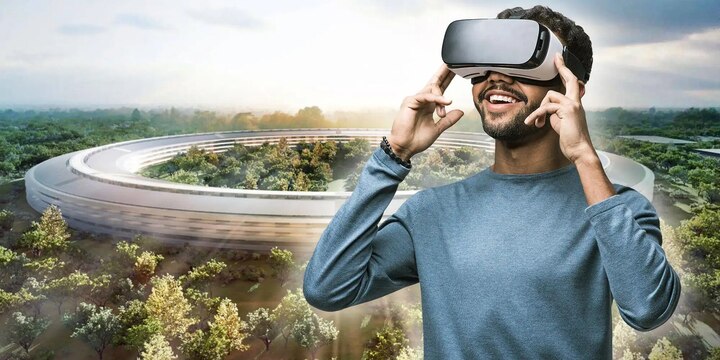
Is 2023 the year for Apple to launch its mixed-reality headset?

According to reports, the long-awaited AR/VR headset by Apple will be available this year. According to a recent Bloomberg article, the mixed reality device will finally be released in the fall of 2023 after a number of delays. The headset has apparently been under development for seven years, with Apple aiming for a 2019 release.

Apple
Image Source: macworld.com

Apple has been incorporating augmented reality into its products for years, but it appears that with the release of a long-anticipated mixed-reality headgear in 2023, the company will quickly advance into the area of Meta, Microsoft, and Magic Leap.

According to a previous story from The Information, the new gadget might resemble a set of ski goggles. It will have multiple cameras so the system can follow a user’s motions in real time and observe events outside of the home. Tim Cook, the CEO of Apple, has repeatedly said over the past few years that augmented reality is a viable technology.

However, it appears that Apple’s future device will provide a mixed-reality experience. Both augmented reality and virtual reality will be available to users. The new device, which Apple may call Reality Pro, will reportedly be unveiled in June during the opening keynote of the company’s Worldwide Developers Conference, according to Bloomberg.

The creation of apps for the new Apple platform has already begun by certain developers. xrOS could be the name of the new operating system for the Apple headset. Given how many developers are interested in this event and working on third-party applications for the iPhone, iPad, Mac, Apple TV, and Apple Watch, WWDC seems like the ideal venue for this type of product launch.

To ensure the long-term sustainability of the Apple headset, it will be crucial to have well-known games and apps for this latest Apple platform.

According to prior reports from Bloomberg, Apple’s mixed reality headgear would have a 3D video service and a unique take on the metaverse. The device’s built-in Mac-level M2 chip, over 10 cameras, and highest definition VR display, according to the report, will cost around $2000-$3000.

According to its most recent report, iOS 17 and iPad 17, the upcoming significant software updates for the iPhone and iPad, respectively, may contain fewer new features as a result of Apple’s concentration on the headset and its xrOS operating system.

Since it has been experimenting with augmented reality on its own iPhones and iPads for years, Apple has already left a tonne of hints about what its future in mixed reality might entail.

Probabilities are good that the headset will follow the same strategy as Meta’s most recent high-end headgear, the Quest Pro, with an emphasis on work, mixed reality, and eye tracking built in.

According to the majority of reports, Apple’s VR headset may likely be so costly and powerful that it will need to target a niche market rather than the general public.

If so, it may be aimed at the same commercial and creative workers as more sophisticated virtual reality headsets like the Varjo XR-3 and Meta Quest Pro.

touch screens

Apple Is Working on Adding Touch Screens to Mac

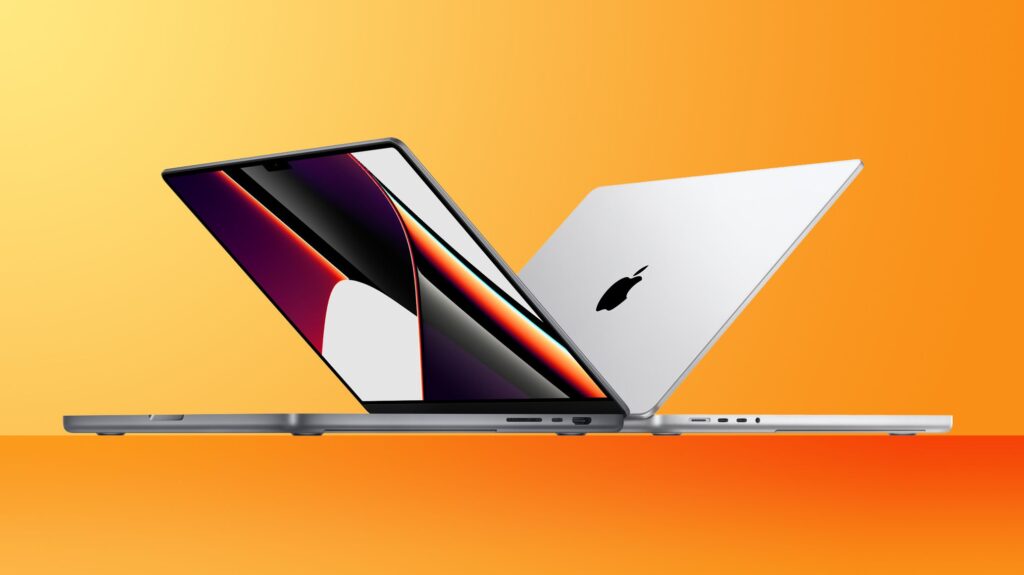
According to Bloomberg’s Mark Gurman, the MacBook Pro’s switch to OLED in 2025 may include touch screens, which Apple has previously rejected.

Apple is finally prepared to reverse course after years of steadfastly refusing to include touchscreens in its Mac computers. According to a recent article by Bloomberg’s Mark Gurman, Apple engineers are “actively engaged” in this project, and the corporation is “seriously considering” making touch screens Macs for the very first time.

touch screens
Image Source: macrumors.com

The first touchscreen Mac may debut in 2025, the report claims. However, Apple’s ideas on this aren’t set in stone, and it is always plausible that these gadgets will never be released.

If it happens, Apple will probably introduce a conventional laptop with a touchscreen that can recognize iPhone-like movements. Other producers, like HP, Lenovo, and Dell, all offer laptops with touch screens in their product lines.

In contrast, Apple has promoted its iPad Pro models as laptop alternatives for users who require a touchscreen, with varying degrees of success. In 2010, Steve Jobs, co-founder of Apple, made the infamous claim that touch screens on laptops “don’t work.” Tim Cook, the CEO of Apple, stated that the Microsoft Surface hybrid tablet was “a fairly compromised, confusing product” in response to analysts’ questions in 2012 over its introduction.

A Mac with a touch screen would occupy an intriguing spot in the market and within Apple’s ecosystem. Even though touch-screen computers have been on for a long time on Windows OS-based systems, Apple has been gradually transforming the iPad into something like a “laptop lite” product.

The company has even included its ARM-based system on a chip, in addition to several keyboard add-ons for the iPad, such as the Logitech Combo Touch and the Magic Keyboard.

Apple explored a Touch Bar for Macs from 2016 until 2021, when it began to phase it out with the introduction of revamped 14- and 16-inch MacBook Pros. This was done in place of adding touch screens to laptops. But since then, the technology has spread to numerous Windows laptops, and an abundance of iPad add-ons have essentially transformed the tablet into a MacBook.

OLED technology is a significant further upgrade coming to Apple’s MacBooks. Apple is reportedly preparing to release a MacBook with an OLED display, most likely by the end of 2024, according to claims from both Gurman and Apple analyst Ming-Chi Kuo.

Last but not least, according to yet another fresh report by Kuo, Apple is preparing to release a new generation of AirPods, which might be priced at $99 and be less expensive than the original.

AirPods Max is a potential additional new audio product from Apple, while no other information is available. These new products could be available in the second part of 2024 or perhaps 2025.

Apple

Apple to ditch Samsung and start making in-house screens in 2024

Apple Inc. intends to use its personalized screens in smartphones as sooner as 2024, in an attempt to decrease dependence on technology partners such as Samsung and LG, and introduce many more constituents in-house.

According to people familiar with the matter, the firm intends to start by replacing the screen in the most expensive Apple smartwatches by the finish of next year.

Apple
Image Source: cnbctv18.com

The displays are an upgrade from the existing OLED, organic light-emitting diode, benchmark to a technology known as microLED, as well as Apple plans to introduce the screens to all other gadgets, such as the iPhone, in the future.

The modifications are part of a larger plan to substitute Apple supplies with in-house components, which will give the firm more influence over the style as well as the functionality of its products.

The tech behemoth has abandoned Intel Corp. chips in favor of in-house designs in its Mac computers but also intends to do so with the vital wireless elements in its iPhones.

Apple’s Cupertino who is a representative based in California declined to comment.

Apple’s display switch has been in the works for several years. According to a report by Bloomberg in 2018, Apple intended to design its displays, beginning with the Apple Watch. The move will be a setback for Samsung Display Co. as well as LG Display Co., the watch’s primary screen suppliers.

Wei Chen, who leads Apple’s display technology team within Johny Srouji’s Hardware Technologies division, is in charge of the project. The firm has started assessing the microLED screens on an upgrade to its current high sports watch, the Apple Watch Ultra.

In contrast to existing Apple Watches, the next-generation screens are intended to provide brighter, more vibrant colors as well as the capacity to be seen from an angle. As per the people who have seen the displays and asked to remain anonymous because the task is still under wraps, the material appears to be painted on top of the glass.

The microLED screens will be Apple’s first entirely in-house designed as well as developed screens. In addition to Samsung and LG, the firm mainly sources displays from a wide range of manufacturers which includes Japan Display Inc., Sharp Corp., and BOE Technology Group Co.

Dark Sky

Apple officially shuts down popular iOS weather app ‘Dark Sky’

The well-known weather application Dark Sky has been officially discontinued by Apple. The Cupertino-based tech giant bought Dark Sky in April 2020. The company removed the weather app from the App Store in September 2020, and all of its users have since been unable to use it.

Dark Sky
Image Source: newsachieve.com

Following its acquisition, Apple quickly discontinued the Wear OS and Android versions of Dark Sky and announced it would no longer accept registrations for Dark Sky’s API, which had given access to the company’s database of weather predictions and historical weather data to third-party app developers.

Later, it announced that the iOS application would be discontinued at the same time as the API service, postponing its closure only until the end of 2022.

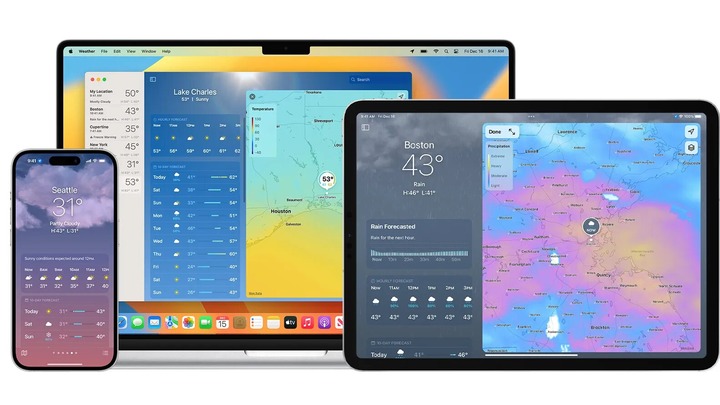
The Weather app that comes pre-installed on iPhone, iPad, and Mac devices now contains a number of Dark Sky’s features thanks to Apple’s acquisition of the company in 2020. The Dark Sky components have been incorporated into Apple Weather.

For the current location, Apple Weather offers hyperlocal forecasts, notifications, high-resolution radar, hourly weather predictions for the upcoming 10 days, and next-hour precipitation.

Precipitation, quality of air, and temperature are just a few of the overlays that are available for the maps; to switch between them, tap on the bottom button on the top-right side of the map view.

Apple boasts that several of Dark Sky’s capabilities “have been integrated into Apple Weather” in the support guide. The remainder of the support guide is devoted to instructing Dark Sky users on how to use the Apple Weather app’s capabilities and interface.

Apple explains the app’s functionality in detail, including how to utilize the maps, handle notifications, and more. Despite Apple’s assurances, some customers aren’t sure Apple Weather is a good alternative to Dark Sky. Several Dark Sky users claim that Apple Weather still lags behind Dark Sky in a recent Reddit thread.

Recent sources claim that Apple is working on new iPad Pro variants. According to MacRumours, the two new OLED iPad Pro models should start selling within the first quarter of 2024.

The corporation intends to launch the new iPad Mini concurrently with the new iPad Pro models in early 2024, the source added. If that the story is true, Apple will for the first time increase the screen size of iPad Pro models.

It is believed that the company may reduce the bezel size in order to achieve the aforementioned screen size. Apple updated its 11-inch and 12.3-inch iPad Pro models in October 2022 by giving them the most recent M2 CPU.

Since the release of iOS 16, Apple has also made its WeatherKit subscriptions available. The company noted that developers can now access this weather information in apps created for iOS 16, iPadOS 16, macOS 13, tvOS 16, and watchOS 9 using a platform-specific Swift API and for other portals using a REST API.

According to the corporation, developers can use the Account tab in the Apple Developer app to upgrade for additional calls or downgrade at any time.

Apple

Apple sued by ex-patent attorney alleging discrimination

After complaining about a male colleague, a former Apple patent attorney filed a lawsuit against Apple alleging discrimination and harassment.

Jayna Richardson Whitt filed a lawsuit against Apple in California, alleging that the firm discriminated against her after learning that she was a domestic abuse victim by rejecting her for higher-level employment roles at the company.

Apple
Image Source: appleinsider.com

Whitt has been employed at Apple since 2006. She claims that throughout this period, she advanced to positions like Director of IP Transactions but also experienced discrimination.

According to the complaint she filed in state court in San Mateo, California on December 20, a White male supervisor “favored Caucasian males and subjected minorities, females, and employees with disabilities to discriminatory treatment.” The patent attorney, who described herself as a single parent of Asian heritage, claimed in her lawsuit that the discrimination was visible in hiring choices, mentoring, assignments, and invitations to meetings.

According to Whitt’s complaint, the company spent more than $630,000 to shield Chief Executive Tim Cook from a stalker in 2021. She claimed that despite uploading a video of a White male coworker brandishing a gun and sharing proof of “death threats and terrorization,” Apple left her “defenseless.”

Whitt said that the company left her on her own to secure her devices, accounts, and Wi-Fi without any assistance from the company’s global security division. Apple initiated an investigation after Whitt published an article in April exposing the company’s harassment and discrimination.

According to Whitt’s complaint, the company conducted an investigation into her behavior after she published the article before terminating her in July. Apple HR criticized her for “allowing a personal relationship to interfere with my work, not adequately securing my devices and accounts, and being unprofessional during the investigation.”

In July, Whitt’s job was terminated “based upon pretextual accusations that she violated Apple policies,” according to her complaint.

Other women have openly recounted their experiences with sexism, harassment, abuse, and other problems at Apple. To draw attention to the issues within the corporation, former employee Cher Scarlett and others started the #AppleToo initiative in 2021.

After weeks of public declarations from Apple employees about internal grievances going unaddressed or dismissed, the group was formed.

In 2021, Scarlett complained to the National Labor Relations Board. She agreed to ask for a withdrawal once she and Apple reached a settlement, but the board rejected the motion since it was illegal.

It is still looking into the situation. In a meeting in September 2021, problems pertaining to employee relations were discussed in part by Apple CEO Tim Cook and SVP of Retail and People Deirdre O’Brien. Pay equity was among the topics that were considered.

In an August statement, Apple said that its policies against discrimination are clear. The company noted, “There are some accounts raised that do not reflect our intentions or our policies and we should have handled them differently, including certain exchanges reported in this story. As a result, we will make changes to our training and processes.”

Apple

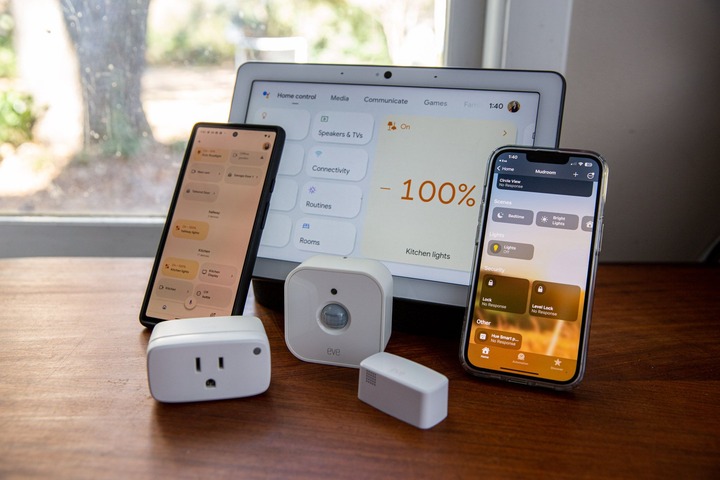
Apple ‘temporarily’ pulls new Home app architecture in iOS 16.2

On its products, Apple has momentarily disabled the ability to upgrade to the updated HomeKit architecture. The new Home app architecture is one of the new features of iOS 16.2, which was formally made available to all customers this month.

Home app
Image Source: theverge.com

Apple claims that this new architecture improves the efficiency and dependability of using HomeKit accessories. However, because users have been reporting problems with HomeKit, the company has now removed the option to update to the new architecture.

Prior to its removal, Reddit users who installed the optional update had complained about problems with the app kicking other users from a Home account and the inability to add them back. On the MacRumors forum, users have complained that they are unable to share the Home with others, that HomeKit devices are perpetually stuck in the “updating” state, and that some accessories have completely vanished from the Home app. After upgrading, users cannot go back to the earlier version of the application.

Apple clarified the issue in a statement, “We are aware of an issue that may impact the ability for users to share the Home within the Home app. A fix will be available soon. In the meantime, we’ve temporarily removed the option to upgrade to the new Home architecture. Users who have already upgraded will not be impacted.”

Apple has also updated its help website with information on what to do if, after switching to the new HomeKit architecture, users are unable to access a Home’s gadgets or invite another user to it.

It’s unclear when Apple plans to reinstate the upgrade option since the company hasn’t commented on its removal from the Home app. What will happen to customers who have updated their Home apps to the new architecture is likewise an issue. With the release of iOS 16.2’s first developer beta in October, the redesigned Home app architecture was unveiled.

The upgrading remained optional even in iOS 16.2’s final release before the option was eliminated. All Apple devices must be logged into iCloud and running the newest versions of iOS, macOS, and tvOS in order to upgrade the Home app to the new architecture. Perhaps the upgrade option will reappear in iOS 16.3, which is now in beta and is anticipated to be made accessible to the general public between February-March 2023.

HomeKit is Apple’s simple-to-use platform for building a trustworthy and protected DIY smart home. A completely functional smart home system can be set up and operational in a matter of minutes with just a few HomeKit-compatible gadgets and an iPad or iPhone to operate them.

HomeKit enables users to connect a number of voice-controlled smart home gadgets from many manufacturers into one system, similar to other voice-controllable smart home devices, primarily Amazon Alexa and Google Assistant. HomeKit differs from the competition in two ways: first, it’s simple to set up and manage all of one’s devices via a single app; second, one’s privacy and security are safeguarded.