Your Tech Story

Apple

15-Inch MacBook Air

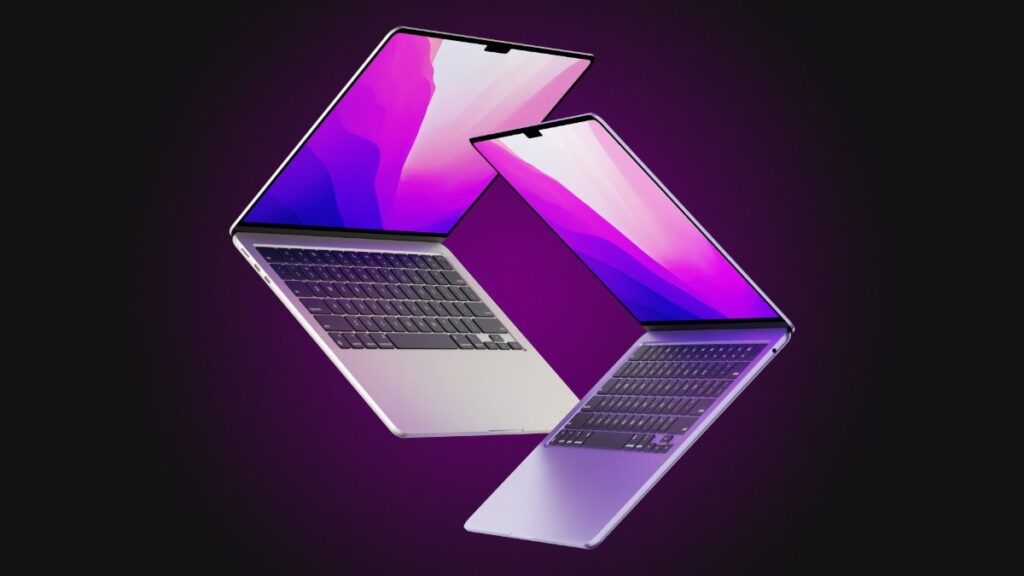
15-Inch MacBook Air Rumored to Launch in April

Ross Young and Bloomberg have both up until recently speculated on the prospect of something like a 15-inch MacBook Air. Bloomberg, in general, and especially, has suggested earlier that a release within the early summer of this year is possible. Back in December, Ross Young confirmed the spring 2023 release.

15-inch MacBook Air
Image Source: appleinsider.com

Young clarified that the 15-inch MacBook Air remains on the path for a summer release in a tweet to his Super Followers, according to 9to5Mac.

“15.5-inch MacBook Air started panel production this month,” Young said. “We would expect an early April launch.”

Source: 9to5mac.com

Also Read: Is Apple really coming out with a foldable iPad?

During this point, we have not yet noticed anything additional about the MacBook Air with a 15-inch display. Even so, you would think it’d be a replica of the 13-inch MacBook Air, although with a larger screen.

13.6 inches & 15.5 inches will be the two sizes in which the Macbook Air will be available by Apple. the MacBook Air was sold in two different sizes earlier by Apple which was 11 inches & 13 inches, but somehow it ultimately pared down the lineup and removed the smaller size.

Ming-Chi Kuo, a reliable apple analyst has also explained the rumored 15-inch MacBook Air, and although he claims that it will not be called a “MacBook Air,” however simply a “MacBook.” as per the analyst. The 13-inch MacBook Air just arrives with an M2 configuration but the M2 & M2 Pro configurations will be obtainable in the new 15-inch MacBook

Bloomberg reports that, in addition to the significantly bigger screened MacBook Air, Apple is working on a 12-inch MacBook. This machine, on the other hand, is not anticipated to be available till the end of 2023 or slightly earlier in 2024.

The year before, the MacBook Air received a significant remodel, with a design equivalent to the new Macbook Pros, including a display notch as well as sleeker edges. This new model has been extremely well recognized, and we hope it will be carried over to the latest 15-inch MacBook.

Also Read: Amazon Subsidiary Zappos Lays Off Around 20% of Staff

The sleeker bezels, in general, and especially, could perhaps mean that somehow the 15-inch MacBook Air provides a bigger screen in a more compact size. The 13-inch MacBook Air’s screen was increased from 13.3 inches to 13.6 inches whilst also preserving the same overall footprint during its redesign last year.

iPhone Ultra

Is the iPhone Ultra worth the wait?

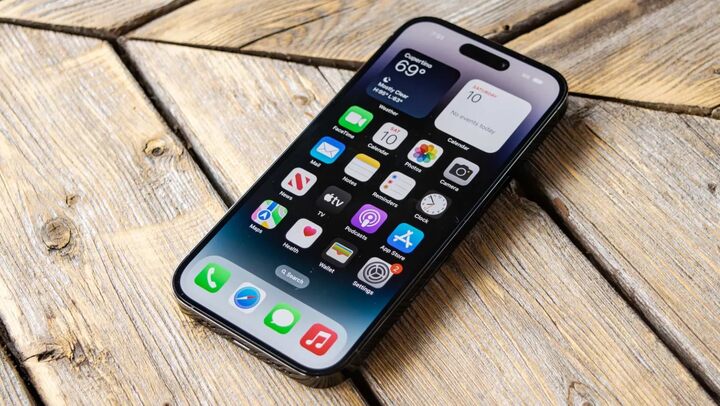
Apple may unveil a new, more costly iPhone tier to its lineup named “Ultra.” According to the rumour, the new iPhone tier will be introduced alongside the iPhone 16 series in 2024 and would sit above the Pro Max and Pro iPhone models.

The brand has previously used the term “Ultra” to distinguish between its top-tier smartwatch, the Apple Watch Ultra, and the most advanced M1 processor. According to the source, Apple has internally contemplated releasing an Ultra model iPhone.

iPhone Ultra
Image Source: macworld.com

However, other than pricing, it is currently unclear how the Ultra model would vary from the Pro and Pro Max models. CEO Tim Cook reportedly stated in Apple’s earnings release last week that he thinks customers will shell out more for a better model.

According to one speculation relating to the iPhone 15 Ultra, Apple may use a new titanium alloy exterior, a feature that was initially expected for the iPhone 14 Pro range but didn’t materialise.

Also Read: The iPhone may get a microLED display. What does that mean?

This rumour gained credence after tipster Leaks According to ApplePro, the iPhone 15 Ultra’s chassis will be made of titanium, while another leak purportedly showed the material up close on a sample iPhone.Titanium is as robust as stainless steel but is lighter, thus this would result in a more robust phone that may still be lightweight.

The only issue is that, given the increased cost of titanium, this could result in an increase in the cost of the iPhone 15 Ultra. The titanium body, however, was recently depicted on the Pro and Ultra iPhone 15 editions in a depiction of the iPhone 15 Pro Max. Thus, perhaps this update won’t be an Ultra-only feature.

According to ShrimpApplePro, the iPhone 15 Ultra’s back panel may have curved edges, which is another odd potential modification. The resulting iPhone would look drastically different and, presumably, feel more pleasant to carry.

But according to the most recent reports from LeaksApplePro, Apple may continue to use the flat-back design it currently uses because to supply chain concerns and wireless charging design limitations.

This fall, the company is anticipated to launch the iPhone 15 series. There are rumours regarding what might be in the new phones, despite the fact that not much is revealed about the new lineup. According to one report, all upcoming iPhone models would incorporate USB-C connections for charging.

Also Read: Why Did The iPhone 14 Plus End Up Being A Failure?

In 2022, the European Union decided that starting in 2024, USB-C would be the standard charging port for all smartphones. Another speculation regarding the iPhone 15 is an increase in price for all smartphone models. The current range of US pricing for the iPhone 14 variants is $829 to $1,599.

The greatest time to purchase a new smartphone is when users actually need one. If your iPhone is beginning to show its age, you’ll want to give the iPhone 15 a serious look, regardless of what the iPhone Ultra might be hiding in the wings.

foldable iPad

Is Apple really coming out with a foldable iPad?

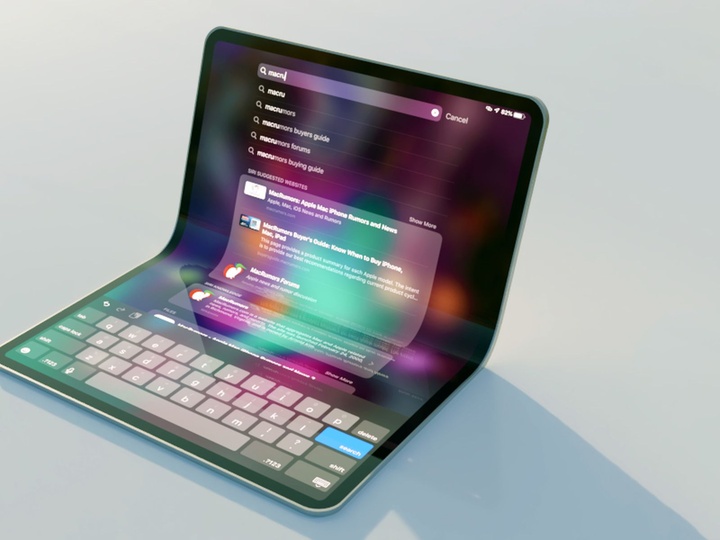
As per Ming-Chi Kuo, a Supply chain analyst, Apple could launch a foldable iPad as soon as the next year. Kuo anticipates that it will be joined by a redesigned iPad Mini, which will go into large-scale production in the initial days of 2024.

Kuo didn’t reveal much new information about the rumoured iPad foldable, but he did say it will have a carbon fibre kickstand manufactured by Chinese component producer Anjie Technology.

Image Source: macrumors.com

“I’m positive about the foldable iPad in 2024 and expect this new model will boost shipments and improve the product mix,” he tweeted.

Source: theverge.com

A 2024 launch date is much sooner than the most notable foldable iPad estimation, made by Ross Young who is a Display Supply Chain Consultant analyst last February. He claimed that Apple is working on a foldable iPad/MacBook combination with an approximately 20-inch foldable display, however, it will not be released until 2026.

Afterwards, Bloomberg’s Mark Gurman revealed that Apple is looking into a dual-screen foldable, with the bottom half of the screen serving as a virtual keyboard whenever the gadget is utilized as a MacBook-style carrying case.

Also Read: Is 2023 the year for Apple to launch its mixed-reality headset?

Gurman did not provide a specifically planned release estimation but did say in October that Apple’s folding iPad could arrive eventually a bit late in the decade.

This is not the first occasion where Kuo has placed a timeline on an Apple foldable prediction. About two years ago, he predicted a foldable iPhone would be available in 2023.

However, it appears that this gadget will be much smaller, with a display size of 7.5 to 8 inches. Gurman even claims that Apple has addressed the release of a foldable device having a display size roughly comparable to the 6.7-inch iPhone 12 Pro Max.

Considering the recent absence of rumours about a foldable iPhone, it’s difficult to envision it launching in 2023, as Kuo predicted previously.

Also Read: Why are so many tech companies laying people off right now?

Shortly, Kuo predicts a decline in iPad deliveries of between 10 per cent and 15 per cent year on year in 2023. Given the increase in sales appreciated by most customer technology firms amid the covid shutdowns, as well as the declines many have recently suffered, a drop in tablet deliveries this year would not be surprising.

Finally, Kuo predicts that Apple’s next iPad will be the iPad Mini. He anticipates that a new model will go into manufacturing in the first quarter of 2024, following its last refresh in 2021.

microLED

The iPhone may get a microLED display. What does that mean?

According to a recent report, Apple plans to start producing its own internal mobile displays in 2024 in an effort to lessen its reliance on Samsung and LG. This move will purportedly bring the benefits of microLED, a screen technology that is even more powerful than the OLEDs already in use, in addition to cutting prices and providing the corporation greater leeway in how it designs its products.

microLED
Image Source: tomsguide.com

Reputable leaker-analyst Mark Gurman claims in a piece for Bloomberg that the plan will initially have a bearing on the Apple Watch, whose premium Ultra edition will receive an in-house bespoke MicroLED with its 2024 update. The displays will eventually be added to the iPhone as well as other Apple Watch devices if there are no technological difficulties.

It’s important to keep in mind that the term “in-house” in the report has some nuances. The distinction would be that Apple will retain more design control; these displays will probably still be produced by an outside supplier.

Also Read: Tesla is getting cheaper. Is it a good move by Elon Musk?

Currently, Apple creates its iPhone and Apple Watch screens using current Samsung and LG technology and calibrates them to the company’s requirements. Now that the display itself will be created and designed by Apple, the company would have more influence over the final product.

Samsung presently manufactures microLED displays, however, they are only applied to their premium televisions. Within the next few years, MicroLED might overtake OLED as the standard display technology. It performs better than OLED in a variety of aspects, including. It is slimmer, making a low-profile and lightweight smartwatch possible.

With apparent advantages for battery life, it is nearly twice as power-efficient (more specifically, it is predicted to take half as much energy to achieve a comparable brightness). In the future, it will be possible to achieve numerous thousand pixels per inch with microLED, which is capable of providing a screen resolution that is many times higher.

Also Read: Is Google bringing its own ‘AirTags’?

In addition, it may produce images that are superior in practically every regard, including color, contrast, and brightness. The displays, according to Bloomberg, are already in testing and “make content appear like it’s painted on top of the glass.”

Additionally, it is less susceptible to display burn-in, which can be a problem with OLED panels. Without a certain, users won’t see any of these features on a 2-inch display, but engineers working on different Apple mobile products would regard them highly.

What we can actually anticipate for this year is that the iPhone 15 will reportedly maintain the 6.1-inch and 6.7-inch OLED panels that we’ve encountered on the iPhone 14 range and earlier devices.

The new iPhones should be a worthwhile investment for the majority of people in need of a phone upgrade because of additional upgrades like a periscope telephoto camera on the iPhone 15 Pro and the latest iPhone 15 Ultra model with a new titanium body and haptic, solid-state buttons.

AirTags

Is Google bringing its own ‘AirTags’?

Rumors suggest that Google is developing its own location-tracking tag to compete with Apple AirTags and Tile trackers. Based on recent revelations from Android leaker Mishaal Rahman, Google is purportedly developing a rival to Apple’s AirTag trackers.

There is speculation that Google’s Fast Pair is getting ready to add support for a new category of locator tag products, and the company is developing something like the distributed monitoring network Apple utilizes for AirTags. Finder Network branding could be present on this new product.

AirTags
Image Source: hindustantimes.com

Codenamed “grogu,” “groguaudio,” or “GR10,” this new tracking gadget will handle both BLE and UWB. It will come in a range of colours and have a tiny built-in speaker. The device’s functions and design, however, are not disclosed.

The device has been developed by Google’s Nest team, although it’s not obvious what the corporation intends to use it for. According to some reports, the device will be released in the first half of this year, albeit it might happen at the same time as the Pixel 8 launch.

Also Read: Will the metaverse be good for society?

Google’s Pixel 6 Pro and Pixel 7 Pro devices both support Ultra Wideband, just like AirTags and iPhone 11 and subsequent versions, and according to Wojciechowski, the trackers might support the wireless protocol in combination with Bluetooth LE to provide customers accurate directions to a lost tag. At its I/O Developer Conference in May, Google may also introduce new Pixel phones along with the tracking tags.

Apple’s AirTags has been a big success, but the corporation has encountered privacy concerns with the product. Google may require more time to think through potential outcomes and create safeguards for their edition of the tracker.

On the basis of this, it is plausible to predict that Google will develop security measures to prevent problems of a similar nature. In conclusion, it has not yet been proven that Google is developing a tracker that is comparable to Apple’s AirTags. The gadget, with the codename “grogu,” will enable BLE and UWB. Before releasing a product, Google might want to take privacy issues into account.

Users have found Apple’s AirTag feature to be a lifesaver, especially those who frequently have trouble locating their gadgets. The “Find My Feature” app enables users to easily track the location of their equipment and makes it easier for it to find them if they go missing.

Also Read: Is 2023 the year for Apple to launch its mixed-reality headset?

On Android, Google’s tags would probably be considerably more functional than Apple’s AirTags are able to be. While Apple does offer a “Tracker Detect” application in the Google Play Store that enables Android users to scan for AirTags as well as other Find My-enabled products that have been separated from one‘s owner, the app was primarily created to allay concerns that AirTags can be utilized maliciously to track the whereabouts of people

Dunzo, a Google-backed delivery company, was recently in the spotlight for its decision to terminate 3% of its workers. The Bangaluru-based startup competes in the same market as Blinkit, Swiggy, and WeFast. It is a platform for on-demand delivery that enables customers to order anything from the convenience of their homes.

As part of its cost-cutting initiatives, Dunzo has decided to lay off workers. In an interview with CNBC-TV 18, the firm’s CEO and co-founder Kabeer Biswas stated that the company is providing “the best support available” to assist employees during this trying period.

M2 Pro

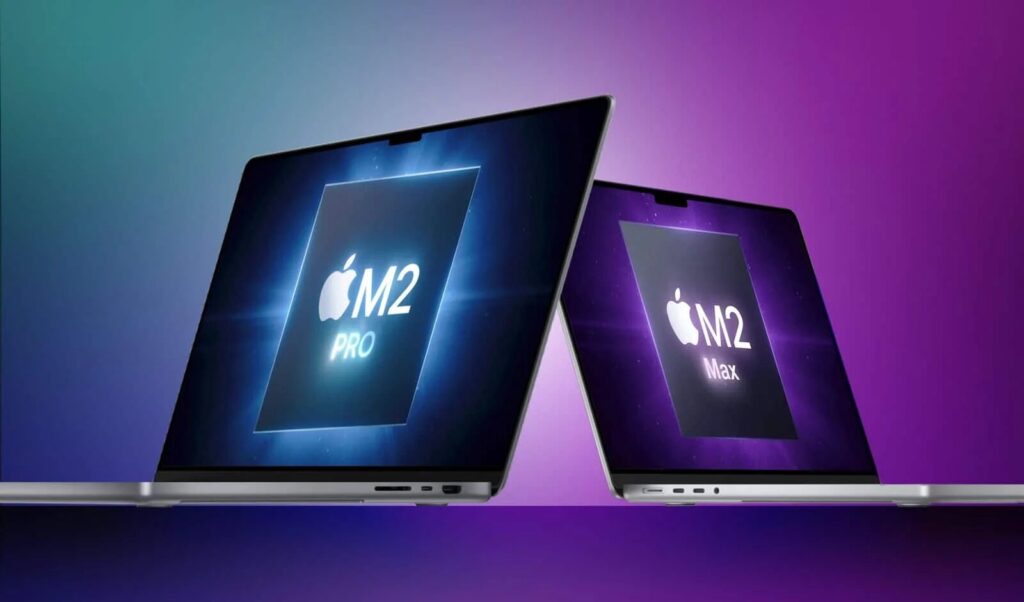
Apple announces MacBook Pro with M2 Pro and M2 Max chips

As per Apple, the latest M2 Pro chip possesses a 10-core or 12-core CPU and provides up to 20 percent powerful speed performance in comparison with the M1 Pro chip.

The chip also includes a 16-core or 19-core GPU that provides up to 30 percent faster graphics performance than the M1 Pro, as well as a 16-core Neural Engine which is 40 percent faster than the previous generation.

M2 Pro
Image Source: showmetech.com.br

According to Apple, the M2 Max chip possesses a 12-core CPU which is approximately 20 percent faster in comparison with the M1 Max chip, and it comes with a 38-core GPU. The latest MacBook Pro has now become up to 6 times more efficient as compared to the speediest MacBook Pro which is intel-based for some functions thanks to the M2 Max chip.

When equipped with the highest-end M2 Max chip, both newly released MacBook Pro models can now be customized with up to 96GB of unified memory. In contrast, older versions with the M1 Max chip were usable with approximately 64GB of memory. Memory bandwidth remains unchanged, with the M2 Pro chip supporting up to 200GB/s as well as the M2 Max chip supporting up to 400GB/s.

The notebooks, like the prior generation, can be customized with about 8TB of SSD storage.

The new MacBook Pro models include Wi-Fi 6E support, which enables faster wireless access as well as reduced latency on the 6GHz band. Preceding 14-inch & 16-inch MacBook Pro systems only supported Wi-Fi 6, which works on the 2.4GHz & 5GHz bands.

On both newly released MacBook Pro models, an updated HDMI 2.1 port features one external screen with about 8K resolution at 60Hz or 4K resolution at 240Hz.

Apple claims that the brand-new 16-inch MacBook Pro has the great battery life ever offered by a Mac, with approximately 22 hours of use per charge. The latest 14-inch model is said to have a battery life of up to 18 hours. According to Apple’s technical specifications, each model gains one hour of battery life over the prior generation.

The newest MacBook Pro models come with a Liquid Retina XDR screen having a notch, a completely black keyboard housing, MagSafe 3 for charging, 3 Thunderbolt 4 port facilities, an SD card slot, an HDMI port, a 3.5mm headphone jack, a 1080p FaceTime HD camera, as well as a six-speaker audio system as the past generation.

Customers can purchase the latest 14-inch and 16-inch MacBook Pros now via Apple’s online store, having availability commencing Tuesday, January 24. The 14-inch MacBook Pro price begins at $1,999, while the 16-inch MacBook Pro begins at $2,499.