Your Tech Story

Apple

Arc

Finally, Arc is coming to iPhone. Will it replace Safari?

For many years, all Apple products, including their laptops, iPads, and iPhones, have used Safari as their primary browser instead of Arc. It functions similarly to Android devices’ Google Chrome browser. In January 2003, Mac OS X Panther debuted Safari.

The browser is well-liked for its speed, security features, and compatibility with Apple gadget services. Apple is well-known for its broad and cutting-edge web tools, including HTML5, JavaScript, and CSS3.

Arc
Image Source: theverge.com

Because of this, web designers and writers favor Safari over other browsers. On the other hand, Arc is a browser that uses the same technology as Chrome and has easy tools for importing favorites.

Also Read: Why are OPPO and OnePlus exiting the UK and Europe markets?

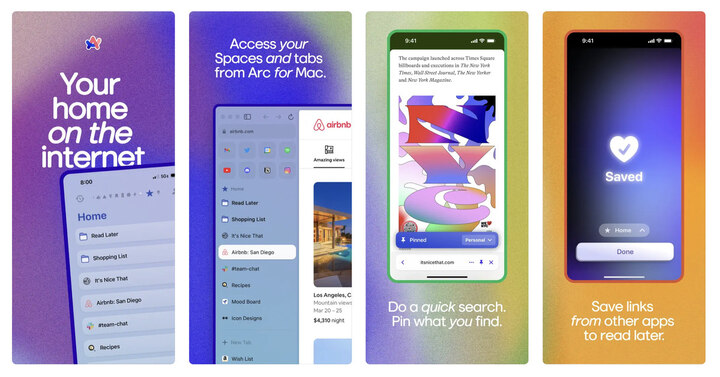
The Verge claims that Arc’s mobile application will function as an iPhone desktop browser extension. The tabs, user accounts, bookmarks, drawings, and notes made using the desktop edition will all be synced by the app.

Josh Miller, CEO of The Browser Company, stated that the current Arc mobile app does not serve as a substitute for a primary mobile browser. At least not right now, the app edition cannot compete with Safari.

Instead of being a full-fledged mobile browser, it functions more as a companion tool for the desktop browser. The idea of a distinct browsing experience is still there, though.

That said, users who want to test the Arc mobile application should already have the desktop version set up on their computers. The functions of the mobile edition cannot be used until Arc has been installed on Mac, according to Ellis Hamburger, a representative of The Browser Company.

It should be noted that the Arc browser is presently accessible on Mac computers, and anyone interested in downloading Arc for Mac should sign up for a waitlist or request an invitation from an Arc user.

The Verge pointed out that even though Arc will be available as an iOS app, it is only compatible with iPhones. Additionally, since the functions of the desktop edition might be challenging to translate to mobile devices, users who are already acquainted with the Arc on desktop shouldn’t expect exactly the same feeling from the iPhone version.

What users can anticipate from Arc as a mobile application was explained to Inverse by Nate Parrott of The Browser Company. Parrott claims that it ought to resemble “chopping off Arc’s sidebar and then putting it into an app.”

Nevertheless, users can anticipate features like “delightful animations, interactions, and haptics,” adhering to The Browser Company’s mission to make the browsing experience “more alive.”

Also Read: Twitter to Begin Culling Legacy Verified Marks From April 1

The company began sharing sneak peeks of Arc’s mobile application via TikTok in January, ahead of the app’s release on iPhones. According to Inverse, the style of the mobile app ushers in the re-emergence of skeuomorphism on iOS devices.

The word “skeuomorphism” refers to a design of an object that closely resembles its real-world equivalent. When the first iPhone was introduced, Apple utilized skeuomorphism for its software design, but by the time iOS 7 became available, it had been neglected.

apple

Apple announces new classical music app

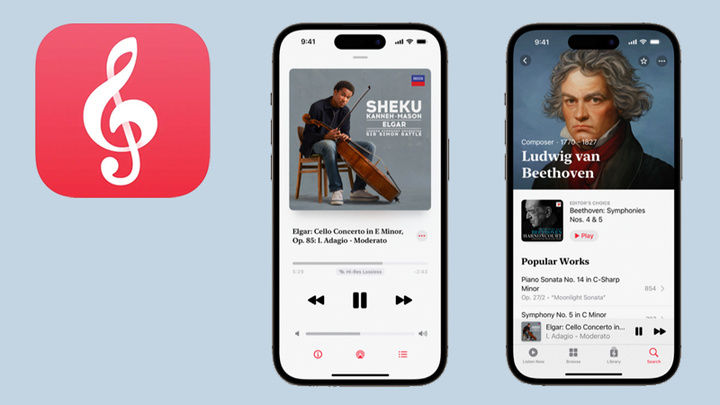
Apple is introducing an innovative classical streaming service for music. As per Apple, the latest Apple Music Classical app which is based on its 2021 merger with streamer Primephonic based in Amsterdam will provide Apple Music subscribers with availability to ever more than 5 million classical soundtracks, such as the latest updates in high-quality sound, in addition to thousands of playlists, hundreds of exclusive album tracks, and other functionalities such as composer bios and profound dives on major works.

Image Source: violinist.com

Provided its composition in the new Os upgrades rolled out to devs, the facility was rumored to be expected to be completed, but the precise date of the release was unknown.

Also Read: Taiwan’s TSMC to recruit 6,000 engineers in 2023

Even so, whilst the app was revealed today, it is currently only on App Store, accessible by preorder. The App will be launched the following month, on 28 March 2023. Furthermore, at rollout, the app would only enable iOS devices that run iOS 15.4 or later.

The firm’s decision to select classical music fans with a separate app is a distinguishing factor for its Apple Music monthly subscription facility, but it’s a far cry from the functionalities main competitor Spotify introduced this week, which included tech-forward functionalities like AI as well as video-based exploration feeds.

Alternatively, Apple Music Classical will offer a straightforward user interface for interacting with classical works.

To identify and track recordings, consumers will have the ability to browse by songwriter, work, conductor, and even catalog number. These can be started streaming in up to 192 kHz/24-bit Hi-Res Lossless sound quality. In addition, large numbers of audio will indeed be accessible in Apple’s interactive spatial audio.

Users will be able to dig deeper into the recordings and read editorial notations about the artists as well as characterizations of their major works. Renowned composers will be able to purchase high-resolution digital portraits accredited by Apple from painters.

Color palettes as well as artistic citations from the noteworthy classical era were used to create these, and additional ones will be incorporated in the future. Portraits of Ludwig van Beethoven, Frédéric Chopin, as well as Johann Sebastian Bach would be accessible from the beginning.

Also Read: Tesla Could Start Making Cars in Mexico Next Year

The facility will also be enhanced by fresh music over time. Apple notes that it has been collaborating with classical musicians and music organizations to provide exclusive material and audio files at release and that this will keep happening going forward. For the time being, users can follow the @appleclassical Twitter account for information and announcements about the app and current music releases.

iOS 16.4

What’s new in Apple’s iOS 16.4 update for iPhone users?

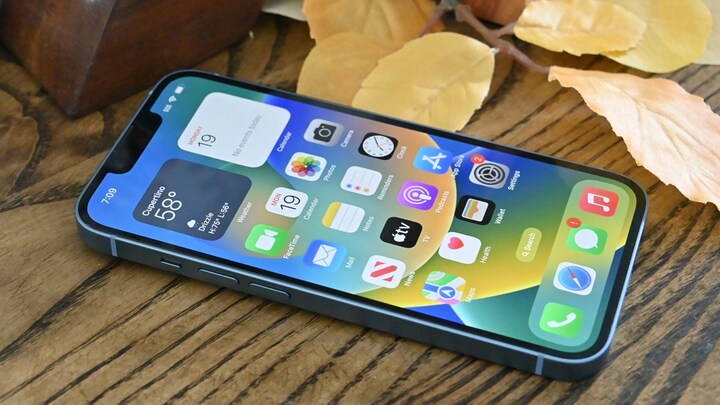
Currently, in beta testing, the software update will be made accessible to the general public in the spring, most likely in March or April. The iOS 16.4 upgrade from Apple, which brings a number of new features and improvements for the iPhone, is about to go live.

Image Source: appleinsider.com

With iOS 16.4, Safari on the iPhone now has opt-in compatibility for web-based push alerts.

Through this feature, users can receive notifications from webpages through Safari just like they would from applications downloaded from the App Store. Push message requests can only be made by websites that users have saved as web apps on their home screens.

Also Read: Instagram starts testing its age verification tools in more countries

A shaken face, a heart in 3 new color choices, a jellyfish, a moose, a donkey, and other new emoji are among the new Unicode 15.0 emoji that are included in iOS 16.4.

With iOS 16.4, a new “Beta Updates” menu has been added under General Software Update in the Settings app. This menu will make it easier for participants in Apple’s Developer Program to obtain developer betas of iOS without having to download configuration profiles from the website for developers.

The same menu also makes it simple to activate iOS’s public betas. Only if one’s iPhone is signed onto the same Apple ID that they used to join up for Apple’s Developer Program will the developer beta option be visible.

This new menu will serve as the sole method to allow developer betas in subsequent iOS releases, according to Apple, stopping config profiles from being utilized and distributed for free online.

In the Podcasts app for iPhone and CarPlay, iOS 16.4 adds a number of new features. The Up Next queue now includes episodes that listeners have stored in their Library and episodes that they stream from programs they do not follow.

A new Channels menu in the Podcasts app offers a list of podcast streams all in one place on the iPhone. The Listen Now and Recently Played queues, as well as audio suggestions in the Browse tab, are now accessible through CarPlay’s Listen Now tab.

Also Read: Google expands Gmail client-side encryption to more users

iOS 16.4 brings back Apple’s revised Home app architecture, which was originally introduced with iOS 16.2 but later removed due to problems.

After updating to iOS 16.4, the Home app offers an optional upgrade with the new underlying architecture. Apple claims that the new design will improve the app’s usefulness, potency, and dependability for controlling smart home devices. The new design comes after iOS 16.1 added support for Matter accessories to the Home app.

Apple

Is Apple working on a secret project to help people with diabetes?

A profile of Apple’s Exploratory Design Group reveals how teams are collaborating covertly on cutting-edge technologies, such as the frequently rumored non-invasive glucose sensor for the Apple Watch.

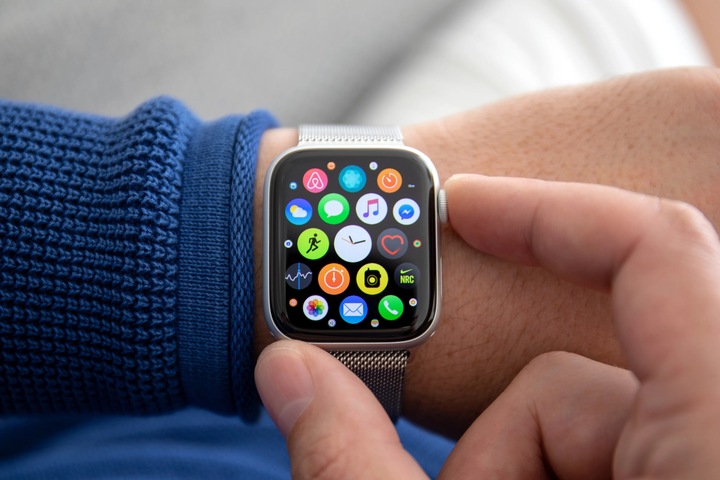
Apple is working on a noninvasive blood glucose monitoring device and long-term plans to integrate the technology into the well-known Apple Watch. The device is said to be powered by two technologies, silicon photonics, and optical absorption spectroscopy, and is intended to measure the reflection of laser light directed into a region beneath the skin in order to determine glucose levels.

Apple
Image Source: scmp.com

Apple is said to have tested the technology with hundreds of users. Although the sources claim that Apple tested the technology under the guise of a startup, Avolonte Health, it doesn’t seem that info from the trials is publicly accessible, so it is not known how well it worked. Apple has yet to formally confirm this information.

Also Read: Will the iPhone 15 Pro have as much RAM as a MacBook?

In order to create new products and technologies that might one day be sold to the general public, Apple has a number of groups operating within its company. The ultra-secretive Exploratory Design Group is described as a small group that functions in some ways like a start-up mini Apple.

According to Mark Gurman’s “Power On” newsletter for Bloomberg, the XDG, which has a few hundred workers, is much smaller than the Special Projects Group, which is responsible for the Apple Car. Additionally, it is much smaller than the Technology Development Group, which has 1,000 members and is developing Apple’s mixed-reality device.

The small XDG, made up of “engineers and academic types,” operates similarly to Alphabet’s Moonshot team in that they are provided with enormous resources to test out pretty much any concept. Instead of focusing on new iterations of current products, XDG explores completely original concepts to see if they are workable or pointless endeavors.

The group was founded by late Apple engineering fellow Bill Arthas with the goal of creating novel battery designs and low-power processor technologies. Additionally, it is believed to be working on next-generation AR and VR headset display technologies to aid those with eye diseases, as well as the glucose monitor.

Also Read: Will Twitter now start charging for SMS two-factor authentication?

The XDG performs some functions similar to those of a miniature Apple, notwithstanding being a very tiny organization in comparison to the powerhouse that is Apple itself. Members of the team operating on specific projects in the XDG are not permitted to talk about the projects with other members who aren’t on the same team, similar to the way each Apple division can maintain work privately from other employees within the business.

Individuals in the group are arranged according to skill sets rather than specific projects, so one person may find themselves engaging in several projects at once while still being required to keep confidentiality.

iPhone 15 Pro

Will the iPhone 15 Pro have as much RAM as a MacBook?

Though the iPhone 15 Pro won’t go on sale until almost the end of the year, there is already a lot to report from the global supply chain. The most recent information is provided by Taiwanese supply chain analysis company TrendForce, which asserts that Apple has increased the RAM for the iPhone 15 Pro.

iPhone 15 Pro
Image Source: gizchina.com

The iPhone 15 Pro, according to a recent rumor, will have the same amount of RAM as the base model MacBook Air. TrendForce claims that Apple intends to upgrade ” the capacity and specifications of the DRAM solutions featured in the next generation of the iPhone.”

Also Read: iPhone 15 and 15 Plus to get redesigned camera. What to expect?

Since Apple only recently upped the RAM in the non-Pro iPhones to 6GB, the iPhone 15 Pro is the candidate that will most likely leap to 8GB of RAM. In contrast, the iPhone Pro has had 6GB of Memory since the release of the iPhone 12 in 2020.

The iPhone 15 will most likely have the same A16 CPU as the iPhone 14 Pro, which means that it will most likely receive the same 6GB of LPDDR5 RAM, an improvement over the LPDDR4 RAM in the iPhone 14. The iPhone 15 Pro might also switch to LPDDR5X RAM, which has a higher bandwidth than LPDDR5 RAM.

There have been reports about the iPhone Pro getting 8GB of RAM before, and this is not unusual for smartphones. The base edition of the Galaxy S23 series has 8GB of RAM, and the Ultra variant has 12GB of RAM with greater storage tiers. There is some idea of what the iPhone 15 will include when it launches later this year.

There might be a USB-C port because reports claim that Apple will adopt the new standard starting with the iPhone 15—especially given that the switchover’s target date is 2024. The gadget might have solid-state buttons that function like tiny trackpads. As the buttons are pressed, Apple’s Taptic Engines will provide haptic input.

Also Read: 15-Inch MacBook Air Rumored to Launch in April

In order to attract rugged users, Apple may also give an “ultra” version of the iPhone, similar to how it markets the Apple Watch Ultra. The iPhone 15 Pro will be among the most potent portable devices ever created, along with persistent rumors that Apple will switch to a 3nm process for the A17 chip, which is said to bring the largest speed increase in years.

Online 3D models of the forthcoming 15 Pro Max from tech behemoth Apple have disclosed that the device will have a thicker body and no physical buttons. Ice Universe, a tipster, shared the 3D models in a tweet on Saturday along with the statement, “Compared with 14 Pro Max, the bezel is narrower but thicker.”

iPhone 15

iPhone 15 and 15 Plus to get redesigned camera. What to expect?

Even though it’s only the middle of February, analysts already have a fair sense of what to anticipate from Apple’s upcoming iPhone 15 series.

Numerous leaks hinted at the updated features and look of the new iPhone series.

iPhone 15
Image Source: apple.com

In light of prior speculations regarding the iPhone 15’s improved camera, the most current rumour focuses on an anticipated design update for the iPhone 15 and 15 Plus.

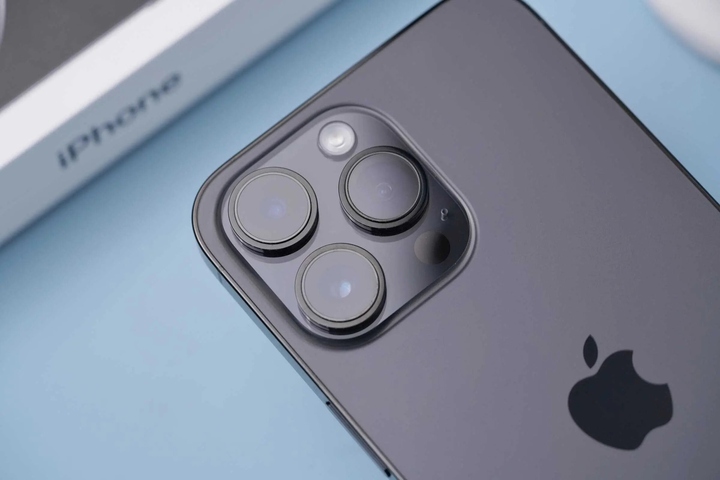
The iPhone 15 and 15 Plus will reportedly include a new camera bump, according to a leak. It can seem like a small design aspect that users don’t really care about right now. However, the reason that’s fascinating is related to the lower iPhone models’ cameras.

Also Read: 15-Inch MacBook Air Rumored to Launch in April

The 48-megapixel sensor that Apple debuted with the iPhone 14 Pros earlier this year should be carried over to both the base device and the 15 Plus.

In recent years, as it updated the sensors, Apple gradually grew the iPhone’s camera bump.

Sensor-shift optical image stabilisation (OIS) technology was introduced with the iPhone 12 Pro Max. Then, Apple added that primary camera to every iPhone 13 device in addition to a new camera setup for the non-Pro variants.

Further with the debut of Apple’s first 48-megapixel sensor in a phone, the iPhone 14 Pro and 14 Pro Max received an even larger camera module. That sensor, according to Apple, is 65% bigger than the one on the iPhone 13 Pro.

Although not identical, the sensors in the iPhone 14 and 14 Plus are comparable to those in the iPhone 13 Pro and Pro Max. Compared to the iPhone 13, the iPhone 14’s bulge is a little bigger. The iPhone 13 Pro also has a third zoom lens, however, this model is smaller.

Higher light is captured by a bigger sensor, which also has more megapixels. However, it also occupies more room in the back. The camera bump’s size is increasing as a result. With such a background, it’s simple to see why the rumour that the iPhone 15 and 15 Plus would feature a larger camera bump is so enticing.

Also Read: Is the iPhone Ultra worth the wait?

The two phones are rumoured to include 48-megapixel primary sensors, the same as those found in the iPhone 14 Pros. That suggests that the rear camera module will need to grow, even if it only has room for two lenses. Reminder: Telephoto zoom lenses won’t be available on future non-Pro phones.

On Twitter, the leaker @ShrimpApplePro summarised the rumoured specifications for the iPhone 15 series and teased the larger camera bump for the iPhone 15 and 15 Plus. The 48-megapixel sensor for both the non-Pro and Pro models of the iPhone 15 is mentioned in the specifications he cited.