Your Tech Story

Founder

SEMrush

SEMrush : Analysing, Optimizing and Managing Content

With internet accessibility has grown exponentially in the last few years, most companies seem to be online, as most of their customers are online as well. Content marketing and digital marketing have never enjoyed a more profitable time than now, thanks to everyone being glued on the internet. But with so many different kinds of media, and different brands looking for customer attention, how can one stay on top? Having a strong online presence is paramount to success in today’s digital world, and any one or anything that helps with that automatically becomes invaluable. That is why, today we are going to take a look at the growth of SEMrush, a content marketing and SaaS platform that helps companies manage their online visibility.

SEMrush is a tool that helps marketers improve their online presence, and in the process boost their conversion rates and sales. While the company began as a supplementary SEO toolkit, it now utilizes many different tools, has expanded considerably since its early days. SEMrush helps brands and companies better their Social Media Marketing and improve their revenue generation. The field is so immensely powerful that the company now makes between $50 million and $100 million a year.

The Founder

Oleg Shchegolev, who is the CEO and co-founder of SEMrush, began working with SEO when he was a third-year college student pursuing a degree in Information Security. As the field hadn’t quite blown up at the time, SEO was relatively easy to master, and so Oleg ended up exploring multiple facets of SEO and quickly picked up information related to it. Oleg, and his friend Dmitriy Melnikov, who is the other half of SEMrush started experimenting with different SEO settings leading to the creation and release of SEOquake in 2006. SEOquake turned into one of the most sought-after SEO toolbars with over 4-5 million users, much to the surprise of the duo. This success inspired them to turn their passion for SEO into something larger, and that is how SEMrush was founded.

Founding SEMrush

Oleg Shchegolev founder SEMrush
Image Source: hackernoon.com

The duo started working on their platform during the financial crisis of 2008, leading to a rocky start filled with trials and tribulations. But what served as a saving grace for SEMrush was the fact that SEOquake was still generating revenue, and that, as a whole, IT start-ups don’t need a lot of capital upfront.

While beginning work on SEMrush, Oleg did not have much of a plan in mind and wasn’t sure how to build the right product or gain market share. The entire process was highly iterative, intuitive and experimental. Having no specific idea in mind, allowed Oleg to play around with different settings, modify and change his ideas and put together the perfect product. The only thing he was sure he wanted was to be satisfied with what the company created, and that was the main criteria based on which the team designed their initial products. Slowly, yet surely, the ideas started falling in place and Oleg gained an idea of what he wanted SEMrush to be, and how he wanted it to look.

After they had created their product, they needed to now, market it. The company started with no promotions, instead opting to distribute SEMrush among friends. Having worked in the IT field, the duo had a lot of contacts within the field, and that helped them get the software around. They stuck to a freemium model, distributed coupon codes, and gave users the chance to test their product out.

SEMrush : The Success

After being founded in 2008, the company expanded in 2015 adding keyword analysis tools to their arsenal and releasing over 100 updates. This way, the company turned from being just an SEO management tool to a content marketing tool that helped businesses stay relevant and visible. The company has also revolutionised the way brainstorming works in major companies by doing away with the concept of deadlines. Instead, they employ people who are enthusiastic and passionate about what they do and then give them the creative freedom to explore.

As a means of generating leads, the company has invested in educating the SEO community by hosting webinars, organizing chats on Twitter and nurturing blogging. SEMrush also makes use of agile marketing to create an incredibly self-sufficient and engaged marketing team. All these efforts have definitely paid off, because, in 2017, PCMagazine listed SEMrush as one of the best SEO tools of the year. Since then, the company has grown at a rate of 80% a year, and currently has several offices around the world, including Philadelphia, Czech Republic, Cyprus and Russia and has clients from over 100 countries.

The time Oleg decided to launch SEMrush was probably one of the toughest periods to launch a start-up, and yet the IT professional kept battling against the tide, and now ten years later, the company employs over 500 people and boasts of more than 2 million users. With Oleg planning to add more features, enhance existing tools, better traffic analytics, expand to newer emerging markets and strengthen his brand, it goes without saying that 2020 will be a big year for one of the world’s leading digital marketing software.

Giphy : Giving Life to People’s Emotions in Gifs

The internet has forever changed the way we communicate, shop, talk, interact and consume media. In short, it has had an impact on almost all spheres of our lives. But the one field that it has had maximum impact is the way we interact and communicate with people. Not only has the internet helped in making the world a smaller place, but it has also made edits on our language and speaking style. Long gone are the days when people would write paragraphs expressing their worry, concern or even love. Short forms, video clips, question tags and hashtags have proliferated into our vocabulary, making it easier than ever before to express how we are feeling.

But nowhere is this shift more apparent than in the usage of GIFS, which are short animated images that help people describe exactly how they feel. GIFs can capture all emotions, from our hatred for Mondays to our love for MS Dhoni. Seven years ago, Alex Chung and Adam Leibsohn utilized this need for expression to found Giphy, which now, boasts around 300 million active users. Here’s a look at their story.

The Founders

Alex Chung is a multi-talented individual holding degrees in philosophy, computer engineering, and graphic design. He started his career at Intel, beginning as a hardware engineer, and then worked his way up and led a team working on interactive television. He then helped found some service-based companies, worked with MTV, and then quit all his jobs, to take some time off for himself.

Giphy founder
Image Source: abcnews.go.com

That was when he met his long-time friend Jace Cooke for breakfast and talked about how much he loved GIFs. The duo was discussing how GIFs had the potential to become the new medium of communication in the future when they realised that there was potential in this idea. When they decided to search for GIFs, they realised that even Google couldn’t help them in finding the right one. Within a week, Chung came up with a basic algorithm that would help search for GIFs and soon after the page had over 30,000 views and the duo received a $1 million offer from Betaworks. And just like that, GIPHY was born.

Founding Giphy

Alex Chung and Jace Cooke founded GIPHY in February 2013. Initially, the software served as just a search engine for GIFS and attracted more than a million users within a week. This inspired the duo to set their targets higher and expanded into other ventures.

In August of the same year, the software gave users the permission to embed and share GIFs on Facebook, leading to a massive surge in users and visibility. This led them securing a spot in the Top 100 Websites of 2013 list published by PCMagazine annually. In November, the duo integrated GIPHY with Twitter and gave users the ability to share GIFs via URL. By May of the following year, GIPHY had started trying to gain investors and successfully raised $2.4 million through investors such as Quire, CAA Ventures and Lerer Hippeau Ventures. By the same time next year, they raised another $17 million, Lightspeed Venture Partners and General Catalyst being the major investors.

By March 2015, the company had acquired a GIF messenger known as Nutmeg, and this helped them make their way into the mobile market. The merger coincided with the Facebook Messenger‘s development plan, and soon, GIPHY was a part of the messenger leading to even more visibility and users. In August 2015, the duo launched their own app called GIPHY Cam, which enabled users to create, edit and share gifs on multiple platforms.

The Success

By 2016, GIPHY was worth over $300 million and was able to raise an additional $55 million as by then, it had hit the 100 million user mark. GIPHY was helping in the sharing of over 1 billion GIFs a day, and users were watching GIF content for up to 2 million hours every single day. A year later, their user base hit the 200 million mark, and when the API and website were taken together, user count went above 250 million. All in all, the company grew 100 times in 2013 when it started, 20 times the following year, and about five times in the next three years!

Recently, Chung announced that the company was further expanding, now trying its hand at advertising. Giphy will soon be rolling out an advertising scheme that works differently from the one used by Google, which relies on search history to display relevant advertisements. GIPHY’s model plans to embed ads in private messages as their service is already a part of most messaging platforms.

With partnerships with over 200 companies, some of them as large as Disney, Tumblr, Pepsi and Universal Studios, it goes without saying that GIPHY has grown to become an industry giant. The company now employs over 80 people and is the front-runner in the race to controlling the GIF market.

cabify

Cabify : The Leading Exclusive Ride-Sharing Service from Spain

How many times it has happened that you have booked a ride, and the driver has made you wait longer than the ETA, or while riding the cab, your driver has not behaved the way he should have. Though these ride-hailing companies do promise for the best and affordable rides, they are not always able to keep up to what they talk about. Cabify is a similar ride-hailing service that entirely focuses on providing the best experience to its riders and takes them really seriously. The service had started as an exclusive one for a particular group of people, but later the company also expanded its services for the cheaper rides.

Early Life and Career

Juan de Antonio was born and brought up in Spain. He completed a degree in Electronic Engineering from the Universidad Politécnica de Madrid. As soon he graduated, he worked for optimizing data networks. After that, he joined the BCG as a strategy consultant. To polish his business skills, Antonio started an MBA course at Stanford University.

On the completion of his MBA degree, he joined Boston Consulting Group and later, a California based motorcycles company, the Zero Motorcycles, as Business Development Director. He played a key role in raising nearly $20 million for the company. This success helped Antonio gain enough experience as well as the confidence to start his own entrepreneurial journey.

Founding Cabify

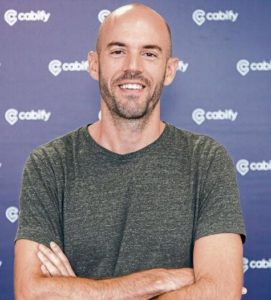
cabify founder
Image Source: portafolio.co

Antonio got the opportunity to travel to different locations because of his studies as well as different jobs. While roaming around the world, he faced a similar problem in every part of the world, hiring the taxies. Different places had different methods of hiring the taxies, and there was no fixed method to pay them. In some places, he got really cheap deals, and some places really amazed him with their high taxi fares. Also, the payment method being cash in most of the places always annoyed him.

This was the problem, he discussed with his colleagues, and his friends Adeyemi Ajao, who is also one of the founders of Tuenti, and Brendan Wallace. After talking to them, he realised that it was not only him who was facing the problem, but others were also the victims of the same issue.

Antonio started Cabify as “Executive” in 2011 and established the company’s first office in Madrid. Juan became the CEO of the company, Ajao and Wallace became his advisors. With Cabify, Antonio wanted to provide people with comfort and exclusive rides at affordable prices. The company collaborated with companies that would supply them luxury cars like Mercedes and Audi.

The Rise

Within six months of its inception, Cabify registered around 20,000 users. In its first round of funding the company raised $1.6 million, Black Vine, Belgian fund Emerge, and AngelList, being the major investors. The company used the money for its expansion and opened its offices in Mexico, Chile and Peru.

The company was started to provide high-end car-rentals, but in 2013, the company started Cabify Lite, that would provide mid-range taxi services to its users. In April 2014, Cabify hosted another round of funding led by Seaya Ventures and raised an $8 million investment. The same year, the Cabify app had been downloaded 100,000 times globally.

Rakuten, Japanese e-commerce, made a major investment in Cabify, helping the company to further expand its services and raise its revenues to $40 million in October 2015. With the Hoy No Circula program in Mexico, the company reduced its fares by 25% to provide people with affordable rides. This helped the company to generate 200% demands in the country.

The Success

In 2016, Cabify raised $120 million in another round of funding, where Rakuten alone invested $92 million in Cabify. After the funding round, the company started its expansion to Argentina, Brazil, Portugal, etc. The funding round made it value at $320 million in the same year. The company has started with 20 employees, and by 2016, 400 employees had joined the company globally.

In January 2018, with another round of funding, Cabify raised $160 million from its existing and new investors, including Rakuten Capital, TheVentureCity, Endeavor Catalyst, GAT Investments, Liil Ventures, WTI, and valued at $1.4 billion, becoming the unicorn. Today, Cabify is operating in 14 countries.

The Difference

Though the company has got a similar business model as of Uber and Didi, the company has got some features that have made it successful in very less time. The company has decided a uniform for the drivers to handle the rides professionally. Cabify charges its customers per kilometre. Unlike Uber and other companies as well, Cabify does not change its prices on the peak hours, or according to minutes and kilometres, a passenger has spent time in the vehicle. Also, as Uber makes it easy for people to earn extra money in the spare time, Cabify has made driving the main source of income for the drivers to keep the job serious enough for them, so that they can provide the best experience to the passengers.

Hootsuite

Hootsuite : A Platform to Manage All Your Social Media Accounts

Imagine being a food blogger, having dinner with your friends in a beautiful restaurant and putting up a story on Instagram, and at the same time, tweeting about the unsatisfactory service of that place. Well, as much as we love to keep us updated, we also enjoy letting people know what is going in our life as well. This isn’t pretty bad after all, is it? Many of us love following up the newsfeeds in social media platforms. But, there is already plenty of them, and at times, it really becomes a nightmare to manage them all at once. Some of the major social media platforms are Facebook, Instagram, Twitter and LinkedIn, and every nine out of 10 people are users of more than at least one social media platforms.

Ever heard of Hootsuite? People, who are smart enough, have already installed the Hootsuite app on their mobile phone, a platform that is programmed to manage all your social media accounts through a single interface. Created by Ryan Holmes in 2008, this social media management platform is serving throughout the globe witnessing more than 16 million users to date. Ryan Holmes along with Dario Meli and David Tedman launched the product in December 2008, and Holmes is still serving as the CEO of the company.

Dario Meli

Meli studied Commerce, followed by graduating with a degree in Digital Media from Vancouver Film School. He joined Invoke (founded by Ryan Holmes) in 2004 and served as co-CEO. Apart from co-founding Hootsuite, Meli is also a co-founder of BrightKit, Foodee and Quietly.

David Tedman

Ryan Holmes hootsuite
Image Source: forbes.com

Tedman also graduated from Vancouver Film School who is an Angel Investor and till date has invested in many companies like Hack Capital, FutureEngine, Hazel, Koho, Foodee (co-founder) and many more. Tedman is mainly focused on tech-startups and hence invests in the new start-ups of the tech domain.

Ryan Holmes

Growing up in a small farm in Vernon which didn’t even have electricity, Holmes really surprised the entire world with his passion-driven a successful career. Holmes started programming from a very young age and also won a programming contest in fifth grade. His first business was founding a paintball field which was followed by opening a pizza restaurant called Growlies in Vernon. But, this definitely wasn’t the aim of his life.

Holmes sold his restaurant in 1999 and moved to Vancouver and learned web development which helped him found his digital media agency, Invoke. And, it was in this agency where Hootsuite tool was built by the employees of Invoke to help the businesses to manage social media platforms for marketing. The product was built in 2008, and it detached from the parent company in 2009 after the Series A funding round.

History and Success of Hootsuite

In 2008, Hootsuite was launched as a tool on behalf of the company, Invoke, and it named the product as BrightKit. Initially, when the product was launched it helped a user to manage multiple Twitter accounts from a single interface. The user interface appeared in the form of a dashboard from where one can manage all the accounts.

In November 2009, the company expanded its management for Facebook and LinkedIn as well. In December 2009, Holmes raised a funding of $1.9 million from the Series A funding round, which led Hootsuite to establish as an independent company. The investors included Blumberg Capital, Hearst Interactive Media, Geoff Entress and Leo Group LLC. By the end of 2010, the company witnessed a major success, i.e., 1 million users. The figure becomes twice in the next year, along with raising $3 million in the capital. In 2011, the company also acquired TwapperKeeper and Geotoko.

2012 was a big year for Hootsuite, as it raised $20 million from VC Omers Ventures, acquired Seesmic (one of its competitors) and reached five million users. After this fund, the company’s net worth rounded up to $200 million. In early 2013, the users of Hootsuite already reached 7 million, and in August 2013, the company raised $165 million in Series B funding. In the same year, Holmes was named one of the most powerful people of Vancouver, with Hootsuite’s growth curve not showing any downfall anytime soon.

In 2014, Canadian Startup Awards, Hootsuite was named Employer of the year 2013 with users hitting the buzzer of 10 million. In this year, the company raised around $60 million and acquired Zeetl. By 2015, Hootsuite became a billion-dollar company with more than 1,000 employees. The next year, the company made a few more acquisitions, and in 2017, it crossed 15 million users.

Currently, the company’s headquarters is based in Vancouver, Canada, and it has offices in 13 locations around the world.

bluestacks

Bluestacks : A Saviour in the World of Android Application Management

The usage of smartphones over the past decade has increased at a really jaw-dropping rate. And with smartphones comes the innumerable android apps that keep us involved in this smart device for 24/7. Be it an app for editing photographs or a high-resolution game, Android applications are plenty in number. But at times, there can be plenty of issues while downloading the app on your mobile phone, causing the phone to hang, or maybe you cannot install at all, due to insufficient memory. Most of you can relate to this issue very closely.

But have you ever heard of Bluestacks? Well, for those who already know are chilling in their room playing Android games on their PCs, and for those who don’t, you just unrolled a mystery! Bluestacks is a software technology that enables users to install every Android application on their laptops and PCs, whether a Windows or macOS system.

Bluestacks is an America-based company that headquarters in Campbell, California, the U.S. The company was founded by Rosen Sharma, Jay Vaishnav, and Suman Saraf. It serves throughout the world, and apart from the App Player, the company has also launched GamePop (subscription service).

Rosen Sharma

Sharma completed his undergraduate course in Computer Science from IIT Delhi. He graduated in the year 1993 and made into Stanford University in the same year for PhD in Computer Science. Sharma also went to Cornell University and secured another PhD in 2000.

Before co-founding Bluestacks, Sharma from the very beginning maintained an impressive career. He co-founded VxTreme in 1995, followed by serving as the CEO of Ensim Corporation. He was in the board of directors for Green border, Ugenie, Teneros, Cloud.com and Teros. In 2003, Sharma became the president and CEO of Solidcore Systems and served the company for five years. Sharma also worked for McAfee before co-founding Bluestacks and left the company in March 2011.

Jay Vaishnav

A B.Tech graduate in Mechanical Engineering from the University of Mumbai, Vaishnav later pursued a master’s from IIT Bombay. After completing his M.Tech in 1982, he went to Texas Tech University to acquire an MS degree in Computer Science.

Vaishnav was hired as a software engineer by many companies like ESVEL, Cullinet Software and Tandem Computers. He also worked for companies like Junglee, Amazon and worked for McAfee and Solidcore as well.

Suman Saraf

Saraf is an ex-NITian who completed his B.Tech in Computer Science from NIT Surat. He worked for REC Surat, NetAcross Communications (Developer), Flextronics Software Systems and Hughes Software Systems. Apart from working for McAfee and Solidcore, Saraf also co-founded Blue Whale India in the same year when Bluestacks was launched.

Story of Bluestacks

Though the sale of smartphones has been increasing exponentially, it is impossible to access every Android app from your mobile phone. So, to overcome this shortcoming Bluestacks was founded in 2011. The concept behind Bluestacks was to make it easy to install every Android application on any PC.

Though the alpha version of the product was first released on October 2011, the founders started working on it way before the exposure to press. Since all the three worked together in two companies, they had the idea in their mind for quite a long time.

Success

Within two months after the launch of the alpha version, there were more than half a million downloads of the Bluestacks App Player. They had a great start, given that there wasn’t any prominent competitor of Bluestacks in the market.

After a couple of years from launching Bluestacks, more than 10 million downloads were witnessed which increased to 130 million by 2016. In the same year, Bluestacks also provided access to more than 1.5 million Android games, and 500,000 Flash games. In May 2013, GamePop was released, and in 7th June 2013, the company finally made iPad games accessible.

In 2019, Bluestacks 4 for the 64-bit version has been released, which is more efficient and also uses comparatively less memory than the other versions.

Strategies and Investors

By 2016, the company raised $30 million from major investors, like Samsung, Qualcomm Ventures, Intel and Andreessen Horowitz.

The company is currently focused on increasing the number of users, hence, the founders are attending conferences worldwide. The software is available for free, and Bluestacks also provides custom made tools and services for enterprises, Flipkart being one of the enterprise clients.

Pitney Bowes

You’ve Got Mail: Success Story of Pitney Bowes

Pitney Bowes is a company that sells mail machines, in a time when people rely more on email than on postal mail. Their business is supposed to, at least theoretically decline and hit an all-time low. Yet, their shares are rising and even hit the $26 mark per share, when ex-IBM employee Marc Lautenbach joined in 2012. So what helps a company that sells something the majority of the world sees as outdated, make revenue and keep afloat? Their shares have grown at a rate higher than that of Facebook‘s for the same time period. So what makes this possible, and how did Pitney Bowes get to the stage it is at now?

About the Founders

Arthur H. Pitney was born in 1871 and is an American inventor and entrepreneur who is known as the founding father of the modern postage meter. Pitney was responsible for filing a patent for the world’s first postage meter in Connecticut in 1901. He worked on the instrument for over twenty years, redesigning and perfecting the design along with his friend and partner Walter Bowes. As soon as the meter was given the green signal by the U.S. Postal Service, in 1920, the duo founded the Pitney-Bowes Postage Meter Company which is now worth over $6.1 billion.

Though Arthur Pitney was born in Illinois, he shifted to Chicago in 1890 and frequented the World’s Columbian Exposition in 1893. He worked as a clerk in a wallpaper store and his interest in mechanical engineering made him explore options to simplify the stamping process in his free time. By 1902, Arthur had gotten a patent for his gadget, even giving a free trial run in 1903. He first founded a company called the Pitney Postal Machine Company in 1902 and later renamed it to the American Postage Meter Company by 1912. The machine was not an instant success, and his financial crisis made him sell insurance as a side-business.

pitney bowes
Image Source: thehour.com

Meanwhile, Walter Bowes was a British industrialist born in Bradford in 1882. He moved to America and was working as a salesman for the Addressograph Company. In 1909 he bought the Universal Stamping Machine Company and initiated relations with the U.S. Postal Service to sell stamp-cancelling devices. It was around this time that he met Pitney, and decided to combine forces to form the Pitney-Bowes Postage Meter Company.

Founding Pitney Bowes

Pitney’s break came in 1919 when he was introduced to Walter Bowes, and by 1920, the duo formed the Pitney-Bowes Postage Meter Company. The first meter manufactured by the company became functional in November of 1920, thanks to legislation passed by the US Congress. By 1922, the meter was cleared for usage in Canada and England, and Arthur even won a Certificate of Merit from the Franklin Institute. After a dispute with Bowes, Pitney resigned in 1924.

Pitney served as the company’s inventor, and Bowes focused on lobbying to ensure the Congress would pass the required legislation. As soon as his labour bore fruit, the first meter was set up, and Bowes posted a letter to his wife, via the postage meter. In two years, the company grew, and over 400 such meters were issued for use, in the postage of mail over $4 million in value.

Soaring Success

After Arthur Pitney resigned in 1924, Walter Wheeler II became the general manager. Since then, the company has expanded exponentially, now providing services such as customer engagement and management, global e-commerce, shipping and location intelligence to over 1 million customers in more than 100 countries. The company now has more than 33 offices around the world, with operating centres in UK, Tokyo and Delhi, employing over 14,000 people from all over the world.

Pitney Bowes entered the postage-meter business in 1920, a time wherein sending a letter would set the sender back by only two cents. Today, the company has expanded and now has several divisions; a postal service for small and medium-sized businesses, and another that serves as a comprehensive shipping-management service. The latter brought in almost 57% of their total revenue, with Ebit earning standing at 35% of total income, at a time when Apple‘s Ebit margin stands at 30%. By 2003, the company was generating a profit of $498.1 million and by 2005, that earning grew by over 11%, hitting $5.7 billion in 2006.

A small idea that a clerk in an ordinary store in 1920, led to the formation of a company which became the world’s largest manufacturer of mailing equipment. With Pitney-Bowes controlling over 85 % of the American and 60% of the world’s postage meter market, it is safe to say that it has left behind a strong legacy. If anything, this success story is a testament to the fact that genius ignites in small details, and that it can be found in the strangest of places, in the strangest of times.