Your Tech Story

Founder

Wadhwani

Romesh Wadhwani, A Billionaire To Be Listed Among World’s Richest Tech People

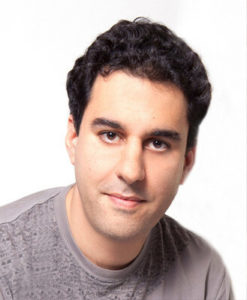
Romesh Wadhwani is one of the most influential and powerful people in the world of tech start-ups. He is famous for his start-up Symphony Technology Group (STG), a private firm that is created to invest and provide financial backups to the start-ups and operating companies. Wadhwani in spite of suffering from physical disability made it to one of the best engineering institutions of India and curved his career from scratch. He is also a great philanthropist who currently resides in Palo Alto, California, the U.S with a net worth of $3.3 billion.

The life story of Wadhwani

Romesh Wadhwani was born during the most vulnerable phase of India, that is, in 1947 and moved to India from Karachi when he was just an infant. When he was two years old, Wadhwani got affected by Polio. But, throughout his journey, Wadhwani proved that it was not a shortcoming for him. Initially, he faced a lot of trouble to get admission in the junior school but at the end, he made it to IIT Bombay where he studied Electrical Engineering. After completing his Bachelor’s degree, he went to Carnegie Mellon University, Pittsburgh to acquire a Master’s degree followed by PhD from the same university.

Wadhwani was never really interested to do a 9to5 job especially because he hated the thought of working for someone. So, after he graduated in 1972 he decided to stay back in America and start his own company. A lot of trouble came his way because of three main reasons, first he absolutely had no business idea given that he belonged to a family no business background and not acquiring a degree in
the business field, second, the start-up culture was absolutely not developed in Pittsburgh especially related to technology and third, he wasn’t even a citizen of America back then. streaming

Wadhwani overcame a lot of obstacles and finally convinced a venture capitalist to pay him $150,000 for his start-up. Wadhwani developed more than just a single start-up namely Aspect The success of Symphony Technology Group Development (software firm) and Symphony Technology Group. The former one was acquired by i2 Technologies in 1999 for $9.3 billion and the latter was founded in 2002. STG brought an immense amount of success to Wadhwani and currently, he plays the role of Executive Chairman. Since Wadhwani was a great philanthropist, he founded the Wadhwani Foundation mainly to focus on developing economies with huge potential. His main interest was in India because he noticed that when he moved to the U.S and started his own business the start-up culture of India was not developed. He, in one of his interviews, said that it would be impossible for him to start his own business had he planned to do it in India. So, he greatly focused on the economy of India and especially to the entrepreneurial domain.

The success of Symphony Technology Group

Wadhwani founded the firm in 2002 as an investment firm based on Palo Alto. STG is the parent company to other many products of Symphony like Symphony Teleca Corporation, Symphony Health Solutions etc. Symphony Teleca Corporation was formed in February 2012 after Teleca merged with

Symphony and started providing software solutions and Symphony Health Solutions was established in May of the same year after it acquired Healthcare Analytics. In the same year, the company also received a funding of $870 million and declared to invest in making better software solutions and services.

2013 for Symphony started with the acquisition of LexisNexis Screening Business from Reed Elsevier followed by Symphony Health Solutions named as the leading Research Firm in the market in May 2013.
In 2014, the company acquired Jobrapido, a firm known worldwide for talent acquisition; MDdatacor LLC, a data integration company that provided with patient’s information and many more.

This company was acquired by Symphony to form Symphony Performance Health. In September 2014, STG was named as the top R&D service provider by Zinnov and it also acquired McGraw-Hill Construction for $320 million. In April 2015, HARMAN acquired Symphony Teleca from STG which was pretty bad news for the company but STG coped up with it pretty well.

Apart from health solutions, STG also has many other products and released a few more in 2016. Some of the new products were demonstrated in 2016 HIMSS Conference.
In January 2017, the company acquired Fishbowl, a platform for the restaurant industry for $2 billion.
The company made a lot of acquisitions like this which is pretty impressive for a team with less than fifty members. The estimated annual revenue of the company is around $2.6 billion and the latest acquisition of the company was in Aril 2019 (RedSeal).

netflix

The Urban World of Netflix: Success Story of Netflix

There are very few internet-users who haven’t heard of Netflix. The streaming giant has grown so exponentially that it no longer needs an introduction. But long before it had become a staple tool that eats up hours of our time, Netflix was a DVD rental service that was on the verge of collapsing. So what happened? How did such a large turn of events occur? Read on to understand the highs and lows of Netflix, and how it got to where it is now.

About the Founders

Marc Bernays Randolph who was the co-founder and first CEO of Netflix is an American entrepreneur with a flair for business, having invested in various companies throughout his career. Randolph was born in New York, to Stephen Randolph, who was a nuclear engineer, and Muriel Lipchik. On his father’s side, he is related to both the legendary psychoanalyst Sigmund Freud and Austrian politician Edward Bernays. Randolph was a very active child and spent his summers working for the National Outdoor Leadership School. After finishing school, he went on to pursue Geology from Hamilton College, and soon after graduating took up a job at Cherry Lane Music Company.

Over in Cherry Lane, Randolph handled the mail-order operation and taught himself the basics of marketing in the process. It was while working here Randolph’s fascination with user data was born, and this would later prove to be the inspiration behind Netflix’s recommendation interface. In 1984, he founded an American chapter for the MacUser magazine and also co-founded MacWarehouse and MicroWarehouse, firms that handled mail orders a couple of years later.

He later joined Borland International in 1988 as a marketer, but soon left to pick up odd jobs in Silicon Valley start-ups, such as Visioneer, and Integrity QA. Then, in 1996 Pure Atria which was a debugging company acquired Integrity QA, and that was when Randolph met Reed Hastings, who was the founder of Pure Atria. Meanwhile, Wilmot Reed Hastings Jr. was born in Boston and attended the Buckingham School in Cambridge. Shortly afterwards, he joined the Marine and spent a summer at Marine Corps Base Quantico. He never completed his training, choosing instead to serve the Peace Corps.

After graduating, he joined the Peace Corps and taught in Swaziland for two years, and then returned soon after. In 1988, he graduated from Stanford University with a master’s in computer science and took up a job at Adaptive Technology. He left the company in 1991 and found his first venture Pure Software, which helped in troubleshooting other software. In 1996, the company merged with Atria Software, forming Pure Atria. It was while serving as the CEO there that he met his friend and colleague Randolph. In 1997, the company was acquired by Rational Software for a whopping $850 million.

Founding Netflix

In January 1997, when Pure Atria was on the verge of being acquired, founder Hastings planned on going back to school, while VP Randolph was looking for the next big launch. Well, as luck would have it, that next big idea turned out to be Netflix! The idea for the company was hatched on a 90-minute car ride that the duo took from Santa Cruz to Silicon Valley. For six months, Randolph kept pitching ideas to Hastings, till finally one day, they hit on the idea of having a movie rental company that operated via mail. The first thing the duo did was head down to a music store, buy a CD and send it to each other.

When the pair received the CD without any damages, the pair knew that this idea could indeed work.
What followed was a mad scramble to find investors, and this was something the pair found difficult as they were rejected over a thousand times during this process. Then Blockbuster CEO John Antioco reportedly even laughed the idea off, but the duo refused to give up, and slowly Netflix grew.

The pair started the company in 1998 by using their savings and taking money from Randolph’s mother, and IntegrityQA founder, Steve Kahn. Analysis of user data helped the team build a successful subscription-based business model which still works for the company even now. They tested out an early recommendation algorithm named Cinematch, which was met with positive results. The company had only 30 employees initially and slowly grew, introducing a subscription in 1999.

By 2000, Netflix had over 300,000 subscribers but was losing money badly. This led to Blockbuster offering to buy the company for $50 million, but the duo turned down the offer. The economic crisis of 2001 would then force them to fire around one-third of their 120 people workforce, but the spring of 2002 brought good times for the company, and the business started to grow.

Streaming Giant

The company went public in 2002 and sold 5.5 million shares at US$15.00 per share. The company earned its first profit of US$6.5 million in 2003, and had by then over 35,000 films in stock, and was shipping over 1 million DVDs every day. Randolph gave up the position of CEO to Hastings in 1999 to focus more on product design and development and then left the company in 2003, a year after the company went public. Hastings proved his mettle and grew Netflix to the stage it is at now, wherein it has a market value now exceeding $130 billion.

By 2005, the company acquired movie rights and were about to go public, but decided instead to opt for a streaming channel, which went public in 2007. In 2007, Netflix delivered its billionth DVD and slowly started the move to a digital format via the internet.

2010, the company expanded further by starting a streaming media and also grew beyond America, going international and offering services in Canada, Latin America and the Caribbean. Since 2012, Netflix has started taking content production and generation seriously and has pushed out several award-winning series through its Netflix Original tag. By 2016, Netflix had expanded to over 190 countries and had already released more than 126 original series and films.

Netflix is as of now the world’s sixth-largest internet company bringing in over $15.7 billion every year, with revenue growing at 35%. From being a company that was barely surviving to the behemoth it is now, Netflix has indeed come a long way, and along with that way it has faced constant challenges. But it is in overcoming those challenges by constant evolution and adaption that the secret to Netflix’s success lies. Netflix went from being a novel and crazy-sounding idea to a movie rental company and then morphed into a streaming and production giant that churns out award-winning content month after month. With over 151 million subscribers around the world, it is safe to say that the future looks bright for Netflix.

jugnoo

Story of Jugnoo : The Desi Uber for Autos

Over 5 million auto-rickshaws ply in India, and only 30% of them are properly utilized. This leads to a loss not just for the rickshaw drivers, but also for people looking for some affordable means of transportation. Jugnoo was established as a means to solve this problem by helping customers make use of affordable services for their daily needs all on a single platform. Beginning as an auto-rickshaw aggregator, the company revolutionised the way rickshaw service worked in India, and have now branched out into other fields and sectors by launching services such as Meals, Jugnoo Fresh, Menus and even Jugnoo Delivery. Here’s a look at how Jugnoo grew from being a small idea that two IITian’s had to a thriving business.

The Founders

Jugnoo was founded in November 2014 by two IIT-Delhi alumni, Samar Singla and Chinmay Agarwal. Samar always dreamt of becoming an entrepreneur and had already invested in other companies before founding Jugnoo as he hails from a business family. He tried his hand at entrepreneurship with his first venture Prodigy foods and then sold it to start Click Labs. His second outing, which he founded in 2011, with Chinmay as a partner was a profitable marketing automation software that used SaaS technology. While Samar is a physicist by his education, it is business that excites him, and that is why this serial entrepreneur decided to take a risk again with Jugnoo.

Chinmay Agarwal who serves as the Chief Operations Officer at Jugnoo has a BTech in Electrical Engineering from IIT Delhi. Following his graduation, he won the Erasmus Mundus scholarship, and so went on to do his Joint Masters in Advanced Robotics from Ecole, France and the University of Genoa in Italy. He later switched to business, embarking on his first venture, Click Labs with Samar, where he held the position of Chief Technical Officer. At Jugnoo, he wears multiple hats, helping Samar with both the operations and product side of things.

Founding Jugnoo

Jugnoo founders
Image Source: homebusinessmag.com

In 2014, while at Chandigarh, the duo launched Jugnoo at PECFEST and gave people free rides as a part of their marketing strategy. The idea caught on, and soon the pair realised that there was untapped potential in this sector. Samar and Chinmay then began connecting drivers and customers, and soon enough Jugnoo took shape.

One of the toughest challenges they faced initially was getting the rickshaw drivers familiar with the technology they employed. This introduction wasn’t always smooth, as the drivers came from an environment wherein technology wasn’t so well integrated. Hence, it took a lot of time, effort and dedication to explain the process to them, how the layout works, and how it would help them. Convincing the drivers that such a platform would be beneficial to them wasn’t an easy task, because these weren’t people who liked the idea of change. But, the duo persisted, and soon enough, people started seeing the application as a boon that would help improve their accessibility, and that was when the company started taking off.

Leading the Way

Soon enough, Jugnoo started earning a name for itself, and the first big investment came in the form of seed funding, when the company raised USD 1 million through investors such as Junglee Flywheel, BCG Group, Rapportive, and Kirloskar Bros. It followed this up with a Series A funding and was able to raise another USD 5 million. Furthermore, recently they embarked on a Series B funding round which raked in an additional USD 10 million with their main investors being big players such as Paytm and Snow Leopard ventures.

Within the first seven months, Jugnoo had amassed over 80,000 users and was completing over 1,500 transactions a day. They earned 80% of their total revenue from auto-rickshaw deliveries and bookings and was making more than $1,500 a day.

By 2016, Jugnoo had evolved and had branched into various verticals, growing into an end-to-end solution for their customers. The app has continued to grow at over 20% a month and boasts over 5 million registered users and an auto-rickshaw fleet that is 12,000 drivers strong. Jugnoo recently added the facility of UPI payment on their app as a means to promote a cashless economy that the government is pushing. They have also launched products in the B2B market, including the likes of Tookan and Juggernaut.

Unlike other start-ups that rush towards the metros once established, Jugnoo prefers to stay in Tier-II and Tier-III cities, because 80% of India’s population resides in such cities. Today, the company is rapidly growing and employs over 1000 people, across 35 cities and successfully completes more than 50,000 transactions a day. Jugnoo does more than making money for its founders. Rather, it has a social side to it as well, as it helps people get access to affordable transportation, while also uplifting the lives of millions who depend on menial jobs for their survival.

The Smart Taxi

The Smart Taxi : India’s Premium Cab Service; ‘Travel in Style’

There are so many companies and brands out there that businesses are forced to gain a client’s approval to provide them with their services. Since they have a wide variety of options, customers have the freedom to choose a company that best suit their needs and requirements. Gone are the days of absolute brand loyalty wherein a whole household would use one product, and one product alone. The future is about giving the clients what they need and also being courteous and polite while doing so, to improve customer experience. Delivering unique and pleasant customer experiences will help in retaining clients, and none understand this better than the new-age start-up The Smart Taxi. Here’s a look at how an ordinary middle-class man dared to dream and made his dream into a reality.

About the Founder

Dhruvam Thaker was born in Jamnagar, and shortly after his birth, his family shifted to Ahmedabad. While growing up, Dhruvam was a quiet, and an introvert boy who had a knack for mechanics and solving riddles. Being shy and apprehensive, he preferred the company of his cars and toys over other people. It was cricket that finally helped the shy Dhruvam make friends and get over his fear of interacting with people. His father is a retired government bank employee, while his mother is a housewife. He has two siblings, a brother and a sister, who have hearing and speaking disabilities.

Due to financial constraints on the home front, Dhruvam studied in a Gujarathi medium school till class 9. His interest in science led him to take up science in his 11th, and he aspired to become an engineer. The first setback he faced in life was failing his 12th-grade exams. He, therefore, used his 10th-grade results to join a diploma course in Nirma University, determined to get his life back on track.

The Smart Taxi Founder
Image Source: startupidols.com

As his love for automobiles and machines grew, so did his grades, to an extent where he came in second in his University exams. While in college, Dhruvam worked part-time jobs and did several odd jobs to make ends meet and to ease the financial strain on his family. Soon after, he got placed and joined an MNC in Bengaluru in 2008 and worked in process improvements and production engineering. In 2013, he came back to Ahemdabad and joined a job near his home. Apart from his job, Dhruvam started feeling the need to do something of his own. While this thought was always in the back of his mind, pressure from society and financial constraints prevented him from taking the leap of faith. But one day, he made his mind and quit his job without letting anyone know about it.

Founding The Smart Taxi

While working in Bengaluru, it required him to travel using taxis, and he often found taxi services to be lacking, when it came to customer experience. He realised that issues such as poor car maintenance, rude staff behaviour and late pickups plagued the taxi service industry, while he found the airline and hotel industry to be the opposite.

That is when he came up with the idea for a taxi service that provided the same hospitality extended by airlines and hotels all over the country. The idea stayed with him all the while as he moved to Ahmedabad and started his new job there. Finally, after four years of running the idea through his head, he decided to quit his job and make his idea a reality. Dhruvam chose Ahmedabad to be his company’s headquarters as he had a local advantage and knew the market there well. So, in September 2016, Dhruvam finally gave life to his long-standing idea of a luxury taxi service, and The Smart Taxi was born. He, and his brother, who is a graphic designer, quickly got to work, and created over 22 test logos, before finally choosing on their present logo.

Speeding Forward

The Smart Taxi now has a fleet of well-maintained cabs, which have all the state of the art features and installations. The taxis themselves are driven by courteous, experienced, polite and well-trained professionals. There is an elite group of people in India who don’t mind paying extra for premium service, and that is exactly what The Smart Taxi provides; exemplary service and outstanding customer experience. The Smart Taxi has several plans and offers, and rents cabs for both hourly trips and longer outstation journeys. Their cabs welcome clients with crafty speeches, play soothing music in the taxi to create a positive ambience, and even offer customers everything from water bottles to chocolates and snacks! Some of their taxis even have WiFi, cold drinks, a plethora of magazines and an Amazon Kindle to help the customer relax and enjoy their favourite book or novel.

The Smart Taxi began its journey with just one cab that Dhruvam used to drive. Since then, the company has grown and now owns a fleet of over 60 cars, including comfortable Sedans and powerful MUVs. The company has now expanded and functions in seven cities; namely, Ahmedabad, Vadodara, Rajkot, Jaipur, Pune, Indore, and Bhopal, with plans to expand even further. As the company is a bootstrapped startup, they make use of online platforms, like Google and Whatsapp to run their operations. The company also has a centralized booking centre from where they delegate bookings to local taxi companies or fleet owners. At present, the booking happens only online, but Dhruvam has plans to extend this functionality to other platforms in the near future.

Dhruvam remembers how during the initial days, he ran the entire company, doing everything from driving cabs to attending calls. But throughout his struggle, he never gave up, but rather kept pushing forward hoping that things will work out eventually. And work out it did, as within two years, the company has grown in every way with two out of every three customers coming back to them and 3 out of 4 even providing them with referrals. While a long road lies ahead for Dhruvam, it is safe to say that this shy, introverted mechanical engineer will surely leave his mark in the field of taxi service!

pebble

Pebble : The Biggest Kickstarter success story

Smartwatches are a new trend in today’s time, and above the trend, it is the most useful tool anyone can get. Apple smartwatch being the leader in the game is not alone, and the competition is tough with its rivals and tech giants like Samsung, Fitbit, etc. working on similar products. But before Apple or Samsung, it was Pebbles, that developed the idea of smartwatch and ruled like a boss. But getting on the top, and maintaining the position, are two different things. Despite, Pebbles is no more the leader of smartwatches, it, still, will be always be known as the pioneer in the field of smartwatch development.

Eric Migicovsky is the founder of Pebbles from the Netherlands. While studying engineering at the Delft University of Technology, he got the chance to migrate to the University of Waterloo as an exchange student. Migicovsky loved cycling but was annoyed how he had to stop for taking calls or to see the messages on his smartphone. Eventually, he came up with the idea of connecting smartphones with smartwatches and created the first model of such a smartwatch named InPulse with his friends.

Later, Migicovsky entered the Y Combinator business incubator program with his idea and was able to raise US$375,000 from angel investors including Tim Draper of Draper Fisher Jurvetson. Though the amount was quite big, Migicovsky successfully sold watches to Blackberry with the name Pebble Technology. But after its first successful business deal, the company was not able to attract more investors.

Pebble Founder
Image Source: uwaterloo.ca

To raise more money, Migicovsky put the product on the Kickstarter website with a target to raise $100,000. The idea behind the Kickstarter was to offer a huge discount on the $150 watches on first 200 pre-orders. The target was indeed achieved, and that too, just in 2 hours, and eventually, the Kickstarter was closed at $10,266,845, the project becoming the most funded project at Kickstarter to that point. The fundraiser also got a world record for the company of the most money raised for a Kickstarter project.

In January 2013, the company partnered with Foxlink Grou and produced 85,000 watches to be shipped to the people who had ordered through the Kickstarter. The watches were connected with both Android and iOS devices through Bluetooth and could show the incoming call, a text message, notification from Facebook and Twitter as well as events on the calendar. By the end of the year, the company had shipped around 300,000 watches. In the next three months, it shipped another 100,000 units of watches. And by the end of 2014, the company had sold a total of 1 million watches successfully.

In February 2015, the company released its $199 second-generation Pebble smartwatch named Pebble Time at Kickstarter campaign. Here too, the company made another record of raising $500,000 in 17 minutes and a $1 million in 49 minutes. In 48 hours the company had already raised a $10 million, and by the closing, it raised a $20 million breaking its own previous record of raising the biggest amount of money in a Kickstarter. The same year, an 86-year-old Japanese watchmaker Citizen offered Migicovsky a $740 million for buying the company, but he turned down the offer, as he was certain of the success of Pebbles.

Despite the company was able to raise a huge amount of money, it had started to struggle financially. New rivals came up for the business, Apple being the prime threat to the success of Pebble. Migicovsky played with the design of the smartwatch and brought new technologies like tracking the health through the watch. But the software used in the watches was not that powerful and the smartwatches failed to put the impact.

The Pebble, Pebble 2, Time, Time 2, and Pebble Core are some of the smartwatch models from Pebbles. In December 2016, the Pebble’s rival company, Fitbit, acquired the company’s assets, employees, and Pebble’s intellectual property, in a total amount of $40 million.

Despite the company has been acquired by Fitbit, Pebbles will always be known as the first, and the fastest funded project in Kickstarter history.

waze

Waze : The Israeli Build, Play, Monetize Mapping App that Acquired the Attention of Google

Though in the past, the paper maps were the most innovative inventions of its time and helped people with their long trips to new places, it was quite difficult to read those maps when they drove their cars. But since the technology has taken everything in its hands, now people can easily find their ways to new places using the GPS systems and via the digital maps, Google Maps being one of the favourites of all. But there is another map app named Waze which came all the way from Israel, which even attracted Google and made it buy the technology behind the app.

Ehud Shabtai is the founder of Waze, who was born and brought up in Israel. He completed his graduate degree in Philosophy from Tel-Aviv University, followed by a B.S. degree in Computer Science from the same university.

Shabtai founded Waze when he encountered a problem in finding the right routes and less traffic on them, as to reach different places in lesser time. For this, one of his friends gifted him a GPS. Though GPS was good for finding the direction, it was not able to give the information about the traffic on the roads.

Waze Founder
Image Source: complex.com

Being a software engineer, he decided to develop a new application, that would help people find the direction to various places, and the information about the traffic or any blockage on the roads due to any reason. Finally, in 2006, he developed and launched a new map app, named FreeMap Israel. The app included a database for the Israeli map and crowdsourced the information of the Speed Cameras. The application used maps from Mapa Ltd. But with the instant growth of the app, Shabtai also received a copyright claim from Mapa Ltd.

Mapa Ltd, at the same time, also offered to buy the app, but Shabtai denied the offer and removed all the Mapa maps from the platform. In 2008, along with Uri Levine and Amir Shinar, to commercialise the app, Shabtai launched the Waze app. The app was like a clean slate, that would collect data from different users, such that directions to a new place, which would get stored in the app’s database, and would help other people for their trips. The app promoted a new strategy of building, playing and monetizing for the app.

Waze encouraged people to enter the route they were travelling a 10th time or the first time, and the data would get stored into its database, such that other users could follow the most appropriate path to the same destination. The users would get points for drawing roads on the app, and earn points for that. Around 1,500 volunteers helped the app in mapping the geographical area of Israel, and Amir Shinar was one of those volunteers. Later, the company got the licensing for its data. In 2009, the Shabtai renamed the company as Waze Mobile Ltd.

In a round of funding in 2010, the company raised a $25 million, followed by another $30 million in financing in the next year. The same year, Waze was upgraded with new features that would help people report local events going on the streets and roads so that the users could take other routes.

After Israel, the company opened its next office in California, employing 10 people. In 2012, the app was incorporated with options for advertising businesses based on location.

Waze received a free promotion when Interstate 405 in California was to shut due to heavy traffic. For that, a local TV show invited the Waze team in order to help people find their way. This was a great help in advertising the service. Leading to that, the company even built a web interface for TV news stations, and over 25 TV stations in the U.S. only were using the same interface to broadcast the traffic information live on TV by 2013. In the same year, the app received the Best Overall Mobile App award from the GSM Association.

Though the company had denied for selling the technology to Mapa Ltd in 2006, it was sold to Google for $966 million in June 2013. At that time, Waze had 100 employees, and Google paid them around $1.2 million during the acquisition. Since then, Google has been adding up the Waze features to Google map. In 2017, with a partnership with Spotify, Waze offered the option to play the Spotify music, and likewise, users could now get the Waze directions on Spotify directly. The next year, the company even introduced support for Apple CarPlay. Waze even updated the iOS platform with Siri Shortcuts support in 2019.

Pandora, Deezer, iHeart Radio, NPR One, Scribd, Stitcher, and TuneIn are Waze’s partners for Audio Player. With Google partnership, Waze offered the Google Assistant integration as well as YouTube Music integration on the platform.

Today, the app is used to report and track the traffic, any other incidents, like the crashes, road blockage, events on the roads, etc. People can also modify the app data by registering to it, and even record voice over for the directions on the app. The success of Waze had made it regular with around 130 million users every month.