Your Tech Story

Yashica Vashishtha

Yashica is a Software Engineer turned Content Writer, who loves to write on social causes and expertise in writing technical stuff. She loves to watch movies and explore new places. She believes that you need to live once before you die. So experimenting with her life and career choices, she is trying to live her life to the fullest.

ASUS Released the Fix for ShadowHammer Malware Pushed on Thousands of Computers

According to a recent report from Kaspersky, more than a million Asus computers running on Windows operating systems are under a malware threat. A malware named ShadowHammer has been injected to a pre-installed Asus utility software by some unknown hackers, making the software vulnerable to hack attacks.

asus malware

According to the Kaspersky, over 57000 Asus laptop and desktop users reported the issue, and the attack took place between the month of July and November, last year. However, Asus denied the number of reported issues saying that the number of affected laptops is lesser and now, it has finally developed the fix for the malware.

As per the reports, the hacker planted the malware through a back door to the Asus Live Update Utility software, such that whenever there is a new update for the system, the malware is pushed into the system as a new update itself. The size of the malware has also made equal to the utility software.

The company has released a patch in the form of an actual security update, which the users can download through a Live Update software tool. The Live Update software tool has also been updated to the V3.6.8 version. Also, the company has rolled out an online security diagnostic tool that can be used to scan the system for any malicious software.

“We have also updated and strengthened our server-to-end-user software architecture to prevent similar attacks from happening in the future,” stated Asus in a statement.

Though the Taiwanese laptop maker Asus unknowingly pushed the malware to the systems of its customers, it was expected from the company to be apologetic about the matter. The company stated in the news post, “Asus customer service has been reaching out to affected users and providing assistance to ensure that the security risks are removed.”

Asus has also asked the ones with the infected Asus systems to take the backup of their data on the computer. They can fix their systems by simply resetting the system or reinstalling the Window to their computers, as it’s a software-level malware attack.

Gmail Finally Releases its AMP-based ‘Dynamic Emails’ for its G-Suite User

After a year-long time, of the announcement, Google is finally has released the AMP support in Gmail for its G Suite audience. The company announced that it is going to release the beta of its fast-loading AMP tech to Gmail starting from today. The new feature is specially designed to provide users with more interactive messaging experience.

According to Google, these Dynamic Emails will give the user more web-based interactive encounter such that the user can fill out forms, browse image carousels, RSVP to an event, reply to Google Docs comments or even browse catalogues, without leaving their inbox and following any external link to a separate website.

The AMP (Accelerated Mobile Pages) technology will help Gmail to keep the content fresh and latest information will be displayed on the screen every single time, like new job recommendations, latest comment threads, product listings or social network recommendations within the email irrespective of the time the mail was received.

According to Google, its other products like Google Docs will also automatically gel with the new AMP feature and can be embedded in the messages directly. Hence, the user will not be receiving new emails every single time they are mentioned in a document, rather the thread will get refreshed every time and the user will be able to reply to the mentions from within the inbox.

For the dynamic emails, the company has partnered with other social networks including Doodle, Pinterest, Booking.com, etc. For now, Google has only rolled out the new AMP feature for its desktop G suite users, but according to the post-Google released on Tuesday regarding the same, the mobile version of the new dynamic emails will also roll out soon.

George Hotz : The First Person to Unlock the iPhone & the Founder of AI Startup comma.ai

iPhone indeed is the most loved smartphone and was one of the first keyboard-less mobile phones available in the market. iPhone is not only known for its unique features, but also for the high security it provides to its users. But there was a 17 years old hacker, George Hotz, from New Jersey, who unlocked the newly launched iPhone, allowing the phone to be used with other wireless carriers and became the first person to do so. He is not only a famous hacker but has also founded his vehicle automation machine learning company named comma.ai. Also known as Geohotz, even having hacked major security programs, Hotz has always said that he never support hacking into someone else’s server and stealing databases of user information.

Early Life

Hotz was born on 2 October 1989 in Glen Rock, New Jersey, as George Francis Hotz Jr. He completed his high school from Bergen County Academies in Hackensack, New Jersey and attended the Academy for Engineering and Design Technology. Hotz also attended the Rochester Institute of Technology and Carnegie Mellon University for a brief time.

Being a brilliant student and always ahead in every competition in science and technology in middle and high school, he even won the $15,000 scholarship at the Intel International Science and Engineering Fair in 2007.

Hacking Career

Hotz was always interested in programming and had developed his interest in hacking. In August 2007, only after two months of the launch of the iPhone, Hotz was able to unlock the iPhone. After doing so, he became the first person to unlock an iPhone. Also in 2009, he released a jailbreaking tool for the iPhone 3GS on iPhone OS 3.0. Though in 2010, he discontinued the jailbreaking software.

George Hotz
Image Source: spectrum.ieee.org

In December 2009, he started working on a new program to breach security on the Sony PlayStation 3. by January 2010, he was able to create a thesis on the hack, but soon in July 2010, he abandoned the idea of entering the security of PS3. But another hacking group fail0verflow also started working on the same, generating the root signing and encryption keys for PS3.

Hotz too published those root signing and encryption keys over his website that led to a serious lawsuit from Sony for both Hotz and fail0verflow. After many court sessions, Sony and Hotz settled the matter outside the court on the condition that Hotz will never try to do any hacking work on Sony products.

Career with Facebook and Google

Hacking had always been his hobby, and his early achievements and knowledge of security algorithms landed Hotz a job with Facebook in 2011 for an unknown role.

Later in July 2014, Google hired Hotz to work with its security auditing team on Project Zero. He stayed in the team for five months and developed an open source program, for dynamically analysing application binaries, named Qira.

In January 2015, he joined Vicarious.com where he worked for 7 months and developed AI algorithms for the company.

Founding Comma.AI

In September 2015, Hotz founded comma.ai, that works on building AI based vehicular automation technology. In 2016, the company built a working self-driving Acura ILX. Later, the company started working on Comma One, a $1,000 software kit that could allow some cars to operate semi-autonomously. But after receiving a special order from the National Highway Traffic Safety Administration, the further production of the software was cancelled.

During the same time, he was also in talks with Elon Musk to sell his autonomous software for Tesla cars, but the talks never met any conclusion.

On 30 November 2016, the company open sourced its self-driving car software. The open source driving agent from the company runs on some of the car models from companies like Honda, Toyota, and GM, making those models semi-autonomous. Reportedly in 2018, the company served over 4,500 drivers.

Personal Life

Hotz aka Geohotz has been always a keen learner for AI and software development. In 2004 he participated in the ISEF competition in Portland where he demonstrated “The Mapping Robot”. He was among the finalists and got featured on the Today Show and Larry King. He also developed another project named The Googler in 2005 and participated in the ISEF competition with the project, here too, he was one of the finalists.

In 2008, he was among the top 10 Overachievers under 21 listed in the March edition of PC World magazine. In 2014 he won the DEF CON CTF tournament for the second time in a row.

On 14 September 2018, Hotz stepped down from the post of the CEO of the company and became the Head of Research Team.

Apple Announced a New Sleek Titanium Built Credit Card Offering Rewards & Cashbacks to its Users

Apple hosted an event on Monday at the Steve Jobs Theater in its Apple Park campus headquarters, in Cupertino, California. The event included many new launches along with Apple’s new credit card named Apple Card.

Apple has been a leader in the field of computers and smartphones, and now, it has put its steps into a new business line with the new credit card, i.e. finance. For the financial services, the company has partnered with Goldman Sachs and Mastercard. According to Apple, the Apple Card will not have any annual fee, international fee, over-limit fee or late charges and will provide the lowest interest rate to its users.

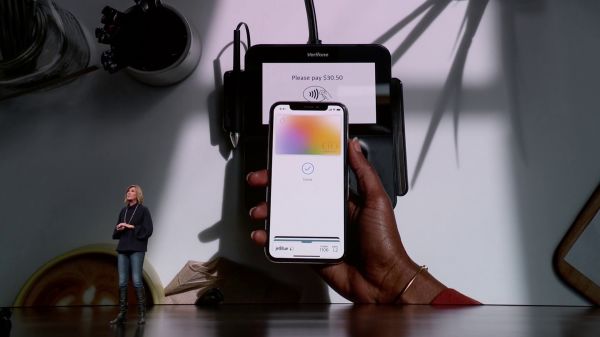
Apple Card
Image Source: cnbc.com

It is an off-white coloured credit card, with all new sleek design and is build with Titanium. Apple is trying to provide full security for the transactions through the card and has stripped off all the numbers like the card number, CVV, expiration date, or signature bar on the back from the card.

The company has also introduced an app to function in sync with the card, as like any other credit cards, the card can be used to make payments physically as well as digitally. The user just needs to signup for the new Apple card with their iPhone, and they are good to go.

After signing up for the card, the user can see a rainbow gradient card on the screen. For every digital transaction, the digital wallet will ask for face Id or touch Id along with a secure pin. The users are able to easily pay their dues for the Apple Card through the app, where they are given multiple payment methods. The users will also be provided with 2% cashback with transactions on Apple pay and 3% cashback on Apple Store purchases using the app. And for the physical card, the cashback on every purchase will be 1% of the purchase.

The app will also allow the users to track their transactions through the card on the app. The transactions will be segmented into categories like ‘food and drinks’, ‘entertainment’ as well as ‘shopping’. The app will show all the details about the user’s spending through the card, mentioning the time, date, merchant and the location of the transaction. The user can also track the weekly and monthly spending summary through the app.

The card is available for users all around the world, and the users will also receive 24/7 customer support from Apple. The new Apple Card is a creative and innovative kind of credit card, that like every other Apple product is on the way to become a status symbol.

Houseparty : A Social Network that Claims to Connects People in More Real Way

Social media not only provide you with the means to connect with your dear ones but is also a place where you can share your thoughts with the world. But with the rise of social media, the pressure on the users have also increased, and the originality of connecting with the people close to them has lost somewhere. Houseparty is also a social network which has been specially built to solve this problem.

The founder of Houseparty Ben Rubin and Sima Sistani, came together to build a platform, which is solely for the people who want to spend real time together even being physically apart. The app allows a group video chat of up to eight people, giving the feel similar to friends sitting in a living room.

The Founders

Ben is an entrepreneur of Israeli descent, who had joined the army when he was 18 years old. He had always intended to become an architect and even studied architecture but ended up building mobile applications.

When Ben was in the third year of his college, he was introduced to the famous social media platform Instagram, which became the inspiration for his first project ‘Yevvo’. Yevvo was a social media platform, which became popular in no time. Ben started adding new features to the app, but was unable to handle the pressure and soon he had to shut down the app.

Next startup app that Ben came with was Meerkat launched in February 2015. Meerkat was a social media app that enabled its users to tweet live videos and comment on the tweet.

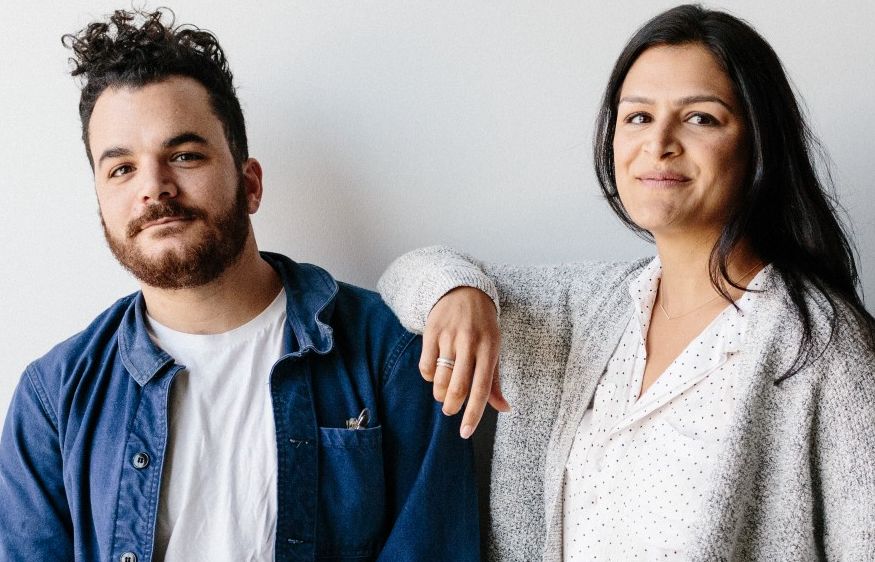
Houseparty co-founders
Image Source: greylock.com

Sima Sistani is an MBA from the Kellogg School of Management, Northwestern University, and was working as the head of media at Tumbler when she met Ben. The two got introduced through a common friend. Sima was already aware of his startup Meerkat and was quite impressed by the success of Meerkat.

After four months from the inception of Meerkat, Ben and the co-founder of Meerkat, Itai, realised that the tweeting live video was only working for people who were famous or were celebrities, and the common people were not getting much of the benefits from the service. At the time Sima had also joined the team Meerkat.

Founding HouseParty

The problem with meerkat was that it was not applicable for the common people, so it led the two future co-founders, Ben and Sima, brainstorm about the concept of live video streaming for the common people. Since it was clear that not many people are interested in watching common people live stream, they reached to the conclusion that why not make the live streaming more personal?

The answer to this question was the private synchronous social network Houseparty. In the first six months of its development, Sima went to different schools to test the features of the app and Ben was constantly working on adding relevant features to it, including personal notifications and locked room.

Houseparty is not only providing its service to common people for live video chats but also offers the advertiser a cheaper platform to advertise their services and products.

By September 2016, after a rewrite of the code, the company was serving over 1 million people in all 50 US states and other countries. Houseparty is mostly focused on Generation Z: 60% of its users are 16 to 24 years old. Currently, Ben is serving the board of the company, and Sima is promoted to the post of CEO of the company, who previously held the position of COO in the company. Till now the company has raised over $70 million from Silicon Valley investors and is growing at a rapid rate. For the success of Houseparty, Ben says that he is happy that his first two startups were failures and he came up with a more feasible business model, that has its own future.

Netflix is Testing Cheaper Mobile-only Subscription Plans in Selected Countries

Reportedly, Netflix is testing its cheapest mobile-only subscription plan in a few selected countries, including India. The company will be reducing the costs of its plans up to 50 per cent, i.e. the basic plan provided by Netflix will now cost $3.63 a month.

netflix
Image Source: fortune

The cheapest Netflix plan in India costs Rs. 500 per month, which will now cost Rs. 250 per month, maintaining the quality of videos purely SD. The cheapest plan will work only on a single mobile device, and there is no option for HD video streaming.

Even though the prices have been reduced by 50 per cent, Netflix still is the most expensive streaming plan in India. One of Netflix’s competitor in India, Hotstar offers a yearly subscription of Rs 365, which is way cheaper than Netflix, offering Re. 1 per day streaming. On the other hand, Amazon Prime is available for Rs 1000 per year, Zee5 for Rs 1188 per year, and AltBalaji Rs 400 per year.

“We will be testing different options in select countries, where members can watch Netflix on their mobile device for a lower price, and subscribe in shorter increments of time. Not everyone will see these options, and we may never roll out these specific plans beyond the tests”, stated a Netflix spokesperson.

However, the original content has been tempting many Indians, who are already paying the ‘expensive’ monthly charges to access it, and Netflix itself has expressed earlier that the company is not facing any pricing issues in India. So people who are already using it will be the happiest, and the ones who wanted to get the subscription, but were not convinced to pay the costly fee every month, may also get their hands on it now.

But, currently, the cheaper plans are only being tested, and only a few Indians have got access to them. And, only if the tests go right, the company will make those changes permanent. Till then, we can only hope for the prices to lower down for every subscriber.