Your Tech Story

Yashica Vashishtha

Yashica is a Software Engineer turned Content Writer, who loves to write on social causes and expertise in writing technical stuff. She loves to watch movies and explore new places. She believes that you need to live once before you die. So experimenting with her life and career choices, she is trying to live her life to the fullest.

Trip Hawkins : Silicon Valley Entrepreneur & the Founder of the Gaming Pioneer Electronic Arts

“I’ve never been content with a straightforward job,” says Trip Hawkins, the American entrepreneur and the founder of startups like Electronic Arts, The 3DO Company, and Digital Chocolate. This may be the reason how a person who was once handling one of the most successful video game companies (EA), left it to pursue a new challenge of running a startup (3DO) all over again. Trip Hawkins, who has registered his name as the eighth person into the ‘Academy of Interactive Arts and Sciences’ Hall of Fame for his contribution to the video game industry, believes that if one wants to succeed in life, he has to be ready to fail first.

Hawkins was born as William Murray Hawkins III on 28 December 1953, in Pasadena, California, U.S. He was a bright student and a video game lover. According to Hawkins, every time he played video games, it switched on his brain. Therefore, eventually, it became his passion.

trip-hawkins
Image Source: playworks.org

After completing his high school education from a local school, he entered Harvard University. Interestingly, here he majored and graduated in a self-designed course, Strategy and Applied Game Theory.

As soon as he completed his college, he joined Apple Inc. as the Director of Product Marketing in 1978. He was one of the first fifty employees of Apple. During this time, the company saw its first most successful years and also filed for its first IPO in 1982. The company also registered its name among the Fortune 500 companies and increased the number of employees to one thousand people.

In 1982, Hawkins decided to start his own financing venture named Amazin’ Software and met Don Valentine of Sequoia Capital to talk about the plan and raise funds for it. On the advice of Valentine, Hawkins left his job at Apple and shifted to a Sequoia office for his startup. On 27 May 1982, Hawkins started Amazin’ Software investing US$200,000 from his personal savings.

At the same time, he started working on his next startup Electronic Arts and hired a few ex-fellow colleagues from Apple. By November 1982, the company had hired over eleven people, and it was relocated to San Mateo.

Hawkins incorporated Electronic Arts on May 27, 1982. In the beginning, the company functioned with name Amazin’ Software, but most of the employees did not like the name and suggested for SoftArt, but eventually, ended up naming the company Electronic Arts. The company started building video games, and their marketing strategy included dealing with retailers directly. It was a great marketing move, and the company started running successfully.

Hawkins has always called the developers artists, and that is why the company name includes Arts in it. The next different thing that he chose to do in marketing was to give photo credit to his game developers on the game covers. In fact, the company released its first ever video game ad featuring the developers in it.

In 1987, EA released its first internally developed game named Skate or Die. The mega-hits from EA are Madden NFL, The Sims and Rock Band. In the early 1990s, the company started producing console games for the Nintendo Entertainment System.

In 1991, Trip Hawkins stepped down as EA’s CEO, after successfully leading the company for 12 years, to found another startup named 3DO. Currently, the company headquarter is located in Redwood City, California and Andrew Wilson heads it as the CEO.

3DO was a video game console company, which in 1993 released the most powerful and expensive gaming console of that time, costing US$599. Being at a higher price, the company failed to sell the gaming console, and eventually, stopped making them. Later in 1996, the company started producing video games that also failed to support the revenues, and it became bankrupt.

After shutting down 3DO, Hawkins went to found another video game company named Digital Chocolate, in 2003. The company produces video games for handheld devices. After serving the company as the CEO for over 9 years, Hawkins stepped down from the position in 2012.

In the same year, he joined the board of directors of Israeli technology company Extreme Reality, and in 2013 became the senior advisor to the board of directors of NativeX. He also joined the advisory board at Skillz, in 2014.

According to one of his interviews, when he was asked about if he was not an entrepreneur what would he be? He answered that he would have been a professor as he assumes himself a natural teacher.

In 2016, he joined the University of California as Professor of Practice in the Technology Management Program.

Charles Simonyi : American Computer Businessman & the Genius Behind Microsoft’s Word-Excel

Microsoft has a history of great inventors and developers to its credit. One of such inventors is Charles Simonyi, who is the no. 40 employee of Microsoft and is also the man behind Microsoft’s most profitable products, including Word and Excel. Though he is famous for his inventions in the programming and development industry, he is also known as the only space traveller who has been to space twice. He is a philanthropist and a supporter of arts and science initiatives, too.

Early Life

Simonyi was born on 10 September 1948, in Budapest Hungary. His father Károly Simonyi was a Hungarian physicist and writer, who also worked as a professor of electrical engineering at the Technical University of Budapest.

Charles Simonyi
Image Source: hungarytoday

It was during his high school when he started working part-time as a night watchman at a computer laboratory and developed an interest in computers and programming. One of the computer engineers, from the lab, also started teaching him the basics of computers and by the end of his school, Simonyi mastered a few programming languages.

When he was 17, he moved to Denmark with a short-term visa and started working for A/S Regnecentralen. As a result, he got his visa extended, and he never went back to Hungary.

Career

In 1968, Simonyi moved to the US and joined the University of California, Berkeley, to pursue a B.S. degree in Engineering Mathematics & Statistics. As soon he completed his education, he got the opportunity to work with the Xerox PARC, where he worked in the development of one of the first personal computers Xerox Alto. And eventually, ended up inventing the first WYSIWYG (what you see is what you get) text editor named Bravo, along with his co-worker Lampson.

In 1977, while working at Xerox, he received a PhD in computer science from Stanford University.

In 1981, Simonyi left Xerox and was hired by Microsoft to start an applications group at Microsoft. The first application he built was a WYSIWYG word processor, and Microsoft’s most valuable applications Word and Excel are the outcomes of the same application. It was Simonyi who introduced Microsoft with the concept of metaprogramming and OOPs which he learnt at Xerox. He also developed the “Hungarian notation convention” for naming variables, which was the part of his doctoral thesis and has been widely used inside Microsoft.

In 2002, Simonyi left Microsft to found Intentional Software, a company marketing the intentional programming concepts, along with co-founder Gregor Kiczales. The company works on developing designs tools and platforms, which programmers focus on capturing the intent of users and designers.

Simonyi was awarded the Wharton Infosys Business Transformation Award for the industry-wide impact of his innovative work in information technology, in 2004. Microsoft acquired Intentional Software in April 2017.

Personal Life

Simonyi married 32 years younger Lisa Persdotter, in November 2008, in a personal ceremony. He lives in Medina, Washington, in his modern design villa, Villa Simonyi. He is fond of collecting paintings.

During 2006, Simonyi became interested in becoming a space tourist and took proper training for that. He signed agreements with the space tourism company, Space Adventures, Ltd., for a ten-day mission to the International Space Station (ISS) and rode a Soyuz TMA-10, on 7 April 2007, along with two Russian cosmonauts. On 26 March 2009, he went on his second trip to space aboard Soyuz TMA-14, becoming the only space traveller to have gone into space twice.

Simonyi and his wife both actively participate in philanthropy works, and in 2003 started a charitable organisation The Charles and Lisa Simonyi Fund for Arts and Sciences, to which Simonyi has donated over millions of dollars. In January 2004, Simonyi also started the Charles Simonyi Fund.

As an inventor, Simonyi currently holds 11 patents to his name.

Huawei Recorded a 25% Rise in its Revenue Despite US Efforts to Curb its Business

Huawei has just revealed its last year’s revenue and with that, it has entered the same league as Google and Microsoft, surpassing the $100 billion milestone. The two companies had reported a revenue of over $100 last year and with a 20 per cent annual rise in the profits, Huawei has also entered the multinational technology companies in the US$100 billion club.

huawei
Image Source: news.cgtn

Although Huawei has been facing some issues in running the business in the other countries, and came under siege by the US government for the functioning of its 5G network in the country last year, the recorded revenue shows that if the company would be functioning fully in the US, it would have earned much more profits.

Huawei is the third largest smartphone maker, and most of the revenue it earned was from its smartphone sales. The smartphone division of the company has made a 45 per cent of share in the profits. The company is also the biggest telecommunications equipment seller in the world, and this very division contributed almost 50 per cent in the profits.

Although the contribution of the carrier technology division of Huawei fell by a 1.3 per cent and contributed the least, this is considered as an effect of the US opposing other countries use the Huawei equipment in their telecommunications networks.

Along with the US, Australia has already banned the use of Huawei equipment. And, due to the Huawei’s cybersecurity practices, UK and EU are also considering banning the use of the company’s equipment in next-generation networks.

The company is blamed for spying for the Chinese government by the US government, which the company has been denying saying that its products are no threat to the national security of other countries. Still, the company has confirmed that it has signed a few contracts for its 5G networks in Europe, the Middle East, and Asia-Pacific.

The recorded revenue shows the fastest growth of the company in the last two years, and with the new contracts, the company may see some more growth in the coming future.

WhatsApp to Soon Roll Out a Fingerprint Authentication Feature to its Android Users

According to WABetaInfo, WhatsApp may soon release a fingerprint authentication for its Android users along with the much awaited ‘Dark Mode’ feature. The company had been testing the beta version of the dark mode feature for Android for quite some time, and now a report is surfacing confirming the release of the same.

whatsapp
Image Source: pymnts.com

WhatsApp is testing its beta app version number 2.19.82 and has submitted a new feature report to the Google Play Beta Program, which also includes the ‘dark mode’ feature in it. Facebook has already added the dark mode feature to its messenger, and according to the reports it soon will be bringing the feature to its other messaging app WhatsApp.

The dark mode has also been adopted by apps like Twitter, Reddit, Telegram, etc. The feature helps reduce the battery consumption for the AMOLED and OLED smartphones by reducing the full display pixel utilization. The company has also uploaded a screenshot along with the report that shows the dark mode in notifications settings, account settings, data and storage settings, and chat storage.

Also, WhatsApp has already provided its iOS app users with Face Id as well as Touch Id authentication for both iPhone and iPad, and now the Android users will also be able to use the Touch Id feature to authenticate their WhatsApp.

The new security feature has been spotted in the Android beta version 2.19.83. By default, the fingerprint authentication will be disabled and to enable the Touch Id for WhatsApp the users can select the option ‘Use Fingerprint to Unlock’, in the Privacy option under Account settings. Then the users will be asked to register their fingerprint for the authentication process. And, then the users can select the time span after which WhatsApp should lock, when not in use, i.e. after 1 minute, after 10 minutes or after 30 minutes. After enabling the fingerprint authentication, users will have to unlock the app with their touch Id, every time they would want to use it.

Though most of the Android users are already using the third party app locks for WhatsApp, an inbuilt authentication feature will add an extra security zone, and the users can ditch the other apps for the security.

The company is also testing and is about to roll out features including frequently forwarded and forwarding info and the audio file name in chat. The frequently forwarded and forwarding info feature will show the number of times a message has been forwarded, which may help in opposing the spread of fake news. Also, the audio file name in chat will show the name of the audio file sent over WhatsApp chat.

Spotify is Testing a New Premium Discounted Subscription Plan for Two Under the Same Roof

As reported by a Redditor u/Hasztagg, from Poland, Spotify has started a new premium subscription plan for couples, which is also suitable for two individual who wants to save some money on Spotify subscription plan. The company already is hosting a Solo Spotify Premium and a Spotify Family premium subscription plan, and now it seems that the company is about to launch a halfway subscription plan between the two services.

spotify
Image Source: complex.com

The most interesting thing to note is that the new subscription plan will be launched with a new playlist called Duo Mix similar to Spotify’s existing Discover Weekly or Daily Mix playlists. The playlist will be generated on the basis of the habits of the two subscribers. The plan will also include two tempo options, i.e., Chill and Upbeat, and the users can choose any one among the two, accordingly.

With the help of the Share Playlist feature, the two participants can also share their playlists with each other. To get access to the Spotify’s Duo Premium plan, it is necessary for the two subscribers to have a similar address. While subscribing for the plan, Spotify will ask the two for their address, same as it asks the Family Premium plan subscribers, during the subscription process, and the address has to be same.

Currently, the Solo Spotify Premium plan costs a $9.99/month, and the Family Spotify Premium subscription is for $14.99/month. Reportedly, the Spotify Premium Duo will be worth $12.49/month, which definitely is a cheaper option for two individuals living at same the place. For now, the service will only be available in five countries, including Colombia, Chile, Denmark, Ireland and Poland.

“The pilot for Premium Duo is part of Spotify’s commitment to continuously explore new ways to improve the Premium experience. We routinely run a number of pilots and programs to improve our user experience, which can pave the path for broader changes to our product or just give us important learnings.” said a Spotify spokesperson in a statement.

According to Spotify, the new Duo Premium is available for new as well as its existing users. The existing users can easily switch to the new subscription plan and their Premium music, as well as the playlists, will automatically be shifted to their new subscription account.

Since having a similar address is essential to opt for this plan, it is more ideal for flatmates and couples. For now, the company is only testing the plan in the mentioned five locations and has not stated on when it will be available worldwide.

Magic Leap Opens Up New Options for People to Buy its AR Headsets, Including From Selected AT&T Stores

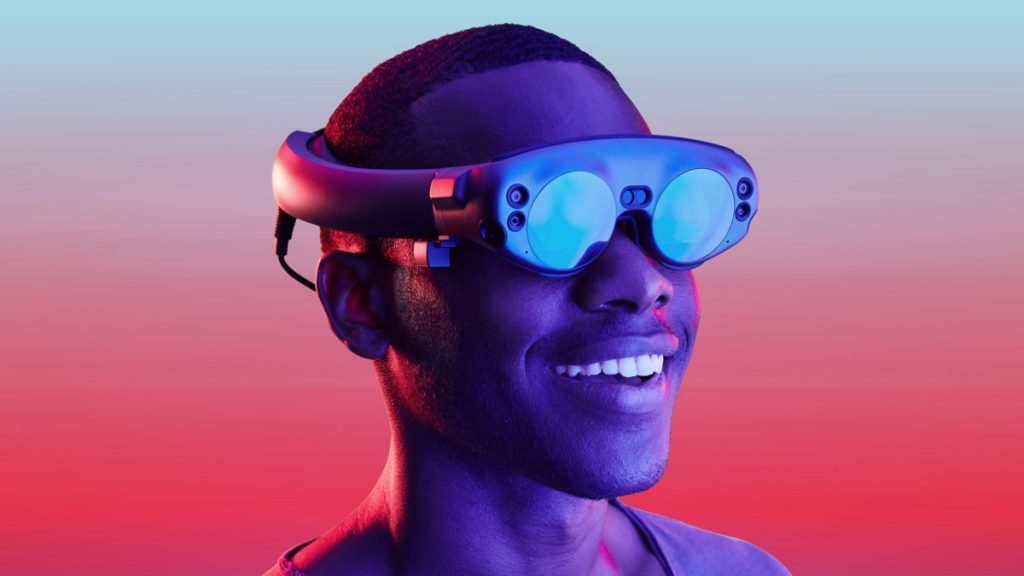
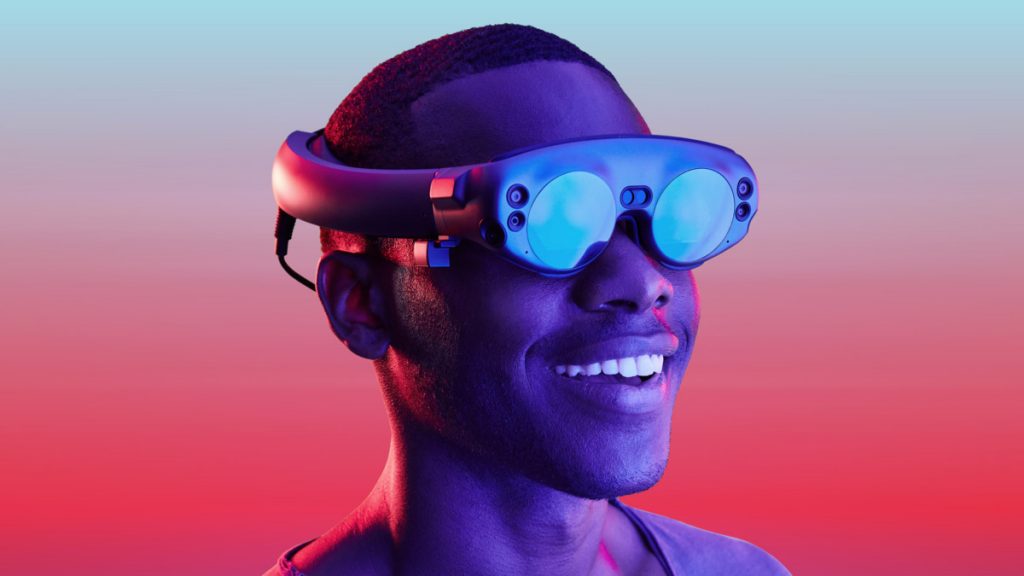
Many of you might have heard of augmented reality headset Magic Leap One that the company Magic Leap launched last year. The company has partnered with AT&T and has announced that the company is going to exclusively sell this mixed reality headset in some of the flagship AT&T stores in Boston, San Francisco and Chicago starting from April 1st.

magic leap
Image Sourec: magicleap.com

Though many early buyers have already got their hands on the Magic Leap One Creator Edition AR headset a few months ago, the company has opened up new options for its buyers to get access to the same in the coming month. In fact, the company has also teamed up with the HBO to deliver the Game of Thrones fans a next level experience with this AR headset, i.e., the company will demo the GOT White Walkers through the MAgic Leap One at the AT&T stores. As the GOT final season is also about to premiere in April, teaming up with HBO is a clever marketing move that the company has opted for.

The availability of the Magic One headset won’t be right away. It will be available at the Boston store on Boylston Street on April 1st, at the AT&T store of the Chicago location on Michigan Avenue from 3rd April and from the 5th April, the headset will be made available at the AT&T store of the San Francisco location at 1 Powell Street. People will also be able to buy the headset online from the AT&T website from the 5th of April.

The Magic Leap One is a $2,295 AR headset, which is on an expensive side. But if you are also interested in buying the same without paying such a big amount at once, the company is also offering people to buy the headset on affordable monthly instalments.

Though there are already many other VR headsets available in the market which are exceptionally great at user experience, including Oculus and Valve, Magic Leap is also trying to hit the market with a new experience. But still, it has not made much of the efforts as there is not many great gaming contents on Magic Leap. So there are lesser reasons people would invest such a huge amount on Magic Leap One except to explore the new technology.