Your Tech Story

Yashica Vashishtha

Yashica is a Software Engineer turned Content Writer, who loves to write on social causes and expertise in writing technical stuff. She loves to watch movies and explore new places. She believes that you need to live once before you die. So experimenting with her life and career choices, she is trying to live her life to the fullest.

T-Mobile Starts to Roll Out its Invite-only Home LTE Internet Service

T-Mobile, on Thursday, announced that it is piloting a new in-home invite-only internet service on LTE, for the rural and underserved areas in the U.S., through a news post. According to the post, though the service the company intends to connect 50,000 homes this year. The service is only available for T-Mobile‘s existing users and will get the service through invites-only.

T-mobile
Image Source: wsmv.com

This limited service will cost $50 a month for its subscribers, and it is a trial for the company’s future cable internet business. Since it is about to launch its 5G service, soon, ahead of that, it is also the test for the company that it is capable of delivering the 5G services to its huge user base.

The new wireless technology will help the home users get rid of the broadband wires, and they will not have to roam around the router to get the full coverage. For now, the company is providing a 50 Mbps over the 4G LTE network, with no data caps, and after the launch of the 5G network, the speed will, eventually, be raised to 100Mbps.

“For now, only a limited few T-Mobile customers – the goal is to reach 50,000 households this year, less than .04% of U.S. households. But the New T-Mobile plans to cover more than half of U.S. zip codes by 2024 with the capacity for 9.5 million households to cut the cord.” stated the company in the news post.

Earlier this month, T-Mobile had also announced that if it fulfils its pending merger with Sprint, it will launch its 5G home internet soon. So the in-house 4G home internet can be a hint on that the company is ready for its 5G home internet service. By providing the internet service to the rural areas, the company is also trying to warm FCC decision makers up to the merger.

Currently, AT&T and Verizon are already bracing up for the launch of their home internet service, and if the merger succeeds, there will be lesser competition left for T-Mobile in the wireless service industry. The company also claimed that this new service will help Americans choose better internet service and will save billions of dollars.

Harsh Agarwal : The Success Story of Indian Blog Scientist & the Founder of ShoutMeLoud

“Follow your passion and the success will follow you!” the phrase that has become quite common today, and actually has done wonders for many. Same is the story of Delhi-based entrepreneur, Harsh Agarwal, who left a job (many of us dream of) just to follow his passion, and indeed the phrase set true for him, too.

Early Life

Born on 22 June 1987, Harsh Agarwal was a curious child and was always into learning new things. When he was 14, he became interested in computers and started saving to buy one. In 2002, he along with his family moved to Delhi, where he joined the Laxman Public School to pursue high school. After completing his school education, he joined the Sharda University and pursued a B.Tech degree in Information Technology.

Like any other parents, it was expected from him, too, to get a good job in an MNC and settle for a regular life. But it was not what Agarwal had ever thought. Having a curious mind, he was always into creative things and even got a certification in ethical hacking while in college.

Career

Soon the time for the placements came, his knowledge and creativity landed up him getting a job with one of the biggest MNCs, Accenture, in 2008. Since there was enough time between his graduation and joining with Accenture, he started working for Convergys.

harsh agarwal
Image Source: Twitter

Along with his job with Convergys, he started writing about things he knew and the things he was learning, at the BlogSpot platform. At that time, blogging was not as popular as it is today. Soon he also received his acceptance letter and joined a regular job at Accenture.

Along with his job, Agrawal was continuously working on his blog. He was interested in network and computer security, so he started a community named Underground World on Orkut. Soon the community started approaching more people, and Aggrwawal decided to build a blog with the same name. He tried to get a domain with the same name on BlogSpot, but the domain was not available, so he started a blog with name virgintech.blogspot. The first paycheque that he received from his online job was of $10, and the first money that he earned from AdSense was of $40.

Soon, the blog was making enough money with AdSense and other sources, such that Agarwal was able to pay his daily needs. After six months of his blogging career, he decided to devote all his time to his blog and left his job. His prime focus was to work on his blog, so he migrated his blog to a WordPress website and chose Shout-Me-Loud as the name for his blog.

Turning Point

On 29th June 2009, Agrawal met with a terrible accident, and the doctors advised him to stay on bed for the next six months. The accident was so bad that doctors had informed him that he won’t be able to walk again. Agarwal was shaken and had lost all hopes. But all he could do was try. Being bedridden, Agrawal had plenty of time to study and work on his blog. Along with working on his health, he was constantly working on the growth of his blog. According to Agarwal, it was a life-changing experience for him.

After seven months of practice and treatment, he was back on his feet. In December 2009, he met with another Blogger from Pune and partnered with him for a new venture. The two started working on a new project, and Agrawal became the B.D.O. of the firm. In just six months the company was financially independent, but the partnership was not going quite well. So, Agarwal decided to end the partnership and move back to Delhi.

ShoutMeLoud Growth

When Agarwal moved to Pune, he hardly got time for ShoutMeLoud, but when he came back to Delhi, it was the only thing which he was dedicated to. Soon the blog came back on track, and Agarwal started blogging to create awareness about making money from blogging. In just two years, ShoutMeLoud became one of the best blogs in India, and in 2013, even won the “Best Indian blog by Indiblogger” award.

By the year 2014-15, Agarwal received recognition as a public speaker, too. He organised plenty of workshops, and also, organised a blogger awareness trip ‘ShoutMeet’ from Delhi to Kanyakumari, in 2015.

Currently, ShoutMeLoud is operating under its parent company ShoutDreams and other than ShoutMeLoud, ShoutDreams is hosting WPhostingDiscount, ShoutMeTech, WPSutra, and CoinSutra blogs. In the past ten years, ShoutMeLoud has grown to a company of its own name, and many other bloggers are getting inspiration from the success story of Harsh Agarwal.

Instagram is Trialing a Shopping Checkout Feature to be Available for its US Users

Instagram on Tuesday, announced that it is testing a new checkout feature for its US users and will be rolling out the same in the next couple of weeks. According to a statement from Instagram, its US-based users will be able to shop items with tags for sale, directly from Instagram.

instagram-shopping
Image Source: esquire.com

Currently, Instagram is one of the most engaging platforms operated by Facebook Inc., and many retailers are using the same to selling their products online. But the News Feed of this platform is not enough to engage people for a longer time. Also, shopping through the app is not convenient as there is no payment feature embedded to the app and people are forced to contact the retailers even to know the price of the goods. This is one of the steps that Facebook has taken to monetise its one of the most popular platforms, in order to enter into the eCommerce business.

The users now will be able to see and order products directly through the app. For the payment, the users will be offered with options like Visa, Mastercard, American Express, Discover, PayPal, etc.

Though the feature will only be available for the US users, and for now, only a few famous brands including Adidas, H&M, Kylie Cosmetics and Michael Kors will be able to use it to sell their goods on Instagram. Noticeably, the company has already partnered with twenty different brands.

Though the company has not commented on the worth of the partnership with different brands, it has confirmed that it will be charging a fixed fee from the various brands interested to sell on Instagram. The fee will also be covering the purchase protection policy for those brands, and it will be Instagram which would pay for any damage to the items or lost items.

According to an Instagram spokesperson, the users will only be able to buy one thing at a time, and the feature is only available for the mobile app users. However, the company is still working on improving the shopping experience for its users.

While it is a piece of exciting news for the Instagram users, and also, this step will help many brands with their business, many people are also worried about the Facebook’s track record on privacy, which may also affect the launch of this new in-app purchase feature of Instagram.

Snapchat to Uncover its New Gaming Platform in the Upcoming Snapchat Summit in April

snapchat-gaming
Image Source: tubefilter.com

According to a report from Cheddar, the parent company of Snapchat, Snap Inc., is planning to launch its own new gaming platform in the coming month. The rumours about the new gaming platform from Sanp Inc. has been making rounds since June last year, and now if we believe the reports the company is all set to launch one in April.

Snap Inc. has already tried its hands in gaming field with its set of AR lens games named Snappables, and also, in January, the company acquired the Australian game studio Prettygreat for an $8.6 million. Furthermore, the Chinese gaming conglomerate Tencent bought a 12 per cent share in Snap, in 2017, which is a clear indication of Snap Inc. paving its ways towards the gaming industry at a bigger level.

According to the reports, the new gaming platform will allow its users to play third party games over it. The new platform will also accept games from outside developers, and those games will play on the Snapchat application itself.

The company is hosting a Snap Partner Summit in Los Angeles on April 4th, for developers and creators from different regions, where the company is expected to unveil its new gaming platform, which is also referred as the “Project Cognac”. Cheddar has even reported of an invitation for the event having a slogan imprinted over it saying, “Less talk. More play”. The slogan, too, is hinting towards the same new gaming platform, that the company may launch at the event.

Snapchat currently is facing tough competition as many other Snapchat-look-alike apps have come in the market and to move ahead in the competition, entering the gaming business can be a fruitful decision for Snap Inc. Moreover, the new gaming platform will be a source of increased user engagement and higher revenue.

For now, the company has not commented on the matter. But, if the sources are to be believed, the new gaming platform will be a great place for the outside developers and creators to place their games, and for the advertisers too, it will be a popular platform to play their ads.

YouTube Launches its Music Streaming Services for its Indian Users

It has been less three weeks since Spotify has entered the Indian music streaming market. And now, Google has also just entered the same market after it launched its new music streaming service, the YouTube Music, along with YouTube Premium and YouTube Music Premium.

Youtube-Music
Image Source: techaeris.com

The YouTube Music will be a free but ad-supported music service for the Indian users, whereas the YouTube Music Premium will be a paid service like YouTube Premium. YouTube Music Premium will cost Rs 99, and the YouTube Premium will cost Rs.129, a month per user, offering an ad-free experience to its users. Through the premium service, the users will have access to features like background play, and millions of tracks and videos, which also will be available for offline downloads. The YouTube Premium subscribers will also get access to YouTube Originals, and YouTube Music Premium.

YouTube is already hosting over 245 million monthly active users, and the number is constantly increasing every day. It has been an effective platform for different types of content creators, especially for the musicians.

“India is where the multi-lingual music scene thrives. It’s interesting to note how Indian artists have consistently claimed top spots over the last few months in the Global YouTube Top Artists chart. With YouTube Music, we are hoping to bring the best in global and Indian music to millions of fans across India, and give them an immersive music experience, with the magic of music on YouTube.” said Lyor Cohen, Global Head of Music, YouTube.

Google is already active in the music streaming service with Google Play Music. For now, the subscribers registered with the Google Play Music service will also be able to access their purchased music and uploads through their YouTube Music service.

The Indian music streaming market is already dominated by the streaming services like Amazon Music, Apple Music, JioSaavn, and Gaana, etc., and in this tough competition, to lure new customers, Google is offering a special introductory offer of 3 months free subscription for YouTube Music Premium to be redeemed by March 31, 2020. But the offer is valid only for the people who are not registered to the YouTube Premium or Google Play Music. Also for the Samsung Galaxy S10 users, Google is offering the same free subscription for a period of four months.

Nvidia Unveiled its New $99 AI Computer for Everyone

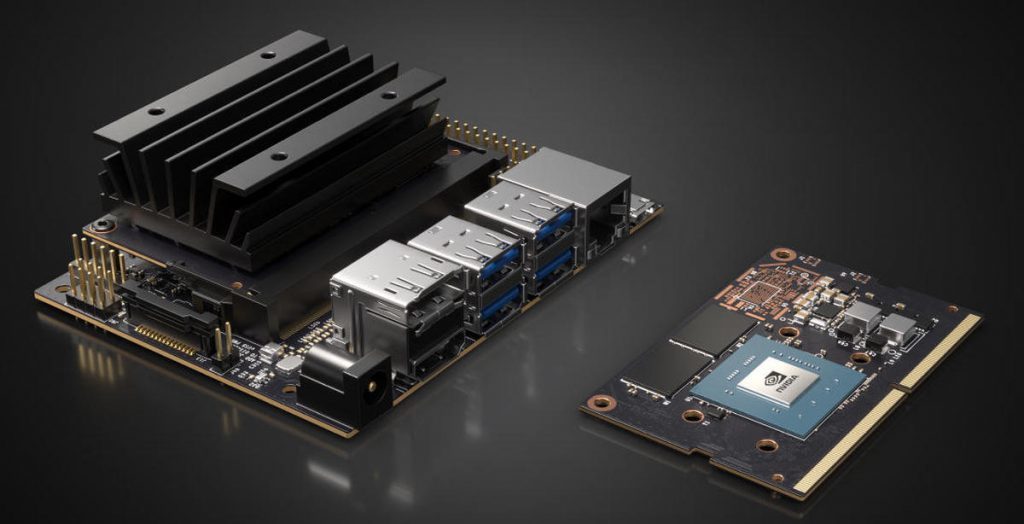
Every person is aware of the fact that AI and machine learning is the next big thing. Slowly, the two technologies are making their way in the real world. On the same league, Nvidia has unveiled the $99 AI computer Jetson Nano along with a developer kit of the Nano, for the developers, makers, and researchers, in its GTC conference held on Monday.

nvidia-jetson-nano
Image Source: zdnet.com

The company has already introduced its Jetson embedded graphics platform and the Jetson Nano Developer kit is the extension of the same. The Nvidia’s Jetson line up works towards providing products to help makers, developers and the students, in the projects based on robotics, AI and autonomous machine applications.

In 2015, the company came with the Jetson TX1 “Supercomputer-on-Module” which provided brains to the robots, drones, and self-driving vehicles. It was the first step for the company in the field of AI and machine learning. After TX1, the company had launched TX2 embedded with a 256-core Pascal GPU and a Jetson AGX Xavier embedded with a 512-core Nvidia Volta GPU. All the three Nvidia’s AI products were high-end products.

But the Jetson Nano is an affordable and tiny $99 computer optimized for AI and machine learning, embedded with 128 CUDA core GPU. The Jetson Nano is based on the Maxwell architecture and offers 472 GFLOPs and is powered by a 64-bit quad-core Arm Cortex-A57-based CPU and a 4GB RAM. The computer also possesses a video processor, which is able to handle up to 4K 30fps encode or 4K 60fps decode. It also has got support for the Gigabit Ethernet, microSD storage, I/O for cameras, and other ports and interfaces, including USB-C.

The Nano kit is a plug and plays DIY kit, which also supports a few AI frameworks including TensorFlow, PyTorch, Caffe, Keras, and MXNet.

Although the Jetson Nano is not as powerful as Nvidia’s previous models, the new Jetson Nano, being cheaper, may help many hobbyists and students with their DIY projects. The company is also offering the production-ready kits for $129, for some specific companies and people who want to build their own AI devices.

The company has also introduced a $250 autonomous robotics kit named JetBot at the event. The JetBot is specially designed to build a self-driving robot.