Your Tech Story

tech story

Fortive

Fortive: A Five-year-old start-up is named as one of the world’s most admired companies by Fortune.

Fortive is a huge success in the technology industry currently controlling many businesses in Instrumentation, transportation, automation, franchise distribution, etc. The company was founded in 2016 by the current CEO of the company, Jim Lico. Fortive was a part of Danaher Corporation, an American diversified conglomerate that spun off the former in 2016. The headquarters of Fortive Corporation is based in Washington. For two consecutive years, Fortive was named as a Future 50 Company by Fortune. This young industrial conglomerate is also on the Fortune 500 list.

About Fortive Corporation

Fortive was created by Danaher Corporation by spinning off a few subsidiaries which include Matco and AMMCO-COATS. The main aim of Fortive is to deliver innovative technologies to its customers and solve pressing challenges.  Fortive works in various fields satisfying a wide range of customers. There are three main segments in which Fortive’s operating companies are divided. The first is Intelligent Operating Solutions which is responsible for ensuring better security and compliance and energy efficiency. Secondly, Precision Technologies solves very tough technical challenges thus a significant part of research and product development, and lastly, Advanced Healthcare Solutions ensures timely delivery of safe healthcare for the patients.
Fortive
Image Source: fortive.com

Growth and Strategic Acquisitions

Fortive is a very young company and since its foundation, the company has focused on acquiring other businesses from various fields. After it was spun off in June 2016, Fluke Corporation (a subsidiary of Fortive) acquired eMaint, a CMMS IIoT system. After a month, Global Transportation Technologies (GTT) was acquired which is a company in the traffic management sector. In July 2017, Fortive acquired Industrial Scientific, a Pittsburgh-based gas detection and safety-as-a-service company. The company also acquired Landauer for $770 million. It is a company that provides services to determine radiation exposure both at the occupational and environmental levels. Gilbarco Veeder Root, a subsidiary of Fortive acquired Orpak Systems which is known for delivering technical solutions to oil companies and commercial fleets.

In 2018, Fortive bought a software firm called Accruent for $2billion. This year Tektronix, another subsidiary of Fortive acquired Initial State which is a data streaming and visualization platform. Fortive Corporation has many subsidiaries acquiring companies in different fields which made it a big success within five years of its establishment. The company entered the healthcare sector after its acquisition of Johnson & Johnson’s Advanced Sterilization Products (ASP) business. This deal was closed in April 2019 and in the same year, Fortive acquired Censis Technologies, which is a SaaS company providing inventory guides in the surgical field.

In September 2019, Fortive announced that it will be splitting into two different publicly traded companies. Last year, Vontier, the new company was announced. Fortive has a very strong working culture and it significantly invests its time and energy in doing social work as well. As a socially responsible company, it tries to minimize waste production and avoid pollution along with adopting sustainable practices. In 2020, Fortive was named as one of the 500 most responsible companies by Newsweek.

About Danaher Corporation

Danaher Corporation is an American diversified conglomerate with its headquarters based in Washington, D.C. The company is divided into four platforms, namely, Life Sciences, Diagnostic, Water Quality, and Environmental & Applied Solutions. Danaher is known as one of the best companies for diverse employees. The founders of the company are Steven M. Rales and Mitchell Rales. It was founded back in 1969 as a real estate investment trust. The company was on a spree to acquire new companies and currently has an arsenal of subsidiaries. Danaher became one of the first companies in North America to adopt ‘Kaizen’ which is a Japanese philosophy of lean manufacturing. Both Danaher and Fortive believe in a sustainable way of manufacturing products. 

Jim Lico – Founder and CEO of Fortive Corporation
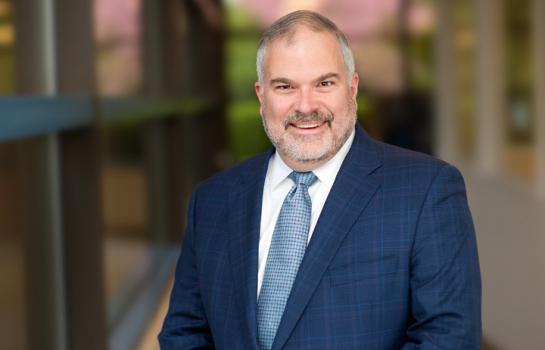
Fortive Founder and CEO
Image Source: fortive.com

The full name of Jim Lico is James A. Lico who is the founding president and CEO of the Fortive Corporation. He was a part of Danaher since 1996 and joined the company as Vice President Operations of Veeder-Root in Altoona, Pennsylvania. He participated in a broad chain of responsibilities in Danaher which includes running Danaher Business System (DSS) for a year, executive leader for the Emerging Market Regional Boards of China, Japan, India and Middle East, etc. Jim graduated with a BS degree from the University of Michigan and a Masters in Management from Northwestern University.

Micron Technology

Micron Technology: From a Budding Consulting Firm to Largest Semiconductor Producers.

There have been incidents where except the founder of a company, nobody believes in their idea. But as time passes, people start recognizing the ability of the company and the potential of its back idea. A similar case happened with the American semiconductor and memory device manufacturer Micron Technology, as people mocked the founders for thinking of diving into the huge competition. But later, they realized the worth of the company and the vision of the founders. Micron Technology started as a semiconductor consulting business, and with time, became the largest semiconductor and memory chip producer in the industry.

A Brief Introduction

Micron Technology is an America-based memory device and semiconductor manufacturer, with its headquarter located in Boise, Idaho, U.S. The company specializes in the manufacturing of dynamic random-access memory, flash memory, and USB flash drives. As of 2020, the total recorded revenue of the company was US$21.44 billion, and around 40,000 people are working for the company.

Micron Technology
Image Source: businesskorea.co.kr

The Founding of Micron Technology

Four design engineers Ward Parkinson, Joe Parkinson, Dennis Wilson, and Doug Pitman from Mostek Corporation, left their well-paying job to establish Micron Technology in 1978. The company started its operations as a semiconductor design consulting company from the basement of a dentist’s office in Boise, Idaho. It raised its initial funding from some local investors as not many were interested in investing in a new company.

Eventually, Micron Technology successfully established its first wafer fabrication unit in 1981 and started manufacturing the 64K DRAM chips. Just in one year, the company manufactured and supplied around one million chips in 1982. The idea of starting their own manufacturing unit helped the company go public in just six years of its inception.

At the beginning of the 90s, the chips from Micron Technology made their way into the manufacturing of newly introduced personal computers. The growing demand for Micron chips led the company to establish a new manufacturing unit worth 1.3 billion in Utah. In order to expand its operation, the company acquired Texas Instruments’ memory division in 1998.

Micron Technology
Image Source: events.wsu.edu

At the beginning of the 2000s, Micron Technology started to manufacture atomic layer deposition high-k films for DRAM memory devices as well as the 30-nm class NAND flash memory. The latter has been a popular discovery among manufacturers worldwide. In 2005, the company joined its hands with Intel to establish a joint venture named IM Flash Technologies. The next year, Micron went on to acquire Lexar, and in 2008, the company bought the stakes of Qimonda in Inotera technologies. In the next 5-7 years, the company acquired names like Displaytech, Numonyx, Inotera Memories, Elpida Memory, etc.

Micron Technology partnered with Intel in May 2018 and launched the QLC NAND memory, equipment to enhance the storage density. The same year, Micron Technology was among the top 500 companies on the Fortune 500 USA list. In 2019, the company introduced the first 1TB microSD card, and the next year, the company’s 3.84TB Micron 5210 Ion became the world’s cheapest but large capacity SSD. The same year Micron technology joined its hands with NVIDIA to enter the field of graphics processing unit manufacturing and also introduced its latest 176-layer 3D NAND chip with better read and write latency.

The CEO: Sanjay Mehrotra

Sanjay Mehrotra is the serving CEO of Micron Technology. He is an Indian-born American entrepreneur, who is also known as the co-founder of the flash memory products manufacturer company, SanDisk. Mehrotra completed his high school education from Sardar Patel Vidyalaya, Lodhi Road, Delhi, and joined BITS Pilani to pursue his graduation. Later he got transferred to the University of California, Berkeley, where he completed a bachelors’ as well as a master’s degree in Electrical Engineering and Computer Sciences.

In 1988, he co-founded SanDisk and held many important roles at the company. For a period from 2011 to 2016, he served the company as the president and the CEO. He left SanDisk after it was acquired by Western Digital in 2016. In May 2017, he was appointed as the chief executive officer of Micron Technology.

Lam Research

Lam Research: The Innovative Journey of a Future-oriented Company.

Innovation is what keeps a company to stay relevant to the changing market trends. This innovation keeps the company going and deal with high-pressure competition. Lam Research is a company that also believes in adapting the change and making use of the technology of the future. This very attitude has kept Lam Research stay on the top in the semiconductor market even after 30 years of its inception, and it has never failed to impress its clients with the innovation it brings for them.

Establishment of Lam Research

Lam Research is a leading semiconductor processing equipment design and manufacturing company. It serves the major semiconductor manufacturing businesses from all around the world. The major areas where the company serves, include the United States, Europe, and Asia. The company products involve the manufacturing of equipment for front-end wafer processing and back-end wafer-level packaging (WLP).

Lam Research company headquarter is located in Fremont in Silicon Valley, California. As of 2019, Lam Research made an annual revenue of US$ 9.65 billion, and around 10,700 employees are working for the company in its various branches in the world. Currently, Timothy M. Archer is serving Lam Research as the president and chief executive officer. Before that, he was working as the executive vice president and chief operating officer of the company.

Products from Lam Research

The company specializes in manufacturing thin film deposition, plasma etch, photoresist strip, etc., for the manufacturing of semiconductors. The company offers smart wafer processing solutions for the tine chips to be used in the transistor, interconnect, patterning, advanced memory, and packaging to sensors and transducers. The products made by the company are essentially used in mobile phones, computing devices, entertainment systems, and also in the new smart cars.

Lam Research
Image Source: twitter.com

The Back Story

David K. Lam founded Lam Research in 1980. Lam was working as an engineer at Hewlett-Packard when he thought of bringing better plasma etching equipment into the market at the time when the semiconductors were reducing in size. He was sceptical about his business plan, but Intel’s founder Bob Noyce helped him in raising the funds for the company.

The Company introduced its first automated polysilicon plasma etcher, AutoEtch 480, in 1981 and sold the first system in the January of the next year. Just four years of its inception, the company had its first IPO on NASDAQ, and it traded as LRCX. Though Lam was the founder of Lam Research, he left the company in 1985 and joined Link Technologies. During the late 80s and the beginning of the 90s, the company had started to expand overseas. The company established its factory units and customer support centers in countries like Taiwan, the U.S., China, Korea, Singapore, and Japan.

Lam Research also did some major acquisitions during the same time. It acquired the chip equipment manufacturing company, OnTrak Systems Inc., in 1997 by paying a sum of $225 Million. This acquisition helped the company grow even faster. In fact, the CEO of OnTrak Jim Bagley was also appointed the CEO of Lam Research in the same year. In the late 2000s, Lam Research made some powerful acquisitions, including Bullen Semiconducto (2005), SEZ (2008), and Novellus Systems (2011). Lam Research also made it to the Fortune 500 list in 2016.

Lam Research in 2017 established an investment firm named Lam Research Capital to enhance its investments in new companies.

The Founder: David K. Lam

Before becoming a famous entrepreneur in the U.S., David K. Lam had to wander around in various countries. He was born in Guangdong, China on 10 February 1943, but he spent most of his childhood in Cholon, South Vietnam. In the mid-50s, he, along with his family, moved to Hong Kong, where he joined Pui Ching Middle School.

To complete his further studies, Lam flew to Canada and attended the University of Toronto, and received a bachelor’s degree in Applied Science in Engineering Physics in 1967. He then completed an M.S. degree and an Sc.D. doctoral degree from the Massachusetts Institute of Technology, in the 1970 and 1973, respectively. As soon he completed his education, he joined Texas Instruments and Hewlett-Packard. This was the same time when he thought of founding Lam Research. Currently, Lam is serving as the chairman of Multibeam Corporation.

NortonLifeLock

NortonLifeLock – An American company well known for Cybersecurity Services.

NortonLifeLock is a cybersecurity company that is empowering people by protecting their digital life. The company uses cutting-edge technology to build online security software to reduce the emerging rates of cyber threats. In 1982, Gary Hendrix founded the company which is now based in Arizona, US. NortonLifeLock is one of the Fortune 500 companies and in India, it has its presence in Pune, Chennai, and Bangalore. This year, NortonLifeLock made it into the Fast Company’s Annual List of the World’s Most Innovative Companies. Since the origin of the company started almost forty years from now, let’s have a look into it.

Establishing Symantec Corporation

When Gary Hendrix founded the company back in 1982 it was known as Symantec. He founded the company with help of a National Science Foundation grant and he hired several natural language processing researchers as a few of his first employees. Symantec started building projects related to artificial intelligence but a couple of years later they realized the database system they developed could not be ported from DEC minicomputers to the PC.

Since after two years of working Symantec was without any product, another software company called C&E software. After the acquisition, the merged companies decided to keep the brand name Symantec. A new product was developed combining the file management and word processing program of C&E along with an advanced natural language query system that was developed by Gary. The final product was named Q&A and it was rolled out in November 1985.

The sales of Q&A started very slowly but after a successful advertising campaign by the advertising agency Elliott/Dickens, the company started coming on the radar. Next, the company started cutting its expenses and focusing on revenue growth which enabled the company to break even. This was one of the breakthroughs of Symantec as the revenue started growing substantially after this event.

Growth of the Company

In 1985, a new division of Symantec was formed which was named Turner Hall Publishing. This division was established to publish third-party software and to diversify the revenue of Symantec. Soon the second product of the company was developed which was a 256k RAM initially released to increase the memory of Q&A. In 1987, the company completed its first merger by acquiring Breakthrough Software followed by acquiring Peter Norton Computing in 1990. Even today, the consumer antivirus and data management utilities of Symantec are still released under the name of Norton. During the time of the merger, Symantec has released Symantec Antivirus for Macintosh and Symantec Utilities for the Macintosh in the market.

NortonLifeLock
Image Source: channele2e.com

It was one year before acquiring Norton that the company started developing a DOS-based antivirus program because it thought the antivirus market was growing and a lot of new work was going on in this branch. The Norton antivirus was a big success as by the end of 1993 Norton product group revenues added up to 82% of total Symantec revenue. Though Symantec was also known for its development tools, the company exited that section of business due to strong new competitors gaining rapid market control.

Symantec in 21st Century

In the 21st century, Symantec’s share of the market increased dramatically as the company acquired Verisign’s Certificate Authority business. In 2013, Symantec went through a major corporate reorganization with the major goal of cost reduction and improving Symantec’s product line. In 2016, the company introduced a new product called the Symantec anomaly detection for automotive which was an ML-based software providing in-vehicle security analysis. The same year, the company intended to acquire LifeLock for $2.3 billion. A couple of years ago Broadcom announced that it would acquire Symantec for $10.7 billion. After the deal was closed the name of the company was changed to NortonLifeLock.

About the Founder

Gary Hendrix is a well-known American businessman who became largely famous after founding Symantec Corporation. Gary received his undergraduate education from the University of Texas and it was then he wrote several papers on robotics and planning. His quality work got him an opportunity to work at SRI international. After working at SRI for several years he left the company with a few of his colleagues to start a venture of their own. In the beginning, their first attempt was a total failure but eventually, Gary founded Symantec Corporation which is part of a bigger corporation today.

SK Hynix

SK Hynix: The Second-largest Memory Chipmaker in the World

South Korea is known for its innovative and advanced technologies. There are several companies from South Korea making big in the technology industry. SK Hynix of South Korea is the third-largest semiconductor company and the second-largest chipmaker in the world. The company, with its innovation, has given the world multiple discoveries in the field of semiconductor and memory chips.

A Brief Introduction

SK Hynix is the world’s largest provider of dynamic random-access memory (DRAM) and flashes memory chips. The company headquarters in Icheon, South Korea, and its worldwide customer list includes Apple, HP Inc., Dell, etc. Hynix’s memory products are used in DVD players, mobile phones, set-top boxes, networking equipment, hard disk drives, etc. The company has its manufacturing units in various countries, including the US, Taiwan, and China. As of 2016, 22,254 are working at Hynix, and the total recorded revenue of the company as of 2018 was US$35.27 billion.

History and Formation of SK Hynix

Though the company was founded on 1 October 1949, it became famous only after it was rebranded in 1983. The company started its journey as Gukdo in 1949 and got a new name, i.e., Hyundai Electronics Industries Co. Ltd. in 1983. There was mass production of 256K DRAM in the company, and it also started to produce the Multifunctional Phone LX-2 in 1985. The company partnered with IBM to establish a PC sales agency and entered the US with the establishment of the US corporation (HEA).

In 1986, other than its B2B clients, Hyundai started to focus on B2C clients through its Hyundai Blue Chip PC. The company was manufacturing the car radios, developed CMOS type 256K EPROM, and also started the production of a key phone-based private switchboard, PABXHX50. The company developed the 4th generation switchboard HX-400 in 1987 and partnered with MOS Electronic Co. to develop the 256K SRAM. It also launched a satellite broadcasting receiver during the same time. In 1988, Hyundai came with the automatic answering machine and established its European corporation, HEE. At that time, it was at the top in the export of PCs in South Korea.

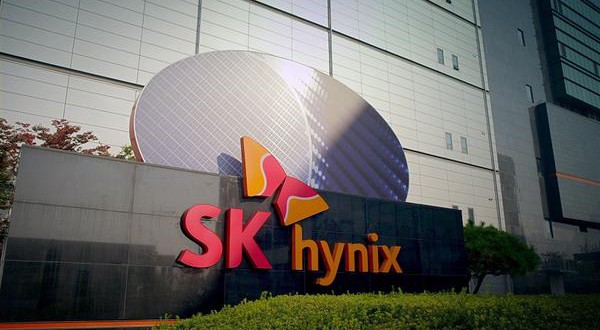
SK Hynix
Image Source: pulsenews.co.kr

Hyundai became the first company to export PCs to Japan in 1989. It also developed the 256K Fast SRAM in the same year. It was the 20th largest company in the semiconductor market in the world. In 1990, the company was mass-producing cameras and started to export them to the US. Along with that, it established the HEA Semiconductor and Computer R&D Center and also started to develop bps Pagers and 1M DRAM, becoming the first company in Korea to do that.

Hyundai developed the smallest and the lightest mobile phone in South Korea in 1991. The company also entered the Singapore market in the same year by establishing the Singapore corporation (HES) which was into 486 PC production. The next year, the company came with G4 FAX, a private switchboard HNT-832, built-in car audio systems, and completed the construction of FAB 2 B-Line. By the mid-90s, Hyundai had become the major supplier of semiconductor devices, car-audio, telecom products manufacturer, and provider of monitor & terminal category products. The company acquired Maxtor (US HDD manufacturer) and also developed the CD autochanger in 1993.

Hyundai is credited for the development of the world’s first MPEG-2 SAVI decoder chip and the world’s first 256M SRAM. In 1996, Hyundai had its first IPO on the Korea Stock Exchange. It also developed the world’s first Synclink DRAM test product and 1G synchronous DRAM using SOI technology. Hyundai acquired a large stockholder’s share of LG Semiconductor and merged into LG’s LG Electronics division in 1999.

In 2000, there was a spin-off in the company, forming Hyundai Image Quest, Hyundai Autonet, and Hyundai Calibration & Certification Technologies. Hyundai Electronics was rebranded as Hynix Semiconductor Inc. in 2001, after another spin-off from the Hyundai Group. In 2006, Hynix recorded its highest revenues since the formation of the Hyundai Group.

In 2010, Hynix partnered with HP for the development of Next Generation Memory Products, ReRAM. SK Group of South Korea acquired a 21.05% stake in Hynix in 2012, and the company started to operate as SK Hynix. The acquisition has been great for the growth of SK Hynix

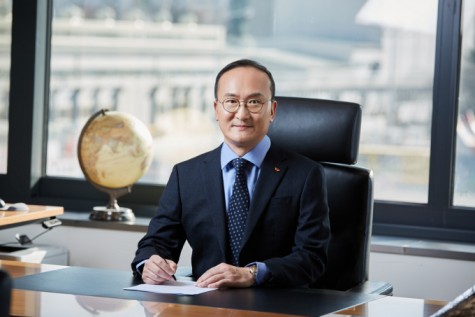
The CEO: Lee Seok-Hee

SK Hynix CEO
Image Source: kedglobal.com

Lee Seok-Hee is serving as the President and CEO, SK Hynix Inc since 2018. He became a member of the board of the company in 2017. Lee did his graduation and post-graduation from Seoul National University and went for further studies at Stanford University to complete a Ph.D.

Mitsubishi Group

The Japanese Multinational Conglomerate Mitsubishi Group completes more than 150 years of its journey.

Mitsubishi group is one of the biggest multinational conglomerates based in Tokyo, Japan. The Mitsubishi Group has subsidiaries in various industries from oil and gas to automotive companies. The company was founded by Yataro Iwasaki back in the 1870s. Though the company has a lot of members spreading wings in different industries, the three main core members also known as the “Three Great Houses” comprise MUFG Bank, Mitsubishi Corporation, and Mitsubishi Heavy Industries.

The origin of the Mitsubishi Group dates back to 1870 when Iwasaki started the company with others. family members. But, a lot changes in the post-world war situation. So, let’s have a better look at the history of the company which is carrying its legacy for the past 150 years.

The Beginning of the Mitsubishi Group

Iwasaki initially worked for the Tosa Clan which was one of the most dominant merchants in Japan during the 1800s. While the clan business was thriving in Japan, the Meiji government created a new policy banning the clan-led businesses which led two powerful members of the Tosa Clan to establish a new company called Tsukumo Shokai in 1870. In 1873, Yataro was completely in charge of the company who then founded Mitsubishi Shokai. The company’s headquarters eventually moved to Tokyo and the business was renamed Mitsubishi Jokisen Kaisha.

Mitsubishi Group
Image Source: fortune.com

The company started working very closely with the government as the Mitsubishi ships were used to transfer troops to Taiwan and Satsuma in 1877. Mitsubishi’s financial base became very strong after this operation and the company started flourishing under Iwasaki’s leadership. In the next few years, Iwasaki invested in new mining technology thus helping his brother’s business, and later acquired a few mines in Japan. In 1884, Mitsubishi purchased the Nagasaki shipyard from the Japanese government.

In 1885, Yanosuke Iwasaki took the place of Yataro Iwasaki as he passed away. Yanosuke was the younger brother of Yataro and the second president of the Mitsubishi Group. The new president played a major role in expanding and diversifying the company into new fields. But soon as promised to his elder brother, the reins of power were transferred to the next generation and Hisaya Iwasaki at 28 became the new president.

Entering into a new era

The young Iwasaki went to Wharton school and his leadership brought some new perspective in both business and management. The entire Mitsubishi group was then divided into various sectors like mining, banking, shipbuilding, etc and the cost and responsibility were divided accordingly. In the 1910s the company was going through great economic growth and Hisaya stepped down, passing the reins to Koyata Iwasaki. Koyata was in charge of the company during the economic depression in the early 20th century. Even in these difficult times, Koyata was committed to quality and fair business. His main idea was to shape a profitable and sustainable business which became the most important principles of the company.

While the company became one of the most powerful conglomerates in Japan, post world war II, the Mitsubishi group was forced to re-launch as independent companies. But in 1954 the companies again merged and became a single entity. In the second half of the 1900s, Mitsubishi Electric Corporation was booming. In 1969, Mitsubishi Foundation was formed which supports social welfare and research programs.

One of the most important reasons behind the success of Mitsubishi Group is its leadership. Every president that served the company embedded some strong principles in the work ethic and evolved by bringing western ideas of business and architecture into the game. The company stood strong even during the economic turmoil and during and after the world wars. Currently, the company is embarking on a new journey exploring beyond our planet.

About the Founder: Yataro Iwasaki

Born in 1835, Yataro Iwasaki understood and valued the importance of education highly. Yataro received the kind of education only a few fortunate people could afford during the time. He was born and brought up in a small village of Japan called Tosa and eventually started working for the Tosa Clan which marked the onset of his remarkable journey. While he was the president of the Mitsubishi group he introduced many new modern technologies which eventually led to uncovering some valuable mines for the company. He was the one who expanded Mitsubishi into other fields like warehousing and finance.