Your Tech Story

tech story

Ansys Inc.

Ansys Inc. – The Most Trustworthy Engineering Software Company In The World.

Ansys Inc. is a Canonsburg-based American company. It develops and markets multiphysics simulation software to design, test, and operate products and provides its products and services to clients around the globe. Ansys picked up a large number of engineering design companies in the 2000s, which gained additional fluid dynamics, electronics, and other physical analysis technology.

Ansys software fits seamlessly with existing systems thanks to their open ecosystem of computer-aided design, manufacturing, and engineering providers. Engineers can use Ansys simulation to explore and predict how products will work in the real world. This simulation superpower also accelerates time-to-market, reduces production costs, increases efficiency, and reduces risk.

The Establishment of Ansys, Inc.

John Swanson invented the concept for Ansys at the time of his work at Westinghouse Astronuclear Laboratory in the 1960s. At that time, engineers conducted hand analyses of Finite Elements (FEA). Westinghouse dismissed Swanson’s concept of automating FEA by designing software for general purposes, so in 1969 Swanson left the company to develop the software by itself. The next year, he created Ansys in his farmhouse in Pittsburgh with the name Swanson Analysis Systems Inc. (SASI). Swanson created Ansys’ initial punch card program and leased a mainframe machine by the hour.

Ansys Inc.
Image Source: facebook.com

By 1991, SASI had 153 workers with an annual turnover of $29 million, which was a 10 percent market share for software analysis for finite elements. SASI purchased Compuflo in 1992, and the software for fluid dynamic analysis was commercialized and developed. In 1993, Mr. Swanson sold his majority stake in the firm to TA Associates, a capitalist firm. The following year Peter Smith was appointed CEO and the software, Ansys, was renamed SASI.

Ansys Products and Services

Ansys Discovery and accurately addresses important design questions early in the process. It eliminates long waits for simulation results to increase efficiency and performance. Engineers can now concentrate on creativity and product success thanks to Discovery. With Ansys SpaceClaim, you can reduce simulation prep time and easily build 3D models. By accelerating the geometry development process, these tools enable designers and analysts to concentrate on the simulation performance.

With Ansys VRXPERIENCE, you will enjoy an active sound quality and sound design solution. Recorded sound, CAE acoustics simulation effects, and Active Sound E-Motor noise, Aeroacoustics sources, Engine vibrations, and EV all have their own special tools.

Ansys Additive Prep optimizes component orientation by auto-detecting support regions and individually configuring them to construct different 3D printing support types. Ansys Additive Print takes the guesswork out of printing. Gain insight into how parts can behave during a build and take corrective actions to ensure that the parts are installed correctly the first time.

To accelerate embedded software development ventures, Ansys offers model-based embedded software development and simulation environment with a built-in certified automatic code generator. Ansys embedded software solutions provide a wide range of powerful capabilities to assist you in developing secure and stable software designs more quickly.

They offer the industry’s gold standard simulators for antenna, RF, microwave, PCB, package, IC design, and even electromechanical devices. These solutions assist you in resolving any electromagnetic, temperature, SI, PI, parasitic, cabling, and vibration issues that can arise in your designs.

Ajei Gopal, The President and CEO of The Company

Ajei Gopal has been the president and chief executive officer of Ansys since January 2017. Ajei worked as an operating partner at Silver Lake, a major private equity technology investor, from 2013 to 2016. During his time at Silver Lake, he was seconded as interim president and chief operating officer at Symantec Corporation. He was a senior vice president at Hewlett Packard from 2011 to 2013. From 2006 to 2011, Ajei served as executive vice president at CA Technologies. He was executive vice president and chief technology officer at Symantec Corporation from 2004 to 2006.

Ajei Gopal previously served as CEO and a member of the board of directors of ReefEdge Networks, a company he co-founded in 2000. From 1991 to 2000, he worked at IBM, first at IBM Research and then in IBM’s Software Group. Ajei is also a director on the board of Citrix Systems, Inc., a multinational software corporation.

CDW

CDW Corporation – A US-based company delivering IT services to government, schools, and non-profit organizations.

Established in 1984, CDW Corporation is a provider of B2B IT services and products to the various entities of the US government and also state and federal government. The company also provides its IT services to various schools and organizations and non-profit health organizations. Apart from the United States, the company has its branches in Canada and the United Kingdom. Michael Krasny established the company as MPK Computing back in 1984. Today, CDW has approximately 10,000 employees and it has become a Fortune 500 company and member of the S&P 500 Index.

Founding Story of CDW Corporation

Michael Krasny, back when the company was a newborn, took a small ad in a free circulation newspaper because he wanted to sell his computer and printer. From this moment, he got the idea of renaming it as Computer Discount Warehouse which simply became CDW. The first national advertisement run by the company was in 1985 in PC World Magazine and after two years the company published its first catalog. In 1987, CDW started offering their first services and helping customers set up their computers. Eventually, the workforce expanded and they started hiring more technical expertise.

CDW Corporation
Image Source: upload.wikimedia.org

Within less than a decade of the company’s establishment, it completed its first IPO in 1993, and its sales summed up to $247million. CDW Corporation was hiring new employees at a high rate and by 1995 it had more than 500 employees which tripled after three years. In 1997, the company established headquarters in Vernon Hills, IL, and celebrated its $1billion sales mark. Next year, a new sector of CDW was founded called CDW G which aimed exclusively at helping government and educational customers. By the end of the late 90s, CDW’s sales reached $2billion.

CDW in the 21st Century

In 2001, John Edwardson became the new CEO and Chairman of the company. The company listed on number 435 in the Fortune 500 company this year and the sales rose to $3.96billion. After a couple of years, the company made a big investment as it bought Micro Warehouse Canada, an asset of Micro Warehouse. In the following years, the company opened Western Distribution Center in Las Vegas, launched CDW Healthcare, opened new data centers and offices in various states. In 2006, the company acquired Berbee Information Network which was a top-tier reseller of IBM, Cisco, and Microsoft products and services.

On 12th October 2007, Madison Dearborn Partners and Providence Equity Partners from Chicago acquired CDW for $7billion. But the company again went public in 2013 through an IPO in the NASDAQ market under the name CDW Corporation. CDW Finance Corporation and CDW LLC are wholly owned subsidiaries. CWD Canada which is the Canadian branch of CDW has received a lot of recognition and ranked 25th in the category of large and multinational companies.

In 2011, the company started a new campaign called People Who Get IT which focused on new technology that solves everyday business problems. In 2013, the company ranked 267 in the Fortune 500 list. CDW established a new partnership with Dell, acquired a UK-based company Kelway and recently acquired Scalar Decisions, a Canadian solution provider. In 2019, Christine Leahy became the new CEO of the company. 

Currently, CDW is selling a wide range of products starting from hardware equipment to providing IT solutions. Starting from computer accessories to ethernet cables and projectors, cameras, drones, microphones, smartwatches, CDW is selling every tech I can think of. The company also sells software for business applications, security purposes, communication, etc. It also provides ample of choices brand-wise.

Michael Krasny – Founder of CDW Corporation

Born in the early 1950s, Michael Krasny is a famous American billionaire hailing from Illinois. Krasny went to the University of Illinois Gies College of Business and graduated in 1975. His career started by working as a Toyota car salesman but he left his job in 1981 and started learning computer programming. But, Krasny was unable to find steady work so he was forced to sell his own computer. While selling his computer, he understood that computers are having great demand and this gave birth to his new and successful business idea. Under his leadership, the CDW Corporation flourished but he left the company after the deal with Madison Dearborn Partners became successful.

DXC Technology

DXC Technology, The Best Global IT Company Out There

DXC Technology is a multinational corporation based in the United States that provides business-to-business information technology services. DXC Technology (NYSE: DXC) assists multinational corporations in running mission-critical systems and operations while modernizing IT, optimizing data architectures, and ensuring security and scalability across public, private, and hybrid clouds.

DXC, with decades of driving innovation, is trusted by the world’s largest companies to deploy their enterprise technology stack to deliver new levels of performance, competitiveness, and customer experiences. DXC is primarily a technology services provider, but it also acquires hardware and infrastructure products. The majority of these are desktops, laptops, printers, monitors, and servers.

A Small Backstory DXC Technology

DXC Technology has a long and proud history of innovation, service, and value through the merger of CSC with Hewlett Packard Enterprise Services. CSC was founded in 1959 by Roy Nutt and Fletcher Jones, computer analysts who raised $100 to provide computer manufacturers with complex programs known as compilers, assemblers, and operating systems. Over the next five decades, CSC expanded rapidly and served governments and companies worldwide.

DXC Technology
Image Source: zdnet.com

Today, DXC stands as the world’s leading independent, end-to-end IT services provider, with nearly 6,000 private and public-sector clients in 70 countries and across a wide range of industries.

DXC Technology Major Goals

DXC is committed to managing its ITAD-waste to reduce potentially harmful environmental impacts. To reduce its carbon footprint, the company is consolidating data centers and offices around the world. Currently, electricity consumption in these buildings accounts for 85 percent of DXC’s carbon footprint. DXC employees are being encouraged to reduce their consumption through environmental education programs and hub-facility competitions. Their IT spaces and server rooms are managed following the ASHRAE TC 9.9 Thermal Guidelines for Data Processing Environments.

They use a circular economy approach to reusing equipment, scalability of solutions, the flexibility of services, and e-waste reduction. DXC ensures that all waste generated by their operations is managed following local regulations. They also pursue waste disposal higher up the waste hierarchy to reduce environmental impacts and promote “circular economy” thinking.

DXC’s Products And Services

DXC’s analytics, cloud, and security services position companies to quickly respond with minimal risk to changes in the market and technology. The company’s corporate technology stack, which includes an end-to-end range of technology services, tools, and capabilities like DXC Bionix, DXC’s intelligent automation and machine training approach underpins DXC’s IC Modernization Solutions.

The business analysis allows you to draw profitable insights into your life and pension schemes. You can view data that help you recognize the important patterns, both positive and negative, using dashboards, reports, filters, and gauges. If you want to understand which policies, agents, goods, etc. drive a specific pattern, you can only explore the factors that influence the outcome.

Organizations need up-to-date and integrated security technologies in this demanding world that can protect their sensitive information and data against rising threats. DXC Technology provides security services in infrastructure and endpoint that reduce corporate data and network risk, enhance safety and encourage business innovation and development. DXC services allow you to reduce your cyber risk, effectively incorporate security approaches, maximize your security investment return and enhance your infrastructure safety.

DXC Market Solutions provides companies with innovative applications and resources to participate more efficiently in the digital environment and to provide differential solutions. DXC utilizes new technologies to improve efficiency, efficiency, and safety. We are redefining the future of work with our solutions and services from IoT, enhanced and virtual reality apps, and front-line staff.

Mike Salvino: The CEO of DXC Technology

Mike Salvino is the president and CEO of DXC Technology. Salvino, who took over as CEO in September 2019, is also a member of the DXC Board of Directors, where he has been since May 2019. He serves on the Investment Oversight Committee for both the hospital and the foundation of the Atrium Health Foundation, the largest healthcare system in the Carolinas. Salvino earned a BS in industrial engineering from Marietta College. He is a member of the Marietta College Board of Trustees and the Duke University Pratt School of Engineering Board of Visitors.

TSMC

TSMC – The World’s First and Most Valued Semiconductor Foundry.

Taiwan Semiconductor is home to many world-famous technology companies, and several foreign companies have also established their manufacturing units in this small country. Along with that, Taiwan Semiconductor is also known for being the headquarters for the world’s largest dedicated independent (pure-play) semiconductor foundry, i.e. TSMC (Taiwan Semiconductor Manufacturing Company, Limited).

TSMC is a semiconductor contract manufacturing and design company. It designs, manufactures, tests, and ships integrated circuits as well as other semiconductor devices to its worldwide customers. TSMC is one of the largest semiconductor companies in Taiwan, with its chips being used in almost every piece of electronic equipment, from smartphones, laptops, and video game consoles to data centres and F-35 fighter jets.

A Brief Introduction

TSMC is a Taiwanese company with its headquarter located in the Hsinchu Science Park in Hsinchu. The company was founded in 1984 and has most of its shares owned by foreign investors. TSMC mainly deals in the manufacturing of Integrated circuits and related services and serves with the brand names CyberShuttle prototyping service, Open Innovation Platform, and eFoundry online services. WaferTech, TSMC PRC, and SSMC are some of its subsidiaries.

TSMC recorded net annual revenue of NT$1.07 trillion in 2019, with 51,297 employees working for it in its global offices. As per the 2020 records, the company can manufacture 13 million 300 mm equivalent wafers per year. Apple, Huawei, Sony, Qualcomm, Broadcom, and HiSilicon are some famous names that are the permanent clients of TSMC, and the list of clients for the company goes as long as 500 companies from across the world.

The Founding Story of TSMC

The late 70s and the beginning of the 80s was the time when semiconductor technology was emerging at a high pace. In 1985, the Taiwan government appointed Morris Chang, a Taiwanese businessman, having more than 25 years of experience in the field of the semiconductor industry, to help them bring the technology to Taiwan. After establishing the first non-profit research institute ITRI in 1986, the Taiwan government, along with Chang, established the world’s first dedicated semiconductor foundry named TSMC in 1987. TSMC was a joint venture between the Taiwan government with 21% shares, Dutch multinational electronics conglomerate Philips with 28% share, and other private investors owning the rest of the shares in the company.

TSMC
Image Source: openthenews.com

TSMC was founded at the time when companies like Intel, NEC, Fujitsu were already making their chips. But the business idea behind TSMC was to provide the other companies with the chips manufacturing service, saving lots of time and money for them. This idea attracted many customers for TSMC, not only from Taiwan but also the big-name companies from Silicon Valley.

When TSMC had just started its journey, IDMs was ruling the industry. But just in ten years in the business, TSMC was at the level of IDMs. In 1997, the company got listed on the New York Stock Exchange, becoming the first Taiwanese company to do so. The years 2000 onwards have been the year of pure growth for the company, and it added clients like AMD, Apple Inc., Broadcom Inc., Marvell, MediaTek, Nvidia, Qualcomm, Xilinx, NXP, STMicroelectronics and Texas Instruments to its customer list.

By the year 2011, TSMC had increased its research works by 39%. The same year the company also started the trial production of A5 SoC and A6 SoCs for Apple’s iPad and iPhone devices. In 2013, it was among the 100 most valued companies in the world on the FT Global 500 list. In 2014, TSMC was producing A8 and A8X SoCs for Apple, and it became the exclusive producer of A9X. The company surpassed the market capitalization of Intel in 2017 and became the world’s 10th most valuable company in 2020.

Morris Chang, The Founder TSMC

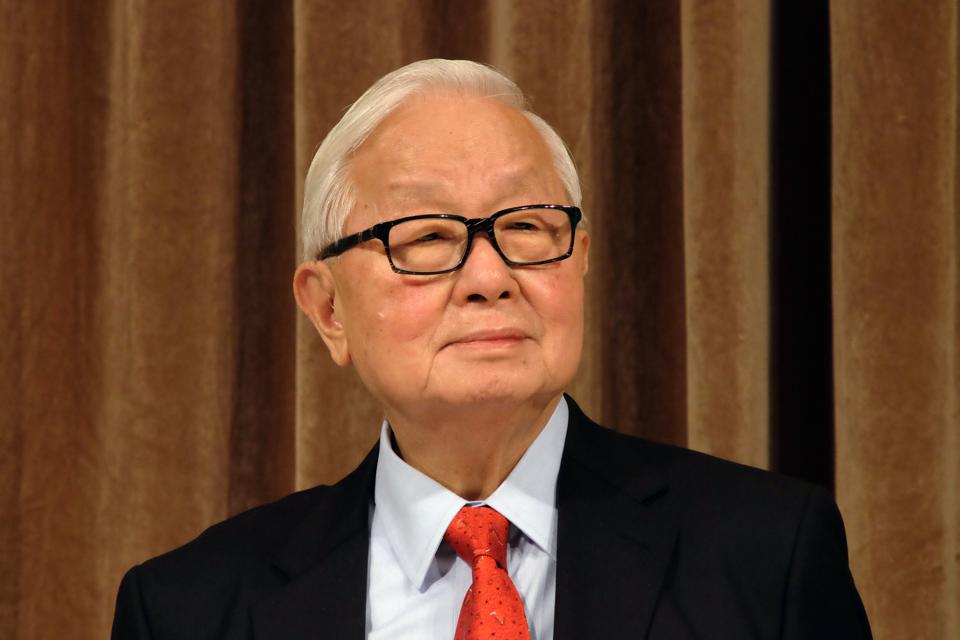
Morris Chang is known as one of the famous businessmen and the founder of TSMC. He was born in Ningbo, Chekiang, on 10 July 1931 and was brought up in British Hong Kong due to the Second Sino-Japanese War. In 1951, he went to the Massachusetts Institute of Technology and obtained a graduate and postgraduate degree in mechanical engineering.

TSMC Founder
Image Source: forbes.com

After completing his education, he joined Sylvania Electric Products, and after working for three years at the company, he joined Texas Instruments in 1958. The latter sponsored Chang’s doctorate, and he joined Stanford University in 1964 to complete a PhD in electrical engineering. Chang spent 25 years of his career at Texas Instruments and was leading the company as the group vice president of its worldwide semiconductor business in the later years. After leaving TI in 1984, he also worked as the COO and president of General Instrument Corporation for one year.

The Taiwanese government wanted to work in the field of semiconductor, so it called back Chang to Taiwan and appointed him as the chairman and president of the newly established Industrial Technology Research Institute in 1985. Under his leadership, TSMC has become the largest semiconductor foundry in the world. During his time at TSMC, he served the company at various ranks, including the chairman and the CEO of TSMC. He retired as the CEO on 5 June 2018 from TSMC.

Kyocera Corporation

Kyocera Corporation – The Journey of Growth and Innovation

Kyocera Corporation is a Japan-based high-quality ceramic component manufacturing company. Kyocera is known for its development work in the field of insulator ceramics and has ties with companies like Sony and Qualcomm. It is known for its quality products and has always introduced innovative technologies to the world. Kyocera Corporation is one of the first companies to produce fine ceramic components, and for the past 60 years, it is also one of the top ceramic component suppliers in the world.

The Establishment of Kyocera Corporation

Kyocera Corporation is a Japanese ceramics and electronics manufacturing company, operating in multiple regions of the world. The company has its headquarter based in Kyoto, Japan, and was founded in 1959 by Kazuo Inamori. Kyocera is specialized in the manufacturing of ceramic products and includes printers/multi-function devices, satellite phones, mobile phones, solar power generating systems, and advanced ceramics as its main products.  Kyocera is one of the first companies to introduce a battery-powered portable laptop.

Kyocera Corporation
Image Source: global.kyocera.com

As per the 2018 records, the total annual revenue of Kyocera was ¥1.577 trillion, and 70,153 are working for the company. Apart from Japan, Kyocera has expanded its business to countries like the US, Germany, India, and the UK.

The Founding Story

The history of Kyocera Corporation dates back to sixty years ago in 1959 when Kazuo Inamori founded the company as Kyoto Ceramic Company, Limited. He, along with his 28 colleagues from his previous job, raised a capital of 3 million yen to start the business. The company started its journey as the developer of ceramic components for electronic devices. Its flagship product was a ceramic insulator known as a Kelcima, an insulator used in the picture tubes of TVs.

In the early 60s, ICs had been introduced and had opened doors for new opportunities for the companies. Taking advantage of it, Kyocera also began to ship ceramic semiconductors that helped hugely in the growth of the company. By the mid of 70s, the company started to expand its operations and was manufacturing solar photovoltaic modules, biocompatible tooth- and joint-replacement systems, industrial cutting tools, consumer ceramics as well as lab-grown gemstones.

By the end of the decade, the company also began to invest in electronic equipment manufacturing and radio communication technologies. Kyocera acquired Yashica Company in 1983, and entered the optical technology business, and started to manufacture film and digital cameras. In the 80s, the company also shipped CD players, receivers, turntables, and cassette decks. In 1989, Kyocera acquired Elco Corporation, followed by the acquisition of AVX Corporation in 1990.

By the mid of 90s, photovoltaic solar energy products from the company became very famous, and Kyocera established a separate unit named Kyocera Solar Corporation for the same in Japan in 1996. To further expand its operation in the solar energy system, Kyocera merged its operations with Golden Genesis Company in 1999.

Kyocera began the new century by acquiring Mita Industrial Company, Limited, and mobile phone manufacturing operations of Qualcomm in 2000. In 2003, Kyocera entered India and established a mobile phone subsidiary named Kyocera Wireless India in Bangalore. The company is credited for being one of the first companies to introduce Color displays on entry-level CDMA Handsets. It is also the first one to launch the EOS concept phone at CTIA.

In 2010, Kyocera acquired the thin film transistor (TFT) liquid crystal display (LCD) design and manufacturing business Sony Mobile Display Corporation. The company also acquired Optrex Corporation in 2012 and SGS Tool Company in 2016.

The Founder: Kazuo Inamori

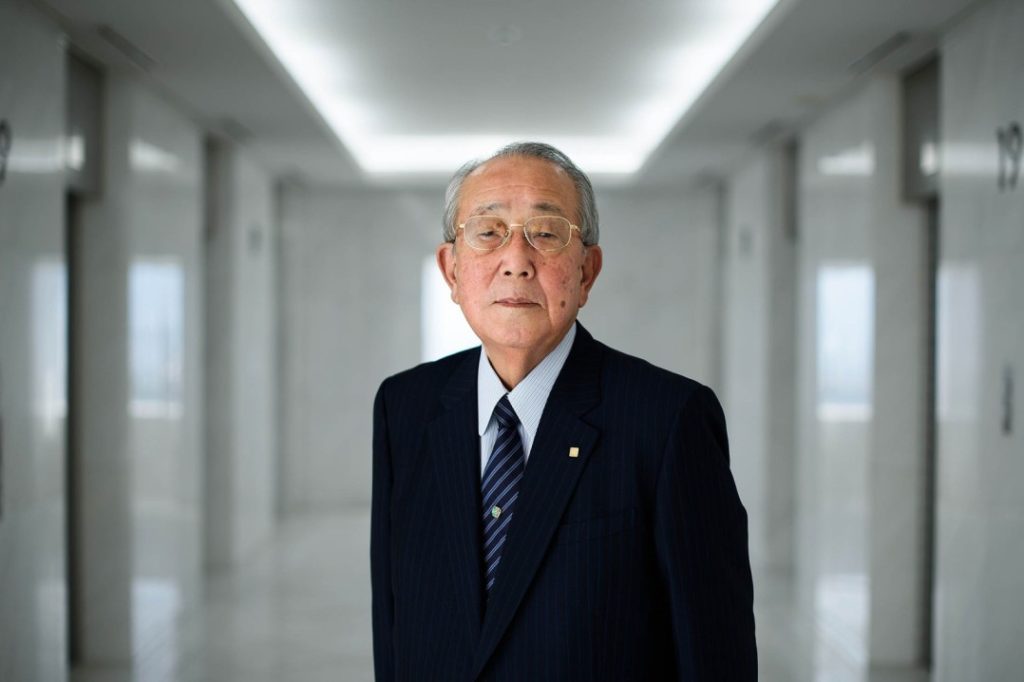
Kazuo Inamori, the founder of Kyocera, was born on 30 January 1932 in Kagoshima, Japan. He completed a graduate degree in Science from Kagoshima University in 1955. His first job was as a researcher at Shofu Industries of Kyoto. His work at the company taught him a lot about ceramic insulators, and he was encouraged to start his own ceramic insulator manufacturing business. So in 1959, he left the company to start Kyocera with the help of 28 staff members from Shofu Industries.

Kyocera Corporation Founder
Image Source: cdn-japantimes.com

Other than Kyocera, Inamori also founded Daini Denden (DDI) Corporation in 1984. In 2010 he was appointed as the CEO of Japan Airlines. He is also into philanthropy works. Inamori is a recipient of the Othmer Gold Medal for his contribution to progress in science and chemistry.

Vivendi

Vivendi – A Conglomerate that is successfully fostering Entertainment and Cultural Diversity Globally.

Vivendi is a successfully established conglomerate in the mass media industry based in Paris, France. The company is currently pioneering in culture, media, entertainment, and communication by promoting the creations of more diverse groups of talented people. The main business of Vivendi revolves around music, television & camera, video games, and publishing. Vivendi has many different businesses and all of them work together to bring great content to people and reveal undiscovered talents. The founding story of Vivendi dates back to 1853 when an imperial decree of Napoleon III built a company called Compagnie Générale des Eaux (CGE).

The Founding Story of Vivendi

The origin of Vivendi started with the formation of the water company, CGE which after a year was granted a concession for supplying water in Lyon. Gradually the company started expanding and supplied water in many cities. From 1853 to 1976, the company remained exclusively focused on the water sector until Guy Dejouany became the CEO of the company. From the water sector, the company gradually expanded to waste management, energy, transport services, and construction. CGE acquired a series of companies and established the Energy Division of the company called Dalkia in 1998.

Vivendi
Image Source: midiaresearch.com

The expansion of the company in the media and telecommunication industry started in 1983 when CGE helped to establish Canal+ which was the first pay-TV channel in France. Later, the company acquired Babelsberg Studio and taking advantage of the deregulation of the French telecommunication market, expanded its growth in the media sector. In 1997, Compagnie Générale des Eaux was renamed as Vivendi and sold its property and construction division. After selling off the two divisions, Vivendi went on a spree to merge with companies like Maroc Telecom, Cendant Software, etc. From 1998, the company started launching digital channels in many countries like Poland, Italy, and Spain.

In January 2001, the media sector of Vivendi merged with the Canal+ television network and with the assets of Seagram Company Ltd formed Vivendi Universal SA. After forming the new company, Vivendi Universal acquired MP3.com and an American leading publisher Houghton Mifflin. In order to raise funds, the company decided to sell another two of its businesses.

Mergers and Acquisitions

Vivendi Universal sold off 80 percent of the company’s subsidiaries to General Electric which further formed NBC Universal. It sold stakes of other companies as well like Canal+, StudioCanal, Monaco Telecom, etc. The selling of stakes in these companies took place in 2004 and the company also let go of Babelsberg Studio. In 2005, Canal+ merged with TPS (France’s second-largest Pay-TV provider).

In 2006, the company changed its name from Vivendi Universal to Vivendi. The first partnership after the company renamed its name was Spiralfrog which was to distribute the company’s song online in the US and Canada. In 2007, the company decided to merge its game publishing unit with Activision for $18.8 billion. The deal was closed for almost half the actual figure and Vivendi got a majority stake for the newly merged company.

In the following years, the company acquired Global Village Telecom (a Brazilian phone operator) and Vodafone’s stake in SFR. But soon the company announced a demerger and SFR was spun off. From 2013, the main priority of the company became content and it started collaborating with content industries. We know the power of content marketing in today’s world and Vivendi took a very strategic decision back then. In recent years the company has acquired many companies like Flavorus, Paddington, The Copyrights Group, Editis, etc. Last year, Vivendi announced a deal to buy Prisma media and a 7.6 percent stake in Prisa (a Spanish company).

Vivendi Create Joy

Vivendi Create Joy is a program started in 2008 which supports and initiates training projects to help the sick, troubled, and disadvantaged young people from eleven to twenty-five years old. These projects are currently taking place in France, Great Britain, and Africa. These projects are initiated to help people take up vocational training and build up their professional networks. It is all about finding their talents and helping turn them into their passion.

Arnaud De Puyfontaine – CEO of Vivendi

Arnaud De Puyfontaine is the Chairman of the Management Board and CEO of Vivendi. Arnaud completed his studies at ESCP Europe followed by the Multimedia Institute and finally Harvard Business School. Earlier in his career, he started working as a consultant for Arthur Anderson and in 1990 he became the Executive Director of Le Figaro. Arnaud also served as the Chairman and CEO of Emap France and many other companies. In 2014, Arnaud joined Vivendi and since then he is serving as the CEO of the company.