Your Tech Story

tech story

América Móvil

América Móvil – A Telecommunication Conglomerate founded by Mexico’s topmost billionaire.

Founded in 1986, América Móvil is one of the largest telecommunication corporations in the world. The company is based in Mexico City and was founded by Mexican billionaire, Carlos Slim. Through the last thirty-five years, América Móvil has successfully expanded its business through strategic plans and acquisitions. The company is one of the global leaders in wireless telecommunication, especially in Latin America. The company believes in providing better services and at the same time closely monitoring the company’s costs and expenses.

This Mexican company is based on the number of equity subscribers and is the largest Central American fixed-line operator. At the beginning of 2019, the company had more than 200 million wireless subscribers and around 84 million fixed revenue-generating units. The company receives half of its annual revenue from Mexico because of its Mexican subsidiary Telcel, the largest Mexican mobile operator. The América Móvil history dates back to the 1980s, so let’s have a look into it.

América Móvil before 2000

If speaking about the history of the company, it actually dates back to 1956 when Publicidad Turistica, an affiliate of Telmex was established. The company published telephone directories which in 1981 started installing and operating wireless telephone systems in Mexico. This company started working under the Telcel trademark in 1989. In the following years, Telcel started expanding as Telmex became a private company and its service quality dropped as well. In 1999, Telcel introduced a PCS system in Mexico and by the summer of 2000, the company had almost 9 out of 12 million cellular phone subscribers in the nation.

The Company in 21st century

While Telmex began acquiring new subsidiaries, the company decided to spin-off América Móvil as an independent company. During that time, América Móvil was Latin America’s largest mobile service provider. After América Móvil became an independent entity, the company was listed on stock exchanges in Mexico City, Madrid, and New York. Since Telcel was already booming, it formed the base of América Móvil. América Móvil eventually expanded its business and formed partnerships with Bell Canada International Inc. and SBC Communications Inc. They together formed a consortium called Telecom Americas Ltd.

América Móvil
Image Source: newsinamerica.com

This consortium was build to develop wireless communication and establish broadband in South America. In June 2002, Bell Canada International sold its 39 percent stake of the consortium to América Móvil. This time the business was booming in Brazil and also expanded to Venezuela, Argentina, and Columbia. The company had always focused on winning over mass customers by offering cheap fixed plans for a fixed number of minutes. The main idea of América Móvil was to get as many people as possible to have access to mobile phones. During this time the company’s expenses were ruthless but soon Slim’s lieutenants proceeded with a much better and strategic plan.

Acquisitions and Expansions

América Móvil eventually started making acquisitions and one of the biggest on the list was acquiring Brazilian BCP S.A. The acquisition was done for $643 million and after this América Móvil became the second-largest mobile phone operator in Brazil. In 2005, the company made a partnership with Ooredoo and in 2007 it acquired a Jamaican mobile operator, Oceanic Digital which was under the brand name MiPhone. The company operates under many brand names such as Straight Talk, Total Wireless, Telcel America, etc. This year, the company has decided to sell Tracfone to Verizon. América Móvil has nearly 2 lakh employees distributed across America and Europe.

Carlos Slim – The Founder

Born in 1940, Carlos Slim belonged to a family who was a part of a small yet prosperous Lebanese Christian community. Carlson’s father started investing in real estate and became a very rich man. Carlos was very interested in his father’s business and he took his father’s place in the company when he was only thirteen years old. Carlos studied civil engineering and worked as a stock trader in Mexico. With the money he earned as a stock trader he opened his own firm, Bursatil. In the early 1980s, during the peso crisis, Carlos bought a number of companies at depressed values and this turned his future.
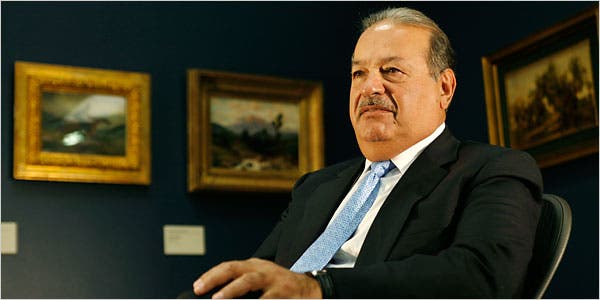
Carlos Slim Founder of América Móvil
Image Source: nytimes.com

One of the companies he bought was América Móvil and under his leadership, the company made some strategic acquisitions and expanded in many other countries. Carlos says that it’s not his deep knowledge in telecommunication that made América Móvil a success but the strategy of reinvesting the profits into the business itself judiciously for growth.

Celestica International Inc.

Celestica International Inc.: Providers of End-to-end Product Life Cycle Solutions

Some companies are not the mainstream ones, but without them, other mainstream companies may fail. Celestica International is an example of such a company that has been enabling the world’s best brands. The company equips its clients with the simplest solutions to their most challenging problems. It is a Canadian electronics manufacturing services (EMS) company with a huge client base across the world. Celestica provides its clients full-fledged services from the ideation of the product to full-scale production and renders its support even after the launch of the product.

Celestica International Inc.

Celestica International is a Canada-based EMS company. The company came into being as the branch office of IBM in Canada, but later it became an independent company. The company headquarter is located in Toronto, Ontario. The services of Celestica include design and engineering, hardware platform solutions, after-market services, precision machining, manufacturing services, logistics and fulfillment, supply chain services, etc.

Celestica International Inc.
Image Source: tangentia.com

Celestica International serves clients from different categories, i.e., enterprise, communications, consumer, aerospace, defense, industrial, alternative energy as well as healthcare across the globe. As of 2018, the company’s annual revenue was US$ 6.6 billion, and 28000 employees are serving the company worldwide.

History of the Company

The history of Celestica differs from most of the technology companies a bit. In the beginning, the current office of Celestica was the Canada branch of IBM. IBM used to manufacture the metal boxes for their mainframe computers at its Canada branch. Later, in the mid-90s, IBM was transitioning from a hardware manufacturing company to a software development and service company. This led to a spin-off of the Canada branch of IBM, and Celestica was formed in 1994.

Though IBM was still owning Celestica, it was unable to focus on the company entirely. So in 1996, IBM decided to sell Celestica and started to look for potential buyers. IBM held an auction between five companies, and with a bid of $750 million for a 69% share of the company, Onex Corporation acquired Celestica International.

Going into the hands of Onex Corporation, Celestica expanded as an independent company. The company in the very next year of its acquisition, in 1997, acquired the manufacturing unit of International Computers Limited, the Design to Distribution. The same year it went to buy a major share in the manufacturing lines of Hewlett-Packard followed by the acquisition of Ascent Power Technology.

In 1998, the company had its first IPO in the EMS field, where it rose $414 million. The very IPO is known to be one of the largest technology IPOs in Canadian history. The IPO made the company turn a revenue of around $3.2 billion annually. In 2005, Celestica became the first EMS provider to win the prestigious Shingo Prize for Lean Manufacturing award.

Acquisitions and Partnerships

Celestica, starting with International Manufacturing Services (IMS), made around eight acquisitions in 1998. In the year 2000, the company partnered with Motorola for the manufacturing of wireless telecom products. The next year, Celestica had another agreement with Lucent worth up to US$10 billion as an EMS provider. The company also made its largest acquisition in Asia by acquiring the Singapore-based EMS provider Omni Industries Limited. Celestica also announced its Global Design Operation in the same year.

With the acquisition of Manufacturers’ Services Limited (MSL) in 2004, Celestica was able to reach an even more expanded customer base. In 2005, the company acquired the flat-panel display repair services provider Displaytronix, followed by the acquisition of CoreSim, a leader in advanced design analysis and redesign services. In 2008 Celestica partnered with Microsoft to develop the BEE3 platform prototypes. In 2010, the company went on to take over the AlliedPanels and Invec Solutions, followed by the acquisition of Brooks Automation in 2011 and D+H Manufacturing in 2012.

The CEO: Robert A. Mionis

Robert A. Mionis is the president and Chief Executive Officer (CEO) at Celestica. He was appointed as the CEO of the company in 2015. Before that, he was working as the President and CEO of StandardAero. Mionis started his career at General Electric (GE), followed by holding many powerful roles in companies like AlliedSignal, Axcelis Technologies, and Honeywell. Mionis has also been on the board of various companies working in different fields, including industrial, aerospace, healthcare, and automotive segments.

ASM International

ASM International: The Biggest contributors in the Growth of Semiconductor Technology

The semiconductor chips or we simply call them the ICs, have transformed the world of information technology. The founding of the ICs has opened doors for many who wanted to try their hands on a new career through innovation. ASM is one such name that came into being during the time when the semiconductor industry started to pave its way. And today, the names ASM and semiconductor technology go hand-in-hand. The company started as a sales agent in semiconductor fabrication technology, and now, ASM is known as the pioneer of new semiconductor technologies like Photolithography, Epitaxy, Ion implantation, and Atomic Layer Deposition (ALD).

ASM International

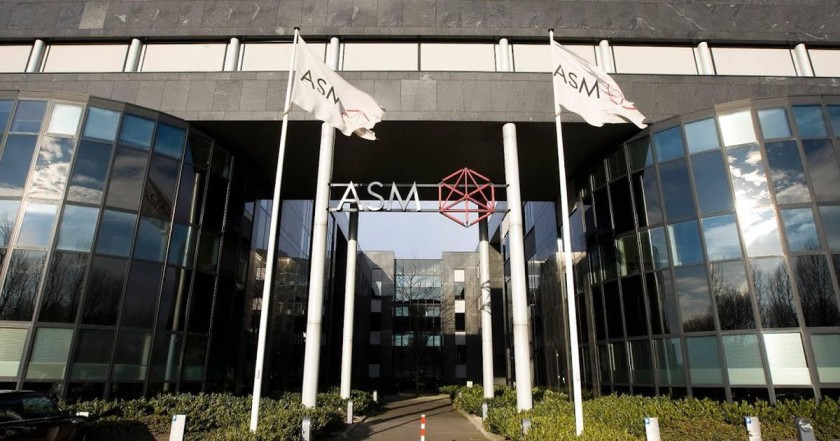
ASM has been functioning since 1968, the time when semiconductor technology was at its beginning too. The company has been working as a manufacturer of semiconductor wafer processing equipment for the fabrication of semiconductor devices.  The working of ASM includes designing, manufacturing, sales, and service of the semiconductor wafers. ASM International shines as one of the leaders in the industry and serves in various fields, including communications, entertainment, energy, transport, and medicine.

ASM International
Image Source: telegraaf.nl

The Origin of the Company

Arthur Del Prado founded AMS International as Advanced Semiconductor Materials in 1964 in Bilthoven, the Netherlands. He founded the company behind his house in a small shed, where he developed one of the first products of the company. In the very beginning, Advanced Semiconductor Materials was a sales office for semiconductor fabrication technology. In 1968, it registered as a private limited company.

In the next ten years, in 1970, ASM started its own designing and manufacturing unit for chemical vapor deposition equipment. With the hard work of Prado, ASM acquired a semiconductor molds manufacturing company Fico Toolings in 1974. The company also established its first international office in Hong Kong in 1975, which is known as ASM Pacific Technology today. In 1976, ASM had another office opened in Phoenix, Arizona.

In May 1981, ASM had its first IPO, and it was listed on Nasdaq. Del Prado believed in innovation and started to invest in new technologies like lithography, ion implantation, epitaxy, and wire bonding. This helped the company to grow at an even faster pace. The company then, in 1988, divested ASML Holding N.V. and ASM Ion Implant and ASM Fico to Berliner Electro Holding in 1993.

Different branches of ASM started to focus on diverse technologies to achieve faster results. The ASM Europe was working on the vertical low-pressure chemical vapor deposition furnaces, ASM Japan focused on plasma-enhanced chemical vapor deposition, and ASM America targetted the single wafer epitaxy.

At the beginning of the 2000s, the company was working on the 300-mm wafer technology and atomic layer deposition and introduced the latter in 2007. ASM was among the top ten global companies in the first Institute of Electrical and Electronics Engineers (IEEE) Spectrum study, 2006. The 45nm node and the Pulsar ALD tool from ASM became the first system to be used in the high-volume manufacturing of devices using a new hafnium-based high-k dielectric material. In 2009, the company headquarters was shifted from Bilthoven to Almere, the Netherlands. Currently, the company is working on device geometries of 10nm and below.

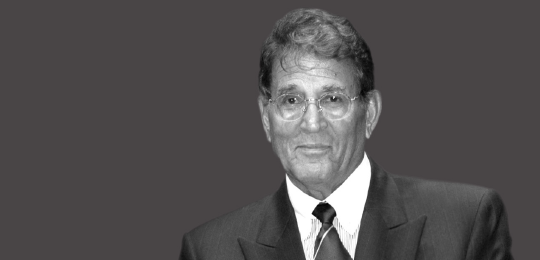
The Founder: Arthur del Prado

Arthur del Prado is the name of the legend who has a great contribution to the field of the semiconductor industry. He was born on 17 November 1931 in Dutch East Indies. During the Second World War, he got separated from his family and was locked in a Japanese camp as a teenager. But fortunately, he met his family again after the war was over.

ASM International Founder
Image Source: asm.com

Del Prado joined the University of Twente and studied chemistry, and later, went to the University of Amsterdam to pursue a degree in economics. He also went for further studies at Harvard Business School in 1954. He came back to the Netherlands in 1958, and in 1964, he founded ASM International. Del Prado served ASM as the Chief Executive Officer until 2008 and as the Chairman until 2016. He passed away in September 2016 at the age of 85.

ASM Today

ASM International is known to be the biggest contributor to the growth of the semiconductor industry. The company is currently having its various branches in 16 different countries, and over 2337 employees are working for it. ASM is the major producer of the products in the Atomic Layer Deposition, Epitaxy, Chemical Vapor Deposition categories. Benjamin Loh is the current CEO of ASM International.

Ericsson

Ericsson: From Telephone Equipment Makers to the Biggest Player in Networking and Telecommunications

The Generation after World War 2 and before the beginning of the new century has witnessed the biggest technology revolution in the history of technology. But few companies have been there from the beginning, and as a part of the revolution, they have contributed a lot than just watching things change. One such company, which has over 49000 patents in its name and has been adding its share to the development process for more than 150 years, is Ericsson. The company is one of the leaders in networking and telecommunications, constantly providing something to the ongoing technology revolution.

About the Company

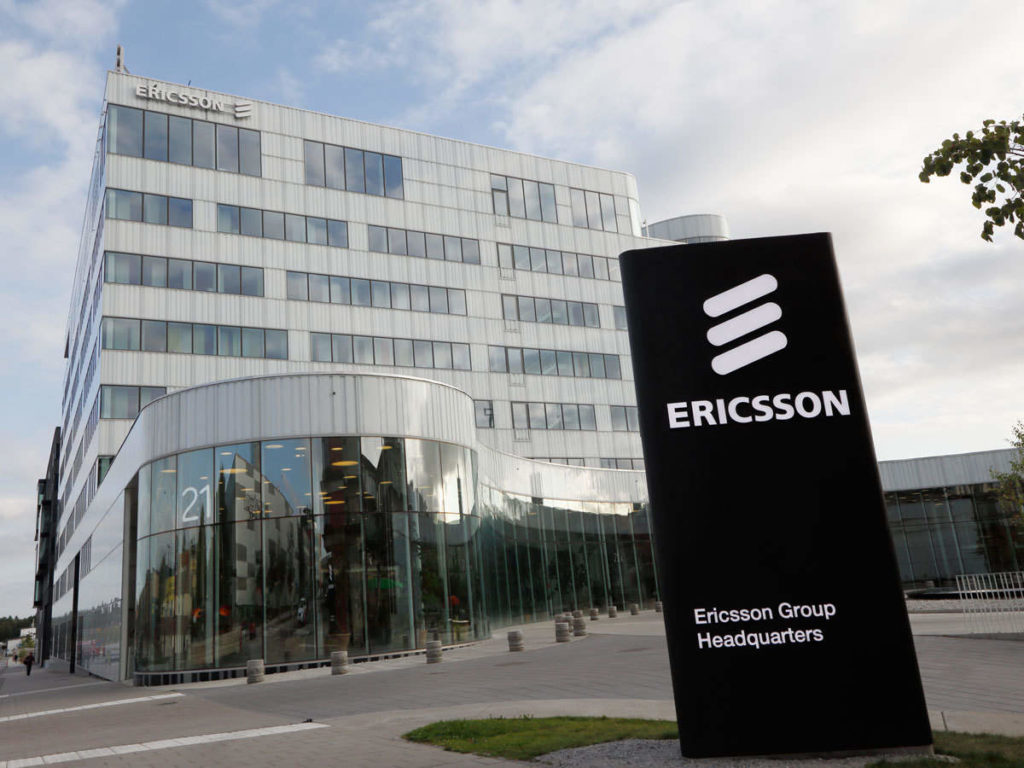
Ericsson is a Sweden-based multinational telecommunication company. The company headquarters in Stockholm and has multiple offices in different countries. Ericsson is known for its contribution to the development of wireless technology and is also the founder of Bluetooth technology. It has 27% of share in the world’s 2G, 3G, and 4G networks, and currently, it is emerging as the biggest 5G technology provider. Ericsson also deals in software development and infrastructure development in ICT for telecommunications operators, development of equipment for traditional telecommunications, Internet Protocol (IP) networking, mobile and fixed broadband, cable TV, IPTV, video systems, etc.

The Foundational Story of Ericsson

The company’s history dates back to almost 150 years ago. It was founded in central Stockholm in 1876 by Lars Magnus Ericsson, who, before founding the company, worked for a telegraph equipment development company in Sweden. The idea behind opening Ericsson was quite simple, repairing the foreign-made telephones.

Only in two years of its founding, in 1978, Ericsson started to independently build and sell the telephone equipment. In the same year, the company bagged a contract from Stockholms Allmänna Telefonaktiebolag (the first telephone company in Sweden), where the company had to supply telephones and switchboards to them. This was a big step for Ericsson, and soon it was ready for its international expansion.

Ericsson
Image Source: economictimes.indiatimes.com

In 1890, the company opened its first international factories in the UK, Russia, Australia, and New Zealand. In the next 20-30 years, the company was competing with its rivals in the US and China but continued to dominate the European telecommunication industry. With the major events taking place, including the World War, the Great Depression, etc., the company was losing its grip in the foreign as well as local markets. The company came under debt, leading to selling off its share to other companies.

In 1925, Karl Fredric Wincrantz acquired most of Ericsson’s shares. With this acquisition, they got rebranded as Telefonaktiebolaget LM Ericsson. Due to the first world war and other events taking place, the governments took the charge of the telecommunication operations. The government would grant the operations of the telecommunication operations on leases, and the company also managed to get some. This led the company to stabilize its condition in the telecommunication market.

Though the company was only providing the manual exchange design telephones, in 1956, it came up with the world’s first fully automatic mobile telephone system, MTA. This changed the conditions for the company, and again the company became one of the biggest suppliers of telephone equipment and crossbar switching. Ericsson crossbar switching was the most in-demand equipment that the telephone administrations in various countries had started to use. In 1983, Ericsson introduced the ERIPAX suite of network products and services.

By 1990, with the rise of the internet and mobile phones, Ericsson also started to build mobile phones and was dominating 40% of the world’s mobile market. During the same time, it was operating in 117 countries providing its telecommunication services. In 1996, the company was already operating tests on WCDMA and had partnered with DoCoMo. But the mobile revolution was moving too fast, and the company was unable to follow up. So in 2001, there was a spin-off of the mobile unit from Ericsson, and a joint venture of Ericsson mobile unit with Sony formed the Sony Ericsson Mobile Communications. This spin-off led to multiple employees cut as well.

The spin-off proved to be a better decision, as the arrival of 3G has opened new doors for Ericsson. It was already working on WCDMA and continued to improve its workability with the changing trends. The improved version of WCDMA, High-Speed Packet Access (HSPA), was out, and by 2006, Ericsson was officially providing its HSPA services in 59 countries. In 2012, Sony acquired all the share of Ericsson in Sony Ericsson, and Ericsson announced that it would solely work on the wireless technology and acquired BelAir Networks, a network technology company. This acquisition was followed by the acquisition of NKT Holding, Red Bee Media, Microsoft’s Mediaroom, some shares in Apcera for cloud policy compliance, Envivio, some operations in Ericpol, etc.

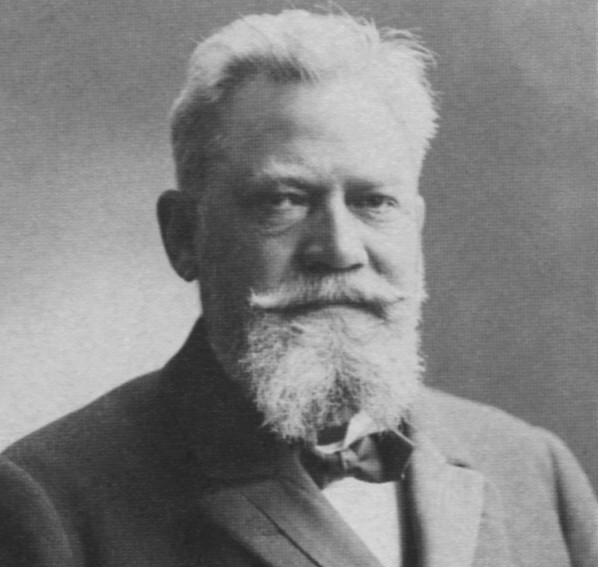
The Founder: Lars Magnus Ericsson

Ericsson founder
Image Source: mg.wikipedia.org

The beginning was quite rough for Lars Magnus Ericsson, the founder of the company. He was born in a small village of Värmland near Karlstad and Arvika. He lost his father at 12, so he had to go out and earn bread for his family. He worked in small workshops and various other places and arranged enough money to leave his village and moved to Stockholm. There he got work in a telegraph equipment-making factory. He learned the skills and was offered two state scholarships to study instrument-making abroad for three years. After completing the scholarship, Ericsson came back to Sweden, and with one of his friends, Carl Johan Andersson, he started a small workshop in a small kitchen that today is known as Ericsson. Ericsson retired from his company in 1900, at the age of 54 and sold all his shares in 1905.

Ericsson has gone through all up and downs, and still, it has emerged as the leader in the telecommunication industry. The company started by making telephone equipment, and today it is the largest wireless network provider. The current President and CEO (Chief Executive Officer) of Ericsson is Börje Ekholm and Ronnie Leten is the Chairman.

National Instruments

National Instruments: The Success Story of a Company Running After Innovation

Necessity is the key to invention. This is the statement that has been the basis of most of the inventions and innovation that has taken place in the world. There have been many stories of success that are the result of need, need to bring about change, and need to get the best technologies for solving the most complicated problems. NI aka National Instruments Corporation is also one of the success stories whose foundation based on the need to turn things simpler and make work easier for people.

National Instruments Corporation

NI is an American technology company which is based in Austin, Texas. The company is known for its automated test equipment and virtual instrumentation software. The popular software products from NI include LabWindows/CVI, LabVIEW Communication System Design, DIAdem, VerusStand, NI TestStand, NI Switch Executive, NI Multisim, etc. NI builds programs to help people do their programming even faster and better by providing them with easy to use automated programming environment.

National Instruments
Image Source: ni.com

For example, LabVIEW is a graphical development environment, whereas the LabVIEW Communications System Design Suite is built to provide its users with faster deployment of the communication systems. Similarly, NI’s NI DIAdem is used for data management, and NI VeriStand is designed for real-time testing. The company has also introduced many hardware products as well. These products include NI CompactRIO, NI roboRIO, NI CompactDAQ, STS, PXI and PXIe Platforms, etc.

History

NI’s history is as old as forty years.  The company was founded in 1976 by three colleagues, James Truchard, Jeff Kodosky, and Bill Nowlin, working at the University of Texas at Austin Applied Research Laboratories. The three co-founders were part of a team that was researching for the US navy during the 1970s. While working together, the three realized that the technology they were using was quite outdated and took way too much time to complete a task. The three thought of developing a new data analysis product that would be faster and would be easy to use.

For the purpose of developing a new product, like many other technology companies, the three founded their company working in the garage of James Truchard in 1976. After a lot of brainstorming and discussion over names like Longhorn Instruments and Texas Digital, they finalized National Instruments (NI) for their new company.

The three were still working at the university and were handling their company work through the garage only. They took a loan of $10,000 from the Interfirst Bank. For the marketing of their company they used the method of cold calling and bagged their first contract from San Antonio based Kelly Air Force Base. They also hired Kim Harrison-Hosen for all their office work, and by the end of the year, they had successfully connected with three clients.

In 1978, the three moved the company to a real office at Burnet Road in Austin. The co-founders focused on the marketing of their company, and through mails and cold calling, they were able to get orders worth $400,000 in the next two years. In 1980, the profits made the co-founders confident enough to leave their jobs and focus solely on company operations.

NI then started to take up new projects so that to expand the scope of the company. By 1983, the company had changed two offices, and in the same year, it produced its first GPIB board used to connect instruments to IBM PCs. The latest discovery of that time was the Macintosh computer, and NI wanted to take advantage of this opportunity.

NI, in 1986, introduced its first flagship product, i.e., LabVIEW graphical development platform for the Macintosh computer. Later, in 1991, NI got the patent for LabView. This software was easy to use as the programmers did not have to write the code, but they could program graphically by connecting the icons given. After Macintosh, the company released LAbWindows for Microsoft DOS. In 1987, NI opened its first international office in Tokyo, Japan. NI also launched the National Instruments Alliance Partner program to connect with third-party developers and engineers to enhance the capabilities of NI products.

NI had $100 million in annual sales in 1993, and by 1998, the company had hired 1000 employees, such that they had to move to a new office. This new office boasted an employee-friendly environment that included play areas and a gymnasium for its employees.

Though NI had already appeared on the web, at the beginning of 2000, the company started its website with the domain ni.com. With the widespread of the internet, NI started to work on web technologies. It also launched the NI Developer Zone, where users could access the sample codes and sample programs and seek help from the NI engineers. The company launched its first international manufacturing unit in Debrecen, Hungary, and by 2006, it had around 40 sales offices opened globally. In 2013, NI acquired Digilent Inc.

The CEO of the Company

National Instruments CEO
Image Source: ni.com

Eric Starkloff is the current CEO of NI. He is also one of the board members of NI and the President of the company. Starkloff is a graduate in electrical engineering from the University of Virginia. He started his career with NI as an application engineer and has been working at NI for more than twenty years.

NI Today

NI is one of the biggest technology companies in the world. After moving to different size offices, the company now headquarters in Austin, Texas. Michael E. McGrath is the current Chairman of the company, and Eric Starkloff serves as the CEO at NI. The company has got over 7500 employees globally, and the annual revenue of the company, as of 2019, is recorded to be $ 1.353 billion. NI went public in 1995 and is listed on NASDAQ as NATI.

TE Connectivity

TE Connectivity: The ‘Not So’ Popular Global Industrial Leader in the World of Connectivity

Facebook, Google, and Microsoft are the names that are well known to us and have become an inseparable part of our lives. We all use their products and know well about them. But there are a few companies that are continuously providing us with their services, but still, we don’t know much or anything about them. These companies are not very popular but are touching our lives, and in some cases, we can’t even manage without their products. One such company is TE Connectivity, which has been there for more than a decade providing its services to us without caring about if its customers know about it or not.

About the Company TE Connectivity

TE Connectivity is an IT and electronics company that manufactures sensors and connectivity equipment that are capable of working in a harsh environment. From the internet to the cloud structure, from drones to space rockets, and from the vehicles on the roads to aeroplanes in the sky, TE Connectivity has its part in every other field that exists in the world.

The company works in three main fields, i.e. Communications Solutions, Transportation Solutions, and Industrial Solutions. So as the names suggest, TE connectivity provides its connectivity solutions in the field of communication, transportation, and in various industries.

The communication solutions include the manufacturing of electronic equipment that is used in home appliances like dishwashers, washing machines, refrigerators, air conditions, etc. The transport solutions by TE Connectivity are focused on automotive, industrial, and commercial transportation, and these products are used in high-speed metros, light rail vehicles, locomotives, etc.

This segment of the company also works on building sensors for various industries like medical, aerospace, commercial transportation, and defense, etc. With the Industrial solutions, TE Connectivity manufactures equipment that provides connectivity, power, and signal to automate the operations in various fields, including transportation, industries, medical, defense, and others.

The Foundational Story of TE Connectivity

TE Connectivity is a spin-off of Tyco International Ltd., a company with a history that dates back to 1960. Arthur J. Rosenberg founded Tyco International in Ireland with its operational headquarter in Princeton, New Jersey. It was a security system company and was mainly focused on semiconductor manufacturing for the government and did research work for the military.

TE Connectivity
Image Source: commons.wikimedia.org

In 1964, the company went public, and in 1970, it was listed on the New York Stock Exchange. By the year 1980, Tyco International had acquired companies like Simplex Technology, Grinnell Fire Protection Systems, Armin Plastics and was spreading its services. The company then divided its operations into three categories, i.e., fire protection, electronics, and packaging. Tyco continued to work in the three fields until 2007, when the current CEO of Tyco International, Ed Breen, spun off the company into three companies. TE Connectivity was one of the three resultant companies.

The CEO of the Company

Terrence Curtin is the current CEO at TE Connectivity. He was born and brought up in Mount Penn, a city in Pennsylvania, USA. According to one of the interviews of Curtin, he wasn’t good at academics but was one of the star players of the gridiron and the baseball team of his school. He wanted to do better at academics, so he used his talent of gridiron and baseball to get into a good college to get an environment where he could improve at his studies. Eventually, he got admission into the Albright College in Reading, Pennsylvania. He graduated with a degree in accounts in 1990 and immediately joined one of the biggest accounts firms of that time, Arthur Andersen.

After working for a few years with Arthur Andersen, Curtin joined TE Connectivity as its Chief Financial Officer and later, held the position of the corporate controller of the company. In a few years, he was appointed as the president of the company. In 2016, he got elected to the Board of Directors of the company. After a year, in March 2017, Curtin was appointed as the CEO of TE Connectivity.

TE Connectivity Today

TE Connectivity is one of the biggest technology companies that are into connectivity and sensor products manufacturing. The company has got 150 branches in 40 countries, and over 7000 engineers working for TE are connecting to its customers every day to solve their problems. Other than that, the employee count for the company as of 2020 is 80000, and the total revenue for the same year was recorded to be USD 12 billion.