Your Tech Story

tech story

Synopsys

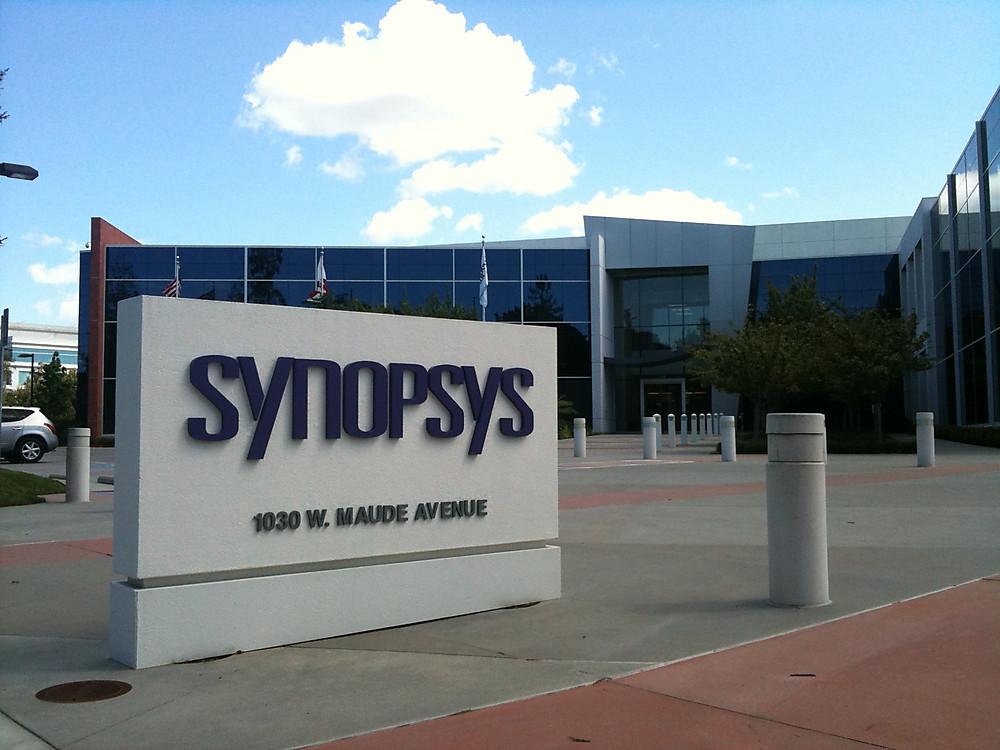
Synopsys – Changing The Way Companies Work And Play

Advanced silicone chips and increasing software content working together intelligently and securely are at the core of this new era of digital innovation. Synopsys leads Smart Everything with the most advanced chip design and verification technologies worldwide, IP integration and security software, and quality testing.

Synopsys technology allows major firms to integrate their next-generation products into smarts, safety, and safety. They help our clients reach new energy, speed, connection, mobility, and reliability goals from silicone through to software that is vital to Smart Everything’s future.

The Establishment Of Synopsys

In 1986 in the Research Triangle Park in North Carolina, Synopsys was founded by Aart J de Geus and David Gregory. The company was initially founded as Optimal Solutions, a charter designed and produced by the General Electric team to develop and commercialize synthesis technologies. Over the history of Synopsys, they acquired a number of key acquisitions in silicon and design testing. CoWare, which now belongs to Synopsys, was a supplier of platform-driven software and services for electronic systems (ESL) design. CoWare has operations worldwide, main R&D offices in Belgium, Germany, and India. CoWare has its headquarters at its offices in San Jose, Calif.

Synopsys
Image Source: glassdoor.com

In 1992, the Interuniversity Microelectronics Center (IMEC) in Belgium launched CoWare development as an internal project. As an independent firm, CoWare split out in 1996. Synopsys announced a purchase of CoWare on February 8, 2010.

Products and Solutions

Designing The Best Chips Quicker

Synopsys is the world’s leading supplier of solutions for the development and verification of advanced silicon chips as well as the design of new processes and models for the production of these chips. Their design technologies enhance productivity and deliver the highest quality while optimizing the power, performance, and cost chips. The verification technology cuts months off project plans by allowing complex chips to be verified with software more quickly.

Providing Security Faster

In every level of software development and the whole supply chain, Synopsys helps companies integrate security and quality in the DNA of their software code. It helps in reducing risks while maximizing application development speeds. The customer may identify and solve vulnerabilities and deficiencies in proprietary code, open-source, and application behavior at an unprecedented depth, accuracy, and speed using our statical analysis, software composition analysis, and dynamic analysis solutions. They assist organizations with early and regularly testing their software so that costly product crashes, security violations, and system disasters can be avoided. In order to verify compliance with licenses, correct vulnerabilities, and decrease operational risk, they also automate the securing and management of open-source software.

The Founder of Synopsys: Aart de Geus

Aart has been developing Synopsys from a start-up synthesis company to a global high-tech leader ever since its co-founding in 1986. He has been a global leader in logic synthesis and simulation for many years and often leads important conferences in electronics and design automation.

Dr. de Geus has been widely recognized for his technical, business, and community achievements with multiple awards including Electronic Business Magazine’s “CEO of the Year,” the IEEE Robert N. Noyce Medal, the GSA Morris Chang Exemplary Leadership Award, the Silicon Valley Engineering Council Hall of Fame Award, and the SVLG Lifetime Achievement Award. He served on the Silicon Valley Leadership Group boards, the Applied Materials Alliance, the Global Semiconductor Alliance, and the Alliance for the Design of Electronic Systems.

Chi-Foon Chan: The Co-CEO of Synopsys

Chi-Foon is responsible for vision and strategy building, directing the company, and ensuring excellence in execution supporting the success of our clients. As President and COO of the Company, he was responsible for internal operations and worldwide field organizations 14 years prior to his 2012 appointment as President and CEO.

As Vice President for Applications and Services, Chi-Foon joined Synopsys in 1990, helping to construct the organization of the Technical Field. He supported many significant projects such as IP entry, and facilitated significant acquisitions personally, such as Avanti, Virage Logic, Magma Design Automation, and SpringSoft. In 2014, with Coverity and the acquisition of Codenomicon, he drove Synopsys into the software testing business and into the software security business.

Prior to Synopsys, Chi-Foon was responsible for marketing all NEC chip devices in North America to industry leaders such as NEC Corporation, which was General Manager of the microprocessor group. Before NEC, he was Intel Corporation’s Engineering Manager. He has an M.S. and a Ph.D. from Case Western Reserve University in Computer Engineering and a B.S. in Electrical Engineering from the University of Rutgers.


Booz Allen Hamilton

Booz Allen Hamilton – The Pioneers of Consulting and Management Services

Booz Allen Hamilton is an American consulting agency, which provides management and IT consulting services to its clients. The company headquarters is based in McLean, Virginia, U.S., and was founded in 1914, by Edwin G. Booz, James L. Allen, and Carl L. Hamilton. The company name is after the surnames of three founders. Booz Allen is one of the leading consulting firms in America and has also over 80 offices in different parts of the world, including clients from private-public as well as non-profits sectors.

Booz Allen Hamilton has two divisions that provide IT and management services, i.e., Worldwide Commercial Business and Worldwide Technology Business. The former is for providing management services, and the other is to provide technology consulting and system development services to both private as well as government organizations. Booz Allen & Hamilton Health Care Inc and Booz Allen & Hamilton Acquisition Services are the main subsidiary companies of Booz Allen Hamilton.

The Establishment of Booz Allen Hamilton

The company history dates back to over 100 years ago, in 1914, when a company, named Business Research Service, was founded by Edwin G. Booz to provide consulting services to other companies. Booz wanted to build a business model where companies could hire experts for unbiased advice for their businesses, such that to help them grow even better. The business was recognized as one of its kind. Two years later, two other partners, James L. Allen and Carl L. Hamilton joined the company.

Even at the beginning of the company, it was able to grab clients like Goodyear Tire & Rubber Company and Canadian Pacific Railway. For the first thirty years of Business Research Service, it was juggling with a lot of name changes, like Edwin G. Booz, Business Engineering Service, and Business Surveys. George Fry joined the company as the first full-time assistant in 1925 and later, became a partner. In 1936, the company headquarters was moved to Field Building in Chicago. The same year, the company was named Booz, Fry, Allen & Hamilton, but as in 1942, Fry left the company, it became Booz Allen Hamilton.

Booz Allen Hamilton
Image Source: monster.com

In 1940, Booz Allen Hamilton bagged a contract from the U.S. Navy such that the company was to assess the preparedness of the Navy for the second world war in terms of the condition of the Navy’s shipyards, telephone systems, and intelligence operations, etc. By the end of the war, the company had established three offices in the major cities like Chicago, New York, and Los Angeles, with around 400 clients on board. Though the war was over, the company continued to offer its services to the US military.

In 1955 Booz Allen Hamilton established the Booz Allen Applied Research, Inc. (BAARINC). The company got recognized as ‘the world’s largest, most prestigious management consulting firm’ by Time magazine in 1959. By this time, IBM, Abbott Labs, and the US Department of the Interior had also become its clients, and the company was making annual revenues worth $55 million.

Booz Allen Hamilton went public in January 1970. In the early 70s, NASA hired the company to evaluate a $100 million satellite to orbit the earth for one year. During the same time, the company also started to work in the telecom and IT field. 1980, the recorded annual revenue for the company was $180 million. To get a hold on the technology market, the company entered the commercial systems integration field in 1989.

By the mid-90s, the company’s operations were restructured and divided into two divisions, i.e., technology services & systems development and commercial management consulting. In 2008, with a spin-off, the commercial arm of Booz Allen Hamilton was separated to form Booz & Company, which later was acquired by PwC. The company had another round of IPO in 2010. By 2020, the company also became the SEC’s major cybersecurity services provider.

International Expansion and Acquisitions

In 1953, the company went international after Booz Allen Hamilton bagged a contract from the Philippines and the Egyptian government. During the same time, the company also opened its office in Italy. The company made some acquisitions like Designers for Industry (renamed Design & Development) and Foster D. Snell Laboratory in the early 60s.

By the end of the 60s, the company had also started to work with several European industries, including the British heavy industry and consumer goods manufacturers and West German and Scandinavian steel producers. During the same time, the company was also actively working with the governments of Brazil, Argentina, Abu Dhabi, Saudi Arabia as well as Venezuela.

In 1972, Booz Allen Hamilton entered the Japanese industry. The company acquired Advanced Decision Systems Inc in 1991, and in 2012, it acquired the Defense Systems Engineering & Support division of ARINC, followed by the acquisition of Epidemico in 2014, S.C. technology firm SPARC in 2015, and eGov Holding in 2017.

The Founder: Edwin George Booz

Edwin George Booz is recognized as the founder of Booz Allen Hamilton as he was the first one to start the company. He was born on 2 September 1887 in Reading, Pennsylvania. He completed a bachelor’s degree in economics and a master’s degree in psychology from Kellogg School at Northwestern University. As soon he completed his education, he started Business Research Service in 1914.

Trimble Inc.

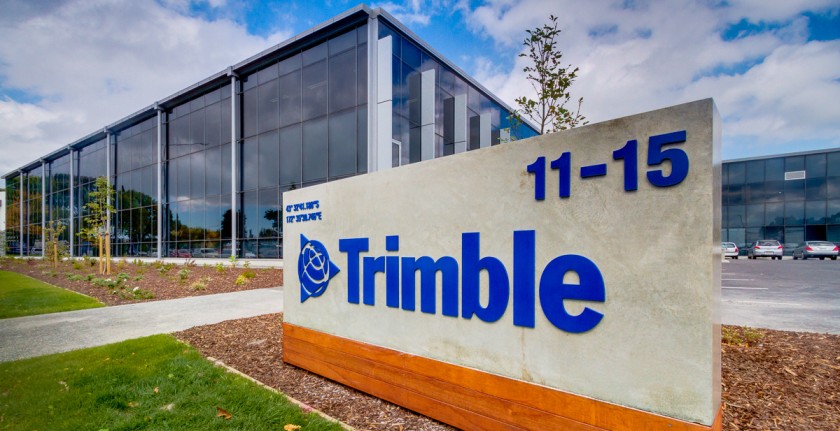
Trimble Inc. – A Software and Service Technology Company providing services in Global Industries.

Trimble Inc. is a technology company based in California, Sunnyvale. Comprehensive service for agricultural, building & building, geospatial, natural resources and services industries, government, transportation, and other sectors. Trimble also develops hardware for receivers, scanners, lasers for scope finders, aerial UAVs, inertial navigation systems, and software processing tools of the Global Navigation Satellite Systems (GNSS). The company was established in November 1978 and uses the slogan “Converting the Work of the World.”

Establishment of Trimble Inc.

Trimble Inc. Navigation, which was initially established over the movie theatre in Los Altos, California, was created by Charles Trimble and two partners from Hewlett Packard in November of 1978. At the end of 2016, 8,388 employees were employed in the company, with over half of employees working outside the USA.

The most popular was their acquisition of Google’s SketchUp 3D modeling software package in 2012. As of 2014, they are also the owners of Tekla (BIM), Vico Office, and Gehry Technologies’ GTeam (BIM data management) (project coordination). Sefaira was purchased by Trimble in 2016. In an all-cash transaction of 1.2 billion dollars, the company Trimble entered into an agreement on 23 April 2018 that it should purchase privately-owned viewpoints from the investment company Bain Capital.

Trimble Inc.
Image Source: techherald.in

On 12 February 2019, the new division Trimble MAPS was launched, bringing together former ALK Technologies and Applications Final Mile companies from Trimble. On 30 October 2019, Trimble unanimously chose Robert G.Painter, as Chairman and CEO of Trimble on 4 January 2020, the first day of the 2020 Fiscal Year of Trimble, to succeed Mr. Steven W. Berglund. On 4 January 2020, Painter joins the Trimble Board.

The firm changed its name from Trimble Navigation Limited to Trimble Inc. and on the first day of October 2016, the name change and modification of the legal address became effective. Trimble Inc. continued operations for stakeholders without alterations or material impact.

Products And Services

Spectra Precision Laser AG402

Trimble offers a whole range of laser transmitters from Spectra Precision, which can be used for a variety of water management tasks manually and ensure a uniform distribution of the water on your field. Laser transmitter options are available for different needs and budgets.

NAV-500™ Guidance Controller

The guidance controller NAV-500 is a cost-effective precise solution for receiving corrections from multiple satellite GNSS constellations coupled with all GFX series displays. Get repeatable precision submeters and a high price of full farm covers for use in tillage, widespread seeding, spraying, and harvesting.

GFX-350™ Display

The Trimble GFX-350TM is Trimble Agriculture’s latest and easy-to-use AndroidTM Display. This cost-effective solution offers excellent functionality and an easy installation, providing access to automation and application control for all farms.

The Founder: Charles Trimble

The Trimble Navigation Limited (TNL) was originally founded in 1978 to produce Loran navigational products by Mr. Charles R. Trimble. Mr. Trimble left TNL in 1998 to chair the GPS Industry Council of the United States. In commercial and civil applications, while maintaining the military advantages of GPS, He has been active in the political development of GPS and has been closely involved in protecting the GPS range.

He is a member of the National Academy of Sciences, the National Academy of Engineering, the Trust Board of Caltech, the NASA Consultative Board, as well as a board of directors of several highly technical companies. He has served on the Governing Board of the Asia-Pacific National Center and is a member of the Foreign Relations Council.

Mr. Trimble has received numerous awards recognizing his achievements: INC Entrepreneur of the Year awards (1991), Financial World Magazine’s CEO of the Year (1996), IEEE’s Position Location and Navigation Symposium Kershner Award (1996), the American Institutes of Aeronautics and Astronautics Piper General Aviation Award for his pioneering research and technology (2002). He graduated from the California Institute of Technology (1963) with a B.S. Degree in Engineering Physical (1964).

Robert G. Painter: President and CEO

In January 2020, Robert Painter was elected Chairman and CEO of Trimble. He served as Chief Financial Officer for the worldwide financing operations of Trimble from 2016 to 2019. Mr. Painter was appointed Vice President, in 2015, of Trimble Buildings, a Trimble group focusing on BIM-centered firms covering the building lifecycle design-construction continuum.

Robert served as Managing Director of the Joint Venture of the Company and Hilti from 2011 to 2014 to support collaborative product innovation in the construction industry. He served as Managing Director of the Construction Services Division of the company from 2009 to 2010.

In 2006, he joined Trimble and took the lead in all acquisition and corporate strategy activities, leading Trimble’s business development activities. Prior to joining the Group, Painter has served at Cenveo, Rapt Inc., Bain & Company, Whole Foods Market, and Kraft Foods in a variety of management and financial positions. He graduated from West Virginia University in 1993 with a Bachelor of Finance degree and received an MBA in Business from Harvard University in 1998.

Supermicro

Supermicro – The Company Seeking Innovation for its Customers.

The arrival of personal computers helped IT technology grow at a faster pace. With having computers at home, people were more interested in learning about IT and upcoming related technologies. It also helped many budding entrepreneurs to try their hands on business apart from the traditional trades and grow along with the IT industry. Supermicro ( aka Super Micro Computer Inc) is one such company that started when the personal computer was becoming a thing, and today, after 28 years long journey, the company is one of the largest IT company in the world.

Supermicro as the Market Leader

Supermicro is a 28 years old American information technology company founded by Charles Liang, Wally Liaw, and Sara Liu in 1993. The company headquarter is located in San Jose, California. Supermicro is a public company and trades on Nasdaq as SMCI. Charles Liang, the founder of Supermicro is heading the company as the president and the CEO.

As per 2017 records, Supermicro made revenues worth $2.53 billion and has been listed among the world’s 100 largest US publicly traded companies by Fortune Magazine. Supermicro is known for its services in computer servers, storage, networking devices, server management software as well as a high-end workstation for enterprise IT and embedded markets.

The Founding of Supermicro

Supermicro was founded by Charles Liang, Wally Liaw, and Sara Liu in 1993, at a time when companies like Oracle, Dell, and IBM were already dominating the market. The founders established the company intending to bring innovative technology to the customers at lower prices, and it still follows the same goal. According to CEO Liang, the company has a strong engineering background that makes it bring the newest and advanced technology before its rivals.

The company has a history of gradual growth since its inception. The company introduced the Pentium® Pro-based products in 1994, which immediately became popular among most North American companies. The next year, Supermicro introduced the world’s first x86 DP server boards based on Orion chipset. The success and increased demand for Supermicro’s products helped it establish a new manufacturing facility in Taiwan in 1996. It also developed the world’s first 20 ready server board named COMDEX in the same year.

Supermicro
Image Source: en.m.wikipedia.org

Few of the next first in the industry from Supermicro includes the server boards supporting both Intel® Pentium® Pro and Pentium® II processors, Xeon® Pentium® II server solution, 533MHz FSB rackmount server system, 64-bit 1U Itanium2 platform, and first 1U server with 1 Terabyte of SATA storage and patent for industry’s first redundant cooling power supply, etc.

In 1998, Supermicro went on to establish its European subsidiary in the Netherlands. The company had its first IPO in 2007 and went public on NASDAQ under the symbol SMCI. Supermicro won the Blade Systems Insight 2010 Award for Best Blade-Based Solution in 2010. With exceeding $1B in revenues in 2012, Supermicro became a unicorn company, and in September 2014, Supermicro moved its headquarters to the former Mercury News headquarters in North San Jose, California, and named the campus Supermicro Green Computing Park. The revenues were double in 2016, and Fortune Magazine named Supermicro the World’s Fastest Growing IT Infrastructure Company. In 2018, Supermicro was the 3rd largest server systems supplier in the world.

Today, Supermicro is actively offering its services to major IT companies in the world and specializes mainly in AI and HPC, Enterprise Applications and Data Analytics, Data Management, Cloud and Virtualization, 5G, Edge Computing and IoT as well as Hyperscale Infrastructure.

The CEO, Charles Liang

Charles Liang belongs to the Taiwanese ethnicity. He was born and brought up in Taiwan and completed B.S. in Electrical Engineering from the National Taiwan University of Science & Technology. Later, he moved to to the US and earned a master’s degree in the same subject from the University of Texas at Arlington.

After completing his higher education, Liang joined the Suntek Information International Group, and in January 1988, moved to Chips & Technologies, where he worked as Senior Design Engineer and Project Leader. He also worked as the President and Chief Design Engineer of Micro Center Computer Inc. for two years, before he founded Supermicro in 1993. He has been serving the company as the president and the CEO since the inception of the company.

Airbnb

Airbnb – ‘Need to Succeed’ Story of Two Roommates.

The rise of online services has eased down many things for people, from making payments online to buy food and getting new fashion clothes to booking hotels for vacations. Airbnb is a similar online service developed by two designers, Brian Chesky and Joe Gebbia, struggling with finances. Airbnb is an online platform, where people are offered services like renting hotels, lodges, homestays, spare rooms in a house as well as various activities for vacations. The platform has been loved for its simplicity and flexible services and is operational in most tourist destinations across the world.

A Brief Introduction of Airbnb

Airbnb is a 12 years old company founded in San Francisco, California by two designers Brian Chesky and Joe Gebbia. Being a millennial product, the service is available on both websites and mobile. The idea behind Airbnb is to make a profit with commissions. People use the Airbnb website or app to rent their property for few days for people who want a comfortable yet cheap stay during their vacations. People rent and book accommodation on Airbnb, and the latter charges a minimal fee from them.

Airbnb
Image Source: designindaba.com

As per 2019 records, around 6000 people are working for the company, and it made an annual revenue of $3.378 billion in 2020. The subsidiary companies of Airbnb include Luxury Retreats, International Inc., Tilt.com, Accomable, Aibiying, Trooly, Inc., Deco Software Inc., Trip4real Experiences, Airbnb UK Limited, and HotelTonight.

The Back story

Airbnb started as AirBed & Breakfast, when two roommates, Brian Chesky and Joe Gebbia, rented their room with three air mattresses to earn some money in 2007. Nathan Blecharczyk dived in as the third founder of the company in February 2008 and held the position of Chief Technology Officer. To expand their business, the three built a website with the domain airbedandbreakfast.com. The website allowed people to book for quarters having air mattresses along with breakfast service for their stay.

The Industrial Design Conference during the summer of 2008 brought the first customers for the company as these customers were unable to find places to stay. The founders of the company then attended the training sessions at Y Combinator in January 2009 to understand better ‘how to run a startup’. Going to the training at Y Combinator also brought the founders their first big venture funding worth $20,000, which they used to market their website across America. In just two months after their training session, Airbnb had registered 10,000 users. Meanwhile, the name of the company was also changed to Airbnb. The company also moved from only renting the air mattresses to renting rooms, apartments, and even a whole house on their platform.

Airbnb got its next big investor the Sequoia Capital and raised $7.2 million in a Series A round in 2010. The next year, it became the winner of the “app” award. The company started to expand overseas, and in October 2011, it opened its first international office in London, followed by the establishment of offices in Paris, Milan, Moscow, Berlin, Barcelona, etc., in the next few years. In the following years, Airbnb established its European headquarters in Dublin. The company also entered Asia after it opened an office in Singapore in December 2012.

Airbnb
Image Source: adage.com

By 2013, the company had registered around 250,000 properties to its platform. Airbnb revamped the website, mobile app, and the logo of the company in 2014, to make bookings, even more, easier for people. Due to the simple and useful concept of Airbnb, it was growing too fast, raising billions of dollars from the biggest investors in the world, including Andreessen Horowitz, Google Capital, and Technology Crossover Ventures, etc. In 2016, the revenues generated by the company were 80% more than the previous year. The company announced two new features on the platform, Airbnb Plus, which listed the collection of best places service/rating wise, and Beyond by Airbnb, a service that offered luxury vacation rentals. As per the 2019 records, two million people had registered to Airbnb globally.

The CEO: Brian Joseph Chesky

Brian Joseph Chesky is one of the founders and the current CEO of Airbnb. He was born on 29 August 1981 in Niskayuna, New York, U.S. Chesky completed his high school education from Rhode Island School of Design and got a bachelor’s degree in Fine Arts in industrial design in 2004. Soon after he got his degree, he moved to San Francisco, where he founded Airbnb with his roommate Joe Gebbia as a result of ongoing financial issues.

Thermo Fisher Scientific

Thermo Fisher Scientific – An Approach to Excel the Healthcare Industry Via Technology

The internet and IT technology boom has helped people bring innovation to various industries. Whether it is for defense, corporate, or healthcare, every other field is trying to get their hands-on advanced technologies to make things simpler for the employees of their industry as well as the end-user of their products. Thermo Fisher Scientific is one such company that has been working towards the advancement of the healthcare industry so to ease out things for the health workers and provide better options for its customers.

A Brief Introduction

Thermo Fisher Scientific is an American Laboratory equipment company, which is the result of a merger between Thermo Electron and Fisher Scientific, the former being a leading provider of instruments and analytical services and the latter one of the well-known biotechnology companies of America. The company works in the field of manufacturing scientific instrumentation, reagents, and supplying consumables. Other than that, the company also provides software services to healthcare, life science, and laboratories in academies, etc. The company also ships products to some of the government departments and other industries.

The Founding of Thermo Fisher Scientific

Though the company is a resultant company of a merger and was established in 2006, its history dates back to over a hundred years from now. George N. Hatsopoulos and Peter M Nomikos founded Thermo Electron (one of the merged companies) in 1956. The company started as the supplier of analytical and laboratory equipment. On the other hand, Fisher Scientific was founded by Chester G. Fisher in 1902. The company sold the laboratory equipment, chemicals, supplies as well as provided services in healthcare, scientific research, safety, and education.

After ruling their respective industries, in 2006, Thermo Electron and Fisher Scientific decided to merge and unify their operation. This way, the company became a single company. The merger was a stock-for-stock exchange tax-free partnership between the two companies. After combining their operations, the company had 30,000 employees, and the annual revenue for the two as one company was recorded to be US$9 billion.

Thermo Fisher Scientific
Image Source: thermofisher.com

Currently, Thermo Fisher Scientific is dealing in the products like Analytical/other equipment and instruments, laboratory reagents and consumables, science software, and services for research, discovery, analysis, and manufacturing. Though the companies have combined their operations, Thermo Fisher Scientific manufactures and supplies the products with brand names Thermo Scientific and Fisher Scientific. Other than these two, the company also ships products under the brand names like Chromacol, Nalgene, Cellomics, Pierce Protein Research, and Fermentas. Despite being a major dominant in the American market, Thermo Fisher Scientific has also expanded into Europe and some Asian countries, including China.

Acquisitions by the Company

Thermo Electron and Fisher Scientific already had about 15 companies acquired under their name before the merger. And after the merger, in just fifteen years, Thermo Fisher Scientific made approximately 50 acquisitions. The major acquisitions by Thermo Fisher Scientific include Phadia (2011), autoimmune (2011), Life Technologies Corporation (2013), Advanced Scientifics (2015), Alfa Aesar(2015), Affymetrix (2016), FEI Company (2016), Finesse Solutions, Inc. (2017), Patheon (2017), Brammer Bio (2019), Qiagen (2020), Henogen SA (2021) and PPD, Inc. (2021), etc.

Thermo Fisher Scientific Today

It hasn’t been long since Thermo Fisher Scientific started to work as an individual company. But despite that, it has reached new heights and has made its separate identity other than its parent companies. Today, it is counted among the Fortune 500 companies and has been making annual revenues of more than $20 billion. Today the company is serving worldwide, and over 70000 people are working for it. The company is public and trades on NYSE as TMO. The company headquarters is established in Waltham, Massachusetts, U.S., and has its various offices in different parts of the world.

The CEO at Thermo Fisher Scientific

Marc N. Casper is the CEO and the president at Thermo Fisher Scientific. He has been serving as the CEO of the company since 2009, and other than that, he is a member of the boards of trustees of Brigham & Women’s Hospital, Wesleyan University, as well as the board of U.S. Bancorp.

Casper completed his Bachelor’s degree in Economics from Wesleyan University and an MBA degree from Harvard Business School. In 1997, he became the president at Dade Behring. In the year 2000, he joined Kendro Laboratory Products as the CEO and the president of the company and worked for one year. Casper joined the Life Sciences sector of Thermo Electron in 2001 as the president.