Your Tech Story

tech news

Ex-Twitter Executives Win $1.1 Million Legal Fees From Musk’s X

Ex-Twitter Executives Win $1.1 Million Legal Fees From Musk’s X

A judge ordered that X Corporation, previously known as Twitter, must pay a total of 1.1 million dollars in legal costs accrued by a number of the social networking site’s former senior executives.

Ex-Twitter Executives Win $1.1 Million Legal Fees From Musk’s X
Image Source: www.hindustantimes.com

Parag Agrawal, the former chief executive officer of Twitter, and Vijaya Gadde, a former top lawyer, directed the group’s legal team in convincing Delaware Chancery Court Judge Kathaleen St. J. McCormick on Tuesday that Twitter had broken its obligation to pay the legal costs associated with their work for the firm.

The ex-executives said that by refusing to pay the amounts despite the fact they were connected to inquiries into the activities of the social networking site, Twitter violated its own rules. When Elon Musk, a billionaire, acquired the business for the price of $44 billion last year, they were fired.

Due to his inability to pay Twitter providers for services like rent and consulting costs, Musk has been the target of several lawsuits.

Company representatives didn’t respond to an email seeking comment on McCormick’s decision on Tuesday right away. She presided over the court case involving Musk’s bid to have his $54.20 per share deal to purchase the social media company dismissed. In October 2022, he gave up trying to have the buyout declared invalid.

According to court documents, the business has reimbursed roughly 600,000 dollars of its debt but kept $1,158,427 in fees for attorneys’ work defending its previous executives in a congressional investigation into the impact of social media on elections in the United States, which required Gadde to testify before the House Committee on Reform and Oversight.

One of the business’s attorneys, Michael Blanchard, said that X executives had sticker shock after receiving the cost from Gadde’s lawyers, which they deemed to be quite unreasonable.

Also Read: Zoom Adds Features Like Document Editing in Bid to Compete With Microsoft

The expenses, as stated by Blanchard, were for a single day of testimony, not multiple years’ worth of dispute. Officials from X believed the proposal to be an absolute exploitation of the business’s legal obligation to compensate employees for work done on its behalf.

McCormick stated Delaware courts inclined in favor of allowing CEOs’ requests for legal cost reimbursement when connected to their representation of firms after considering the arguments. She claimed that she didn’t see any justification for departing from the usual in this instance.

Zoom Adds Features Like Document Editing in Bid to Compete With Microsoft

Zoom Adds Features Like Document Editing in Bid to Compete With Microsoft

Zoom Video Communications, a key player in the communication and collaboration software market, is gearing up to take on Microsoft’s Teams with a slew of new features and tools.

Zoom Adds Features Like Document Editing in Bid to Compete With Microsoft
Image Source: finance.yahoo.com

As of the first quarter of this year, Zoom controlled only about 7% of the market, while Microsoft dominated with a 42% share, according to industry analyst IDC. In a move aimed at enhancing collaboration, Zoom announced on Tuesday that it will be adding word processing capabilities to its suite of tools. This includes collaborative document editing, a feature reminiscent of Alphabet’s Google Docs. However, what sets Zoom apart is its innovative integration of information and artificial intelligence-generated summaries from Zoom meetings directly into the document editing process, as revealed by Chief Product Officer Smita Hashim in an interview.

Zoom’s meteoric rise during the pandemic, with its fiscal-year revenue surging over fivefold to $4.1 billion from 2020 to 2022, has plateaued as offices reopened, and competition, especially from Microsoft, intensified. Analysts now anticipate a modest growth of less than 2% in the coming quarters. To counter this, Zoom aims to diversify its business tools beyond video meetings. This strategy includes incorporating features from Workvivo, an employee communication service it acquired in April.

Zoom has found success with its office phone service, generating approximately $500 million annually, and its customer-service center offering, which has attracted over 500 clients. Despite these positive developments, Microsoft’s Teams remains a formidable adversary. Zoom executives have met with regulators in both the U.S. and the European Union to voice concerns about Microsoft’s preferential treatment through design and price bundling.

To stay ahead, Zoom is experimenting with novel features, as revealed in recent patent filings. These include interactive virtual objects in meetings for purposes such as product advertisements or education. Another patent shows a feature that scans the “nonverbal cues” of meeting participants, providing prompts based on their expressions.

Also Read: Ex-Googler’s Struggling Search Startup Becomes Antitrust Cautionary Tale

In September, Zoom introduced AI features, such as call summarization and message drafting, included in paid plans at no additional cost. Hashim emphasized that these AI features are not promotional pricing and are committed to remaining free for users.

As Zoom seeks to expand its suite of tools, the company is confident that customer interest and adoption will continue to rise. “The focus right now is bringing more and more value to customers through these kinds of cross-product journeys,” Hashim said. Time will tell if these innovations will be enough for Zoom to bridge the gap with Microsoft and secure a more significant share of the competitive communication and collaboration software market.

Ex-Googler’s Struggling Search Startup Becomes Antitrust Cautionary Tale

Ex-Googler’s Struggling Search Startup Becomes Antitrust Cautionary Tale

It’s difficult to compete with Google’s search engine. Ask every startup that has given it a go.

Ex-Googler’s Struggling Search Startup Becomes Antitrust Cautionary Tale
Image Source: business-standard.com

Prosecutors are focusing their case on the accounts of startup companies who have tried fruitlessly to establish a foothold in the sector as the US Dept. of Justice attempts to persuade a court that Alphabet Inc.’s Google has established an unlawful monopoly in the web search industry. Neeva Inc. is one such business. It was established by ex-Google employees and debuted in 2019 to much acclaim before unexpectedly shuttering its product early this year.

Sridhar Ramaswamy, a co-founder of Neeva, remembered how the business considered it could provide customers with a better search experience by charging them for a subscription instead of serving up ads, which he thought had eventually degraded the overall quality of Google’s product while testifying Monday and Tuesday in the federal courtroom in Washington. However, despite adding additional AI features to the product that could provide succinct answers to inquiries, Ramaswamy and his co-founders were unable to establish momentum with consumers and ultimately came to the conclusion that they couldn’t create a sustainable business.

“People who tried our AI experience genuinely loved it. It was a better, easier, sleeker experience,” Ramaswamy said on the stand Monday. But an economic slowdown, coupled with Google’s paid-for placement on smartphones, meant Neeva couldn’t “grow our subscriber base fast enough,” he added.

finance.yahoo.com

Also Read: Visa Initiative to Invest $100 Million in Generative AI Ventures

Despite this, several search businesses have persisted in making an effort, particularly in light of the prospects presented by emerging technology to revolutionize how users use the internet. The success of OpenAI’s ChatGPT has generated discussion in Silicon Valley regarding a new search paradigm in which software powered by artificial intelligence would provide authoritative answers to queries submitted by users instead of the well-known webpage of links that Google popularised. Although some business owners contend their startups have a greater chance to ride the wave, Google has already mobilized teams within to redesign its search engine for this age of change.

“We are moving towards a new segment, a new kind of internet where you are basically getting answers served to you instead of links,” said Aravind Srinivas, a former Google researcher whose startup, Perplexity AI, offers a conversational web-search product. “And that’s a market that will not be dominated by Google,” he said in an interview.

finance.yahoo.com
ChatGPT now supports voice chats and image-based queries

ChatGPT Now Supports Voice Chats and Image-Based Queries

Major improvements to ChatGPT will allow the chatbot to respond to voice instructions and visual inquiries. Users will have the ability to feed photos into ChatGPT on every platform and engage in voice conversations with it on both iOS and Android devices.

ChatGPT now supports voice chats and image-based queries
Image Source: nytimes.com

If you want to test out voice discussions in the ChatGPT application, you must opt-in. Five voices are available for you to select by touching the mic button.

The latest text-to-speech algorithm, according to OpenAI, powers the exchange of voice dialogues and can produce humanoid audio from only written words and just a few moments of sample voice.

It used professional actors to help create the five voices. The business’s Whisper voice recognition system, on the other hand, transforms an individual’s spoken words into text.

The features based on images are also fascinating. According to OpenAI, you could ask the chatbot to answer a maths problem you’ve snapped a picture of and show it a picture of your smoker. and inquire why it fails to ignite or get it to assist you in planning a dinner based on a photograph of what’s in the refrigerator. In fact, Microsoft emphasized the Copilot AI’s aptitude for maths issues during the previous week’s Surface event.

GPT-3.5 and GPT-4 are used by OpenAI to fuel its image classification capabilities. Tap the photo icon to snap a picture or select an existing photo from your smartphone to enjoy ChatGPT’s visual features. You may use a tool for drawing to zoom in on a particular area of the image while asking ChatGPT about numerous images.

 The possibility for damage was mentioned by OpenAI in a blog post introducing the revisions. It’s conceivable for dishonest people to imitate famous people’s voices and maybe conduct fraud. For this reason, OpenAI is concentrating on ChatGPT voice chats using this technology and collaborating with a few chosen partners on additional constrained use cases.

Also Read: Palantir Wins $250 Million AI Deal with US Defence Department

Regarding visuals, OpenAI collaborated with Be My Eyes, a free tool that enables people to join video conversations with blind and low-vision users in order to assist them in better interpreting their surroundings.

“Users have told us they find it valuable to have general conversations about images that happen to contain people in the background, like if someone appears on TV while you’re trying to figure out your remote-control settings,” OpenAI said.

finance.yahoo.com
TikTok’s E-Commerce Ambitions Stall as Global Backlash Grows

TikTok’s E-Commerce Ambitions Stall as Global Backlash Grows

In a surprising turn of events, TikTok, the wildly popular Chinese-owned social media platform, is facing a formidable obstacle in its quest for e-commerce dominance as a groundswell of regulatory backlash grows globally. 

TikTok’s E-Commerce Ambitions Stall as Global Backlash Grows
Image Source: finance.yahoo.com

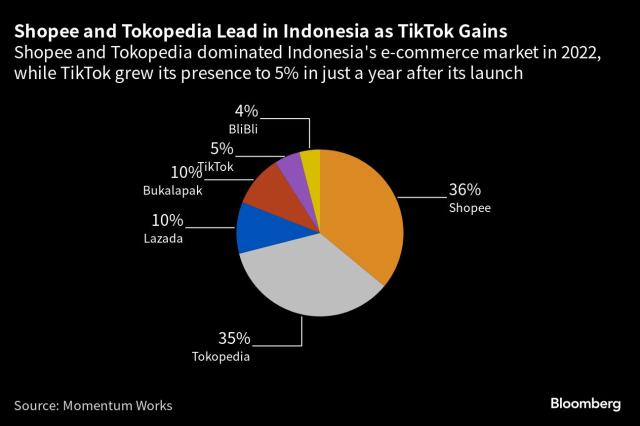
The latest blow comes from Indonesia, Southeast Asia’s retail giant, where sweeping regulations have been implemented, forcing TikTok to split payments from shopping—a move that could impede its thriving e-commerce initiatives. The Indonesian Minister of Cooperatives and Small and Medium Enterprises, Teten Masduki, has emerged as a vocal critic, expressing concerns about TikTok squeezing local players. The new regulations prohibit social media companies from handling direct payments for online purchases, and TikTok, with its TikTok Shop, is the only platform currently doing so. This separation poses a significant challenge for TikTok, forcing it to reconsider its e-commerce strategy in Indonesia.

The regulations have triggered a ripple effect in the market, benefiting local players like GoTo and Sea, while potentially chilling the entire online shopping arena. The ban on direct payments could alienate foreign firms and investors, adding to concerns about protectionist measures in various industries.

TikTok has pushed back against the regulations, arguing that separating social media and e-commerce stifles innovation and adversely affects millions of merchants and consumers who rely on the platform for their livelihoods. The company faces the dilemma of either creating a separate app for payments, potentially diminishing its user experience or risk having its business shut down in Indonesia.

Also Read: From Unicorns to Camels: How AI Startups Transcend The Divide in Tech Investment

The conflict with Indonesian authorities marks a stark contrast to the optimism expressed just a few months ago when TikTok’s CEO promised significant investments in Southeast Asia. The regulatory challenges in Indonesia may also set a precedent for other countries in the region to scrutinize TikTok’s influence in their e-commerce markets.

As TikTok navigates this regulatory minefield, it faces not only potential scrutiny in the US, Europe, and India but also the challenge of finding a structure that satisfies authorities while allowing for continued growth. The outcome of this battle will have implications not only for TikTok’s ambitious e-commerce plans but also for the broader landscape of social media and online shopping worldwide.

Alibaba to Spin Off Cainiao Logistics Unit for Hong Kong IPO

Alibaba to Spin Off Cainiao Logistics Unit for Hong Kong IPO

The Cainiao Smart logistics arm of ALIBABA Group Holding’s e-commerce behemoth will be spun off via an initial public offering (IPO) in Hong Kong, according to the company.

Alibaba to Spin Off Cainiao Logistics Unit for Hong Kong IPO
Image Source: finance.yahoo.com

Based on a filing on September 26, the Hong Kong exchange approved the business’s capacity to move through with its planned Cainiao split and IPO. According to the filing, Alibaba will continue to own over fifty percent of the unit’s stock, and Cainiao will stay a business subsidiary.

The Cainiao IPO is expected to be amongst the first of Alibaba’s divisions to list on the stock market following the tech giant’s shocking division announced earlier this year.

According to a previous report from Bloomberg News, banks such as Citigroup, Citi Securities, as well as JPMorgan Chase have been collaborating on the first-ever share sale, which has the potential to generate a minimum of one billion dollars.

With the division of the company into six primary divisions and the shift to new management under the recently recruited chief executive officer Eddie Wu, Alibaba is undergoing a historic transformation. To concentrate on Alibaba’s cloud business, his predecessor, Daniel Zhang, resigned as chair and CEO. A few months later, he too gave up both positions to lead a newly created investment fund.

In 2013, Alibaba helped establish Cainiao and used it as the foundation for its Chinese online marketplace’s delivery system.

The division entered the worldwide e-commerce market after Alibaba, managing packages for millions of retailers and brands on websites like AliExpress along with Lazada in Southeast Asia.

As per its website, Cainiao, a term in Chinese for novice or amateur, guarantees package delivery in China within 24 hours and internationally within 72 hours. It collaborates with over three thousand logistics partners to manage over 300 global routes.

Also Read: Apple to Testify It Sees No Need to Deploy Google Alternative

Alibaba unveiled its largest reorganization in its 24-year history at the end of March. It will divide its firm into six parts using a holding corporation management format, the majority of which will look into capital raises or public debuts to finance expansion.

The renovation coincided with Beijing’s attempts to promote the expansion of the private sector after two years of repression and was unveiled the day after Alibaba founder Jack Ma came back after a year overseas.