Your Tech Story

tech news

Apple’s Challenge for the Next Vision Pro: Making It Easier to Wear

Apple’s Challenge for the Next Vision Pro: Making It Easier to Wear

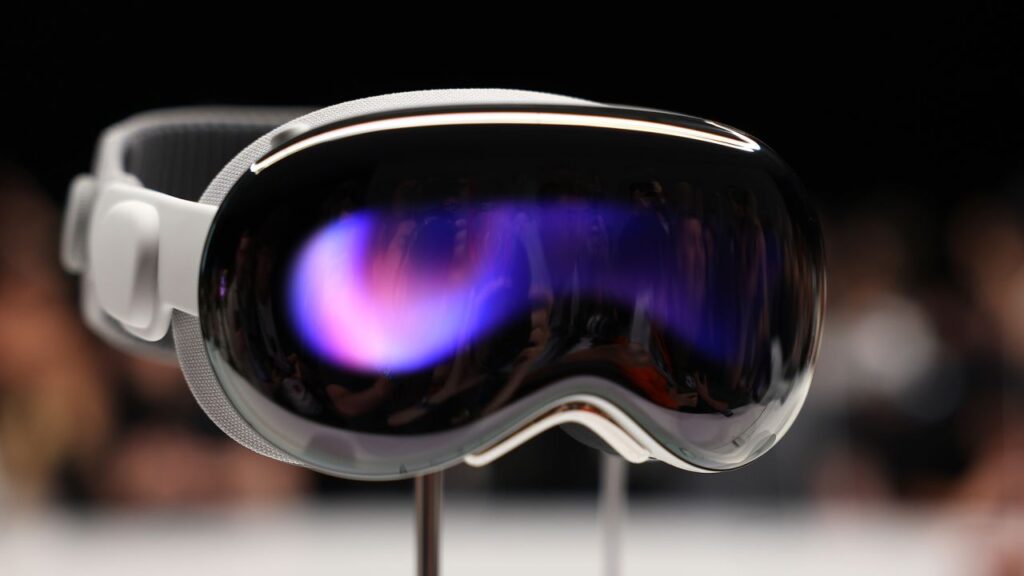
In a recent report by Bloomberg’s Mark Gurman, it has been revealed that Apple is diligently working on enhancing the wearability of its upcoming Vision Pro headset. 

Apple’s Challenge for the Next Vision Pro: Making It Easier to Wear
Image Source: edition.cnn.com

The current iteration of the Vision Pro, a mixed-reality headset combining augmented reality (AR) and virtual reality (VR), has received acclaim for its performance and features. However, a significant concern arises due to its perceived bulkiness and discomfort during prolonged usage.

Gurman’s report indicates that Apple is addressing these concerns through a focus on a “smaller and lighter design” for the next Vision Pro. The current model, weighing approximately a pound, has been deemed too heavy for some users even in short durations. While an over-the-head strap is considered for the initial model, the long-term solution rests in making the hardware itself lighter, possibly incorporating lighter materials. The anticipated launch for this improved headset is speculated to be next year.

One of the prominent issues faced by users of the current Vision Pro is its lack of accommodation for prescription eyeglasses. Apple’s attempt to address this by partnering with Zeiss for special lenses has posed challenges in dealing with various combinations of these lenses. As a potential solution, Apple is reportedly contemplating manufacturing headsets with prescription lenses pre-installed in the factory.

However, this solution is not without its complications. Gurman highlights concerns that Apple might be perceived as a healthcare provider, a role the tech giant may not want to assume. Additionally, the inclusion of built-in prescription lenses may limit the sharing or resale of headsets, and with people’s vision prescriptions changing over time, this approach might not be universally effective in the long run.

Also Read: Japan to Propose Rules for Generative AI to G7 Leaders: Yomiuri

Apple’s commitment to improving the wearability of the Vision Pro signals a strategic move towards making mixed reality a mainstream computing platform. If Apple can successfully create a headset that is comfortable for extended use, it could revolutionize the landscape of AR and VR applications, ushering in a new era of immersive and user-friendly experiences. As technology enthusiasts eagerly await the release, Apple’s pursuit of comfort in the next Vision Pro may indeed mark a significant milestone in the evolution of mixed reality devices.

Japan to Propose Rules for Generative AI to G7 Leaders: Yomiuri

Japan to Propose Rules for Generative AI to G7 Leaders: Yomiuri

Prime Minister Fumio Kishida declared Japan’s commitment to spearheading the establishment of international regulations for trustworthy artificial intelligence (AI) during a speech at the annual Science and Technology in Society forum in Kyoto on Sunday.

Japan to Propose Rules for Generative AI to G7 Leaders: Yomiuri
Image Source: bloomberg.com

Highlighting Japan’s leadership, Kishida announced the proposal of the Hiroshima AI Process, a framework designed to address concerns related to generative AI, while holding the chairmanship of the G7 industrialized nations.

“With a view to ensuring trustworthy AI, Japan is now taking the lead in international rule-making on governance and transparency,” stated the prime minister, emphasizing the nation’s pivotal role in shaping the future of AI governance.

The decision to create the Hiroshima AI Process was made during the G7 summit meeting in Hiroshima in May. The G7 leaders aim to formulate international rules regarding generative AI by the year’s end, addressing issues such as the potential spread of false information and infringement of intellectual property rights, including copyrights.

Key areas of discussion during the international rulemaking deliberations will include the establishment of effective regulations across various fields like education, security, and elections. Additionally, preventing the concentration of generative AI development platforms in the hands of a few IT giants, thus avoiding service monopolization, will be a priority.

Prime Minister Kishida expressed his commitment to promoting advanced technologies like generative AI while acknowledging the necessity of addressing the negative social impacts and ethical concerns associated with such innovations. Disinformation, privacy concerns, and copyright protection were specifically mentioned as areas requiring serious attention.

Also Read: Oyo Talks to Apollo for $660 Million Refinance on IPO Delay

In response to rising concerns over disinformation, a new digital technology named Originator Profile has gained attention. This technology enables internet users to verify the credibility of information through digital signatures attached to online content, including news, corporate websites, and advertisements. These digital signatures are authenticated by a third-party organization, providing a potential countermeasure against the proliferation of false information.

As Japan takes the lead in proposing comprehensive rules for generative AI to the G7 leaders, the international community awaits the development of regulations that balance technological advancements with ethical considerations and societal well-being.

Dell Says Servers, Not PCs, Are Its Main Growth Engine in the AI Era

Dell Says Servers, Not PCs, Are Its Main Growth Engine in the AI Era

The corporation that provides technology for data centers, according to Dell Technologies Inc., the organization that assisted in ushering in the age of personal computing, has become its most prospective one.

Dell Says Servers, Not PCs, Are Its Main Growth Engine in the AI Era
Image Source: finance.yahoo.com

The business unit that offers servers, data storage, and various other office equipment will expand by roughly seven percent throughout the next few years, almost doubling the estimate given in 2021, the business said in a statement to investors on Thursday. Dell anticipates PCs to recover from their decline and produce a steady revenue rise of approximately 2.5 percent.

Because artificial intelligence demands increasingly powerful devices, the growing interest in the field throughout the industry is generating some of the benefits, according to Jeff Clarke, chief operating officer at Dell.

He stated that Artificial Intelligence is addictive and it’s going to increase overall technology spend, pointing to the rising demand for servers with high-capacity storage space and graphics processing units like those produced by Nvidia Corp.

For a server supported for AI applications, the business stated in August that it currently has over two billion dollars in piled-up orders. The same lack of high-power CPUs that is limiting the remaining portion of the business is still a problem for Dell, according to Clarke. Demand exceeds the supply, and Clarke is the solo No. 2 to the chief executive officer and founder Michael Dell at Dell following Chuck Whitten’s resignation in August.

Also Read: Amazon and Microsoft Cloud Units Face UK Antitrust Investigation

Due to the significant drops in sales of personal computers following the pandemic, it has been a challenging year for computer manufacturers. Investors have focused on Dell’s server business as a result of the slowdown in computer growth in order to observe how the firm might profit from artificial intelligence, according to Bloomberg Intelligence expert Woo Jin Ho.

Dell refuses to give up on selling PCs, it still generates a total of 58 billion dollars in revenue annually, which accounts for over fifty percent of all sales. Simply put, the market’s potential for expansion has decreased, according to Clarke. However, a cycle associated with fresh purchases may be on the horizon given that Microsoft Corp. is urging customers to upgrade to the most recent version of its operating system, Windows, and that many PCs purchased before the epidemic are aging. Dell said that it will buy back additional stock and raised its long-term earnings growth estimate.

Amazon and Microsoft Cloud Units Face UK Antitrust Investigation

Amazon and Microsoft Cloud Units Face UK Antitrust Investigation

In a significant move, Britain’s media regulator, Ofcom, has formally requested the Competition and Markets Authority (CMA) to investigate the dominant positions of U.S. tech giants Amazon and Microsoft in the UK cloud market. 

Amazon and Microsoft Cloud Units Face UK Antitrust Investigation
Image Source: indianexpress.com

The regulator expressed concerns over features that hindered UK businesses from using multiple cloud suppliers, citing a lack of flexibility and increased difficulty in switching providers. According to Ofcom, Amazon Web Services (AWS) and Microsoft jointly commanded a substantial 70-80% share of Britain’s public cloud infrastructure services market in 2022, leaving Google as their distant competitor with a mere 5-10% share. Ofcom contends that this concentration could have adverse effects on competition within the market.

“The CMA will now conduct an independent investigation to decide whether there is an adverse effect on competition, and if so, whether it should take action or recommend others to take action,” stated Ofcom.

Amazon responded with disagreement, stating that Ofcom’s findings were based on a “fundamental misconception of how the IT sector functions, and the services and discounts on offer.” The company warned that unwarranted intervention might lead to unintended harm to IT customers and competition but expressed willingness to work constructively with the CMA.

Similarly, Microsoft, holding a significant stake in the UK cloud industry, pledged its commitment to ensuring innovation and high competitiveness. A Microsoft spokesperson asserted, “We will engage constructively with the CMA.”

Ofcom’s move follows its earlier expression of concern in April, prompting speculation about a potential antitrust investigation. UK businesses, in their feedback to Ofcom, emphasized the difficulties in switching or combining cloud providers, leading to the decision to refer the matter to the CMA. Fergal Farragher, Director at Ofcom, stated, “So, we’re referring the market to the CMA for further scrutiny, to make sure business customers continue to benefit from cloud services.” The CMA welcomed the referral, acknowledging the critical role of effective competition in the £7.5 billion ($9.1 billion) cloud services market, upon which many businesses rely.

Also Read: Google’s New Virtual Assistant to Include Bard AI Tools

This move aligns with a broader global trend, as both the French antitrust authority and EU regulators have shown an increasing interest in scrutinizing practices within the cloud computing sector. Google’s Vice President, Amit Zavery, stressed the need for an open cloud market without vendor lock-in, reflecting the sentiments of UK government agencies, businesses, and consumers.

The CMA is expected to conclude its investigation by April 2025, marking a pivotal moment in shaping the landscape of the UK’s cloud services market.

Google’s New Virtual Assistant to Include Bard AI Tools

Google’s New Virtual Assistant to Include Bard AI Tools

In a strategic move towards advancing artificial intelligence capabilities, Google has announced the imminent release of a revamped version of its virtual assistant, powered by the cutting-edge Bard artificial intelligence technology. This development is poised to elevate the capabilities of the Google Assistant, allowing users to seamlessly navigate and tackle more intricate tasks with unprecedented ease.

Google’s New Virtual Assistant to Include Bard AI Tools
Image Source: tech.hindustantimes.com

The innovative offering, aptly named “Assistant with Bard,” is set to undergo a test phase in the near future before its official rollout to the general public in the coming months, according to an announcement made by the tech giant on Wednesday. This update aims to imbue the Assistant, known for aiding users on Android and Google devices in task completion and information retrieval, with functionalities reminiscent of Bard—a chatbot designed by Google to rival the widely acclaimed ChatGPT from OpenAI.

In a blog post accompanying the revelation, Sissie Hsiao, a Google vice president, expressed enthusiasm about the transformative potential of generative AI in creating a more intuitive, intelligent, and personalized digital assistant.

“As technology continues to evolve, generative AI is creating new opportunities to build a more intuitive, intelligent, personalized digital assistant,” wrote Hsiao.

As major players in the tech industry compete to harness the power of AI advancements, Google is proactively integrating this technology across its extensive portfolio of products. In the preceding month, Alphabet Inc.’s division revealed plans to incorporate its Bard chatbot into services such as Gmail, Maps, Docs, and YouTube.

The announcement was made during a hardware event hosted at Google’s Pier 57 Manhattan office, where Rick Osterloh, Google’s devices chief, expounded on the company’s broader strategy of infusing generative AI into various apps and services. Osterloh disclosed that, in the next year, the Google Home app is slated to introduce experimental features. These features include summaries of activities around users’ front doors and the ability to inquire about the status of packages using natural language.

Also Read: Ex-Twitter Executives Win $1.1 Million Legal Fees From Musk’s X

Google Assistant is already a formidable player in the virtual assistant arena, competing with the likes of Apple’s Siri and Amazon’s Alexa. Its expansion into AI capabilities reflects the industry’s recognition of AI as the new frontier in this fiercely contested market. Google Assistant can be found across a spectrum of devices, including smartphones, smart speakers, smartwatches, and other computers.

With the integration of Bard AI technology, Google is poised to redefine the capabilities of its Assistant, promising users a more intelligent and intuitive digital companion for their daily tasks. As the virtual assistant landscape evolves, this move underscores Google’s commitment to staying at the forefront of innovation in artificial intelligence.

Apple Releases iPhone Software Update to Fix Overheating Issue

Apple Releases iPhone Software Update to Fix Overheating Issue

Apple has published an update to address the overheating problems with its most recent batch of iPhones. iOS 17.0.3, which according to the manufacturer, offers significant enhancements and safety fixes and resolves a problem that could cause the iPhone to function warmer than anticipated. There is also an update for iPadOS 17.

Apple Releases iPhone Software Update to Fix Overheating Issue
Image Source: tech.hindustantimes.com

Apple attributed a portion of the overheating problem to an iOS 17 bug. Additionally, it mentioned that some recent modifications to third-party apps are overloading the system. To fix the issue, the business has been collaborating with the creators of such apps.

It’s possible that your iPhone is set up to automatically upgrade to the most recent version of iOS while it’s charging. On your iPhone, navigate to Settings then General, and go into About then, Software Update to manually upgrade your device. You can immediately install iOS 17.0.3 if it becomes accessible to prevent your iPhone from being overheated.

Apple has admitted that the iPhone 15 as well as the 15 Pro can grow very hot, something many customers have seen over the past week. According to the business, the issue is being caused by background activities, an iOS 17 flaw, and third-party apps, Forbes revealed over the weekend. Apple also mentioned that an update to the software and programmer patches will be available soon.

Also Read: Ex-Twitter Executives Win $1.1 Million Legal Fees From Musk’s X

“We have identified a few conditions which can cause iPhone to run warmer than expected,” a spokesperson said in a statement. “The device may feel warmer during the first few days after setting up or restoring [it] because of increased background activity. We have also found a bug in iOS 17 that is impacting some users and will be addressed in a software update. Another issue involves some recent updates to third-party apps that are causing them to overload the system. We’re working with these app developers on fixes that are in the process of rolling out.”

engadget.com

The in-question applications include Asphalt 9, Instagram, as well as Uber. It’s important to make sure you have the most recent version because Meta is currently releasing a patch for Instagram. Given that not every user has experienced it, the overheating problem may be limited to specific circumstances and app combinations.