Your Tech Story

Tech Story

fiverr

Fiverr : A Two-way Platform for Selling and Buying Digital Services

Every time a new company is launched, the setup requires a lot of pre-requisite. From designing a logo to maintaining a company’s blog, everything needs to be done at a professional level. For doing this, companies generally hire freelancers. Now, instead of looking for individual freelancers and separately hiring them, how convenient would it be to have access to a single platform from where you can communicate with freelance contractors for all your requirements?

Fiverr, which can also be designated as an online virtual shopping mall, is literally the best and most wanted site for any freelancers and business companies. The service provider can earn some extra cash through this, and the companies can also get their job done in a hassle-free manner.

On 1st of February 2010, Micha Kaufman and Shai Wininger launched Fiverr. The company has its headquarters based in Tel Aviv, Israel providing its services across the world. Fiverr is available in 5 different languages, including English, Spanish, French, Dutch and Portuguese.
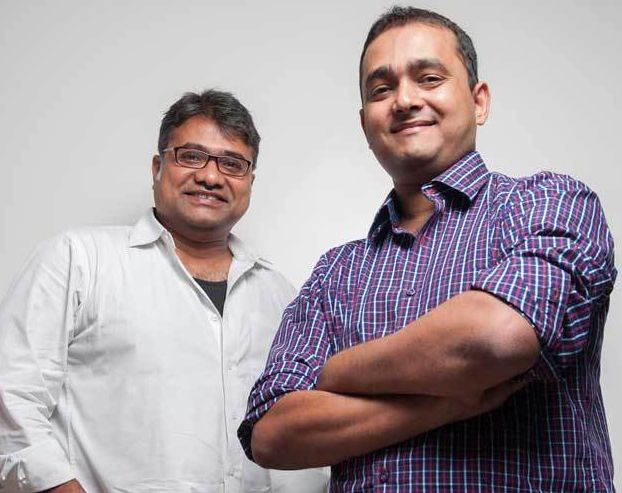
Fiverr Founders
Image Source: fiverr.com

History of the $5 Fiverr ‘Gig’

Kaufman and Wininger wanted to create something new, which would break the regular credence of working hours from 9 to 5. So, they came up with an idea of creating a website with a variety of online services like logo designing, data entry, digital marketing, voice translation and many more. Here people could work according to their comfort neglecting the 9 to 5 job scenario. So, the two young entrepreneurs created a single platform which is capable of providing almost every digital service under one roof.

The company started succeeding at a very fast pace such that within a year it had grown 600% in transaction volume. The company received its first funding of $1 million in 1st June 2010 from Guy Gamzu and other angel investors. On 3rd May 2012, the company announced that it had raised another $15 million in the second round of funding from Accel Partners and Bessemer Venture Partners summing the total raised fund to $20 million. By this time, the company had 40 employees working in its different offices spread over Israel, U.S and Europe.

The Growth of an Innovative Business Ever Witnessed by our Economy

In Fiverr, the minimum charge for every service is $5 and might extend up to $1,000 depending on the sellers and the quality of work. This system was started in January 2012 and allowed the sellers to earn more in exchange for their services after ten successful transactions. The services provided by Fiverr are known as ‘Gig’.

The $5 strategy attracted millions of customers from around the world, and by the end of 2011, the company was already providing 70,000 gigs. In 2012, the figure reached around 1.3 million with an increasing number of clients as well as service providers. By the end of this year, Fiverr witnessed an increase in sales by 190%, providing 4,000 new services, i.e. ‘Gigs’ daily.

The expansion of this leading marketplace resulted in the opening of a new office in New York in 2013.

Since 2013, Fiverr.com has acquired a position in the top 200 popular sites list of the world, and its Alexa rank is 291. By June 2013, Fiverr provided over 1.7 million Gigs to customers around 200 countries. The number of categories expanded to 120, which even included Arts & Crafts, Astrology and Gift cards. In December 2013, Fiverr launched its iOS app, followed by releasing the Android app in March 2014.

In August 2014, Fiverr raised $30 million in Series C funding from the existing investors along with Qumra Capital and private investors. This funding promised a larger and new workplace, where the sellers and customers can connect at a global level. In October 2014, Fiverr expanded the Gig service by launching the website in four different languages. Realizing the need for global connectivity, the strategies of Fiverr always played the ace in the digital marketplace.

In November 2015, Fiverr raised another $60 million in the funding round led by existing investors along with Square Peg Capital. With this, the company valued $550 million at that time. By now, the main target of Fiverr was to connect with every single freelancer out there and expand its Gig economy side. In November 2015, Fiverr raised another $60 million in the funding round led by existing investors along with Square Peg Capital. With this, the company valued $550 million at that time. By now, the main target of Fiverr was to connect with every single freelancer out there and expand its Gig economy.

In August 2016, Fiverr opened a new office in San Francisco, and the same year, Fiverr announced DCX Growth Accelerator as its new Global Agency of Record.

Latest Acquisitions and Partnership

In January 2018, AND CO came under the acquisition of Fiverr and the freelance software of AND CO was made free.

In February 2019, Fiverr announced the acquisition of ClearVoice, a content marketing platform. In June 2019, the company announced a new partnership with Lily Singh.

In July 2019, Fiverr introduced its Gaming store providing services like game development, game designing etc.

duolingo

Duolingo : The Biggest Free Language Learning Platform

Even though there are thousands of languages in the world, English has become the main medium of communication. But still, many of the people are struggling with finding a better institute, where they can learn the language at a cheaper price.

Some people want to learn different languages as a hobby, and some need to learn a different language to get a better job. But getting admission into a good college or institution is not easy for everyone.

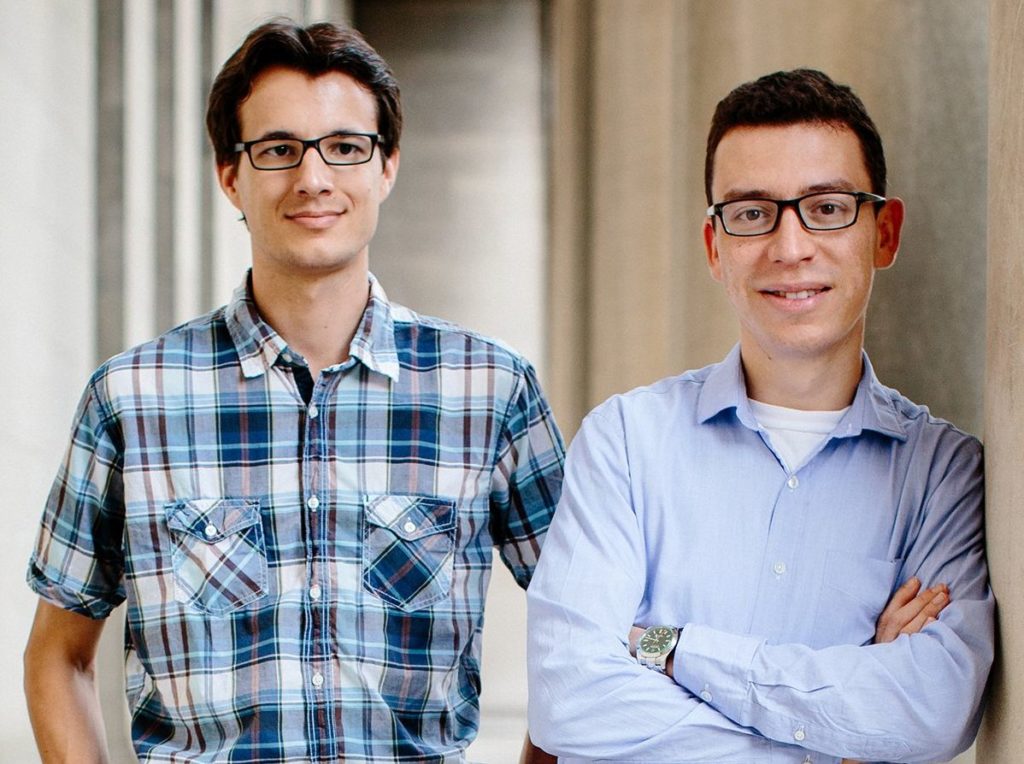
Thinking of this obstacle, the professor and student duo, Luis von Ahn and Severin Hacker, thought of developing an online platform that could help the people around the world learn different languages for free.

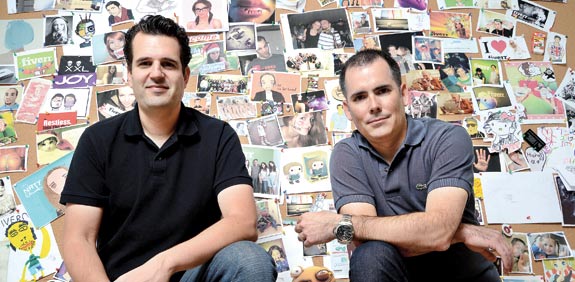
Duolingo Founders
Image Source: inc.com

Luis von Ahn is the Carnegie Mellon University professor, who is also the developer of reCAPTCHA. And, Severin Hacker was a graduate and Ahn’s student from the same university.

Ahn is a native of Guatemala, a place where the scope of getting a basic education is only 30 per cent. Ahn was a bright student and wanted to study Mathematics. But unfortunately, there were no resources for studying Maths in the whole country. But if a person is working hard, no obstacles can stop him/her from achieving their dreams. Ahn’s determination brought him to the U.S., and he joined the Duke University.

Ahn completed a BS degree in Mathematics from the university in 2000. In 2005, he received a PhD degree in Computer Science from the Carnegie Mellon University. The next year, he joined the Carnegie Mellon School of Computer Science, Carnegie Mellon University as the faculty member.

Ahn is recognised for his researches on CAPTCHAs and human computation. He has won many awards for his work including acclaim as the 50 Best Brains in Science by Discover and one of the 10 Most Brilliant Scientists by Popular Science Magazine.

Severin Hacker was born in 1984 in Zug and was brought up in Zurich. He completed a B.S. from Zurich and then moved to Pittsburgh. In Pittsburgh, he joined the alumni of Carnegie Mellon University and received a PhD degree in Computer Science. Hacker met Ahn at the university, where Ahn was his graduate advisor.

Being from a place where people struggle with the English language, Ahn and Hacker wanted to create a system, that could translate the website language from English to the other languages. This way, the people who did not understand English could access the website in their own language. But the two were not convinced about this idea completely and decided to develop a program that could do two things at a time, i.e., translate sentences into foreign languages and translate simple phrases in documents.

At the time, another language teaching app, Rosetta Stone, was getting famous. But the paid subscription of the app could not get more subscribers, and it was limited to the ones who could really afford it. But as the two co-founders had come from a place that where not all were economically well, they knew that not all can afford to pay for studies. The two knew that there is a larger population that require to learn a new language, especially English, and if they get a chance, it would be great for them. This led the two co-founders to build a simple and free language learning platform Duolingo.

The two started working on Duolingo in 2009, at the time when Ahn had just sold his startup reCAPTCHA to Google. In November 2011, the two started the beta testing of their product. In the beginning, they used the approach of crowdsourced translations. This gave birth to the early premise of the company, “learn a new language while translating the web”.

A National Science Foundation grant and the Ahn’s MacArthur fellowship sponsored the project initially. Later, Duolingo raised $3.3 million investments from Union Square Ventures and actor Ashton Kutcher’s firm, A-Grade Investments in a private Series A funding.

Ahn talked about Duolingo at his TED Talk in the same year, where he got a chance to reach a bigger number of audience. Though it was not a sales pitch, Ahn talked about the broken education system in underdeveloped countries and the benefits of using Duolingo. The speech received 1 million views, and this way, 300,000 users entered the waiting list for Duolingo signup.

The next year, with much improvements, Duolingo was released for the general public, and the platform included four languages, i.e. English, Spanish, French and German.

The company reported that not only the job seekers and students but the English teachers across the world were also using Duolingo. In late 2012, the company released an iOS app for its users, and the next year, the company also launched the Duolingo Android app. The Android app became an instant hit and had over 1 million downloads within the first three weeks of its launch.

In 2013, Duolingo partnered with BuzzFeed and CNN. The company raised $15 million in series C funding. By 2017, the company had received a total $108.3 million investment.

Though the service is completely free and does not support ads. To generate a certain revenue, the company uses periodic advertising. If the users do not want to see those ads as well, they can pay a subscription fee. The platform offers support for over 25 languages and 30 different courses. On the advice of Hacker, gamification was added to the platform.

The Duoliongo app was named as the number one app on Play Store and App of the Year on Apple Store in 2013. As of 2014, Ahn is serving the company as the CEO. Hacker and Luis von Ahn received the Tech 50 award in 2015.

basecamp

Basecamp, A Company that Created Mystique in the World of Web Applications

Every business, rising from a small start-up to a flourishing company needs smart management tools to become more efficient and work in a proper hassle-free manner. The main problem that arises when you don’t have appropriate tools for managing a project is the communication gap between the company and the clients. And, this is the biggest threat to any existing business which can lead to extreme loss and even dissolution.

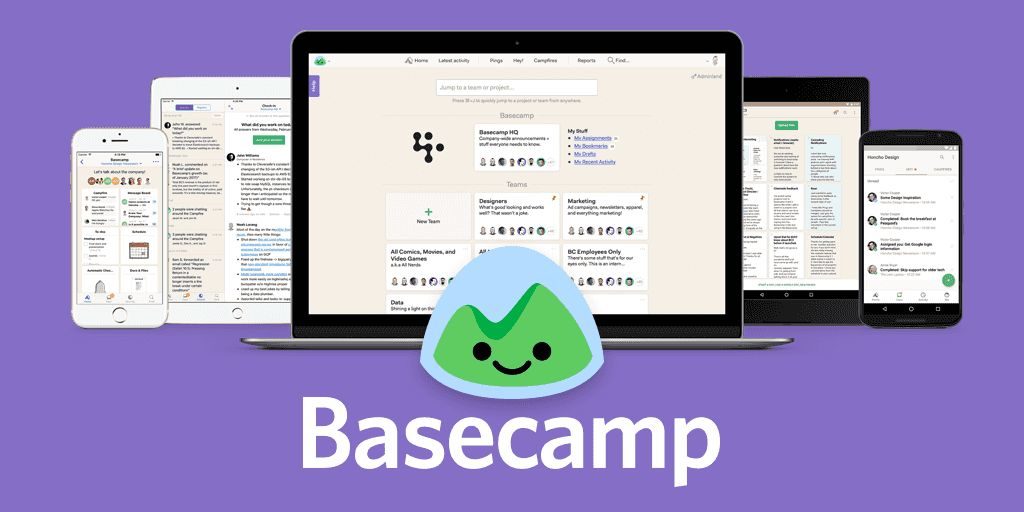
But, how about a web application where everything from creating your schedules to managing multiple chat heads of clients can be carried out? Basecamp, a private company, is one such platform that provides web applications where every necessary tool is combined together in a single software to make your work much easier and better.

Though Basecamp released its first web application publicly in 2004, the history of the company dates back to 1999, when a company named 37signals was formed with just four team members.

basecamp
Image Source: basecamp.com

37signals

In 1999, Jason Fried, Carlos Segura and Ernest Kim founded 37signals in Chicago, Illinois, as a web designing firm. The main motive of the company was to help other business companies improve their websites and make it less complex.

Initially, the company was doing quite well, but as the number of clients started increasing, the founders found themselves in a much-disorganized situation and started losing the demand for its service. As the trend of business communication follows, 37signals also marketed and managed projects through emails. And, this is what needed a very significant change to bring them out of the dealing topsy-turvy. 37signals realized that the method of getting updates via emails isn’t efficient enough, and it hinders proper communication. So, they planned to create a project management tool, which will have features like tracking progress, alerting deadlines, bookmarking important messages, managing emails, receiving notifications and much more. Basically, they started working on building up a web application with an arsenal of perks for every businessman around the globe.

After building the application, they started implementing the features, while interacting with their clients. This way, they received feedbacks of the tool internally, which was exceptionally positive. Realizing the demand for it, the company finally released Basecamp publicly in 4th February 2004. This was the first step towards something way bigger and over the years updated version of Basecamp like Basecamp Next and Basecamp 3 were also released.

The Growth

After the release of the application, they offered everyone one free project, in order to give clients the experience of management. And in case they still wanted to continue, they were asked to sign up for any one of the three paid packages.

Their first target was to make $5000 a month, which means $60,000 annual revenue. But they achieved it within six weeks only. This triggered their determination, and they realised that they are on the right path. Since the business was increasing rapidly after the launch of Basecamp, 37signals wanted to shift their field of interest from web designing to building web applications. So, they stopped taking any more clients for web designing and fully focused on modifying Basecamp. Today, Basecamp is used by the majority of firms and is the best project management tool across the world.

The tool became so popular that everyone starting from the business firms, software developers, educational institutions, and even, the non-profit organizations used this application to make their projects better. In 2014, the company was to Basecamp, after the software package (flagship product) Basecamp.

In 2004, David Heinemeier Hansson, partner at Basecamp, created Ruby on Rails, a free web application framework which was later released as open source.

In 2015, Basecamp 3 was released which the founders claim to be the best ever version of Basecamp with maximum modification and features.

When Basecamp was released in 2004, only 45 clients signed up for it. But the numbers started increasing so gigantically that by the next ten years 1,544,456 clients signed up, and, the number has almost doubled by now.

The Success

Basecamp and Ruby on Rails are two of the most successful products of 37signals (now Basecamp). Most popular sites like Twitter and GitHub use the Ruby on Rails framework.

Today, Basecamp has around 54 employees dealing with a diverse population working for the same goal that is creating better projects. Several books have also been published by this team like Zero to One and Rework.

UrbanClap

UrbanClap : One of the Most Successful Hyperlocal Startup in India

The past decade has been the decade of startups, and India has been one of the booming industry for them. From Flipkart, Paytm, Yatra, Oyo, Faasos to Unaccademy, all are some of the names that are the most successful startups in India. Their unusual idea helped them emerge as the biggest companies in India. UrbanClap is a similar startup that is originated in India and was one of the newest ideas in the field of startups.

Early Life & Career

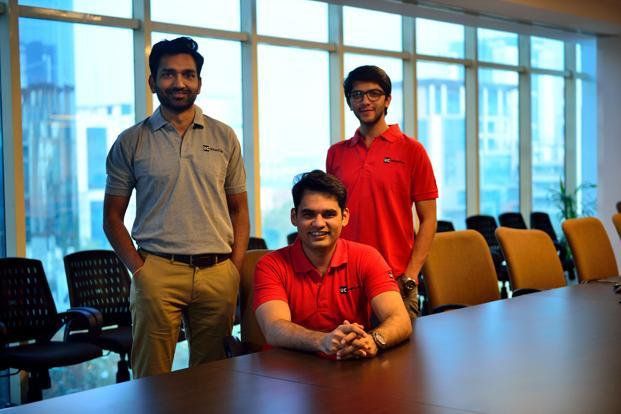
Like every other freshly graduated person, the bug of entrepreneurship had also bitten the co-founders of UrbanClap Abhiraj Bhal, Varun Khaitan and Raghav Chandra. Bhal and Khaitan were college friends, who always thought of starting up their own business. After graduating from the Indian Institute of Technology, Kanpur, the two started working for Boston Consulting Group (BCG) at their U.S. office.

During their time at BCG, Bhal and Khaitan often talked about starting their own business, but none of them had a clue that what they would be doing. Instead, they used to casually ignore the thought. But one fine day, they decided that if they want to do something, they have to start it very next second. They just can’t only daydream about it.

UrbanClap Founders
Image Source: livemint.com

The two had no idea what would be their startup based on, but after working for two years in BCG, they had figured out they want to start an ‘enduring business’. Both were ready to take the plunge. So in 2013, 0they left the job and came back to India to start their business.

Bollywood and movies being the biggest interest in India, Bhal and Khaitan launched their first startup named Cinemabox. The company made entertainment devices for public transport like buses, trains and planes. They invested about INR 10 Lakh in the startup on their own.

On the other hand, Chandra received an engineering degree in Computer Science from the University of California, Berkeley. After completing his college, he worked for some major companies like Infosys, Yelp, and Twitter. Chandra had a similar dream as of Bhal and Khaitan, so he also came back to India, in 2013. Here he started an online-autorickshaw booking platform Buggy.in.

But both the startups could not do well and were shut within seven to eight months of their inception. Despite the failure, the three budding entrepreneurs were not in the mood to quit and were still looking forward to establishing a successful startup.

Most of the times, the better startup ideas are the result of the necessities one faces in real life. This way, the foundation of the startup is always strong, and the results are the most fruitful. After failing once in the business, they were looking for that necessity-driven idea.

Meanwhile, during the wedding of Khaitan’s sister, Khaitan faced a lot of problems in hiring people and local vendors for various tasks. This hit the pinpoint, Khaitan and Bhal were certain that creating a platform, where people could find service providers at a reasonable cost will be their next startup idea.

Founding UrbanClap

The two now needed a tech guy, and eventually, got to meet Chandra through their common friends. The three of them discussed the idea, and after, contributing INR 10 lakh each, they started UrbanClap in October 2014.

They met with professionals from the different fields and shared their idea with them, such that to make them register to UrbanClap. Upon meeting those professionals, the three co-founders got to know that these service providers also faced various problems with their customers and payments.

The Success

The company was an instant hit, As you could hire people from various fields, like a Yoga teacher to a plumber, through the UrbanClap app. In two years, the company expanded to six major cities of India, including Kolkata, Jaipur, Chandigarh. UrbanClaps received its first investment of $10 million from SAIF Partners, and by 2015, it had raised $37 million, SAIF Partners, Accel, and Bessemer Venture Partners, being the major investors. In December 2015, Ratan Tata from Tata group also made an undisclosed investment in the company.

The UrbanClap app lets the customers book a particular service through the app, the professional go to their home and complete the task. The customers make the payments for the service through the app. The company deducts 20 per cent of the payment and rest go to the service provider. This way, many of the registered service providers even make a lakh a month.

In 2018, the company expanded to Dubai, UAE and also closed a $50 million Series D round for expansion. By this time, the company revenue started growing three times a year.

The three co-founders seem to have no plans of going public in the near future. They want to make the company, and its services, future-ready and with their hard work as well as their strategies, it looks quite promising as well.

faasos

Faasos : The Biggest Cloud Kitchen Restaurant Company in India

Most of the times, the low phases of a person’s life help him/her discover the right path for their future. But what if you are already on the right path, but this very path does not interest you anymore? Same happened with two friends, Jaydeep Barman and Kallol Banerjee, from Kolkata, India, who though were working with one of the finest companies, but still, something they always felt was missing. So what one should do in such a situation? Discover the right thing to do, and that is what they did, they founded Faasos.

Faasos is an online restaurant service, biggest in the world, that provides its customers with on-demand food delivery services. Seems similar? But it is not, the business model of Faasos is way different from Grubhub, Uber Eats and Zomato.

The Founders

Jaydeep Barman and Kallol Banerjee, both belong to Kolkata and have been friends for over two decades. The two, after completing an MBA course, started working for different firms. Meanwhile, one evening sitting at their Pune apartment, the two decided to launch a restaurant as a part-time business. But the uniqueness of the restaurant has to be Indian cuisine and no foreign brand food. So in 2004, the two started Faasos, a restaurant with the touch of Kolkata’s taste in Pune.

Faasos Founders
Image Source: inc42.com

The restaurant was running side by side, and the two started another management course at INSEAD. After they completed the course, Barman joined the consulting team at Mckinsey London, and Banerjee moved to Singapore to work for Bosch.

Alongside their job, they anyhow managed to open five more Faasos restaurants in Pune. While working with the two leading MNCs, they had to live separate from their family. Wives of both friends worked in different countries. It was quite hectic for the two to manage their job and family, all together. So one fine day, they decided to leave their jobs and come back to India to expand their restaurant business.

Making Passion the Career

After realising their passion after seven years, they had to come up with an idea that would help support their decision financially. So they thought of an on-demand food delivery model for their business. So they took the responsibility of all the three processes that are the part of an online-food-delivery service, i.e. taking the orders, food preparation and delivering quality food.

The idea was different, and they pitched it in front of Sequoia capital and raised $5 million in November 2011. The main idea that attracted the Sequoias was keeping the fixed prices low.

The Challenge

Soon, the chain had 16 restaurants in Pune and Mumbai. The customers could order from the telephone as well as the Faasos website. But it became quite challenging for them to run their business in Mumbai, as the rents were high in Mumbai, and they did not have any references for suppliers there. The biggest mistake they did was to hire veterans to run their restaurant and the warehouse.

The two concluded that they should hire freshers, who want to succeed in life. So they introduced the FER (Faasos Entrepreneurs-in-Residence) programme. The unique thing they did was posted the job in a blogpost and had asked the aspirants not to send CVs, as everyone glorifies themselves in a CV.

The post went viral, and they received over 1,000 applications. After fifty telephonic and ten personal interviews, they had hired a good team of eight. The team took all the responsibility from running operations to managing the supply chain, etc.

Rise of the Company

The company launched its mobile app in March 2014. The app launch increased the number of orders, and 80 per cent of the orders were coming from the app only. The app was easy to use, and thus, the owners decided to turn their service into app-only service. The app processes over 30,000 orders every month.

In February, the company raised another $20 million in the second round of funding, and in the next funding round, the company raise $30 million, in December 2015.

Faasos as of 2017, was operating in 150 locations in 20 major cities of India, including Mumbai, Pune, Bangalore, Surat, Kolkata, Chennai, Coimbatore, Hyderabad, Nagpur, Gurgaon, Ahmedabad, Vadodara, Indore, etc.

In July 2019, the company received $125 million investment from Go-Jek, Coatue Management, and Goldman Sachs, and now, operates 235 kitchens across 20 Indian cities.

digitalocean

Digitalocean : The Success Story of One of the Largest Hosting Web Providers in the World

Being one of the top companies in the world should be the result of decades of experience and hard work. But would you believe if you are told that a startup is holding the position of world’s third-largest web hosting company? Quite surprising, right? But it is not surprising for the founders of Digitalocean, the very company holding the mentioned title, Ben Uretsky and Moisey Uretsky, as it is their unique ideas and approaches they used to build their company so big.

Digitalocean is a New York-based company that the two brothers, Ben Uretsky and Moisey Uretsky, founded in 2011.

Early Life and Career

Ben and Moisey moved to the U.S. from Russia, when Ben was only 5, with their family. They started living at Brighton Beach and completed their high school education from Stuyvesant High School.

Digitalocean Founders
Image Source: soundcloud.com

Ben is a Pace University pass out and holds a bachelor’s degree in information technology. He had the experience of 20 years in systems and network engineering in the infrastructure space at the time he started Digitalocean with his brother. He even started another company named, ServerStack, a managed hosting business, before he launched Digitalocean. He drove the inspiration to start the ServerStack from his previous company that got bankrupt due to its bad planning of product development.

Being the CTO of the company, he had gained enough knowledge and experience so that he could start a similar company and established ServerStack.

Moisey on the other hand, despite having an interest in computers went on to get a bachelor’s degree in Mathematics from NYU. He also experimented with various startups and gained some expertise in the business incubation and venture investing activities, etc. His first startup was a big data company named CorreGroup.

Both, Ben and Moisey, ran ServerStack successfully for eight long years, and the annual revenue they generated always fluctuated between 3 to 7 million. But, with the rising competition, there was nothing new or unique that they were offering to their customers. So other similar companies, Rackspace being their biggest rival, were also getting their hold on the market.

During the same time, cloud computing started becoming a thing, and Amazon launched AWS. The rise of cloud and the success of AWS made the two brothers think for a new business, and they looked for an opportunity in the cloud.

Founding Digitalocean

As everyone, including Google and Microsoft, was running after the cloud, the two brothers thought of bringing something better and unique. They thought of building a cloud infrastructure that would help developers deploy and scale applications. So they founded Digitalocean in 2011.

To bring their plans into action, they hired Jeff Carr, who is also the co-founder of Digitalocean, for the engineering work. Carr built the entire backend for their company product singlehandedly himself. Later in 2012, Mitch Wainer and Alec Hartman also joined the founding team. Since the Uretsky brothers ran their previous business all by themselves, they did not know any of the venture capitalists. But for their new startup, they wanted a bigger scale and more investments. So in the same year, the co-founders participated in TechStars, the startup accelerator to raise seed funding for the company.

The Success

By August 2012, the company earned 400 customers and launched around 10,000 cloud server instances through the accelerator program. The next year, the company was offering SSD-based virtual machines and became one of the first cloud-hosting companies to do so. The company also established its first European data centre in Amsterdam, leading to becoming one of the fastest-growing companies. The company raised a US$3.2 million in July 2013, in its seed funding led by IA Ventures. In the series A funding, the company raised US$37.2 million in the next year.

In 2015, Digitalocean became the second largest hosting provider in the world, and it raised US$123.21 million in a round of funding. And by 2017, the company had opened twelve data centres in different parts of the world, including Singapore, Canada, London and India.

Digitalocean also hosts a forum for the developer-to-developer forums and tutorials on open source and sysadmin topics. Today, DigitalOcean has got 500 people working for it and records over $200 million in revenue annually.