Your Tech Story

Tech Story

Porsche

Ferdinand Porsche : The Legendary German Engineer who Founded Porsche

Being born into a family of a plumbing business, Ferdinand Porsche was also expected to adopt the same profession. But, his interest resided somewhere else. He was intrigued by electricity, designing and machinery. He carved a deep niche for mechanical work, and his passion changed his life entirely. He started from serving as a chauffeur to be known as the Great German Engineer.

A Sneak Peek to Porsche’s Life

Porsche was born into a German family on 3 September 1865, in Liberec (now a part of the Czech Republic). He was an automotive engineer and probably the best of his time. Before he founded his own company, he worked for many influential people designing the Lohner-Porsche, Volkswagen-Beetle and many other intimidating cars. He also received the Car Engineer of the Century award in 1999, 48 years after he passed away. He played a major role in World War II and was a member of the Nazi Party.

Early Life and Career

Porsche was the third child in his family, and his father, Anton Porsche ran a plumbing business. Though he grew a very strong interest in the mechanical aspect of engineering, he didn’t devote his entire time into experimenting with different equipment. He helped his father out in the workshop during the daytime and went to Imperial Technical School during the nights. After he finished his school and by the time he was 18, he got a job in Bela Egger and Co., an electrical company in Vienna. During his time in this company, he built his first electric hub motor.
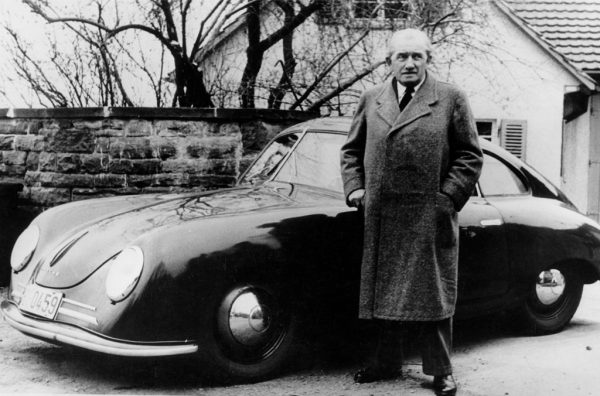
Ferdinand Porsche
Image Source: automotivehalloffame.org

In 1897, he started working for Jacob Lohner and Co. in their newly established Electric Car Company. The first design of the company was Egger-Lohner vehicle or Porsche P1, a carriage-like car. In 1900, the modified version of this vehicle (from two wheels to four wheels) was displayed in the Paris World Exhibition, and this masterpiece received much appreciation. In 1901, Porsche designed Lohner-Porsche, the first model of hybrid electric vehicle (HEV). Porsche also upgraded his existing vehicles with many engines from Daimler and Panhard, breaking many speed records.

In 1905, he was awarded the Potting prize for being Austria’s most outstanding automotive engineer. By this time, he gradually got involved in the military services served as a chauffeur to the then crowned prince of Austria.

Working for the Major Automobile Companies

In 1906, Porsche was hired by Austro Daimler as the chief designer. In 1910, Daimler won the Prinz-Heinrich Fahrt, an automobile contest. The Austro-Daimler car for which they won the contest was solely designed by Porsche. He also designed many race cars, aircraft engines, trolley-buses and many other vehicles using HEV technology during his time at Austro-Daimler. In 1916, Porsche became the Managing Director, and in the same year, he received the honorary doctorate from Vienna University of Technology. In 1923, he left the company due to differences in future perception of the company’s development.

Soon after he left Austro-Daimler, he was hired as a Technical Director in Daimler Motoren Gesellschaft. For his excellent work in this company, he received another honorary doctorate from Stuttgart Technical University. Again in 1929, Porsche left the merged company, Daimler-Benz, as his ideas for developing a light-weight Mercedes Benz was not accepted by the company’s board.

He started working for another company, but due to the Great Depression, his engineering skills had become almost needless to the world.

Founding Porsche

Though the economic condition dried up during the 1930s, Porsche made his way to establishing his own company. In April 1931, Porsche built his own consulting firm (for vehicles and engines) in Stuttgart with the financial support of Anton Piech and Adolf Rosenberger.

He started taking up big projects from reputed companies, but he also worked on his own designs. He managed to impress some companies that could sponsor his own projects, but eventually, all of them lost interest due to some of the other reasons. Also, the economic condition of that period wasn’t in favour of any newly born business.

In the early 1930s, Hitler wanted every citizen of his nation to own a car, which led to the hiring of Porsche for this project, the people’s car (Volkswagen). Soon, he got involved in many other Nazi projects. The first two prototypes of Volkswagen were released by 1935, and by the next three-four years, a lot of redesigning and pre-production took place.

In the meantime, a lawsuit was filed against Porsche by a Czech company, claiming breach of the company’s patent. The matter was finally resolved in 1961, ten years after Porsche’s death.

Life after World War II

The company went through a severe loss during the war, but he was ordered to continue with the Volkswagen designs. But, before the project could restart, he was captured by French authorities as a war criminal.

Ferry Porsche, Porsche’s son tried to run the business while he was in prison. He was finally got released on 5th August 1947, and in the meantime, Ferry designed Porsche 356, the first car to have the family name. Ferry rebuilt the business once again and made huge profits.

While the entire family returned to Stuttgart to re-establish their business, Porsche died in 30th January 1951 due to a stroke.

Capital One logo

Richard Dana Fairbank : The Founder of One of the Largest Banks in the U.S.

One of the most influential and financially predominant individual with quality of great leadership is what defines Richard Dana Fairbank. Banking business can make a profit like a spreading wildfire, and that is how Fairbank turned the wheel of his life.

Richard Fairbank, a billionaire in addition to the successful American businessmen, is the founder and owner of the bank holding company, Capital One Financial Corporation. He founded the company in 1994, along with Nigel Morris, an English businessman. Fairbank’s new strategies for credit models changed the entire face of the banking industry, thus, entering into a new era of entrepreneurship.

Education

Fairbank was born in 18th September 1950. In 1972, he graduated from Stanford University with a bachelor’s degree in economics. Later, in 1981, he completed his MBA from Stanford Graduate School of Business. Almost 12 years after founding Capital One, he received an award on excellent leadership from his university.

Career Before Capital One Happened

Before founding Capital One, Fairbank worked in a few different companies. He worked as a partner and consultant in Strategic Planning Associates (1985-1990), followed by the head of the credit card unit in Signet-Banking Corporation (1990-1994).

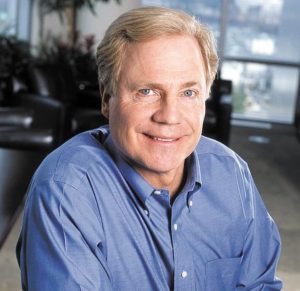
Richard Dana Fairbank
Image Source: knownetworth.com

It was in the 1980s when Fairbank met Morris in a consulting firm, their mutual workplace. Since then, the idea of implementing new technologies to amend credit card plans hovered over their minds. Both Fairbank and Morris wanted to change the entire idea of charging an annual fee for credit cards holders, replacing it with different schemes for a different segment of the population. This is where they needed the contribution of information technology to manipulate data of consumers and their purchase list.

With the help of data management software, they were able to divide the entire population of credit card users into different categories, followed by offering them different plans and offers. They pitched Oracle Corporation for the job of database management, and they agreed to the new strategy of the company. It was due to this credit card model, both of them got hired by Signet-Banking Corp, in 1990.

Soon after the two economists joined Signet, the bank offered around three hundred different credit plans to its customers, charging the interest rate according to the divided categories. This was a breakthrough for both of them, but this was just the beginning. Fairbank along with Morris also developed a new strategy of transferring money from one credit card to another, with a relatively much lower rate of interest. This attracted quite a robust number of new customers, hiking the profit to an unexpected level.

And, in 27th July 1994, Signet announced the credit card division split-off, renaming it as Capital One. Richard Dana Fairbank was made the CEO of the company, and currently, it is the seventh-largest U.S commercial bank by assets.

The success of Capital One

The success of Capital One became so enormous that it superseded the sale and profit of Signet, its parent company. Fairbank made Capital One look like a massive credit card business in partnership with a bank rather than a spun-off segment of a banking business.

By 1995, Capital One completely became an independent business whereas Signet came under the acquisition of First Union Corporation. Within a single year of its establishment, Capital One made a 25% increase in the net income of the company, making it to the list of top 10 credit card issuers in the U.S.

Capital One is an ideal banking company, where excellent business models are backed up by strong database manipulating software. The company first analyses the needs of a customer and then build credit card plans accordingly.

After many years of successful business, during early 2000, people started questioning about the algorithms used by Capital One to access information about customers, and hence, the stock prices dropped. Though ultimately nothing risky was found in the algorithm, Fairbank and Morris saw it as a future threat to the company and decided to form an executive board to make decisions for the company.

Achievements of Fairbank

Richard Dana Fairbank was honoured with the award of Washingtonian’s “Business Leader of the Year” and Credit Card Management’s “Entrepreneur of the Year”. He is also listed among the top ten Bank CEOs, who became a billionaire and have achieved many other things.

Personal Life

Fairbank is married to Chris Fairbank, and they have eight children. They are settled in Virginia.

blackmagic design logo

Blackmagic Design : Some Startups are Not to Make Money But to Change the World

There were times when production cost to create a TV program was way higher than it would earn at the end. This was because of the high price equipment that the film and TV series maker would pay for buying or renting them. At that time, buying these camera equipment used to cost over a million-dollar and renting them was not less than a thousand dollar per hour. But being an engineer himself, Grant Petty, founder of Blackmagic Design, knew that the cost the vendors are putting on these equipments are way higher than their actual cost. So he concluded that he needs to do something to change the way everything worked in the TV industry.

Early Life

Grant Petty is an engineer and entrepreneur from Australia, who initially worked in the TV industry as an engineer. As a kid, he lived in government quarters with his family. The financial condition of the family was not that good.

When he was in high school, he started working with a local TV studio, with the help of a grant his school had received from the government. At the studio, he got to operate two PCs at the same time, and hence, he got the opportunity to learn to code. He kept himself busy in learning the basics of programming, and eventually, grew immense interest in coding.

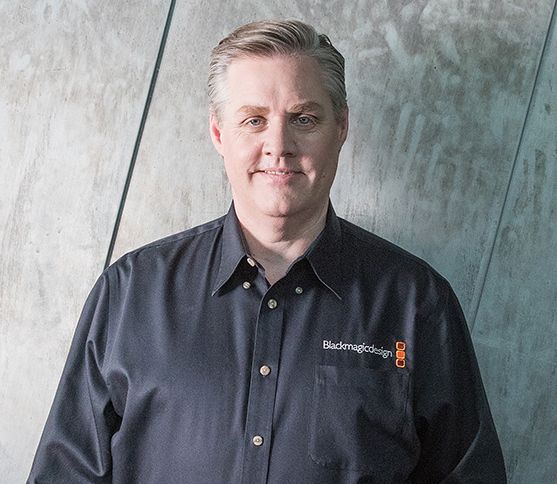
Grant Petty founder Blackmagic Design
Image Source: buildingaunicorn.com

In late 1991, Petty moved to Singapore to work at VHQ Singapore. It was the biggest firm that provided digital facility products to filmmaker and people from the TV industry. The equipment the company sold used to cost a fortune at times. After working for a while in the TV industry, he found out that technology in the industry was over-priced. The vendors were taking advantage of the fact that the creators are not the coders, and do not know much about the technology.

The Turning Point

In 1992, his roommate, Peter, bought a scanner for his Mac Duo Dock computer. The scanner came with an image editing software application named Adobe Photoshop, and that was a kind of turning point of Petty’s life. He was amazed to see the various useful tools that photoshop provided. The software was able to beat his company’s $70000 PaintBox.

Photoshop was for the design industry but was able to do much TV-related stuff as well. This led Petty to explore the software even deeper. He even bought other design software to learn more about the design industry. He pitched the idea of using the design software in place of film-making software. Nobody took an interest in his idea. He realised that there was no market for such software in Singapore, so he moved to Melbourne and started working with another company.

Petty decided to establish a new industry that would transfer the control into the hands of the creators. But deciding was not enough. To change the industry, he needed to produce the products himself, so that he could cut the production cost. So he along with his roommate Peter started working on a product. He now wanted to connect design with TV.

Founding Blackmagic Design

In 2001, Petty founded Blackmagic Designs and launched the first product, a capture card for macOS, named DeckLink in 2002. The card was first to offer uncompressed 10-bit video, and for its uniqueness, 163 units were sold in the very first month. He had started the production with his own money, so the sale of so many units helped him with further production. He even had to live on rice for a week as he was out of money and he had to pay for the supplies.

Soon, the company added support for Windows to the card, and also included colour correction features to it. It also included support for Adobe Premiere Pro and Microsoft DirectShow. This way, the product started becoming more popular.

By 2005, the company had launched other products as well. The main highlights of the new product series were the Multibridge family of PCIe bi-directional converters and the FrameLink family of DPX-based software. The next year, the company launched the Blackmagic On-Air television production software, which still is one of the world’s most advanced live production switcher control software. The ATEM Television Studio includes the support for both Mac or Windows.

The company announced its first Cinema Camera in 2012. With the passing time, the company also started to grow. At the time, Petty launched his company, only one or two high-end production studios were in Melbourne. With the growth of Blackmagic Design, 80 per cent of the production houses started using its products.

In 2018, Blackmagic Design joined its hands with Apple and created the Blackmagic eGPU. The next product that the company released with the partnership was the Blackmagic eGPU Pro. In the same year, Blackmagic and Netflix came into partnership.

The Company Today

Today, the company has established its offices in four different continents and has also acquired around six other companies, including Da Vinci Systems, Echolab, Teranex, Cintel, eyeon Software, and Fairlight. The company’s major products are Broadcast Hardware, Cinema Cameras, Production Camera and Editing Software, including Fusion, DaVinci Resolve, etc.

Petty, with his determination, finally, completed his mission, as he, with Blackmagic Design, cut down production hardware and software expenses for the TV industry by 50 per cent. Today, Blackmagic Design values more than $300 million.

Robinhood

Robinhood : The Platform that is Democratizing American Financial System

Stock exchange and cryptocurrencies, both have proved to be the most beneficial financial industries, where people can invest and earn. But, it has always been tough for people to understand the whole process and make their investment wisely. Using some of the eCommerce platforms costs a big amount, and most of the time does not help the way it should do. This had always been the pain point, and the 2008 financial crisis also became the reasons for the two U.S. based immigrants, Vladimir Tenev and Baiju Bhatt, to work on a new platform that would allow users to buy and sell shares free of charge. The platform that they created is Robinhood.

Early Life

Vladimir Tenev was born in Bulgaria, in 1987. At the time, his father was studying at the University of Delaware, the U.S. After one year, when Tenev was four, he moved to the U.S. to live with his parents. He spent most of his childhood in Virginia, and later, moved to the Bay Area. The family was quite drawn towards studies, and Tenev himself loved to study maths and science.

In 2004, Tenev joined Stanford University, where he met his future co-founder Baiju Bhatt. Both had opted for physics and maths as their degree’s majors. Bhatt is also an immigrant from India. The two shared a common interest, i.e. maths, that helped in building the bond between the two, stronger.

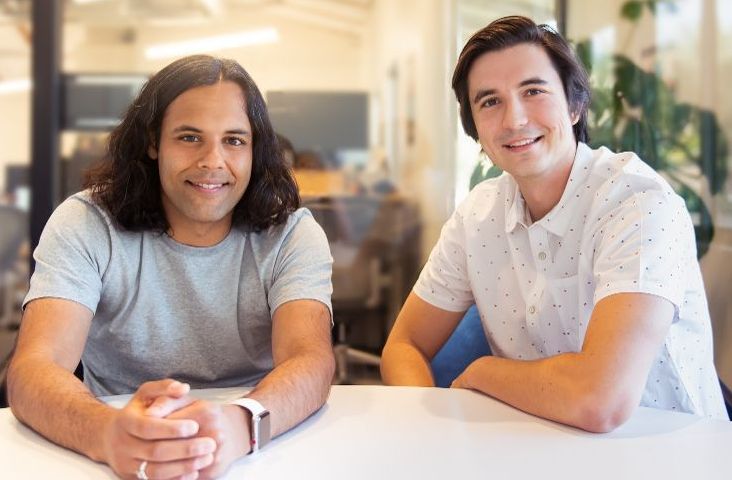
Robinhood founders
Image Source: glassdoor.co.in

After graduating from the Standford University, Bhatt joined a finance firm as his first job in San Fransisco, whereas Tenev joined UCLA to complete a PhD in Mathematics. While working at the financial firm, Bhatt realized that there was a great business opportunity in hedge funds.

Entering into Entrepreneurship & Founding Robinhood

So the two started their first venture, Chronos Research, in 2011 and got a small apartment in San Fransisco, where they started working on their project. The business they started offered tools for hedge funds and banks to build automated trading strategies. While working for their first joint venture, the famous 2008 financial crisis took place. The Lehman Brothers went under, and the market got collapsed.

The financial crisis inspired the two to move to New York City and find a better solution for share market trading. Their joint venture was the first step for their new startup Robinhood. Thus, they brought their existing technology to the retail brokerage market and started Robinhood in 2013.

Being the Millenials, they knew that smartphones will play the prime role for their new ventures, so they worked on different layouts of a mobile app for the platform, and sent it for the regulatory approvals. Before the app, they launched their website, that would do the same work as the app. They wrote “commission-free trading, stop paying up to $10 per trade” on the front page of the app, and worked on a waitlist, that would show people their position among other traders.

The Biggest Turning Point

The waitlist got Robinhood a mention in the Hacker News, that too at third after news on China moon mission and Google in a single day. The specifying in Hacker News got the company its first maximum traffic. After one day, Robinhood had its press lunch, following which, the platform got 10,000 signups, and in the next week, the signup reached 50,000. The company offered free membership to the users for their sign-ups. It only charged the users with a monthly fee instead of charging a particular fee on every single transaction.

The next task was to get the investors on board. The company raised $3 million in its seed round, led by Index, Google Ventures, Andreessen Horowitz, after pitching their startup in front of about 75 investors. Even before the company launched an official app, it had gained over 1 million signups, in the first year of its launch. After a year and a half, the company launched its app in March 2015. The Robinhood app offered the easiest interface for the users, such that it got most of the users under the age of 35.

The app has helped people to recover 90 per cent of their investment in the trade market, which is impossible with the traditional method. By the beginning of 2017, the platform had carried out the transactions of over $30 billion. In April the same year, the company raised another $110 million through a funding round led by DST Globa that made the company value at $1.3 billion.

The next year, on January 25th the company started to trade in cryptocurrency and announced a commission-free waitlist for the users from California, Massachusetts, Missouri, and Montana. By the end of the day, the waitlist had over 1,250,000 names registered. In May 2018, Robinhood raised $363 million Series D financing round led by DST Global and valued at $5.6 billion.

The Company Today

The company partnered with the Ohio-based Sutton Bank, such that to provide its users with checking and savings accounts as well as debit cards. The company raised an additional $200 million in a round of funding in 2019, that has led the company to value between in the $7 billion to $10 billion.

The company is registered with the U.S. Securities and Exchange Commission and headquartered in Menlo Park, California. Before 2019, the company’s primary source of revenue was from payment for order flow, but now, the source of revenue has been changed. The company earns its revenue from the interest earned on customers’ cash balances and margin lending.

Currently, the two co-founders are serving the company as the co-CEOs. Tenev was named among ‘30 Under 30’ in 2016, by Forbes. Robinhood became the first financial app to receive an Apple Design Award and was also listed among the top US FinTech startups of 2015 and various other rankings.

mixer

Mixer : The Story of Two Teenagers, and their Online Game Streaming Startup

Age is just a number. It has been proved a lot of times before, and the duo who co-founded Mixer is the most appropriate example of that. Matthew a.k.a. Matt Salsamendi and James Boehm became entrepreneurs at the age of 13 and 15, respectively. Built out of curiosity, the two ended up founding Mixer as Beam in 2016, and again as a teenager, i.e. at the age of 17 and 19. Mixer is a video game live streaming platform that enables people to watch their favourite gamers play and get in whenever the gamers need help to defeat their enemies. Today, Mixer is the part of Microsoft, and Matt and James are the lead member of the Xbox team.

Early Life & Career

Matt is a native of Ft. Lauderdale, Florida, where he lived with his family. Being a curious kid, he always played with computers, broke them and assembled them. In fact, he had build a few computers that resided in his room. When he was thirteen, he thought of converting those computers into the server and started providing hosting to gamers on Minecraft.

James lived in Atlanta, Georgia, and got to meet Matt online at Minecraft through an advertisement he had posted for his hosting service on the platform. James was 15 at that time. The ad made him interested in a new startup, and he contacted Matt. Soon, the two were good friends and talked about a server hosting business. James was ready to help him with marketing and other business stuff, whereas Matt had to do all the hosting related tasks.

Mixer founders
Image Source: zimbio.com

Soon, the business started growing, and they had to move out of Matt’s house to a new place, a datacenter. As they had already moved out to a new office, they became the owner of an unnamed company, which they then named as MCProHosting. The demand was increasing, so was the business. Within the span of three years, the company valued at $5 million. The company also became the world’s largest game server provider, hosting over 600,000 game servers.

In 2014, Matt was in his freshman year at school, and at the same time, was handling a multi-million company. The burden was increasing rapidly, and he was becoming incapable of keeping the balance between his studies and the business. Finally, after discussing with his parents, he decided to drop out of school.

Founding Mixer

Matt and James have been a video lover, ever since they got to know about it. At the time, the online live game streaming field was getting hot. YouTube and Amazon’s Twitch were providing live streaming to the gamers, but there were a few flaws in both platforms.

YouTube did not offer live chat, and on Twitch, the latency rate for the chat was quite high. Even though people could watch their favourite gamers play, despite a chat system, they could not suggest new moves to them in real-time. This clicked an idea for Matt and James, and they decided to shift their business from the server hosting to live game streaming service, with better features.

The two got their hands on building a website that would allow gamers to live stream, chat with their viewers in real-time with lowest latency rate, take their help, and discover other streamers. They started with the alpha version of the platform and focused on connecting the gamers with other game communities.

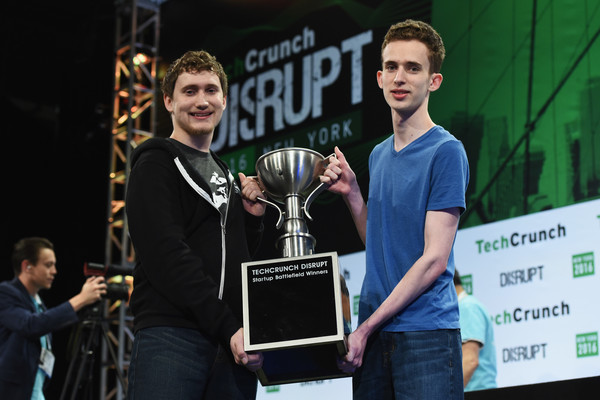
They had started working on the website in 2014 and launched it as Beam on January 5, 2016. Soon, there were over 1,00,000 users on the platform. The co-founders took Beam to the TechCrunch Disrupt conference in May 2016, to participate in the Startup Battlefield competition. Eventually, they won the competition and earned $50,000 in equity-free funding for their startup.

The Big Breakthrough

The winning of the competition could be a kickstart for the company, but only after two months of winning, Microsoft acquired Beam for an undisclosed amount in august 2016. Matt announced the news through a blog post, thanking all the community members that had supported Beam. Matt and James remained the lead of the Beam team and moved to Redmond to work with Microsoft.

The company integrated the platform with Xbox, and then later, with Windows 10. In the next year, the company integrated it into Xbox One along with the 2017 software update. In May, the same year, Beam was rebranded as Mixer. The new software update came with new features as well as a new mobile app.

Matt and James are consistently working on Mixer, and as of now, there are not as many users as its rivals like Twitch have. It does not bother the two co-founders as they believe in steady growth. They know that their platform is providing better services to the users, so eventually, those users would end up with Mixer. In fact, Ninja, a famous video game streamer, announced on 1st August 2019 that he would move from Twitch to Mixer on the 2nd August. Within four days of the announcement, Ninja got a million subscribers on Mixer.

segment

Segment : The Success Story of Three MIT Drop Outs

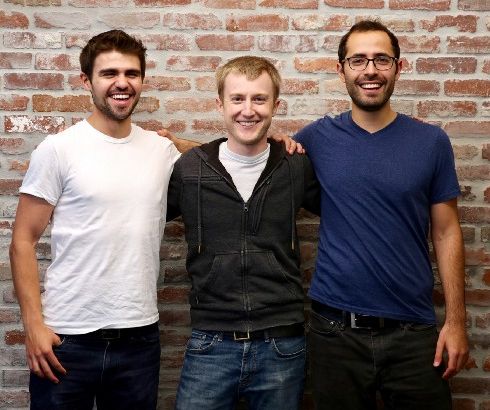
There are many successful entrepreneurs who are the geniuses with big degrees. But there are also many of the ones who just got off the college and started working on their dream projects, and ultimately, became an inspiration for all. Steve Jobs and Bill Gates are some of the names that have proved that skills are always above a degree. The story of Peter Reinhardt is similar to the two, as he also, along with his friends, Calvin French-Owen, and Ilya Volodarsky, dropped out of MIT, and founded one of the most successful startups, Segment.

Peter Reinhardt was born in Seattle City in Washington. He was always curious about the space and loved doing Mathematics. He met Calvin at a summer math class at the University of Washington when he was in 7th grade. Soon after meeting each other, the two shared a friendly vibe.

After completing high school, Reinhardt went to MIT to gain a bachelor’s degree in Aerospace Engineering. MIT was the place where he again united with French-Owen. The two then met Ilya Volodarsky in 2008, during the campus preview weekend at MIT.

segment co-founders
Image Source: architecht.io

Being into space and maths, Reinhardt took both the subjects as majors at the university. But his two friends were thinking of working on a startup. All the three first thought of building a classroom tool that would help the kids in the class to show the level of confusion they face during a lecture and tell the lecture about their doubts, without interrupting him. The three worked on the project and started the testing for the tool. But for their surprise, most of the students in the class were more engaged to Facebook than the lecture.

The three co-founders had raised a sum of $600K for the project. But they got soon aware of the fact that this idea is not going to work practically. So they tried to pay back the investors. But the investors wanted a better product instead of their money.

The three friends again started thinking of a new project. This time, they thought of products like Google Tag Manager and Mixpanel. It took a year and a half for them to even start the project. By this time, they had spent all the money and to earn some more investment, they went to Y-Combinator in 2011. But on seeing the wastage of time and money, the company refused to help.

This incident made Reinhardt and his friends realise that they were rushing the things, and their idea does not have the strength to sustain. So they took a step back and started more research work. At the same time, to devote most of their time to their dream project, they dropped out of college.

To work on their new project idea, they had to choose between Google Tag Manager and Mixpanel, and after being confused for some time, they realised that people need a tool that would help them figure out which among the various tools is better for their work.

This way, they had a new project idea, and they started working on an analytic tool that would integrate various other tools and provide the users with the right solution. The tool was Segment. Before launching the product, they made it open-source for developers. The platform started evolving and provided the engineers with the facility to integrate various tools at one place and organise their customer’s data in a cleaner way.

The idea became a huge success, as most of the people were facing a problem with what tool to choose for what data situation. The users were able to handle all the tasks from analytics to marketing automation through Segment. Reinhardt and his team used to test every new tool and integrated all the effective ones to Segment. Today, Segment helps over 19,000 companies in 70 countries to refine their toolkit, including Product Hunt, Atlassian and Instacart.

For the success of the company and its product, the company owners relied on content marketing. The company had started with four employees, and by 2017, the company had employed about 130 employees. Segment did not raise any money in its starting years. In fact, the three founders were spending $30K every year on the process of product development. Till 2019, the company has raised more than $280 million in total.

Peter Reinhardt is still very much interested in things related to space. He continuously follows the footprints of companies like SpaceX and Rocket Lab. According to Reinhardt Segment still has to go a long way.