Your Tech Story

Tech Story

Ordermark

Ordermark : A Service that Streamlines the Online Orders for the Restaurants

It has become so easy for us to get things delivered to our doorsteps with just a few clicks, especially food. Numerous food apps provide 30 minutes delivery service, and for us, it is quite easy to use those apps. But for the restaurants, despite the high revenues generated through these apps, it is quite a complex process to keep track of every single app and serve the customers efficiently. Since people are making more online orders, to keep up, the restaurants need to register in all the apps. But some times, it becomes very confusing for them to operate so many apps and carry out the other processes. To deal with this problem, Alan Canter came with Ordermark, a single platform that can connect different apps at one place and streamline the whole food delivery process.

Alex Canter: Early Life and Career

Alex Canter is a native of Los Angeles and a graduate in Computer Science from the University of Wisconsin-Madison. He is also the 4th generation owner of the famous nine decades-old restaurant, Canter’s Deli, based in Los Angeles.

As soon as Canter grew thirteen, he started waiting tables at his family restaurant. And after he graduated, he started working full-time at the restaurant. At the restaurant, he handled the post of operation manager and started experimenting on new ideas to grow their business and improve the services. He came up with the point of sale system and also revamped the restaurant website. With time, the online order services also started expanding, and he also registered his restaurant with multiple online food delivery platforms, like Eat24, DoorDash and Grubhub.

Alex Canter Ordermark
Image Source: prweb.com

Initially, he experimented with the various food items that their restaurant could serve fresh, sandwiches being the first item on the menu. In fact, he himself went to deliver over 20 orders a day, through some other delivery services. As time passed by, a larger menu was already built for the deliveries. The online deliveries were getting them 30 per cent more revenue, but soon it becomes quite hectic to handle the online as well as offline customers.

Most of the times, the staff was confused, and the various devices that were logged in to different delivery apps caused chaos among them. There were multiple smartphones, laptops, and tablets, all specially used for operating the various food delivery apps. This way, sometimes the online customer was getting late deliveries or wrong food items, or the live customers were turning back without having their food.

These reasons were enough for Canter to think of a better option, as he could not shut down his four generations old live business nor he could bear the loss that shutting down the online deliveries could cause. He even went to meet the other restaurant owners and discussed the matter with them. It did not surprise him to hear that these restaurant owners were also finding it difficult to manage all the orders online as well as offline.

Founding Ordermark

Canter hired a professional team, and after analysing the problem, got to the conclusion that the restaurants wanted a system that could streamline all the orders at one place and print a similar-looking order summary through a single platform. So the aim was to centralise the online orders from different apps to a single app.

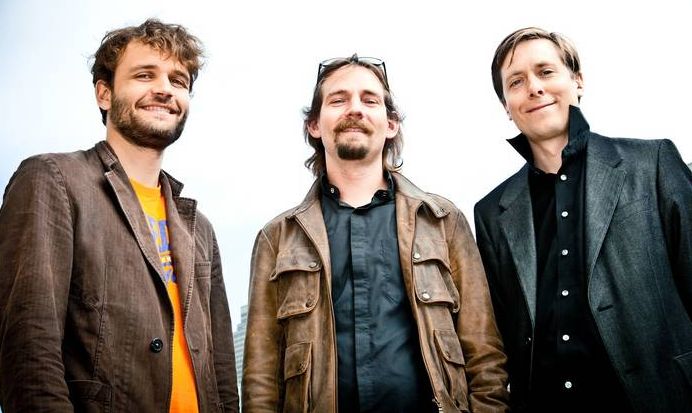
Finally, Canter launched Ordermark in January 2017, with six other co-founders, including Mike Jacob founder of TapInto and Paul Allen. The platform included all the locally running delivery services into one and chose Epson to develop a single printer to print every transaction in a similar format. Finally, Canter launched Ordermark in January 2017, with six other co-founders, including Mike Jacob founder of TapInto and Paul Allen. The platform included all the locally running delivery services into one and chose Epson to develop a single printer to print every transaction in a similar format.

With the Ordermark subscription, every restaurant receives a tablet and a printer. The service provided the users with a single dashboard, from where they could streamline the process of taking and processing the orders, such that there is no confusion and the customer service is improved.

Canter and his team helped restaurants with curating their menu and taught them how to use the platform. Also, the Ordermark created a pick-up zone for the delivery drivers.

Ordermark raised a $3.1 million series round led by TenOneTen Ventures, Act One Ventures, and Mucker Capital and a $9.5 million Series A round led by Nosara Capital in 2018. The company raised to 35 employees and 500 signed up restaurants in the same year serving in twenty states in the U.S.

Ordermark Today

Today the company has got four offices in different parts of the U.S. It has gained over 3000 signups from various restaurants, including TGI Friday’s, Qdoba, Veggie Grill, Dickey’s Barbecue Pit, Yogurtland, Johnny Rockets, and Sonic. In July 2019, the company raised an $18 million in a new round of funding. The company intends to target the already running 1 million restaurants, and the ones that will be opened in the coming future.

Alex Canter’s unique idea brought him success in his 20s, which is a great achievement for a person just graduated and a dream for many. For his early achievement, he got his name listed in Forbes 30 Under 30.

Mazda logo

Mazda Motor Corporation : Success Story that Seems Unreal

Zoom Zoom! This magical sound will invoke a sense of enthusiasm and passion for driving in the minds of all automobile junkies. There is absolutely no doubt about that. Mazda Motor Corporation is one of the biggest Japanese automobile brands which have managed to capture the interest of the market for vehicles all over the world.

The Unusual Beginning

Initially located in Hiroshima, and named as Tokyo Cork Kogyo Company Ltd, Mazda was founded by Jurigo Matsuda in the year 1920. It’s funny how one of the world’s leading automobile manufacturing firm started out as a mere cork manufacturing factory! This is a classic example of how all giants have a humble beginning. Diversification was the concept that triggered their success. The firm slowly started expanding its production from making corks to include machined products. Soon enough, the firm rebranded itself as Tokyo Kogyo, dropping the term ‘Cork’ from it. Later, the company started manufacturing machine tools also.

Cork to Cars

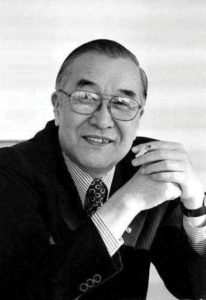
Jujiro Matsuda Mazda Motor Corporation
Image Source: evomalaysia.com

The year 1931 was quite a bit unusual for Tokyo Kogyo. They did something that nobody had ever attempted to do. They introduced a three-wheel truck into the market. The concept was so bizarre yet so catchy. This was crazy enough for the firm to attract the attention of their target customers. The idea took off in 1945 when there was a high demand for military supply production.

It was only in the year 1960, that the company manufactured its very first passenger car, modelled Mazda R360 coupe. This was a major turning point for the company, and soon, it entered into an agreement with Felix Wankel to manufacture the German company’s famous rotary engine. This rotary engine has a lot of significance, as it has given a certain set of characteristics to the vehicles to increase its efficiency.

The Real Revolution

The release of the Mazda Cosmo Sports 110S model, in 1967, brought the real revolution, as the car featured the German rotary engine. Ever since then, the firm started expanding its market across the European continent. Soon enough, after the year 1970, Mazda started expanding their production and reached to the US as well. Later on, the Ford Motor Company purchased a 25% stake in Tokyo Kogyo, leading the two firms to work together.

It was in the year 1984 that the firm officially changes its name from Tokyo Kogyo to Mazda Motor Corporation. Mazda then developed a US production facility, which was located in the suburban areas of Detroit. All these major changes took place in a very short span of time, and the company saw exponential growth in their market value and revenue. The name Mazda slowly began to make a mark in the automobile industry, and it is safe to say that the company has come a long way from manufacturing quirky three-wheeled trucks to becoming the super players in the market.

A major event in the timeline of Mazda Motor Corporation took place, when the firm sold its 50% share of the Detroit plant to Ford Motor Corporation, and thus, created a joint venture named AutoAlliance International Inc.

The Downfall and Rise

After a long success streak, in 1994, Mazda faced its first downfall. The company fell into loss, and this, maintained to be for another 5 years. Following which, Ford took over the major shares of operations in Mazda and named Henry J Wallace as the President. It was for the very first time in history that a non-Japanese had headed a Japanese firm. After a few years, in 1999, Mazda regained its lost glory as the firm attained its profit status after a long six years.

Mazda Motor Corporation Today

Mazda now positions itself as the high-end Japanese Automobile technology giant, which started out as a cork manufacturing factory somewhere in Hiroshima. The firm still has its headquarters in Hiroshima and is headed by Akira Marumoto, who is the Representative Director of the firm. The automobile giant now focuses more on the manufacture and sales of passenger cars and commercial vehicles, with a net worth of 284 billion dollars. With their vision to make driving more fun and carefree, they have developed several successful models that have been accepted wholeheartedly by the customers all over the globe. The network of Mazda has spread over countries like the US, Germany and China. The success story of Mazda Motor Corporation is truly an inspiration for all the beginners, who envision making it big in the business world.

hotmail

Hotmail : One of the First Viral Hit on the Internet

Creating an email id is no herculean task for us today. But, there was a time, when the world was a different place, and one could only access the inbox through only one’s personal computer. How tedious would that have been! Today, we are accustomed to so much luxury and technological freedom that we can access our emails from any system and from anywhere in the world. All thanks to Sabeer Bhatia and Jack Smith, the founders of the one and only Hotmail!

Ever since its launch in 1996, the concept has been accepted with open hands by the public, as it was able to satisfy one of the major needs of the common man. Hotmail is considered as one of the very first of the webmail services, which later, went on to be absorbed by Microsoft. Hotmail is now most popularly known as Outlook.com, as it has been revamped and launched by Microsoft again in 2017.

It all started with a normal conversation between two colleagues at the Apple office of San Francisco. Sabeer Bhatia was getting tired of the mundane tasks and routine work that he had to do at Apple. It was at the same time when their manager left the firm to work for a startup, named Power Systems in Silicon Valley. Both Sabeer and Jack followed him, and soon, joined the startup.

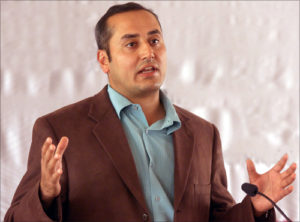
Hotmail Founder Sabeer Bhatia
Images Source: rediff.com

It was during this phase of their journey that Bhatia created a browser-based email. This million-dollar idea changed the course of things on the internet and was able to create a wave of changes in how people accessed their mails. The inception of the idea was when Bhatia found it difficult to send emails to his colleagues because of the firewall. This posed as a major hindrance for a large group of office going individuals and other technology users of the mid to late ’90s.

Sabeer was so confident of his idea that he asked Jack Smith to leave his job and start working with him full time. They soon pitched the idea to Venture Capitalists and asked them for 3 million dollars to fully develop the vision. After a lot of negotiations and bargaining, a total of 30,000 dollars they agreed upon. The venture capitalists asked for a 30% share of the profit, but the duo only agreed for 15% of the total profit or shares of their firm.

Within six months, Bhatia was able to launch the product. The product was such a huge success which even the founders had not anticipated. They received 100 thousand subscribers within the first week of the launch. The momentum was so high, such that the number of new registrations went up to a thousand users per day. It was one of the biggest entrepreneurial successes that the world had ever seen, making a deep mark in the digital realm.

Even then, they were asked to add more impressions, clickthroughs, and other added displays. All of the latest additions gave the startup more than one million dollars per month. Even this huge amount of money was not enough to sustain the functioning properly. It was during this time when rocket Mail (later came to be known as Yahoo) partnered with the very own Hotmail. This partnership was not very successful, and the two of them parted their ways very soon.

There were many such developments in the field, created lots of innovations, mergings and split-ups. One of the most remarkable of the acquisitions worth mentioning was that of Hotmail by Microsoft. The acquisition was for around 400 Million USD, making Sabeer Bhatia one of the most successful entrepreneurs of the decade.

With over 65 million subscribers and counting, Hotmail can be considered as one of the most viral and highly accepted concepts ever launched. Now known as Outlook.com, Hotmail succeeded in eliminating one of the most frustrating issues faced by the internet users of the ’90s. This is the reason why there is still a large community of people who still have not converted to outlook.com from Hotmail.com. The version of MSN Hotmail, which was the name given immediately after the acquisition by Microsoft, was also a hit. Even then, the tidal wave that Hotmail created among the people is still very much remarkable.

Ahley Qualls

Ashley Qualls : A Successful Entrepreneur Who Became a Millionaire at 17

Many of the people around us have a dream of becoming a successful entrepreneur in their life. But, how often do you hear about a 14-year-old teenage girl creating history in the entrepreneurial world?

Ashley Qualls, an American entrepreneur, from Detroit, Michigan, started her website at the age of 14 to provide tutorials in the domain of web designing. In 2004, Qualls released whateverlife.com providing mainly HTML tutorials and free MySpace layouts. She mainly opened this website as a hobby to help teenagers, especially of her age, learn graphic design and coding.

The First Step into the Business World

Qualls neither belonged to a financially predominant family nor did she have a lucrative investor by her side while creating her website. Her mom was a single mother and Qualls was the eldest daughter in her family. She really struggled her way to the top, and ultimately, became one of the successful teenage entrepreneurs of her time.

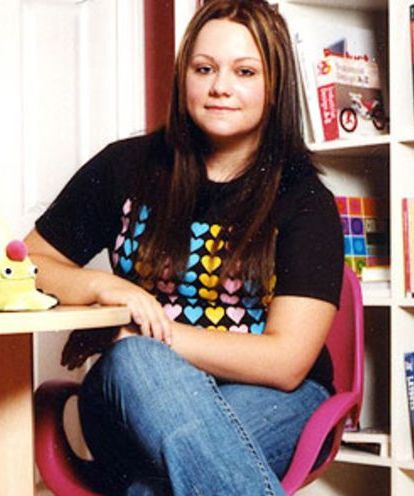
Ahley Qualls
Image Source: networthbuzz.com

At first, 14 years old Ashley Qualls wanted to create an interesting website for everyone without any future perspective and strategies. Initially, she planned on publishing her own portfolio having graphics and pictures create by herself. Applying her knowledge of web designing in the project, she finally launched the website in 2004, under the domain name whateverlife.com. It was the first stepping stone for her towards creating something funny and attractive for the people, especially teenagers.

Just after a few months of the launch of the website, Qualls earned $70,000. Eventually, she started uploading different tutorials in her website regarding web designing and programming, thus, helping out the teenage students. As the number of unique viewers started increasing, many modifications were made to whateverlife.com. Every user, who created an account on the website, was allowed to upload their own projects, which in turn helped them gain more popularity and even earn rewards. These rewarded points are used to buy digital goods online.

This strategy escalated the rate of popularity of the page, and within a year, it had visitors from around the world. Whateverlife.com became famous among every youngster throughout the globe, witnessing 300,000 users every single day.

The Growth

Before the company turned three years old, whateverlife.com observed 3-4 million page views, especially, for tutorials of HTML and CSS. Qualls’s website became so popular that it started giving tough competition to websites like cbsnews.com and oprah.com.

In 2006, a buyer, whose name has not yet been revealed, offered a price of $1,500,000 to buy the portal, which was humbly turned down by Qualls. Her performance in the field was so impressive that Brad Greenspan, co-founder of MySpace, offered her a hefty amount of money twice in exchange for her website. But, Qualls had more craze for knowledge, and a passion to drive her business even higher than just giving up the ownership to someone else. So, she rejected the offer from Greenspan twice, irrespective of the money he was willing to pay. It is very rare that a young entrepreneur has such high spirit to turn down business tycoons and stand tall by her own. She also bought a house in 2006, where she started living with her mother and younger sister.

Soon, the number of visitors on her website turned to 7 million, and by the time Ashley Qualls turned 17, she was a millionaire.

When Life Turned Upside Down

The flow of success suddenly hit a pause when Qualls was diagnosed by an autoimmune disease, due to which she experienced gastrointestinal issues. The turmoil of her life wasn’t just limited to this, as she lost her business, her house followed by her miscarriage. But she never thought of giving up. She joined a job in 2015, which unfortunately hit an end the very next year due to her worse health conditions and regular visits to doctors.

But, after reading an article in The New Yorker by Meghan O’Rourke, she realized that there are many people out there who are suffering from the same disease.

SickNotDead

After realizing the harsh certainty that this disease will haunt her forever, and there are about thousands of women suffering from the same, Qualls decided to open a blog, SickNotDead. She accepted the reality and started writing to provide advice and support to everyone out there who is prey to this unfortunate veracity. And, through her motivational writings, she has been able to bring a difference in the lives of these people.

Unity Technologies

Unity Technologies Co-founder, David Helgason, Teaches Us ‘Never Give Up’

In the past fifty years, the video game industry has evolved tremendously, and an infinite number of video game developers are currently contributing to the very field in their own way. David Helgason is one such developer, who along with Nicholas Francis and Joachim Ante, created a gaming engine that is used by half of the active game developers in the world, under the name of their company Unity Technologies. Unity Technologies is one of the biggest video game software development companies which are responsible for the development of most popular video games running today.

Early Life

David Helgason was born and brought up in Iceland. After spending the first ten years of his life in Iceland, he moved to Denmark with his mother. He was a little kid when his mother brought him a computer. As soon he got his hands on the computer, he grew an interest in learning more about it. Once after breaking the computer, he tried to fix it and got some video games to play on it. He even started learning programming languages, so that he could build games on the computer.

He spent a whole 22 years in Denmark, and from education to his first job, he did all there. Though he never got a degree from the university, as he dropped out of university at least four times, and studied different subjects every single time, including psychology, physics, computer science, Arabic, and middle eastern studies.

Unity Technologies founders
Image Source: globenewswire.com

Founding Unity Technologies & Initial Struggling Years

Helgason was never sure of what he wanted to do in future, except becoming a scholar. But studies did not interest him, and after dropping out for four times from the university, he finally thought of starting a software development company.

In the year 2000, he started Over the Edge Entertainment (later rebranded as Unity Technologies) with his friends Nicholas Francis and Joachim Ante, inside a basement. To pay the rent and the taxes, all three were working part-time in restaurants and coffees shops.

The three friends had started the business but without a business plan. So they had nothing to do better than sticking along. So for a long time, they were doing some consulting projects and other non-technical jobs to support their company. The three finally launched their first game, GooBall, in 2005, and the bizarre thing about the game was that it only supported Mac. This way, the first project of the company failed badly.

The Rise of Unity Technologies

But this failure brought the three into the light, and they started working on another project. This time, they added support for Windows PCs and Web browsers. They also shifted their focus from developing games to developing a gaming engine. They aimed at creating a gaming engine that could ease out the process of development of 2D and 3D interactive content.

In 2006, the co-inventors participated in the Apple Design Awards and were the runner-up for Best Use of Mac OS X Graphics. In the next year, with the release of the iPhone, the company started working on adding the support for the iPhone in the engine. In 2008, they released the new version of the engine that supported iPhone games, becoming the first gaming engine to do so. This made the engine popular among the people. The company started developing support for mobile games and began to grow at a faster rate.

In 2008, Cartoon Network used the Unity engine to create FusionFall. FusionFall is an MMORPG for kids and has been played by 8 million people. In the following years, other big names like Electronic Arts, Microsoft and Ubisoft, also used the same engine for their projects.

In 2010, the company launched the Unity Asset Store, and in 2012, Unity Technologies acquired the animation company Mecanim. The next year, the company recorded 1 million registered developers, the 50 per cent of the total game developers of the world. Facebook also added Unity engine to its platform, in 2013,

The Fundraiser

By 2016, Unity Technologies had earned more than 5.5 million registered users. The same year the company raised a $181 million round of funding making the company valued at approximately $1.5 billion, and in another round of funding in the next year, the company raised $400 million that valued the company at $2.8 billion. In 2018, with $145 million raised in another funding valued the company at $3 billion.

In the year 2017, the company released the Unity 2017 version and partnered with Google to develop augmented reality tools for Android devices and apps on ARCore. The two companies also joined their hands to offer online game development on Google Cloud. Unity Technologies also started working with DeepMind, an Alphabet subsidiary, to develop a virtual world artificial intelligence.

Unity Technologies Expansion

Today, the Unity engine is also used in various other fields other than game development, including film, television and automotive. Since its inception, the company has acquired much other game development and media companies, including Digital Monarch Media (2018), Vivox (2019), Applifier (2014) and Multiplay (2017).

As of 2018, the company has hired more than 2000 employees and has established its offices in various parts of North America, Europe and Asia. John Riccitiello replaced Helgason as the CEO of the company in 2014. Since then, Helgason has been working as a member of the board of the company and has moved to Copenhagen. He has also spoken as a motivational speaker at many events, such as TechBBQ, Copenhagen Tech Festival, Techfestival.se, Tech Open Air Berlin, Slush, etc.

Revolut

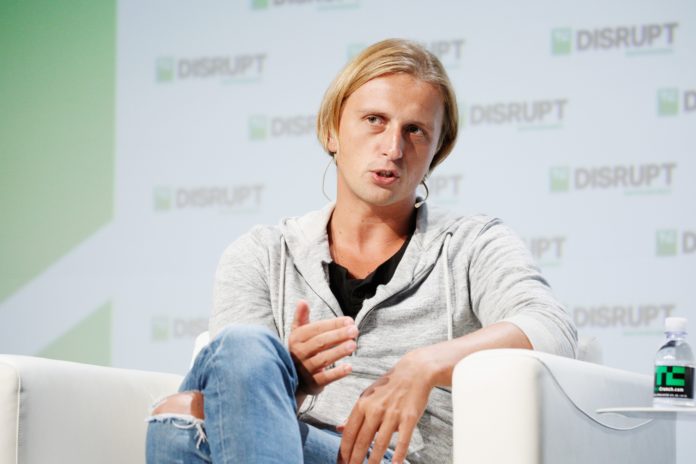
Nikolay Storonsky : Founder of Revolut, the Amazon of Banking

No one better than a traveller would know the worth of every single cent as he/she has to pay an extra fee on the exchange of currency when crossing borders. This is not only the problem of a traveller but many others, who need to get their currencies exchanged, and that too, over different exchange fees. Would it not be better if we get a personalised and accurate platform that would help us with the foreign spendings and the currency exchanges, so that the whole process remains transparent, and we always pay the right amount?

Nikolay Storonsky, a British-Russian entrepreneur, went through the same problem, every time he planned vacations out of the country. But, in the end, he came up with Revolut. Revolut is a banking app that helps you with your finances and spendings across the globe.

Early Life

Nikolay Storonsky was born on 21 July 1984 in Moscow, USSR, to Nikolay Mironovich Storonsky. His father is the Deputy General Director of Science for Gazprom Promgaz, Russia.

Nikolay Storonsky
Image SOurce: vixc.com

Storonsky, after completing his school education from a public school, joined the Moscow Institute of Physics and Technology, where he completed a master’s degree in Physics. During his time at the university, he also participated in various swimming competitions and became a state-level swimming champion. Later, he went to the New Economic School in Moscow, where he completed another master’s degree in economics.

Storonsky started his career as a trader and worked for Credit Suisse and Lehman Brothers.

Founding Revolut

Storonsky loved travelling and even went abroad for small trips. But every time he went out of the country, he faced issues with the currency exchange and their hiked fees. This annoyed Storonsky a lot and wanted to find a better solution for the same.

After a lot of searching and brainstorming, Storonsky reached to a conclusion that he should develop a system that could help people with their finances. So, along with Vlad Yatsenko, and with the help of former Credit Suisse and Deutsche Bank developer, he started working on Revolut.

In the beginning, he raised a $3.5 million for the startup and launched Revolut as an exchange platform on 1 July 2015. The new and convenient concept of Revolut helped it reach more people and make other investors interested in it. In the next two years, the company raised $71 and valued at $350 million. The company also added some other financial services to the platform like cryptocurrency exchange, peer-to-peer payments and pre-paid debit card, etc.

In 2018, the Revolut raised a $250 million in another round of funding, led by Hong Kong-based DST Global. The company became a unicorn and valued $1.7 billion after the round of funding. The same year, the company was able to get the Specialised Bank licence from European Central Bank and an Electronic Money Institution licence, both facilitated by the Bank of Lithuania.

This way, the company is allowed to accept deposits from the consumers and offer them credits. But since it has the Specialised License, it cannot process the investments from the consumers.

Further Expansion

Revolut is one of the fastest-growing fintech, and as of February 2019, it has earned over 4 million users out of which half of them uses the Revolut debit card. The Revolut app offers withdrawal of around 120 currencies through ATMs, and around 29 currencies can be sent to people directly using the app. The app also supports the exchange of cryptocurrency with 20 different fiat currencies. The cryptocurrencies that the app support includes Bitcoin (BTC), Ethereum (ETH), Litecoin (LTC), Bitcoin Cash (BCH), and XRP, etc. The app has its own wallet that can be used to make online payments.

The app had been developed to help people cut the extra fees they pay on exchanges, so the app provides a minimal or no fee for all of its services.

The company headquarters is based in London, United Kingdom, and Nikolay Storonsky is serving the company as the CEO. Currently, 600+ people are working for Revolut. The net worth of Storonsky is estimated to be $510 million.

Awards and Recognition

Revolut has been ranked number three in the LinkedIn Top Companies (UK Startups) list in 2018. It has been also awarded the Top 10 Employed Brand (UK) by Hired in the same year. Revolut won the award of Hottest Fintech Startup 2018 by Europa Awards and Innovator of the Year 2018 by Amazon Growing Business Awards. It was also named the Fintech Company of the Year 2018 by CityAM Awards.

For now, Storonsky is working hard and wants to extend the scope of Revolut services to other countries as well.