Your Tech Story

Tech Story

Zillow_logo

Zillow- Online Real Estate Company Founded By The Owner And Former Svp Of Expedia

With every latest product coming into the market, the consumers grab the power of choice. The right to information and the freedom to choose are the two main goals every company wants to provide. And, this idea to make people aware of information led to the establishment of Zillow. Founder of Expedia, Richard Barton and the Former Senior Vice President of Expedia, Lloyd Frink developed Zillow. Zillow is an American online real estate company established in Seattle, Washington. It is mainly a database company that generates its revenue by selling advertising on its website. The idea of Zillow and how it came up is really interesting.

About the Founders

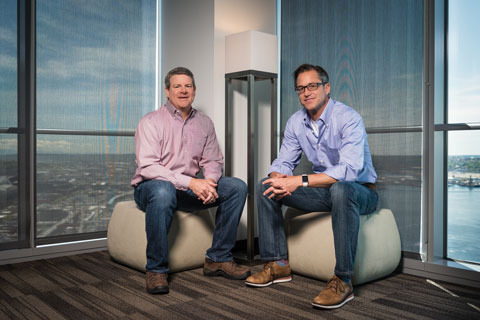
Richard Barton is one of the most famous American entrepreneurs. Apart from Expedia, he is mainly known as the founder of Expedia and Glassdoor. Lloyd Frink acquired a degree in economics from Stanford University. He started his career life from working at Microsoft as a Group Program Manager. He worked there for twenty-five years. In 1996, he joined Expedia as SVP and left the company in 2004. After he left the company, a lot of ideas popped up in Richard’s and Lloyd’s mind for the next start-up.
Rich Barton and lloyd frink
Image Source: Google Images

The Next Idea

The thought of building a new business came up when IAC acquired Expedia in 2003. They could have easily started working for some MNCs. But, for them and especially Frink starting a new start-up would have been far more exciting and challenging.

The first idea that came into their mind was what we call today’s cloud storage. A space to store high-resolution photos and it resembled Dropbox. But, they dropped the idea soon. Because they figured out after a point of time companies like Microsoft and Google would provide it for free.

Finally, they came up with Zillow when they needed some market-related information and won’t able to fetch it. Lloyd and Barton thought of creating a database containing such information. That’s why they founded Zillow.

The Hard Work

After Expedia, it was their second start-up. The founders admit that the journey wasn’t a bed of roses but they were certainly relaxed about it. After they were finally decided what to go for, they started doing thorough research and studies.

The idea of opening a website bothered them a little bit. It happened because they did not have enough expertise in the area of brokerage and real estate. But, they figured out opening a website and then learning to connect with people will be more effective. So, they launched the website in early 2006.

Withstanding Recession

It’s really hard for a start-up to be in the game when the global financial crisis hits after a couple of years of establishment. Still, Zillow managed to survive the big catastrophe. When the recession hit the market, Zillow already had 3-4 million users every month. Around 150 employees working at Zillow at that period.

So, at this moment they just needed to take a big decision and kind of sacrifice. They declared the layoff of one-third of the company. It was a hard decision to make but the team stood together and came out of it stronger. Lloyd also mentioned they were kind of in a bad situation due to their fault. The reason he showed was they just hired too many people too soon.

But, today Zillow has emerged out as a company making billions over a year. The company has made a lot of acquisitions since 2011.

Acquisitions

Zillow started off the list with Postlets in April 2011. In December 2011, Zillow acquired Diverse Solutions which was followed by RentJuice in May 2012. The company also acquired Buyfolio, Lincoln, and HotPads in this year. One of the biggest acquisitions of the company was in 2015 when it acquired Dotloop for $108 million.

Zestimate

Zestimate is one of the most interesting products of Zillow. The product mainly determines the value of a home in a neighborhood considering all the available information. So, the value might vary from place to place depending on the kind of information available.

In 2011, the replacement of Zestimate’s calculated algorithm took place. It estimates the values of over a million houses in the country.

Success of Zillow

Instead of many controversial remarks from Wall Street and other lawsuits, Zillow has become successful. According to the statistics of 2016, Zillow served around 140 million active monthly users.

Smartly.io

How Smartly is Making Millions By Giving Life to Ads

Almost every company wants to take their business online, and if they aren’t, it is because they already are online! In a heavily digitized world, a business can stay relevant only if it can attract people online. Doing so is becoming more and more difficult due to the sheer volume of competitors online. Social media marketing is a sure-fire marketing method used by most modern companies nowadays. Let us take a look at a company smartly that made full use of this to propel itself forward. 

About the Founder

Ovaska grew up in Helsinki, studying Economics and Finance with Statistics and Mathematics on the side. He began his career as a researcher working on how Russian’s economy impacted Finland’s economic growth. He soon got restless and left to start Aaltoes.com at his university in 2008. That company became a leading university-level startup association for entrepreneurs.

Tuomo Riekki
Image Source: Google Images

It was through this initiative that he met his co-founder, Tuomo Riekki. When Tuomo’s startup ran out of funding, the duo got together to build a company. They began with FunRank before moving on to Metrify and finally settled on Smartly.io.

Past Efforts

Prior to Smartly.io, Kristo Ovaska and his co-founder, Tuomo Riekki, started Metrify, which made value predictions for gaming companies. The company began in 2012, a year that marked the beginning of the big data analytics bubble. Around that time, most gaming companies acquired customers using outdated methods and hence was not visible.

Metrify used their analytics to predict where to invest their acquisition money. Around this time, Facebook went public and so needed to make money. Facebook knew that mobile-gaming companies had the money they needed and would be good buyers. They also had the data that such companies needed, and so the gaming companies moved to Facebook.

Early Struggles

Slowly these gaming companies began to pump in money, and their advertising helped attract people to Facebook’s News Feed. This huge shift into social media advertising became Smartly’s stepping stone into the industry. The duo opened in Germany, coding and rapidly scaling their features. The company began as an eight-member team partnering with Rocket Internet. The company scaled rapidly and doubled its size every month for the next ones.

In six months, the company became profitable going international thanks to Rocket Internet. Facebook trusted the small team from Helsinki so much that they recommended them to several big customers abroad! So much so that they now have customers such as Ubisoft, Uber, and eBay, helping manage over $1.8 billion in ads.

Growth and Future Plans

The company doubled its headcount from 150 to 400 within a span of 18 months. Similarly, they expanded their office chain from seven to seventeen. The rise of Facebook Stories has also helped the company improve its visibility and reach. The company raised €100,000 in 2013, following it up with another €1 million a year later.

The company became profitable in 2015 and raised an additional €20 million, two years before. Almost 25 percent of Smartly.io is in the hands of the employees themselves. Recently, Smartly.io, raised $20 million through secondary funding thanks to Highland Europe. The company recently announced hitting a $1 billion run rate with over 500 happy customers.

 With a headquarters in Helsinki, the startup has a very Nordic working culture, which celebrates communication and freedom. The workforce hierarchy is very flat and straightforward regardless of position and seniority. Currently, the company has employees in several cities from around the world like New York, Helsinki, Dubai, and Sydney.

The team plans on expanding their creative side by offering the tools to ad teams. They have launched in alpha phase with Pinterest recently. They are also in talks with the likes of Twitter, Snapchat and YouTube.

Blacklane Logo

On the Blacklane: Last Mile Connectivity Revolutionised

Blacklane allows thousands of people to get home safe and sound every day. The company connects all these passengers to an insured fleet of professional drivers. Blacklane offers phenomenally professional driver service in over 50 countries and does it at affordable prices. As soon as you land at your airport, you can have your driver ready to go. This means no more delays, reaching meetings late and no more inconvenience. So how did the revolutionary idea come to be, and what’s the secret behind its success? Here’s a look at everything you need to know about Blacklane and the service they provide.

Making Their Presence Felt

Blacklane CEO Jens Wohltorf co-founded this innovative company with Frank Steuer. The two-man team which started their business from a one-room office in Berlin now employs more than 200 people. Their small company grew into an enterprise with a solid presence in over 185 cities. They have tie-ups with more than 300 airports, much more than what Uber or Lyft has! So what’s the idea behind this wonderful company?

Jens Wohltorf - Co Founder of Blacklane - Your Tech Story
Image Source – Google

Story Behind the Idea

The co-founder Jens Wohltorf is an ex-Boston Consulting Group employee. Over at BCG, he made his way up the ranks and became the manager of their Berlin office, before calling it quits. In 2011, shortly after having received a promotion, Wohltorf stepped down to build his dream company. He got together with his old friend from University, Frank and then set the wheels in motion for Blacklane.

The duo had been planning and conceptualizing since 2009, analyzing the field and looking for opportunities. The duo always knew they wanted to work together, ever since their college days, and finally got their wish. When they saw that taxi apps were showing up on the Playstore, they took their chance. Also, traveling for BCG work had opened Wohltorf’s eyes to the need for professional car services.

Within the company, Wohltorf became the business guy while Frank handled the technical side of things. However, Wohltorf is industrial engineering with a Ph.D. in telecommunications. The first customer for the pair’s company was Wohltorf ‘s own brother and the business took off. The pair relied on online marketing to canvas customers landing in Berlin. 

Growth and Finance

In the beginning, the duo did most of the work manually and even took 12-hour shifts to handle driver and passenger queries. The first employees were added in early 2012 and by the end of the year, the company had expanded to 15 cities in Germany. Soon enough, the pair internationalized the business, by adding both the British pound and US dollar within payment methods. The website followed suit, by turning multi-lingual and offering English, German and French. By going international so early on in their business, the company was able to scale effectively later on. 

In 2013, the duo took on a challenge in the form of “Mission 100” which required them to add 100 new cities within 100 business days. This initiative helped them in reducing their launch time by over 75%. Once the duo started seeing returns, they began to look for investors.

Blacklane raised over 22 million euros via six funding rounds with Daimler being the main investor. This inflow of capital led to large-scale expansion and development, and soon enough, the company was operational in over 50 countries. Blacklane decided to have just one office in Berlin to help with centralizing power. 

Blacklane Vs Uber

All the drivers employed by Blacklane are licensed and insured, and just like Uber, the company owns no cars. The cars are not theirs, and neither are the drivers. Instead, the company acts as a bridge between the customers and the drivers, by partnering with local chauffeur services. This way, the team has been able to build a fleet of esteemed drivers in every city they operate. This ensures that there are no conflicts, regulatory issues or strikes. 

The biggest difference between Blacklane and Uber is that their pricing is fixed and all-inclusive. Hence, customers know exactly how much to expect and there are no hidden fees or surges in pricing. Also, unlike Uber, Blacklane works as a member of the travel value chain. Furthermore, they provide multi-lingual support to customers around the clock and also provide a booking guarantee. 

Further Growth and Future Plans of Blacklane

Recently, 64 new cities in the Asia-Pacific brought them to over 250 cities worldwide, improving their market presence significantly. The company is looking to expand further by partnering with flight reservation pioneers Amadeus. Blacklane will then become a part of the flight booking industry, and also plan on providing rooms to customers. Their transparent website and ease of doing business have played a big role in helping the company scale such heights.

Being extremely customer-friendly by allowing even one-hour cancellations makes them a service people love to use. The company plans on integrating with more airlines, hotels and online travel agencies to improve their reach and visibility. The company helps take all the stress out of traveling for business travelers who have other things to worry about. With the world becoming a smaller place every day, such services will help people settle in faster than ever before.

Ripple Logo

How Ripple Helped Chris Larsen Become the Richest Man in Cryptocurrency World?

The total digital currency industry amounts to over $600 billion, helping in the making of several new millionaires. One of the newest billionaires to benefit is Ripple’s former CEO, Chris Larsen. With a fortune amounting to a whopping $20 billion, Larsen’s revenue comes from XRP, which serves as the token of Ripple.

Ripple which he co-founded in 2012 with Jed McCaleb is a cryptocurrency based system that allows international payments. So how did this company that uses blockchain technology make Larsen a billionaire? Here’s the story of how Larsen made millions through Ripple and what the future holds for cryptocurrency.

About the Founder

Chris Larsen co-founded E-Loan in 1996, which worked as an online lender is the first company to provide free FICO credit scores. Within 4 years, Larsen grew the company and made it worth $1 billion. He then went on to sell it to Banco Popular in 2005. The next year he co-founded Prosper which he left in 2012, to co-found Ripple Labs Inc., which later developed Ripple. He stepped down in 2016, taking up the post of Executive Chairman. His stake in Ripple is estimated to be worth $37.3 billion, making him the 15th richest American.

Chris Larsen
Image Source: Google Images

Chris Larsen was born to a freelance illustrator mother and aircraft mechanic father in San Francisco. He obtained a BS in International Business from the San Francisco State University in 1984. Shortly after graduating, he started working for Chevron and then went on to do his M.B.A. from Stanford.

He and his colleague Janina Pawlowski, quit their jobs to found a mortgage company in 1992. By 1996, they raised $450,000 from friends and family and set up an office in Dublin. They made their E-Loan website public in 1997, and instantly tasted success.

By 1998, E-Loan was making $6.8 million annually and the company went public a year later. E-Loan was worth $1 billion by 2000, and in 2005 Larsen stepped down as CEO selling E-Loan to Banco Popular.

Larsen and John Witchel co-founded Prosper, which worked as an online auction marketplace like a Dutch auction system. He resigned as CEO in 2012 but stayed on as a Chairman. He then co-founded OpenCoin, which later became Ripple Labs, Inc. in 2013. Ripple Labs developed Ripple and by 2014, XPR was becoming a roaring success.

Making a Ripple in the Industry

San-Francisco based Ripple facilitates secure international transactions and has grown 30,000% between 2017 and 2018. Hence, it has now passed Ethereum and has become the second-largest cryptocurrency in the world. By 2017, XRP’s market share amounted to US$73 billion. The explosive growth of Ripple is due to the launch of futures trading on Cboe and rising investor interest in digital currency.

XRP started out 2017 with a price of $0.006 and ended it by growing over 38000% to become valued at $2.30. In Ripple, the currency is a part of the payment system, unlike other systems wherein the currency is King. Hence, as the payment system is as important as the currency, it makes the entire process a lot safer and very flexible.

Bringing in the Big Bucks

Larsen’s company holds over 61 billion of the total 100 billion XRP in circulation, making him one of the richest people in the world. His 17% stake in Ripple led to him being a part of Forbes’s list of richest people. The company is worth more than $410 million and has over 100 esteemed customers including the likes of Mitsubishi Financial and Bank of America.

The current CEO, Brad Garlinghouse, holds 6.3% stake in Ripple, making him worth nearly $10 billion. Jed McCaleb also served as a co-founder of Ripple but left in 2013 with 5.3 billion XRP.

SAP SE

SAP SE – Inspiring Journey of the Company That Emerged Out Of Rejection

It’s a tough task to manage the financials, logistics, HR and other business areas without the help of technological tools, especially for bigger companies. Such tools bring accuracy as well as transparency in the organization. The combination of various business processes is achieved through it. One of such Enterprise Resource Planning (ERP) software is SAP SE.

SAP SE journey – a very basic version of the most celebrated software as per fortune 500 companies

In 1971, Xerox left the hardware manufacturing sector and asked IBM to shift its business systems to IBM technologies. That time five IBM engineers from the AI department were working on enterprise-wide systems based on the software to which IBM has given rights to, Scientific data systems (SDS) /SAPE software. They were told that the project they are working on is not of use. That time, they decided to leave IBM and start their own company.

So, in 1972, those 5 engineers – Dietmar Hopp, Hasso Plattner, Hans-Werner Hector, Klaus Tschira, and Claus Wellenreuther founded SAP SE. currently, their headquarter is located in Walldorf, Germany and regional offices all over the world in 170 plus countries with more than 425000 customers.

Further Exploration of SAP SE

In the beginning, they developed programs for payroll and office for their first client Imperial chemical industries. Their software was real-time, unlike IBM.

In 1973, they moved to a commercial product which was their first financial accounting system. (SAP R/1) It has centralized data storage and improved data maintenance. In 1979, SAP involved other areas like material management & production planning. (SAP R/2). This SAP R/2 version did not improve until 1990.  SAP R/3 was released in 1992 and was developed with new features in 1995.

By this time, it already achieved the mainframe computing trend and the concept of business process integration came into the picture. To accommodate all these changes, SAP R/3 was replaced with SAP ERP central component in 2004. The latest version is of 2016, SAP ERP 6.0. Till 2016, SAP was the world’s third-largest software and programming company. As per recent reports, it is on number one. Most of the fortune 500 companies use this software.

Five Co-founders, One Dream

The five founders have different stories before they were in IBM and have different journeys with SAP. Let’s have a short introduction to the life of masterminds behind SAP SE.

Dietmar Hopp

Starting with Dietmar Hopp, who grew up in Hoffenheim. He was a telecommunications engineering student and after that, he joined as a consultant at IBM. Then SAP was founded, and he was the CEO of SAP SE from 1988 until 1998, chairman of its supervisory board from 1998 until 2003 and member of the board from 2003 until 2005. When he left the board, he kept 10% of the company’s shares.

Hasso Plattner

Plattner has received many awards and recognitions for his commitment to economics and science ranging from Leadership Award for Global Integration to the “technology guru”. He was also estimated to be worth US$10.8 billion by Forbes in 2016.

Klaus Tschira

He got his Diploma in physics and worked at IBM before he founded this company, for which he was a board member From 1998 to 2007. He passed away on 31 March 2015 in Heidelberg. As well, he was a recipient of many honors in his lifetime including several doctorates.

Claus Wellenreuther

Wellenreuther studied business administration at the University of Manheim in operational research. He left the business in 1980 due to his health condition and got compensation of 1 million DM.

Hector

One of the founders, Hector, A trained mathematician successfully built up the North American market for SAP. Later, he was separated from the company in 1997 after a falling out with his partners.

CEO till 2019 – William R. “Bill” McDermott

Formerly William R. “Bill” McDermott was the CEO of SAP who is currently CEO of ServiceNow.  While he was the co-CEO and CEO, SAP’s market value increased from $39 billion to $156 billion. McDermott went to North-western University’s Kellogg School of Management where he earned his MBA. He joined SAP in 2002 as CEO and was designated to the SAP Executive Board in 2008. He did various roles in SAP.  On October 10, 2019, McDermott decided to leave SAP SE. In 2016, McDermott was named “Manager of the Year” by the German Business Daily. He also received the award as TOP CEO by Glassdoor.

Current Co-CEOs – Christian Klein & Jennifer Morgan

Presently, the duo Klein-Morgan handling the CEO position of the firm. Starting from Jennifer Morgan, she joined this company back in 2004. After serving for a long time, in 2017, she appointed in SAP’s Executive Board. However, she became the first female in America that first-ever appointed to the Executive Board. While Klein, the Co-CEO joined the company in 1999 as an intern. Thereafter serving at several positions he named as a CEO along with Jennifer.

NEO Logo

How NEO Became China’s Answer to Ethereum?

The cryptocurrency industry is one that is growing at an unprecedented rate. The environment has grown tremendously in the last five years and is now a billion-dollar sector. Several entrepreneurs owe their millionaire status to this industry. This time around we will be looking at two such millionaires. But all this success has led to a saturation in the industry, and it is now highly competitive. With new currencies propping up every year, it is difficult to stay ahead and stay relevant. One such new cryptocurrency that is gaining momentum is NEO. Here’s a look at how this currency came up and the story behind its success.

NEO Vs Ethereum

Ethereum is the second most popular cryptocurrency, second only to the Bitcoin. However, NEO has been creeping up behind Ethereum and is very close to catching up to it. The competition between the two is so fierce that is has earned NEO the nickname “Chinese Ethereum”. The currencies are going head to head against each other because they are very similar in many aspects. For instance, both currencies are multi-purpose, unlike the Bitcoin.

However, NEO gets a lot of support from the developer community as it supports C++, C#, Java and even Go. Therefore, developers skilled at one of these languages can build projects on NEO. Furthermore, the system has the power to handle over 10,000 transactions/second. In comparison, Ethereum supports only 15 transactions/second.

Growth in China

One of the biggest support that NEO receives is from China. China creates alternatives for most services provided around the world. For instance, Alibaba goes head to head with Amazon, while WeChat battles WhatsApp, and Baidu takes on Google. In the field of cryptocurrency, NEO is China’s answer to Ethereum. So much so that has become China’s largest cryptocurrency due to support from the Chinese government.

About the Founder

Da Hongfei, who co-founded NEO, also founded AntShares in 2014 for a decentralized app building. This company later became NEO in 2017 via a re-branding scheme. Hongfei and Antshare’s CTO Erik Zhang founded Onchain in 2014. This company served as a blockchain research and development company.

Da Hongfei
Image Source: Google

Onchain levied partnerships with Microsoft China and Fadada throughout 2016 to build this company. These three companies together became Legal China later on. Hongfei also serves as a communication link between his company and the Chinese government and works as their consultant on matters regarding cryptocurrency. 

Growth and Success

Onchain was also the first Chinese blockchain development company. In 2016, NEO released China’s first consensus protocol called dBFT. It is this protocol that allows NEO to carry out lightning-quick transactions. NEO started 2017 priced at $0.16 and then grew a miraculous 111,400% to end the year at $162! The company’s current market share stands at a whopping $4.96 billion. 

The company opened with 100 million NEOs, out of which, 50 million went to early investors, and the rest went into a smart contract. Every year, 15 million tokens get released to fund development and research. In 2018, Da Hongfei announced that the company would split into NEO Foundation, under Hongfei and Erik Zhang, and two units named NEO Global Development and Global Capital.

NGD will work on research and development, while the Foundation would handle everything to do with operations and marketing. NGD opened its first office in Shanghai in 2018 and the second one in Seattle. 

The word “Neo”, in Greek, means new, modern and young. With their fresh ideas and young team of professionals, it does look like NEO is the newest kid on the block with the power to disrupt the cryptocurrency industry.