Your Tech Story

Tech Story

C Programming Language

Dennies Ritchie’s Contribution To Programming And Origin of C Language

Nowadays computer science is a mandatory subject in schools. Though computer science is optional in high school, everyone acquires knowledge of basic computing at an early age. And, when we take steps towards learning how to code, we always start with the C language. At least most of us opt for it. The c programming language is one of the most famous and earliest programming languages around the world. The language can be used extensively for programming operating systems and embedded systems. After the first version by Dennis, so many versions of the language have come up but currently, C18 is the most recent.

About Founder
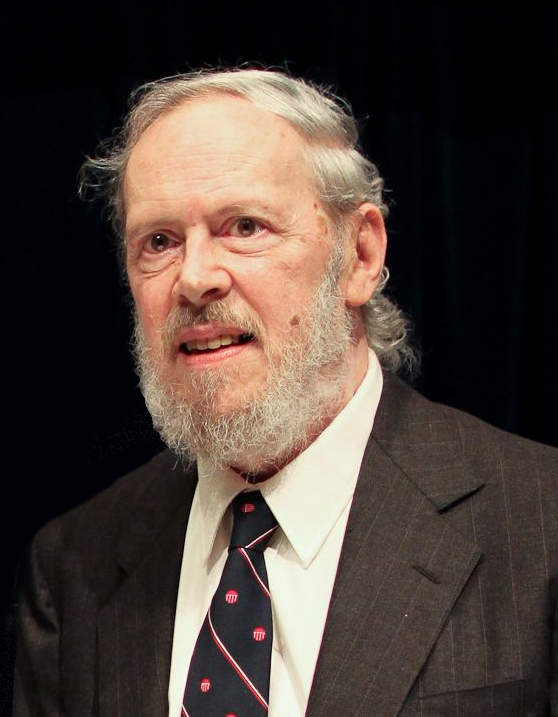
Dennis Ritchie
Image Source – Google Images

Dennis Ritchie, an American computer scientist is the creator of the C language. He has also developed the Unix Operating System and B language. Dennis received many prestigious awards for his excellent works and contribution to society. He is one of the reasons our world has come so far in terms of technicality.

Early Life

Born into Bronxville, New York, Dennis moved to New Jersey at a very young age. Alistair E. Ritchie, one of the scientists of the Bell Labs was father to Dennis Ritchie. After the family moved to Summit, Dennis attended the Summit High School. Later, Dennis went to Harvard University and acquired degrees in Physics and Applied Mathematics.

Early Career

After graduating, Dennis joined Bell Labs in 1967. He was carrying out his Ph.D. under Patrick C. Fisher at Harvard University. But, he was never able to receive the degree officially. When Dennis started working at the Bell Labs, Ken Thompson worked as a colleague of him. Both of them were working on the Multics operating system.

During this time, Thompson discovered an old PDP-7 and he started developing an operating system along with Dennis. In 1970, the operating system which they named “Unix” was finally completed. Eventually, Dennis came up with the B language followed by the C language.

Origin of C Programming Language

After Dennis and Thompson developed the Unix operating system, they decided to port the operating system in PDP-11. Once they incorporated Unix, Dennis needed to come up with a new language or rather a new compiler to make use of this operating system in PDP-11.

Dennis started working in Fortran, but he gave up after some time because it wasn’t possible in that language. Then he started working with BPCL systems programming language but there wasn’t much information about the official description of the language.

Thompson along with Dennis came up with B language but the language was too slow and it didn’t adjust well with the features of PDP-11. So, Dennis tried to modify the language and make some changes. But, doing that led to the invention of a whole new programming language, that is, C.

In 1972, the C compiler was used for version 2 Unix and the fourth version of the OS was released in November 1973. The other versions of C were ANSI C, ISO C, C99, C11, and Embedded C.

Other Works

Apart from working with the C language and Unix operating system, Dennis also wrote a book, The C Programming Language along with Kernighan.

He also worked for the development of operating systems like Plan 9 and Inferno. Dennis also helped in creating the programming language, Limbo. Dennis worked for Lucent Technologies until he retired in 2007.

Awards and Achievements

In 1983, both Dennis and Thompson were honored with the Turing Award. They received for the award for making significant progress in the field of generic operating systems theory and for developing Unix. In 1990, again this couple bagged the IEEE Richard W. Hamming Medal for both the Unix OS and C language.

This decade was followed by receiving a fellowship from the Computer History Museum in 1997. In April 1999, Bill Clinton awarded both of them with the National Medal of Technology. In 2005, Ritchie received the Achievement Award from Industrial Research Institute mainly for Unix. He was also honored with the Japan Prize for Information and Communications in 2011. Thompson received this prize along with him.

Retired Life

He worked for Lucent Technologies after leaving Bell Labs. In 2007, Dennis stepped down from the research department. He passed away on 12th October 2011. He was suffering from prostate cancer and heart disease.

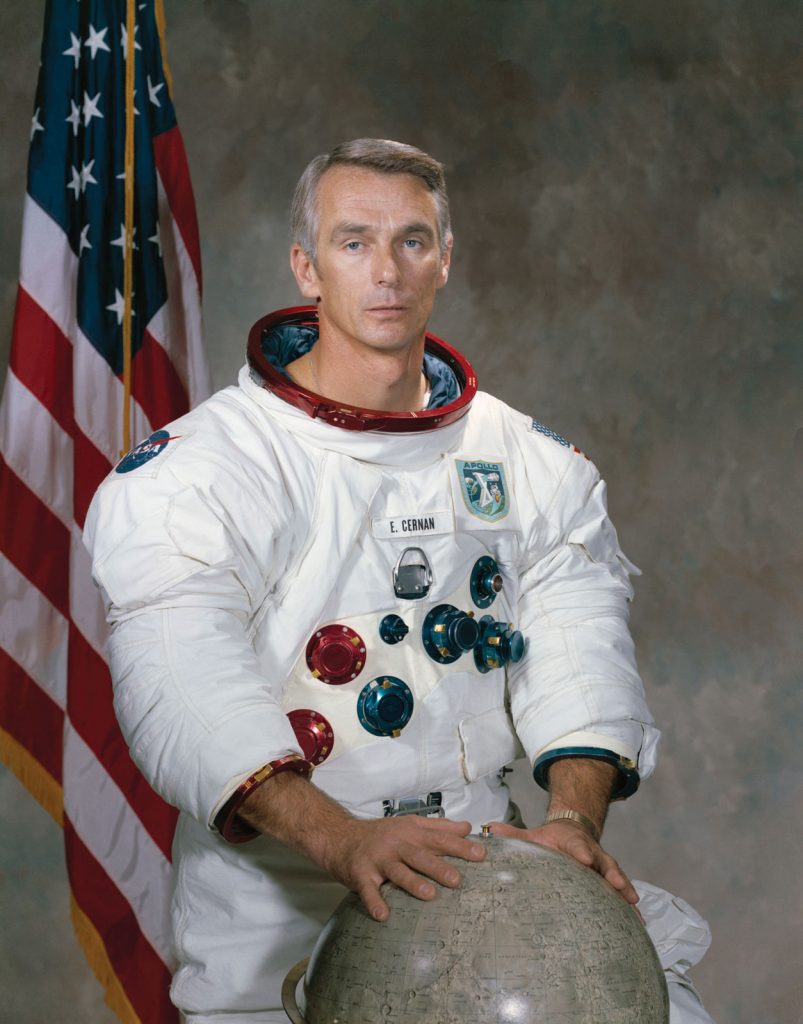
Eugene Andrew Cernan

Remembering the Last Man to Walk on the Moon- Eugene Cernan

For as long as mankind has been on Earth, we have been obsessed with the night sky. Countless hours, effort and money went into trying to understand the sky and everything that occurs beyond it. Man’s fascination with the starry sky dates back to ancient times. As science and technology progressed, we took steps to unravel those mysteries. Astronomy grew, and soon enough, we sent people to the people. Here’s a look at someone who led one of the most colorful lives possible. Let us take a moment to remember Eugene Cernan, the last man to walk on the moon.

Early Days

Eugene Andrew Cernan was born in 1934 in Chicago to a Slovak immigrant father and Czech mother. He was a very active boy while attending McKinley Elementary School, becoming a Second Class Boy Scout. He graduated from Proviso East High School in 1952, and soon joined Purdue University. While there, he was a Phi Gamma Delta fraternity member. He accepted a Navy ROTC scholarship right after his sophomore year. This scholarship required him to work aboard the USS Roanoke. In 1956, Cernan graduated with a B.S. in electrical engineering with a GPA of 5.1 on 6.0. 

Military Career

Cernan underwent training with the Naval Reserve Officers Training Corps and became a U.S. Navy Ensign. His first posting after training from Purdue was on the USS Saipan. He later switched to active duty after completing flying training from Whiting Field, Baron Field and the Naval Air Stations in Corpus Christi and Memphis. He became a Naval Aviator and flew both the FJ-4 Fury and A-4 Skyhawk for squadrons 126 and 113. He graduated with an MS in Aeronautical Engineering from U.S. Naval Postgraduate School in 1963. His Navy career witnessed over 5,000 flying hours, out of which 4,800 hours were in a jet aircraft. 

Taking to Outer Space

In 1963, NASA chose Cernan to be a part of their Gemini and Apollo programs. NASA chose Thomas Stafford and Cernan as backup pilots for Gemini 9. However, when NASA T-38A crashed killing the prime crew, they became the main pilots of the mission. Gemini 9A faced several setbacks including launch explosions and component failures. The crew fought against all odds and carried out several rendezvous to salvage parts. Cernan himself did an EVA, only the second American to do so, becoming the third person to ever do a spacewalk.  

To the Moon and Back

Eugene and Stafford flew the Lunar Module for the Apollo 10 mission and collected data regarding lunar gravitational conditions. Two months later, this critical information allowed the Apollo 11 to land on the Moon. Though he was offered a chance to walk on the Moon during the Apollo 16 mission, he turned it down.

Budget cuts led to the cancellation of Apollo 15 and Apollo 19 in 1970, making Apollo 17, the last Apollo mission. In 1971, NASA launched Apollo 17, with Schmitt and Cernan handling the flying. The duo performed three EVAs lasting 22 hours on the Taurus–Littrow valley, covering over 35 km. He was also the last man to ever say anything standing on the Mo0on, and his final words were;

“America’s challenge of today has forged man’s destiny of tomorrow. And, as we leave the Moon at Taurus–Littrow, we leave as we came and, God willing, as we shall return, with peace and hope for all mankind. Godspeed the crew of Apollo 17.”

— Cernan, [14] 

Eugene is one of three people to go to the Moon twice and one of only twelve to have walked on the lunar surface. Following the missions, he retired in 1976, as a captain. He later became the Executive Vice President of Coral Petroleum Inc. In 1981, he quit that company to found The Cernan Corporation. Eighteen years later, he published his memoir titled The Last Man on the Moon. He passed away at 82, in 2017 and was the first astronaut to be buried with full military honors at the Texas State Cemetery.

Legacy 

Cernan also famously drew his daughter’s initials in the lunar dust as he was leaving for Earth. He holds the distinction of being the last human being to leave their footprints on the Moon. While working in the earlier missions, Cernan told Neil Armstrong about the white line his crew had painted in the sky to the Moon.

All Armstrong had to do not to get lost was follow the line and land, joked Cernan. His crew also captured the iconic photo, titled Blue Marble, showcasing the Earth in all her splendour. In many ways, Cernan embodied the human spirit, full of ambition to do things no one has done before.

Oodle

Oodle Defined A New Way Of Digital Advertising

Anyone who has started a new company or is planning to pursue advertising as a career has heard about Oodle. We all know how crucial advertisement has become in today’s marketplace. With competitors crawling in every field, advertisement plays a key role.

Now, from the perspective of an owner of a start-up or a famous businessman they think about unique ideas. They tend to hire people who can brilliantly tackle customers with the skill of digital marketing. But, who thinks about the other side of the coin? People think about establishing their own company in various domains. But, creating a business that is exclusively for advertisement is pretty exceptional.

Oodle, an American company is the world’s largest classifieds aggregator to date. Many of you might don’t know what that means but it’s surely not rocket science. It defines a simple idea of advertising which previously used to be only in newspapers. But, with the advent of the digital era, classifieds advertising has channeled the power of the internet.

The founders of Oodle are Craig Donato, Faith Sedlin and Scott Kister.

Craig Donato

Craig acquired a bachelor’s degree in Electrical Engineering from Virginia Tech. He pursued his MBA from Stanford GSB. He started his career by working for Excite as Vice President of Product. After working in this position for five years he became the SVP Search and Community of Excite@Home.

Craig Donato
Image Source – Google Images

In 2001, Craig became the CEO of Grand Central and after a couple of years, he founded Oodle and became the CEO. He resigned from the company in 2012 and in 2013 he joined QVC as the VP of Social. In 2015, Craig joined Nextdoor.com and currently, he serves as the Chief Business Officer of ROBLOX.

Faith Sedlin

Faith went to Wellesley College followed by Harvard Business School. In her career world, she has played the role of product marketing manager, business developer, product manager, and founding start-up. She had seven jobs in total.

Scott Kister

Scott has a BS degree from the California Institute of Technology. He acquired his Master’s in Computer Science from Stanford University. After completing his Bachelor’s degree he joined Oracle in 1992. He also has work experience at Excite for more than five years after which he joined Danger as Senior Director, Service Engineering.

In July 2004, Scott founded Oodle along with Faith and Craig. He is currently the CEO of Oodle.

Founding Oodle

Though the company was founded in 2004, Oodle was launched publicly in 2005. The company started rolling since 2009 when Oodle added a new feature on its user interface. The feature allowed the users to directly publish listings on their social media like Facebook.

After launching this feature, users were able to post any update anytime to Facebook, MySpaceID through Oodle. In 2010, the company announced that the feature will also be available for LinkedIn, eBay, Trulia and Zillow.

In 2009, Oodle raised $5.6 million from investors like Greylock Partners, JAFCO Ventures and Redpoint Ventures. This year, the total fund Oodle invested in the company summed up to $21.6 million.

Expansion and Success of Oodle

People often tend to sell their old belongings to someone they know. And, Oodle spotted out this and turned it to their advantage. People in America also use Craigslist to sell and buy things but research has shown users are more comfortable when the deal is between someone they know, family or friends.

This is the prime reason Oodle tied up with the biggest social networking site, that is, Facebook and eventually other social platforms. The users easily put up the advertisement for something they want to sell. And, the potential buyer just might be from his or her social media.

In 2010, Oodle witnessed 15 million unique monthly visitors in its site giving strong competition to Craigslist. In this year, Oodle also acquired Grouply.

Acquisition of Oodle

From the beginning till the end, Oodle has focused only and only in expanding its social network. Because according to research 49 percent of Americans prefer selling their goods to their acquaintances. The company was making a good profit. In 2012, QVC acquired Oodle which again came under the acquisition of Oodle Holdings in 2015.

The company currently has 75,000 partner listings and serves as one of the best platforms for advertisement. Because apart from the rich source of heavy networking it establishes trust among the users.

infoblox-logo

How Infoblox Removed Frustrations and Made Millions Through DNS Technology

Every founder has an interesting story behind why he or she founded their company. Sometimes it is because they feel that there is something lacking in their industry, and other times it is because they feel burnt out in their current position. Better yet, sometimes founders find a spark and feel they need to chase it with everything they’ve got. Infoblox too has a reason for its existence and that reason is attributed to founder Stuart Bailey’s frustration with network downtime! Here’s a look at how Bailey grew Infoblox into a company leader worth millions of dollars.

Removing Frustrations

Stuart Bailey was researching database architectures at the University of Illinois in Chicago and was quite frustrated with the University’s network maintenance. The framework was down quite often and technicians took quite some time to get the network back into play.

While conversing with colleagues and other students across the city, he realized that this was a frustration they all shared. This common frustration gave Bailey the idea to look for ways to decrease this network downtime, and soon enough Infoblox was formed. The company made history for being the first startup to receive investments from Sequoia Capital via a cold call or cold e-mail.

Stuart founded Infoblox at the age of 28, prior to which he worked for Dr. Robert Grossman at the National Center for Data Mining. He spent five years there learning about data architecture and being involved with the building of the National Scalable Cluster Project. He also helped in guiding teams to win numerous accolades at the High-Performance Computing Challenge at the Supercomputing conference.

Growth and Success of Infoblox

The company was founded in Chicago in 1999 and is a gold-standard in the field of software and hardware manufacturing and development. In 2003, Infoblox shifted its base to Santa Clara, California in search of cheaper technical labour.

Stuart Bailey, who founded the company is still a part of Infoblox, serving at its chief scientist. An increase in the need for network management and risks to internet security through hacks led to a rise in demand for the company’s products.

In 2012, over 7.8 million new malware threats emerged and threats to mobile phones grew by 1,000% with over 865 successful breaches which compromised more than 174 million records. In 2007, they acquired Ipanto, a French startup and brought out IPAM WinConnect appliances. Infoblox acquired Netcordia in 2010 which helped consolidate its hold on the network task automation market.

Infoblox raised funds through five different rounds from 2000 to 2005, bringing in over $80 million via Sequoia Capital. The company went public at a rate of $16 per share in 2012 to raise extra capital. After the first day of trading, the stock price rose by over 40%. Since going public, the company has grown in terms of employees and revenues.

In 2013, the company faced some revenue deficit due to a predicted slowdown within the industry which rose due to business fluctuations. The unique selling point for Infoblox products has been their combination of tools to hack servers, reduce operational expenditure, and make network management more efficient. Also, the company has great social policies, offering environment-friendly appliances since 2006.

Owning the Market

Infoblox now offers services which help in maintaining DNS servers, IP address management and network management. The company, therefore, grew from strength to strength and by 2013, boasted of over 6,000 customers. The company grew over 40% in 2013, bringing in $63.1 million in revenues. As per a Gartner report, by 2015 the company held almost 49.9 percent of the market, which is worth over $533 million.

A year later, the company became a clear market share leader in the fields of DNS, DHCP and IP address management with other players having less than 15% market share. In 2016, they acquired cyber threat company IID, improving their hold in the security services field.

The same year, Infoblox was purchased by Vista Equity Partners for $1.6 billion. The next year the company expanded by opening an office in Tacoma, for cybersecurity research. In 2019, Infoblox updated their Network Identity Operating System and extended support for Google Cloud Platform.

Infoblox continues to grow at alarming rates, and is now an established market leader with more than 50% market share. The company boasts of over 8,000 customers, which includes 93 of the Fortune 100 and 350 of the Fortune 500. Overall, the company extends its services to 58% of the companies that make up the Fortune 1000. Thus, Infoblox powers and helps run most of the world’s most sophisticated networks and companies.

Ducati Logo

Ducati- A Symbol of Freedom and Youth

Motorcycles have undergone radical changes since they were first discovered. They have grown from being something to get from Point A to B, to a symbol of freedom and youth. Several companies have aided this growth and prospered as a result of it. Whenever anyone mentions the word bike, chances are you think of Ducati. Having become synonymous with the words bike and motorcycle, this giant in the field exudes class and success. Here’s a look at how this small motorcycle company grew to become one of the world’s most recognized brands.

Gold-Standard Legacy

Ducati Motor Holding SpA produces several types of motorcycles and is a gold-standard within the industry for technical excellence. Since its early years, the company has made a name for itself in racing. Ducati has won over 13 World Superbike Championship titles between 1990 and 2006. Their motorcycles are valued collectors’ items and objects of fascination for fans around the world.

Similar to competitor Harley-Davidson, Ducati has entered the fashion industry designing motorcycling accessories. Ducati sells such apparel through its retail stores spread across the world. While the company has faced several ups and downs, theirs has never faltered, rather only increased. Here’s the story behind one of the biggest names in bike racing.

Setting Up Shop

Though Ducati associates itself with high-performance bikes now, its origins were in an altogether different industry. In 1926, Adriano Ducati and his sons, Adriano, Marcello, and Bruno Cavalieri founded Societe Radio Brevetti Ducati in Italy. Their early radio products were patents of Ducati and the company’s first product was a Manen’s condenser. This product followed by a string of successful products made them an international phenomenon.

In 1935, Ducati started the construction of their Borgo Panigale factory, and also began to expand. The Development of an international chain of facilities helped them serve their customers more efficiently. By the end of the 1930s, Ducati had offices in New York, Paris, London, and Sydney. However, WW2 ended their radio career with constant bomb raids destroying factories.

Also Read: Success Story of Xender, Sharing Files Without The Expense of Mobile Data

Moving into The Motor Industry

The destruction of their radio empire gave them the time and capital to focus on a completely different industry. Adriano Ducati and his brother thought of several new products to consolidate their international position. Eventually, the brothers decided to completely shift lanes and in 1946, Ducati came out with the Cucciolo. This small rotor fitted into bicycles, and soon enough, sales sky-rocketed. As the idea started to gain favor, Ducati began marketing it as a motorbike, using a Capellino frame patent.

The success of the Cucciolo led to further models and in 1952, the Cruiser came out. This bike came with an electronic ignition controlled 175cc engine, that had an automatic transmission. A year later, they released a smaller bike with a 98cc engine, as a way of attracting more customers. These two models together helped make Ducati an internationally renowned manufacturer. Under Fabio Taglioni, the company grew even further and by the late 1950s, the company was a strong market player.

Racing Pedigree

As Ducati bikes got stronger and more powerful, they became a staple in races. The 250cc GP models, like Mach 250 was taking part in and winning famous competitions all around the world. The 450 Mark 3D followed suit, with a top speed greater than 170 km per hour. As Japanese superbikes started pouring into the market, Western manufacturers had to reinvent themselves to stay relevant. To stay in the race, Ducati began making 750cc bikes in the 1970s. Their continued success led to Ducati being purchased by Claudio and Gianfranco Castiglioni in 1983.

Change of Guard

The Castiglioni’s, however, kept Ducati in the racing scene and even expanded to new models after improving the production volume. This golden period led to several important Grand Prix wins from 1986 to 1998. However, such aggressive expansion led to the company bleeding money, and soon Ducati faced financial issues. Sensing this, in 1996, the Texas Pacific Group bought 49% of the company for $43 million.

Two years later, TPG bought out the company, paying a whopping $174 million. The revived Ducati went on to win even more races and prices for their bikes sky-rocketed. This, in turn, raised the company’s revenues, with turnover hitting $280 million in 1998. A year later, the company was making $300 million annually. TPG then went on to go public with Ducati listing it on the New York Stock Exchange. Soon after, retail stores propped up all over the US and the company began selling apparel to great success.

This success has followed into the 21st century with Ducati still going strong. TPG sold its majority stake to the Italian firm Investindustrial Holdings in 2005. From 2006 onward, their sales increased and the company started bringing in more money than ever before. AUDI’s Lamborghini subsidiary then bought Ducati Motor Holding S.p.A. for €747 million in 2012. In 2018, they sold over 53,000 bikes, making them the leader in the superbike category with 26% market share. It goes without saying that this company will remain the gold-standard for motorbikes in the years to come.

Also Read: David Baszucki : Founder of Roblox, the Biggest Video Game Building Platform

jimdo Logo

The Journey of three entrepreneurs Fridtjof, Christian, and Matthias Henze to set up Jimdo

Jimdo made it simpler to develop a website for people who are not tech-savvy. It is the Germany based start-up, held the main office at Hamburg, Germany. Three German entrepreneurs Fridtjof Detzner, Christian, and Henze started Jimdo as a side project. Today, it offers two products well-known as Dolphin and Creator. Also, powering more than twenty million websites all across the world. 

Backstory of Jimdo

Since high school, Fridtjof Detzner and Christian Springub were working together on coding for websites. Initially, they started assembling computers and selling to local customers. After the launched of the web, they started building websites for peoples. They started an internet agency at Cuxhaven. Subsequently, one more genius mind Matthias Henze joined them. 

Jimdo Foundation

While building the websites for others, they came to know that people desire to design their websites. But due to the requirement of coding knowledge, they were unable to do so. 

So, they realized that they should create a website building platform without coding requirements. As a result, in 2007 they set up the company Jimdo. At first, it was set in a barn in Cuxhaven. Because when they had decided to establish a Jimdo, they had zero budget. So, for their first project, they used Fridtjof parent’s farmhouse. The first version of their website builder was developed at that old barn. In very less time, the company turned into a profitable and sustainable firm.

Flashback on Jimdo’s founder’s Lives

In 2015, the founders of this company are awarded the prestigious German Founder Prize. Matthias, Fridel, and Christian named this award for the company’s corporate values and innovative products. Also, these three friends running the company successfully for the last 12 years. So, let’s see how they made this happen.

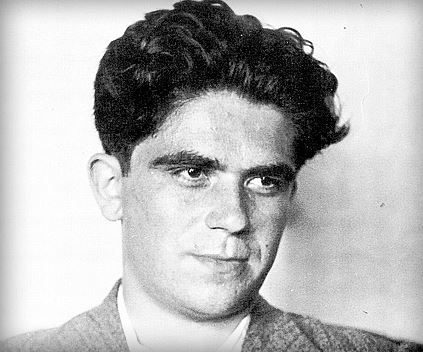
Fridtjof Detzner 

During high school, Fridtjof Detzner started programming for websites with his friend Christian. At the age of 16, they got the first business license with the help of their parents. At that time, Fridtjof created hundreds of websites with the help of Christian and Henze. In 2007, he co-founded the website-builder business Jimdo.

Fridtjof Detzner
Image Source: fridel.de

At Jimdo, he contributed to the design and development of the company’s product. Also, he is responsible for the maintainable and wide-ranging company culture.

Christian Springub 

He was born on 5 October. Presently, he is the co-founder of the company NorthClick GmBH and Jimdo. However, he had been working on website design and coding from the high school days. Christian is a born businessman.

At the age of 12, he runs a business of buying and selling toys at a flea market. During high school, in one of the parties he asked, who wants to be a partner in his website building business? That’s how he met his another co-founder of the company and friend Fridtjof Detzner. After a few years, he with his partner Fridtjof, and Henze co-founded Jimdo in May 2007.

Matthias Henze – CEO of Jimdo

He is co-founder and CEO of the company. Back in 2004, Matthias Henze who was the Detzner’s brother’s friend joined the company started by Fridtjof D. and Christian S. After three years, he helped in building and launching the company Jimdo. Currently, Jimdo enables over 20 million websites. 

Matthias is proudly helping to determine the policies and best strategies for the company. 

Services offered by Jimdo

The company is famous for its two main services. The first one is Jimdo’s creator and the second is Jimdo Dolphin. The Creator is a basic website builder. Jimdo creator provides a drag and drops style tool for website building. But it required some basic coding skills. However, Jimdo Dolphin only needs basic computer skills to build an efficient website. Because it is an AI-based website builder. 

As like other website-building platforms, Jimdo offers free as well as premium plans. Also, these services are available in seven different languages. Includes, German, English, Italian, and Japanese. Also, French, Dutch, and Spanish.

Bottom Line 

Today, This company is a popular and diverse website building platform. Blogs, online shops, company pages, website portfolio, etc, can be build using Jimdo. Presently, around 20 million miscellaneous websites had built using Jimdo’s website builder. Also, it offers great assistance to its users. Thus, Jimdo is not only popular but also a trustworthy company in the field of website building.