Your Tech Story

Tech Story

Precision Castparts Corp

How Precision Castparts Corp Caught Warren Buffett’s Eye?

Warren Buffett has been running Berkshire Hathaway Inc. for over five decades, and the organization has become synonymous with success. So when the 85-year-old billionaire announced at an annual shareholder meet that he was going to buy Precision Castparts Corp, people were up and listening with intent.

He went on to buy the company the Oregon-based company for $37 billion becoming one of his most highly-priced acquisitions. So what was it about this metal dealing company that caught Buffet’s eye? Precision makes parts for the aerospace industry; a greatly untapped market. Thanks to the efforts of CEO Mark Donegan, Precision has grown to become a giant slayer and here’s a look at their remarkable journey.

The Captain of the Ship

Mark Donegan is a 60-year-old, who played football for Villanova University with an eye for detail. This quiet and reserved CEO has made a name for himself, thanks to his great track record and strive for perfection. This is clear by how after heading Precision for 13 years, the company’s stock has grown by over twenty times!
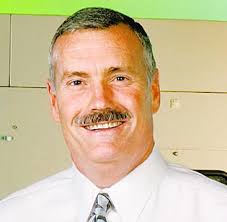
Mark Donegan
Image Source: Google Images

He has also helped Precision quadruple their annual turnover, bringing it up to an astounding $10 billion and has also been a part of several acquisitions. Precision is now a key supplier to industry heavy-weights such as Boeing, Airbus, and General Electric. All these efforts and striving for perfection made him a part of Barron’s list of the best CEOs in 2014. The CEO is a perfectionist who pushes himself as hard as he pushes his employees and even helps managers with their problems at factories.

Humble Beginnings of Precision

Mark Donegan studied accounting at Villanova and started his career at GE under Jack Welch. Precision hired Donegan’s boss Bill McCormick as President in 1985, and he followed soon after. Engineer and MBA graduate Ed Cooley founded and ran Precision in the 1950s. A decade later, the company began supplying to GE via factories in Portland.

McCormick, who became CEO in 1991, stated that on joining Precision, he found it was run like a family-owned enterprise. Under him, the company expanded aggressively by venturing into manufacturing parts for gas turbines.

They also acquired forging company Wyman-Gordon, which had ties to the aerospace industry. Donegan was working his way up the corporate ladder and soon became President. By 2001, McCormick made him Operating Chief and a year later, he became CEO when the former retired.

New Era

Under Donegan, the company began an acquisition spree, buying even more companies that were associated with the aerospace industry. In 2007, Precision bought Cherry Aerospace to further expand their business and as a result became the 568th largest U.S. company.

In 2012, Donegan acquired a titanium supplier for a whopping $2.9 billion, helping to consolidate Precision’s position in the market. His relentless efforts led to the company’s shares hit an all-time high price of $275.09. By 2013, Precision had over 150 factories around the US to help feed its ever-expanding empire. 

Growing Interest

The company went through a rough patch during 2014-15 due to plunging oil prices, which led to their shares dropping by 27%. However, this led to Buffett forming an idea for an acquisition. His investment manager, Todd Combs, had amassed about 3% shares in Precision by 2012. In 2015, Buffett led Donegan to know that he wanted to buy Precision and the duo met in Idaho. The offer on which they settled finally, came up to $235 a share, allowing Donegan himself to pocket $51.8 million. 

Since the acquisition in 2016, Donegan has captained the ship and increased the company’s stock prices. It is one of the only three Fortune 500 companies to be based in Oregon and ranks 9th with regards to the leaders in Aerospace and Defense.

The company boasts of over 29,600 employees and makes more than 9.6 billion USD annually. It is quite easy to see exactly why Buffett took interest in this industry juggernaut and the stalwart who leads it.

weheart it logo

We Heart It- A Platform For The Social Butterflies To Spread More Love

It doesn’t matter if the chicken salad is delicious but it should look tasty. Isn’t it? This is the current status of a social butterfly. From making a DIY lamp to the video of their window shopping, they love to share everything. And, social media gives you a platform to do so. But, how about improvising the concept a little bit and creating something better that touches the heart of millions of people?

Since we all love sharing beautiful pictures all the time, how about an image-based network? Or even better if it is an image-based social network. Fabio Giolito built such a network in 2008 which is still inspiring people and spreading love.

Drop A Heart

The exact idea of what this platform does might be a little blurry. Well, most of us are on famous social platforms like Facebook or Instagram. But, unlike those sites, Weheart It is all about posting pictures and sharing it. It creates a visually dynamic website where images, animated GIFs and videos can be posted.

One can like the picture or rather ‘heart’ it and share and save. The best thing about this social network is one cannot comment on the pictures. This creates a very positive environment within the social community of We Heart It. So, if one doesn’t like a picture he or she can simply scroll down without any criticism.

This helps expand the community as no one feels shy about posting anything on the platform. You simply drop a heart and share away from your favorite photographs.

Fabio Giolito

Fabio Giolito has plenty of experience in the professional world. He had a deep interest in designing from a very young age. And, throughout his career, he was involved as a designer in some biggest companies around the world.

Fabio-Giolito
Image Source: Google Images

Fabio belongs to Brazil. In 2008, he graduated with a bachelor’s degree in Industrial and Product Design from a university in Rio de Janeiro.

In January 2008, Fabio joined Globo.com as a designer. But, before joining this company he already started planning his start-up. On 3rd January 2008, the launching of the mobile app for We Heart It took place. But, he didn’t stop here.

In the same year, Fabio joined I Hate Flash as a designer and a developer and continued for two years. He also became the lead designer of Yahoo and left the company within a year. In 2010, he joined WeDemand as a designer and a developer.

Fabio made another breakthrough in 2009 when he created ListaAmiga. It then became the biggest events platform in Brazil. Currently, he works at Expa as a Designer-In-Residence.

A Small Initiative

The story of We Hears It dates back to 2007 when Fabio was still an undergraduate student. He created the website for himself and there he added a feature to collect pictures he liked. He said it was to help him get more ideas about his designing course.

Eventually, he showed it to some of his classmates and they started using it too. Seeing the great feedback within his campus he decided to launch it as a tool for every social media lover out there. In 2008, two years before the creation of Pinterest, We Heart It launched.

The Growth

When the app was launched, there wasn’t anything to dislike about it. It started growing exponentially as the words spread in every friend’s group. They went to the website, signed up and started sharing photos.

When the app was launched, Fabio wasn’t fully dedicated to this. Because he never started it thinking something big will come out of it. And, once the business started flourishing he needed a helping hand because then he had a full-time job at Yahoo.

He brought Bruno Zanchet in the business and together they landed some funding. So, We Hear It finally became a conventional business with funding in 2011. They established the headquarters in San Francisco, California.

The Success

The business started with just 25 employees. There first big funding was in June 2013 when they raised $8 million from White Oak and IDG Ventures. In the next year, Alexa ranked the company 754 globally. In June 2016, the company came into a partnership with The Blu Market.

Currently, the company is under the acquisition of Super Basic, LLC and it doesn’t operate from San Francisco anymore. But, the platform now has 45 monthly users. It continues to inspire people and serves as a hotspot for creative ideas.

Feedburner

FeedBurner – Product of The Brilliant Idea of Four Tech Geeks

At the beginning of the 21st century, dot com boom in the world and massive websites were launched for the first time. In that scenario, a group of four people grab the opportunity and set up FeedBurner. It was a powerful idea to enhance the operationality of the website. 

Feedburner was their second company to hit in the tech world. At that time, RSS was just started to gain some real momentum. In such a situation, they launched the Feedburner at an impeccable timing. After that, the company achieved success in a very short period. 

Backstory of FeedBurner

It is a web feed management provider based in Chicago. In 2004, a group of four people launched the service. Soon it became popular among publishers and bloggers. It is the product of a brilliant idea of the four brilliant minds, who were working at Andersen consulting. 

They noticed that the web is the future of networking. They proposed the idea of feed management services to the firm they were working with. But their idea was uninterested in Andersen consulting. Therefore, they launched own successful services in the website tracking. FeedBurner was one of their popular services. It is launched back in 2004 by Dick Costolo, Steve Olechowski, Eric Lunt, and Matt Shobe.

Dick Costolo

Dick Costolo was the co-founder and CEO of FeedBurner till 2007. After Google acquired the Feedburner, he served as Group Product Manager on the Ads up to 2009. From 2010 to 2015 he served as a CEO at twitter. 

Personal Life

He was born on September 10, 1963. In 1985, Costolo attended the University of Michigan for his graduation in communication & computer science. During his senior year, he did several plays as a theatre artist. He wanted to work in improvisational comedy. So, after graduation, he rejected many job offers in the technical field. 

However, he joined Andersen Consulting and severed for as long as 8 years. That time, he co-founded a web design company, known as Burning Door Networked Media. Just before the FeedBurner foundation, Costolo also co-founded SypOnIt. 

Later Achievements

He served at National Security Telecommunications Advisory Committee in 2011. After that, in the year 2015, he was the consultant for HBO Tv series popular as Silicon Valley. In 2016, he joined as a partner at Index ventures. 

Costolo was in the list of Business Insiders’ Silicon Valley’s most impressive CEO. Also, he marked the name in the TIME magazine’s list of Top 10 influential U.S Tech CEO.

Eric Lunt

He was one of the office colleagues of Costolo at Andersen Consulting. Currently, he is CTO at Signal. Eric co-founded SpyOnIt and Feedburner with the Costolo and other two partners. In fact, after the foundation of Feedburner, he served as CTO till Google acquired the company. 

Lunt is a Princeton University graduate.

Steve Olechowski

Steve Olechowski also worked at Andersen Consulting. He contributed to the foundation of Feedburner in 2004. Where he served as COO till 2007. After that, he worked as a project manager with Google on social content syndication. 

As a brilliant tech person, he was always in search of new ideas. As a result, he founded on more companies in 2011 named as Blinkfire Analytics. Also, he is the director at Plug and Plays Chicago.

Matt Shobe

A tech geek, who is brilliant in designing is well familiar as Voice of Feedburner. He is the co-founder of Feedburner, who also worked as a chief designer officer. After Google acquired the FeedBurner, he worked with Google for three years. After that, he joined the BigDoor Media as a chief design officer in 2011.

In 2014, Shobe began his journey at AngelList. He oversees product and user experience. 

Apart from that, Shobe inspires students for entrepreneurship. He sponsors Shobe prize to encourage entrepreneurship. Also, helps to promote start-up businesses with connecting them to popular start-up communities.

Services offered by FeedBurner

The custom RSS feeds and management tools of FeedBurner helped numerous bloggers, podcasters, and other online content publishers. The company provided good control of the website to understand the audience. The basic services provided by Feedburner is traffic analysis. Also, it offers an optional advertising system for publishers. Also, with FeedBurner’s feed, data about subscribers could be easily found. 

We can call it as a typical Web 2.0 service. As it had provided web service APIs allowing much other software to interact with it. 

FeedBurner Acquisition by Google

In 2007, Google bought FeedBurner which was popular for its feed management service. However, rumors said that Google paid a big amount of $100 million. After a month later, Google made MyBrand and TotalStats, the two popular services of FeedBurner free to users.

On 26 May 2011, Google shut down the FeedBurner APIs. After a year, Google retired Adsense of feeds and shut it down shortly. Till 2007, FeedBurner hosted over a million feeds. Around 584,832 publishers used the FeedBurner for blogs as well as for about 142,534 podcast feeds.

Pixabay Logo

The Journey of Pixabay Founders – Hans and Simon are helping the people to get Royalty-Free Images

This digital age has become really about visuals. Getting good images for everything you put on the Internet is a must to catch the attention of the visitors. It has become a need for every content creator and entrepreneur. If you copy images from the internet, you might face a lot of complications if the real owners take an objection against you. There are several websites/apps available to give you royalty-free images. One of the most famous of such tools is Pixabay. 

The Pixabay is an app and site that facilitates accessing and managing over 600k+ images and videos on users’ devices. The community on this app has user-donated copyright and royalty-free images that can be used by anyone without credit. 

How Pixabay Came Into Picture?

Hans Braxmeier and Simon Steinberger started their first web project called pagewizz.com where people can write articles/blogs on different topics with related images. They found that many users put copyrighted images from Google and that’s how they got an idea to launch Pixabay.com to give free images to their users. 

As it was created with the intention of providing quality images to people for their blogs, and other types of content without worrying about the copyrights, it gained popularity rapidly. Also, it provides a great platform for professionals and laypersons to share their work with the community. They get all the deserved praises and recognition from the other users.

Founders

Hans Braxmeier, Co-Founder and CEO of Pixabay

Hans Braxmeier is currently living in Switzerland. He studied computer science in Ulm (Germany) and did some web projects initially. He is personally interested in photography and that’s how he made his passion out of it. Hans is also interested in various new technologies. In fact, he is really fascinated with the new cameras being launched nowadays. 

Hans Braxmeier
Image Source: Google Images

To keep himself engaged and creative, he prefers learning something new every day. He thinks that a day should have more than 24 hours so that he will get more time to learn new things. 

His own interest in photography made him work for Pixabay passionately. He loves to be outside and shoot everything he sees in his surroundings. Hans’s profile on Pixabay is an example of how creative he is. His profile is full of landscapes, artistic images, and natural snaps. 

He specifically had no mentor in his overall journey. His main source of learning new things was always the internet. With his projects, he learned the most.

Simon Steinberger, Co-Founder, CEO of Pixabay

Simon Steinberger is Hans’s partner in launching Pixabay.com. He studied chemistry in the same university in which Hans studied (Ulm, Germany) and finished his Ph.D. in 2011. In this span, he started working in the IT sector and developed various websites. Other than this interest, he enjoys rock climbing, mountain biking, and some adventurous fun. 

Simon Steinberger
Image Source: Google

Simon thinks that the best motivation for growing Pixabay day by day is how useful it is getting for users all over the world. His view of photography is quite different than Hans. He believes that photography is a really special art and they get very diversified results in Pixabay. People all over the world put up their images on the site and it amazes him a lot. He is also fascinated by the new generation cameras and their features which help their users create amazing images. 

His main focus is Pixabay but he is also working on some mobile apps for iOS and Android. 

Unlike Hans, Simon has an idol, Mark Zuckerberg. He thinks Mark is passionate about what he is doing than the money he is getting. That’s how Simon sees himself and Hans.

Simon likes the fact that he is free to do whatever he wants with this career choice and that’s what he likes the most about his job.

Bottom Line

Hans and Simon give major goals about how small projects can grow if they help people in the right way. Pixabay is helping a lot of people in creating amazing blogs and sites with no worries for the attribution.

Ganna.com

Gaana.Com – Success And Transformation of India’s Largest Music Streaming Service

Listening to music is a major part of our daily lives especially when it comes to Gaana.com. We don’t specifically schedule a time for that but throughout the day we just keep the music on. From traveling to working late on a Monday evening, music is our constant companion.

Previously we use to share music videos through apps like Xender and Shareit. But, the unlimited source of data has made our lives easier. Nowadays, we prefer listening to music online and kudos to online music streaming platforms.

Gaana.com is India’s largest commercial music streaming service. It serves users worldwide with currently 150 million active users.

History of the Founding Team

Until 2013, Avinash Mudaliar was the head of Gaana.com and a part of the founding team as well. After he left the company in 2013, Pawan Agarwal became the new business head of Gaana.com. This year, hiring some senior-level positions took place which included the VP of marketing and ad tech as well.

Avinash Mudaliar
Image Source: Google Images

Satyan Gajwani served as the CEO of the company and the services escalated after the formation of a new team. Though the company started its platform since 2010, in 2013 the company released mobile apps for Android, iOS, BlackBerry and J2ME devices.

Journey since the beginning

In April 2010, the launch of Gaana.com took place as a music streaming platform. Gaana.com provided both Indian and international content from the beginning. In 2005, the registration of the domain name, Gaana.com took place. But, the company emerged under Times Internet since 2010.

The company gained huge momentum from the very beginning and the success of the company was jaw-dropping.

The New Era

The company made a new management team in 2013 and since then a lot has been changed. Gaana.com came into a partnership with the South Indian Music Companies Association in 2013. It gave the company rights and access to 79 different labels of music. This enriched the content of Gaana.com and undoubtedly attracted millions of customers.

In October 2015, Micromax acquired a stake at Gaana.com. And, in 2016, a serial entrepreneur, Prashan Agarwal became the CEO of the company. Before joining Gaana.com, Prashan founded PropTiger.com (2011) and 19miles.com (2015). He has a Bachelor’s degree from IIT Kanpur and an MBA from the Indian School of Business.

Under Prashan’s leadership, Gaana.com has transformed completely. After he joined the company, the company’s market grew seven times its size. He has truly given more meaning to India’s digital music platform.

Under Prashan’s leadership

Previously, the internet wasn’t available to every corner of India. But now with the appearance of the digital era and on top of that, the 4G network played ace for Gaana.com. Due to the high-speed internet, the rural population for the first time got to use a music platform like Gaana. This helped the company to reach every part of the country and gain users rapidly.

Currently, Gaana.com offers music from twenty-one different languages, but consumers prefer English and Punjabi songs mostly. Prashan predicts that within the next two years the monthly users might hit 400 million. The consumption of regional music has also grown twenty-five times in India.

It’s not only about Bollywood

Gaana.com is not only about promoting songs from Bollywood movies. Many independent artists are emerging these days and Gaana.com provides them a platform to nurture their talents. Not only has it helped the artists to gain recognition but also how to understand their fan-base.

Gaana has released a new feature called Artist Dashboard. Through this feature, artists can understand the kind of music their fans like to listen to.

And then there is Artificial Intelligence

I can think of no such fields where the application of AI is not possible. After Prashan joined the company in 2016 he has focused on AI.

To become a great musician you have to be a great music mixer as well. And, software based on AI and ML has made it a lot easier. So basically if one can master the art of programming he or she can just grab the best award for music composition. This is no joke.

The exact concept is what Gaana trying to implement in its platform. Through the tools based on AI, it is easy to understand the personal taste of music. And once that is achieved the platform can provide music recommendations accordingly. This is a boon for both the provider and the user as well.

So, this is the next big plan of Prashan thus driving a massive profit and success for the company.

MoneyGram

Pam Patsley – A Billion Dollar Company Chairman And An Inspiration for Every Women Entrepreneur

The start-up culture has spread like a wildfire in recent years. With many potential entrepreneurs in the run, an American businesswoman is creating big news. Well, it is transparent to the world that female participation is comparatively lesser in the business world. Undoubtedly there are many women out there struggling hard to break the walls of patriarchy and emerge out. But, the world needs more such passionate women.

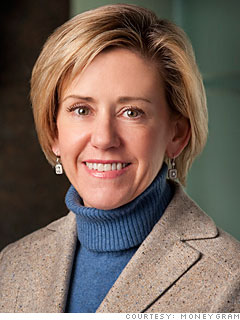
Pam Patsley famous as the Chairman or I would rather say Chairwoman of MoneyGram is a powerful American businesswoman. She is known as one of the highest-paid woman executives around the world.

Early Life

Born into a family of schoolteachers, Pam turned her ordinary life into something beyond challenging and thrilling. In 1957, Pam was born in St. Louis, Missouri. She went to the University of Missouri to complete her graduation. Pam was determined to contribute to the financial world and so she acquired a bachelor’s degree in accounting.

Early Career

Pam’s career officially started in 1979 in Dallas, Texas. This year, she joined KPMG as an accountant. Once she stepped into the financial world, she realized money wasn’t everything that pulled her into it. Money was a big factor but accepting the challenge and building a team became bigger.

After serving KMG for six long years, Pam started working as the chief financial officer of First USA Inc. Success started accelerating and she became the president and CEO of Paymentech. In 1999, First Data Corp acquired the company which led Pam to become the president of First Data International. She left the company in October 2007.

Something Bigger

After she left First Data in 2007 she wasn’t much engaged in the acreage of the financial domain. She fled to Paris and took a semi-leave from the corporate world. Pam was working on some of her own business when something way better landed right in front of her.

Thomas Lee Partners (investor of MoneyGram international) and Goldman Sachs offered Pam to take full control of the empire. In 2007, MoneyGram went through some serious financial crisis right after which THL and Goldman Sachs became the company’s investors. They found Pam well-fitted for the job and offered her the helm.

In January 2009, Pam joined MoneyGram as the chairman of the company. After a few months, she became the CEO of the company as well. MoneyGram is the world’s one of the largest non-banking money transfer company. After Pam joined the company, she rolled over its future completely.

Success of MoneyGram

After Pam started leading the company, the headquarters shifted to Dallas, Texas. Initially, the company’s future seemed bleak. But, it all changed with time. In the year 2010, the company’s annual revenue summed up to $1.17 billion. This helped it repay some of the debts.

After a couple of years, it lost a few partnerships; shares fell about 70% and had to close some call centers. So, the company finally decided to restructure itself to cut costs. In 2015, MoneyGram created a widespread agent network in Africa. MoneyGram reached 25,000 new locations. By this time, MoneyGram’s services reached to 191 countries.

Pam’s views on Indian Market

Pam Patsley
Image Source: Google Images

Since the day Pam started working for MoneyGram, she wanted to expand the network. According to her, a giant network can assure a more efficient transfer of money. Pam, in an interview, said that she has seen great potential in the market of Middle-East and Asian countries.

Pam said India provides one of the biggest markets for MoneyGram. She also said that in terms of recipients no other country has beaten India so far. India is a unique country and MoneyGram would focus more on building a strong agent base.

Why outside the US?

Well, according to Pam it is all about the senders and the recipients. So, why not expand to countries which have a potential of becoming the largest markets for MoneyGram. Pam saw Malaysia as a great start for the expansion business which eventually led her to the Asian market.

Saudi Arabia became the second largest sent market just within two years of doing business there. Apart from India and Malaysia in India, Bangladesh, Nepal and Sri Lanka proved to be of great importance.

Personal Life

Pam married Gary who is a retired chief financial officer of First USA Bank, Texas. They have a son, Philip. Pam has no trouble balancing her personal and corporate life as her husband takes care of the family very well.