Your Tech Story

Tech Story

NetApp Logo

NetApp – Surviving The Dot-Com Burst And Becoming One Of The Biggest Data Management Companies

The cloud computing services have majorly developed in the past few years. Many Indian start-ups have also been emerging. But, more importantly, Indians are acquiring powerful positions in many top tech companies around the world. One of the most established Indian, George Kurian is the current CEO of the company, NetApp.

NetApp is a California based company founded in 1992. The company’s main products are cloud computing, cloud storage, and data management. David Hitz, James Lau, and Michael Malcolm founded the company twenty-eight years ago. In 2015, George Kurian became the CEO of the company.

About the Founders

David went to Annandale High School but he dropped out. Becoming a Silicon Valley icon or establishing a billion-dollar company, none was present in the bucket list of David. But, somehow he became the founder of one of the best companies in the industry of cloud computing.

After graduating from Princeton University, David started working at MIPS Technologies. David’s main role in the companies was as a Software Engineer. In April 1992, he co-founded NetApp and became the Executive VP of Engineering. In 2000, David became the Chairman of the Hitz Foundation.

James went to City College of San Francisco and Heald College- San Francisco. He worked at HP Enterprise Services for more than thirteen years. Currently, he is the System Engineer of NetApp.

Early History

In 1992, when the company was founded it was named Network Appliance, Inc. After a couple of years, the company received venture capital funding from Sequoia Capital. Within three years of its establishment, that is, in 1995 the company filed its first IPO. The company started growing rapidly from the very beginning.

Unexpected Success

In 1997, the company acquired Internet Middleware for $10.5 million. The company stood strong during the time of dot-cot burst and emerged out of it even stronger. A lot of companies suffered huge losses during this boom and a few were even dissolved. But, from 1999 through 2001, NetApp’s annual revenue turned up to $1 billion.

The Key to Success

With the evolution of the start-up culture throughout the world and especially India, criticism arises simultaneously. The most important question is whether a founder should step down and give control to the young entrepreneurs of today.

David, in one of his interviews, said that it is not about the 90s founders or current generation. When a company is built from scratch there might be times when the founders only focus on the remaining products. They don’t consider expanding harms the future of the company. We all know evolution is the key to survival. And, that’s the reason NetApp is still on track.

When the vision of a founder is limited they are expected to step down. But, it doesn’t necessarily mean all the founders will have limited vision.

Struggling Moments

David said there were two moments where they needed to hold their breath and be patient. First, when the first CEO of the company stepped down. David said he has the best management styles in the company. But, once the company started expanding with a lot of managers reporting to each other, he didn’t enjoy it anymore. Eventually, he moved to another company.

Well, the company might have survived the dot-com burst but it suffered major losses. During 2000, the price of the company’s stock fell from $150 to $10. And, that’s when he realized he should expand its territory in terms of products.

Success and Acquisitions

In 2004, NetApp acquired Spinnaker Networks for $300 million. The next year, NetApp acquired Alacritus for $11 million. In this year, the company also acquired Decru for security storage systems. The following years witnessed the acquisition of Topio, Onaro, Bycast, Akkori, Engenio and many more.

NetApp under George Kurian

George after joining the company has focused mainly on the new trends and products. He, in an interview, said that the product revenue has been increasing rapidly especially for the new products. The Asian market has also grown well in the last couple of years. Though the company is having a relatively small market share in Asia, it is capable of replacing some bigger companies.

The three biggest markets of NetApp are the UK, France, and Germany. NetApp’s latest acquisition was Cognigo.

Havells

Havells: Lighting Up the World One Bulb at A Time

In the year 1971, within a shady and busy street corner of Bhagirath Palace, Qimat Rai Gupta worked furiously on some permutations and combinations. No, these had nothing to do with the next batch of light bulbs he needed to order for his shop. Rather, it was regarding a business proposition that was on QRG’s mind. His vision and ambition led him to start manufacturing electrical goods and with his decade-long experience in the field of electrical goods market, he knew he could succeed. This is the story of his success and how he established Havells.

Breaking Barriers

Havells came up at a time when manufacturing was picking up in India. However, finding the right buyers and having enough money was still difficult. Except a few famous conglomerates, the barriers preventing entry into the manufacturing industry was still too high for most entrepreneurs. Furthermore, Licence Raj brought with it further more licensing and compliance issues. Yet, none of these issues held QRG back, and he went on to close the deal. The rest, like they say, is history!

Founding the Company

In 1971, QRG bought the brand Havells from Haveli Ram Gandhi for a bragin seven lakhs. However, to establish a manufacturing plant, the company now needed more cash. With a lot of effort from QRG’s side and several helpful friends, the brand name grew. Within a few years, the brand Havells picked up momentum and became a well-known brand trading in electrical goods within Delhi. In 1976, a plant came up in Kirti Nagar for the production of switches. Due to the large entry barrier, competition was scarce at the time and QRG pushed through. The company soon added distribution boxes to their product list and focused on making quality goods. Due to good feedback and growth in sales, the company expanded further, strengthening their distribution network. In 1979 they set up another plant in Badli, and a year later, one came up in Tilak Nagar.

Acquisitions and Further Growth

The company continued to grow organically, but knew that to accelerate this growth rate, they had to acquire companies. Thus began the acquisition and expansion phase of the company. They picked up companies losing money, and then turned them around into money-making machines. They acquired Towers and Transformers, which made electrical meters and Havells turned it cash positive in one year. The late 1980’s witnessed a slump in the Indian market due to large influx of cheaper Chinese products. This, therefore, served as a difficult time for local manufacturers and many shut down. However, Havells boosted their quality and expanded, holding their own through the storm. They established a Research and Development centre to come up with new and innovative products. They got into a joint venture with Geyer and DZG to create more innovative and high-quality products. Between 1998 and 2002, they acquired Standard, Crabtree and Arnics Electronics. They became the first company to introduce the ‘Green CFL’ technology and also the first BEE five-star rated fan.

A Family Affair

In 1984, founder QRG tasked his son, and later CEO of Havells, Anil Rai Gupta with his first business assignment- to find a good five-star hotel for a meeting! Anil was merely fifteen years old at the time and Havells was making just Rs 50 lakh annually. With time, however, the stature of both grew, and grew tremendously. Three decades later, Anil heads Havells which has over 6,500 agents in their network now. Its product basket now includes not just cables and fans, but also water heaters, mixer grinders and air coolers. Its annual revenue in 2016 came in at INR 5400 crore, growing 4% annually. Anil joined the company in 1992 as a non-executive director and worked with his father for over 22 years. Those years taught him greatly about his father’s values, which continue to drive the company forward.

Stellar Success

Havells also gave rise to the growing FMEG category by establishing direct rapport with customers across India with their brilliant brand building campaigns. They introduced a one stop-shop called Havells Galaxy, which today has over 250 stores across India. Havells was also the first FMEG company offering door-step service via Havells Connect. In 2007 they acquired Sylvania for over 980 crores, making Havells the fourth largest lighting company in the world. In the same year, Warburg Pincus invested over $110 million in Havells, buying 11.2% of their equity stake. With more than 11 manufacturing plants, 5300 dealerships, the journey of Havells is one that every Indian can be proud of.

Chuck Hall

How this Young Eighty-Year Old Continues to Revolutionise Manufacturing

3D Printing is now a major part of numerous applications, all the way from medicare to aerospace. However, how many of us know about its quiet founder and the story behind its success? Here’s a look at how Chuck Hull became the father of 3D printing.

Wide-spread Use

Surgeons at a hospital in Texas had to separate conjoined twins to save their lives in 1996. However, the operation would result in one girl never being able to walk, or so they thought. When doctors used a 3D printer to observe their bone structure, they found a bone bigger than expected. Hence, they split it, allowing both girls to walk. This was the magic of 3D printing. Hull recalls how the first few surgeries made him emotional, as he saw how his invention could help people.

Origin Story

Chuck Hall is now a young octogenarian who serves as the CTO of the company he co-founded, 3D Systems. Three decades ago he famously printed a cup using stereolithography, which later became 3D printing. At that time, he worked for a company that used UV light to adhere veneers to furniture. Like everyone else within the industry, he hated how difficult it was to prototype new designs.

That is when he first thought of using light to etch layers of plastic to form objects. He tinkered with the idea for over a year and finally adapted a system to do so. When he told his boss about the idea, he gave him a lab to play around during evenings and weekends.

3D Printing Revolution

The class of materials used is “photopolymers” which are acrylic-based liquids until hitting with ultraviolet light. Upon being hit, they turn into a solid which can then be molded. 3D printing, therefore, uses a vat of such liquid and turns it into a solid plastic using UV light. Upon making the project a success, Hull showed it to his wife. The idea really blossomed in the last few years with regard to rapid growth and recognition.

One of the biggest improvements it brought forth was the accuracy achieved in manufacturing. As early designs required the changing of the phase of substances, parts would shrink and get distorted. However, in recent years, that chemistry has vastly improved, ensuring there is no distortion now.

Also, the properties of the materials have improved, from being brittle to great and tough plastics. The whole point of 3D printing, according to Hull is to foster creativity and improve product design and manufacturing. The market growth occurred simultaneously and is now worth over $3 billion worldwide annually.

Continued Success

He patented this design in 1986 and then founded 3D Systems to commercialize the new technology. The company raised over $6m from investors and customers, as he used videotapes to show people how it worked. Their first product came out in 1988, becoming a sensation amongst aerospace and medical equipment manufacturers. Soon enough, GM and Mercedes-Benz became regular customers and the company just took off.

However, Hull predicted the year he invented the concept that it would take 30 years for it to be a commercial reality. That has proved correct as the widespread commercial use of 3D printers has started only in recent years. However, now that they have, the possibilities are truly endless with every industry from food making to pharmaceuticals are finding a use for it. In the future, the company will assist Google with its next-generation phone.

Legacy

Hull has 93 American patents and 20 European ones to his name. Rather than retiring to the suburbs, he has decided to keep working at his company. He now serves as the VP and CTO, holding stock worth $20m and 3D Systems makes over $500m annually. The company is growing and expanding constantly, coming out with new and innovative products.

It recently launched the Ekocycle Cube in collaboration with Black-Eyed-Peas fame Will.i.am. Will.i.am served as the chief creative officer for the project which came out as a daily use printer costing $1,199. Stepping down has never been an option for Hull, who continues working with the same passion he had decades ago.

Quantum Computing

How Benioff Paul’s Quantum Computing Theory Formed The Foundation Of Quantum Computers?

Quantum computing brings new spectacles that changed many things about conventional computing. No doubt, traditional computing is efficient. But a large data handling using classical computers that utilizes conventional computing might fail. However, a quantum computer could perform such a complex computation. In the 20th century, Quantum computing was a rising field for research. That time, Paul Benioff helped with his research in quantum information theory. Also, it proved the theoretical possibility of a quantum computer. In fact, he introduced the world for the first time that computers could operate as per the law of quantum mechanics.

Paul Benioff’s Journey

Paul Benioff is an American physicist, well known for his research in quantum computing. In 1970, he started research on the non-classical method of computation. In a short duration, he proposed the theoretical feasibility of quantum computing. Other than this, he researched various fields of chemistry, physics, and mathematics.

Image Source: Google Images

Early life

Paul Benioff was born in Pasadena in California on May 1, 1930. Paul’s father was a seismology professor at the California Institute of Technology. Also, his mother was English graduated at that time. Apparently, the well-educated family background must be helpful to developed interest in science.

Education

For an undergraduate degree in Botany, Benioff attended the University of California, Berkeley. In 1951, he completed his under-graduation course. After that, he worked for TracerLab in the field of nuclear chemistry. In 1959, after returning to Berkeley Paul obtained a Ph.D. in nuclear chemistry.

Career

Paul starts his career as a post-doctoral fellow at the Weizmann Institute of Science. He completed that internship in 1960. After that, he worked for six months as a Ford fellow at Niels Bohr Institute. It was the well-known institute of that period. In 1961, he grabbed the chance to work at Argonne National Lab. In fact, he worked there until 1995. During 1961-1978, he worked in the chemistry division. However, after 1978 he changed his division to Environmental impact Division.

Apart from that, he was a visiting professor at Tel Aviv University in 1979. He taught the quantum mechanics foundation which was his research topic. Also, he worked as a visiting scientist for two years at CNRS Marseilles.

Research in Quantum Computing

In the 1970s, he began research in the non-conventional computing method, i.e., Quantum computing. In the early stages, he presented several research papers in this field. Later, he published a complete description of Turing Machines’ quantum mechanical model in 1980. This model was based on Charles H. Bennett’s reversible Turing machine. However, Paul Benioff’s theoretical presentation on the quantum computer was efficient enough to eliminate the dissipation of excessive energy.

At the same time, it was reversible. In fact, his research paper was first that showed reversible quantum computing is theoretically possible. Based on his research, many other scientists discover the field of quantum computing. Surely, Benioff formed the foundation for quantum computing.

How Benioff’s research set the foundation for quantum computers?

In 1982, he published a revised paper on quantum mechanical Turing machines. Based on this, Richard Feynman developed a universal quantum simulator. Furthermore, based on Benioff and Feynman’s research, other scientist Deutsch showed the power of quantum computers. He proposed that with quantum computers, computational problems can be solved faster. Because the classic computer was not effective in handling large numbers.

Quantum computing- Centre of Attraction

Benioff continued his research and published many papers. Also, several other researchers followed his research and came up with new discoveries in the field of quantum computing. Soon, quantum computing became the topic of attraction. The industrial sector, banking sector as well as government agencies kept a constant eye on this field. In fact, this field became an attraction for many other scientists. Presently, quantum computing is a fast-growing research sector that offers applications in cybersecurity, cryptography and many other fields.

Other researches of Paul Benioff

Other than quantum computing, he researched nuclear reaction theory. Also, he conducted research to show the relationship between physics and mathematics foundation. In fact, Benioff continues research in physics after retirement.

Later Success

Benioff honored with many prestigious awards. Includes, Quantum communication award for the International organization in 2000. Also, he awarded with Quantum computing and communication prize from Tamagawa University, Japan. In 2001, he honored with Special University of Chicago medal for his extraordinary performance at Argonne National Lab. Furthermore, Argonne Lab held a conference in Benioff’s honor for his work in quantum computing.

Today, his contribution to quantum computing enables the field of research for quantum mechanical models, quantum robots, and other quantum computing topics.

Bitcoin Image

Nakamoto Mystery Worth Billions of Dollars: How Bitcoin founder Nakamoto left with no trace.

Bitcoin has emerged as a game-changer in world-economics attracting millions of users and buyers. An international digital currency that took the world by a storm at the start of the decade still continues its run. Rewarding investors handsomely, and turning them into millionaires has made this commodity very valuable. However, one of the most fascinating aspects of Bitcoin is its founder, Satoshi Nakamoto. This mystery remains unsolved as people know little about him. After releasing this commodity which forever changed the dynamics of international economics, he disappeared. Here’s a look behind the scenes at the mystery and the success of the Bitcoin.

What is Bitcoin?

Bitcoin is a type of decentralized digital currency or cryptocurrency, having no banks or administrators. This currency goes from one person to another, without relying on middle-men, via a network. The system works on the principle of block-chain technology through which transactions are verified and recorded in a public ledger. The idea started taking shape in 2008 by a person or group who used the pseudonym Satoshi Nakamoto. The platform went open source in 2009 and quickly gained popularity. People started trying to learn more about, and ‘mine’ these bitcoins to exchange them for other currencies and products. By 2017, over 4.8 million unique users had their own cryptocurrency wallets.

Bitcoin Image

Nakamoto Creation of the Bitcoin

In August 2008 the domain name “bitcoin.org” was registered and within a couple of months, Satoshi Nakamoto authored a paper titled “Bitcoin: A Electronic Cash System”. It came out as open-source software in January 2009 with Nakamoto’s identity remaining unknown. The author himself mined the first block, called the genesis block two days after launching. Hal Finney became the first receiver when Nakamoto sent him 10 bitcoins, and soon enough other people joined the chain. The first commercial exchange occurred in 2010 when 10,000 coins gave Laszlo Hanyecz two Papa John’s pizzas. Since then, the coin has become an international phenomenon and currently, one single Bitcoin costs around 5.5 lakhs!

Disappearance and Mystery

Nakamoto mined around a million bitcoins and disappeared in 2010, leaving everyone in shock. Before leaving, he handed over the network key to Gavin Andresen, who became the lead developer at the Bitcoin Foundation. Silk Road was a major investor early on, carrying out transactions worth more than $214 million. The coin started 2011 at $0.30 and grew to $5.27 by the end of the year, having hit $31.50 in June. Alternate coins soon came out with the first one being Litecoin, which came out in 2011. A year later, Bitcoin rose to $13.30 and in the same year, investors and developers found the Bitcoin Foundation.

Explosion and Growth

In 2013, the industry really exploded and the Bitcoin grew exponentially, starting the year at $13.30 and ending it at $770. The same year, FinCEN built some regulatory guidelines for the bitcoin, making it a legal entity. A huge hit came in late 2013 when the People’s Bank of China banned Chinese institutions from utilizing bitcoins. After two years of constantly rising and falling prices, in 2016, the prices steadily rose to $998. In 2017, the prices sky-rocketed, hitting their highest value of $19,783.06 on 17th December 2017. In 2018, the prices fluctuated, mostly staying above $5000, being negatively affected by hacks and thefts. Also read

Who is Nakamoto?

As the Bitcoin grew, Nakamoto’s importance grew with it, with him being a figurehead to the entire institution of digital currency. Most discussions regarding the future development of the bitcoin constantly feature his name. Also, the founder also holds cryptocurrency worth around $5.8 billion, making him an important investor. While people made numerous efforts over the years, the search for Nakamoto’s identity has proved difficult and elusive. Here’s a look at the three most probable candidates.

Satoshi Nakamoto
Image Source: Google Images

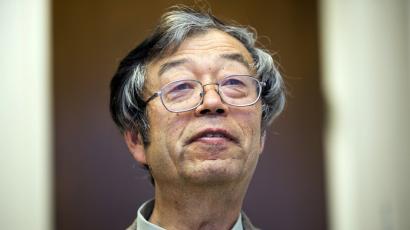
In 2014, Newsweek stated that Dorian Nakamoto is Satoshi Nakamoto via an article, creating a storm within the crypto-environment. The article claimed several similarities between the two, including a Japanese connection and similar philosophies. However, Dorian denied these claims, but still profited from it as people gifted him 67 bitcoins worth $273,000.

Australian scientist, Craig Wright announced in 2015 that he had been involved with bitcoin for a while. This led to large-scale investigations with people claiming he was Nakamoto. However, over time, the proof came out which unraveled Wright’s claim to being Nakamoto. Even Ethereum cofounder Vitalik Buterin, who is in most cases silent came out against him. Conspiracy theorists have even stated that the founder could be a group of companies. For example, Samsung + Toshiba= Satoshi and Nakamichi +Motorola=Nakamoto! Like “Finding Nemo”, the quest for finding Satoshi Nakamoto is on, and let us hope we get a name soon enough! However, in spite of this mystery, the industry continues to grow, being already worth billions of dollars.

John Cioffi

How John Cioffi Gave Life to the Internet Through the Broadband

Most of us cannot imagine a world without the internet now. We depend on it for everything from reading this article to shopping for groceries. However, forty years ago, the internet barely existed with the World Wide Web years away. Since then we have come a long way to technology such as 5G and crypto-currency, thanks to the internet. For most of this, we have engineer John Cioffi to thank. He realized that the copper wires used as phone lines could supply fast data to homes. This move made it possible for homes to get the internet without creating new networks. Years later, Joseph Lechleider turned that dream into a reality, and modern broadband came to be. Here’s a look at how those two men singlehandedly revolutionized modern-day internet and our lives.

What John Cioffi Did

Cioffi realized while at American Bell Laboratories in the 1970s, that someday the entire world would use the internet. However, making this affordable wasn’t an easy task. To make the process affordable, he imagined using copper telephone wires which have been around since a hundred years earlier. He moved to Stanford University by the end of the ’70s and began working on this concept. He tried to fit hundreds of data channels alongside phone conversations without causing disturbances. Cioffi named the technology DMT or Discrete Multitone. However, the high interference of the lines became a problem. So he built a device to switch data between channels to prevent this, creating the first broadband modem.

Joseph Lechleider’s Contribution

Cioffi’s broadband modem lowered the interference but not for high rate data sending. By then, Joseph Lechleider was working as an engineer at Bell Labs which had become Bellcore. He discovered that sending large data in one direction and smaller in the opposite could solve this problem. Hence, this process became the basis for the Asymmetric Digital Subscriber Line technology. ADSL technology works great for people who don’t need to upload much data.

Broadband becomes Universal

Cioffi founded Amati in 1992 to build broadband modems, while companies such as BT began working on ADSL technology. Meanwhile, customers began using dial-up modems to access the internet via their phone lines. Since DSL required signal processors, they were too expensive to implement early on. However, as the 2000s rolled in, microchips became more affordable and internet connections became over a hundred times faster.

Cioffi then successfully worked on Dynamic Spectrum Management to make the transmission even faster. Soon enough, John Cioffi became the Father of DSL, with over 100 patents in the field. He works on projects to improve internet speeds and is a Fellow of the Institute of Electrical and Electronics Engineers. Lechleider died in 2015 becoming inducted into the US National Inventors Hall of Fame in 2013.

Continued Success

Cioffi also served as a professor of electrical engineering at Stanford University, supervising over 100 Ph.D. students over two decades. He left Stanford in 1991 to found Amati Corporation, building the world’s first DSL modem. The modem soon became a gold-standard as it was 4 times faster than its competitors, also being the first to transmit live television via a phone line. He sold Amati Communications to Texas Instrument for $440 million three years after taking it public in 1995. Cioffi returned to Stanford, to research on Dynamic Spectrum Management and vectored VDSLs, which will soon be launched in the US.

In 2003, Cioffi founded ASSIA which now has over 80 million worldwide subscribers and retired from Stanford six years later. The company makes software and hardware for companies involved in providing users high-speed Internet services. His wife works as the Executive Vice President owing to her keen sense of people, and management skills. His design for the VDSL powers almost 98% of the 500 million DSL connections the world now uses.

DSL accounts for more than 70% of the world’s broadband, more than even cable and fiber combined. ASSIA controls 90% of the U.S. market with regards to DSL management software, with its product making about $100 million annually for its users. The company began with three people, and by 2011 had over 170 employees. With the DSL industry has grown to one worth over $120 billion worldwide, it goes without saying that we have a lot to thank Cioffi for.