Your Tech Story

Tech News

Car Sales

How the Coronavirus is Pushing Car Sales to the Down-lane

Coronavirus has been making headlines all around the world due to its aggressive transmission rate and deadly symptoms. Many European countries have now fallen prey to the virus which has claimed over 2500 lives all around the world. Several countries around the world have imposed strict travel bans and economic sanctions in order to stop the spread of the deadly virus. With such a large global epidemic hitting the world, there were bound to be severe economic repercussions. So, how has the Coronavirus hit the Indian economy? Well, it certainly had an impact on our automotive sector. Here’s a look at how the Coronavirus has pushed car sales into a down-lane.

Car Sales in February

Rate of care sales has dipped again in February, and car manufacturers and makers across the country are now scared with respect to what further impact the virus will have on their sales. Most manufacturers are now trying to sell their left-over stock as production facilities in several countries in Europe have been shut. The government had recently released a statement that said that India would be transitioning to a new emission standard.

Therefore, car sales of models that comply with earlier standards will fall to an all-time low once the implementation starts. This sudden transition had already strained the automotive industry as buyers were still not confident in buying new cars. Therefore, most dealers were trying to get rid of their old stock as purchases for these obsolete models would be close to zero once the transition takes effect. The government had earlier said that the deadline to make the transition from BS-IV to BS-VI is April 1st. However, the Coronavirus scare has shut off several production facilities in mainland China, which has, in turn, affected the supply chains for automotive parts.

A slowdown in Car Sales and Manufacturing

The Director of Sales at MG Motors, Rakesh Sidana had said that the Coronavirus scare has severely limited their production capacities as many centers in Europe and China have been shut. He believes that this is directly responsible for the reduction in sales in February, and predicts that the downfall will continue throughout March. MG Motors had one of their lowest retail sales in February, with the final amount coming to a mere 1,376 units last month.

Similarly, Maruti Suzuki underwent a 1.11 % decline in sales, with total sales coming up to just 147,110 units, which is much lesser than their sale of 148,682 units last year. Furthermore, Mahindra & Mahindra suffered a 58 % decline in sales last month, owing to the automotive giant lowering production due to the emission standards transfer. Also, a shortage of parts and low exports from China led to them selling only 32,476 units last month, which is significantly lesser than the 56,005 units they sold last year.

Uncertain Future

While most of these companies had predicted a drop in sales due to the emission transfer protocol, the unexpected arrival of the Coronavirus has severely affected the industry. This unforeseeable challenge has put many restrictions on the supply of parts from China, affecting the capacity of Indian makers to adhere to the BS-VI specification. Tata Motors too suffered a 34 % decline in sales, having sold only 38,002 units in February, while they sold 57,221 units last year. The company was also badly affected by a fire that broke out in one of their vendor’s storehouses, which in turn, affected their production rate and volume. Similarly, Hyundai went down by 10.3 % with sales amounting to only 48,910 units in February.

Most of these manufacturers are hoping that issues will be cleared up by late March, and that supply chains will be re-instated as quickly as possible. To make this possible, large dealers such as Honda are trying to ramp up production of BS-6 models, in a bid to reduce the waiting period for customers. Adding further trouble to the struggling automotive industry is the lagging economy that is undergoing a slowdown, putting the entire industry under pressure. With mismatched inventories, shortage of parts, compromised production facilities and a slowing economy, it really does look like the automotive industry has its work cut out for itself in the months to come. Let us hope that the Coronavirus and its effect recedes in the months to come, providing much-needed relief to our automotive sector.

Microsoft Xbox Series

Microsoft is Out with the Perfect Xbox Specifications : Here’s a look at Your Dream Console

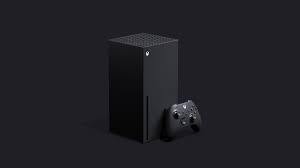
On Monday, Microsoft brought out the big guns and came out with the full specification list for its new Xbox Series X, and gamers couldn’t be more excited. The new model boasts of near-perfect specs and is expected to be on every gamer’s Christmas wish list. So, what’s so special about the Series X and why is the gaming fraternity going crazy over it? Here’s a look at everything you need to know about the Microsoft Xbox Series X which promises to bring be a next-gen gaming console.

Mind-Blowing Specifications

  1. The Xbox Series X will run on an AMD Zen 2 RDNA custom processor, which will be four times faster than the processor used in Xbox One.
  2. The new processor also offers 12 teraflops worth of GPU, which is twice that of the Xbox One X.
  3. The 12 teraflops GPU means the Xbox Series X will go far beyond the capabilities of mid-range AMD or Nvidia cards, making it a new gold standard.
  4. The Xbox Series X supports Variable rate shading which allows users to prioritize effects as per their needs and requirements. It also makes it possible to focus individual effects on just one game character or object, and renders that perfectly, without affecting the image quality of the rest of the screen.
  5. Xbox X will also have the DirectX Raytracing feature which will be on show for the first time ever, with this console. This feature will allow the console to create life-like images, realistic acoustics, real-time reflections, and even real-life lighting within the game.
  6. To wring the latency, the new Xbox comes with next-gen storage using SSD which promises faster load times than ever before.
  7. Furthermore, the Quick Resume option will allow players to access several games without delay from their suspended states.
  8. Also, to improve latency the device supports the Dynamic input option which results in minimising latency between Controller and console communication.
  9. The console also fully supports HDMI 2.1, meaning it has options such as Low Latency, Refresh rate variation and even Tearing prevention while gaming.
  10. Xbox Series X can go as high as 120 frames/sec, meaning the games will appear to be more real than ever before.
  11. Furthermore, Microsoft is heavily committed to its earlier games and hence will extend compatibility to Xbox One, 360 and original games with backward compatibility.
  12. The Series X, will, therefore, run all prior games faster, steadier and with better resolution than ever before.
  13. Also, the new Series will support videos in 8K, making it a great investment to have for the future, wherein 8K video support TVs become more popular.

Furthermore, Microsoft has said that further updates and specifications will be released in the coming months, with the Game Developers Conference in March being a key focal point. Also, the E3 convention in June might give Microsoft another opportunity to unveil more specs and features of the Xbox Series X. This convention might give us details regarding pricing, availability and even new launches. One of the most highly anticipated new launches for the Series X will be Halo Infinite. With these specs in place, Microsoft’s dream of creating the world’s most powerful console might just come true with the Xbox Series X.

Microsoft Vs Sony

The one area where Microsoft has a clear edge over Sony is with regards to backward compatibility of games. Whereas the PS4 has made several of the older PS games obsolete, Microsoft continues to make it possible for its users to access and enjoy its older titles. The two key interest areas where Microsoft seems to be the clear winner are computability and also delivery. Smart Delivery is a new feature that has come into play which makes it possible for you to reuse the games on various devices. For instance, if you buy a game for a particular device, Microsoft allows you access to the right game version for various Xbox types. Therefore, once you buy an Xbox, whichever one it may be, Microsoft has your back and will help you enjoy the gaming experience for years to come. This auto-updation of games is a feature loved by games as it allows them to enjoy games across platforms with ease, and unnecessary expense.

Furthermore, recent developments prove that Microsoft is interested in entering the cloud-based gaming industry, and the Xbox Series X might be a step in that direction. Their strategy seems to be to consolidate gaming across various platforms from PC to cloud, with mobile, Xbox and other consoles adding into the picture. However, Sony has stayed quiet with regards to its flagship new model PS5 and has released no announcements regarding the same. This announcement from Microsoft now has made it clear that it is now Sony’s turn to try to outdo the other with their announcement. Sony will, therefore, now be under pressure to release appropriate specs within a specified time interval. The relative quietness from their end indicates that something huge is in the making, and this sure seems to be an exciting time for gamers all around the world.

Commercial Docking Space

Space-Wars: The Fight for Commercial Docking Space in Outer-Space

For as long as humankind has been alive on Earth, it has been fascinated by the stars. Throughout history, we have seen great thinkers and scientists look to the skies for inspiration, and thinking men and women have always tried to unravel the secrets that lie behind our home planet. This innate curiosity which powers all our innovation has led to several space exploration missions, multiple moon landings and even expeditions to Mars. Quite recently, it has led to commercial satellites taking to the stars as well. History was created recently, when for the first time in the history of the world, two commercial satellites, as a part of a servicing mission docked in orbit! The scientific community has never been happier as this will lead to a new beginning with regards to space exploration and satellite servicing. Read on to find out more about this docking and why it is so important and historic.

New Beginnings

This orbiting provides new hope for ailing satellites which have been orbit for continuous periods of time and require quick assists. Furthermore, it could also give rise to a new form of business- space decluttering! As technology advanced, humans kept sending exploratory missions to outer space. This coupled with a large number of satellites in place for communication and spatial recognition has led to a space problem in outer-space. The skies are immensely cluttered and filled with space junk, which now has reached a stage, wherein we need cleaners to clear out.

International Space Docking

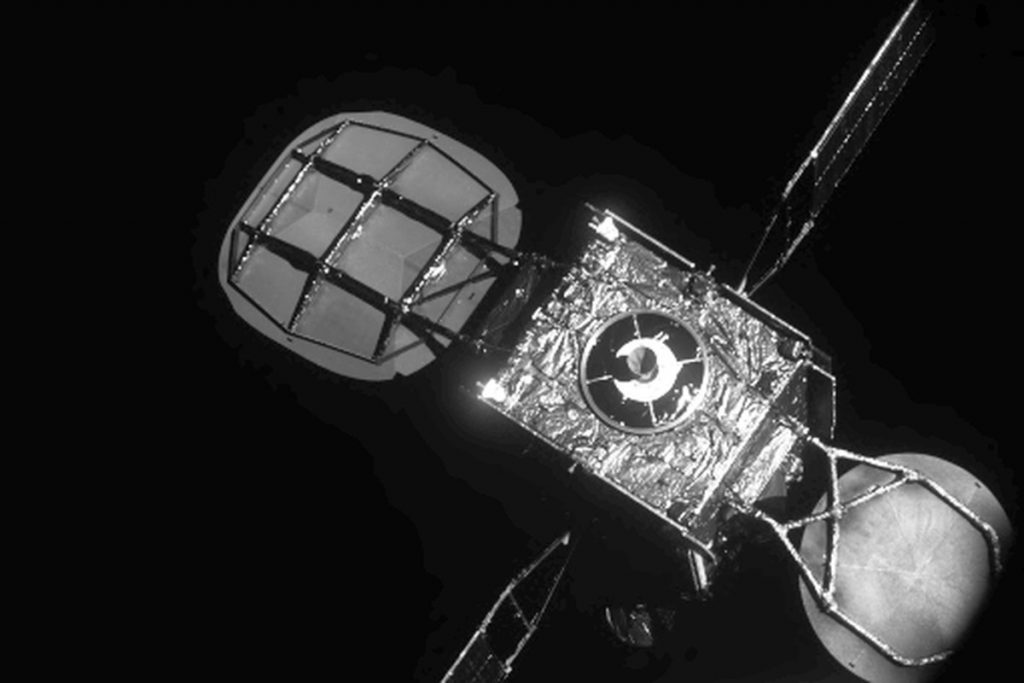
Out of the two satellites that docked, one is a telecom-industry satellite that was low on fuel while the other was a replacement that plans on taking over the former’s movements. This maneuver will help the Intelsat-901 extend the 19-year mission it has been fulfilling with regards to TV relay, by another 5 years. For all the scientists, platforms and satellite makers involved in the process, this docking is a major accomplishment as it helps in solving several problems.

The two satellites met about 36,000 km above the Earth’s surface, and the mission was spearheaded by Northrop Grumman, the maker of the Mission Extension Vehicle-1. After the successful docking, the MEV-1 plans to move westward by 27.5 degrees to continue its telecoms duties by late March. While talks of inter-galactic re-fueling and junk removal have been going for decades now, the success of the Northrop Grumman is the first undertaking that has come out with a positive result. The international docking took place on Tuesday, 300 km above the arc from where telecom satellites usually undergo their data relaying.

Process of Docking

  • Pushing of a probe into the Intelsat-901’s engine nozzle.
  • Removal of any spacecraft that is currently operational from close proximity to prevent any mishaps
  • The MEV-1 approaches the IS-901.
  • Opening of the probe’s fingers into the IS-901, allowing the MEV-1 to hold the spacecraft in place.
  • Autonomous docking once both the crafts are aligned.
  • Following the docking, the MEV-1 will now control all the movements of the satellite, allowing the IS-901 to continue operations for five more years.
  • Afterward, the MEV-1 will get rid of the IS-901 and dump it in what is commonly referred to as space. graveyard, which contains other defunct satellites.
  • The MEV-1 will then move on to the next ailing and old satellite, in a bid to extend its lifetime.

The MEV

The MEV-1, launched in October last year rose around 180 miles above the geosynchronous orbit to help the IS-901, which had stopped services in December of last year. This new stack consisting of two satellites will now perform the duties which IS-901 had earlier done, which will ensure that the TV relaying service continues uninterrupted for another five years. The contract also ensures that the MEV-1 after the period is over will return the IS-901 to a decommissioning orbit, before moving on to a different client spacecraft.

The MEV can accomplish multiple dockings and has a service life extension capability of over 15 years. However, in the near future, this vehicle will be capable of doing much more as the company aims to establish a fleet of such vehicles to make servicing, maintenance, and repair work possible. Furthermore, other plans include allowing the MEV to carry out inclination changes, diagnostics, spacecraft inspections, and even in-orbit repair assembly.

People Involved in the Docking

Northrop Grumman is a new company that works in the field of satellite communications through its subsidiary- SpaceLogistics LLC. The company plans on expanding the present project and wishes to perform in-orbit repair, maintenance, and assembly in time. It is now working on new technology that will help the docking probe, not just tug onto an object, but actually hold it, the way a robotic arm would. Furthermore, it is also working on the creation of fuel-pods that can attach itself onto satellites that are running low of fuel. SpaceLogistics is all set to launch its second MEV this year in order to perform some routine support on another Intelsat spacecraft.

Stephen Spengler who serves as the CEO of Intelsat says that such plans were set in motion in 1992, wherein an Intelsat spacecraft was famously rescued by another space-vehicle when it fell into lower-Earth orbit. Spengler believes that the company has always pushed boundaries with respect to space technology and will continue to do so in the coming years, turning dreams into reality in the process.

ISRO Navic

Xiaomi To Support Navic Technology In Collaboration With Qualcomm

The contributions of space research organizations are boundless. The extraordinary inventions, the high-tech spacecraft and most importantly satellites have immense applications in our daily lives. Now, we might not be able to spot a difference they are making, but the big picture depends on them. For example, ISRO and Xiaomi have shaken hands to incorporate NAVIC technology in Xiaomi smartphones.

Without smartphones, we can’t survive even one day. They are a very integral part of our life. And, incorporating the NAVIC technology into something so basic in our daily lives proves how crucial is satellite navigation. Currently, the news of bringing this technology in Xiaomi is crawling all over the internet.

What is NAVIC?

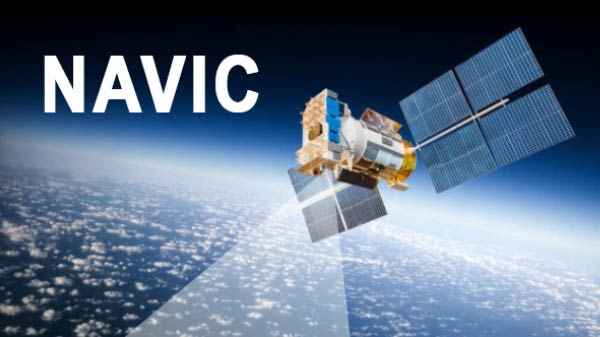
NAVIC stands for Navigation with Indian Constellation. It is the operational name for The Indian Regional Navigation Satellite System. The technology is built by ISRO, our very own space organization to monitor real-time positioning and timing. NAVIC mainly covers the Indian mainland and an extended region of 1,500 km around it.

Global navigation is very important for every nation especially for the army, the aircraft, and the navy as well. During the time of war or any hostile situation, a country to have access to the global navigation satellite system. But, it becomes almost impossible to get access to those data. Hence, to overcome this problem ISRO opened a new satellite navigation center in 2013.

ISRO launched NAVIC mainly for military purposes but recent times have shown an expansion of the service. Before Xiaomi and ISRO collaborated, Qualcomm already incorporated the same technology in some of its Snapdragon chipsets. And, the same is now helping Xiaomi to introduce this technology in their smartphones.

In July 2013, ISRO launched the first satellite of this program. It has an accuracy of 1m in public and 0.1 encrypted. Till now nine satellites have been launched from IRNSS.

Past History of Xiaomi

The company’s smartphone sales have grown exponentially over the years. Though it also sells apps and other software, 90% of the company’s revenue comes from the smartphone sell. This surpasses even the revenue of Apple that comes from its mobiles.

The company has made a breakthrough by coming into a joint venture with both ISRO and Qualcomm. But, let’s have a look into its brief history.

Lei Jun founded the company in April 2010. And, in August 2010 it launched its first product which was an android-based MIUI (MI-User Interface). Around 2011, the company started selling its product in the Asian technological markets. In 2012, another new smartphone came into the market and the company started getting bigger.

It is quite a progress for a new company to incorporate such a high-tech geo-positioning system given the competition in the market. At the end of 2013, Xiaomi became the fifth-largest company in China in terms of mobile phones sale. Currently, Xiaomi is working on launching its new operating system, MIUI 12.

Beijing, China is the base of the company’s headquarters. The company also has many international headquarters and one of them is in Singapore.

Xiaomi and NAVIC

The Chinese smartphone company finally confirms that it will be introducing smartphones having NAVIC technology in it. The technology is mainly used as a geo-positioning system in India and for a distance around it. Qualcomm’s snapdragon mobiles unleashed the true power of this machinery.

After an agreement with ISRO regarding this technology, the efforts given by Xiaomi’s R&D are limitless. Xiaomi has made this announcement better by putting the tag of “made in India”. They want to manufacture mobile phones in India as the technology itself is created in this nation.

Features and Advantages

First time a technology which is developed in India is used in the country for manufacturing as well. NAVIC comprises of seven satellites out of which three orbits over the Indian Ocean (geostationary orbit) and the other four can provide positioning with accuracy better than 20m.

One of the main reasons to apply this technology in smartphones is to navigate locations in very rural areas. Along with precise timing, voice and visual navigation are also provided for the benefit of the drivers. So, in 2020, the release of many Xiaomi smartphones will take place with this feature across multiple price points.

Kenichi Ayukawa

Maruti Suzuki is Ready to Invest 4,000 Crore Rupees on New Models: Ayukawa

Highlights:

Mr. Kenichi Ayukawa expressed the concept of Futuro-E in the SUV segment.

This year, Maruti Suzuki to invest ₹4000 (US$ 572.33 million) crore on plant renovations and new product development.

Kenichi Ayukawa at Auto Expo 2020

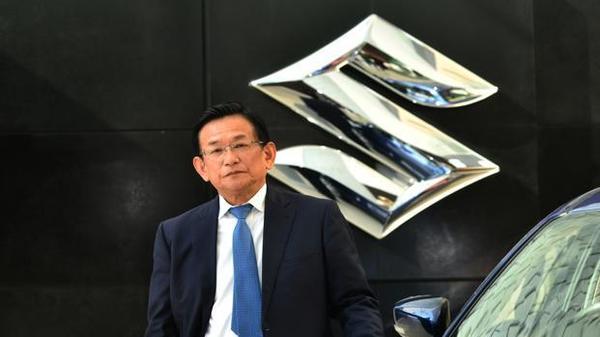
On Wednesday, at Auto Expo 2020 in New Delhi the Managing Director and CEO of Maruti Suzuki India Ltd, Mr. Kenichi Ayukawa expressed the concept Futuro-E in the SUV segment. Maruti Suzuki India is the largest passenger carmaker in the country. However, the company is ready to invest more in new product development. Kenichi Ayukawa, CEO of Maruti Suzuki unveiled the decision of the company to invest ₹4,000 crores this year on new product developments and plant renovations.

He said to BusinessLine on the sidelines of the Auto Expo that “We will invest around ₹4,000 crores in developing new products and modifications of the factories (in Haryana) this year”.

The company announced on the first day of Expo that it would work towards alternative fuel models. As well, electrification of its future models to contribute to environment safety.

What is Mission Green Million?

In this decade, Maruti Suzuki aims to sell around one-million cars that are adapted to new technology. Such as smart hybrid, strong hybrid, and electric vehicles.

“Mission Green Million is our commitment to bring advanced powertrain technologies for Indian customers. In this mission, ‘Make in India’ will be our core philosophy. S-CNG and Smart Hybrid technologies on Maruti Suzuki cars have seen huge acceptance by customers,” CEO Kenichi Ayukawa said.

He also added, the company has complete faith in the future of the Indian automotive market and will accelerate its efforts for electrification of powertrains, with a technology-agnostic approach.

“Our endeavor will be to offer realistic solutions for mass acceptance by customers,” Ayukawa said.

Maruti Suzuki Gujarat plant

Regarding the Gujrat plant, the CEO of Maruti Suzuki said, “It was delayed a bit in terms of completion. But is now on schedule and on track to expand the capacity by 2.5 lakh units to 7.50 lakh units this year”.

Maruti Suzuki and Toyota Partnership

On the partnership with Toyota, “all works were progressing as planned and products would start rolling out in the near future”, he said. Also, Ayukawa added, rolling out of the new Brezza by Toyota this year, and branding it, would also depend on when Toyota decides to launch the vehicle.

GSAT -30

ISRO Starting The New Decade By Launching GSAT-30 As A Replacement Of INSAT-4a

India has been creating and breaking its own record when it comes to spacecraft. For a very long time, Indian scientists have dedicated their lives to reach the space. And, for all the space-related activities ISRO is the best research organization of India.

It was ISRO that built India’s first satellite, Aryabhata which was finally launched in 1975. This was the first and one of the biggest successes of ISRO and India. Since then it has come a long way. Recently, ISRO has announced about launching its communication software, GSAT-30. The launch is supposed to take place on 17th January of this year.

The GSAT Series

ISRO designed all the GSAT satellites for the communication purpose of India. GSAT-1, the first of the series was launched on 18th April 2001. The main purpose of the satellite was conducting communication experiments like internet services and compressed digital television transmission. Many other features like the heat pipe radiator panel were also tested in this satellite.

The next in the line was GSAT-2 which mainly operated in S-band and C-band. GSAT-4 was designed for testing a lot of new features. But, the satellite never took off as GSLV-D3 was unable to complete the mission. The same happened to GSAT-5P which was an exclusive satellite for the GSAT series.

GSAT-8, GSAT-10, GSAT-12 are some of the other satellites that were more advanced. The latest GSAT satellite before GSAT-30 was GSAT-31. This was launched in February 2019 and it was configured on ISRO’s enhanced I-2K Bus.

GSAT-30

GSAT-30 is a whole new telecommunication satellite designed by ISRO. The satellite is used as a replacement for the INSAT-4A. But, the preliminary stages of the design are inspired by INSAT. According to ISRO, GSAT-30 will provide enhanced coverage. And, it is one of the main reasons the new satellite is better than INSAT-4A.

Features of GSAT-30

GSAT-30 is designed for improved and efficient spacecraft services. The main coverage that will be provided by this satellite is the Indian mainland and the islands in Ku-band. GSAT-30 will also provide extended coverage in the areas in C-band. It will mainly cover a lot of Asian countries, gulf countries and also Australia.

The weight of the satellite is 3,357 kg. Since GSAT-30 is a communication satellite it is going to enhance television uplink and VSAT services. The satellite is designed in such a way that it is capable of providing information services from the geostationary orbit in C and Ku-band. GSAT-30 has a mission life of fifteen years and it is expected to be a huge success.

Apart from providing television uplink and VSAT services, the satellite will be used extensively for teleport services, DTH television services, digital satellite newsgathering and, many such related applications.

Initial Purpose

Ground-tracking is very essential for every satellite. So, one Ku-band beacon downlink signal is transmitted for GSAT-30. The satellite would orbit EUTELSAT KONNECT. It is a telecommunication satellite for the operator Eutelsat.

Take Off

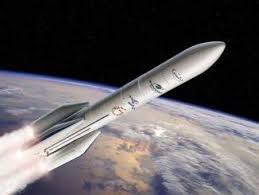
It is declared by ISRO that the blast-off will take place on 17th January from Ariane Launch Complex, Kourou. It is a French territory located along the north-eastern coast of South America. The time of the take-off is set to 02:35 hrs IST. GSAT-30 is using an Ariane 5 launch vehicle (VA 251) from Guiana Space Centre.

International Relations of ISRO

ISRO has international relations as well as cooperation with many foreign countries. For example, ISRO is carrying out a joint venture with France as the Indo-French Megha-Tropiques Mission. It has also planned a joint venture with NASA as well in 2020.

Organizations like the European Centre for Medium Range Weather Forecasts, European Organization for the Exploitation of Meteorological Satellites and the European Space Agency have signed various agreements with ISRO.

ISRO has also launched several satellites from foreign grounds. And, maximum of them are communication satellites and launched from Ariane. ISRO has international relations with more than thirty-six countries.