Your Tech Story

Tech News

Amazon’s Ring

Amazon Opens Pre-order for Its New Ring Video Doorbell-3

Amazon is one of the largest e-commerce providers in the world, with the platform hosting millions of products. There are thousands of sellers online on Amazon, with the e-commerce giant selling millions of products every month. Furthermore, the giant also owns several subsidiaries and companies which create products for them to sell.

One such company that Amazon owns is Ring, the new-age doorbell-camera creators who took the world by a storm a few years back with their signature design. Well, the company is back again with a bang, as Amazon announced that Ring is coming out with two new doorbell models. Here’s everything you need to know about the announcement and what it means to buyers around the world.

Two New Models Out

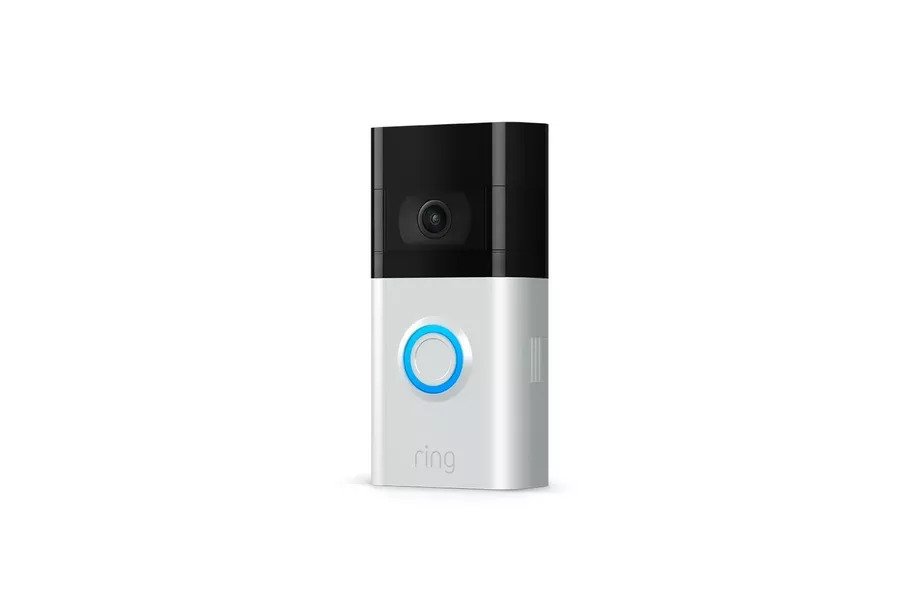
Amazon’s Ring will shortly release two new designs which will feature battery-powered doorbell video cameras, and the models are called Ring Video Doorbell 3 and Ring Video Doorbell 3 Plus. While the Doorbell 3 will cost you $199.99, the Doorbell 3 Plus will have a retail price of $229.99. Furthermore, the company released a press statement that announced that the models will be shipped starting on April 8th, with the company giving people the green signal to start pre-ordering their cameras.

Features of the New Models

The internet has been set ablaze by a new feature the Doorbell 3 Plus which will enable users to view video footage from four seconds before the detection of motion in the background. While this video is shot in black-and-white, this new feature, called Pre-roll has the world excited. Most of Ring’s doorbells share features with Arlo’s video doorbells, but this new addition has fans giving Ring the upper edge. Furthermore, representatives from Ring mentioned that the new feature will not have a significant impact on the battery life of the product, meaning that users can rest assured regarding the device’s performance on a long-term basis. Both models will also support dual-band 2.4Ghz /5Ghz Wi-Fi and will also feature adjustable motion zones, which will enable them to detect motion between five and fifteen feet from their place of installation.

The new Ring doorbell module will consist of three individual cameras, with all three sensors working together to provide ultimate security. Also, the sensors will record videos in 1080p clarity, making your video surveillance a lot sharper and clearer. Furthermore, the new system will try its level best to conserve power, meaning that users will not have to charge their Doorbell 3 Plus as often as they had to power up its predecessors. The major difference between the two models being the Pre-roll feed option, because otherwise, the Doorbell 3 has most of the functions the 3 Plus boasts of.

Impact on Older Models

Owing to the announcement of the new models, Ring is now offering the Doorbell 2 at a discounted price of $169.99, considerably reduced from the initial offering at $199.99. The Doorbell 2 has most of the features that the Doorbell 3 boasts, in case users want a Ring doorbell at a more affordable price. Along with the release of the new doorbell models, Ring will also come out with updated versions of the Ring Chime and Chime Pro. Both of these announce notifications from the doorbells by plugging into an appropriate outlet. The new version of the Chime Pro will feature a pre-built night light and will come with a Wi-Fi-extender, to help improve the network and connection capability of the device. In design, it will be very similar to the first-gen Chime Pro, but with a classier and refined look. The new Chime will cost users $29.99, while the updated Chime Pro will set buyers back by $49.99. Both new models, much like the new doorbells, can be pre-ordered with shipping expected to begin on April 8th.

Security Concerns

In the past, the biggest criticism that Ring has faced is the lack of good security features in their products. As a way to lay to rest these claims, Ring has announced that their new products will feature a compulsory two-step authentication process. Furthermore, in January, the company has announced that it would come out with an advanced privacy dashboard for its devices. This is the second biggest release for Amazon, who had revamped its Echo lineup last year. With these new releases, Amazon seems to be trying to gain more inroads into the home security market, and it looks like the company will diversify even further in the future.

coronavirus

Does India is planning to backstop its growing electronics sector by arranging to airlift components from China?

Highlights:

1. Manufacturing of Electronics products, especially smartphones assembly is a golden chance to improve India’s otherwise fading economy.

2. Two of the officials reported to Reuters that the Technology ministry has asked electronics and smartphone industry lobby groups to draw up a list of components made in China which then can be airlifted.

Coronavirus has been declared a global emergency, which took the lives of many people all over the world, especially in China. Recently, many smartphone companies denied participation at Mobile World Congress 2020 arranged in Feb due to Coronavirus Outbreak. However, India is planning to backstop its growing electronics sector by arranging to airlift components from China, three government officials said, as it tries to contain the fallout from the coronavirus crisis in China.

Emergency Airlift plan

India’s federal technology ministry has asked electronics and smartphone industry lobby groups to draw up a list of components made in China which then can be airlifted, two of the officials said.

After an extended shutdown due to the Coronavirus outbreak, China is slowly getting back to work. But the country is still facing a range of products and logistics delays. Electronics manufacturing such as smartphone assembly is the bright hope for India’s otherwise flagging economy. However, India is still relying on China for basic components required for the assembly of smartphones. Includes, display screens, camera modules, etc. 

The emergency airlift plans highlight the global supply chains’ interconnected nature as well, continued dependence on China for key goods even as some manufacturers prompted in some cases by the US-China trade war move to build up capacity outside of China. On the basis of this, other industries are exploring airfreight options too.

India’s role in Emergency Airlift plan

The auto industry in India is highly depending upon China for assembly parts like electronic components, fuel injectors, and pressure sensors.

As per the reports, the Indian Automotive Component Manufacturers Association has reached out to its members so that parts are in short supply will assess and can potentially be air-lifted. Also, the government adviser with direct knowledge of the matter reported that India’s embassy in China is coordinating an airlift of drug ingredients from China.

As per one of the government sources, “For the electronics and smartphone components, the technology ministry is in touch with aviation carriers and air freighters and they’ve been connected with the industry”.

“The airlifting of components from the Chinese cities of Guangzhou and Shanghai is one option being discussed”, the official said. However, the sources did not clear anything about when the airlifting might begin. The aviation ministry also did not immediately respond to a request for comment.

Import of Chinese goods has been lower down

Reuters has reported, Lack of truck drivers, a proliferation of road checkpoints and a shortage of workers at Chinese ports have slowed shipments even for parts that are still being produced. Also, Air cargo firms have reduced services in response to crew health concerns and uncertain demand.

All aware that China is the biggest trading partner of India, but imports of Chinese goods in India contracted in February to their lowest levels in nearly four years, trade ministry data reviewed by Reuters showed.

Scrambling in India

Indian Smartphone makers thus far have largely weathered the virus crisis, partly because they had made up inventories of Chinese-made parts to cover the Lunar New Year holiday period when factories in China shut down. But those stocks could dry up soon.

The co-founder of homegrown smartphone maker Lava Mr. S.N. Rai said, “the supply of some components had resumed, but the pace of production at his factory on the outskirts of New Delhi could soon slow down”.

Rai reported to Reuters, “The period between March 10 and March 20 is going to be very tough, in the absence of supplies, we might have to cut one or two of the three eight-hour shifts we have daily”.

Others are also scrambling for components

As per to two industry sources, the India units of contract manufacturers Wistron Corp, which makes some of Apple Inc’s lower-priced iPhones, and Flex Ltd have, through an industry body, asked for government help in securing components including camera modules and displays from China. However, Wistron and Flex did not immediately respond to Reuters’ requests for comment.

Oppo, a Chinese smartphone maker as well as Korean Samsung Electronics did not respond to requests seeking comment on their supply chains.

Coronavirus outbreak brought the uncertainty in Global Economy, especially the economy of China and developing countries like India. The global emergency affected the automotive sector of India. Also, now it is affecting the Electronics Manufacturing Industry of the country, which is the bright hope for the flagging economy of India. Let’s Hope, Coronavirus outbreak recedes soon so that all sectors reinstate its potential.

google assistant

Google all Set to Lose Legend-ary Voiced Assistant

Google is one of the world’s most recognized brands and is a tech-superstar due to its huge presence. We have all been helped by the search engine at some point in time in our lives. It answers everything from simple questions regarding words, to sports updates when we are stuck at work. Slowly, yet surely, the tech-giant has branched out into other ventures. With several highly successful applications like Google Maps, Google Keep and even their cloud-storage service Google Drive, the company has become an integral part of our lives. One major part of Google’s services is their voice assistant which helps us do tasks without actually touching the phone. We can use this assistant to run searches, open the camera or even call someone without lifting a finger. Since voice search is touted to be the next big thing in the years to come, Google has never spared any expense when it comes to developing its search interface.

Wonderful Marketing Strategy Behind Google Assistant

One seemingly brilliant way it has made the assistant more relatable and approachable is by replacing the usually robotic and monotonic voice, with the voice of someone we appreciate and love. Fans went crazy last year when Google announced that the new update would have the assistant upgrade to All of Me fame John Legend’s voice. However, the collaboration seems to have ended because the tech giant announced that the voice would be removed from March 23rd onwards. Here’s a look at how the unusual pairing came to be.

Unlikely Pairing

In case you got used to having John Legend pick up your chores and assist you in your everyday life, you might have to brace yourself for the news. The celebrity cameo will come to a stop on March 23rd, after almost a year of great service. News regarding John’s voice being added to the Assistant’s settings had come out last April, much to the delight of Google users around the world. Most people do not identify with or particularly like the robotic voice that is associated with voice assistants. John Legend, therefore, came as a whiff of fresh air to most users, but, unfortunately, the unlikely, yet successful pairing is coming to a close. But to be fair, Google had mentioned at the time of release that this would be a limited feature, though they had not specified the duration of the tenure.

The addition of Legend’s voice brought a lot of joy to the ears of users around the world, because it brought with it several Easter eggs, very specific to his personality. For instance, you could get a personalized Happy Birthday song, sung by Legend himself if you asked him to do so. Similarly, fans were greeted to a part of All of Me, anytime they mentioned or asked about Chrissy Teigen, who is his supermodel wife. However, it is not all bad news for users, since Google still offers comedian Issa Rae’s voice. But it would be best not to get used to her witty one-liners or sarcastic remarks because you never know when Google will take her off the list.

Special Surprises

While Google Assistant has featured celebrity voices for quite some time now, users might want to make the best of them while they still can. John Legend, however, will always be remembered for being the first celebrity to lend his voice virtually to a plethora of devices all around the world. The singer’s smooth voice, which is sinfully filled with emotion and grit was a huge hit with fans all across the United States.

Google announced the removal via a tweet that urged users to use Legend to the maximum in the time they have left and encouraged them to request more serenades from the crooner. However, though you might miss the Legend-ary voice, rest assured because the Assistant will continue to function the way it used to. The only problem being that you won’t be able to belt All of Me along with the singer himself without accessing YouTube. Also, let us hope that owing to the success of this new endeavor, Google keeps surprising us with new celebrity voices in the future.

Ubihere

Ubihere’s Latest Technology fills in for GPS indoors, making it an alternative for GPS-denied environments

Highlights:

1. For indoor and outdoor positioning, Ubihere has introduced a new 2D and 3D technology.

2. The company’s patented technology enabled real-time asset location and information without GPS.

3. Ubihere’s technology to provide the alternative for GPS-denied environments.

Ubihere has enabled a novel 2D and 3D tracking technology for indoor as well as outdoor positioning. This patented technology offers real-time asset location and information. However, GPS is not needed for the whole process. Thus, making it an alternative for GPS-denied environments. It will be launching in Hospitals and Retail Store so that the efficiency of these crowded places will maximize.

How does it work?

Basically, an anonymous Video Analysis Positioning Technology which is OSU patented is used by Ubihere’s system along with advanced machine learning and tag technology. The cameras, system tags, and software track assets to the centimeter. These assets then monitored through either anonymous video feed or tags. These tags are the same as the size of the credit card and non-RFID.

Ubihere’s vice president of business development Mr. Alice Hilliard explained, “The map for indoor environments can be generated from a building information model (BIM). Based on the building’s architecture, movement is tracked. In milliseconds it can hone in on an exact location within a centimeter”.

Depending on the preference of the customer, the location data is transmitted to either the server or the cloud. Then it is loaded into dashboards. However, it can be accessed from any device the client requests.

Now, if a tagged object leaves a building, it will continue to be tracked with or without GPS. In case, if the object stays within the building, no need to use GPS. The battery life of the device which ranges from 18-24 months can be shorten using GPS. Also, several floors, temperature, and usage affect battery life.

Alper Yilmaz- Inventor of the Technology

Alper Yilmaz, the inventor of the technology and geoinformatics professor of Ohio State University (OSU) researched how to geolocate undercover officers based on motion video information. He also considered astronauts on spacewalks.

However, OSU commended Alper to commercialize his technology, and Rev1 Ventures served as the incubator. Under Rev1’s portfolio, Ubihere launched in 2016 in Columbus in Ohio.

Tags to offer a way to calibrate location in Hospitals and Retail Stores

These tags are useful to calibrate locations in places such as hospitals and retail stores, where food cart tracking or devices through lead-lined walls enables these places to maximize their efficiency.

Hilliard says, “Imagine how many times a nurse or other caregivers go back and forth”. Also, he added, “By tracking how people and objects move around, we can help departments figure out opportunities to layout the floor better to allow the staff to save time and steps”.

Further, Hilliard informed that “With a blueprint loaded into the software the system knows whether a (tagged) IV pump went down the hall, turned left or right, entered an elevator, or was left in a patient’s room”.

Locations such as retail stores are the best places to install the cameras, enabling Ubihere to anonymously track a journey of the consumer. If the tag and camera used together, it can assist stores to determine whether a display is working, showing how many customers came into the shop, or how many looked at or touched items in a particular display. In the case of e-commerce, the behavior of costumers can be tracked automatically in real-time with Google Analytics and other SEO tools.

Where else it can be used?

Hilliard explained that “If you were in a factory or even a nuclear power plant, OSHA guidelines establish that you have to have two people in the control room at all times”. Possibly, other uses include emergency-response teams and factories.

He further said, “Periodically, OSHA is required to monitor if the power plant is following that protocol. Instead of having someone sit there and oversee the situation, we can use our camera technology to anonymously collect workers’ whereabouts, which can then be easily pulled from the cloud. For response teams, an equipment failure that makes it difficult to locate a team member could be overcome with the tag technology”.

Yilmaz said, “Ubihere’s machine-based algorithms can learn locations based on various types of sensors, detecting odors isn’t out of the question”. This machine-based learning algorithms utilize maps and sensors to provide a new way to accurately locate things or people in indoor situations where GPS can’t.

About Ubihere

It uses non-GPS reliant tracking technology with great appeal to myriad industries. As well, enabled enormous implications for healthcare, retail as well as the US Military. Ubihere has its roots in research by Alper Yilmaz’s Ohio State University lab that researched how to geolocate undercover officers based on motion video information and astronauts on spacewalks. Its patented advanced positioning analytics map-enabled real-time asset location and information without GPS. Earlier, the company worked with Converge Technologies.

Ubihere now exploring potential applications of its GPS-free tracking technology. Initially, beta tests will be conducted in the hospital as well as in retail environments. As per the reports, the company also has signed three projects with the U.S. Department of Defense.

Facebook

Facebook to Gather New Campaign “More Together” in India from Now On

As technology progressed, it helped to make the world a much smaller place. While in the past, people had to rely on letters to communicate with people living far away, as we moved ahead, faster, more efficient means developed. The world is moving towards a digital era, wherein we all have our digital personas on the world wide web. Social media has evolved to become an integral part of our lives, and most of us have accounts on multiple platforms. As the degree of internet penetration continues to rise, more and more people will join social media networks such as Instagram and Facebook. In fact, the competition amongst social media networking sites is so high that several of them have had to shut down due to a lack of an active user base. So how do social media sites ensure that they stay relevant and attract new users? Here’s a look at how Facebook is trying to stay on top of the game through an innovative marketing campaign.

What’s More Together About?

Social media giant, Facebook announced on Monday that it was going to launch a new campaign, More Together, in a bid to attract more new users in India. The initiative will focus on the app and will work towards making the company more relatable and human. One aspect of this program is to highlight stories that showcase the power of the network to bridge gaps and form relationships. This campaign will, therefore, help people realize how the platform has been integral in building connections and sustaining friendships all over the world. This campaign is the first of its kind in India and will go a long way in helping people become even more aware of Facebook’s power to bring people together.

Who’s Behind This Campaign?

The idea for such a campaign came from the Dentsu Aegis Network, which is a creative agency working in India. The plan was conceptualized by the head of this agency, Taproot Dentsu. The plan will see the release of advertisements in over eight Indian languages which will be aired all over the country in the weeks to come. The campaign aims to be a 360-degree strategy that will span across various mediums, such as radio, cinema, and social media.

Why Opt for Such a Campaign?

The main idea behind such a campaign was that in recent years Facebook had stopped telling stories about itself. Also, most of the time when such a story was put out, it was orchestrated by other groups and not by Facebook itself, which led to a divide in the narrative. Facebook India MD, Ajit Mohan believes that a campaign that comes from the social media giant itself will help in reaching out to even more people, as the narrative is extremely informal and personal.

There is a need to change the people’s perspective on Facebook, and such a campaign will help Facebook control its own narrative, as its own app will be at the epicenter of the campaign. Facebook also plans on spending even more on marketing and promotions within the country, and this campaign is just the start of many more things to come in the future.

Other Creative Members

The first TV commercial under this new campaign will release on Saturday and has been directed by none other than, Chak De India! fame Shimit Amin. Pallavi Chakravarti from Dentsu Aegis was given the responsibility to head the copywriting team behind the campaign and has incorporated several real stories from around the country. These stories capture the essence of what Facebook is and showcases it in a very raw light, inspired by real people and their stories.

Complementary advertisements have been led by Bharat Sikka and will feature YourFood Lab expert Sanjyot Kheer, Curly Tales fame Kamiya Jani and Madhuras recipe protégé Madhura Bachal. Furthermore, the ads will also feature Paula McGlynn, Sarang Sathaye, Chhavi Mittal, Varun Pruthi and Maithili Thakur.

All these people have used Facebook to build connections and improve their lives, and hence, will serve as ambassadors for the social media platform. This campaign comes after the brand’s famous decision to change its logo in November of last year and seems to be a continuation of that marketing strategy. Furthermore, the company has also appointed Avinash Pant as the MD for the Indian region.

Geely

How Geely Car Manufacturers Are Taking to the Stars?

Ever since mankind took form on the Earth, he has been fascinated by the sky and the stars. As a civilization, we have yearned to explore more about the stars than any species before us. This quest for innovation and creation has helped us become the longest surviving dominant species on Earth. Innovations in the field of science and technology have made it easier to live, lengthened our life spans and made things which were impossible in the past, possible. One of the key areas in which research is going on now is space and telecommunications. We are eternally in search of a new home in the galaxy, and science is helping us do that. Furthermore, huge advancements in the field of electronics and communication have made it possible for us to link various devices together. One major change that will occur in the next few years is the globalization and cloud-control of cars. Let us take a look at how Chinese auto-giant, Geely is making this dream a reality by taking to the stars.

Geely to Build Satellites

Geely is the largest private car manufacturer in China, and they are all ready to enter the satellite business. This Chinese conglomerate has been rapidly expanding in the last decade, having moved into trucking, speed trains, drones, and even Volvos. The company is showing no signs of slowing down any time soon, by releasing a statement that they will soon be entering the aerospace field.

This move has been undertaken so as to make it easier to tie together all their assets. Geely will begin work on its own satellite-powered network, in order to formulate a mobility ecosystem that will be smart and intelligent.

On Monday, the automotive giant announced their plans to begin work on a production facility that will create, design and test satellites in Taizhou, Zhejiang. This facility will have state-of-the-art technology, which will help it create different satellites for both Geely and non-Geely devices and machines. The company also mentioned that the satellite network will be launched by the end of the year, but refrained from commenting on how large or extensive it would be. Sources states that the giant is spending almost $326 million on this project, and plans to makeover 500 satellites a year.

Satellite Power

Most of these will be low-orbit satellites that will provide high-speed data transmission capabilities and also help with navigation. Geely believes that this will help usher in a new age for cloud computing, which will make it possible for vehicles to receive over-the-air instructions and updates.

Furthermore, this will help in providing a direct link between the manufacturer and the vehicle, allowing the company to constantly keep track of the device’s performance and maintenance. Also, the company might plan to collaborate with other satellite makers such as SpaceX and OneWeb. Altogether, these satellite constellations will be able to transmit large volumes of data.

While current GPS probes are only accurate up to meters, this new satellite network will make it possible for vehicles to be accurate to within even a centimeter. Such accuracy will prove to be crucial when it comes to autonomous vehicles, as the biggest argument against their use is that of safety and inaccuracy. Unmanned flight, UAVs and smart cars will all turn into realities if this plan works the way it ought to.

The Future

Autonomous vehicles will be a signature of the future. As and when that happens, Geely will have a huge advantage over its competitors if it has its own satellite network to back up its vehicles. Instead of relying on third-party vendors for satellites, the company will be able to make use of its own fleet to run diagnostics, control navigation and also set up communication with its cars.

Furthermore, the demand for on and in-car connectivity has been on the rise in the last couple of years and have their own satellite network will help Geely back up that demand. A similar move has been undertaken by Elon Musk, whose company SpaceX is creating a Starlink network, which can be used to communicate with his Teslas.

Every year over 78 million people buy cars, and as the years go by, more and more people want their cars to be smarter. Connected cars will help buyers get the best of both worlds by being smart, intelligent, intuitive and highly productive. For instance, in 2016, connections for cars was growing at a faster rate than cellular connections for mobile phones.

This is because a high-end supercar has to process more data than a supercomputer! Hence, car manufacturers all around the world have realized that in the future, cellular connections alone will not be enough to process all the data required. Hence, satellites will be the best option for them to transmit large data and process vital information. Therefore, we will be seeing even more car makers, such as Geely, take to the stars in order to turn their dreams into a reality.