Your Tech Story

Tech News

Soleimani

Instagram is Removing the Posts Supports Soleimani to Adhere US Laws

The world watched in shock as US released a statement saying they had taken out Iranian General Qasem Soleimani. However, there was more shock to follow suit, with Instagram recently announcing that it will remove posts about the slain commander. Instagram and its parent company Facebook has decided to take down posts in support of Soleimani due to U.S. sanctions laws. There are very few Western born social media platforms allowed in Iran, and Instagram is one of them. Thus, the move will come as a big setback for the technology giant, and a huge let down to the people. Here’s a look at the whole story.

Violation of Free Speech

Most journalists and activists who fight for free speech feel that such censoring will do no good for anyone. The removal of the posts will be to comply with American sanctions. Isobel Cockerell from Coda Story exposed that as per a report by the International Federation of Journalists, Instagram had suspended over 15 Iranian journalists’ accounts.

While some accounts were reinstated, several posts have been permanently deleted. As the activists feel that this is a time Iranians need to have access to information, the move will be heavily criticised. Choosing to censor Iranian media at this juncture is highly unacceptable as per Anthony Bellanger, who serves as the IFJ General Secretary.

Taking Down Accounts

Instagram has also reportedly been shutting down accounts of journalists, advocates and activists from Iran, sharing posts related to the commander. In one notorious instance, Instagram removed a post by journalist Emadeddin Baghi, who suggested that Soleimani’s killing is “contrary to the principles of international law”.

However, Instagram backed the move by stating that it is merely complying with US laws. Furthermore, the company stated that it restored posts made by Baghi after checking them for compliance. Posts removed by erroneous means, and which did not violate any company policy were later restored by the social media giant.

As per US law, Instagram has to remove posts in favour of groups labelled foreign terrorist organizations as per U.S. State Department records. That list, as of last year, includes the Islamic Revolutionary Guard Corps formerly led by Soleimani. Facebook interprets the law such that it removes all content encouraging their actions or speaking in support of them.

Public Resistance

However, this behavior raised concerns from free speech advocates, who feel the network has no legal obligation to take down such posts. Also, they feel that such a move goes against Facebook’s mission to become a representative for free expression.

Facebook spokesperson Sarah Pollack said that Facebook regularly reviews its content to make sure it complies with US laws. She also revealed that people whose accounts have been disabled can appeal at the Help Centre for further help. Noted advocate for free speech, Jillian York who works at the Electronic Frontier Foundation, expressed his disappointment, stating that Instagram is “legally wrong”.

Activists feel that while flagging organisations as terrorist groups might work for intelligence agencies, it also works as a blunt tool. Offering private entities, the power to dictate policies such as this could grow into a dangerous problem soon enough, as per them.

The aggressive position that such platforms are taking might not be very sustainable for the companies themselves. Though Google declined to comment, the giant has not yet removed any posts and neither has Twitter. This, therefore, puts Facebook in a tough spot.

Manna's 5G drone delivery deal

Delivering the Future, One Slice at A Time: How Manna’s Drones will now Deliver Pizza

If someone told you five years ago that a drone would drop your pizza at home, how would you have reacted? Well, the scene seems to be right out of a science-fiction movie without a doubt. However, thanks to advancements in science and technology, the future is coming to our houses! Manna, is an Irish drone manufacturer and deliverer company with huge plans for the future. They recently joined hands with Manna Cubic Telecom to usher in the future by bringing 5G connectivity to their fleet of drones. Here’s a look at their plans for the future, and how they will change the way product delivery works.

Upgrading their Fleet

Manna announced their tie-up with Cubic Telecom at the Consumer Electronics Show in Las Vegas. This arrangement will allow Manna to use the Pace connectivity platform, earlier used by cars, to track, control and monitor their drones. This particular platform is the preferred standard for companies such as Audi, Porsche, and Volkswagen, and has millions of users across 93 markets. Cubic has vital experience in the field of connectivity services, as they offer their last-mile connectivity service in over 180 countries. Their systems help cars link to internet-of-things devices and mobile networks.

Super-fast Pizza

Manna’s drone will deliver restaurant food in under three minutes, by using high-speed drones that travel at around 80 km/h! The company will start testing its delivery system by April, by starting with one location. Once they have worked through issues encountered and perfected the system, they will expand to more locations, by the end of this year. Cubic will help these drones perform better and improve their efficiency.

The software will be fed into the drones during manufacturing. This software will transfer data between the drone, restaurant, and customer in real-time, helping keep everyone in the loop. Thus, the customers will be able to track the drone’s position and hence, gauge how fast their food will reach them.

Imagining the Future

Manna’s Chief Technology Officer, Alan Hicks believes that the future of food and product delivery lies in the sky. Airborne methods of delivery will help streamline the process, resulting in better conversion rates and customer satisfaction. The most difficult part about taking delivery to the skies is maintaining robust communication between the fleet and the cloud services.

Partnering with Cubicle will help provide Manna with that viable link, which brings them closer to delivering the future to us. The commercial take-off of drone delivery will help revolutionize the world of delivery forever, as per Cubic’s CEO Barry Napier. Hence Cubic values its partnership with Manna as they will be helping to lower overall cost and time of deliveries, while also reducing their environmental impact.

To the Skies

Founded by Bobby Healy, drone delivery company Manna recently raised $3 million via a seed round to fund their growth. This brings their total funding up to $5.2 million through seed funding. The three-year deal with Qualcomm-backed Cubic Telecom will greatly help the company commercialize its products effectively. Previously, the Irish company had teamed up with food delivery company Flipdish.

Bobby Healy
Image Source: Google Images

Manna’s drones fly almost 300 feet above the ground at an average speed of 50mph and occupy 6 feet by 6 feet. Manna surveys areas wherein they plan on delivering, verify landing zones through computer vision and then programs the drone. The drones can make deliveries weighing up to 4 pounds within a 4-mile radius. Restaurants can use these drones to make up to 5 deliveries an hour, thanks to the three batteries it uses.

Technology giants such as Amazon and Google are also hoping to soon use drones to deliver their packages and fulfill orders. Amazon is already said to be testing their drone-delivery system, in a bid to lower labor costs. Meanwhile, governments across the world will begin work on the legislature required to make such deliveries legal and safe. There are several obstacles that such companies will need to cross with regards to social acceptance, and they include privacy, safety, and noise.

However, drones will help speed up delivery unlike any other system used before. Manna has a testing center in Wales and plans on expanding to three additional sites in Ireland by the end of this year. In the future, the company plans to deliver meals at $1 per delivery.

Samsung AI based robots

When Dreams Turn to Reality: Samsung’s NEON is as Real as it Gets

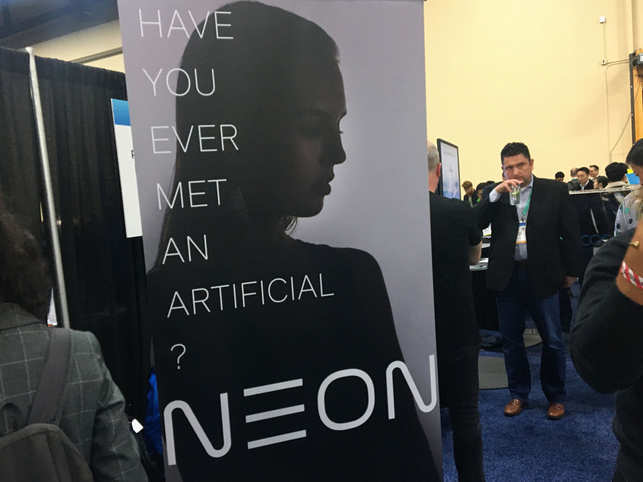
Growing up, we have all read books about robots and humanoid creatures. We have all seen science-fiction movies with fully-automated houses and robots who do all the housework. But, did you ever think that this would someday be a reality? Thanks to advancements in science and technology, we are now closer than ever before to see such a revolution. The momentum for such a change has been gaining, and the wheels seem to be in motion. Recently, in an announcement, Samsung unveiled an AI-powered digital avatar or artificial human which resembles humans. This robot, the company claims, can converse with empathy and sympathy the way we do. The announcement came as a part of the 2020 CES, or Consumer Electronics Show. Samsung’s collaborators, Star Labs have made this new AI, called NEON, which frankly resembles something out of our dreams.

What is NEON?

This new technology will allow developers to create customized avatars on display boards, ads, and video games. Such beings may be modeled to look like anyone from TV anchors to mega movie-stars. They can even become our companions if you let them be, as per the California-based laboratory. Pranav Mistry, who is the Chief Executive at Star Labs said that NEON can serve as a constantly evolving friend retains memories. The humanoid chatbot will not replace humans, but rather make us even more human.

How realistic is NEON?

The people that NEON generates are super realistic people of sorts. The computationally generated virtual entity looks, talks and behaves exactly the way a human does, even being capable of emoting. The robot can also handle a variety of emotions and shows considerable intellect and reasoning. Therefore, the technology allows developers to create video chatbots that look, behave and talk like real people. While these robots aren’t all-knowing assistants like the ones seen with Iron Man, they behave a lot like humans themselves. They are independent beings which show emotion and learn from their experiences to evolve and adapt better to their surroundings. The bot might not be able to tell you about the weather, but can have real, deep conversations with you!

NEON bots form memories and have the ability to teach themselves new skills. However, they do not have a physical body to manifest, for now, but they might in the future. But due to their hyper-realistic approach NEONs can become teachers, advisers, actors, and even TV anchors. Though they resemble humans, they cannot be exact copies of someone alive because each one has a unique personality.

NEON and the Future

Even before arriving on the scene through the CES 2020, NEON had made a name for itself. The robot had generated a lot of buzz for Samsung, though no one knew what the project was about. Several tweets and teasers had come out by December before the unveiling to keep spectators and enthusiasts excited. The bots are even capable of conversing in other languages such as Hindi. While the lab is funded by Samsung, these bots aren’t their property. Star Labs aims at expanding by turning science fiction into reality.

Samsung, much like Apple and Amazon have realized that the best way to make useful devices is to use artificial intelligence as voice assistants. Every big fish in the field of technology is investing in this field, as they think it is the future. Very soon, such AI-powered bots will decide how we interact with the world around us and our gadgets. The bots run using a technology called Core R3, where the three Rs stand for Reality, Real-time and Responsive. It also makes use of a technology called Spectra, which handles the bot’s capacity to learn, memorize and emote.

The company will beta-launch Neon this year around the world, and will sell it via a license. Samsung also hopes that one-day NEON will appear in movies and news around the world. Let us hope that the future makes more of our dreams come true, with life resembling science fiction faster than imagined.

yahoo

Goodbye Yahoo: yahoo to shut down community website

If you grew up in the ’90s, chances are that you have used a Yahoo account at some point. The 2000s saw the rise of Yahoo as a big shot with several well-run communities and networks. Since then though, its popularity has dwindled thanks to stiff competition from social media sites like Facebook and Twitter.

However, Yahoo recently released a notice in early October stating that it is closing down the Yahoo Groups website. A popular website back in the day, Groups presented a mix of community forums and mailing lists that people don’t use now. Here’s a look at everything you need to know about the notice, and its impact.

End of an Era

The notice said that users could add new content up to Oct. 28. Following this, on Dec.14, all content will be wiped for good. Therefore, the company has given users time till 14th to back-up their data, and save what they have uploaded. Everything from files, photos, links and polls to attachments will be cleared off the site.

What will remain is the option for users to communicate with their group members through email. However, the website will continue to live but all groups will be private and admins will only have access to limited settings and functions. Yahoo did not clarify why Groups was shutting down. Groups had always been an extension of real-life communities, helping to bring people together across various common interests and friends. The notice also has a link explaining how to save user data. But before that, what exactly was Yahoo Groups?

History of Yahoo Groups

Launched in 2001, Yahoo Groups came when the dotcom boom was at its peak and during its heyday had millions of users. The online discussion portal faced severe competition from the rise of social media sites such as Facebook and Reddit. As people switched to other such platforms, Groups fell behind and was left with a few loyalists. So much so that, several groups on the website have not been upgraded in years! While certain forums on the website are new, it does not provide the kind of interface that Facebook or Instagram does, and hence struggled to retain users.

Rise of Yahoo Groups

Yahoo Groups was once a very popular forum which helped people with common interests connect for almost two decades. At the height of its popularity, that is during 2010, Yahoo Groups boasted of over 115 million active users. To help people build and maintain virtual relationships, the website had over 10 million groups.

Due to a large number of users, Yahoo had enough power to make over 100 carriers and mobile manufacturers pre-install their apps on new devices. To keep Facebook at bay, Yahoo promoted new and unique features such as subgroups, and private chats. But despite their best efforts, Yahoo was fighting a losing battle. With Instagram exploding around that time, users quickly migrated to rival platforms. Hence, it is safe to the say that the shutdown as imminent, being a long time coming!

How to Save Files

To save their data, Yahoo users can download it from their Privacy Dashboard. The notice also links to a Yahoo web-page that explains how to download your data and save it. However, the process is quite cumbersome as you have to individually download each file or photo. Users also have the option of requesting a complete download to the company. This request will take up to 30 days to process, and the download will be available only after that. Afterwards, the group will have only basic communication features. Functions such as attaching photos, polls, links and calendar will be lost forever.

Takeover and Promises

Verizon acquired Yahoo in 2017 in a deal that was worth $4.48 billion and created Verizon Media. Verizon Media too failed to compete against Google and Facebook and is being forced to cut their budget and staff. Strangely enough, the notice regarding Yahoo Groups went away quietly, only being mentioned in small support documents. However, as a sign of good faith, Jason Scott from The Internet Archive has promised to save as much content as possible. So maybe it might not all be lost forever.

Yahoo had previously removed their application GeoCities, taking with it 7 million websites. Digital archivists tried then as well to save whatever they could. Also, before that, they had winded up their Maps site in 2015, and their messenger last year! Sadly, each shut down such as this leads to the erasing of internet history, making it a pivotal moment. While many of you might not have used it in its full capacity, you might have been part of a fan club or movie club. Make sure you do visit one last time before Yahoo effectively erases that part of your childhood.

Phone

Best Phones Under INR 10,000 for Indian Market

Are you looking for the best one under INR 10,000? Well, if you are, then you are in the right place! As technology surges ahead becoming more affordable by the day, features such as high-functioning rear cameras, full HD displays and fingerprint sensors are becoming a common part of even budget phones.

The sub-10,000 market is a very significant one in India and contributes heavily to annual mobile phone sales in the country. There were several new entries into the scene this year and since most of them offer great specifications, it becomes difficult to choose the right model. Therefore, here’s a little something to help you out. Heres a comprehensive look at the five best phones under Rs 10,000 in India.

  1.   Xiaomi Redmi Note 7 

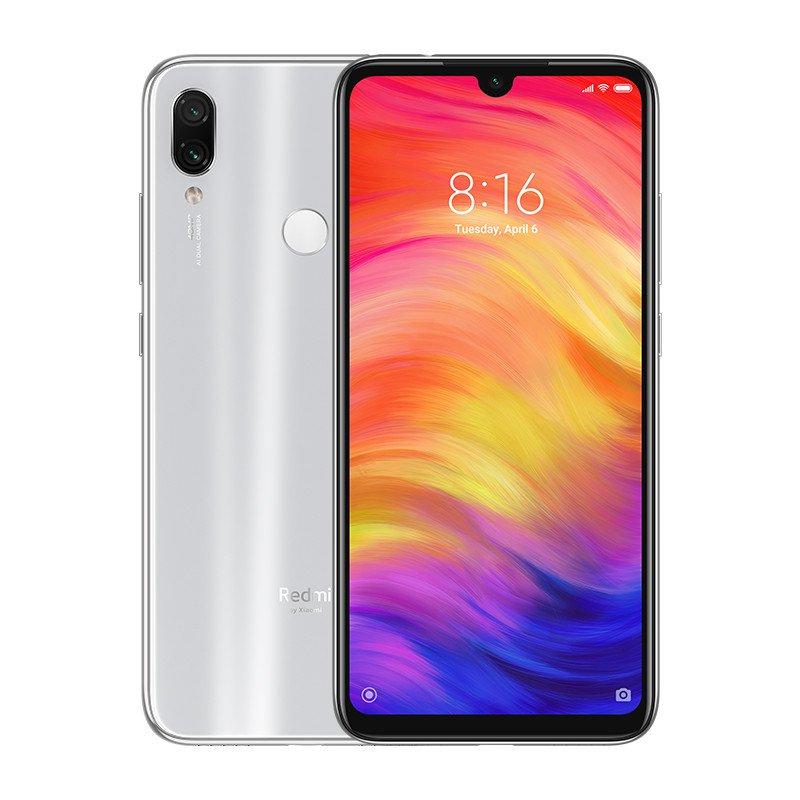
The Redmi Note 7 does not offer a 48MP camera, but it comes packed with power as it runs on a Snapdragon 660 SoC that will not let you down when it comes to performance. The vibrant display and new colour gradient make the phone visually stunning. 

It is similar to the Asus Pro M2 but comes with a smaller battery that is well capable of lasting a day and a half.  Performance is where this phone outshines its competitors because the Snapdragon processor makes this phone the fastest in the market for this price range. 

The camera performance, like with all Xiaomi phones is quite good, and the front camera produces some memorable selfies.   The night mode in the primary camera has been well appreciated by users, and so has the noise reduction feature in the video recording. 

Designwise, the screen is protected by Gorilla Glass 5 and has an exceptional finish. The only downfall would be the UI as the phone runs the MIUI 10, which is notorious due to the server ads that it comes with, but overall the phone works great.  

If you don’t mind splurging a little extra, the Redmi Note 7S is a great option, as it sits between the Redmi Note 7 and Redmi Note 7 Pro. This was runs on the MIUI 10.3 and allows a lot of customisations. The major difference though is the camera, as the Note 7S supports a 48MP primary sensor making it a great camera phone.  

2.   Realme 3 Pro 

The Realme 3 Pro is considered one of the company’s flagships and has been designed to go head to head against the Redmi Note 7 Pro. Similar to the Realme 2 Pro in terms of design, the phone features a small notch and slim.

The 6.3inch fullHD+ display helps in bringing to life vivid colours and perform commendably even under direct sunlight. The phone also has three slots, meaning you have enough space for two NanoSIMs and a microSD card. It comes with the Qualcomm Snapdragon 710 SoC., which is one of the best ships in the under 20,000 market. 

The phone comes in two varieties; 4GB RAM and 6GB RAM. The OS used is similar to the Android 9 Pie and runs smoothly.   The phone, thanks to the great processor can handle intensive apps and games and does not heat up at all. 

3.   Samsung Galaxy M10 

The most significant advantage that the Samsung Galaxy M10 provides is that it houses an ultra-wide-angle camera which was not something you would regularly see in the under Rs10,000 segment, making it an excellent buy for the price.

The primary camera does a great job, as with all Samsung phones when the lighting is good enough, and the display stretches till the end, making it a great phone to watch videos and movies on. As long as you don’t want heavy multitasking, the phone is an excellent buy for the price, and the battery is good enough for it to last over a day on a maximum charge.  

 However, the old chipset is not the most reliable, and hence, performance suffers as a result of this. But thanks to optimisations Samsung has deployed, the phone works well enough and can handle a multitude of apps reasonably well. The waterdrop notch on the screen, makes the phone’s display the best in the under 10,000 categories.  

 Further, if you don’t mind splurging a little more, the Galaxy M30 is a great option. The 3GB variant of this phone falls in the under 10,000 categories and is a great buy for the price, sporting a Super AMOLED display. The fullHD+ panel gives crisp images and the Samsung Exynos 7904 SoC also allows for intensive gaming and app use.  Once again, as with most Samsung processors, the device does tend to heat up when used for extended periods of time. However, the greatest drawback is that it comes with an Android Oreo and not Android Pie.   

4.   Realme 5

The Realme 5 comes with an updated crystal back panel and polycarbonate exterior, making it a little heavier than its predecessor. The phone has a huge 6.5-inch HD+ display, which has good brightness optimisation even though the resolution is a little low. The phone, much like most Realme phones, has three slots in the side, allowing the phone to carry Nano-SIMs and a microSD card.

The Realme 5 runs on the ColorOS 6.0.1, which resembles the Android 9 Pie, allowing a lot of customization options such as gestures and shortcuts. The phone utilizes a Snapdragon 665 SoC which allows for intensive gaming without much heating up. The phone sports four cameras in the back, and is the first sub-10,000 phone to do so. These include a primary camera, a depth sensor, a wide-angle lens and a macro lens.

The 13-MP front camera gifts you some great selfies, while supporting video stabilization. While the cameras do a great job in good lighting, they struggle to capture the same quality under low-lighting, which is the main drawback of this phone. The 5000mAh battery can easily last a day and half on a single charge. That is a good thing, given that the phone does not support fast charging. The phone has multiple variants, with the base variant which comes stocked with 3GB of RAM is a good buy at 9000.

5.   Asus Zenfone Max Pro M1 

The Asus Zenfone Max Pro M1 is similar to the Redmi Note 5 Pro but outperforms it as it comes with stock Android. The build quality is fantastic, and the phone feels very robust and sturdy while the 16 MP dual back camera is quite adept at capturing pictures.  

The fact that it comes with the Android 8.1 Oreo helped in boosting sales, and it looks like it will end the year as one of the most popular budget phones. They also provide regular updates for the UI, making it a reliable phone that stays relevant. The phone also comes with a massive 5,000mAh battery that ensures that it will stay alive even under strenuous use.  

Invensys

INVENSYS, A COMPANY FORMED BY MERGING TWO MULTINATIONAL CONGLOMERATES

The true potential of the internet has been exposed towards the entire world within these couple of decades. There are many flourishing businesses in the tech market especially in the field of advanced software and telecommunication.

But, how many of these companies master their reputation in the technical world and industrial production as well? Software companies and production industry are two diametrically opposite points of a circle. But, Invensys, the global tech company has been successfully running its business for the last 20 years.

Invensys, founded in 1999 is a famous company divided into three segments, namely, software, industrial automation and energy controls. The company was formed by merging two gigantic multinational companies, BTR plc and Siebe plc. Though Invensys was founded in 1999, the actual history of the company dates back to the 1800s when Augustus Siebe started working for the Deane brothers.

In the 1800s

Born in 1788, Augustus Siebe was a famous British Engineering who was hired by the Deane brothers. Since Siebe specialized in designing diving tools and types of equipment, he was giving a project to modify the then-existing helmets for underwater activities.

Seeing his great improvement and contribution in the field, Charles Parsley, leader of the Royal Navy also made some suggestions to improvise his existing inventions. Once his work brought a revolution in the world of marine engineering, he moved to London and opened up his own company in 1819. This great man passed away on 15th April 1872 due to chronic bronchitis.

How Invensys was formed?

Siebe plc was originally formed in 1920 but it started making a significant presence in the world of engineering since the 1970s. The company made a lot of acquisitions starting from 1972. Some of the acquired companies are James North and Sons, CompAir, Foxboro Company, Triconex, Eurotherm, Esscor and many more.

The last company that Siebe acquired before merging with BTR plc was Esscor. All these companies made Siebe a versatile conglomerate pioneering in excellent software products, power industry, petrochemical industry and whatnot.

On the other hand, BTR plc was originally established as B.F. Goodrich Company and transformed itself into BTR Limited in 1956. The company started flourishing under the leadership of Sir Owen Green and made a lot of big acquisitions in 1982.

BTR started buying companies outside the UK which included the U.S, Canada, Australia, South Africa and Germany. By the time BTR merged, it happened to be famous for building products, polymers, packaging and materials engineering.
Finally, in 1999 both the companies shake hands-on mutual grounds to form Invensys.

Fate of Invensys


After a couple of years of the establishment of Invensys, Invensys Rails Systems was formed in 2001. In 2004, Invensys Controls was formed which was mainly created to monitor the control system (also included climate control) and its applications.

During these five years from 1999, Invensys went through a lot of crisis and even had the chance of dissolution. But, the company was somehow saved and opened another new sector, Invensys Operations Management in 2009.

Again after a couple of years, the business started falling with share prices dropping to almost 50%. The company decided to sale Invensys Rails followed by the entire company in 2013 to Schneider Electric. The entire acquisition was finally completed on 17th January 2014. The amount was finalized to £3.4 billion.

About Schneider Electric

The company was built in the 19th century by the Schneider brothers and since then they have owned the steel as well as the machinery market. Gradually, the company also entered into the market of construction and electricity in the 20th century and emerged out as one of the companies in recent days to focus on energy management.

The company invests quite an impressive amount of fund in this area keeping in mind the abrupt environment changes. In 2010, the company with Alstom, created Aster to provide support to the newly founded business in the area of efficient energy consumption and eco-friendly environment.

The company is currently headquartered in France with more than 155,000 employees. The company has gained unexpected recognition in India given that it was given the award of Best French Group in India in 2018.