Your Tech Story

Tech News

Sony

Sony launches Alpha 7C the world’s smallest Full-frame camera in India

On 18th November 2020, Sony launched the world’s smallest and lightest Full-frame camera system in India. Sony’s Alpha 7C comes with a zoom lens SEL2860 which has a compact design yet uncompromised performance. The company claims that it is not only the world’s smallest full-frame camera but also a high-performing gadget with advanced autofocus mode and high-resolution 4K video qualities. The camera system has a lot of advanced features that will help the photographers and the content creators come up with much better output and explore new possibilities. Mukesh Srivastava, Digital, Imaging Head, Sony India, said that the new Alpha 7C with FE 28-60mm F4-5.6 zoom lens has the most advanced imaging technologies unleashing the power of a Full-frame system in the palm of our hands.

Sony Compact Design yet High Quality

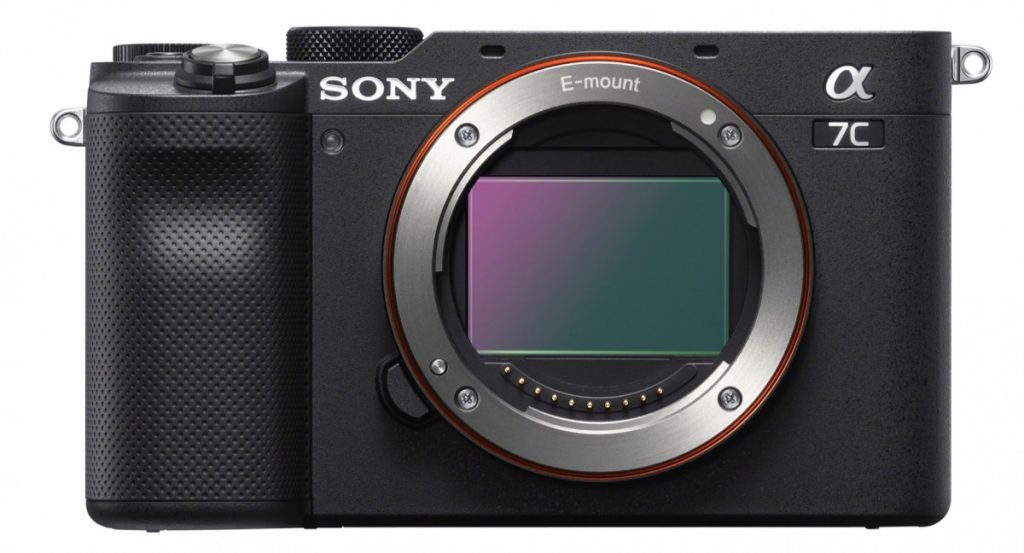
Apart from the advanced autofocus (AF) qualities, the camera also has versatile video shooting modes as compared to its compact design. The 24.2MP camera with a 35mm full-frame-black-illuminated CMOS sensor offers high sensitivity, an impressive resolution, and a 15-stop wide dynamic range. The camera also has a BIONZ X image processing engine and allows high-speed image data processing. Alpha 7C has a measurement of 124.0mm X 71.1mm X 59.7mm and weighs 509g. The camera offers a 5-step stabilization effect that produces a stable image without the use of a tripod. It also has a high capacity battery of NP-FZ100 to comfortably shoot for a long duration.

4K video recording
Sony
Image Source: gsmarena.com

The new Alpha 7C produces excellent high-resolution low noise image quality at all ranges of sensitivity. Apart from photography, the user can also make excellent videos of diversified stuff from shooting nature to portrait. The standard ISO of the camera is up to 51,200 and expandable to ISO 50-204. For more details, you can always check the website of the company. The camera allows 16-bit processing and 14-bit RAW output. Other advanced video qualities supported by Alpha 7C is HDR (HLG) and S-Log/ S-Gamut profiles, Slow and quick motions, full HD-recording at 120 fps3, etc. The camera also captures twice the amount of data required for 4K videos to produce clearer footage.

Advanced Autofocus (AF) mode

Sony Alpha 7C has integrated AI-driven functions to do real-time tracking while the shutter button is half-pressed. When the user presses the AF-ON button both tracking and AF are activated. There is also a “Touch Tracking” option useful for both stills and movies. Alpha 7C also has Real-time Eye AF to accurately focus on both humans and animals. The eye will automatically track and lock the subject with high precision. This camera also has a newly developed shooting unit that allows continuous shooting up to 10 fps.

Dream of any video creator

As mentioned by Mukesh Srivastava this camera is specially designed so that the content creators can explore new possibilities and come up with more engaging videos and photos. As this camera is a very good option for shooting fast objects, this is already on the bucket list of many vloggers and video creators. Moreover, for capturing better selfies and overhead shots, this camera has a side opening vary-angle LCD monitor. This LCD monitor helps immensely to take low ground-level shots as well. The movie button has been shifted to the top of the camera making it easy for the videographers to operate while shooting. Alpha 7C also comes with an amazing audio interface with Multi-Interface (MI) Shoe. This helps make the input audio signals filter and get clearer audio recordings. Headphone and microphone jacks are also provided with Sony Alpha 7C.

A smooth workflow

The LCD monitor provides optimal visibility even in bright lights. The touch panel is of large touch-sensitive 3.0 type with 921 thousand dots approximately. Sony Alpha 7C has been designed exclusively keeping the user in mind. This includes Wi-Fi communication to transfer images and videos to a smartphone for convenience and saving purposes. The camera has been provided with a USB Type-C connector that supports SuperSpeed USB 5Gbps. The connector allows charging from an external source while shooting.

The new Sony Alpha 7C will be soon available in all Sony Centers, Alpha Flagship Stores, and other major electronics stores across the country. The price of Alpha 7C (body only) is Rs 1,67,990 and the price of Alpha 7CL (along with the new Kit Lens SEL2860) is Rs 1,96,990. Both will be available from 18th November 2020.

Apple

Privacy activist Max Schrems’ hits Apple with new complaints of consent breach

Yesterday, a privacy activist group called Noyb founded and led by Max Schrems filed a complaint against the US tech giant Apple. A specific complaint has been filed with German and Spanish data protection authorities regarding the tracking tool of Apple. According to Max Schrems, Apple’s online tracking tool saves user data on iPhone without their consent. This is strictly against European law and also the first time Apple has been accused of such a major action that questions its privacy rules.

In response to this allegation, Apple has made it clear that the company is very strict and superior in terms of privacy protection. Apple will also tighten the rules further with the launch of iOS 14. Unfortunately, Apple’s plan to launch the new OS has been shifted to sometime earlier next year.

Why complain was launched against Apple?

Noyb brought the complaint against Apple regarding the company’s online tracking tool that automatically generates a tracking code while setting it up. This tracking code is called the Identifier for Advertisers (IDFA). This code is used by Apple and third-party applications to track the online behavior of the users and consumption preferences. By tracking these data, it will be easier to send the users targeted advertisements that might interest him or her.

Apple

According to Noyb lawyer, Stefano Rossetti, these codes are placed in the iPhones without user consent and it is a clear breach of European Union privacy laws. Stefano further gave a reference to the EU’s e-Privacy Directive according to which a user’s prior consent is required for the installation and use of such information. He also said that the complaint is not launched to make Apple pay higher fines but to establish a clear principle where tracking must not be the rue but an exception. He also demanded that instead of restricting IDFA it should rather be deleted. But, the planned new rules of Apple will not change this as it restricts the third-party apps from accessing such private data but not Apple.

German and Spanish market

Kantar Group in early 2019 revealed that 24.3% smartphone users across five major European market uses Apple’s iPhone. According to Counterpoint Research, currently one out of four smartphones sold in Europe is the iPhone which is very impressive growth. An accusation as big as this is most probably going to affect Apple’s European market. According to Noyb, the claims on behalf of German and Spanish consumers were handed to the Spanish data protection authority. The authorities counterpart in Berlin led by Austrian Schrems has also said it received the complaint against Apple. And, this privacy advocacy group has already won two trials against Facebook. Spain’s privacy protection authorities denied making any comments regarding this.

Apple hits back

In response to the claims by Noyb, Apple said that the claims were factually inaccurate and the company is looking forward to making it clear that the privacy regulators should examine the complaint. Moreover, specifically in response to the comment regarding IDFA, Apple said that “does not access or use the IDFA on a user’s device for any purpose”. Apple said that the company always targets on how to make the privacy of a user more protected and secure. And, iOS 14 gives the users control over whether they want to link the apps with the third party for targeted advertisement. Apple also said that the company’s practices comply with European law. The US tech supports and advances the aim of the GDPR and the e-Privacy Directive which makes sure users have the full power and control over their data. 

More about Max Schrems

Max Schrems is a famous Australian activist who also founded NOYB- European Center for Digital Rights. He studied law at Santa Clara University. He is mostly famous because of the campaigns against Facebook for its privacy violations. Max accused Facebook of violating European privacy laws and allegedly sending personal data to the US National Security Agency (NSA). In 2018, he also filed suit against both Google and Facebook for coercing their users to accept data policies. He didn’t only target these two companies but also every other major tech giants around the world.

EU and tech giants

Tech Giants Face another Threat from the EU

Technology companies have been feeling the heat ever since the onset of the Coronavirus pandemic. Throughout these last six months, they have faced various sanctions and threats from around the world. With the EU trying to bring into play a Data tax, and the American government investigating their power, big tech firms have been under the microscope this year. Several nations around the world have also stated that their handling of false news amidst the global health pandemic has not been satisfactory. The EU, in particular, has been sharp regarding its criticism of the power yielded by such companies. Now once again, the EU has threatened to ban them from the European market unless they follow EU regulations. Let us now take a look at what the ban could mean for the big tech firms and what guidelines the EU wants to be implemented.

EU Ban on the Horizon

The services of tech companies could be banned from the EU unless they follow the organization’s guidelines. EU’s chief of industry, Thierry Breton while speaking to a German weekly named Wely am Sonntag pointed out that the EU is in the process of finalizing their data handling rules. The EU has been very vocal in its criticism of big tech companies, and have been drafting better policies to control the power they wield. The new rules named the Digital Services Act, and the Digital Markets Act will revolutionize the tech industry within Europe. Breton and Margrethe Vestager, who serves as the European Competition Commissioner, will announce the new guidelines on 2 December.

What are the new rules about?

The new guidelines will serve as a list of Do’s and Don’ts for tech companies, acting as gatekeepers for such companies. They will limit the power yielded by such companies and prevent them from monopolizing the European market. It will also force such companies to share the data they collect with both rivals and regulators. Hence, it will also serve as a significant deterrent to the promotion of their services and products unfairly. All of these laws will help the EU have a more significant say on the power and exclusivity yielded by large tech firms. 

EU and tech giants
Image Source: medium.com

Who impact will the new rules have on the market?

The newly drafted rules will have a massive impact on American tech firms, which have been on the firing line for the past year. The EU pin-pointed Alphabet-owned Google, which has failed to stop its anti-competition activities. In the past, Google has been criticized for monopolizing the market and driving competition out by unfairly promoting its services and products. While it has been called out several times, the American giant has failed to curb such practices. Certain industry experts want the EU enforcers to do more than order companies to stop. Hence, the newly drafted rules will give the EU the power to ban such companies from the coalition. As a result, it is safe to say that the tech giants will take these new laws more seriously, fearing a ban from the 27-country political bloc.

What is the need for such rules?

However, until the EU passes the newly drafted rules, the organization does not have the power to enforce its threats. Breton told the German weekly that the power to enforce its threats is important if people wish to see any change. He was clear to state that the EU was done waiting for the change to occur organically. Having appropriate rules and measures in place, including fines, penalties, legal action, and bans will help the companies take these laws more seriously. The laws also allow the enforces to split companies up and limit their access to the Single market, helping them put some weight behind their threats.

However, Breton was quick to point out that the committee would take only required measures, saving the strictest rules for exceptional cases. Also, it is clear to see that big tech firms fear such rules. Google launched a 60-day plan to gain American allies to push back against such EU regulations. Donald Trump has also been vocal regarding his criticism of such strict laws and rules against American companies. But, it looks like such rules will become a reality soon enough and that the tech giants will have to curb their power finally. Such a move coupled with the enforcement of the Data tax would lead to tech giants, such as Facebook, Google, Amazon, Apple, and Microsoft becoming more accountable for their actions. We will have to wait and see to what extent the EU goes in a bid to fight the tech giants and their unchecked power.

Amazon

Amazon accuses Future Group of insider trading in new push to block Reliance deal

Amazon has made a few arguments and asked India’s market regulators to look into the Future Retail deal with Reliance Industries. The company has accused Future Retail of insider trading, a letter confirmed by Reuters as it seeks to stop its business partner from becoming a part of the rival’s dynasty. In response to this accusation, Future Group has asked the court for a restraining order so that Amazon cannot approach the regulators which might put the deal with Reliance in jeopardy.

Amazon has been putting pressure on the Securities and Exchange Board of India (SEBI) to review the deal of Reliance that took place in August. The August deal between Reliance and the Future Group announced the acquisition of the retail, wholesale, logistics, and warehousing business of the latter for Rs 24,713 crore via Reliance Retail Ventures.

Why Amazon is making accusations?

Amazon has made it clear that it had an agreement with the Future Group in 2019 that prevented the Indian group’s retail assets from selling to some specific parties. Reliance is one of those parties that Future Group is barred from selling the assets. Amazon now accuses the Future Group that it has disclosed price-sensitive details of an injunction granted by a Singapore arbitrator to Reliance in order to block its deal with the same. In response to these allegations, the Future Group has included in its statement that Amazon needs a “tutorial on the law on insider trading”.

The deal along with accusations and the judgment will be an example of how the Indian firms and the judiciary system values the arbitration decision made following overseas arbitration rules. This may come as another backlash for Amazon which will degrade its reputation more as it is already facing antitrust challenges.

Amazon
Image Source: gadgets.ndtv.com

The injunction Amazon speaks of was granted on 25th October while the company welcomed the decision. On the same day, Reliance informed that it has informed of the arbitration order and the company will enforce its rights to complete the deal with Future Group as early as possible. But, now Amazon in its 20-page letter to the SEBI accused that Reliance was secretive about the price details of the injunction.

What if the Reliance deal fails?

Amidst the accusations that Amazon has made to scupper the deal, Future Retail will go into liquidation if the deal with Reliance Industries is not successful. The 130-page order by the arbitrator shows the level of concern in the Future Retail of this deal breaks. More than 1,500 outlets of Future Retail will have to pack up creating havoc for thousands of employees and the workers in the vendor firms. Future Retail has taken the decision to go for liquidation which means the earning of more than 29,000 employees will stop at once.

Future Retail said that after the pandemic has struck the world, the retail sector has been hit hard. And, this deal with Reliance was supposed to protect the interest of the stakeholders by the acquisition of the liabilities and huge funding. Amazon, after filing accusations has made its relationship sore with both Future Retail and Mukesh Ambani’s Reliance.

Future Group defends itself

While Amazon is putting allegations on the Future Retail and Reliance, a spokesperson for Future has made a statement to Reuters that Amazon has made wrongful allegations. The news of the injunction was made public on Sunday. Neither Reliance nor SEBI has made any comments to Reuters after this and Amazon has also declined to comment regarding the content of the letter.

Future Retail has further told that the agreement Amazon is talking about regarding preventing from selling the assets to Reliance was with a separate Future Group unit. It has also mentioned that on 26th October Future Retail said that they were examining the arbitration order and the same should be tested by Indian law.

Now, we can do nothing but wait and observe the decision of the Indian court. It is important for the regulators as well to choose the right side between Amazon and Future Retail. Amidst the COVID-19 crisis, losing a job for thousands of employees will make the economy worse.

Apple Event

Apple Major Announcements from One More Thing Event

Apple hosted its One More Thing event yesterday. This was the tech giant’s third event in the last three months, with several major announcements coming out yesterday. Apple has kept itself busy throughout the pandemic, focusing on research and development. All that hard work seems to have paid off as the One More Thing event announced certain new releases for the company. In this article, we will take an in-depth look at the event and the major announcement made by the American giant.

Apple Move to Better Chips

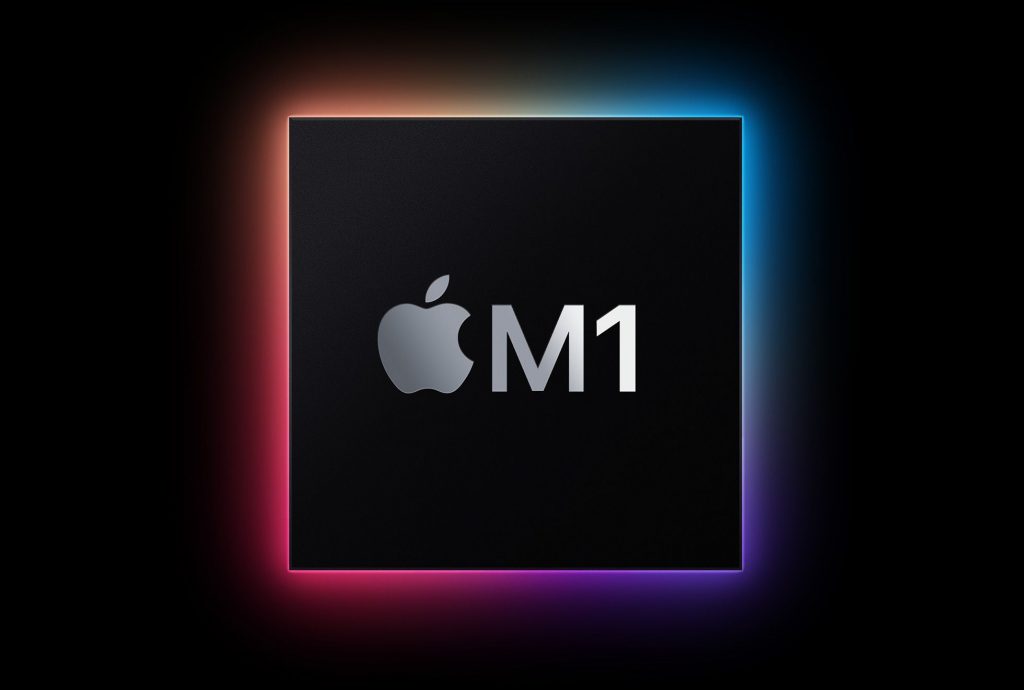
The One More Thing event’s most significant announcement came in the way they detailed in what manner Apple would be shifting the new Macs to better chips. The new chips, built and designed by Apple will power the new Mac Mini, MacBook Pro, and MacBook Air. While Apple has been mass-producing its chips for the iPad, iPhone, and Watches, they relied on third-party suppliers for the other devices. Rather than rely on Intel processors, Apple has switched to its ARM-based processors to power all their new Macs.

However, the company seems to be shifting that concept by using their chips for their bigger devices as well. Apple promises better performance, higher efficiency, and improved power efficiency with its new chips. The first Mac chip named M1 will have the following specifications;

Runs on an 8-core CPU with four focusing on high-performance and the four on high efficiency

  • A GPU with up to eight cores
  • Uses around 16 billion transistors
  • Comes built-in with Apple’s Secure Enclave system in
  • Supports both the Thunderbolt and USB 4 system

iOS Applications to run on Mac

As mentioned at the WWDC conference held in June, the iOS applications will now run on Mac devices. In June, Apple announced that several new applications will now run on both iOS and Mac. Apple held true to their word, and the One More Thing event showcased the HBO Max and Among Us apps running on both iOS and macOS.

Apple Event
Image Source: hk.asiatatler.com

New MacBook Air Announced

Apple also announced a new MacBook Air which will run on Apple’s self-designed M1 chip. The new device, much to the surprise of fans and experts, will run fanless. Apple claimed that the latest device was around 3.5 times faster than its predecessor. Furthermore, the absence of fans for cooling will help make the new MacBook Air a lot quieter than the previous generation. Announcers claimed that the device would run for up to 15 hours on a single charge while using the internet, and for 18 hours if only watching videos. The MacBook Air features a 13.3-inch display and supports an SSD of up to 2 TB. The device will also support Wi-Fi 6, Thunderbolt connectivity, and USB 4 systems. Apple announced that the new device would cost $999 for regular customers, and $899 for educational users.

Apple Announces New Mac Mini

The Mac Mini will also feature the new M1 chip and will go for sale at $699. When considered with older models, the new Mac Mini has been priced $100 less, with experts believing this will help boost sales considerably. The device will support an SSD with up to 2TB capacity and comes with 16GB worth memory. When it comes to connectivity, the device has two USB-A and USB-C ports. The USB-C ports support both Thunderbolt and USB 4 connectivity. The Mac Mini also features a 3.5mm headphone jack, along with space for HDMI 2.0 and Gigabit Ethernet cables.

New MacBook Pro

The new M1 chips will help the MacBook Pro last for up to 17 hours claims Apple. Furthermore, the device will last for up to 20 when used only for video playback. Similar to the MacBook Air, the Pro too features a 13.3-inch display and offers support to SSD’s with up to 2TB storage. The device has 16GB worth of memory and supports both Thunderbolt and USB 4 for connectivity. Additionally, it also features the TouchID, supports Wi-Fi 6, and has a TouchBar. The device will go on sale for $1,299 for regular customers and $1,199 for educational users.

Big Sur arriving soon

Another major announcement that Apple made concerned the new macOS update. Apple announced Version 11.0, named the Big Sur back in June during the WWDC event. The One More Thing event finally named a release date for the update, by informing excited fans that it will drop on November 12th. We will have to wait and see what new changes the update brings, but it is safe to say that fans are excited regarding all the new announcements.

Inito

Indian made Inito Fertility Monitor receives approval from FDA prepares for US launch

On 9th November 2020, Inito, a Bengaluru-based medical start-up received approval from the US Food and Drug Administration (FDA) for launching its Fertility Monitor in the U.S. The co-founder of the company, Aayush Rai has informed The Indian Express that it is a very proud moment for the people of the company. Aayush also mentioned that they are very glad that their invention can be implemented on a global level and not just in the U.S. or India. The company has made a breakthrough that Aayush mentions as a development for the rest of the world from India. The Fertility Monitor has passed all the rules of the FDA and all set for launch in the international market.

Inito received Class One approval

Fertility Monitor is a home-based user testing product and thus has to go through various scrutinies to prove that it is safe to use. The Fertility Monitor received class one approval and it means that according to FDA it is a device with the lowest degree of risks. This is a very impressive invention for a start-up to receive a class one approval given that the use of medical instruments is very sensitive. The company is still required to show the clinical trial data, pass all the levels of scrutiny for manufacturing requirements, and other rules of the U.S. regulator. The main goal of the Fertility Monitor is to see if it works both safely and accurately.

Work environment

As the U.S. has grant approval for the Inito Fertility Monitor, they are preparing for setting up an operation in the U.S. Inito should strictly abide by the U.S. regulatory standards apart from creating a huge user base and run smooth production operation. Many factors especially the physical environment should be maintained at an optimum condition for proper production. For example, temperature is one of the major factors that play a role in using medical devices. So, a lot of pre-processing is required before production starts in the U.S.

Inito Fertility Monitor
Image Source: indianexpress.com

How the device will work?

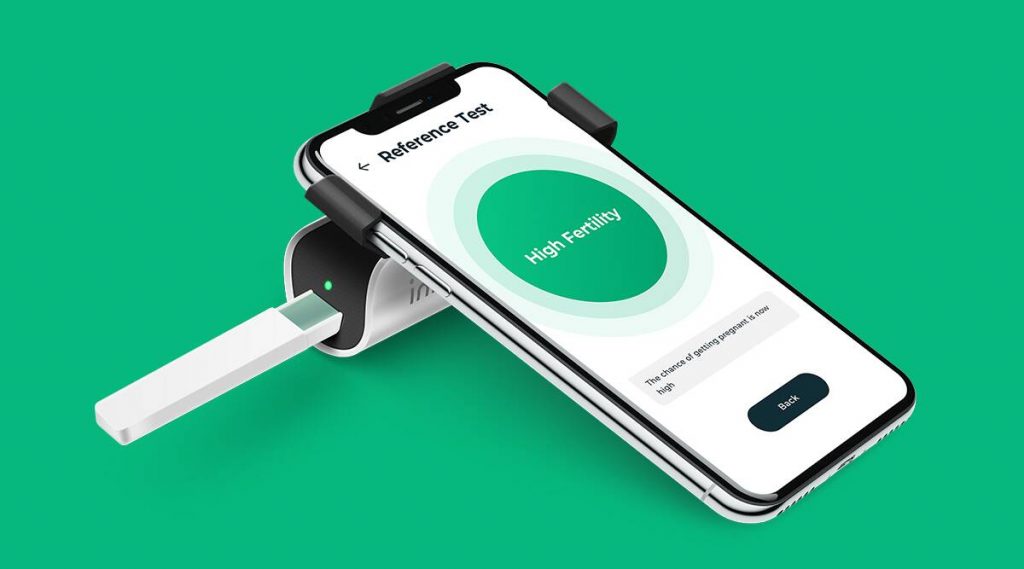
The Inito smart Fertility Monitor can be connected to a user’s smartphone by installing the app for Android or iOS. This will help couples give a clearer view of the most fertile days when they are trying to conceive. Many couples struggle to conceive and hence it is a huge advantage to get access to such a device at home. Inito doesn’t work like the regular ovulation strips rather it combines testing for both estrogen and Luteinizing Hormone (LH). Many ovulation testing kits are available on the market but they only test the LH level. But, the presence of high LH is not the only indication of high chances of fertility.

So, Inito’s Fertility Monitor measures both the estrogen and LH level and connects it to the phone’s app, and shows a certain period of six days as the fertility window. The smart monitor not only displays the level of estrogen and LH but also shows the probability of fertility from low to high in the six-days window. Moreover, through the level of these hormones, other health issues can be predicted as well. If you observe an abnormal level of estrogen and LH you can then consult the doctor to figure out if there is any other complexity in your body. The company through this invention is trying to help figure out couples the best time to conceive as according to the Indian Society of Assisted Reproduction (ISAR), 10-14% of couples in India face fertility issues.

More about Inito

In India, Inito sells its Fertility Monitor along with strips via Amazon. Currently, Bangalore is their biggest market but their market is also growing in tier-2 and tier-3 cities. Aayush said that the product they have developed requires a very educational background to adopt it quickly. Since sexual education is still a subject of taboo in our country, maybe the product is taking time to expand in small cities.

Inito’s developments are very forward-thinking and show an accurate result. This company is the first-ever medical device start-up from India to secure funding from Y-Combinator. The company plans to add more hormones to the test both in the field of fertility and beyond. The company will further focus on testing for thyroid, vitamin D, testosterone, and HBa1c.