Your Tech Story

Tech News

FAU-G

FAU-G – India’s Very Own Shooter-Game Up for Pre-Registration on Google Play Store.

FAU-G, which is a mobile game that Indians have been looking on with a lot of excitement, has finally come up live on the Google Play Store. While the game is not ready for download yet, gamers can now pre-register for the game, which will be out soon. The Indian public has been waiting patiently for what they believe to be India’s most high-profile made-in-India shooter game. Indians believe that FAU-G will rival PUBG in popularity, and see it as an Indian-made alternative to the viral Chinese shooting game. Let us now take a closer look at the game’s launch on the Google Play Store and what this means for Indian gamers.

FAU-G Up for Pre-Registration

FAU-G had to battle through multiple changes in its launching date and delays to appear on the Google Play Store finally. However, the developers have plans to launch only an Android version initially, and later expand to newer markets. Additionally, the listing on the Play Store helps in expanding on the storyline more than what the teaser initially did. The plans for such a game came out two days after India banned over 118 Chinese apps way back in September. However, the game has been marketed as more than just a replacement for PUBG Mobile India. Most Indians acknowledge that the game is a patriotic one as its developers will contribute a share of their earnings to the armed forces. 

FAU-G
Image Source: i.gadgets360cdn.com

FAU-G Gameplay

FAU-G stands for Fearless and United Guards, and users who sign up for the pre-registration will receive a notification when the game drops on the Play Store. Also, all eligible devices which have signed up will automatically download and install the game. However, the developers have not revealed details regarding the game’s size and other technical details. The listing does give a brief outline of the basic gameplay that FAU-G will follow and the storyline it will stick to, which follows closely what gamers saw in the teaser. As expected, the game will in some ways emulate the clashes that occurred in the Galwan Valley between the Indian and Chinese armed forces. The scenario described on Google Play Store emphasizes that the game will focus on Indian soldiers posted on India’s northern borders. The characters will go by the name FAU-G commandos, which will serve as an elite Indian wing of soldiers who patrol the most dangerous territories.

FAU-G Development

Bangalore-based gaming company nCore Games have been developing FAU-G. The company has been partnering with Bollywood actor and celebrity Akshay Kumar, and the first trailer for the game went live on October 25th. While the game was to drop by the end of October, the team ran into delays and pushed the launch into November. However, this puts the game on a collision course with the launch of PUBG Mobile India. PUBG Mobile India is an alternate version of the trendy shooter game that is tailored for the Indian market. Both have announced that launches in November but ran into delays and now seem to be competing on who will hit the market first. On a troubling note for nCore, the number of followers that PUBG India boasts far outweighs the support that FAU-G enjoys on Tap Tap. However, things might pan out quite differently once the games drop, as FAU-G has a patriotic angle.

PUBG Corporation Hassles

The PUBG Corporation has been trying very hard to minimize the effect of the border tensions between Indian and China in the last few months. The company has had to do this so that they receive the approvals required to make a comeback into the Indian market. Meanwhile, FAU-G has been using the heightened nationalism and anti-China sentiment that arose as a result of the skirmish for their gains. Their teaser emulated the Valley skirmish along the LOC and used brawler mechanics to depict the clash realistically. The game is also using the Atma Nirbhar Bharat sentiment to inspire more Indians to use its made-in-India services. Additionally, the developers will donate 20% of their revenue to Bharat Ke Veer. This is a trust that the government established to help the families of soldiers who died in the line of duty. 

Foxconn

Foxconn shift some Apple production to Vietnam to minimize China risk

The advent of the global pandemic has already destabilized the economic condition around the world that might take years to repair and heal. And, amidst such a crisis tension between America and the Republic of China increases as former US President Donald Trump openly blames China for the novel coronavirus. With Trump’s exit from the White House and Joe Biden’s incoming administration, the intensity of impact due to the Sino-American conflict depends on how America can sustain and strengthen its competitive advantages.

But, keeping in mind that the impact of the Sino-US war can fall heavy on the businesses, Foxconn is moving a part of iPad and MacBook assembly to Vietnam from China. The decision has been taken at the request of Apple Inc. This way the company can both minimize the effect of the Sino-American war in its production and business and expand the Vietnamese market. The plant in Vietnam is expected to come online in the first half of 2021.

Foxconn Taking production out of China

Under Trump’s administration, he has repeatedly asked the US firms to take their production out of China. The relationship between the two nations in terms of trading and beyond has gone stale especially after the open accusation. Few months after the outbreak of COVID 19, Trump also decided the ban TikTok as it was responsible for data theft by the Chinese government. He further made some amendments to Clean Network System so that the privacy of every US citizen is protected. Trump didn’t only stop at this as United Nations especially targeted the made in China electronics for higher import tariffs. A restriction in the trade for products using US technology to supply in China was made as it put the nation at risk. No business wants to get caught up in this nasty trade war which can be the end of their market. So, some other Taiwanese manufacturers are also planning to shift some of their production units to countries like Vietnam, India, and Mexico.

Foxconn plan for Apple

Currently, Foxconn is planning to shift the assembly lines for Apple’s iPad tablet and MacBook laptop to the northeastern Vietnamese plant in Bac Giang province. The company has started building the assembly lines as announced in July of this year and will start production by the first half of next year. The source of this news is anonymous as the plan of Foxconn in the Vietnamese market is private. But, the company has not been clear about the fraction of production it is planning to take out of China. The person though has informed that Foxconn is doing this at Apple’s request as the latter wants to “diversify production following the trade war”. So, to support the Vietnamese expansion, Foxconn announced an investment of $270 million to open a new subsidiary called FuKang Technology.

Foxconn
Image Source: businessconnectindia.in

Foxconn has denied commenting on the details about the plan. The company said that due to the reasons of commercial sensitivity they will not comment on any aspect of work revolving around its customers. Apple didn’t choose to make any comments either. Shifting the production of China will also mark a date in history for Foxconn as this will be the first time the company will not assemble iPad in China.

Products other than iPad and MacBook

News has spread that the production in the Vietnamese plant will go beyond Apple’s products. The contract manufacturer has plans to assemble television sets in this new plant for Sony. The production is scheduled for late 2020 to early 2021. But, Sony has declined to comment. Foxconn has a plan to produce more than just Apple’s product meaning it might eventually have a good grip on the Vietnamese electronic market. The anonymous person has informed that the new plant will also manufacture computer keyboards.

Other Asian markets

Foxconn has planned to invest a handsome amount in the Indian market as well. The company has already made plans to spend up to $1 billion in India for iPhone assembly. Apple is requesting to expand business in other markets anywhere beyond China. And, India is a land that produces quality engineers every year. So, it is a smart move for Foxconn to invest such a bulky amount in India. The company is also considering building plants in Mexico.

Apple

Indian Government import hurdles affect Apple and Xiaomi devices

India and China have been engaging in a war of words for a while now.  The border skirmish that took place in July has led to several disputes and talks which have not led to much. The world also seems to be having a tough time with China due to its handling of the COVID-19 pandemic. This has led to an escalation of problems around the world, leading to trade embargos of various kinds. In recent news, India’s stringent quality checks and clearances regarding Chinese goods have led to import troubles for various brands. Here’s a quick look at what impact the control measures will have on the electronics industry.

How Import hurdles affect Apple

The import of goods such as the new iPhone model and several devices by Xiaomi has been delayed due to India’s more stringent quality checks. All electronic goods coming from China now require tight quality clearances, leading to delays in procurement and order fulfillment. Since the release of the new iPhone model early last month, the demand for the phone has been rising in the country. However, industry sources claim that the need for better quality measures has led to a significant slow-down in the import of such goods. In the past, the Bureau of Indian Standards took around 15 days to process such imports. However, recently the same process has been taking up to two months. 

Other Moves

The BIS began to delay the quality checks and reports sometime in August, shortly after the border incident. The delays in quality checks mostly had an impact on the shipping of laptops, smartphones, and smartwatches. Experts believe that this was a direct repercussion of India’s deteriorating ties with China. Since the border skirmish, India has made the rules regarding foreign investment a lot more stringent. While this has made it more difficult for Chinese companies in India, the government has also been pushing for other reforms. Recently, the Indian government banned hundreds of Chinese applications, including some by ByteDance, Alibaba, and Tencent. All three are some of the biggest tech giants in the world, worth billions of US Dollars, and the government banned an additional 43 apps on Tuesday.

Moves from the Electronics Sector

Since these measures have led to a bottleneck in the procurement of the new Apple models, executives from Apple India have begun negotiations. Top executives from the company are talking to BIS to get them to speed up the process of approval. The executives are also providing assurances that the company will shortly set up manufacturing plants in India for local production and assembly. While it remains unclear just how long the delay will extend, both parties refused to comment when asked what their opinion was on the matter. 

Apple

While Apple does have assembly stations in India, newer models, like the iPhone 12, come from China. India has been pushing heavily to set up establishments in India and make the production a local affair. Contract manufacturers in China make a bulk of Apple’s devices which are then shipped to all four corners of the world. As of yesterday, the BIS had over 1080 pending applications for tablets, laptops, and other devices. A staggering 669 of those have been delayed for over 20 days as per reports from the agency’s website. These included several units built in Chinese factories of Wistron and Compal Electronics and Hangzhou Hikvision. Some of these applications have been pending since way back in September, leading to supply chain delays and hiccups.

Boycott Calls

Both nationalist groups and Indian manufacturers have been calling for a complete ban on imported Chinese goods in recent months. On a similar line, Prime Minister Modi has also been heavily pushing an agenda that supports local production and self-reliance. Experts believe that the Ministry of Electronics and IT are pushing Indian manufacturers to produce more goods locally. As per BIS regulations, various electronic devices need to meet specific predefined standards. While the clearance delays do cause problems for large tech giants, it allows Indians to source more locally.

With the festive season coming up, the delays regarding clearance will lead to huge problems for several companies. Since the government restricted the importing of TVs in July, this is another segment that has been affected by recent events. Such moves will have a detrimental impact on brands such as Samsung and Xiaomi. This might be a crucial moment for India as it tries to improve and increase its domestic production.  We will have to wait and see if the delays hurt the electronics sector or give it an impetus to start producing more locally. The latter will lead to the availability of more products while also providing employment opportunities to millions.

Tooter

Meet Tooter the “Swadeshi” version of Twitter for the Indians

There is an ever-increasing pitch for self-sufficiency ever since the pandemic hit and border tensions with China arose. The Indian Prime Minister Narendra Modi called this a “vision for an Aatmanirbhar Bharat” or a self-reliant India. Tooter is up against a formidable challenge and is appealing to the patriotic fervor of Indians urging them to “join the revolution”.

Ever since the Indian government has cracked its proverbial whip on Chinese digital companies, there has been a flurry of activity in the Indian digital space. Be it Reliance Jio launching its Zoom clone, or fledgling Indian startups jumping in with their products to fill the void left by TikTok.

Tooter Vision:

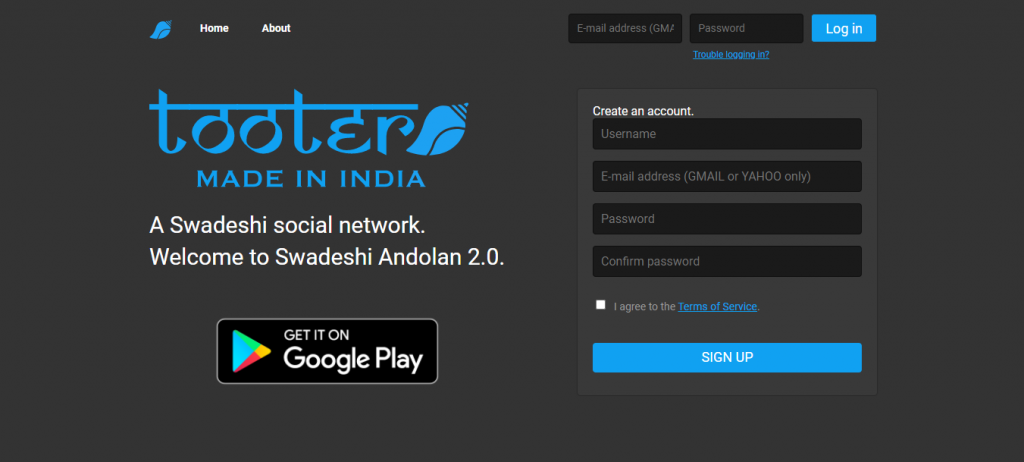
Tooter’s vision reads as follows: “We believe that India should have a Swadeshi social network. Without one we are just a digital colony of the American Twitter India Company, no different than what we were under the British East India Company. Tooter is our Swadeshi Andolan 2.0. Join us in this Andolan. Join us!” Twitter has a massive user base in India, with all popular personalities making their presence felt on the social media giant.

More into Tooter:

Tooter
Image Source: tooter.in

The company is headquartered in Sri City, Telangana. Tooter has been active since July but it has been making waves only recently, with some government bigwigs like Prime Minister Narendra Modi, Home Minister Amit Shah, and Defence Minister Rajnath Singh joining the platform. One can join the platform with an email-id. The app is currently for web and Android users only, iOS users have to wait for some more time. On signing up, you automatically follow a verified handle called “news”, among other verified handles. From a user interface point of view, Tooter is very similar to Twitter. On Twitter you have tweets, and on Tooter you have… toots! There is a news feed and people who you can follow. So it is very similar to Twitter in the usage department as well. Tooter also has a blue conch as its symbol. There is also something called Tooter Pro, which is available for Rs. 1000 INR. But the payment process is quite clunky and not intuitive. Even the Pro version features are not well outlined.

Twitter clone why?

Twitter isn’t a Chinese company nor do the Chinese have a majority stake in the company. Then what motivated a hitherto unknown company called Tooter to launch a desi Twitter version? Twitter has had multiple run-ins with the Indian government in the last few months, be it map disputes or hate speech and privacy regulations. Twitter has also had issues with the general population with some calling Twitter’s attitude biased.

Privacy and Regulations:

This is one aspect where Tooter has failed to meet the expectations of its lofty vision statement. The terms of service contain the words – “protected by the First Amendment” – which is a US constitution term(the Indian first Amendment has nothing to do with personal freedom) Tooter claims to be India’s answer to Twitter but its regulatory terms do not reflect that fact. There are many other terms and conditions which appear to be riff raffed from any standard US company regulations.

Tooter does not allow children below the age of 18 to create an account (except for California citizens where the legal age is set at 16). This would sit perfectly fine for everyone who is paranoid about a – “A Social Dilemma” type of situation.

However, Tooter does mention that the sole purpose of its creation is free speech and to protect this “God-given right” and individuals exercising this right. The extent of this is not known yet, and its limits will surely be tested soon.

Long run:

Tooter has an open-source code base, which will probably help it in the long run. On the company website, it says that Tooter is forked from the Mastodon project and is licensed under the GNU Affero General Public License version 3 (AGPL3). An open-source code can be edited by anyone, thus increasing the pace at which features are added to the base application. Many apps that have been launched by trying to clone popular ones have failed miserably. Hopefully, the Indian Tooter will not be one among them, and the Indian digital space continues to make waves. There is still a long way to go for Tooter, and it will take inspiration from the fact that it is David up against a Goliath called – Twitter.

microsoft

Microsoft Teams to roll out free all-day video and voice calling options to take on Zoom

The global pandemic has increased the demand for video calling apps to several folds within a few months. Since the entire world is getting accustomed to the new normal, from kindergarten kids to business professionals are relying on videoconferencing applications. Among the many video conferencing apps, it was Zoom that started owning the market at the beginning and was extremely successful. But, it was soon followed by zoom bombing and then sharing the market with Google Meet and Microsoft Teams.

With that being said, just days after Zoom announced that it will lift the 40 minutes meeting timing for Thanksgiving Day, Microsoft Teams comes with a brand new option of free all-day video and voice calling. The latter is rolling out a bunch of new options to give a hard competition to Zoom and attract Zoom users to its platform. The company confirmed the news through a blog post.

What is new in Microsoft Team?

The new all-day video and voice calling option will not only be hard on Zoom but Google Meet as well. The free 24 hrs calling will allow 300 participants to connect be it a video call or a voice call. Apart from the free all-day calling the platform is also expanding its ability to create a group chat maximum of 250 participants. The user will see up to 49 members simultaneously during virtual conversations. The company hasn’t specified if there is an end date to this free 24-hours calling. This new feature will immensely help existing users and attract new users as well. With Zoom’s compromised security then deciding to enable end-to-end encryption for only paid users followed by rolling it out for everyone has signaled instability of the platform. So, maybe this new feature of MS Teams will make it own the market.

Microsoft
Image Source: dispatch.m.io

Apart from expanding the chat capability, Microsoft is also adding support to upload and share photos and videos from your computer. Users can share these directly in any group chat or video chat. Both the Teams desktop and the web apps are including more options letting professionals add their account to chat with friends and family.

Does everyone need a Microsoft account?

The company has mentioned that like every other video conferencing platform, it is not mandatory to have a Microsoft account to attend a meeting. The user can join a Microsoft Teams meeting without opening an account or installing the Teams app only by clicking on the link that has been sent by the host. Users can simply attend the meeting from the web browser. Moreover, the platform is trying to connect as many people as possible by getting seamless syncing of chats between the phone and the computer. As mentioned earlier, the platform will also show 49 others in the meeting in a gallery view similar to the Zoom app. This is done by using the Together Mode feature in MS Teams.

New features for Teams mobile app

Apart from overall updating the Microsoft Teams platform, the mobile users can communicate with their contacts that do not have Teams on their smartphone. The chosen contact by the user will receive an SMS and the receiver can respond to it via simple text messages. Moreover, the recipient will receive a link to download Microsoft Teams on their phones. The SMS support will be available to the Teams app in preview only for US and Canadian users. An additional feature of adding group events from chat to the device calendar will also be available. Users can also get task and location updates in the activity feed along with adding photos to the personal Safe. The new location feature is made to let your family and loved ones know about your whereabouts so that you are safe. They will receive alerts during your departure and arrival time as well. Microsoft Teams is trying to make the platform as personalized and secure as possible for the users. The company also says that they are expecting the feedbacks are the user input matters a lot.

Last month, the company announced that it surpassed the mark of 115 million daily active users and they want to make it a communication solution for everyone.

Qualcomm Snapdragon

Boost for Mobile Gaming in India Through Qualcomm India’s Snapdragon Conquest Program

Qualcomm India has been launching a few initiatives in recent months and is showing no signs of stopping. Yesterday they announced their plans for an extensive mobile gaming e-sports program. Named Snapdragon Conquest, this first-ever gaming program will give a significant boost to the mobile gaming sector in India. Read on to find out more about Qualcomm’s plans and how they will shape India’s future as a gaming center.

What does the Snapdragon Conquest offer?

Qualcomm stated that the Snapdragon Conquest will be powered by features, such as Qualcomm Snapdragon Elite Gaming. The event will feature various games and programs spread across the year. The program will encourage mobile gamers from across the country and of varied skills to take part and showcase their talent. The event will also feature varying levels of difficulty, helping individuals of varying levels of proficiency to take part in it.

Snapdragon Tournament Details

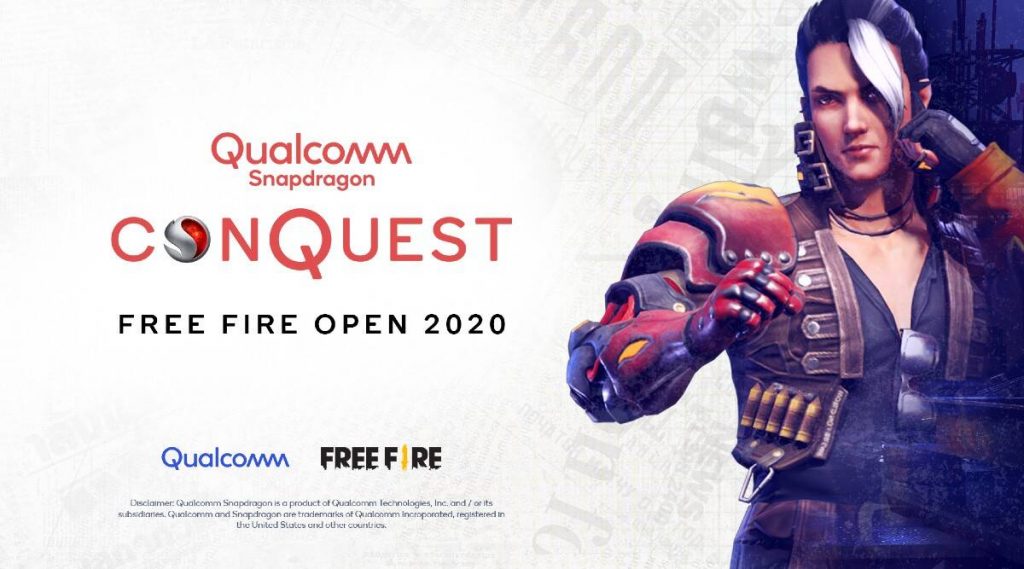
The kick-off event will be the Snapdragon Conquest: Free Fire Open 2020, which will feature prizes worth a whopping INR 50,00,000. Players from around the world will be able to witness this spectacle as it will be broadcasted live via player live streams. Apart from the opener, Qualcomm has not revealed the other games which will be a part of the Snapdragon Conquest. However, experts believe that Need for Speed and PUBG India will be a part of the lineup due to their popularity within the country.

Entry Specifications for the Tournament

Additionally, the Snapdragon Conquest features no registration fee, making it entirely free to enter. Interested participants may register for the tournament through its official website. Qualcomm also stated that it would reveal further details through the company’s official Twitter ID. Other updates, dates, and details regarding the events and their timings will also be updated through the company’s Twitter handle. The eligibility criteria here is that contestants must be well-versed with Garena Free Fire, which is similar to PUBG Mobile’s works in a way. Each team competing will have four members, and there will be multiple rounds which will help teams progress up the ladder.

Qualcomm India’s Snapdragon Conquest Program
Image Source: indianexpress.com

Qualcomm and India

Qualcomm is an American tech company based infsnap San Diego. Over the years, they have expanded and found a place for themselves within the Indian digital ecosystem. The chipset manufacturer now enjoys a hood position within the Indian market, powering several flagship phones in the market. The Snapdragon Conquest will be their first foray into competitive gaming in India. The Fire tournament that sets off the event will also be Qualcomm’s first Free Fore tournament in the country.

India is the world’s second-largest smartphone market. The rise in the usage of smartphones and improved internet penetration has led to a boom in mobile gaming in India. The advent of 4G has also helped improve access to such games and events in India, leading to more users. The recent $100 million investment by PUBG Corporation is an example of this untapped potential. The move will also trigger a surge in popularity for the Garena Free Fire game that works on a battle royale structure. This event will also help them boost interest regarding their planned launch of PUBG Mobile India.

Impact on Indian Gaming

Qualcomm believes that India is a mobile-first industry wherein most people rely on their smartphones for most things. Rather than invest in a gaming rig, most Indians prefer to play games on their smartphones. Hence, encouraging the mobile-gaming sector within the country is an excellent way to encourage more people to play such games. The rise of mobile gaming in India has been phenomenal, with it raising the demand for better technology as well. As a result, there is a push for an improved ecosystem and better opportunities for such gaming.  

Qualcomm announced that it was excited about the launch of such an event, that is the first of its kind. They believe that they are helping create a community that challenges and understands the gaming needs of Indians across the country. Such an event will also test the competitiveness and skill of our gamers. Meanwhile, it will also give the company a deeper understanding of what this audience needs. Hence, the VP of Qualcomm India, Rajen Vagadia, believes that this event is the start of much greater things.