Your Tech Story

Tech News

Adobe

Adobe announces the release of ARM version of Lightroom for Apple’s M1 and Windows 10

Yesterday, Adobe announced the release of the Arm version of the Lightroom app for both macOS and Windows 10. The new Lightroom version created especially for the M1 processors will take advantage of this processor leading to better productivity of the app. The Qualcomm powered Windows 10 is also compatible with running this app but only in those smartphones operating on ARM-based processors. The news became public via the blogpost of Adobe’s Photo Product Manager, Sharad Mangalick where he also mentions that the company intends to ship Apple M1 native versions as soon as they are ready. So, Adobe Lightroom will be available as a native app for the users of Apple’s M1 and Arm-based Windows 10, and also it is becoming a part of the Creative Suite installer.

Adobe new updates

In the blogpost by Sharad Mangalick, the news updates for the native app of Lightroom, Camera Raw, and Lightroom Classic are also mentioned. With the December updates, the users will now have the advantage of ProRAW format support. Once you take an image in the Apple ProRAW format you can import and edit those images in Lightroom. This applies to the desktop version as well. Adobe has also introduced new Lightroom widgets for iOS14 which will allow the users to quickly take photos and selfies using the Lightroom camera. The new widgets will allow the users to explore the Discover Edits and In-app tutorials from the Widget screen. In Lightroom iOS (iOS 14 and above), the users can drag these widgets onto the Home screen which will save some time and enable easy access.

Adobe
Image Source: somagnews.com

There is also a free Lightroom starter plan for the desktop version of the software. This can be used by both Mac and Windows users but geographically limited to Australia and New Zealand. The new customers can start this free Lightroom starter plan, get used to the core Lightroom features, and continue to use without a subscription or trial limit. But, in general, this software can be downloaded for free but the trial period is only for one week. After one week, a monthly subscription fee of $9.99 has to be paid for continuing to use it. This subscription pack also includes 1TB cloud storage. Though the beta version of the app is already available for download, the Classic lovers have to wait for some time for a full rollout.

The biggest update of 2020

In 2020, Adobe Lightroom has introduced many new updates throughout the year. In February, Lightroom released Raw defaults for Lightroom Classic and Adobe Camera Raw followed by introducing Improved GPU support for the same. In June 2020, the software included the option of Share Edits, Local Hue color updates, Raw Defaults, and Watermarks for Mac, Windows, iOS, and Android users. Share Edits is a very helpful option for all the budding photographers out there helping them to understand the edits. Many big photographers on social media have started sharing the Lightroom presets which is a great advantage for the content creators.

In October 2020, one of the best new features of Lightroom so far was added, that is, Advanced Color Grading in Classic, Adobe Camera Raw, and Lightroom. This feature allows much finer control producing even more sensational photographs than normal Split Tones. Apart from the Hue and Saturation control that already existed, the new color grading option gave broader tones for the users to experiment with. With the three new options of Luminance, Blending, and Balance the users get the best chance to change the mood of their photographs accordingly. The color effects produced by the advanced color grading are mostly used by the video editors.

The recent Beta version of Photoshop

Apart from the latest Lightroom updates, Adobe has also released the Beta version of Photoshop that runs on M1 Macs and ARM-based Windows PCs. The new Lightroom updates have all the missing features of this new beta version of Photoshop. The beta version undoubtedly has improved performance but features like the content-aware fill, patch tool, healing brush, etc are missing. This beta version was released in November, just a couple of weeks before the release of the native Lightroom app. But, the updates in Lightroom show that Adobe is improving the existing features continuously striving to optimize the software for Arm and M1 devices.

bumble

Bumble and OkCupid Have a Flaw Putting User Data of Millions at Risk

Data security has been gaining prominence in recent years thanks to data activists and experts. As more and more people have started asking questions regarding their user data, companies have also started to become more stringent. User data becomes quite sensitive, especially when used to find suitable matches on popular dating websites and apps. A recent allegation regarding a significant flaw in apps such as OkCupid, Bumble, and Grindr have left millions worried about their personal data. Here’s a quick look at what the flaw is, how it can impact people, and what the experts are doing about it.

Bumble Putting User Data of Millions at Risk

Apps such as OkCupid, Grindr, Bumble, Yango Pro, PowerDirector, and several others are vulnerable to a flaw in the Play Core library. This defect puts the user data of millions of people at risk as per a report by Check Point. The research firm believes that though Google patched this flaw in April, app developers are yet to make the required changes. For the fix to work, the developers have to install the new Play Core library to neutralize the threat. However, all the apps mentioned above still make use of the old library, putting them at risk. Apps such as Booking and Viber were some of the few that updated their Play Core library and mitigated the risk.

bumble
Image Source: pcmag.com

What is the flaw?

The security experts at Check Point noted that Bumble, Grindr, and OkCupid are vulnerable to the CVE-2020-8913. While Google released a new patch in April, for the flaw rooted in the widely used Play Core library, failure to update the library leaves these apps at risk. The Play Core library is responsible for notifying users of in-app updates and feature modules for their phones. The CVE-2020-8913 allows threat actors to siphon off user data through these vulnerable apps. As a result, the flaw could lead to millions of people losing their private information. The leaked data will include critical information, including financial details, email passwords, and login credentials. The CVE-2020-8913 flaw allows hackers to add their executable modules to apps that use the Play Core library. Hence, arbitrary codes can be compromised to execute with malicious intent

Google’s Response

Google acknowledged that the bug was serious and gave it a severity rating of 8.8 out of 10. They responded quickly by releasing a patch that remedied the problem, way back in April. However, app developers have not been careful enough, and are yet to install the new update putting millions at risk of a data breach. Experts at Check Point note that over 13% of all Google Play apps they analyzed in September leveraged the Google Play Core library. Unfortunately, over 8% of these apps still used the vulnerable version, with only a few making the switch to the safer version. Even ones like Viber and Booking only updated after the experts at Check Point brought the matter to their attention.

Potential Danger

Aviran Hazum, who serves as the Manager of Research on Mobiles at Check Point, believes that hundreds of millions of users now face a security risk. Since CVE-2020-8913 is highly dangerous, the developers not installing the new patch is highly risky. In case any malicious application finds its way into this vulnerability, it can compromise several popular applications and gain the same access as the app. For instance, the vulnerability allows for the stealing of the two-factor authentication codes or even that of banking application credentials.

A threat actor could also manipulate social media apps to spy on others and grab messages from people, leading to a large number of attack possibilities. Hence, all users who have such apps on their phones are putting their data at risk. Experts are therefore recommending users to uninstall these apps until developers install the new patch and mitigate the risk of a breach. Since the security firm has notified the apps regarding the vulnerability, an update is expected son from their side. Following such an update, users can reinstall the apps and continue to use them as they did before.

Nvidia

Nvidia finally acknowledged the GeForce RTX 3000 series global crisis publicly.

On 5th December 2020 during the Credit Suisse 24th Annual Technology Conference, Colette Kress, CFO of Nvidia acknowledged the global shortage of the RTX 3000 series. He went into some details about the reasons for the shortage as there have been several reports on what is causing such a crisis. Colette revealed in front of the media that wafer yields are not the only reason behind the global shortage.

During the webcast of the conference, Colette also mentioned that the production yield of Samsung 8nm nodes is one of the prime reasons for the decelerated rate of 3000 series production. Before this conference, Nvidia didn’t put any official statement acknowledge the global shortage of the RTX 3000 series.

Reason behind Nvidia GeForce RTX 3000

Colette Kress has given proper statements in the webcast regarding the shortage of the RTX 3000 series. Apart from revealing that the yield of Samsung 8nm nodes is one of the reasons for the shortage, other topics on the same group have also come up. Kress further said that the company is currently facing supply constraints that go beyond just the wafers and silicon supply. Some constraints are also in substrates and components but no details were discussed. The company will continue to work in this crisis and it believes that the demand will exceed supply in Q4 for overall gaming.

Nvidia
Image Source: indianexpress.com

From what Colette said in the webcast it is clear that the low production rate of various components is one of the reasons the production rate of GPU has gone down. Till now, Samsung was the sole provider of Nvidia GeForce RTX 3000 series 8nm nodes. But, this is also having a negative effect slowing down the production of Nvidia. So, the company is looking for other options and most probably will get nodes from TSMC as well. It is better to keep more than one option in hand in a time of crisis.

Samsung or TSMC nodes 

Many rumors and reports have spread earlier regarding Nvidia’s preference for using Samsung or TSMC’s nodes. But, it was only a few months ago that Nvidia confirmed the use of the Samsung 8N node for building Ampere second-gen RTX cards. The company said that it is replacing the TSMC 7nm node which was used for the initial Ampere GA100 GPU. Jensen Huang, CEO of Nvidia then announced that for the majority of its GPUs they will be using TSMC tech and for a small subset of graphics silicon production they have chosen Samsung.

On 1st September 2020, in GeForce Special event, Jensen Huang announced that the company decided to use Samsung’s 8N process for all the large Ampere RTX GPUs. Many reports said that with smaller Samsung-built process nodes, the new generation of GeForce chips will offer a huge amount of rasterizing performance. But, with the shortage of production, Nvidia probably will switch to TSMC again.

Why the shortage is taking place?

According to some experts, the reason behind the shortage is difficulties faced in logistics and supply chain. A report by Tom’s Hardware explains that most of the cargo space in the distribution system is taken up by the pharmaceutical supplies which have caused the shortage of supplies for the electronic division. We are in the middle of a pandemic and most of the attention is going to the pharmaceutical needs and their fastest transportation. So, this can be a very important reason why the delay has been caused in yield and production rate. Moreover, the COVId-19 vaccines are also getting transferred to so many places across the world. And, currently, that is the prime concern of every nation.

The demand for the GPU has already exceeded the supply. And, you might have also noticed that the stocks are vanishing in no time. Even if someone is lucky to get hold of the RTX 3000 series they are receiving an unboxed version.

Will it get better soon?

Kress mentioned that the situation will improve within a couple of months but still it is difficult to quantify what is the exact portion of the demand they can meet. The company will update further on this situation by the end of this quarter. Till then we just have to sit tight and wait when these GPUs will be in stock again. The pandemic has affected every field in the industrial sector and we have to overcome it.

QoQ Growth

Global Production of Smartphones Surges Ahead with Highest QoQ Growth

The global smartphone industry had taken quite a hit as a result of the COVID-19 pandemic. However, the industry seems to be back on its feet, owing to new releases and a surge in demand. The global production of smartphones has shown a marked increase of 20% on quarter-on-quarter growth. The increase takes the production to 336 million units in 2020’s third quarter as per market research done by TrendForce. In this article, we will take a closer look at this report and what it means for smartphone users around the world.

QoQ Growth

The report highlights how this is the highest QoQ reported in recent years, despite the slowdown caused by the global pandemic. TrendForce also noted that the comparisons of various QoQ clearly outline a recovery from the plummet in demand caused by COVID-19. However, even with such a surge in production, only Xiaomi and Samsung were able to increase their market share this quarter out of the top six.

Companies Moving Ahead

As per TrendForce’s data, Samsung experienced a QoQ growth of 42% producing 78 million units last quarter. This massive growth helped the smartphone giant retain its global top spot. However, the research predicts that Samsung will drop its production to 62 million, indicating a drop of 16 million units by the end of the holiday season. As the company faces stiff competition from the Apple iPhone 12 series, after the holiday stockpiling in Europe and North America, there will be a reduction in production.

Coming in second is Oppo, with a 64% QoQ increase that saw the company produce 45 million units in the third quarter. However, this figure also includes devices from the Realme, OnePlus, and Oppo lines, leading to a higher number. Following close behind was Xiaomi which experienced a 51% QoQ boost leading to the production of 44.5 million units. Due to the comparative figures, TrendForce recorded that both Xiaomi and Oppo shares the second spot.

Other Companies in the Mix

Oppo, Vivo, and Xiaomi have all benefitted from Huawei’s loss of market share. Huawei has had to deal with American sanctions that have severely impacted its production and demand. Both Oppo and Xiaomi are planning to boost their production in the fourth quarter. Estimated production volumes for Oppo and Xiaomi include 47 million and 46 million units respectively. 

QoQ Growth
Image Source: nextbigbrand.in

Meanwhile, Apple dropped to the fourth position on the chart due to a QoQ growth of a meager 2%. The American giant produced only 42 million units in the third quarter, and this drop is attributed to the delay in launching the iPhone 12. Researchers believe that the launch of the 12 series will reinstate Apple’s high position on global charts, with production volume estimates being as high as 74 million units in the fourth quarter.

Bottom End of the Chart

Mirroring Apple’s position was Huawei, which produced 42 million units in the third quarter, on par with Apple. However, the company witnessed a QoQ decline as large as 19%, which experts believe will fall to a whopping 30% by the end of the fourth quarter. As a result, their production volume is expected to shrink to 30 million units. Vivo came in sixth with a QoQ increase of 13%, producing 30 million units in the third quarter. However, experts believe that the company will expand production to 35 million units in the fourth quarter, indicating a higher QoQ in the future.

Political Tensions

TrendForce’s experts noted that the ongoing India-China border dispute will put even more pressure on companies like Xiaomi, Vivo, and Oppo. As Indians take a more patriotic and nationalist approach to production and purchase, these companies will face hurdles in their sales efforts. India remains a primary foreign market for all these manufacturers, and they may experience a loss of market share if these sentiments are to continue. The trio of brands enjoy a robust local supply chain in India and have a strong brand identity. However, if the dispute drags on Indian buyers might gravitate towards their competitors, marking a decline in sales for them.

TrendForce also noted that the global production of smartphones for 2020, experienced a YoY drop of 11%. This year, the total production volume touched 1.25 billion units, and this is expected to grow to 1.36 billion units in 2021. Therefore, smartphone manufacturers can expect a surge in demand in the coming year, helping them recover fully from the lull caused by the COVID-19 pandemic this year.

Qualcomm

Qualcomm Reveals Details Regarding Faster and More Powerful Snapdragon 888

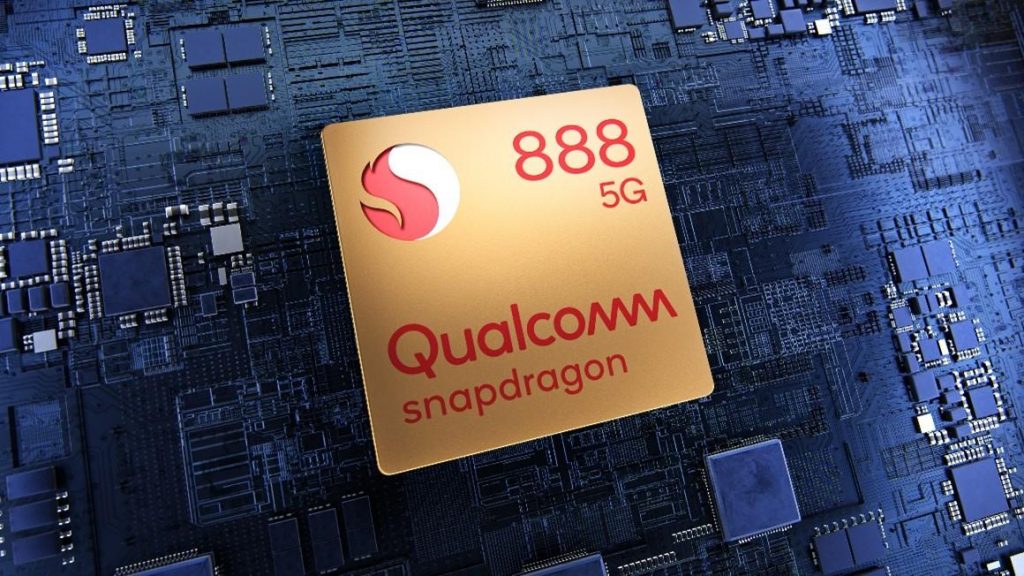
Snapdragon, as a part of its annual Tech Summit Digital 2020 introduced its flagship 888 5G platform for mobile phones. As per reports, this chipset will serve as the benchmark for most flagship phones to hit the market next year. The new platform contains key industry-leading innovations in the fields of 5G, gaming, camera, and artificial intelligence. The Snapdragon 888 has the power to transform mobile devices into gaming rigs of exceptional quality. Additionally, the new chipset can convert phones into high-quality cameras and capable personal assistant. Let us now take an in-depth look at the new chipset and what features it will bring to the world of smartphones.

Qualcomm Snapdragon 888

The Snapdragon 888 provides advanced 5G capabilities and connectivity, which will allow it to redefine mobile experiences for users. As a result, the chipset will usher in a new dawn of console-quality gaming, enterprise mobility, and telephony.  Senior VP of Mobile and Infrastructure for Qualcomm Technologies, Alex Katouzian said that this new chipset is yet another breakthrough technology. Qualcomm has a long history of providing such historic breakthroughs in the field of premium-tier mobile phones. The new chipset will allow manufacturers to differentiate their products and bring to life cutting-edge mobile technologies.

Key Features of the Snapdragon 888

Qualcomm
Image Source: qualcomm.com

Connectivity: Features the world’s most advanced 5G platform that supports both Wi-Fi 6 and Bluetooth audio. It also features the Snapdragon 3rd Gen X60 Modem-RF System that extends support for 5G-enabled sub-6 carrier aggregation. This will help make the system capable of delivering the world’s fastest 5G speeds, up to a maximum of 7.5 Gbps.  The system also enables superior coverage as it uses a Dynamic Spectrum Sharing technology. The chip also supports Global 5G multi-SIM, enabling international roaming, and allows users to manage multiple numbers on the same phone.

Additionally, the system also allows users to optimize their different monthly plans and receive the best services at the most affordable costs. The chip also supports the world’s fastest Wi-Fi 6 speeds up to 3.6 Gbps as it runs on the FastConnect 6900 Connectivity System. This feature also supports Bluetooth 5.2, the Qualcomm aptX suite, and unique modulation and coding features.

Artificial Intelligence: Snapdragon 888 has a unique 6th Gen AI Engine that features the Hexagon 780 processor. This new system provides the perfect blend of voice assistants, gaming capabilities, camera quality, and fast connectivity. The chipset also features power-efficient options and performance that is three times better than the previous generation at 26 TOPS.

The platform also makes use of the 2nd Gen Sensing Hub, integrating a low-power processor to improve activity detection, screen wake, and audio detection. Such features make use of advancements in technologies like 5G, Bluetooth, and Wi-Fi. The updated AI Engine Direct software will enable developers to run AI-powered apps on the platform.

Camera: The Snapdragon 888 features the Spectra 580 ISP, and will be the first to have a Triple Image Signal Processor. This will enable it to capture streams simultaneously from three cameras at speeds as high as 2.7 gigapixels per second. Users can use 120fps snapshots to capture HD action sequences or three 4K HDR videos. The Spectra 580 ISP also has an updated low light architecture, allowing users to take brighter photos, even in near darkness conditions. To enable image capture in more shades, the chip features a 10-bit color depth in HEIF.

Gaming: The chipset features an Elite Gaming arsenal allowing users to enjoy ultra-smooth play at high graphics, mirroring desktop capabilities. The Snapdragon 888 also brings Variable Rate Shading to mobiles for the first time, improving rendering by 30%. The Game Quick Touch function improves responsiveness by 20% and helps in lowering touch latency.

Performance: The chipset features several significant architectural advances. Manufacturing of the platform makes use of 5nm process technology, with the Kryo 680 improving CPU performance by 25%. Top frequencies lie close to a whopping 2.84GHz, and this will be the first commercial subsystem based on the Arm Cortex-X1. The Adreno 660 renders graphics 35% faster when compared to the previous generation and can sustain better performance for more extended periods.

Security: Snapdragon 888 features the following technologies to protect user data and maintain a secure ecosystem. 

  1. Secure Processing Unit
  2. Trusted Execution Environment
  3. Wireless Edge Services 
  4. Type-1 Hypervisor, which helps isolate data between apps 
  5. Capture cryptographically-sealed photos 

Mobile phones that make use of the Snapdragon 888 will hit the market by the first quarter of 2021. All the features listed above make it evident that the devices making use of this chipset will be miles ahead of its competitors. There will be a substantial boost in Qualcomm’s capabilities, helping our smartphones become faster, safer, and more efficient than ever before!

Slack

Salesforce to acquire work-chat service app Slack for $27.7 billion

On Tuesday both Salesforce and Slack confirmed the acquisition of the latter for $27.7 billion by the software company Salesforce. This acquisition will mark one of the biggest business deals in the software industry and also the biggest in the history of Salesforce to date. Salesforce is a cloud computing giant which after owning the new work-chat app will amplify the working connectivity globally. The company will have a better shot at giving tough competition to the tech giant Microsoft.

Salesforce was one of the earlier companies in the IT industry to sell software in the form of subscription service. This saved many small companies and individual workers the time to install the programs on PCs. But, the concept of the software subscription is not a unique idea anymore. Many companies especially the big tech giants are making such online services with lucrative packages to offer, for example, IBM and Microsoft. So, what’s Salesforce’s plan in the long run?

Slack Competing with Microsoft

Slack is an application used for messaging on a professional level. It is mostly used to enable communication among a group of people (especially workplace teams) which offers more than just one-to-one chatting service. Unfortunately with Microsoft Teams into Office 365, the demand for Slack was pulled down. In July, Slack launched a complaint against Microsoft in the European Union for illegally offering Teams in Office 365 subscription. And, customers will rather prefer a subscription where they are offered more than one service and everything is connected to ease the workflow. On top of this, some of the main products of Salesforce are in tough competition with Microsoft’s to stay afloat in the market. So, what is better than making a deal to make the company bigger and better?

Slack
Image Source: howtogeek.com

The experts can see clearly that for Salesforce the main target is to outrun Microsoft as the latter is moving far ahead of Salesforce in terms of cloud computing. Marc Benioff, CEO and founder of Salesforce said that “Slack is a central nervous system for so many companies” and that “it’s a match made in heaven”. But, if it is only about outrunning Microsoft not every decision of the company might be fruitful.

The Salesforce – Slack deal

Salesforce is paying Slack $27.7 billion to close the deal. Under the agreements for this acquisition, the Slack shareholders will get $26.79 in cash and 0.0776 shares of Salesforce common stock for each share of Slack. And, this calculation gives an entire value of $27.7 billion according to the November 2020 closing price of Salesforce’s common stock. March believes that this acquisition and what it will lead to will become the future of enterprise software. And, as the entire world is now getting accustomed to the work-from-home habit, the two companies might have hit the jackpot after all.

Stewart Butterfield, CEO of Slack, believes that with every passing day enterprise software is becoming the core of any organization. So, to build products and services with less complexity, more flexibility, proper alignment, and organizational agility is the main goal. He also said that he believes this is the most strategic decision in the history of software.

The current reputation of Salesforce 

It has been over two decades that Salesforce is providing computing solutions to customers around the globe. The company has achieved massive success and recently it is also expanding its business by several acquisitions. The company bought a data analytics specialist for $15.7 last year. The current market value of Salesforce is approximately $220 billion which is around seven-folds greater than it was almost a decade ago. Kate Leggett, an analyst predicts Salesforce made a very positive acquisition as Slack will be added to its software suite giving people a similar experience like Office 365. If there are no hiccups in the way, Salesforce will take full control of Slack by mid-2021.

An arsenal of perks

Though Slack is a very handy alternative for email and other online communication, it is not as popular as it was expected to be. It is used by many companies and government agencies but not a hot deal for the investors. So, by selling it to one of the leading software companies in the world, Slack just made a perfect exit embarking on a new journey. With Slack being acquired now it will have a broad customer base of the Salesforce and attract new customers as well for the company.