Your Tech Story

News

daimler logo

Daimler CEO Ola Kallenius Expects Daimler to Export Mercedes-Benz Cars from India

India has a large and growing automobile manufacturing industry, which has in recent years showed much promise. The COVID-19 pandemic has led to a decline in sales for large manufacturers. However, the industry is looking for ways to grow past this slight hiccup. It might have received such an invite through the Daimler CEO’s recent statement. As per CEO Ola Kallenius’s interview with the Times of India, the auto giant is looking to source specific components exclusively from India. Here’s a look at the major highlights of the interview, and how Daimler has positioned itself as an automotive ally in the last few years.

Validation for India

India’s the automobile and manufacturing industries have grown exponentially in recent years. This move by Daimler serves as a significant validation for its growth and reliability. As per the interview, the Daimler CEO has stated that the company would use India as an exclusive base for global sourcing of specific important components and software. Furthermore, he also said that Daimler was considering plans to export cars from India on a large-scale. However, the final plans regarding these projects will depend on their economic feasibility and financial viability.

More Praise for India

Ola Kallenius also had a lot of praise and good faith for India, expressing how he was an “Indian fan”. He also described how the movement of the manufacturing of individual parts to India permanently had been a good move. As a result, the company would remain focused on making more such engineering efforts to better their production, and ally with India strategically. However, the CEO was unclear to what extent such a partnership or alliance would grow as that depends on several factors. The CEO was in Germany, unveiling a new S-Class limo while making these statements.
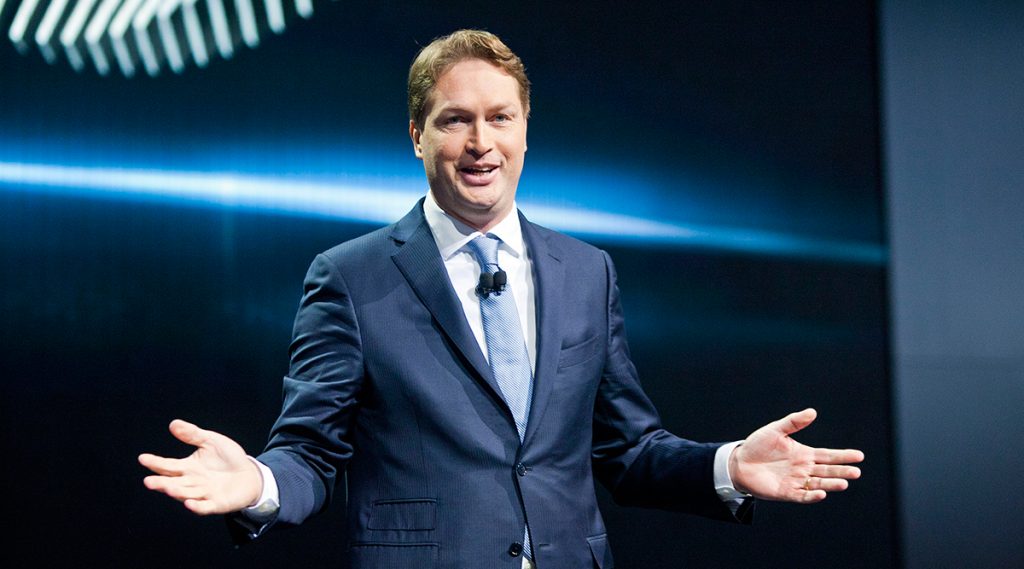
Ola Kallenius
Image Source: ttnews.com

Furthermore, he was also clear about how the growth of software development in India also poses favorable conditions for the expansion of such alliances. He also made it clear that expansion in India could be for more than bare vehicle engineering, but also the IT side of things. He was also quick to point out that India has been a “solid pillar of their house” for several years.

Presence in India

Daimler has two active and functioning factories in India. Their factory in Pune houses and creates Mercedes-Benz cars, while the one in Chennai churns out their Bharat Benz range of trucks. Furthermore, the company also has a large Research and Development centre based in Bangalore, which focuses on global R&D. Kallenius also stated that the export of Mercedes-Benz cars from India would serve as a purely economic decision. As a result, the project depends heavily on the economic feasibility and viability of the decision. However, Kallenius also stated that such a case had never come up till now and that he isn’t sure when such an opportunity would arise. He also reiterated that if and when they do have to make such a decision, it would rely heavily on the financial aspect of things.

Previous Plans for the Future

The German auto legend set up the factory in Chennai, which produces trucks and buses to help with serving its Latin American market from 2022.  Earlier reports had stated that shipments would start going out to Brazil, Chile, and Mexico between 2021 and 2022. The reports for the same had come in September of last year, following the Indian government’s move towards BSVI technology. Around that time, the company also stated that globally it had sold over 1.4 million vehicles which are Euro-VI, or BS-VI equivalent compliant. The company has also invested about INR 500 crores in India to localize, test, and improve its Euro-VI technology.

Two years ago, Daimler exported the GLC SUV, which is an Indian-made vehicle to the US. The company went on to mention that their Indian plant was a back-up set up to help deal with a rise in global demand for their vehicles. Furthermore, on being asked about the low sales of luxury vehicles in India, the Daimler CEO said that numbers did not do any justice to the true size of India, it’s economy and the population. He concluded by stating they had a fair market position but just had to work some things out. The analogy he employed included shaking a good ketchup bottle but having difficulty with bringing out the ketchup. It will be interesting to see whether the deal goes through after financial analysis, as it could breathe some much-needed life into India’s automobile manufacturing industry.

PUBG Mobile

Indian Government Bans Another 118 Apps Including PUBG

The Indian government took a big decision on Wednesday by deciding to ban an additional 118 or so mobile applications, including the uber-popular video game PUBG. The move follows in the heels of an earlier decision to ban 59 Chinese applications earlier this year. All of these bans were a result of rising tensions between the two superpowers. India cited security reasons and data privacy concerns as the primary cause of the ban. Here’s a look at the impact the move will have, and what led to the government taking such drastic measures.

India Making Big Moves

Tensions had been high ever since the India-China scuffle at the Ladakh border a few months ago. These border skirmishes, coupled with the world’s resentment towards China for its handling of the COVID-19 pandemic, has snowballed into trade embargos and political battles around the world. Following India’s model, the US too recently banned the usage of a sleuth of Chinese applications citing security concerns. The Ministry of Information and Technology released an official statement yesterday, wherein it said that 118 apps have now been banned in India. The reason being cited that these apps were prejudicial to the integrity, security, sovereignty, and defence of the nation. As per the statement put out by the Ministry of Electronics and Information Technology, the ban falls under the purview of Section 69A of the Indian IT Act.

Major Apps to Leave India

Some of the biggest names in the list of apps now banned in India are Baidu, FaceU, WeChat, and PUBG Mobile. Several reports state that PUBG has over 33 million active users in India, meaning that this move will have a significant impact on the game. In fact, most reports state that PUBG is one of the most popular applications in India, with over 13 million users signing in every day. The Ministry noted that it frequently received complaints regarding people misusing these applications in various ways. Some of the complaints referred to the stealing or personal and private data and then selling such data to servers located outside India. The fact that such data could be mined, processed, and analyzed to harm the sovereignty of the country is what led to such drastic steps as per the statement from the Ministry. 

PUBG Mobile
Image Source: businessinsider.in

Further Notices and Suggestions

Furthermore, the Indian Cyber Crime Coordination Centre, which works under the Ministry of Home Affairs also released a statement of recommendations regarding how to block these apps. In the public domain as well, people had been asking the government to take more stringent actions to protect the private data of Indian users. Such a targeted move will therefore help put to rest worries that a large part of the demographic had regarding the safety and security of the Indian cyberspace. The government has decided to retaliate at the best time, as global superpowers unite to protect their data and frameworks from foreign assaults and attacks.

Earlier Steps

Just a few months back, in June, the Centre had banned another 59 applications, with most of them being Chinese-based on similar grounds. This list included popular apps like UC Browser and TikTok. The recent ban on an additional 118 apps will see PUBG Mobile leaving India for an indefinite period. The wildly popular shooter videogame ranks within the world’s top five most popular smartphone games and boasts of over 734 million downloads. The game, which comes under Tencent Holdings Limited’s videogame department also has a loyal fan following in India, leading to social media being flooded with memes on the ban. The Indian Prime Minister, Narendra Modi himself had referenced the game last year during a talk on exam stress. This interview after it went live led to the creation of the “Yeh PUBG-wala hai kya?” meme, which roughly translated to the PM asking a worried mother whether her son was a PUBG player.

It is quite evident that the ban on apps has a clear political agenda behind it. The very fact that the ban came after the Indian government accused China of using troops provocatively along the Pangong Lake in Ladakh is proof enough of this. As the Chinese troops had made a similar move on August 31st, the government was left seething at this provocation. However, the Indian army was able to successfully thwart both actions, preventing any damage or loss for the Indians. Recent months have witnessed several clashes and showdowns, with over 20 soldiers being martyred in the Galwan Valley in June. Political or not, there is no doubt that the banning of these apps will have a ripple in our cyberspace. It will be interesting to see whether China will retaliate in any way to these bans, as TikTok gears up to fight the US government through a civil lawsuit. 

apple

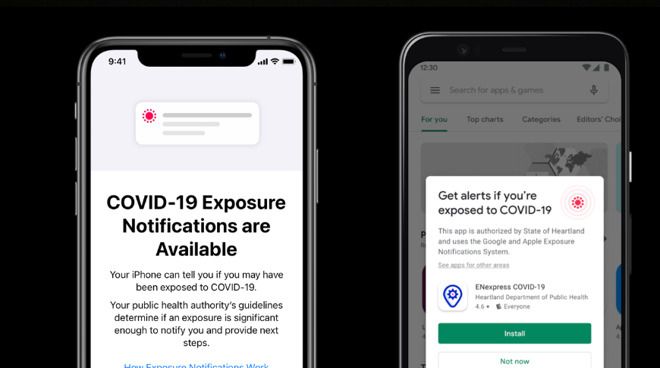
Apple in collaboration with Google launched COVID-19 ‘Exposure Notification Express’ via iOS 13.7

Only after the outburst of the novel coronavirus, Apple and Google started working together to develop a contact tracing system. The system was designed in a way that new apps can be created by PHAs (Public Health Authorities) and this system will be incorporated. So, whoever downloaded and installed this app when came close to another person using the app data will automatically be transferred and saved. This helped later to get notified if the user in the past few days came in contact with a COVID-19 patient or not.

Yesterday, the two companies announced a big advancement in the existing technology by rolling out new tools. The new tools are launched to make the task for PHAs easier as they do not need to maintain their apps. Currently, the tool has been incorporated in iOS 13.7 and Google is working on the same for Android. For Android, there will be an automatically generated application that will be implemented in Android 6.0 later this month.

What is Exposure Notification Technology?

Exposure notification technology or exposure notification API is software made jointly by Google and Apple to help the PHAs incorporate it in apps. After the PHAs and other organizations built these apps with incorporated exposure notification API they can release it publicly. The general public can use these apps to stay updated about the COVID-19 cases around them and if they came in contact with any of the affected patients.

Both the companies took care of the user’s privacy and hence encrypted the transmitted Bluetooth metadata. Keeping in mind public privacy, the location information of the users is not exposed. Instead of this, the notification alert just shows a time and place where the device came in close Bluetooth range with other devices. So, if a user-tested COVID-19 positive and updated in the app only then the other users will receive notification that they came in contact with a potential COVID patient. The first version (Beta version) of this software was released in May 2020. But, now Apple has announced about the modified system which will not require creating a separate app by any PHA anymore.

contact tracing system
Image Source: appleinsider.com

No separate apps required anymore

Since changes in the software have been made, people might get a little confused. The working system of this new modified tool is different for both iOS and Android. It is a bit complex for Android and that is why it will launch later this month. So, the most striking and best improvement is that you don’t have to download and install an app on your own that is created by the PHAs to keep yourself updated.

Instead of downloading the app, you will receive notification from your local health authority then you can choose to opt-in. If you are an iOS user you have to install a provisioning profile and in case of an Android user, an auto-generated app will be installed via Google Play.

Role of PHAs

The PHAs don’t have to create apps on their own, so what they will do? They will provide Apple and Google with necessary information like contact information, proper guidance procedure, the recommendation for effected patients, precautions for those who came in contact with the virus, etc. Then the notification system can deliver it to the users helping them to take necessary steps as required.

The local health authorities are still responsible for what messages should be sent and the further steps if someone with positive COVID-test updates in the database. So, they are just relieved of developing their apps as most of the tech part is covered by Apple and Google. But, in the meantime already 20 countries around the world have developed and launched their apps.

Implementation of this new system

This new Exposure Notification Express will be first implemented by DC, Maryland, Nevada, and Virginia. Both Apple and Google are also working with the U.S. Association of Public Health Laboratories that will help the users to track even after they are traveling out of their home state. It is proven that this system has helped in reducing the spread of COVID-19 and preventing many deaths.

facebook logo

Facebook Takes the Battle to the Government by Planning to Block Australian Publishers from Sharing Articles

Facebook in a new statement has announced that it will block publishers and users from Australia from sharing news pieces and articles. However, this move will serve as a significant pushback against a newly proposed law that will force Facebook to pay media companies for their articles and content. Furthermore, this new announcement will also escalate tensions between the tech giant and the Australian government. Both parties have been caught in a bitter antitrust battle, with the government holding Google and Facebook responsible for paying publishers for the content they provide these platforms. Here’s a look at how the battle came to heads and what this move could mean to users and publishers.

New Law In-Play

The Australian government is yet to approve and ass the new legislation. However, an arbitration panel tasked with working out the by-laws and clauses has proposed that tech companies must pay their content publishers if the two sides cannot agree. Facebook hit back through a blog post yesterday, claiming that such a proposal was hugely unfair. The social media giant also stated that such a law would allow content creators and publishers to charge any amount they wanted. Furthermore, the company said that if the law did come through, it would be forced to prevent Australians from sharing any media on Facebook and Instagram. 

Facebook Takes A Stand

Facebook’s VP of Global News, Campbell Brown, said that this decision was hard to take for the company. However, he reiterated that it was the only way to protect Facebook against a move that would hurt them and Australia’s media outlets. She went ahead to state that the social media giant was still working on a full-proof method to block Australian media from sharing articles. Following this announcement, Josh Frydenberg, who serves as Australia’s Treasurer, said that these were nothing but heavy-handed threats.

facebook

Instead, he stated that such a law would help make the media landscape more sustainable as digital platforms would have to pay for the content they put out. Rod Sims, who serves as Australia’s competition regulator, also said that such threats were misconceived and ill-timed. He went on to say that the newly proposed law would go a long way in ensuring that the media remains fair and transparent.

Google Follows Suit

Since the Australian legislation will also affect the Alphabet’s Google, the tech giant has also been vocal about its displeasure regarding such a law. They too raised alarms and said that such a measure would force them to put out much less efficient versions of Google Search and YouTube. As a result, such a move, Google Australia and New Zealand MD, Mel Silva, said would critically damage the use of free internet services, like Google in Australia. 

Fighting for Transparency

The Aussie government claims it is only trying to make things more fair and transparent for its media bodies. Furthermore, it states that such a law would help level the playing field and give local media a chance against large tech companies. For instance, the local media is struggling as a result of the free sharing of news by such tech giants with News Corp, a media agency owned by Rupert Murdoch planning to cut jobs in Australia.

Murdoch’s decision will result in the closing down of over 100 regional and local newspapers in Australia, putting these media persons at risk. Murdoch has long asked Facebook and Google to pay for the articles, news pieces and content that appear on their platforms. Hence, it was obvious that New Corp would laud the government’s efforts to make this a reality. Michael Miller, who serves as the executive chairman of News Corp, stated that such a move would put an end to the tech giant’s free-riding on the content created by others. Since such companies derive a lot of benefit from such content, it is only fair that they pay the people making such content out of their own pockets.

Impact and After-Effect

However, if Facebook does follow through with its plans as per the announcement, publishers would no longer have access to a broad audience. Facebook claims that in just the first five months of this year, it sent over 2.3 billion clicks to news websites based in Australia from its News Feed. As a result, blocking such news from their feed could result in a massive loss of audience for news channels, while also limiting the appeal the platform enjoys in Australia. Australia’s new rules come as a part of a global push to make tech giants more accountable and regulated.

France came out with a statement asking Google to pay media companies for the articles it shares in April. Two months later, Google said it would start paying for certain news services in Brazil and Germany. Facebook came out with its separate News Feed last October and pays certain publishers for stories. The tech giant is also in plans to extend this News tab on a global basis but will block the sharing of news if governments try to intervene in its efforts. It will be interesting to see whether the social media giant is capable of halting this global push for more regulation and whether that would be a wise choice for the consumers.

neuralink

Elon Musk’s Neuralink puts computer chips in a Pig’s brain to treat disease.

On 29th August 2020, Elon Musk’s startup, Neuralink revealed a big experiment they are carrying out. The main source of the news is Reuters. Neuralink has put a coin-sized computer chip inside a pig’s brain for the past two months. The name of the pig is Gertrude and it is in the early stage of the experiment to analyze if the same concept can be applicable for human brains. According to Elon Musk, this can be a way to cure many diseases in the human body.

Neuralink is a neuroscience-based startup founded in 2016 by Tesla Inc and Elon Musk. Current experimentation of the company involves treating major human diseases by implanting wireless brain-computer interfaces. Musk delivered this news on a webcast last Friday. The timeline for human trials has not been mentioned yet.

Three little pigs

Musk has given a presentation virtually and it is called “three little pigs” demo. The demo showed Gertrude, the pig whose brain has been implanted with the computer chip in a position that controls the snout. After some coaxing by Elon Musk, it began performing some activities like eating off a stool and sniffing the straws which led to show striking changes in the graphs monitoring the neural activity.

Musk also revealed that the experimentation has been carried out in three such pigs having two brain implants each. The implanted pigs are physically indistinguishable from any regular pigs and there are no abnormalities in them. Moreover, the pigs with implantation have shown greater accuracy in limb movement during a treadmill run. The conclusion has been reached using the implant data. These pigs are now often described as “Cypork”.

Human trial

Previously, Musk has mentioned about the human trials beginning at the end of this year. But, on Friday, Elon Musk has not mentioned any specific timeline for the beginning of the human trail. Dr. Matthew MacDougall, the head surgeon of Neuralink said that the first clinical trial on humans will focus on a small group of patients suffering from paraplegia or paralysis. The company also confirmed that it has made many great innovations for the past four years and the long studies have come to an end. This might mean that the trails will begin shortly since the implantation in animals has shown positive results.

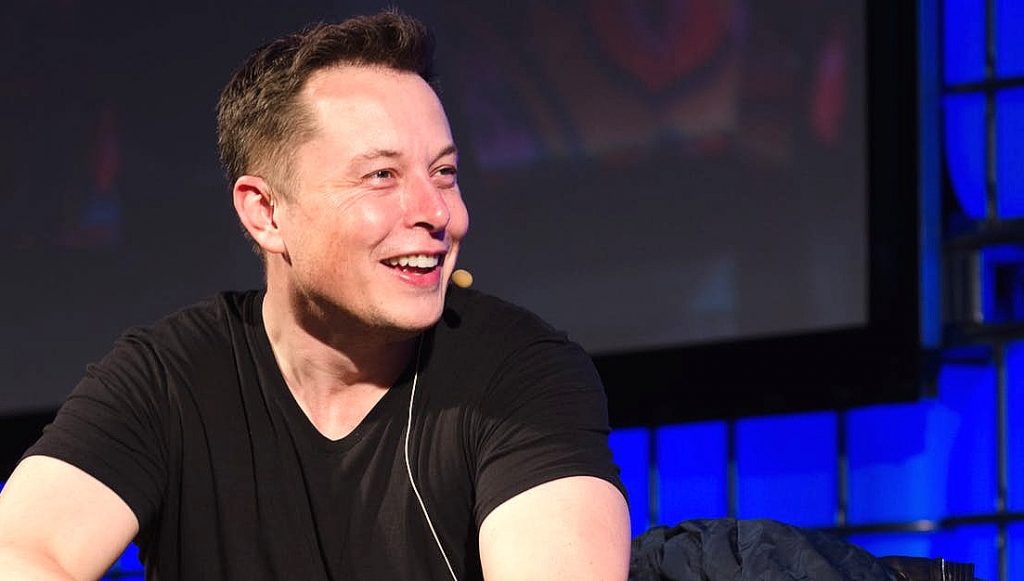
Elon Musk
Image Source: teslarati.com

Treating several diseases 

Elon Musk has said the implantation device can solve many actual diseases in the human body like memory loss, hearing aid, depression, and insomnia. There are thousands of electrodes present in the computer chip which interacts with the human brain to cure complex neurological problems. Severe conditions like Alzheimer’s disease, dementia, spinal cord, injuries, etc can be cured as well. The size of the Neuralink’s chip is approximately 23 mm in diameter. Musk described it as “a Fitbit in your skull with tiny wires.” So, it is impossible to distinguish a person with implantation from a normal person. In 2020, around 5.8 million Americans are diagnosed with Alzheimer’s dementia. So, an invention like this will be a big scientific and medical breakthrough. But, once it becomes a success, viability will be the main concern.

Expert’s feedback

In response to the high success rate of this experimentation, Graeme Moffat, a neuroscience research fellow from the University of Toronto said that Neuralink’s advancements are ahead of its time. The superior design of the computer chip with efficient power management, wireless technology, and smaller size makes it very innovative and impactful. One of the neuroscientists from Stanford University said that the company has made huge progress since last year’s demonstration about the chip.

But, some of them have contradicted the statement regarding the end of longer studies. A few fellow researchers around the world said longer studies might be required to determine the longevity of the device. Since the experts can read the brain waves after the chip has been implanted it will lead to a better understanding of the brain activity while suffering a disease.

Similar advancements

Musk’s neuroscience start-up, Neuralink has received $158 million in funding. But, he said that the main reason for Friday’s event was recruiting and not fundraising. Musk also spoke about AI and its role in this new Neuralink’s chip. He also said other companies like Kernel and Paradromics are carrying out similar experiments.

Google

US Government Accuses Google of Tying Products and Blocking Competitors.

The recent weeks have seen a rise in political unrest and the issuing of executive orders from the United States of America. The BLM protests have also set alight discussions and debates regarding news, biases on social media, and the freedom of speech. Meanwhile, the American government officials have been building a case against Google with regards to antitrust issues. The government is trying to prove that the search engine is bundling products together, and helping certain players have a competitive advantage over the others. The charges also claim that Google blocks out competitors using such strategies, making the market place unfair and uncompetitive. Here’s a look at what the case claims, and how it could impact the functioning of Google.

Case Builds Momentum

The Justice Department, in coercion with State attorneys, have asked executives from various firms to testify regarding how such practices have impacted them. They have also asked these firms regarding the operations of the Network Division, run by Google. The Network Division sells various services that concern itself with everything from brand strategy to advertisement publishing. These inquiries also focus on discounts, coupons, and features that Google offers advertisers using its products. Regulators are also asking how Google’s search business interferes with the Network Division and the way it sends out targeted ads. However, these executives have asked agencies not to mention their names and designations as they wish such information to remain private. 

Tying Products

Tying certain products together makes the sale of one conditional depending on the purchase of another. While this process isn’t illegal, using it to establish market dominance could be considered a breach of law. As per Gene Kimmelman, who serves as a senior adviser for the Public Knowledge Think Tank believes that using tools to maintain or create a monopoly by restricting entry of new players and blocking rivals could result in antitrust violations. As a result, American regulators are looking to file a lawsuit regarding competition against Google in the weeks to come. Once filed, this lawsuit will become the most massive monopoly suit since the American government sued Microsoft in 1998. That case as well focused on the tying of products that Microsoft made use of to promote Windows systems. 

Google in Similar Trouble

Google is now being asked the same questions, about two decades later. The interviewing of rivals started in July, and each round of questioning has become more detailed and distinct. Reports claim that several respondents used whiteboards to explain the more complicated processes regarding the ad tech market. However, Julie McAlister, who serves as the spokeswoman for Google, stated that Google’s digital ad tech service works across several crowded industries. As a result, these ads compete with thousands of rivals, leading to heavy competition and subsequent lowering of prices and the availability of improved choices for consumers. 

Google

Major Business

The Network Division is a highly successful service for Google, bringing in over $21 billion as revenue last year. However, the growth enjoyed by the same has been on the slower side, when compared to Google’s other ventures and services. Google always frames the Network Division as an aid to publishers who depend on Google for their digital ads. However, critics are quick to point out that Google owns and exploits much of the market. As a result, most advertisers end up being forced to use more Google products, rather than competing or rival products. The regulators are looking at sell-side, buy-side, and exchange-side software, all of which help the ad tech market in pushing out ads. Interestingly, Google offers and owns tools that help with all of these services and processes.

Problem Statement

According to Pramila Jayapal, who serves as a Democratic Representative, the major problem here is that Google controls all these entities. She also mentioned that this makes the ad tech sector sound like the stock market, without any regulation to ensure transparency and fair competition. Hence, to ensure the same, the government regulators are now asking Google about how it waives fees to publishers who use its tools and auction space on Google’s exchange software. They have also questioned the search engine’s decision to limit ad space buying on YouTube via its tool DV360 in 2015. Most rivals have stated that this move led to them losing out on a lot of video ad inventory. Google countered that most social media sites work similarly and that rival Amazon had found a way to grow even without accessing YouTube. 

Insider Trading Issues

Competitors also claim that Google utilizes its search engine to display ads unfairly. Such leveraging of their search business has helped Google account for a whopping 10% of the total publisher revenue on the internet. Rival firms also complained that this forced them to pay for Google’s ad exchange software because the search engine has made itself the most prime real estate for ads. Complaints also focused on how Google passes information between its arms, leading to customer targeting and insider trading. The same complaint was raised by the UK Market Authority’s report on Google’s conflict of interest published last year.

In July, CEO Sundar Pichai dodged several of Jayapal’s major questions regarding Google’s market share. Rather, he focused on how Google shares its revenue with other websites, making it a low-margin business for them. The hearing also brought out several internal emails from Google that proved claims regarding insider information trading. It will be interesting to see what more information future hearings will unearth. Also, we will have to wait to see how the hearings might level the playing field by restricting Google’s access and control over the ad tech market.