Your Tech Story

News

Nvidia Logo

Nvidia to Acquire ARM Holdings from Softbank at a $40 Million Valuation

The coronavirus pandemic has made this a precarious time for companies of all kinds. As a result, we have been seeing quite a few mergers and acquisitions in recent months. The newest addition to that group is the collaboration between Nvidia and Arm Holdings. Through a shock announcement on Sunday, Nvidia has agreed to buy smartphone chip-designer Arm Holdings, from Softbank at a valuation of $40 billion. Here’s a look at everything you need to know about this acquisition and the lead up to it.

Details Regarding the Deal

The companies announced via a report on Sunday that they were near closing the acquisition deal. The deal, which values Arm at $40 billion will include $21.5 billion via Nvidia stock, $12 billion in cash, with a $2 billion payable at the signing of the deal. In 2016, Softbank acquired Arm at a $31.4 billion valuation, making it one of the most expensive acquisitions ever. Arm Holdings is a known chip-design and manufacturing company that focuses on the design of chipsets for smartphones.  They are also involved in the making of Qualcomm and Apple chips, making them a popular choice within the industry. Furthermore, Apple has also expressed plans to shift its MAC computers from Intel to Arm chips, opening new avenues for the company.

Nvidia’s Plan for Arm

Nvidia is a giant in the field of AI and graphic card design and manufacture. They also have operations that help with the design and creation of self-driving vehicles and other autonomous applications. The company stated that it would retain Arm’s licensing model which is largely open in structure. Furthermore, Nvidia also said that they would continue to uphold Arm’s customer neutrality. Nvidia has been doing quite well for itself due to a boom in the usage and sales of video games due to the global pandemic. The company is aiming to launch a new desktop graphics card that will help PC gamers play more intensive games. As per the last earnings report, the company has projected a 46% growth in revenue for the third quarter of this year.

Nvidia Arm Logo
Image Source: nvidia.com

Past Acquisition

SoftBank’s acquisition of Arm was a result of them entering the Internet of Things space. The company viewed Arm Holdings as a valuable investment in this field due to its work on wireless connectivity and smart devices. Arm Holdings also works on intelligent chipsets that could possibly help with the development of everyday smart devices, such as refrigerators, other appliances, and cars. At the time of the acquisition, Masayoshi Son, who serves as the Chairman of Softbank, had hailed the move. He went as far as to say that Arm was a company he had always admired and that the acquisition means a lot to him.

Tough Time for Softbank

However, over the years, Softbank has had to deal with financial troubles. A couple of intensive investments, in companies like Uber and WeWork, has led to them losing money. Furthermore, the company’s shares lost value recently due to it holding stock in tech companies that had fared poorly in the market in September. While it is unclear precisely how much Softbank will make through the Nvidia acquisition, it might help them take a capital-intensive company off their hands. However, experts are concerned about whether Softbank will be able to make a lot of money on the sale due to it having invested quite a bit on Arm.

Softbank also requires cash to help the start-ups that it has picked up via the Vision Fund initiative. This move will provide some relief to start-ups that are facing hardships due to the lockdowns brought in by the coronavirus pandemic. Earlier this year, it had also stated that it would sell about $21 billion worth of stock it holds in T-Mobile. The acquisition will see Arm working as an Nvidia division. The company will stay headquartered in the UK and follow the same licensing model and customer base. However, the deal might still face intense scrutiny with regard to regulations from the EU.

Microsoft has also signed on-board, making Arm-based Surfaces and using it on their Windows. Also, the two companies are not competitors per se as Nvidia does not do much of CPU design or mobile hardware manufacturing. Nvidia might be planning an entry into the next stage of AI computing with this acquisition. Reports are stating that Nvidia wants to invest in building a brand-new AI center for research in Cambridge. If this proves to be true, then the companies can align with each other enabling both to push ahead with regards to AI software develop

Tesla Logo

Tesla has launched fast electric car charging in Berlin with more cities in target

The trend of getting shifted to battery cars have been spreading gradually across the globe. But, with diesel and petrol cars slowly dropping in sales, it will still take a few years for the battery cars to reach the steady consistent market demand. Using battery cars has a lot of advantages thus reducing the demand for limited petrochemical resources of our world. But, to meet the demand for battery cars, quick charging technologies should be invented and commercialized.

Many electric car charging points have opened recently in cities of America, China, etc. Moreover, these charging points are now spotted in the Google Maps making it easy for the customers to reach quickly. And, adding into the endless efforts of many companies, Tesla launched the fast electric car charging in Berlin yesterday. This will help in boosting the battery car scheme and development attracting more potential buyers and automobile companies.

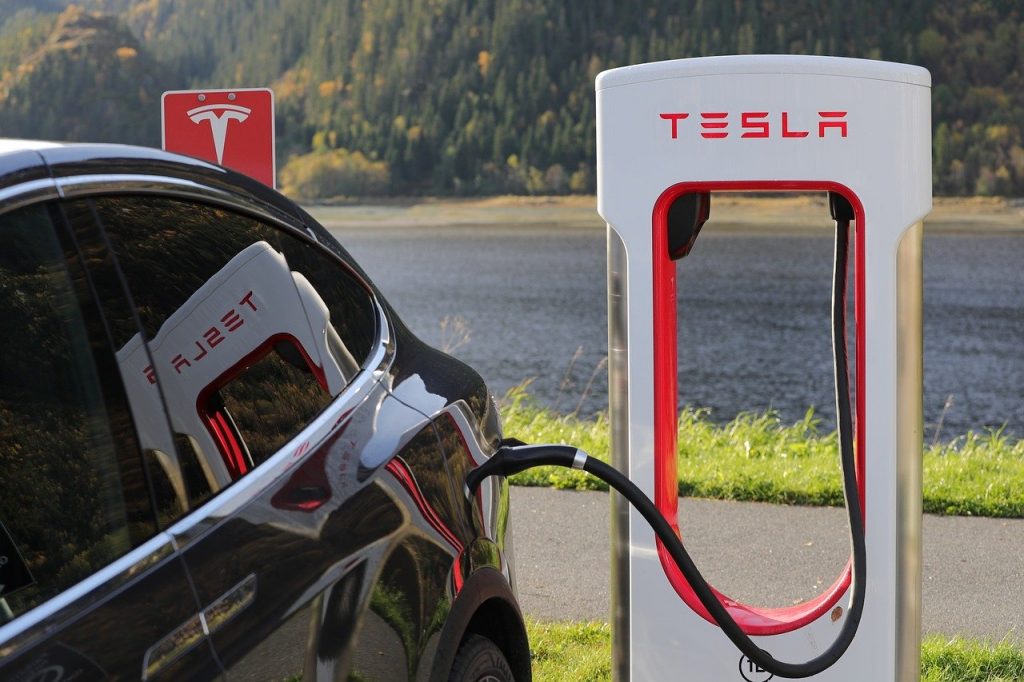
Tesla new supercharger

According to Reuters, on 10th September 2020, Tesla Inc launched a new fast electric car charging thus contributing to the upcoming industry of electric vehicles. The managers of the company demonstrated this new electric charging for cars in the Berlin campus. The company further mentioned its plan to execute the same in more cities soon. Many buyers take a step back from buying electric vehicles to get rid of the charging inconvenience in the future. But, Tesla is trying its best to eradicate the problem permanently.

With the launch of new supercharging for electric cars, the company is giving access to as many people as possible who right now can’t access such charging. Jeroen van Tilburg, manager of Europe of charging infrastructure at Tesla, said that they are expanding this supercharging network into city centers so that people who don’t have access to home or workplace charging can also experience it. It is a good business strategy by Tesla which shows a high level of commitment towards the existing and potential buyers.  

Tesla Supercharger

Market in Germany

One of the spokesmen of Tesla said to Reuters that apart from the current launch, the company will open at least another fast-charging site this year. And, this site is planned to develop as the inner city charging site in Germany. There could be more sites opening up soon in this year. Currently, the marketplace focus of Tesla seems exclusively giving its attention to Germany. This is because the German policymakers want to boost the sale of battery cars as soon as possible and as much as possible to cut out the high rate of emissions.

And, to enhance the marketplace, what can be better than creating more demand among people? This is one of the biggest reasons why Tesla is planning to create fast-charging sites as city centers. Peter Altmaier, Economy Minister of Germany has said that they are yet to do a lot in terms of charging infrastructure. He has also said that rolling out of both the public charging points and private charging will be escalated as it has harmed sales in the past.

Improvisation 

The software upgrade has been done by Tesla and it is normal for every company to evolve with time and make things better. In response to opening fast-charging sites in the cities, the Tesla spokesman said that it is a bit different from their conventional way of doing things. Tesla generally emphasizes on residential charging, but the need of the hour calls for a quicker option.

About the charging time, the Tesla Model 3 cars can be charged within five minutes by the V3 charger. This allows the cars to run approximately 120 kilometers. The company also further mentioned that relevant software upgrades will be received by the old models of Tesla.

Germany amidst the global pandemic 

The new factory of Tesla will start to operate from next year. Amidst the global pandemic, the sales have been hampered by a great extent. Many people have become jobless and the economic condition of every nation has started to worsen. But, with the factory opening in Germany, it will boost the employment rate of the nation as approximately 40,000 people will find new jobs.

Fake News

The EU Asks Facebook, Google, and Twitter to Do More to Combat Fake News

The coronavirus pandemic has been a rather unfortunate event that has shaken the world vigorously. However, one of the gravest aftermaths of it has been the large-scale sharing of fake news. Around the world, governments are doing all they can to hold tech giants more accountable for their actions. As a result of combined efforts, tech giants, such as Google, Facebook, and Twitter had agreed to accept a self-regulatory code in a bid to combat fake news two years ago. However, the European Commission has now urged these companies to do more to prevent the spread of disinformation. Here’s a look at what the EU is asking of these companies, and how they have reacted in the past.

Proactive Approach

The COVID-19 situation has made governments more active with regards to stopping the spread of misinformation. As a result, social media is now being asked to take a more proactive approach when it comes to combating fake news. The tech giants mentioned above, along with companies like Mozilla and advertising bodies have been asked to do more. All these companies had signed a more lenient deal in 2018 that aimed to prevent more heavy-handed regulations against hate speech. Later on, TikTok and Microsoft also joined these companies in promising to stop the spread of fake news. 

Shortcomings in the Code

However, following an assessment last year, experts concluded that the Code contained several shortcomings. As per a study done by Reuters, the Code allowed for its incomplete and inconsistent application. Furthermore, the report stated that there was a lack of uniform definitions, which allowed for different platforms to interpret the laws differently. Also, there were a lot of gaps in the commitments stated in the Code. The Code also featured limitations that were intrinsic to the very nature of the self-regulatory Code. Vera Jourova, who serves as the Vice President of the European Commission, therefore, called for greater transparency.

Google Facebook Twitter
Image Source: digitalinformationworld.com

Flexibility in the Digital Rule Book

Jourova also stated that the world is now witnessing new threats, making new measures extremely essential. Furthermore, Jourova said that these social media platforms need to be held accountable and that they should become more transparent. They also need to provide better access to their data to make the internet a safer place. As a result, the Commission is working on an Action Plan which will help the E.U. become more resilient towards digital threats. The E.U. Commission will soon propose a Digital Services Act by the end of 2020 to increase the responsibilities and liabilities of such platforms.

Requirement for Better Laws

The new Act aims to bring more rules that will restrict the freedom of platforms, products, and services. As a result, the move has set ablaze a fear within the tech industry as they will now face more heavy-handed opposition from governments. A joint statement regarding the inefficiencies of the older plan and the need for a new one came out on Tuesday. The announcement was made by Vera Jourova, who is the EU Commissioner, Security Chief Julian King, and Mariya Gabriel, who serves as the Digital Commissioner. The statement also noted that the old laws allowed for the large-scale spread of propaganda and disinformation which needs to be stopped. As a result, the EU Commission said that the tech giants need to work together and cooperate with governmental and independent bodies.

Trouble Brewing

In recent years, both Facebook and Twitter, with the former in particular have come under scrutiny in the US and Europe. One of the main talking points in such debates has been the Russian influence on the 2016 American election and the Brexit vote that occurred in the UK. The fears of such an influence led to the EU, asking for a better framework to moderate and regulate the spread of information by such platforms. The EU also stepped in requesting American tech companies to provide monthly reports with data on how they are fighting fake news regarding COVID-19 in June. With the US Presidential Election set to take place next year, the pressure is mounting to build such a framework as soon as possible. The rise in the number of manipulated videos and audios by using Deep-Fake technology has also become a popular talking point. Facebook’s refusal to fact-check posts have also drawn fire from lawmakers in the US, and employees within the company. Hence, it will be interesting to see how the companies handle this new law, and whether it will be successful in changing the way social

Whatsapp

A new Whatsapp text bomb is making the app crash on loop

Whatsapp has always been prey to the malicious text bombs. Many users when opening a text message or any media received from an unknown number, the app is compromised. Many times the app is crashed due to these messages the personal information of the user is at stake. Either way, this should not be taken casually especially amidst the pandemic when information theft has become very common.

One such mischievous text bomb flooded the Whatsapp yesterday resulting in crashing the app for every user who opened the chatbox. The company said that there is no solution for it right now, so the best advice is to not open any messages from an unknown number.

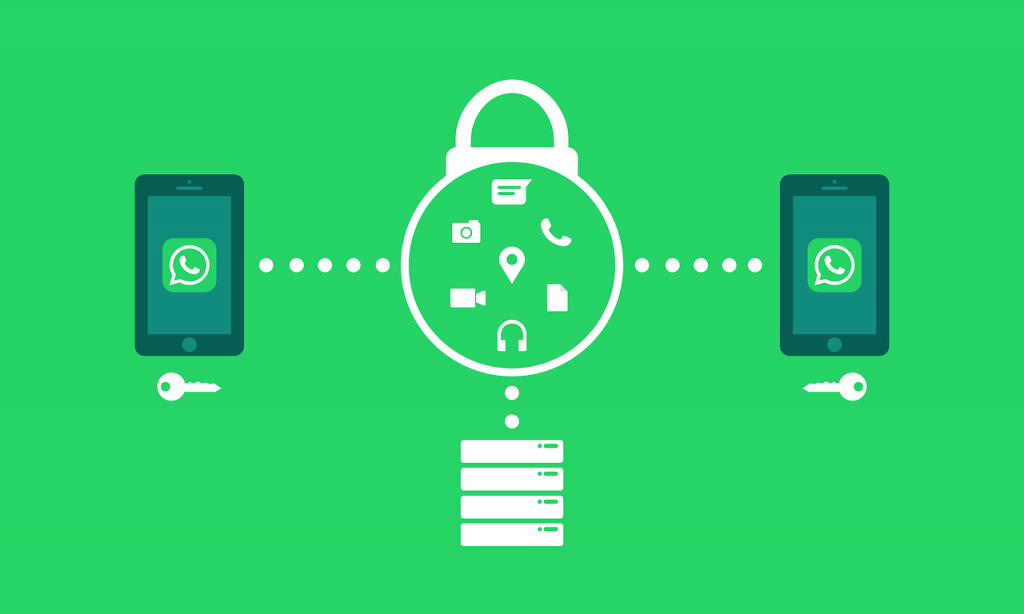
Whatsapp text bomb

The text bomb that is being sent to many users is a set of special characters that are randomly placed and cannot be read by the system. One cannot make any particular meaning out of it nor there exist a specific pattern. The Whatsapp can’t decipher this text hence it results in crashing the program on a never-ending loop.

What is the problem behind constant crashing?

Deccan Herald reported yesterday that Whatsapp is going through a series of attacks by the hackers simply causing the system to crash and hang. But, what seems to us as just simply crash and hang might not be that. Hackers often use these tactics to freeze the app as well as the operating system of the mobile as a whole and steal all personal data. Even if you are closing the app and then refreshing it, your phone will remain inoperable.

Investigating the origin of this text bomb, it is informed that this Whatsapp spam was created in Brazil and still exists there. A report has shown that this specific text bomb started spreading among the users in Brazil in mid-August. But, currently, it is expanding the region and reaching out to many places on a global level.

The company’s tech support and security are looking into it. Hopefully, Whatsapp will come with an effective solution at the earliest as the privacy of common people around the globe is at stake. This has also caused panic among the citizens especially the Brazilians. So, be vigilant and do not open the messages from any odd or random number.

Whatsapp

The suggestion tweets

Recently, WABetaInfo tweeted asking new suggestions for features that Whatsapp should add or modify any existing features. The tweet said to give a clear idea about the suggestion and why it is important. The suggestions asked were for both Android and iOS. A lot of people have responded to the tweet, but the majority of the response was concerning the text bomb that is causing the entire app to crash and phone as well.

A twitter account with the handle @lan_Oli_01 has responded to the tweet by sharing two screenshots of the texts that are causing the crash of the app. The screenshot clearly shows some text with no specific pattern or any specific language that can’t be read by the application. He has also tweeted that the anti-crash mechanism should be integrated into the official Whatsapp application. The modded Whatsapp version has a “Crashcode protection” and it should be added to the Whatsapp application (official) as well so that texts like this won’t freeze the app.

Such texts that were compromising the app followed by the mobile OS are known as “Binario”, “Contact Bombs”, “Trava Zap”, “Crashers”, etc. The technique behind it is very complex and every time you open Whatsapp it crashes.

Prevention vs. cure

Since there is no feasible solution to date, it’s better if we become extra careful and take prevention measures so we don’t become one of the victims. Apart from not opening any texts from an unknown number, one more solution is there that can protect us at a better level. Because sometimes we might become careless and open one such spam messages.

To prevent this, you can go to Settings followed by Privacy. After clicking Privacy, go to Groups. You will find an option “Who can add me to groups” where you need to change the preference from “Everyone” to “My Contact”. Hopefully, this will prevent you from getting bamboozled temporarily.

Airtel

Airtel launches Xstream new broadband plans with high-speed internet

With almost no physical interaction after the outburst of the novel coronavirus in March 2020, the demand for better network connectivity has increased. From attending virtual online classes to attending business meetings, from chatting with distant family members to binge-watching in Netflix, the data usage per person has escalated rapidly. The demand for online video gaming, online education websites, etc has also increased.

With stuck in our own houses, it’s time we unleash the power of a truly digital era. So, this is a golden opportunity for large network companies to keep the existing customers and attract new customers by providing some lucrative deals.

Airtel providing unlimited data

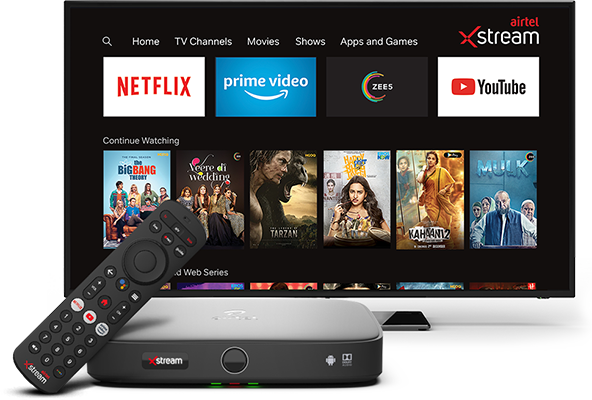
Amidst the pandemic, every working family and student needs better network connectivity with high-speed internet and unlimited data. So, yesterday Bharti Airtel announced a series of new Airtel Xstream Bundle that will provide speed up to 1Gbps. On top of that, every plan with come with unlimited data and Airtel Xstream Android 4K TV Box.

The new normal since the pandemic started has opened the huge business potential for network companies. So, it is their responsibility to provide us with pocket-friendly packages and a better experience. Airtel is offering these packages from 7th September and once you subscribe for one of these you get access to all the OTT content. You can also attend online classes/ meetings and stream content of your own. The new Airtel Xstream Bundle looks like a wholesome package at an affordable price.

All the new broadband plans

After the new plans have been launched, all the plans now will include the Airtel Xstream box worth Rs 3,999. This eliminates the idea of having multiple smart entertaining devices in one house and this covers all your needs. This Android 4K TV Box runs in Android 9.0 OS and includes a remote that supports Google Assistant voice search. You can also have access to the apps available in the Play Store and enjoy online gaming.

Airtel Xstream
Image Source: airtel.in

The plans of Rs 499 (40 Mbps) and Rs 799 (100 Mbps) provides the Android 4K TV Box, 550 TV Channels, more than 10,000 movies, and TV series from 7 OTT apps and 5 studios. And, the next three plans of Rs 999 (200 Mbps), Rs 1,499 (300 Mbps), and Rs 3,999 (1Gbps) are provided with an additional subscription to Disney+Hotstar, Amazon Prime Video, and ZEE5.

Xstream Fiber vs. Jiofiber

Apart from Airtel Xstream Bundle, we also have Jiofiber service which is also very popular among us. It was only a few days ago that Reliance Jio announced the new pricing of the broadband services (JioFiber). So, after Airtel launching this exclusive new package with both high-speed connectivity and unlimited data, it is going to give a tough competition to Jio.

Jio announced the new pricing plans earlier this week with the same two goals that are, giving unlimited data to its customer with high speed. Keeping the pricing strategy at mind Jio announced about four packages, all of them with unlimited data. The package of Rs 399 and Rs 699 offers unlimited data usage with 30Mbps and 100 Mbps speed respectively. And, the other two packages of Rs 999 and Rs 1,499 includes the 4K Set Top Box and OTT apps like Netflix, Amazon Prime Video, Sony LIV, etc. The company also claimed that in these packages the download speed will be the same as the upload speed. On top of that, Jio has announced a no-condition 30 days trial that will provide 150Mbps unlimited data, 4K set-top box, top ten paid OTT apps, and free calls.

Now, it is for you to decide which the best plan is for you and your family. Both companies are providing unlimited data so that solves half our problem. Rest depends on your usage activity and the purpose.

What Airtel is saying? 

Director-Homes of Bharti Airtel, Sunil Taldar said that with every passing day people are investing more time on the internet. Educational, professional, and entertainment are the three most important reasons why data usage is increasing rapidly. And, entertainment is the sector with vast opportunity as people look for a source that can provide them with the best entertainment at an affordable rate. So, Airtel is trying to make more such plans that will drive the audience towards it.

Google logo

Google urged the EU to provide flexibility while setting the Digital Rule Book

On 3rd September 2020, Google urged the European Commission to bring flexibility to the upcoming Digital Services Act. Google further said that one single rule book is hard to fit all and thus amendments should be made accordingly. On 8th September 2020, the public consultation period on this matter ends. Google made a 135-page submission urging the European legislature to bring more clarity to the rules and regulations of the online platforms.

Why a new strategy?

On 1st July 2020, the new rules by the European Union to boost competition rolled out mostly because of losing Google’s market grip. The main reason to set a new rule book was the conclusion of multiple antitrust actions against Google proving ineffectual. The new Digital Rule Book set by the EU mainly focuses on two things- laying ground rules for data sharing and how the digital marketplace should operate.

Margrethe Vestager, digital chief of EU and top antitrust enforcer informed Reuters in June that the new rule book has been set up to prevent history from repeating itself. The nation doesn’t want to witness what happened with the Google cases and wants to boost competition at the same time. Google didn’t choose to reply in response to this statement.

Many actions have been taken on the operations of Google’s search engine, its OS on the Android mobile, and advertising business-related to anti-competitiveness. The rivals of the company have said that they are yet to see more competitors. So, in response to all these cases, the U.S. antitrust enforcers are preparing a case against Google. Moreover, the Digital Services Act of the EU can force the giant tech companies to give access to data under certain conditions to their small rival firms.

Why did Google ask for clarity and flexibility?

After the EU has decided to roll out the new set of rules, Google asked to reconsider all the facts and operations of every company being different from others. It said that though it is important to identify and put a stop to all the illegal contents, the mandating use of technology can “overblock Europeans” which is a very big negative point.

Google, DIgital rule book tech news

New rules should come with new features that will improve the current situation, filter the content judiciously, etc. The company further said that the rules should be laid out in such a manner that it will get rid of the extra burden of undue costs from European businesses. Because in the time of the pandemic, that is the least desirable thing for any nation.

Companies other than Google

But, is it only Google that has fallen victim to this unhealthy situation? The new template formed by the EU will become a very good example for other governments around the globe on how to tacitly rein in companies like Apple, Amazon, and Facebook. It seems that after Google, Amazon and Apple are next in line.

Targeting unfair contractual terms will harm Amazon if the investigation is carried out for the company against a dual role. One for the digital marketplace for its customers, and second as a competitor against other traders. Apple might also suffer antitrust investigation by the EU after Spotify has raised complaints about unfair curbs on its music streaming platform and a 30% fee for its in-app purchase system. Both Amazon and Apple declined to comment on this matter.

Imposing DSA will endanger the reputation of Facebook as the Digital Services Act focuses mainly on catching the frauds earning money through false advertisements. There are many business advertisements on the web that makes high profit by providing false information. So, it is clear that the EU Commission is hell bound to lay strict rules which will not only affect Google but the topmost companies of the 21st century to date. In response to rolling out the Digital Rule Book, a Facebook spokesman said that the company is supporting the EU for laying off “a harmonized EU framework” that will help in content regulation.

 In a nutshell, some of the biggest companies have been placed in the EU crosshair and both the offender and the defender will try their best to keep a better part of their negotiation. But, one thing is for sure that the U.S. Department of Justice is expected to file a case against Google soon.