Your Tech Story

News

tiktok

Kevin Mayer TikTok CEO resigns as Trump administration plans to ban.

Media has been flooding with the news regarding Chinese apps and its role in privacy breaches since the outburst of the novel coronavirus. Once the pandemic took a toll on all our lives, from vivid facts to conspiracy theories have come up regarding China being responsible for this havoc. Though the other nations suspect COVID-19 as a biological weapon, there is no strong evidence supporting it. But, seeing China as a threat to the world especially the U.S., Trump administration decided to ban the Chinese apps mainly TikTok and WeChat.

The Big news 

The relationship between China and the U.S has gotten stale with Trump announcing the ban on Chinese apps. To expand the Clean Network, Trump gave a deadline until mid-September to sell the assets of TikTok to any other company. With Trump accusing such Chinese apps of information theft, political battles have increased since the last month. Amongst this grave tension, Kevin Mayer, the new CEO of TikTok decided to step down yesterday. In the meantime, Vanessa Papas, the current general manager of TikTok will take his position as the interim head.

Why Kevin Mayer stepped down?

It has been only 100 days since Kevin Mayer, former Disney executive joined the most famous small video making Chinese app, TikTok owned by ByteDance. Kevin Mayer made a big decision resigning from Disney to become the CEO of TikTok, but unfortunately, everything went haywire. After Trump gave an order earlier this month to ban the Chinese apps like TikTok and WeChat, the disturbance created between Beijing and Washington.

Before the ban of TikTok in the U.S., India banned all the Chinese apps mainly because of the dispute regarding the LAC. With all these political tensions not stopping anytime sooner, Kevin’s scope in TikTok might not go as expected. So, his decision to step down from the company is completely understandable, said a TikTok’s spokesperson to TechCrunch. Moreover, only a few days back TikTok sued the U.S. government for false accusations against the company.
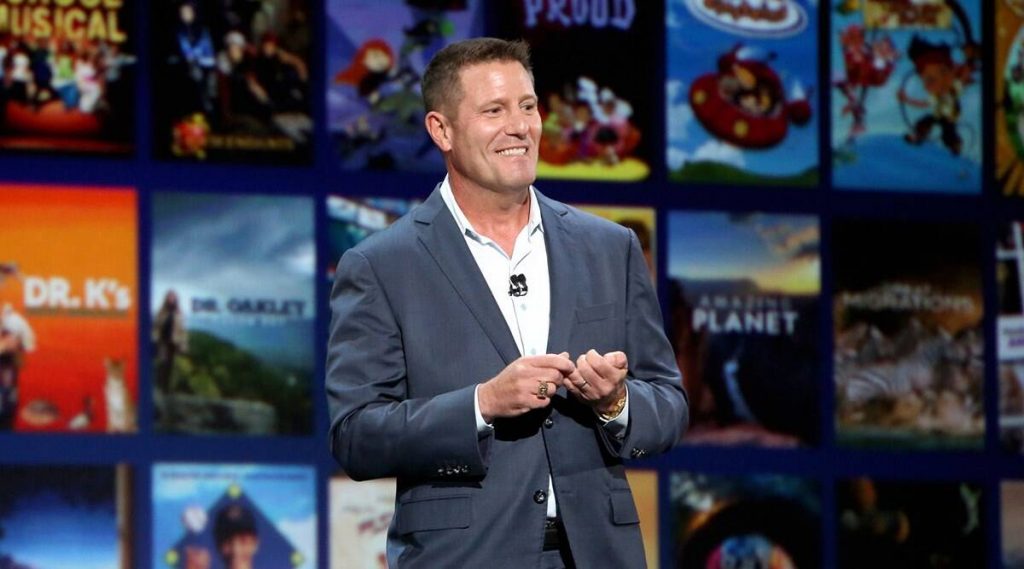
Kevin Mayer
Image Source: indianexpress.com

The fight that both the TikTok and the U.S. government have picked up will have harsh consequences in the future for both sides. Kevin Mayer didn’t expect political tension of this intensity to fall upon his reign and hence he decided to step down. Moreover, the timeline of becoming the newest CEO of the company and the political rivalry has clashed coincidentally. But, Kevin has all the right to get far away from this growing tension and seek a better career opportunity.

Why did Trump order a ban on Chinese apps?

On 6th August 2020, Trump signed an executive order thus banning TikTok and WeChat within a timeline of 45 days. Trump accused these Chinese apps of stealing data that might harm the privacy of the U.S. citizens and compromise the national security of the nation. He also supported India’s act of banning 59 Chinese apps and decided it is time the U.S. takes some strict action against this information theft. It banned all U.S. citizens to conduct any transaction through these platforms or any brand from the U.S. to advertise their products.

This was a big blow for TikTok as the U.S. served as one of the biggest markets for the platform. In 2020, TikTok gained revenue of $200 million for the U.S. alone. Getting banned from the U.S. brought a huge loss for the company. Moreover, with China being thrashed everywhere in social media for the COVID-19 pandemic, the company should keep fingers crossed until any other nation takes a bold step.

Bargaining over the U.S. assets of TikTok

After Trump administration imposed banned on the U.S. operations of TikTok, many companies have come forward for buying them. Microsoft being the first company to take interest in buying the U.S. operations of TikTok, Trump was interested to sell it. Meanwhile, Twitter showed interest in buying the company’s U.S. assets but this decision was questioned. The market capitalization of Twitter is almost equal to the TikTok’s value of U.S. operation while Microsoft’s valuation is in trillions. So, it becomes crystal clear who might win the bidding. Apart from Microsoft and Twitter, Oracle is the third bidder. But, till now Microsoft is winning the race.

TikTok

Twitter shows interest in buying TikTok’s US operations by outbidding Microsoft

ByteDance, a Chinese company is the owner of the very famous video sharing platform, TikTok. With the advent of the global pandemic which emerged out from the Chinese city Wuhan, many nations have turned against China. Whether it’s a serious innocent breakout of an infectious disease or a plotted biological weapon is still in question. But, with almost every country around the globe suffering tremendously, many unpredictable decisions have been taking place.

Last week, Trump announced the ban of TikTok along with other Chinese apps from the U.S. Apart from all the other Chinese applications; TikTok has a very wide user base not only in the U.S. but also around the world. Trump has expressed the need of the hour to ban these Chinese apps as they might be responsible for serious data theft that can put the nation’s security in jeopardy. So, with a 45-days timeline to ban the usage of any Chinese apps by the U.S. citizens, Microsoft showed interest in buying the U.S. operations of TikTok. But, it is only yesterday that Twitter showed interest in buying the same by outdoing Microsoft in bidding.

TikTok by Pixabay

Can Twitter manage to Finance?

Yesterday, the news of Twitter being interested to buy ByteDance owned TikTok was delivered to Reuters from a trusted source. But, it is a big question if Twitter has the capital to buy the U.S. operations of TikTok. The market capitalization of Twitter is around $30 billion which is nearly equal to the assets of TikTok put on sale. On the other hand, Microsoft’s market capitalization is around $1.3 trillion which makes the scenario clear about the bidding.

So, if Twitter is having a serious plan to buy the U.S. operations of TikTok, it needs to raise additional capital. In a normal situation, it would have been easy to raise money, but with the pandemic creating havoc in the financial world and a time strain of 45-days it is a very difficult task.

Due to these two important factors, Microsoft is still on the run and occupy the first place for the bidding. Erik Gordon, a professor from the University of Michigan said that Twitter doesn’t have enough borrowing capacity making it even harder to acquire the U.S. operations of TikTok. Moreover, the current shareholders of Twitter might think that expanding business in this crisis might be a big risk and it will be better if the company (Twitter) focuses on its existing business.

Protecting the Nation

A couple of months back India decided to take strict action against China because of two main reasons, first the outbreak of COVID-19 from Wuhan which might be a strong conspiracy against the world, and second, the dispute regarding LAC. So, Indian banned all the Chinese apps hence taking a big step and protecting the nation’s security from compromising. Now, a similar action was taken by the American president, Donald Trump, thus banning Chinese apps like TikTok and WeChat.

Trump has also mentioned that this is one step forward towards protecting sensitive information and privacy of U.S. citizens from China. These apps are gaining access to information of every user and it can be used against the U.S. for many purposes. He also told that the ban of Chinese apps will also improve Clean Network thus adding five more lines of effort, namely, Clean Carrier, Clean Cable, Clean Apps, Clean Store, and Clean Cloud. And, lastly, he gave a deadline of 45 days and in mid-September, the ban will be imposed completely.

TikTok’s current reputation 

With the novel coronavirus pandemic, the reputation of China as well as its apps is degrading. But, TikTok is used by billions of users around the world, and especially in the U.S., it has millions of fans. Many citizens of the U.S. have expressed outrage towards Donald Trump after he declared the ban of TikTok. But, no matter what a nation’s security should always be the priority. Moreover, it will also become a golden opportunity for the country’s app developers to create something similar and make it a big hit.

The relationship between Twitter and Donald Trump has become sour as the president accused the platform of unfairly censoring him. So, apart from the capital of Microsoft being incredibly bigger than Twitter’s, it is likely Trump will support the acquisition by Microsoft.

Google Stuns by Dropping Three Pixel Models at Once with a Flagship Coming Out Soon!

Smartphone enthusiasts have a huge reason to celebrate this week, thanks to recent announcements by Google. Google has left everyone surprised and baffled by its official announcement of three new Pixel phones. No one within the industry expected such a significant statement from the tech-giant that is currently working on its gaming platform. However, the new report reveals that Google will soon be releasing the Pixel 4A, 5, and 4A 5G. Here’s an in-depth look at what the announcement means, and how the new line-up looks for Google.

Three Phones Out

Google Pixel 4A will set users back by $349 and will be the first phone to hit the market. The phone is already available for preorder, with the first shipment order coming out by August 20th. Following the 4A is the Pixel 5, which will support 5G and ship sometime by the fall of 2020. Lastly, Google announced plans for a Pixel 4A-5G, which costs a whopping $499 and will ship along with the Pixel 5 during the fall of this year.

Why the Sudden Rush?

Essentially, the tech giant is now admitting that it has a large number of phones lined-up, one after the other. As visible, the company is releasing multiple phones at the same time, confusing both fans and experts. However, most experts believe that this occurred as a result of the delay in releasing the Pixel 4A. The phone should have come out much sooner, but the COVID-19 situation prevented the phone from hitting stores earlier.

As the Pixel 4A was available to a few, several reviews of the phone are already out. However, the company has not released many details regarding the other two phones in its line-up. The announcement has given away a few details, including photos of the phone, which we will be looking at through this article’s course.

Pixel 5 and Pixel 4A-5G

Most experts believe that the matte black phone in the announcement picture is the Pixel 4A 5G. Meanwhile, the sparkly phone on the left will most likely be the Pixel 5. Google has only stated that the Pixel 5 will come out in fall and that it will support 5G capabilities. Furthermore, the company has also noted that the UK, France, Germany, Australia, Japan, Canada, Ireland, Taiwan, and the US will receive both phones. Google’s Vice President of Product Management, Brian Rakowski, said that the company would make further details available in the months to follow.

Rumours Flying Around

Also, since Google has a habit of tweeting details before the actual launch of the phone, users can expect features through social media. Last year, Google’s response to rumors regarding the Pixel 4 was to tweet a photo of the upcoming phone in June. Also, Google seems to be adopting this new strategy of cluttered release as a form of pushing 5G capabilities on their phones. However, since the Pixel 4A-5G and Pixel 4A have a price difference of $150, it will be interesting to see how the users react. Such a large price difference only for the ability to use 5G data seems steep, but most experts believe that Google will also beef up the Pixel 4A-5G. Rumours are already alight that the phone will have a larger screen OLED screen, and maybe even a secondary lens for the camera.

The Pixel 4A that comes out in August will not support 5G, leading to American carriers having a placid response to it. The phone will mostly go on sale only online as American service providers do not want to push phones that don’t support 5G. The biggest reason for such a cluttered launch of phones seems to be to vouch for 5G capability. Since the 4A does not offer 5g and will not garner much carrier support, the pre-announcement of the Pixel 5 will act as a saving grace for Google.

These new phones might be a make-or-break for Google as the Pixel line has fallen under controversy in the past. Most experts believe that the company has fallen behind competitors in the smartphone race. While the line’s battery life has been disappointing, the saving grace for the range has been its excellent camera. However, the man thought responsible for it; Marc Levoy has moved on to Adobe, as we had already reported earlier. While the company usually announces the flagship Pixel model in October, it has moved the announcement forward this year. We will have to wait and see whether the line-up will hold its own when push comes to shove at the end of this year.

Huawei

Huawei Usurps Samsung to Become Biggest Smartphone Seller of the Last Quarter

The year 2020 has brought several firsts, partly due to COVID-19, and the rest due to the lockdown it caused. No industry or field has been left alone by this global pandemic as the global economy took a tumble. However, certain companies have braved the storm and come out on top. As per a report by analyst enterprise Canalys, Huawei has shipped more mobile phones in a quarter than any other smartphone manufacturer. Here’s a closer look at what this means for the world of technology, and how buyers can benefit from this shift in power.

Huawei On Top

Huawei has climbed to the top of the charts with regards to the number of units shipped within a quarter, beating out the likes of Apple and Samsung. The company has had hopes of usurping Samsung to become the world’s largest smartphone seller for a while. The reports by Canalys prove that is exactly what happened between April and June in 2020. However, the report does not claim that Huawei will hang on to the title for long. The ongoing global pandemic had a big role to play in how these numbers turned out. Therefore, experts believe that things will turn around soon enough, as the world retraces its steps back to normalcy. 

Impact of the Global Pandemic

As a result of the COVID-19, Huawei suffered a 5% loss in terms of year-on-year sales, shipping 55.8 million smartphones last quarter. However, within the same period, Samsung suffered a fall of 30%, hitting a low of 53.7 million units. The most integral point here is that over 70% of Huawei’s sales come from mainland China. The country was somehow able to escape the harrowing effects of the pandemic, leading to it becoming a more viable market. However, Samsung did not have the same fortune, as they were not as big a player as Huawei within China.

Huawei Hoping for Better Days

A Huawei spokesperson stated that the news was very welcome for the company amidst such troubling times. The achievement was also a result of their exceptional resilience, and a harbinger for better times to come. While the company braved unprecedented and unforeseen circumstances, they focused on growing their brand, leading to their claim on the top spot. Analysts at Canalys credit the COVID-19 for Huawei’s resurgence and shoot to the top. Ben Stanton, who serves as a Senior analyst, stated that the company made good use of China’s economic recovery to shoot to first place.

Difficulties Ahead

Things have not been easy for the Chinese manufacturer, though their phones have impressive hardware. Rising political tensions and sanctions on phones have threatened their hold on foreign markets. The recently launched Huawei P40 was regarded to be a remarkable phone by most who reviewed it. The company reached the zenith of its technical prowess, hitting the best hardware specs at an affordable price. 

However, President Trump’s trade war against China has borne bad news for the company. America recently put Huawei on its Entity List, meaning most American companies now cannot hold trade discussions and do business with it. As a result, the Chinese manufacturer can no longer ship phones containing Google services or apps. In fact, their phones cannot even hold the quintessential Google Play Store, leading to an almost instantaneous reduction in demand. 

Huawei Vs. Samsung

Mirroring Samsung, Huawei to has two separate flagship models, the P, and Mate series. While the P series somewhat resembles Samsung’s S series being more mainstream and simple, the Mate Series takes after Samsung’s Note Series. These phones suit power users and come with a sleuth of super-specific features. However, unlike Samsung, Huawei has made both these series look drastically different. The P40, as a result, has rounded edges and a softer design with an OLED screen and subtle curves. Also, like with the Galaxy S20 U, the P40 offers periscope-telephoto cameras, which are still hard to find in the American market. Therefore, we can see stiff competition between both brands as they try to dominate the smartphone market on a global scale. 

However, Samsung says there is no cause to worry, claiming it will bounce back soon enough. In fact, the company posted operating profit rising by 23% despite revenue dropping by over 6%. They say they have recovered from the global economic hit faster than imagined, and that sales will be back to normal soon enough. While Huawei might have to recede its top spot soon enough, its continued strength in the Chinese market will provide some much-needed hope.

android

Users Can Now Access Google Stadia Via 4G and 5G Services On Their Mobile Phones

Gamers have more good news coming their way. Google recently announced that its cloud gaming service Stadia will now be accessible to Android users. As per the report, Google’s Stadia will now work through 4G and 5G services from mobile phones. This will improve the accessibility of the service, which hit the market last November. Let us now take a quick look at how this move will help gamers around the world.

Accessibility Over Mobile Networks

Google’s announcement via their 9to5Google forum says that users can now use Stadia over mobile networks. The platform will be accessible to Android users who have 4G or 5G connectivity. However, this feature will be through an “experiment” mode, hinting that the feature might not pan out so great for the first few users. Ever since the platform dropped in November 2019, users could play games on it only over Wi-Fi. However, a few had figured out how to play over cellular networks by tethering their laptop. Even so, this was not a preferred method for many, with most opting to play over their fixed LANs. 

Experiment Op-In

In order to play over a cellular network, users will have to opt-in for the experiment. To do so, they should head to their Stadia app, select Experiments, and then click on the Use Mobile Data option. As per previous user experience, playing over a 90Mbps LTE connection ranged from playable to filled with stutters. However, that was back in November, and there is reason to suspect Google has since improved the platform. Since we are unsure of whether the tech giant has updated the portal, users might be surprised to find they can now render games smoothly over cellular networks. Also, in the past, cellular networks could be used only via tethering, which does hamper the overall quality. As users can now make use of 4G and 5G services directly, they can expect better user experience. 

Lot of Updates

This announcement is only one of many regarding Stadia since the platform’s launch. Some of the other updates, including making it available to Android phones, allowing wireless connectivity and finally launching a free service. 

Phone Compatibility

One of the major announcements was that the platform no longer supported only a few smartphones. Recently, they opened up the Stadia app to all Android phones capable of downloading it. Most phones that work on an Android 6.0 OS or higher can now use the Stadia app. To enable the platform, users need first to download and install the app. Then, they must open settings, click on Experiments, and later Play on this device. However, most gamers were unsure of whether the app works on tablets. This helped open up a lot more gamers to the platform, which was available only to Pixel phone users when it launched. Later, by February, it added Samsung, Razer and Asus devices to its roster, before finally opening up to other Android users. 

Wireless Connectivity

Six months after launching last November, Google announced that Stadia would work wirelessly with Android devices. During the launch, most users were left surprised that the tech giant did not include wireless controller support to the platform. Due to this, gamers had no option but to connect their controllers via USB to their device. With the announcement of wireless controller support, gamers got an opportunity to test how easily the platform can shift between devices, the web and Chromecast.

Over time, Google has been improving the Stadia platform, enabling 4K Streaming in March over the web, and then making the service free a month later in April. In April, Google also gave away a free trial Stadia Pro version to users for two months. Through this free version, gamers can access Thumper, GRID and Destiny 2, along with six other titles. Furthermore, existing paid users also got Stadia Pro for free for the same period, and a total of 14 countries got access to this free trial.

However, while the service is free and has a sleuth of new games now, Google has not been able to corner the gaming industry successfully. However, the giant promises to add more than 120 games by the end of 2020, ensuring that both game selection and the number of users will grow in the coming months. 

bmw

BMW Out with Electric Versions of the X1-SUV and 5-Series

Recent weeks have been exciting for auto enthusiasts, with companies like Ford and Tesla issuing updates on new releases. Well, the excitement is here to stay as BMW becomes the newest auto-giant to publish statements regarding future releases. As per a report, BMW has decided to offer completely electric versions of some of their vehicles in the coming year. Here’s a look at the whole story and what it means to the auto giant and car lovers.

BMW Company’s Electrics

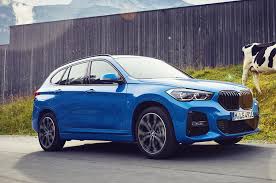
BMW stated that it would be offering electric versions of two of their popular lines. The company will take the X1-SUV and 5 Series electric in a bid to have at least 25 electrified vehicles as a part of their portfolio by 2023. However, the company has not made it clear by when these vehicles will be available. The electric drive-train will serve as one of four options for the buyers of the X1 and 5-Series. The Sedan and SUV will also be available as diesel, gas or plug-in hybrids. Such models will feature a 48-bolt technology that is mild-hybrid in nature.

BMW
Image Source: autocar.co.uk

Expanding Lines

The company came out with such a decision to align with its plan of diversifying and expanding its electric lineup. Before this announcement, the company decided earlier this year to offer their 7-Series as an electric as well. The flagship 7-Series Sedan is one of their most iconic lineups, and coming next year, it will be available with an electric drive-train.

Goals in the Years to Come

By 2023, the company aims to have at least 25 electric models on their portfolio. Out of these 25, at least half the models will be fully electric, while the others will have electric components. The “electrified” models also stand for ones that come equipped as a plug-in hybrid or normal hybrid. BMW has stated that its goal is to have at least 7 million electrified vehicles on the road by the end of 2030. Also, the company is aiming to ensure that at least two-thirds of that 7 million will be fully electric.

Availability

The automaker aims to bring out these five all-electric vehicles onto the road by the end of next year. The vehicles lined up include the Mini Cooper SE, BMW i4, BMW iX3, BMW iNEXT and the BMW i3. Out of these, the BMW i3 is a famous vehicle, which is a part of the electric vehicle industry. The others are newer entries that do not have the name that the i3 has, and this is something BMW wants to cultivate. When it comes to performance, the Cooper SE comes with an i3 motor. The vehicle’s marketing focuses on the fact that it is an easy-to-drive urban vehicle. It comes with a 32.6 kWh battery that allows for a 110-mile EPA-rated range. 

iX3 Not for America

The iX3, which borrows heavily from the X3, works as an electric crossover. The car will have its assembly done in China, and will surprisingly not come to the US. Instead, BMW plans to hit the market with the iX3 in China by the middle of next year. The company choosing to ignore the US when it comes to their first electric crossover seemed surprising to most experts. However, they believe the decision will help BMW strengthen its hold on the EV market in Europe and China.

However, since the iX3 was built off the X3, which is the company’s most popular model in the US, fans were left disappointed. The company held the unveiling of the car in Beijing through the Auto China expo in 2018. The automaker will have to keep in mind Europe’s stricter regulations when it comes to emissions to have a successful campaign in the EU.

BMW isn’t the only car manufacturer to rethink their EV strategies. For instance, Mercedes-Benz has delayed the American launch of their EQC SUV, which will now occur only in 2021. Similarly, Volkswagen will also withhold the ID.3 from the US, bringing the ID.4 instead to American shores.

When it comes to the other model, BMW stated that the i4, which has a range of 270 miles, will hit production in early 2021. Similarly, the iNEXT, which is a flagship model for the company, will start production next year. It will be interesting to see the finished models and how they perform in a tepid EV market.