Yashica is a Software Engineer turned Content Writer, who loves to write on social causes and expertise in writing technical stuff. She loves to watch movies and explore new places. She believes that you need to live once before you die. So experimenting with her life and career choices, she is trying to live her life to the fullest.
Apple has posted an article regarding how the iOS, macOS, and tvOS app developers will be able to offer discounts on the subscription plans to their app users. Due to the increase in the subscribers for many apps in the past time, the company was working on its guidelines and tools in order to manage those subscription apps. The company released the news through a blog post on Monday.
Previously, the company had produced more strict guidelines on how the subscription plans should work. But the new guidelines will help the app developers to offer new discounts to its existing subscribers and to lure the new ones. The offers will also help the developers to regain their former users.
According to the ‘current’ guidelines, the discounts are only available on the limited time subscription plans (at the beginning), which are the part of introductory promotions, and as soon it ends, the subscribers have to pay the full amount of the subscription fee. Also withdrawing from the subscription plan is quite a tedious job. Even the developers are not allowed to make changes to those subscription plans.
But the new guidelines will make it easy for the subscribers to cancel their subscriptio. And, the developers will also be able to produce new offers to attract their former and new subscribers. This will provide the developers more control over their apps, as now they will be able to drop or raise the price of their subscription according to the demand, like offering discounts on the subscription plans during the festive or holiday season, etc.
The new guidelines fromApple will allow the developers to offer ten types of different deals to promote their apps’ subscription plans. And, if any user decides to withdraw from the subscription, the developers can suggest more tempting offers to them to make them stay. According to the previous guidelines, the developers were also unable to see the users with disabled auto-renewal of the plan, but now they will not only be able to see those users but also offer them discounts to draw them to opt for the auto-renewal.
Yashica is a Software Engineer turned Content Writer, who loves to write on social causes and expertise in writing technical stuff. She loves to watch movies and explore new places. She believes that you need to live once before you die. So experimenting with her life and career choices, she is trying to live her life to the fullest.
Starting on Sunday, a few tech giants have already showcased their upcoming technologies, in the Mobile World Congress ( MWC) 2019 happening in Barcelona, Spain, including LG that introduced its forthcoming foldable phone in the same event.
Image Source: wired.com
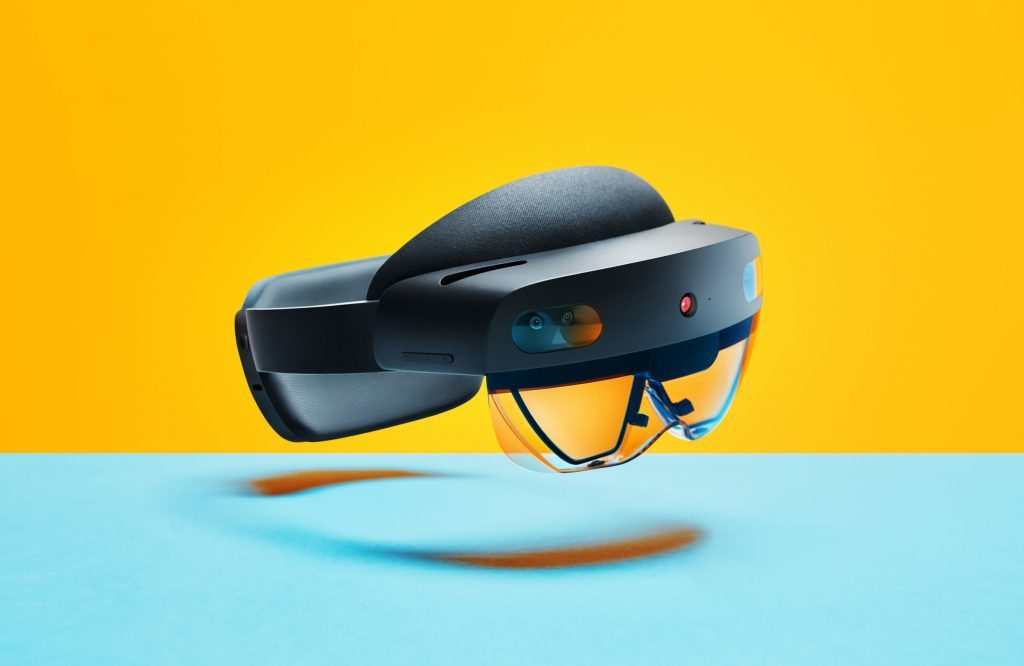
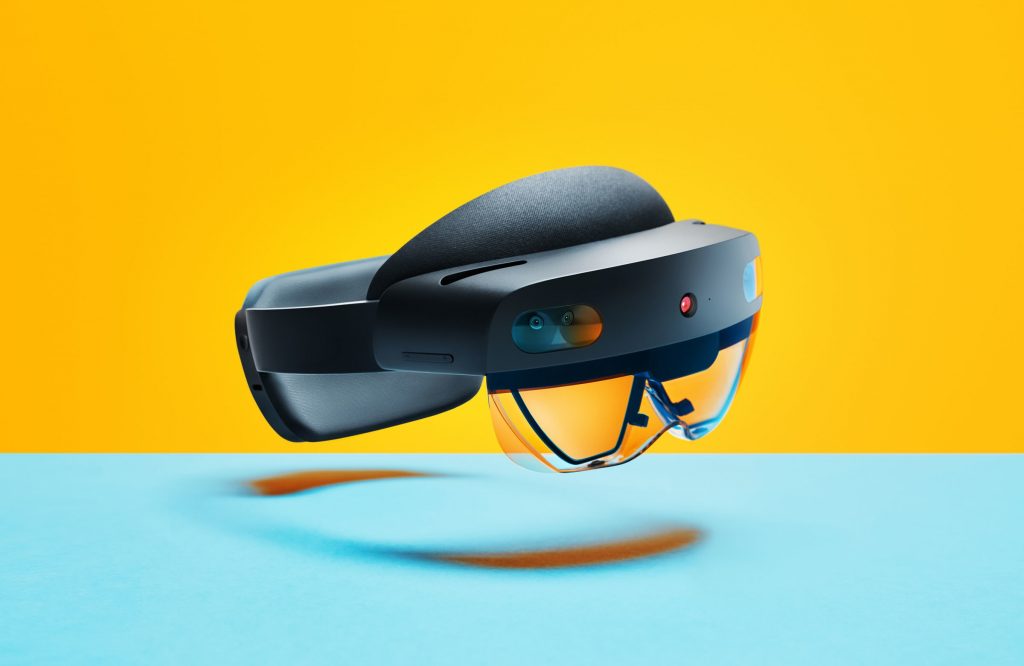
On the same league, Microsoft also revealed its new second generation mixed reality headset, HoloLens 2, the successor to 2016’s groundbreaking holographic headset. The device is an AI-backed pair of goggles, integrated with the company’s Azure cloud services. The new HoloLens 2 is more efficient, more advanced and more improved version of its predecessor.
The
HploLens 2 is powered by Qualcomm Snapdragon 850 Compute Platform and
also has its own custom-built processing unit. The device comes with
an iris authentication technology, such that it is ready to use as
soon as the user puts it on. It offers a double field view,
approximating 2,000 pixels per eye, maintaining the holographic
density of 47 pixels per degree of sight. The headset projects across
a 100-degree swath, which is almost double as of its predecessor,
projecting to a wider viewing area. It is built with the
microelectromechanical system (MEMS) display technology, providing
the 2K display for each eye.
The
device boasts a 5-channel microphone array, and spatial built-in
hardware is employed to the device, which controls the audio I/O of
the device. The device is embedded with an advanced ToF sensor,
through which the headset allows the users to interact with a
hologram with their hands. Now the user does not need to use the
virtual reality icons, rather they can simply move their hands to
control the HoloLens. It also includes a 12-megapixel RGB camera, to
facilitate video conferencing.
The
device uses the USB-C for charging and includes a pretty generic 2×2
802.11ac wireless radio. It also offers Remote Rendering which
processes the holograms of up to 100 million polygons, through the
Azure-powered service, serving as the external GPU for the HoloLens
2.
The new HoloLens 2 is more immersive and more comfortable than its predecessor. The cost of the headset is set to be $3,500 (around Rs. 2,49,000), and currently, is only available on the Microsoft e-shop, for the citizens of United States, Japan, China, Germany, Canada, United Kingdom, Ireland, France, Australia, and New Zealand. According to Kipman, Microsoft’s technical fellow for AI and mixed reality, the device is not for the gamers or the knowledge workers but is specially designed for the enterprise customers, workers who fix gear shifts and work on oil rigs, and the military personnel.
Yashica is a Software Engineer turned Content Writer, who loves to write on social causes and expertise in writing technical stuff. She loves to watch movies and explore new places. She believes that you need to live once before you die. So experimenting with her life and career choices, she is trying to live her life to the fullest.
According to a report from the Wall Street Journal, the social media website, Pinterest has confidentially filed for an initial public offering with the Securities and Exchange Commission. The news came out on Thursday, according to which the company is seeking a valuation of at least $12 billion over its IPO.
Image Source: ebay.com
Pinterest
plans to go for the IPO in the month of June this year, for that it
has hired Goldman Sachs Group Inc and JPMorgan Chase & Co, as the
lead underwriters, although the company has denied commenting over
this matter.
Pinterest is one of the largest, still-private, companies and the Unicorns of Silicon Valley, that had also raised $150 million in a private funding round in 2017. A few months ago the CEO of the company Ben Silbermann had also announced in a statement that the company was planning to go public in April 2019. But due to the economic slowdown, like few other companies, the IPO has delayed to June.
In
the last September, it was estimated that the San Francisco based
company caters to over 250 million through the company’s website
and mobile app. The users use Pinterest as a bulletin board where
they pin the things of their interest. The app is also used as an
e-commerce platform to sell products and services. The company itself
earns profits from marketing and advertisements. In 2018, the
recorded revenue of the company was more than $700 million.
The news of the company going public can be an after effect of the other tech giants like Slack, Uber and Lyft filing for their IPO, even though the company has still maintained confidentiality over this topic. Under the JOBS Act of 2012, a few companies with annual revenue less than $1 billion can file for IPO confidentially, such that they could raise capital before the before releasing detailed financial information.
Yashica is a Software Engineer turned Content Writer, who loves to write on social causes and expertise in writing technical stuff. She loves to watch movies and explore new places. She believes that you need to live once before you die. So experimenting with her life and career choices, she is trying to live her life to the fullest.
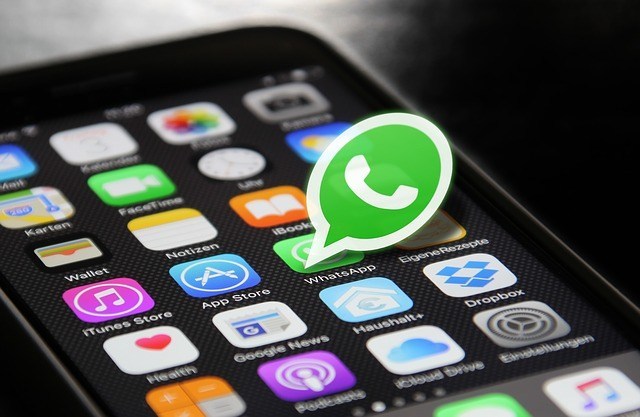
The data security has become the prime concern today and to maintain proper privacy, WhatsApp had rolled out a new biometric security feature for its iPhone app users, earlier this month. The security features made use of the Face Id and Touch Id to unlock WhatsApp, such that in the case of the unlocked phone screen, the users had to use the Face Id or the Touch Id to unlock WhatsApp.
But, a bug has been discovered in this new biometric feature that allows anyone to access WhatsApp, even the Face Id or the Touch Id is enabled for the app. This new feature was made available to the iOS users having WhatsApp version 2.19.20, and the bug was first reported on Reddit by a user named de_X_ter. Even WhatsApp has accepted that it is aware of the bug and is taking proper measures to fix it asap.
According to the Reddit post, the user can bypass the FaceId or the Touch Id security if the user selects any option other than “Immediately” for the Screen Lock under the WhatsApp Account’s Privacy Settings. The Screen Lock options other than “Immediately” are “After 1 minute”, “After 15 minutes”, and “After 1 hour”, which lets the users bypass the security using the WhatsApp share option on any other third-party application.
In reality, when the Screen Lock is enabled for the WhatsApp account, and the user tries to use the WhatsApp share option using other apps, a Face ID or Touch Id authentication must appear on the screen every single time. But due to the bug, the Screen Lock is not working the way it should. If we use the same share feature when the “Immediately” option for the Screen Lock is enabled, the Face Id and the Touch Id is working perfectly fine.
WhatsApp has acknowledged the issue and said in a statement, “We are aware of the issue and a fix will be available shortly. In the meantime, we recommend that people set the screen lock option to immediately.”
Yashica is a Software Engineer turned Content Writer, who loves to write on social causes and expertise in writing technical stuff. She loves to watch movies and explore new places. She believes that you need to live once before you die. So experimenting with her life and career choices, she is trying to live her life to the fullest.
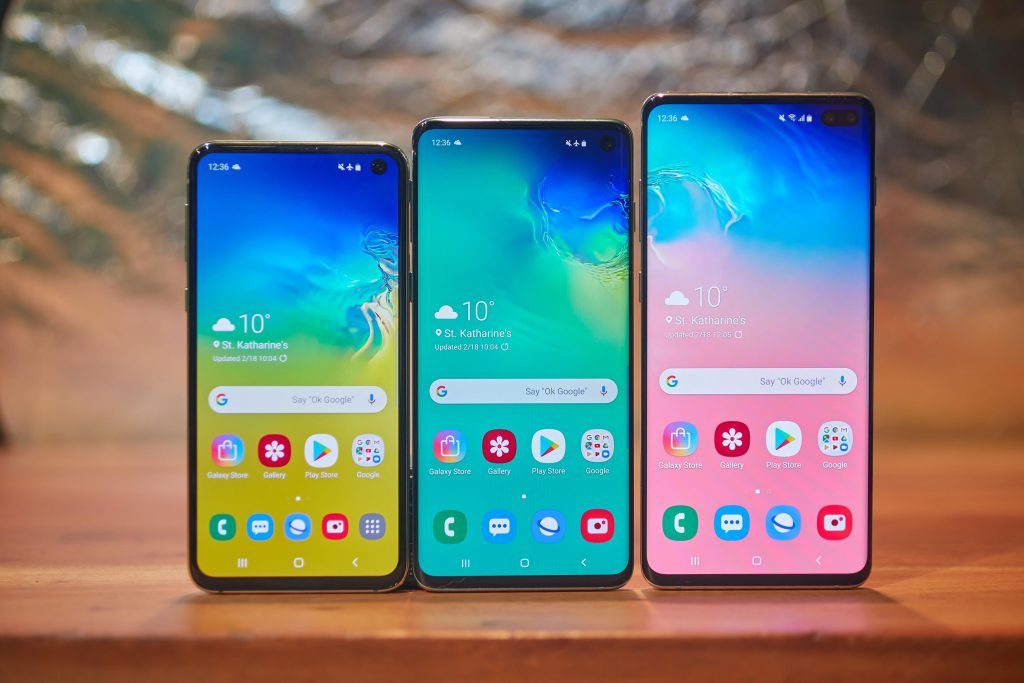
Samsung has just added three new models to its Galaxy smartphone flagship, the Samsung Galaxy S10, S10+, and S10e. The company launched the phone in its Samsung Galaxy Event on 19 February, held in San Francisco, along with another Galaxy smartphone, i.e. Galaxy fold and other devices including the Samsung wearable, earbuds, etc.
All the four phones are redesigned with the new smart screen, providing the cinematic view to its users. The screen is baseless, and even the front camera is placed within the display, to provide the HD photo quality. By default, the screen resolution is full HD+ and can be changed to Quad HD+ from the Settings.
Image Source: cnet.com
The
three Galaxy S10 phones are in different screen sizes. The S10 is
having a 6.1” screen, the S10+ has got the 6.4” screen, and the
S10e has been provided with a 5.8” display. All the three
smartphones are having a Quad HD+ and dynamic AMOLED Infinity-O
Display. The display is HDR10+ certified, providing the most real
display to its users. The AMOLED display is specially built to
comfort the eyes, as it reduces harmful blue light by 42 per cent.
The
most innovative feature that the company has embedded to its latest
flagship Galaxy S10 and S10+ phones is the fingerprint scanner, which
has been moved from behind to the front screen of the phone. The
scanner uses the ultrasonic pulses to detect the fingerprints. For
the S10e smartphone, the fingerprint scanner has been moved to the
power button of the phone.
Coming
to the camera of the new Galaxy smartphones, the S10 and S10+ are
having similar back camera frame including three cameras, i.e.
wide-angle (12MP), ultra wide (16MP), and telephoto (12MP) camera.
For the S10 plus, there are two front cameras embedded to it, a
selfie camera (10MP) and an RGB Depth Camera (8MP). Galaxy S10 has
one front camera, whereas the Galaxy S10e has two rear cameras and
one front camera.
All
three phones are designed with the AI features that adapt to the
users’ behaviour and learn their daily routine patterns. The Galaxy
S10+ has a 4100mAh, Galaxy S10 has 3400mAh battery capacity, and
Galaxy S10e has 3100mAh battery capacity. The next generation
smartphones are capable of charging the other Qi-certified devices as
well, only by placing the devices on the top of the phone. The device
that can be charged using those smartphones includes the Samsung
wearable, earbuds and wireless chargers etc.
The
RAM size of the smartphones has been increased up to 12GB, the S10e
having a 6GB RAM size for the basic model, and the S10 as well as
S10+ having a RAM size of 8GB for the basic models. The internal
storage for the Galaxy S10e, S10, and S10+ has also been enlarged to
up to 1TB, which is expandable up to 1.5TB via microSD card.
The
Wi-Fi speed has also been increased to maximum 1.2Gbps for both
Download and Upload, along with the increased LTE speed 2.0Gbps for
the Download and 150Mbps for Upload. All the three Galaxy S10, S10+
and S10e phones are both water and dust resistant.
There are four to six colours available for the three models, including the Prism White, Prism Black, Prism Green, and Prism Blue, which are common for all the three Galaxy phones. The Samsung Galaxy S10, Galaxy S10+ and Galaxy S10e will be available for preorders from February 21, while the devices will become available in stores and online beginning March 8, 2019. The price range for Galaxy S10 starts at $899.99, for Galaxy S10+ starts from $999.99 and for Galaxy S10e starts from $749.99.
Yashica is a Software Engineer turned Content Writer, who loves to write on social causes and expertise in writing technical stuff. She loves to watch movies and explore new places. She believes that you need to live once before you die. So experimenting with her life and career choices, she is trying to live her life to the fullest.
Necessity is the key to invention, and the story of Linus Torvalds is the greatest proof to that. A student and an enthusiast programmer from Helsinki University started working on his own Operating System when he was unable to buy a basic UNIX system that costed around US$5,000 at that time. Although it was a modest effort of improving the small clone of UNIX, his creativity and curiosity led him to build a whole new and free OS software, Linux, which accidentally became an alternative to the Microsoft monopoly.
Early
Life
Linus Torvalds was born on 28 December 1969 in Helsinki, Finland. His father Nils Torvalds and mother Anna Torvalds, both worked as journalists. His parents named him after the Nobel Prize-winning American chemist, Linus Pauling. Torvalds was 11 years old when he got familiar with computers and the BASIC programming language. This was the time when he grew an interest in computers and coding. Soon, he was able to write codes for his own assembler and editor, as Finland was not a place where software were easily available. Later, he also developed a few games, including the clone of Pac Man, naming it the Cool Man.
Image Source: zdnet.com
Torvalds joined the University
of Helsinki in 1988, where he studied Computer Science as his majors.
But within the first year of his college, he joined the Finnish Army
Uusimaa brigade and completed the 11-month officer training program,
as the Second Lieutenant, under the mandatory military service of
Finland.
After completing the military
training, Torvalds came back to his home town, to resume his college.
While in college, he got introduced to Unix for the first time. At
the same time, he also started studying a book named ‘Operating
Systems: Design and Implementation’, written by the computer science
professor Andrew Tanenbaum, which described the educational
stripped-down version of Unix, ‘MINIX’.
Founding
Linux
In 1991, he bought the Intel 80386-based clone of IBM PC, having a 33MHz Intel 386 processor and a huge 4MB of memory. The system came with the MS-DOS operating system, that according to Torvalds did not do justice with the 386 Intel Processor. As he was already working on UNIX in the college, he was not much comfortable with working on MS-DOS but getting a UNIX copy too expensive. This led him to the other alternative for the OS, and he ordered a copy of MINIX for his system.
MINIX was faster than MS-DOS
but still had some flaws. So he decided to make some changes to MINIX
in order to improve the OS. To work on the idea, even before
receiving his MINIX copy, he went into the depth of Unix and studied
books covering all the aspects of the development phase. He started
with writing a small piece of code that could improve MINIX. This
also became the M.Sc. thesis project for Torvalds, and he titled the
project as ‘Linux: A Portable Operating System.’
On Aug. 25, he posted to the
internet’s Minix newsgroup, saying, “Hello everybody out there
using MINIX – I’m doing a (free) operating system (just a hobby,
won’t be big and professional like GNU) for 386 (486) AT clones. I’d
like any feedback on things people like/dislike in MINIX, as my OS
resembles it somewhat.”
Eventually, with great hard
work, Torvalds managed to release the first version of the OS, i.e.
1.0, on September 17, followed by the second version, i.e. 2.0, on
October 5, in the same year. The second version OS was a text-based
user interface and was officially named as Linux. Torvalds put the
0.2 version over FTP and used Stallman’s GNU General Public License
version 2 (GPLv2) for his Linux kernel so that other developers could
use it and modify it for further improvements.
Developers from across the
world also became curious about Linux, started working on the same,
resulting in rapid improvements to the platform. Even being a student
at Helsinki University, Torvalds was doing really well. The college
authorities appointed him as an instructor at the University, which
helped him continue his development work for Linux.
By 1996, people started using Linux on their systems, and by 1997, Linux was installed on over three million computers. Organisations like NASA, Dell and IBM were also using Linux. At the same time, Red Hat started building software based on Linux, that boosted the popularity of Linux even more.
In 1999, when Red Hat went
public, the company presented Torvalds with stock options in
gratitude for his creation, making him an overnight millionaire.
Also, when IBM started its research work on Linux in 2001, to support
this free software, a few other companies also stepped in to do the
same.
Today, Linux is serving those
people, who need to use a computer, but cannot and does do not want
to spend a huge amount on the other operating systems. According
to Torvalds, he started working on Linux for fun, and it is also a
fact that for almost a decade, he was working on it for free. Linux,
certainly, is the result of his dedication and brilliance.
Personal
Life
Torvalds
is married to Tove Torvalds and has three daughters. In 2010, he
obtained US citizenship. In 2000, he became interested in scuba
diving and have received many certificates in the same. He also
launched Subsurface, a software for logging and planning scuba dives,
in 2011.
In
1998, Torvalds received an EFF Pioneer Award. He also shared the
Takeda Award for Social/Economic Well-Being with Richard Stallman and
Ken Sakamura. In August 2005, Torvalds received the Vollum Award from
Reed College. He also received an honorary doctorate degree from
Stockholm University.
Torvalds also founded the distributed version control system Git, in 2005. The system is widely used to track the changes in source code during software development.
Yashica is a Software Engineer turned Content Writer, who loves to write on social causes and expertise in writing technical stuff. She loves to watch movies and explore new places. She believes that you need to live once before you die. So experimenting with her life and career choices, she is trying to live her life to the fullest.