Your Tech Story

Yashica Vashishtha

Yashica is a Software Engineer turned Content Writer, who loves to write on social causes and expertise in writing technical stuff. She loves to watch movies and explore new places. She believes that you need to live once before you die. So experimenting with her life and career choices, she is trying to live her life to the fullest.

The Success Story of Hewlett-Packard (HP)

HP is not a new name in the IT industry, and the narrative of the company is over 80 years old. The company was founded by two Stanford graduates Bill Hewlett and David Packard, in January 1939.

The two co-founders met each other in a social outing during the time they were studying at Stanford. Both were pursuing a degree in electrical engineering and shared a common interest in starting a business after completing their education. They discussed their idea with their fellowship professor Frederick Terman at Stanford and with his supervision started working on the same.

The two started their company from Packard’s garage in Palo Alto, in 1938, with an initial capital investment of US$538, even without deciding a proper name for it. In 1939, they tossed a coin to decide the name for the company adopting the surname of their names. The toss was among Hewlett-Packard and Packard-Hewlett, in which Hewlett-Packard won.
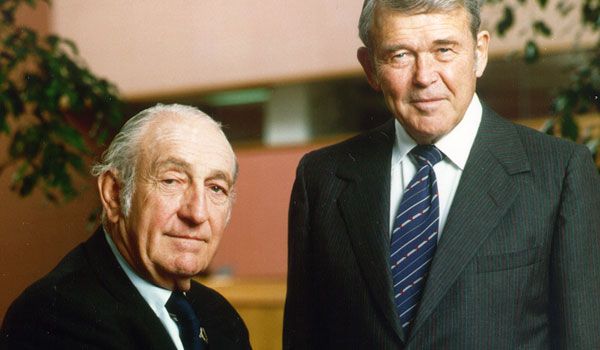
hewlett-packerd
Image Source: Pinterest

The first product from the company was a precision audio oscillator, the Model HP200A. It was cheap and efficient, and became one of the most successful product, commercially. The same product was also used by Walt Disney Productions, for the movie Fantasia, in certifying the Fantasound surround sound systems installed in theatres.

In 1957, the company went public in its initial public offering.

In the 1960s, Hewlett-Packard started producing the semiconductor devices for the instruments and calculators. In 1966, the company entered into a new business of computer manufacturing and rolled out the accumulator-based design HP 2100 / HP 1000 series of minicomputers, followed by the HP 9800 and HP 250 series of desktop and business computers.

In the 70s the company started producing the advanced business computers, i.e. stack-based HP 3000 computers. During the same time, the HP 2640 series smart computers were also introduced that included one of the first bit mapped graphics displays. The same computer was used to develop the first commercial WYSIWYG Presentation Program, BRUNO, by coupling the HP 2100 21MX F-Series micro-coded Scientific Instruction Set.

In the same decade, the company produced the world’s first handheld scientific calculator HP-35, world’s first handheld programmable HP-65, first alphanumeric, programmable, expandable HP-41C and first symbolic, and the graphing calculator HP-28C.

In the 80s, Hewlett-Packard expanded its business to build printers and scanners for desktop computers. With the rise of the internet, the company registered its website domain as HP.com, on 3 March 1986, becoming the ninth Internet .com domain ever. In 1989, HP acquired the Apollo Computer, and in 1995 it acquired the Convex Computers.

By 1998, the company had become one of the leaders in the desktops, laptops, and servers for many different markets. Later, it also started its online service hpshopping.com, to sell its products online, which was rebranded to “HP Home & Home Office Store” in 2005.

In 2005, due to the merger with Compaq, Hewlett-Packard was facing heavy losses in the business. In 2006, the company offered a new range of products in both hardware and software, reducing the costs. In 2007, the company’s revenues skyrocketed, and HP hit the $100 Billion mark for the first time.

In 2011, Hewlett-Packard launched its first tablet named HP TouchPad, followed by the industries’ first wireless mouse. But by the end of the same year, it announced that it won’t be operating in the tablet and smartphone business anymore, and will focus more on the Cloud, solutions and software business.

In the years 2012-13, the Hewlett-Packard faced a great decline in its profits, cutting down 34000 jobs in the same years.

In October 2014, the news of splitting up of Hewlett Packard into two separate companies came into knowledge. The two wings would do their separate business of personal computers and printer manufacturing. Finally, in November 2015, the company separated into HP Inc. and Hewlett Packard Enterprise, HP Inc. retaining the Hewlett-Packard’s stock price history.

Although the company has seen many ups and downs during its long journey, the vast history of HP has introduced the world with many great inventions. The company also gets credits for many patents and will be known for its contribution to the IT industry.

Uber, Lyft Rewarding the Drivers with Cash Bonuses to Invest in Shares in Their Respective IPOs

According to a new report from The Wall Street Journal, the cab-renting service Uber and Lyft are planning to allocate some cash bonuses to their drives so that they can invest in the company’s shares through the upcoming IPO of those companies.

uber-lyft
Image Source: howtogeek.com

There has been a lot of discussions about the role of a driver in a transport company and most of the times those drivers are not recognised as the full-time employees of that company. Also, under the rules of the Securities and Exchange Commission (SEC), those companies are not allowed to grant those drives a share of the stocks, directly, in the company.

Although many times several laws have been trying to put those drivers into the full-time employee category, companies like Uber and Lyft regards the drivers as individual contractors. Now the two companies are planning to offer those drivers who have been a part of their team for a longer time with rewards, such that they would be able to buy a share of the stakes in the IPO of those companies, before shares to begin trading on public stock exchanges.

According to the reports, Lyft will be granting the drivers, who have completed 10,000 rides, with $1,000 and the driver who have completed over 20,000 rides will get $10,000. It will be the choice of the drivers if they want to keep the money or put the money towards IPO-priced shares.

On the other hand, there is no hint from Uber over the amount of reward money. Although there has been no confirmation from Lyft as well, and the money value can be changed depending upon the situation.

Uber had been talking about offering a part of the shares of the company to its drivers since 2016, and last year, in May, the Uber CEO Dara Khosrowshahi also announced that the company was planning to provide extra benefits and rewards to its drivers. Uber has also started free tuition fee and insurance programs for the drivers working for the company.

Noticeably, both Lyft and Uber are ready to debut on the Nasdaq for their IPOs. It is expected that Lyft between $20 billion and $25 billion in its IPO, and Uber may reach $120 billion in the IPO. Lyft and Uber will be putting hundreds of millions of dollars toward the reward program for its drivers so that they would be able to invest during their IPOs.

Spotify App Launched in India Providing Access to Forty Million Songs

Amid a legal conflict with music label Warner Music Group, Spotify, successfully launched its app for the Indian users yesterday. The company quietly rolled out the app for the Indian users on Wednesday, and it is also expected that the Indian Spotify app may be used to test the upcoming features to the app.

spotify
Image Source: rollingstone.com

With the launch of the app, Spotify will provide its Indian users with access to over 40 million songs, and in different languages including Hindi, Punjabi, Tamil, and Telugu, etc. The app is specially designed for the Indian users, such that they will be able to create playlists for the trending songs in the major cities of India. The app also offers on-demand songs with a free account.

“India has an incredibly rich music culture, and to best serve this market, we’re launching a custom-built experience,” Spotify founder and CEO, Daniel Ek, said in a statement. “Not only will Spotify bring Indian artists to the world, but we’ll also bring the world’s music to fans across India.”

The app is offering various different plans for its users in India. The offers include one day to monthly plans, under which for one day access the users need to pay 13 rupees ($0.18), for a week they have to pay 39 rupees ($0.55), and one single month plan is for 129 rupees ($1.81). Spotify has also introduced the student plans offering discounts up to 50 per cent.

Although the company had set up its office in India last year and had plans to launch the app in India in the month of February in the same year, in order to get the licensing deals with major record labels including Sony, Universal and Warner Music, the launch got delayed for a whole year.

Even though the company has finally launched the app in India, it is a bit late, as there are many other companies including Apple Music, Google Play/YouTube Music, JioSaavn, Gaana, and Amazon, that are already ruling the music streaming industry in India. So it can be a bit tough for the company to establish itself in the Indian music streaming industry amid the high competition.

The Sweden-based company Spotify is operating since 2007 in several other countries, having a huge client base across the globe. As of February 2019 records, the company is catering to 207 million total monthly active users, including 96 million paying subscribers.

Disney Plans to Expand in Streaming Business; Plans to Acquire 10% Hulu Stake from AT&T

hulu
Image Source: axios.com

Reportedly, Disney is in talks with AT&T to acquire a 10 per cent stake that the latter holds in the streaming service media company Hulu, in order to expand its control over the company. AT&T carries the 10 per cent stakes in Hulu through its subsidiary WarnerMedia unit. Disney, currently, owns 30 per cent of shares in the streaming service and is already close to acquiring another majority stake in the same from the 21st Century Fox, which owns the rest of 30 per cent shares in the company.

Clearly, after the acquisition from 21st Century Fox and AT&T, Disney will be a 70 per cent stake owner in Hulu, and there will be only one other owner left with 30 per cent of the stakes in Hulu, i.e. the subsidiary of Comcast, NBCUniversal.

AT&T is in the process of settling off its extreme debts, and in 2018, it had announced that it would pay down at least $20 billion worth of debt in 2019, alone. Selling off the Hulu stakes is one of the major moves that the company has taken in order to settle its debts. It was in 2018 when the company announced that it is interested in selling its 10 per cent of shares it owns in Hulu. According to the reports, the deal between Disney and AT&T may close at $1 billion, which may help the latter to pay down its excessive debt to an extent.

Hulu has been providing its streaming services since 2007 but has always failed in front of its rivals including Netflix. But last year, the company started streaming its original content and gained much popularity among people. Also, the company registered 8 million new users in 2018. This increased client base has also increased the company’s worth. But still, it needs more focus and good content.

Disney already is looking forward to expanding its business in the streaming services and is working on its own home project for it, the Disney+. Disney+ will be a streaming service that will carry exclusive Disney movies and TV shows and will be launched by the end of this year. Initially, the service will be available domestically.

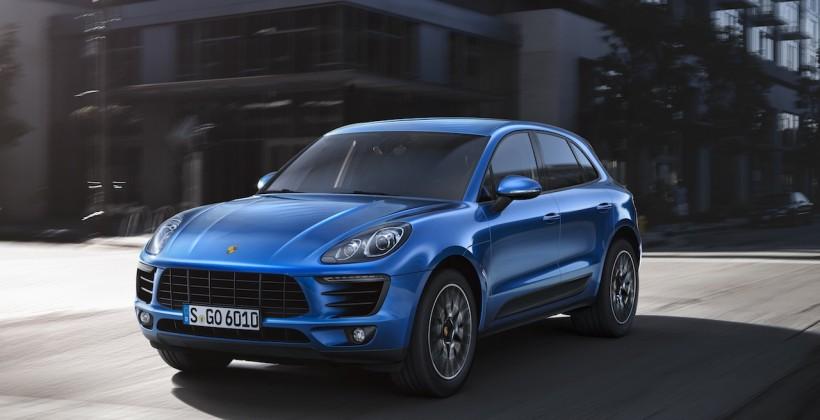
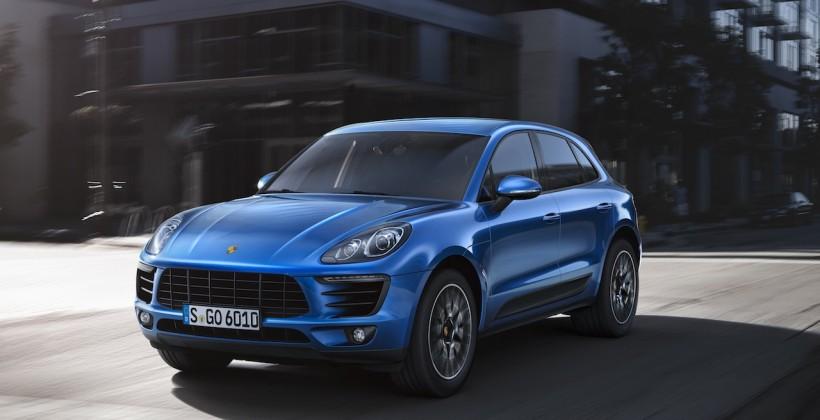
Porsche’s Best Seller ‘Macan Compact SUV’ to Go All Electric

Porsche Macan
Image Source: slashgear.com

The luxury vehicle producers, Porsche, announced on Tuesday that it is going to transform it’s best selling Macan SUV, into all electric. The company has recently started working on its first electric vehicles, the Taycan and Cross Tourismo, and the electric Macan SUV will be another addition to its electric vehicle lineup.

The company has revealed that the production of the electric Macan SUV will start anytime at the start of the coming decade, and the company is already set to launch its Taycan sedan by the end of this year, and the launch of the Taycan Cross Turismo will follow shortly afterwards, which is also the final production version of the Mission E concept of the company.

Like Porsche’s electric vehicle Taycan, the Macan compact SUV will also feature 800-volt architecture and will be capable of taking charge up to 350 kW. The company has not given any statement on the total distance it would be able to cover when fully charged, but we can get a good idea of its mile range from the Taycan model, which will have a range of 250 miles, after charging in fewer than 20 minutes.

The company has said that the Macan compact will be based on the PPE architecture, and for that Porsche has collaborated with the Audi AG. The company plans to turn most of its vehicles into electric or hybrid models, like its contemporary Tesla, and according to the company, 50 per cent of all new Porsche vehicles may have an electric drive system, by the year 2025.

“Our aim is to take a pioneering role in technology, and for this reason, we will continue to consistently align the company with the mobility of the future,” Porsche CEO Oliver Blume said in a statement.

Porsche is known for its luxury and sports vehicles, and Macan compact crossover is the best-selling vehicle of the company, having been sold 23,500 Macan SUVs in 2018, in the U.S. only. Porsche has plans to invest over $6.9 billion on EVs manufacturing through 2022. The company will manufacture all its electric vehicles at the company’s existing plant in Leipzig, Germany.

Henry Ford : The Founder of Ford Motor Company

“Follow your passion. Following your passion will lead you to the road of success.” the most common saying that we hear today. But how many of us have the courage to do that? Only a few are there who recognise their passion and pursue it to find self-satisfaction. One such prominent personality was Henry Ford, the founder and the first chief engineer of Ford Motor Company. Henry’s passion was his love for the machines, and his passion gave inspiration to many, as his only interest led him to build an empire which is one of the biggest automobile manufacturers, today.

Early Life

Henry Ford was born on 30 July 1863, in Greenfield Township, Michigan, in a farmer’s family. His fathers family belonged to England, and his mother’s parents had moved from Belgian to Michigan. In his early childhood, he was introduced to many types of machinery used in farming, and the time he became a teenager, he became more interested in the machinery repair work than farming. He used to dismantle and repair the timepieces and became a pro at it.

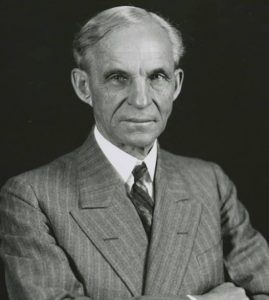
henry ford
Image Source: thehenryford.org

His love for machines led him to move to Detroit and join the James F. Flower & Bros. as an apprentice machinist. Later, he joined the Detroit Dry Dock Co. at the same position.

Though he was never interested in farming, he had to move back to his hometown to work on his family farms. Here too, except the farming work, he was more involved in the other machinery work. In the same time, he learned to operate the Westinghouse portable steam engine and was appointed by Westinghouse to service their steam engine.

Career

As Henry was always interested in working with the machines, with his interest he had developed great skills, too. In 1982, to pursue his dream career he started working with the Edison Illuminating Company of Detroit as an engineer. Within two years, he was promoted as the Chief Engineer in the company. He had gained enough experience and was earning good money too, so he started experimenting with his own projects and was able to build a self-propelled vehicle naming it the Ford Quadricycle.

On 5 August 1899, Henry founded Detroit Automobile Company and launched another vehicle financed by Detroit-based businessperson William H. Murphy. Since the company could not provide the best quality of vehicles, the company was shut within two years of its inception, in January 1901.

In the month of October the same year, Henry built another 26-horsepower automobile. The vehicle was of high quality and encouraged the shareholders of the Detroit Automobile Company to invest in another newly built company named Henry Ford Company, established on 30 November 1901, where Ford became the chief engineer. But in the very next year, due to some dispute, Henry left the company.

Leaving the company did not stop Henry from manufacturing vehicles, and in 1902, he, with the help of former racing cyclist Tom Cooper, manufactured the 80+ horsepower racer “999” that participated and won a race, in the same year.

Founding Ford Motor Company

The success of “999” was enough to attract more investors, and that is what happened next. Alexander Y. Malcomson partnered with Henry to form Ford & Malcomson, Ltd. to manufacture an inexpensive automobile. Soon, other investors including Dodge Brothers also partnered with Henry and Malcomson, and they incorporated the company as Ford Motor Company, on 16 June 1903, with a capital of $28,000. The next model from the company set a new land speed record at 91.3 miles per hour that drove on the ice of Lake St. Clair.

It was the race driver Barney Oldfield who became the most important person in terms of marketing of the cars produced by the company, as he drove the “999” around the country.

The next popular model that the company produced was the T model, having a cost of around $825 (1908). It was the first car model that had steering on the left, and the engine and other machine parts were enclosed under the metal covers. The design was impressive, and various other companies copied the design.

In 1914, the recorded sales passed 250,000 units, and in 1916, sales reached 472,000. In 1927, the final total production of the T model was 15,007,034, which set a record that stayed for the next 45 years.

By the year 1918, Henry acquired the sole ownership of the company. The next hit model that the company produced was the model A, introduced in December 1927.

Henry was not only a visionary inventor but was also an excellent entrepreneur. He tried to get everything under one-roof and tried to avoid any kind of dependence on any other company. He had established an empire where he could manufacture the products from scratch. He always supported the economic independence of the United States.

In 1911, he established the first two international Ford plants in Britain and Canada, followed by the establishment of the other plants in Germany, Australia, India, and France, by the year 1920.

During the first World War Henry also invested in the aviation industry and built the most successful aircraft, the Ford 4AT Trimotor. The company also acquired the Stout Metal Airplane Company. In 1927. The Smithsonian Institution has honoured Ford for changing the aviation industry. In 1933, the aviation wing of the Ford Company was shut down due to the sales issues.

During the war, Henry was one of the 170 peace leaders who were against the war and was making efforts to stop it. In the second World War, too, he opposed America’s participation in the war.

After the death of his son Edsel Ford, in May 1943, who was also serving as the President of the company, the company started facing a kind of decline. Henry had left the Presidency over twenty years ago, and due to his son’s death, he reconsidered to regain the post. Although due to his health issues, there were only a handful of people who wanted him to take the position, he was chosen with majority votes as the President of the company. But due to bad health, he appointed his grandson Henry Ford II, as president and the company was back on the track.

Personal Life & Death

Henry had married Clara Jane Bryant on April 11, 1888, and had a son Edsel Ford, who later became the President of the Ford Motor Company.

Henry ran as a Democrat for the United States Senate from Michigan in 1918 but lost to the Republican candidate, Truman Newberry with a small margin.

He also took immense interest in the car racing and manufactured cars, especially, to compete in various races. He himself, too, participated in a few car races.

On 7 April 1947, he died of cerebral haemorrhage at Fair Lane at the age of 83.

Ford Henry will always be remembered for his contribution to the automobile industry and the leadership qualities that he possessed. He was a great inventor, and his story is a motivation for many.