Your Tech Story

Yashica Vashishtha

Yashica is a Software Engineer turned Content Writer, who loves to write on social causes and expertise in writing technical stuff. She loves to watch movies and explore new places. She believes that you need to live once before you die. So experimenting with her life and career choices, she is trying to live her life to the fullest.

David Welch : A Pioneer in the Field of Optical Devices & the Co-founder of Infinera

Passion can not only help you discover new horizons, but it also leads you to the heights of success. In the past many years, we have been hearing about the discoveries that have been derived from passion, and today, are contributing to the world. One such passionate person is David Welch, an optical engineer, who is the pioneer in the field of optical devices and the co-founder of Infinera. David Welch started his journey as an optical engineer and ended up becoming an entrepreneur, who is also one of the famous contributors in the various sectors of science, engineering and technology.

Early Life

David Welch was born on 26 October 1960, in Washington, D.C. His father was in the navy and had also worked as an engineer at Westinghouse. David was inspired by his father and used to build small electronic equipment with him. He also built an electronic tic-tac-toe game for his science project while in school.

David Welch
Image Source: globenewswire.com

David completed his high school education from Severna Park High School in Severna Park, Maryland, and attended the University of Delaware where he pursued a bachelor’s degree in electrical engineering. During the freshman year in college, he played as the pitcher in his college baseball team. At the same time, he had applied for the naval academy to follow his father’s footsteps in career, but soon he realized that he is not much interested in navy. During his vacations, he used to take small jobs at companies that helped him to get involved in practical engineering works. One of his such jobs included a job at Aeronautical Radio, Inc. where he worked on radio technologies used in planes.

Later, in 1985, he joined Cornell University to earn a PhD degree in Electrical Engineering.

Career

As soon as David finished his PhD thesis, in 1984, he started giving interviews and finally, joined as the research scientist at SDL, in January 1985. Eventually, in the late 80’s he was appointed as the vice president of research in the company. In 1992, for his contribution to the optical science, David was awarded the Adolph Lomb Medal from the Optical Society of America. Throughout his seventeen years of career, he handled various important job titles at SDL including the chief technology officer and vice president for corporate development.

At the same time, he designed and developed the high power diffraction limited semiconductor lasers and was awarded the IEEE LEOS Engineering Achievement Award in 1998. Then in 1999, David received the OSA’s Joseph Fraunhofer and Robert M. Burley Award.

Founding Infinera

David met his future co-founders Jagdeep Singh and Drew Perkins at a 2000 Christmas party. The three had discussions on optics and bandwidths. Together they conceived the idea of starting a digital optical network and started working on the same.

In the year 2000, David founded Infinera as Zepton Networks, along with Jagdeep Singh and Drew Perkins. The company stayed underground until it produced its first product in 2004. The company is known for the production of WDM optical transmission equipment for the telecommunications service provider market. The company is also a pioneer in the design and manufacture of large scale photonic integrated circuits.

Within seven years of its inception, in 2007, Infinera went public on the NASDAQ raising a valuation worth $182 million. This was just the beginning, till now the company has registered over 300 patents in the field of optical transport and virtualization of optical bandwidth. Welch himself holds over 130 patents in the field of optics and has published over 250 articles on the same.

Personal Life

Welch married to Heidi Welch in 1993. The two have a daughter and two sons. Welch is one of the boards of directors of AntriaBio, Inc., which is a biopharmaceutical company. As of 2018, the estimated Net Worth of David F Welch is at least $11.5 Million.

Wang Xing : Chinese Billionaire Businessman & the Founder of Meituan

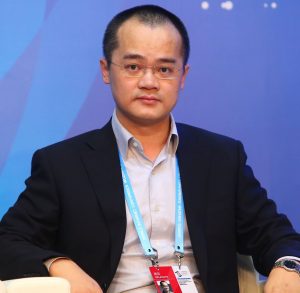
A geek and a curious guy, this is how the Chinese people know, Wang Xing, the founder of Meituan, the biggest Chinese group buying website. Wang Xing is a serial entrepreneur who emerged as one of the successful businessmen in China, even after facing multiple failures and now, he has built the biggest online-to-offline market in China. Also known as ‘Big Brother Xing’, he has been giving its rival, Alibaba’s Ele.me, a tough competition.

Wang Xing was born on 18 February 1979, in Longyan, to a Chinese businessman Wang Miao, the owner of a cement factory located in the city of Longyan in Fujian. Wang Xing completed a bachelor’s degree in electronics engineering from Tsinghua University in 2001.

wang xing
Image Source: fortune.com

Having born into a business family, Xing was always into starting up his own business. Inspired by the success of Facebook in the U.S., he dropped out of the University of Delaware, where he was pursuing a PhD in computer engineering and started his first social network named Duoduoyou. The startup specifically targetted the students in the various university, but like many of other startups, it was unable to make the mark.

The second time, he started Youzitu, that was built to serve the Chinese students abroad. But again the startup got shut down. The next startup that Xing started was Xiaonei that he launched in 2005. This startup also targetted the Chinese students and was the first of his startups, to get thousands of registered users in a small time.

But yet again, Xing faced problems like financial issues in handling the company and had to sell it to InterActive Corp, for US$2 million, only after a year of its inception. InterActive Corp renamed the company to Renren, that later raised US$740 million, in its IPO in 2011.

Having earned enough money in the deal, Xing was able to perceive a new startup idea and launch another social media app, which actually was a micro-blogging app inspired by Twitter, named Fanfou. This time, the startup went very well and had gained over 2 million user base. But then, in 2009, Government ordered to shut down the social network as a result of violent discussions that took place over the platform about the Ürümqi riots. But eventually, after a small time gap, Xing re-opened Fanfou and is still an active participant on this platform.

Even having faced many failures in his past start-ups, Xing never became discouraged and pushed his limits even further. In 2010, he came up with his another startup, Meituan, a group buying a website for local food delivery services, consumer products and retail services. Xing received the initial funding of worth $12 million for the startup from Sequoia Capitals. This startup again was inspired by another US-based company named Groupon and sold discount vouchers on various services and deals.

The company is backed by Tencent and is one of the biggest on-demand services providing platforms. By the year 2014, the company had employed over 5,000 people, and in 2015, it had registered over 200 million users. The company operates in 2800 cities in China and has partnered with 400,000 local Chinese businesses.

On 8 October 2015, Meituan merged with a Chinese group buying site named Dianping, and the merger became Meituan Dianping. In January 2016, the company raised $3.3 billion worth of funding. Meituan Dianping went public on the Hong Kong Stock Exchange in 2018 at a price HK$69 per share.

Wang Xing has always stressed on enhancing the efficiency and in fact, has done the same in the past fifteen years. Currently, he serves Meituan Dianping as the chairman and is also the member of the board at Beijing Mobike Technology Co Ltd. He is an avid reader and also writes blogs on topics like entrepreneurship, philosophy, etc.

In 2018, Xing was at number 37 in the Forbes China Rich List 2018 and at number 379 in the Forbes Billionaires 2019 with an estimated worth $4.1 billion. He was also listed number three on the Forbes 2018 “40 under 40” list.

Samsung Reports the Lowest Quarterly Profit Since 2016

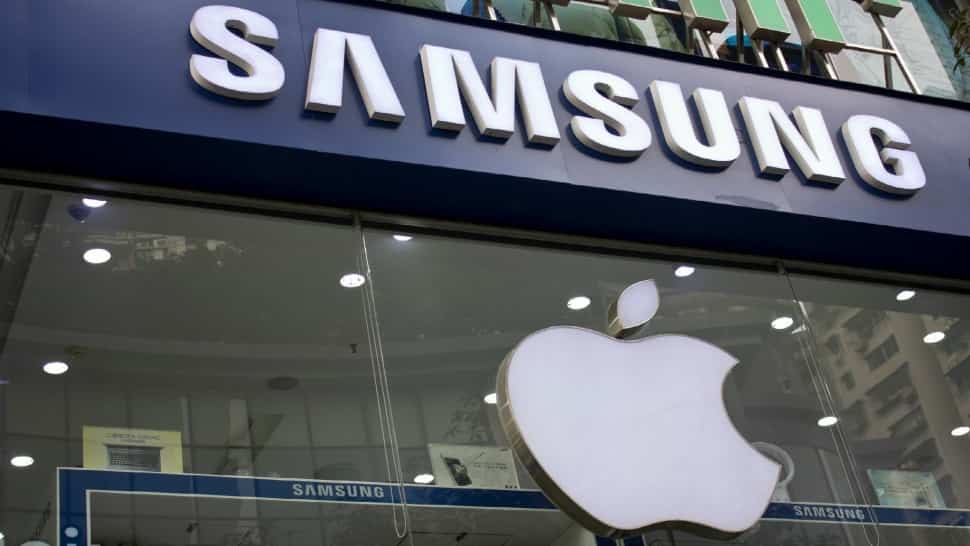
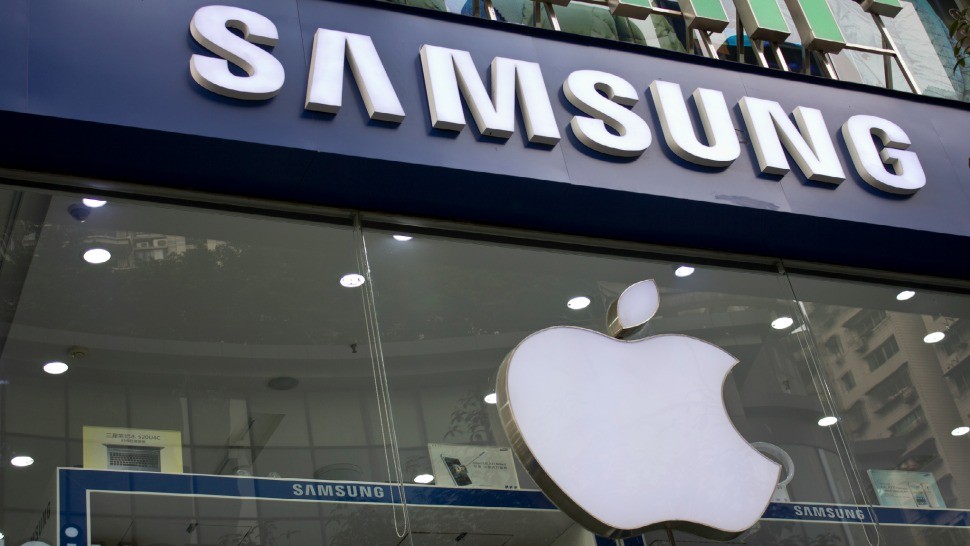
Like every year, Samsung reports its Q1 profits at the end of April, and ahead of that, the company has revealed that it is likely to face 60 per cent of the decline in its quarterly profits compared to the previous year. The company has reported that the decline in the profits is due to the rapid decrease in the sales of memory chips and its display products.

samsung
Image Source: komando.com

Noticeably, the 2018’s Q1 operating profit was reported to be 15.64 trillion South Korean won, which now has fallen to 6.2 trillion won for this year’s Q1 operating profits. According to Samsung, it had already expected a 14 per cent decline in its operating profits for the first quarter of 2019, which was estimated to be around 13.2 trillion South Korean won.

In the past year, the memory chips prices dropped by a surprising rate, and the company too had stated that price drops were “larger than expected.” This report of the operating profits indicates the Q1 2019 profits will be the lowest since the third quarter of 2016 (due to the worldwide recall of it’s over exploding batteries of Galaxy Note 7 in 2016). In past few years, Samsung has been getting hints on the slowing down of the growth of the company, and even the company is aware of that, as the analysts’ reports has been revealing the continuous decrease in the sales of Samsung products.

Samsung though is trying hard to compete with the biggest tech giants like Apple, the main source of its profits has always been the mid-range products. Also, its semiconductor division has been the greatest contributor to its high revenues. So it may be the time when the company should focus on its loyal customers, and the mid-tier products to secure that additional revenue.

But according to the analysts, this decline in the profits will remain for a bit longer, especially in the memory chip division. The price of the memory chips may decrease up to 20 per cent in the coming future, and then in Q2, the semiconductor division may see even lower profits.,

Snapchat Launched a New Gaming Platform & other New Features at its First Partner Conference

Snap Inc. CEO Evan Spiegel hosted the Snapchat’s first partner summit in Los Angeles on Thursday, where he announced a few new features, and a new suite of products, in his keynote speech. According to Spiegel, the company is all set to introduce a new revamped AR camera, Snap Games, and integration with third-party apps.

The company has been facing a lot of pressure and competition by its rival companies, Facebook and Instagram. Therefore, Snapchat is also trying to get ahead of the competition by introducing new features and products.

snapchat
Image Source: techspot.com

Going through the facts, Spiegel said, “In the United States, Snapchat now reached nearly 75 per cent of all 13-34-year-olds, and we reach 90 per cent of 13-24-year-olds. In fact, we reach more 13-24-year-olds than Facebook or Instagram in the United States, the UK, France, Canada and Australia.”

Like its contemporaries, Apple and Google, Snapchat has introduced an ad-supported Snapchat gaming platform and has teamed up with some renowned game developers. The platform will be rolling out the game titles including Bitmoji Party, Tiny Royale, Snake Squad, C.A.T.S. Drift Race, Zombie Rescue Squad, and Alphabear Hustle. The Bitmoji kit has also got new updates, and now those Bitmojis will also reflect in Venmo and Fitbit devices.

The Snapchat Lenses integrated with Augmented Reality, now will help its users to solve math equations and other features like body tracking, hand tracking as well as pet tracking are also added to it. The new AR bar will be located under the Lense slider, and the user can select any of the options according to their need. Also, over 400,000 Lenses have been created for the updated Snapchat.

The company has also introduced Landmarks, that includes filters that are specifically designed to get applied when the camera points to any of the iconic places like Eiffel Tower in Paris, Capitol One building in Washington, Buckingham Palace, The Flatiron Building in New York City, etc.

According to Snapchat, now the users will be able to post the stories directly to its other partner social media platforms. The first platform that will have this feature is Tinder. Also, Snapchat will let the users share the music they are listening to on the JioSaavn on Snapchat and Netflix will also get similar support.

The company is also about to monetise the third party apps to help its partners to get some benefits.

Rick Alden : The Visionary Genius & the Founder of Skullcandy

A disruptive thinker and wildly unpredictable, the two terms can be associated with Rick Alden, the founder of Skullcandy, the American headphones manufacturing company. Alden is also known as a mad genius, who always believed in refinement and innovation. He wanted to create a product that was not owned by the user, but it could own the user.

Alden was born on 4 July 1964 in Baltimore, Maryland. Rick loved snowboarding and wanted to pursue a career in the same. He attended the University of Colorado Boulder, and while in college, he founded his first company National Snowboard Inc (NSI), along with co-founder Jim Gardner, in 1986. The company was an event management firm that hosted the consumer and pro-snowboarding events nationwide.

rick alden
Image Source: kcpw.org

Later, he moved the headquarter of NSI to Denver and migrated to the University of Colorado Denver, where he pursued a Bachelor’s degree in political science.

The next business venture that Rick founded was Device Manufacturing, which he founded along with the veteran snowboarder Brett Conrad and produced the step-in snowboard boot and binding system.

In the late 90s, the snowboarding was becoming more popular, and Rick himself was an active snowboarder. Rick liked to listen to music at high bass while snowboarding and knew that others also loved to do the same. But the chunky headphones never provided him with the experience he always expected for. This led Rick to think about a new business idea, i.e. a company that would produce headphones, especially for snowboarders and skateboarders.

In 2003, Rick founded Skullcandy and started manufacturing headphones for snowboarders. Skullcandy launched its first product, the Skullcandy Portable LINK Consumer Electronic Show (CES) in Las Vegas in 2003.

After the launch, he went out to market all the Skullcandy products directly to the snowboarding and skateboarding shops. In the beginning, pitching to those shop owners was not that easy, but slowly they got convinced and started selling the headphones at their shops. In fact, Rick offered those owners to buy back the headphones himself, if they did not find any customer for them. But the innovative product never brought such a situation and received much appreciation from its consumers.

In the following years, Rick pitched the idea of putting the speakers into the helmets to Giro, one of the most popular snowboards and ski helmets producers. The company liked the idea. Rick also convinced Giro to print the tag line “Powered by Skullcandy” on the packaging.

In 2007, Rick approached Best Buy, Target, and Circuit City to get picked for the Q4. All the three companies were impressed by him and placed immediate orders with Skullcandy. Rick never expected to get picked by all the three and did not have enough expertise to complete the orders within time. But then, he decided to visit China to figure out better ways to increase the company’s tooling cavities, and the plan worked. Rick completed the orders within the given time, and it was the biggest turning point for Skullcandy.

In 2008, the company rolled out all its products in all the retail stores. Bored of old chunky headphones, Rick manufactured more colourful and designer headphones and earbuds for Skullcandy consumers.

In the December edition of Forbes magazine, the Skullcandy earbuds were introduced as “the world’s coolest ear bud”. In 2011, the company acquired another headphones manufacturing company, Astro Studios. In the same year, the company filed for its first IPO with the Securities and Exchange Commission.

In 2016, Skullcandy was acquired by Mill Road Capital for $196.9 million at $6.35 per share.

Rick Alden has been issued the patents for inventing technology to integrates mobile phones and music players, known as LINK, and designing the Orvis Batternkill Large Arbor Fly Fishing Reel.

The Inc Magazine ranked Alden at number 31 in the Inc 5000 Award for Skullcandy’s three-year (2004–2007) growth. He was also named “Entrepreneur’s Entrepreneur of the Year” in 2009.

Beats to Launch its First True Wireless Earbuds ‘Powerbeats Pro’ which are Costlier than Latest AirPods

The competition in the wireless earbuds market is increasing every other day, and companies like Apple and Samsung are one of the leaders of the very field. Recently, Apple launched its second-generation AirPods, and now, the Apple-acquired Beats is also set to enter into the competition independently with its Powerbeats Pro.

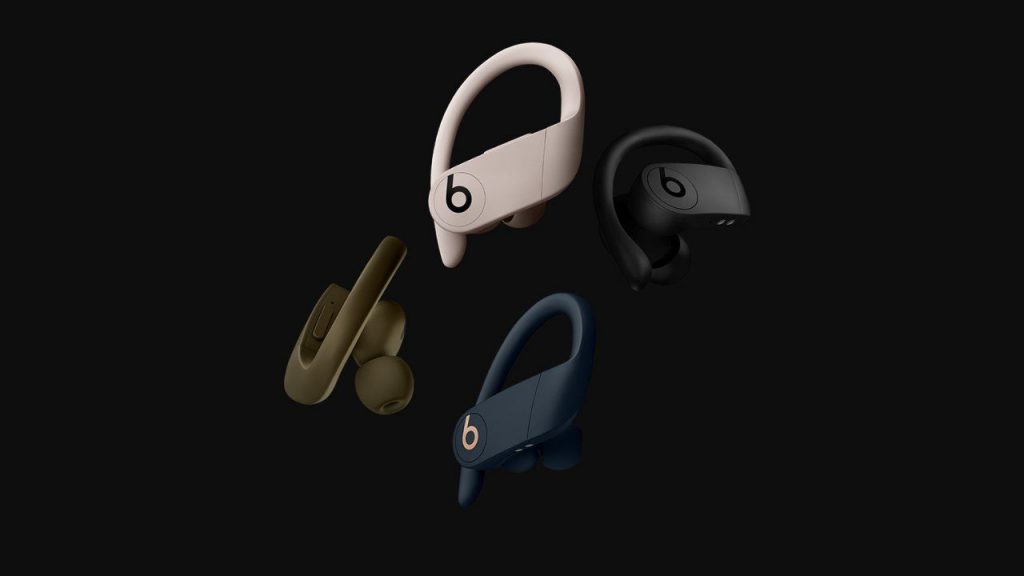
powerbeats-pro
Image Source: thurrott.com

The Powerbeats Pro is a pair of $250 wireless earbuds. Beats has worked well on the design of the product, and it comes with a better grip and better battery life, i.e., the Powerbeats Pro can be used continuously for 9 hours straight.

Having been worked with Apple, Beats has created a similar design and has got an over-the-ear hook, which keeps the earbuds on its place when the user is walking, running or working out.

“Over 20 configurations were electronically modelled and physically tested. The result is a completely new, ergonomically angled acoustic housing that nests comfortably in the concha bowl of the ear with an off-axis nozzle,” said Beats in the announcement.

The earbuds ships with volume controls in both the earpieces. The earbuds do not have any power button but include motion sensors, so the earbuds go to sleep whenever stays idle for a longer time. Like the other wireless earplugs, the Powerbeats Pro gets paused as soon as removed from ears and start to play the music when gets plugged into the ears.

According to Beats, the earbuds are 23 per cent smaller and 17 per cent lighter than the Powerbeats 3, and the audio quality for the calls has also been improved in this model. It also provides noise reduction property to enhance the call quality. The Powerbeats Pro is sweat and water resistant.

The earbuds include the same Apple H1 chip that provides the support for Apple-only feature Siri.

The elements that can be considered as the drawbacks are the bigger size of the charging case, no wireless charging available for the earbuds, and no LED light to show the charging status.

Though these earbuds are built by the Apple-acquired company, these are also compatible with Android devices. The Powerbeats Pro earbuds work well on the criteria of ‘true’ wireless earbuds, but these are on the pricier side. In fact, these cost $50 more than the latest second generation AirPods. Since Beats has been a leader in the field of earphone and headphone manufacturing, we can expect the Powerbeats Pro to get more user base. The company will start shipping the Powerbeats Pro earbuds from the beginning of May this year.