Yashica is a Software Engineer turned Content Writer, who loves to write on social causes and expertise in writing technical stuff. She loves to watch movies and explore new places. She believes that you need to live once before you die. So experimenting with her life and career choices, she is trying to live her life to the fullest.
In recent years, people have become more inclined towards investing in Bitcoins and other cryptocurrencies, but still most of the times, they are not sure of how to spend their cryptos. But now, Coinbase has announced that it is going to launch a debit card that will allow people to spend their cryptocurrencies on daily expenses.
Image Source: clark.com
Although Coinbase had support for the Shift card, a similar card that allowed the users to liquidate their cryptos, and use them to withdraw cash at various stores. But almost two months ago, Shift discontinued its services with Coinbase, and now Coinbase itself has come with a more feature-rich debit card for its users.
The
company is launching a debit card along with a Coinbase Card app,
that will help the users to manage all their cryptocurrencies and
choose among those cryptocurrencies as to which one they want to
spend. The app will generate instant receipts, notifications on every
transaction and will help the user to manage their crypto balance.
The card can also be used for ATM withdrawals with a free withdrawal
limit of £200 per month, and also does not have any maintenance
cost.
The
card is a Visa debit card issued by PaySafe and will cost a 2.49%
interest on every purchase made through it. Issuing the card alone
will charge the user a £4.95 ($6.48). The card will come with a
spending limit of £10,000 ($13,092) per day and every reverse
transaction will cost the user a £20 ($26.19).
Earlier
in 2017, the London Block Exchange was working on a similar Visa card
but failed to launch one. Also, many other companies have developed
such cards in the past, but to use those cards the users had to
pre-load a specified amount on them.
Coinbase will be responsible for every conversion of the crypto into fiat, and the amount will be deducted on the basis of the current rate of the cryptocurrency. With the Coinbase debit card, the users will be able to spend on movie tickets, food and other similar purchases. For now, the company has only announced the debit card for its UK and EU users.
Yashica is a Software Engineer turned Content Writer, who loves to write on social causes and expertise in writing technical stuff. She loves to watch movies and explore new places. She believes that you need to live once before you die. So experimenting with her life and career choices, she is trying to live her life to the fullest.
Education is the biggest asset, but not everyone is able to get it due to many reasons like lack of money or resources. But to solve this problem, Sebastian Thrun, the famous educator, inventor, computer scientist and entrepreneur, took the initiative and founded Udacity. Many people might not be aware of this educational platform, but there are millions of people who actually have taken its advantage and have educated themselves. This online platform is providing academic as well as vocational educational courses to a global user base to help them get the best suitable job for them.
Early
Life
Sebastian Thrun was born on 14 May 1967 in Solingen, West Germany to Winfried and Kristin Thrun. He completed a diploma in Computer Science, Economics and Medicine from the University of Hildesheim in 1988. In 1995, he received a PhD degree from the University of Bonn.
Thrun was always interested in
robotics and automotive technologies. In 1994, he started working on
the Rhino project under the guidance of his doctoral thesis advisor
Armin B. Cremers.
Career
After completing his education, Thrun started working at the Carnegie Mellon University (CMU) as a research computer scientist. It was Thrun, who built the world’s first robotic tour guide along with his fellows at CMU, Wolfram Burgard and Dieter Fox, for the Deutsches Museum Bonn, in 1997. Another robot that he built was implanted at the Smithsonian’s National Museum of American History in Washington, DC, for a period of two weeks that guided over ten thousands of tourists.
Image Source: medium.com
In 1998, he was appointed as
the assistant professor at the Robot Learning Laboratory of the
university. Later, he co-founded a Master’s Program in Automated
Learning and Discovery, along with the other faculty members. The
course later became a PhD program for the students of CMU. At CMU he
also built a humanoid interactive CMU/Pitt Nursebot and developed my
mapping robots.
In 2003, he left CMU to join
the Standford University as the associate professor and in 2004, he
was promoted as the director of SAIL (Stanford Artificial
Intelligence Laboratory). In 2005, he started working on a new robot
Stanley and made an entry in the DARPA Grand Challange. His robot won
the first price.
In 2007, he again participated
in the DARPA Urban Challenge with his robot “Junior” and
won the second prize. Later in the same year, Thrun along with many
Standford University students joined Google as sabbatical and
co-developed the Google Street View.
After working for a period of seven years at Standford, in 2011, Thrun left the job to join Google as a Google fellow. He then attained the post of VP at Google and worked at on development of the Google driverless car system. At Google, he also founded Google X, where he founded Google Glass. In late 2011, he was introduced to Artificial Intelligence at Google, which was the biggest influence for him to start Udacity.
Founding
Udacity
In January 2012, Thrun founded Udacity with David Stavens and Mike Sokolsky, a MOOC website, where he would teach people about everything. He sent e-mails to his students and to the people who were known to him about the website and asked them to enrol for the courses. For his surprise, he received 160000 enrollments for a class on Introduction to Artificial Intelligence, and more people joined from out of Standford. There were students who had never been to college, few were single moms and even students from war zone areas like Afghanistan joined the class. The platform was free, and Thrun was offering the same education to people that a Standford University student was getting by paying $58000 per year.
The company received its first
investment from the venture capital firm, Charles River Ventures, and
Thrun put his personal money worth $200,000 into it. In October 2012,
Andreessen Horowitz invested $15 million in Udacity. By 2014, the
company was teaching 12 full courses and 26 free courseware to 1.6
million global users.
Udacity basically partners with Universities and MNCs, to prepare courses that can help the students prepare for the competition and get the right job. The platform provides proper grades and certifications to the students on the basis of their performance in the tests.
In 2005, Thrun was named among the ‘Brilliant 5 by Popular Science’. He has been also awarded the Max-Planck-Research Award (2011), the Inaugural AAAI Ed Feigenbaum Prize (2011), Global Thinker number 4 by Foreign Policy (2012), ALVA Award by 99U (2013), and number 17 Influential Educator, by Noodle (2014), etc.
He has also co-authored a book named ‘Probabilistic Robotics’ along with his long-term co-workers Dieter Fox and Wolfram Burgard, which is a best seller in the Japanese market.
Yashica is a Software Engineer turned Content Writer, who loves to write on social causes and expertise in writing technical stuff. She loves to watch movies and explore new places. She believes that you need to live once before you die. So experimenting with her life and career choices, she is trying to live her life to the fullest.
Slack has been working really hard to gain more client base for its workplace messenger, and currently is serving more than 10 million daily active users. For that same matter, despite the rivalry between the two companies, Slack has joined its hands with Microsoft, to bring more enterprise productivity tools to it.
The company is working with Microsoft OneDrive and Outlook to get integrations to it, which it has been doing with other services too. Previously, it integrated the Azure Active Directory to it, and also, bought Astro to its messaging platform.
Image Source: thetechnews
Now
with Microsoft 365, Slack will have integrations like Outlook
Calendar Slack app, a new option in Outlook that enables the users to
directly send messages to Slack, a new option in Slack for attaching
files from Microsoft’s OneDrive storage, and the ability to preview
Office files including Word, Excel, PowerPoint, directly in Slack.
“We
want to break down walls that might otherwise exist between apps that
should work together.” said Andy Pflaum, Slack’s director of
product management for interoperability.
The calendar app integration in Slack will help the Outlook users to see and schedule events, directly on Slack without leaving it. Also, the users will get the events notifications and invite to new events, directly on Slack, and the users can respond to those notifications and invites from there only. The calendar will also update the user status depending upon the availability. This integration will also provide reminders to its users to join the WebEx, Skype for Business, or Zoom video calls.
For the Outlook users, the mail integration will allow them to send emails to the Slack Channel, attach files and send direct message alongside adding a note. The platform already has the options to attach files from Google Drive and Dropbox, and now, the users will have the option to get the attachments from Microsoft’s One Drive. The option will reflect under the import files menu in Slack.
Though the two companies are in the same race of competition, and even Microsoft had mentioned Slack’s name in the list of its rivals, in its annual 10-K report, the two companies know how to gain profits even from competitions.
Yashica is a Software Engineer turned Content Writer, who loves to write on social causes and expertise in writing technical stuff. She loves to watch movies and explore new places. She believes that you need to live once before you die. So experimenting with her life and career choices, she is trying to live her life to the fullest.
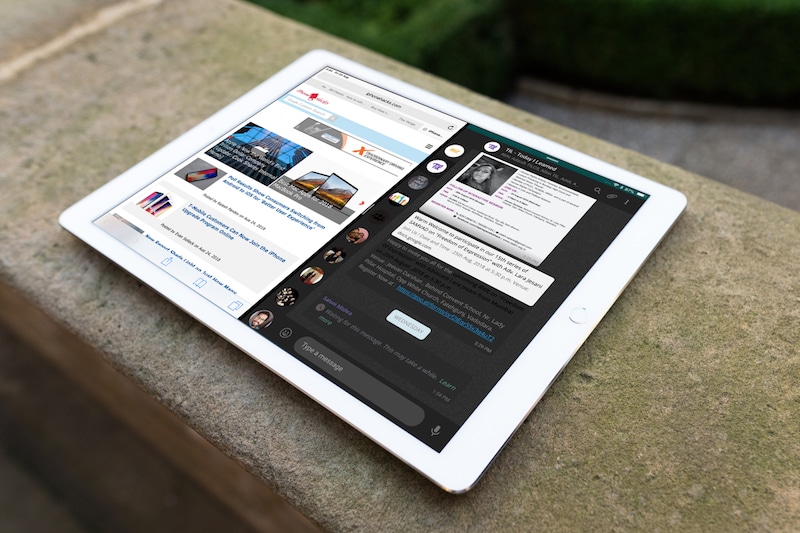
According to a report from WABetaInfo, Whatsapp is testing its latest version for the iPad users. Noticeably, Whatsapp has been the most favourite messaging app for both iPhone and Android users, but it has always lagged behind for its iPad users, who could only use the web version of Whatsapp by connecting it with their iPhones.
Image Source: iphonehacks.com
The
company is about to update its Whats App version to v2.19.40, which
now may also be available for the iPad as a standalone App. The users
now will be able to use Whatsapp directly on their iPads by signing
in to the app through their registered phone number. This is great
news for the iPad users as now they will have access to their
WhatsApp account on a bigger screen, and even by splitting the
screen, it will provide better visibility.
Also, amid the elections, the company has also revealed a few new features, among which there is a new option for Android users, where the group admins will be able to stop the frequently forwarded messages such that to help stop the spread of fake news. The feature will only be available for the group admins and will appear on the sub-section of the group settings. It will be enabled by default, and the group admin can disable it from the settings.
Though
the company has mentioned that the feature is still in its
development phase, this is one of the most desired features for every
Whats App user, especially in India.
On one hand, the iPad is about to get its own standalone Whatsapp ‘app’, which will include all the features like chatting, video calls, etc., and all the bug fixes. On the other hand, people will be able to ignore the fake news and stop them from further spreading.
The
company has not revealed any launch dates for the both as both are
still under the development and testing phase.
Yashica is a Software Engineer turned Content Writer, who loves to write on social causes and expertise in writing technical stuff. She loves to watch movies and explore new places. She believes that you need to live once before you die. So experimenting with her life and career choices, she is trying to live her life to the fullest.
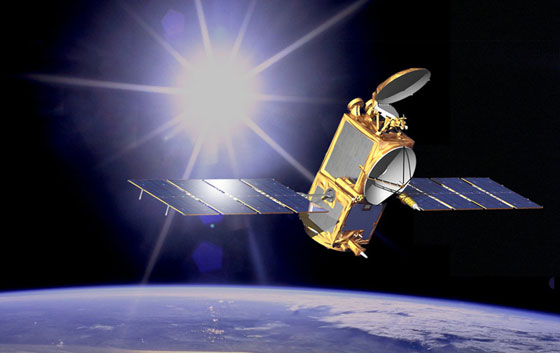
The small satellite launcher Rocket Lab has unveiled ‘Photon’, a circular satellite platform, at the 35th Space Symposium held in Colorado Springs on Monday, which according to the company will help people reach to the orbit faster and save millions of money.
Rocket Lab is one of the private leaders in the launch and satellite services, and now the company is trying to get its hold on the complete satellite manufacturing solutions for its customers.
Image Source: climate.nasa.gov
With
Photon, the company has brought a fully customizable satellite that
can be modified according to the need of the client, and they do not
have to build whole satellite hardware for their Low Earth Orbit
missions, like technology demonstration or hosted payload. Photon
will help create satellites that will be launched to the orbit on
Rocket Lab’s upper stage of the Electron rocket.
In
general, even if the satellite companies want to test or launch a
satellite, or send delicate sensors or cameras to space, they have to
create their own hardware spending millions of dollars, but now with
Photon, the companies will get new option to cut the cost as well as
reduce the risk.
Peter Beck, the CEO of Rocket Lab, said in a statement, “Launch was the first bit that we needed to solve, but it always seemed crazy to me that the rocket builder did not also build the hardware for a satellite. Photon means satellite companies don’t need to invest millions of dollars in bringing together a team and manufacturing complex space hardware.”
Photon’s
design is based on the successfully-flown kick stage, that was used
in four out of five Electron launches. Photon has got the GPS
support, a flight computer, a 3D-printed Curie engine and more. It
has been equipped with propulsion, providing it with the capability
of staying in the orbit for five years by adjusting with outer
conditions like the altitude. The satellite can weigh up to 374
pounds (170 kilograms).
According
to Beck, Photon is a complete satellite solution, that will help the
customers to drop the coordination phase between different companies
during the manufacturing of satellite, and Rocket Lab will be
responsible for most of the work.
Yashica is a Software Engineer turned Content Writer, who loves to write on social causes and expertise in writing technical stuff. She loves to watch movies and explore new places. She believes that you need to live once before you die. So experimenting with her life and career choices, she is trying to live her life to the fullest.
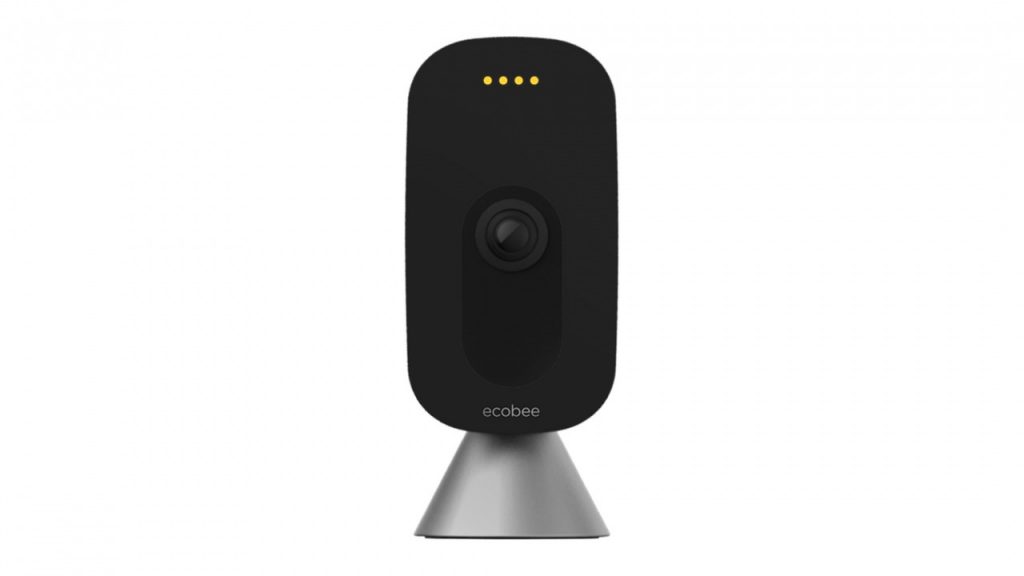
The famous smart thermostats manufacturing company Ecobee, reportedly, is enhancing its expertise, and the next product from the company may be a home security camera. According to a few leaked camera pictures, first obtained by ZatzNotFunny, the company has been working on an indoor camera for quite some time now.
Image Source: iclarified.com
Looking
at the leaked images, there is a black colour camera which is mounted
over a silver colour cone-shaped stand. On the top, it has four
lights, that flashes yellow or blue light. Reportedly, the camera
from Ecobee might be the next home smart device.
Purportedly, the camera may have support for Amazon’s Alexa or perhaps it will be a standalone Alexa speaker. Noticeably, in 2018, Amazon invested a huge amount of money into Ecobee, that too from the Alexa funds and some of the older Ecobee products, including ecobee4 and Ecobee Switch+, also have got the support for a few Alexa features. So there are higher chances that this device will have some good Alexa features, too.
It
is also expected that the camera may act as a sensor for the Ecobee
thermostats as well as may include the room temp and humidity
capabilities. Also like the other Ecobee products, including the
ecobee3 lite and ecobee4 thermostat, may have the support for the
HomeKit, depending upon if the new camera is wired or is powered by a
battery. Since due to the more power drain, all the devices that
support the HomeKit are wired. Many of the security camera
manufacturers have already enabled the Homekit for its advanced
features.
The company has been providing thermostat products enabled with Apple’s HomeKit, Amazon Alexa, Google Assistant and Microsoft’s Cortana support. And, by building an indoor camera, the company is trying to grow itself into other fields of home products, too. The company has not commented on the matter, and also, the launch date or the price of the product has not been revealed as yet.
Yashica is a Software Engineer turned Content Writer, who loves to write on social causes and expertise in writing technical stuff. She loves to watch movies and explore new places. She believes that you need to live once before you die. So experimenting with her life and career choices, she is trying to live her life to the fullest.