Yashica is a Software Engineer turned Content Writer, who loves to write on social causes and expertise in writing technical stuff. She loves to watch movies and explore new places. She believes that you need to live once before you die. So experimenting with her life and career choices, she is trying to live her life to the fullest.
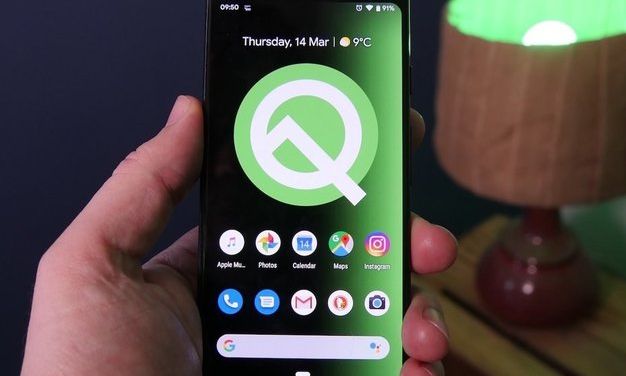
People are currently waiting for the launch of new iPhones and iOS 13, and there comes the launch date of Google’s Android Q (Android 10). Yes, two Canadian mobile operators, i.e. Rogers and Telus, has revealed the rumoured release date for the OS, and that too, for everyone’s surprise is today. Yes, news that both the operators had posted on their websites say that Google is releasing its latest OS, i.e. Android 10 on 3rd September.
Though there has been no confirmation from Google, and even Rogers has removed the news from its website, Telus has still got the date printed on its website. It was the leading news hosting website, 9to5Google, that spotted the posts over the webpages of both the carriers. The company also took the screenshot of the same on the website. So the mobile operators are not in the state to deny it.
The post on Telus’s website has got the mention of the release date of the OS as well as the new security updates that the OS will be bringing with it. Believing the news, the new OS will arrive on the eight of the Pixel series Google smartphones. These smartphones include the original Pixel, Pixel XL, Pixel 2, Pixel 2 XL, Pixel 3, Pixel 3 XL, Pixel 3a, Pixel 3a XL.
Image Source: cybermagonline.com
People were already expecting the release of the Android OS to be in August. As, for the past few years, the company has been releasing its OSs, including the Android 7 “Nougat”, Android 8 “Oreo”, and Android 9 “Pie”, in the month of August.
Google released the final beta of Android 10 for the testers at the beginning of August. And with the release, Google had also said that the “public release is a few weeks away.” But till now there has been no news from Google in this regard. The beta was available for all companies’ smartphones, including Samsung, Nokia, LG, OnePlus, Huawei, etc., but the original release will still be on the Pixel phones first. So the other companies’ smartphones yet need to wait a few more weeks or months to get the OS. But we cannot say that even the Pixels will get the OS today until Google confirms it.
The latest OS from
Android will cover a few security patches as well as new features.
The expected features for the Android Q includes the improved gesture
controls, dark mode, as well as some accessibility features.
Yashica is a Software Engineer turned Content Writer, who loves to write on social causes and expertise in writing technical stuff. She loves to watch movies and explore new places. She believes that you need to live once before you die. So experimenting with her life and career choices, she is trying to live her life to the fullest.
June 2019, Apple
gave some hints on its keynote event to take place in September,
where the company would be revealing its new shiny range of iPhones.
And finally, the company has confirmed the date too. The company’s
mega-event will be taking place on 10th September at 10th at 10 AM
PT, 1 PM ET, at the Apple Park headquarters in Cupertino, California.
This is the 11th annual event that the company is hosting, and like the previously held events, Apple will launch the new iPhone series at the event; this time the iPhone 11. Along with the iPhone, Apple will also be talking about the new updates and the iOS that usually are launched one or two weeks after the launch of the new iPhones.
The Apple event is always the most anticipated one, and the rumours about the event always start making rounds months before it. So like every other time, the big news agencies also have been talking about the event and the products, days before the event; iPhone 11 being the major highlight. For now, the new iPhones are considered as their successor. According to some reputed news hosts, Apple iPhone will be almost like the iPhones launched last year, there will still be some of the advanced features to make the difference.
Image Source slashgear.com
Apple, like previous
year, will be launching three iPhones this year too, and for the very
first time, two of the three iPhones will be having a triple-camera
setup on their rear. There may be a slight increase in the size of
the smartphones, and the rumoured size is a 6.1 inches display. The
experts are also expecting a faster processor and improved battery
life for the new iPhones.
One of the expected upgrades may also include the support for bidirectional wireless charging for the Airpod, through their new wireless charging cases. Like every other year, the iOS 13 will also be launching soon after the launch of the iPhones. With the launch of iOS, Apple may introduce the dark mode and rich updates to Photos, Maps, and privacy-protecting features like Sign In with Apple.
There is also rumours that the company may launch or reveal new Apple Watches, iPad as well as new Macs. Believing the rumours the MacBook Pro and iPad Pros may be upgraded with a new and faster processor.
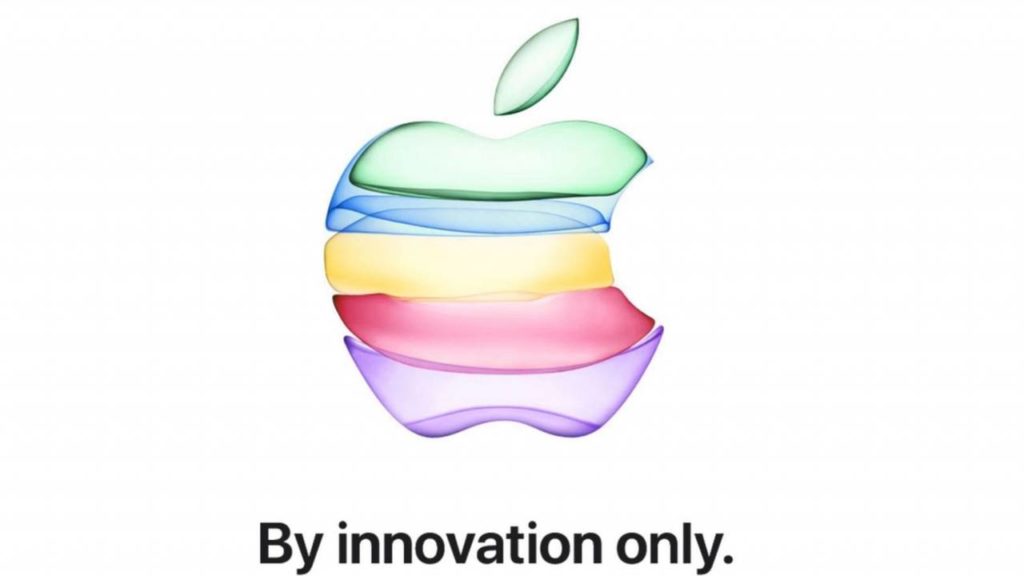
The company has
already sent the invitations to its guests. Though the invitation
does not say much about the new upgrades and the iPhones, it simply
reads “By innovation only” accompanied by a colourful
multi-layer Apple logo. The different colours used in the logo may be
an indication of the availability of these colours for the new range
of iPhones. There are also high expectations from the company over
the colours of the new iPhones, like a green iPhone for a change.
Yashica is a Software Engineer turned Content Writer, who loves to write on social causes and expertise in writing technical stuff. She loves to watch movies and explore new places. She believes that you need to live once before you die. So experimenting with her life and career choices, she is trying to live her life to the fullest.
Though taxis were always there, the ride-hailing services have got even more popular after the companies like Uber and Lyft has come onboard. These apps provide the most convenient method to hire cabs and travel independently. But for a daily basis, these are not the affordable choice for people. In countries like India, there is also a problem of traffic in big cities, which also affect the efficiency of a rental car. But with the motorbikes, there is still hope for affordability as well as escaping the traffic. This very fact has inspired many people to build a bike ride-hailing service, and companies like Uber and Ola are not any exception. Even though these big companies could manage to host the very service, it is Rapido that has successfully established its motorbike ride-hailing service in India.
Rapido was founded
by three engineer friends, Aravind Sanka, Pavan Guntupalli, and S.R.
Rishikesh, in 2015, in Bengaluru India. Sanka and Guntupalli are
childhood friends, and Rishikesh was the flatmates with Guntupalli.
Three of them were working as engineers in Bengaluru, earning good
bucks, but none of them could not escape from the startup fever.
After the app-based ride-hailing services came to India, all three loved the concept and used those apps to commute to their offices and back. But it was not an affordable option. One fine day, all three decided to overcome this problem and look for some better and affordable option for daily travelling.
Image Source: Forbes
Motorcycles are quite popular in India and are also the most affordable mean of travelling. All the three decided to quit their job and start working on a business model that will help people hire bikes to commute from one place to the other at cheap prices. At the beginning of their business, they named the company ‘theKarrier’. They started theKarrier in November 2014 and rebranded it as Rapido in 2015.
The basic idea behind the startup was to hire people who owned two-wheelers. The idea was different from Uber and Ola, as these company invested heavily on the vehicles. But in the case of Rapido, the bike owners just needed to register on the Rapido-captain app and verify their details with the company. And, they were good to go. Another thing that helped Rapido to rise above its rivals was that it did not bother that the driver wanted to be full or part-timer.
The driver in terms of Rapido is called the Captain, and the company provides its every captain with insurance. For the safety of the rider, it has included a few features on the app. The user gets the assistance just in a single tap on the app. Rapido has also set up a customer care service for the users and also offers perks on the rides.
Almost over 5000 drivers use the app every day, and an average of 15,000 drivers log in to the app every month. These drivers also complete over 30,000 rides per month on an average, and the company aims to make it one million rides per day by the end of 2019. The women drivers have also registered to the app and are successfully earning good money over it. According to the stats, the app usually registers drivers of the age between 18 to 50 years.
In April 2017, Rapido raised an undisclosed amount in its pre-Series A funding, backed by Hero MotoCorp Ltd chairman Pawan Munjal and Google India managing director Rajan Anandan. By 2018, the company has raised $6 million in two rounds and was earning a $1.5 million revenue every month. It hosted the latest round of funding in August 2019 and raised over $58 million in funding led by Westbridge Capital. Rapido wants to spend this money on technical innovation and intends to reach 100 major cities in India soon.
Rapido began its service from Bengaluru and is now expanded to 40 cities across the country, including Hyderabad, Mysore, Vishakhapatnam, Vijayawada, Tiruchirappalli, Madurai, Coimbatore, Indore, Guwahati, Surat, Patna, and the NCR region.
The Rapido founders
got their names listed in Forbe ‘30 Under 30 Asia – Consumer
Technology 2019’.
Yashica is a Software Engineer turned Content Writer, who loves to write on social causes and expertise in writing technical stuff. She loves to watch movies and explore new places. She believes that you need to live once before you die. So experimenting with her life and career choices, she is trying to live her life to the fullest.
Microsoft has been experimenting with Windows 10 since it was first launched to bring a better user experience for its customers. Recently, it had released some new features for its Tablet OS. This time, again, keeping the Tab experience in mind, the company has launched a new build for testing, i.e., Build 18970 (20H1), to enhance it. The company released the build for the Microsoft Insiders for the testing, and along with that, they can also use the Cumulative Update Build 18970.1005 (KB4518974).
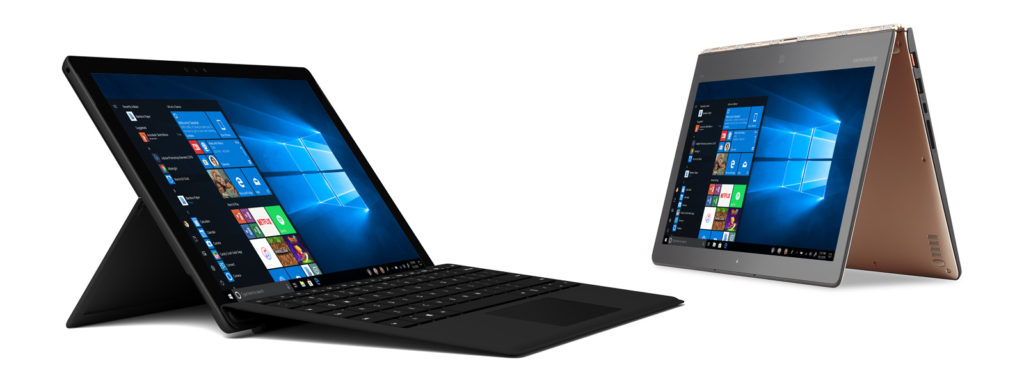
The build has been designed for the 2-in-1 convertible PCs, including the Surface Pro. The new build has got a similar design as the current Windows 10 desktop interface, but as soon the keyboard is removed, or the position of the PC is changed to a Tablet’s, Windows becomes compatible to the Tablet view.
The new build has brought some changes to the current interface of the 2-in-1s. The changes include increased spacing between the Taskbar icons, and the company has collapsed the Search box on taskbar into an icon. So to use the Search box, one needs to tap on the icon, and the Search box will pop up on the screen. Also, when turned into a Tablet, the File Explorer switches to touch-optimized layout for better accessibility for the users. The company has also optimised the keyboard software for the Tablet, as when turned into a Tab, the Touch keyboard is auto invoked upon tapping on any of the text fields on the screen.
Image Source: microsoft.com
Since the company is
trying to provide its users with a better Tablet experience, it has
also made some changes in the settings for the Tablet. Along with the
new build, Microsoft has also made refurbished the Rest option for
the Windows. Now, the users can easily re-install the Windows from
the cloud or local drive using the Reset option. Earlier Reset option
only allowed the installation through a local install, that too with
available Windows files (the compressed copy of Windows files stored
at the local disk). Now the users will be able to speed up the
process of installing the Windows through the cloud.
These are some of the changes that Microsoft has defined through a Blogpost, but according to the reports, there are some more. But that, one can only know after exploring the new Build. Currently, it is only available to the Microsoft Insiders, and after the update is released for the general public, the users can enjoy the new Tab experience as soon they change the position of the laptop as a Tab or remove the keyboard from it.
Yashica is a Software Engineer turned Content Writer, who loves to write on social causes and expertise in writing technical stuff. She loves to watch movies and explore new places. She believes that you need to live once before you die. So experimenting with her life and career choices, she is trying to live her life to the fullest.
The internet and the rise of the tech giants like Google, Microsoft and Amazon have inspired a lot of people out there to start their own innovative business. And there is much evidence that the inspiration has worked for numerous people. The Internet has helped people to get idea from their daily needs and transform it into a successfully functioning business. One such person, who was inspired by the success of the big tech companies, is Apoorva Mehta, the founder of Instacart. Mehta was awed by the fact that how the new startups were getting success overnight. And hence, after trying out over 20 business ideas, he finally started Instacart.
Early Life and Career
Mehta belongs to the
Indian descent, but was born and brought up in Canada. He had always
been inclined towards the internet and technology. He had also been
interested in learning science and computer programming. After
completing his school education, Mehta joined the University of
Waterloo, to complete an electrical engineering degree.
After completing his graduation, Mehta worked for companies like Qualcomm and BlackBerry. Though he had got good jobs, he was a bit confused about what he really wanted to do. Later, in 2008, Mehta moved to Seattle, to work with Amazon. He joined Amazon as the supply chain engineer. But, here too, he could not feel the passion for work and left the company after two years, in 2010.
The Inspiration for Startup
Image Source: celebritynetworth.com
With the rise of the
tech companies, he had already developed an interest in
entrepreneurship, so Mehta started looking for ‘the’ idea, that
would help him establish a successful business. It took him over two
years and 20 failed startup ideas to finally reach to Instacart.
Before Instacart, Mehta tried to build an ad network for the gaming
com to developing a social network for lawyers. But nothing worked
for him.
After brainstorming for two long years and testing out those twenty startup ideas, Apoorva Mehta stopped and analysed, what he was doing wrong. He even thought of quitting, as none of his ideas had worked out. But persistence is the key. This time, he decided to work with passion and patience. He also realized that a business is successful when it solves a problem. So, he started looking for a problem that he could solve. Ultimately, he got an idea of developing an online grocery delivery service, which came out straight from his own pain point.
While working at Amazon, Apoorva Mehta was unable to find time to go for grocery shopping. He could order anything online, but there were no grocery delivering services. He found an opportunity in the problem and started working to solve it.
Finding the Investors
Mehta developed the
app for his new startup ‘Instacart’ and started looking for
investors. He tried to get into the Y Combinator tech incubator 2012,
but the summer intake was already closed. So he had to take the other
way around. He met a few of the partners of Y Combinator to request
them to provide him entry into the incubator. But no one agreed. He
met the last partner, who did not reject him, but said that the
startup idea was nearly impossible.
Apoorva Mehta came back empty-handed but sent a pack of beer to that last partner through his app. This act made that partner think of this idea again, and he convinced the other Y Combinator partners to open the entry for Mehta. And this way, the doors of success were also opened for Mehta and his startup. Finally, he launched the company in 2012, in San Francisco.
The Rise of Instacart
In two years from
its inception, the company gained a $40 million and spread to 17
different locations within the U.S. and Canada. The company was named
as the ‘Most Promising Company in America’ by Forbes in 2015, and
even, valued at $2 billion just in three years.
In 2016, the company
went to expand in the North Chicago Zone, and the next year, the
company was serving in 1,200 cities in 25 states. By the end of the
year, the company partnered with Loblaw Companies for deliveries. The
company raised a total of $400 million investment and valued at $3.4
billion.
In 2018, Instacart
partnered with companies like Walmart Canada, HyVee, The Fresh
Market, Harps, Lunds & Byerlys. It even acquired a Canada-based
grocer named Unata. After raising a $200 investment in February 2018,
the company raised another $600 million funding in October the same
year and valued at $7.6 billion.
Mehta’s startup idea was unique and became successful within a year of its inception. And today, it is among the unicorn companies. The reason behind the success of Instacart is that it was different from the other businesses. It won’t be wrong if we call Instacart the Uber of grocery, as there was no warehouse to store the grocery and no official vans were bought to do the deliveries. In fact, the grocery came directly from the retailers, and the company hired people with their vehicles to do the deliveries. Both Instacart and the retailer are in benefit, and there is no spending of money on the physical cost resources.
Yashica is a Software Engineer turned Content Writer, who loves to write on social causes and expertise in writing technical stuff. She loves to watch movies and explore new places. She believes that you need to live once before you die. So experimenting with her life and career choices, she is trying to live her life to the fullest.
Oppo has launched another range of smartphones, and that the company has brought to India first. The new series is called the Reno 2 series, under which the company has launched three flagship smartphones, Reno 2, Reno 2Z, and Reno 2F. Though the Reno 2 series is the sequel of the previously launched high-end smartphone Oppo Reno series, it is not that of a high-end series. But still, the series includes one of the decent smartphones that lie under the affordable mid-range smartphone criteria.
Reno
2
The
Reno 2 smartphone is a 6.5 inches smartphone and is powered by the
Snapdragon 730 processor. It has got an 8GB RAM as well as offers
secondary storage of 256GB, which is further extendable through an SD
card. The smartphone is being compared to Samsung’s Galaxy S10 due
to the usage of the 20:9 1080p Dynamic AMOLED panel in it.
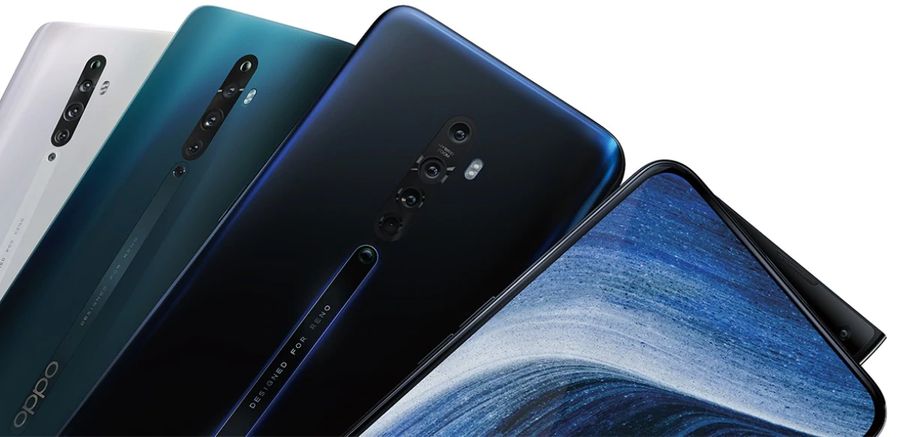
The quad-camera on the rear of the smartphone includes a 48-megapixel Sony IMX 586 primary sensor with an 8-megapixel wide-angle camera, a 13-megapixel telephoto camera along with a 2-megapixel monochrome sensor. The cameras are accompanied by an LED flashlight, and all the cameras and the flash have been coupled in a vertical line at the back of the smartphone.
Image Source: gadgets.ndtv.com
There
is also a 16-megapixel selfie pop-up camera that comes out through
motorised camera mechanism from the top of it. The very smartphone
will be available for Rs 36,990 in the Indian market starting from 20
September. The prebooking fro the smartphone will start from 10
September.
Reno
2Z & Reno 2F
On
the other hand, the Reno 2Z and Reno 2F have got a bit smaller screen
size, i.e. 6.3 inches 19.5:9 1080p OLED screens. The Reno 2Z is
empowered with the MediaTek Helio P90 processor, whereas the Reno 2F
is running on an Helio P70 processor. Both the smartphones, like Reno
2, have got an 8GB RAM. Reno 2Z includes a 256GB internal storage,
and the 2F has got a 128GB internal storage.
The
camera setup for the two is similar to that of the Reno 2, i.e. is a
quad-camera setup in a vertical line on the back of the smartphones.
Both have got an 8-megapixel wide-angle camera with a 48-megapixel
main camera, a 2-megapixel sensor with a mono lens and 2-megapixel
portrait sensor. But for both, the company has used different sensors
for the main camera. For Reno 2Z, the company has used the Sony
IMX586 sensor, and for Reno 2F, Samsung’s cheaper GM1 module has
been used. The company has used an electronically stabilized camera
setup for both instead of optical image stabilization.
The price of the Reno 2Z is set to be 29,990 and is already available for pre-bookings. The smartphone will be available in the market starting from 6 September. On the other hand, the price of Reno 2F is yet to be revealed, and as indicated by Oppo, it will be available for purchases in the coming November.
All
the three shares a few similar features, like all the three runs the
Oppo’s ColorOS 6.1, they have got the support for USB-C, VOOC 3.0
flash charging, a 4,000mAh battery and has also got the support for
an optical in-display fingerprint sensor.
The
company has shuffled the smartphones in four different colours, that
includes Ocean Blue (Reno2), Luminous Black (Reno2 & Reno2Z), Sky
White/Polar Light (Reno2Z), and Sky White/Lake Green (Reno2F).
Yashica is a Software Engineer turned Content Writer, who loves to write on social causes and expertise in writing technical stuff. She loves to watch movies and explore new places. She believes that you need to live once before you die. So experimenting with her life and career choices, she is trying to live her life to the fullest.