Yashica is a Software Engineer turned Content Writer, who loves to write on social causes and expertise in writing technical stuff. She loves to watch movies and explore new places. She believes that you need to live once before you die. So experimenting with her life and career choices, she is trying to live her life to the fullest.
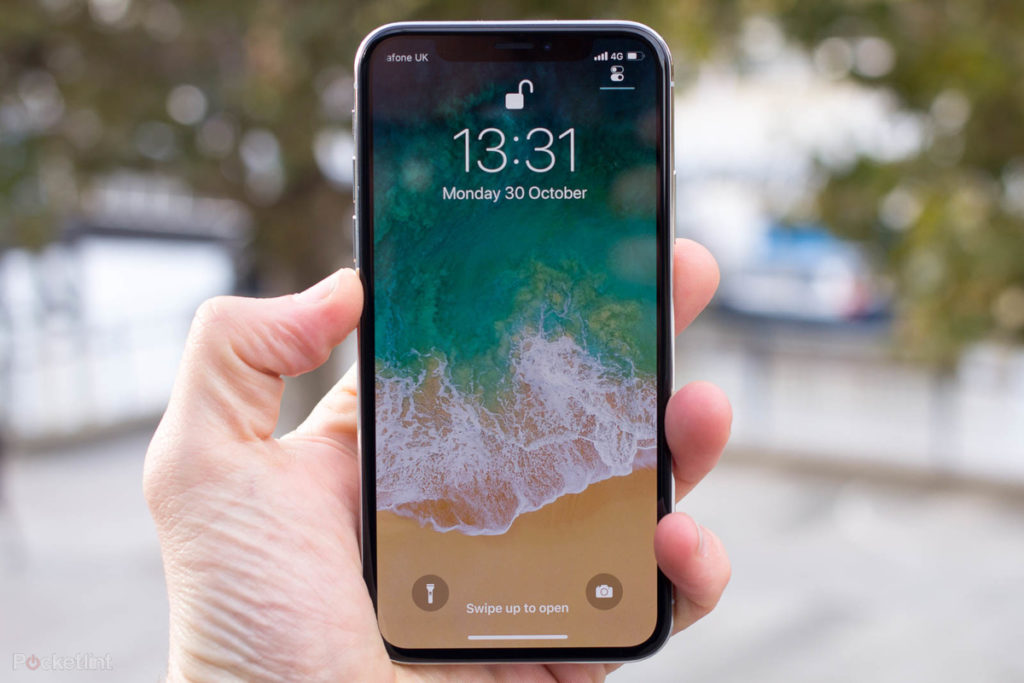
Apple is only a few weeks away from launching its flagship smartphone, the iPhone 11, but before that, the company has got a surprise for its users. People are aware that the company is working on its next iOS version, i.e. iOS 13, and that like usual time, the company will launch after the release of its new iPhone. But this time, Apple has gone for something unusual. The company has just announced the release of the first developer beta of iOS and iPadOS 13.1 before the launch of the iOS 13.
Yes, the company has
released the iOS 13.1 beta version for testing ahead of the release
of iOS 13, which is quite unlike Apple. Usually, the company releases
the major updates in the iOS, and only after that, go for the release
of .1 version of the software.
The release of the beta of iOS 13.1 indicates that the iOS 13 is almost ready, and is starting to work on the next version of the OS. When a company releases the developers beta, it is for the developers to test the features and find the bugs. This way, the company can improve the product before the release.
Image Source: pocket-lint.com
So, similarly, with the .1 version, the company is trying to test some of its features, that it will be incorporating in the next version of iOS 13. The newly released beta version of the Apple OS, along with new features, has also got some of the bug fixes. One of the new features that the company has set for the test with the release of the beta is the audio sharing support.
The feature will
allow the Apple device to simultaneously connect to two different
pairs of Airpods through Bluetooth. But there is still a question
that will the iPhone, and the other apple device support connecting
to two pair of Airpods?
The other feature
that the company has introduced with the new OS beta is the video
editing feature, that will allow the users to make the background of
a video transparent or invisible. It will help produce the green
screen effect on the videos. Apple has developed the feature with the
help of recently acquired company Spektral.
Along with the
iPhone, the company has also released the new beta versions for
watchOS 6.0 and tvOS 13.0 today. The users can go to the software
updates option on the iPhones to get the developer beta installed on
their devices from today onwards. There is no statement from the
company that when the beta of iOS 13.1 will be available for the
general public.
Yashica is a Software Engineer turned Content Writer, who loves to write on social causes and expertise in writing technical stuff. She loves to watch movies and explore new places. She believes that you need to live once before you die. So experimenting with her life and career choices, she is trying to live her life to the fullest.
Entrepreneurship has always been a term that possibly the three-fourth of the world population look forward to. There are rarely any people who are happy with the idea of the 9 to 5 job. Every person must have thought about starting up their own business and being their own boss at least once in their lifetime. And it is fair too, as working for oneself and doing the work out of passion is what makes everyone successful. One such person, who was always in the favour of becoming his own boss is Jason Wang, an American serial-entrepreneur, who founded the food delivery service Caviar.
Jason Wang belongs to the Japanese descendent and graduated from Berkely University. He was still in school when he started his first business, i.e., an anime website, which served a total of 30,000 unique visitors every month. He received $1 for every ten visitors through ads, and hence, was earning $30 a day. But soon, the creators of Cardcaptor seized the domain name of his website, and his first business came to an end.
After graduating from the University of California, Berkeley, (Haas School of Business), he worked with big-name companies, including Google and Microsoft. Though he had a good salary package and had a stable job, he was still dreaming of building his business. So finally, after leaving his corporate job, he founded a mobile app development company, 815 Productions, in 2010. With his company, he developed an app that extracted data from Craigslist. Though the app was quite useful, the venture also got shut in a few months. But still, he remained to be encouraged to do something big and on his own. He kept on thinking of new ideas that would be a kick-starter for his entrepreneurship.
Image Source: bizjournals.com
During the same time, Groupon was taking over the world with its amazing deals. He was impressed by how the company was establishing itself in no time. Seeing the growth of the company, Jason was forced to look at the business model of Groupon, upon which he found out that most of the people were going for the food deals on the platform. This led him to think of a similar coupon business that only would provide deals in food items.
Jason concluded that
it would be better to target the university students to get more
customers in one place without investing in ads. So he launched
MunchOnMe for the Berkeley University students first. At the same
time, Paul Graham from Y Combinator came to the university for his
keynote and asked the students to apply for the accelerator program
at Y Combinator.
Jason Wang had already registered 3000 users to MunchOnMe and applied to Y Combinator with the same idea. He made it to Y Combinator for its summer batch. It was a life-changing experience for him, as he got to listen to the big tech entrepreneurs and learn more about the business. He also received an $18000 seed funding for MunchOnMe.
After launching
MunchOnMe officially for the general public, Jason realised that the
business was good, but could not sustain for a longer time. So after
operating it for a few months, he decided to sell the company. While
selling the company, he made it clear to the buyers that he won’t
be a part of the company and will lose every right over it.
The money he earned from the company’s acquisition helped him and his teammates to survive for a year and a half. But after that, he ran out of money. According to an interview with Jason Wang, there was a time when he had only $10 in his business account. But fortunately, the place he was renting had enough space to make room for new tenants, and he rented half of the place for $600.
While working in his
office in San Francisco, he and his teammates felt the craving for
Ike Place’s sandwiches, but the restaurant was on a distance of 45
minutes. So it would take them to go and come back from the
restaurant a total of one and a half hours plus one hour of standing
in the long queue at the restaurant. They called the restaurant for
delivery, but they did not have the service available at that time.
This was the year 2012, even before Uber. So there were no resources
that could help Jason and his teammates to get the sandwich in time.
This incident made
Jason think of a delivery service that would help people to get the
desired food at their doorsteps. This led to the launch of Caviar.
Jason started working on the idea and partnered with three restaurants, i.e., Ikes Place, HRD and Nick’s Cripsy Tacos. The idea was to get people what they wanted to eat, delivered at their doorsteps. And, initially, Jason and his team would deliver the food by themselves. It was easier for him to get new customers as he talked about the idea with his friends from the University, Office, and also from Y Combinator. In the beginning, they would deliver on the lunchtimes and only on the weekdays. But soon, the company started gaining more customers and partnered with more restaurants. This way, Caviar gained most of its users within the six months of its launch and became popular among the masses.
The company had a
kickstart, and in two years, it raised more than a $13 million from
the investors. Jason did not have a long journey with Caviar, but it
was the most successful business of his life. He sold the company to
Square in 2014 for a rumoured $90 million.
Though Jason Wang sold his company, he is still active as a growing entrepreneur and has made a few investments in different ventures. Alongside Caviar, he also launched a few restaurants and also co-owns a hospitality group called Umai. He is also the founding partner of Beluga Capital, the venture that helps the tech startups with funding. He is a big food lover and also founded a food blog named Cityfoodsters. Jason also got his name listed under the Forbes 30 Under 30 in 2015.
Yashica is a Software Engineer turned Content Writer, who loves to write on social causes and expertise in writing technical stuff. She loves to watch movies and explore new places. She believes that you need to live once before you die. So experimenting with her life and career choices, she is trying to live her life to the fullest.
The 45th G7 summit
just took place in France and became the centre of discussion for
various reasons. One of the reasons being the meeting between Indian
PM Narendra Modi and Trump as well as the rejection of $20 million
aid for stopping the Amazon forest fire by Brazil. But one of the
main agenda that was sorted out at the summit was the controversial
French Digital Tax.
During the conference at the G7 summit, President Donald Trump and French President Emmanuel Macron announced that they have agreed on finding a way to put a fair tax on the big foreign tech companies operating in France. But until the OECD does not set some proper tax guidelines, France will retain the same digital tax.
Macron also admitted that the controversy based on the new taxes has also affected the business of the French wine in the U.S. He also admitted that it has become expensive for big companies like Facebook and Google to operate their business in France.
Image Source: cbs42.com
The 134 OECD
countries have been working towards establishing a new set of rules
for the tech companies to operate in foreign countries, and France
promised at the G7 summit that it would remove its digital tax asap
OECD will finalise the new rules. The announcement also indicated
that the rules may arrive as soon as 2020.
In July, France imposed new digital tax for the big foreign tech companies operating in the country. The digital tax is based on the local profits rather than the global revenues those companies earn. According to French digital tax the companies that make over a €25 million (around $27.7 million) in France, or €750 million (around $830 million) worldwide, will need to pay an extra 3% tax to the French government. This way, the GAFA companies, i.e. Google, Apple, Facebook and Amazon (all the U.S. based companies) are becoming the main targets of France.
But after the
agreement, the Tax Authority of France will look on the taxes that
those companies have paid and the taxes they will pay under France’s
digital tax policy. It will also calculate the amount these companies
will be paying after OECD establishes the new tax rules for them.
Concluding the extra paid tax, the French government will reimburse
the extra amount back to those companies.
“Everything that
is paid in excess compared to the international solution will be
credited to the company,” said the French Economy Minister Bruno Le
Maire.
The new agreement
will help the two companies to reduce the tension as well as the
trade conflict between them.
Yashica is a Software Engineer turned Content Writer, who loves to write on social causes and expertise in writing technical stuff. She loves to watch movies and explore new places. She believes that you need to live once before you die. So experimenting with her life and career choices, she is trying to live her life to the fullest.
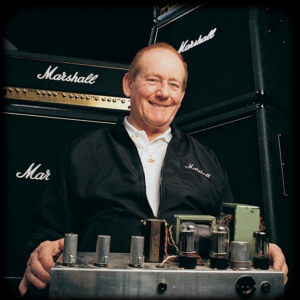
From a drummer to one of the most successful entrepreneurs and the inventer of the amplification system, the life journey of Jim aka James Charles Marshall has been quite an interesting one. Jim Marshall is the founder of the famous Marshall Amplification, a company that designs and manufactures music amplifiers and the other music-related products, including speakers cabinets, headphones, and earphones, etc. The company is also known for manufacturing customised products for its customers and is one of the biggest brands in the music industry.
Early Life & Career
Jim Marshal was born
in a family of musicians and boxers settled in Acton, London, United
Kingdom, on 29 July 1923. Being a part of a musical family, he got
naturally inclined towards music. When he was a little kid, he got
diagnosed with tubercular bones. So he had to spend most of his
childhood in the hospital. At the time he grew a little older, the
second world war took place. He also tried his luck in the army but
was rejected due to his poor health condition.
Despite missing his school education, Marshall was able to get a day-time job as an electrical engineer at a small firm. He also worked part-time in the evening as a singer as well as a drummer. As an electrical engineer, he got to gain a lot of experience and designed and built a portable amplification system that he brought to his workplace in the evening. This was the first time when he built an amplification system by himself.
Image Source: allaboutbluesmusic.com
Soon in 1942, he joined a band as the lead drummer. At the same time, he started teaching music to people. Those people include some of the famous names of the music industry, including Mitch Mitchell and Micky Waller.
Career as an Entrepreneur
Through working with the band and the music classes, he was able to save enough money to start a music store in Hanwell, west London. Initially, he sold drums in the store and soon, on the request of many guitarists, he stocked guitars and their amplification system in the store. While selling those guitars and their amps, he often got to hear that these guitars were not producing the desired sound for them, not even with the amps. The customer wanted something bigger and louder. The customers had to buy different amps for different sounds. So on the suggestion of Ken Bran, the amp repairer, Marshall thought of building a single amplification system for all.
The Turning Point
Marshall started
working on a new amplification system, along with his team, that
included Ken Bran and the other worker at the store, Dudley Craven.
Within a total of six attempts, using a Fender Bassman, Jim Marshall
developed the first prototype of the Marshall Amplification in 1962.
He named the system as JTM45. JTM is the acronym for Jim and Terry
Marshall (Jim’s son).
The new Marshall
Amplification became an instant hit and offered people with the sound
they were seeking for. Soon the sales, as well as the products in the
range of amplification, increased.
One of the most significant product from Marshall Amplification is the Marshall stack. The Marshall stack was designed specifically on the request of Pete Townshend, who wanted a 100 Watt head and an 8×12 cabinet amp. But instead of an 8×12 cabinet, Jim Marshall suggested him a 4×12. But Pete directed him to build what he wanted initially. At last, he had to come back to Marshall so that he could cut the cabinet into half and make it a 4×12. And eventually, the famous 100 Watt Marshall stack was developed.
In 1981, Marshall came up with the Master Volume Marshall amps and the classic Marshall JCM800 split-channel amps. The Marshall store also started including speakers and other music equipment for sale.
The Life After Success
In 1984, Jim
Marshall became the recipient of the “Queen’s Award for Export”
by Queen Elizabeth II of the United Kingdom for the extraordinary
achievement of the Marshall Amplification.
Upon completing the
25 years of the company in 1987, it introduced a new Silver Jubilee
series of amps, that included the 2555 (100-watt head) and the 2550
(50-watt head) models. The new models rendered the “semi-split
channel” design, such that the user could set two different
input gain levels through the same tone stack and master volume
control.
In 1985, Marshall
got his hands printed to the Rock and Roll Walk of Fame. Marshall
also received an OBE honour from Buckingham Palace for his “services
to the music industry and charity” in 2003.
Marshal participated
in many charity works. When Marshall suffered from tuberculosis as a
child, he was treated at the Royal National Orthopaedic Hospital in
Stanmore, London. So after earning enough money, he donated a few
million dollars to the same hospital.
Marshall had become
the biggest name in the field of music through his invention. Today,
Marshall Amplification is the first choice of every musician. In
fact, in the 60s and 70s, the big-sized Marshall stack had become a
status symbol for the musicians. Marshall died at the age of 88 on 5
April 2012. Today he is remembered as one of the four forefathers of
rock music equipment and is often cited as the father of Loud.
Yashica is a Software Engineer turned Content Writer, who loves to write on social causes and expertise in writing technical stuff. She loves to watch movies and explore new places. She believes that you need to live once before you die. So experimenting with her life and career choices, she is trying to live her life to the fullest.
OnePlus has proven its worth with its outstanding range of smartphones, specifically known for its cameras. Now the company is up to releasing the series of its LED TVs, that according to the company will be having a QLED panel. For the past couple of days, the company has been giving information about its new TV in bits, and now it has finally revealed the name of the TV, i.e. OnePlus TV.
The OnePlus CEO Pete Lau, revealed the name of the TV last week. The company had hosted a contest for the name of its new smart TV last year. But it seems that the company went simply with its trade name. There were also a few revelations about the features as well as the release date of the OnePlus TV.
Along with a blog post, the company took it to Twitter to announce the release month for the TV, i.e. September. The company also tweeted about the size of the TV and a few other features as well. Previously, the leaks suggested that the TV will be available in four different sizes, i.e. 43-inches, 55-inches, 65-inches, and 75-inches. And according to one of the tweets from OnePlus, the TV that the company will be releasing in India will be a 55 inches, that too with a QLED screen. The U.S. and China will be receiving the biggest edition of the TV, i.e. the 75 inches panel TV.
Image Source: gadgetsnow.com
QLED display seems to be like the OLED display but is quite different from the latter. Q-LED stands for quantum-dot light-emitting diode. Basically, in OLED, every pixel emits their own light, whereas, QLED still works on the backlighting. QLED TVs have been the most significant part of the Samsung TV series, and now, we will see how the OnePlus TVs perform in the market for the company. The rumours also suggest that the TV may have 4K as well as 8K resolution with HDR.
For the sale of the
TV, the company has partnered with Amazon and has included a ‘Notify
Me’ button on Amazon’s OnePlus TV page. So the users need to
login and click on the button, to stay updated with the new updates
about the TV.
The TV will also render support for Bluetooth 5.0, and the company claims that the users will get the “unique Android TV experience” with the new OnePlus TV. Since there is a mention about Android, the smart TV from OnePlus may run on the Android Pie and include some of the Android apps in it. It is also expected that the TV may support a 3GB RAM.
“I am confident
that there are many things that you can expect from OnePlus TV. Image
and sound quality are fundamental that we must get right. Alongside
these key essentials, I believe the TV’s remarkable design and
smart interconnectivity make this product even more exciting,” Lau
said.
Yashica is a Software Engineer turned Content Writer, who loves to write on social causes and expertise in writing technical stuff. She loves to watch movies and explore new places. She believes that you need to live once before you die. So experimenting with her life and career choices, she is trying to live her life to the fullest.
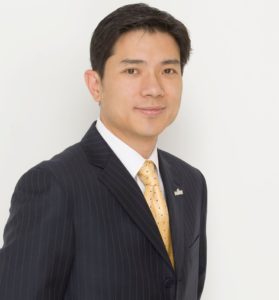
The emergence of the Internet opened new ways for everyone, especially for them who were innovative and wanted to create something big. It also helped those who had no resources as a child, but later, reached the heights of success. The rags to riches stories are interesting and inspire people to fight with their situations and face the struggle. One such person who presents the most appropriate rags to riches story is Robin Li, an internet entrepreneur from China, who once faced the worst financial conditions and now is one of the richest men in China. He is the founder of the multinational company Baidu, which is the owner of China’s biggest search engine, with the same name.
Early Life
Robin Li
was born on 17 November 1968 in Yangquan, Shanxi, China in a labour
family. He was a single boy among the five children of his parents.
The Shanxi province was an underdeveloped area, and there were no
good resources of education. But still, Li tried his best and on the
advice of his mother, worked hard to get a better education.
Ultimately, he was able to crack the entrance exam for Peking
University, Beijing, where he received a Bachelor of Science degree
in library information management.
After
completing his bachelor’s degree, the next step was to get a job.
He worked in a company in Beijing for one and a half year, but
fortunately got admission to a Fellowship program at the State
University of New York. He moved to New York and completed a master’s
degree in science from the university in 1994. He was enrolled in the
PhD program in computer science but did not complete his doctorate.
Career
Image Source: buffalo.edu
As soon Robin Li completed his master’s he joined Dow Jones and Company’s IDD Information Services as a software engineer. At IDD, he became the part of the development team, which was working on software program for the online edition of The Wall Street Journal. Here he also got the chance to work on the search engine algorithms as well.
While working at IDD, he started working on page-ranking algorithms, and ultimately developed Rankdex, the first web search engine with page-ranking and site-scoring algorithms that means, it used hyperlinks to check the quality of a website. Rankdex later became the inspiration for Google’s PageRank algorithm.
After Li
successfully developed Rankdex and got the U.S. patent for its
ranking algorithm, he left his job at IDD, in 1997. He then, joined
Infoseek, another internet company that was working on search engine
algorithms. During his time at Infoseek, he developed a new function
for Go.com, through which it could do image-based searches. Here he
worked for two years and left the job in 1999.
Founding Baidu
Robin Li moved back to China, to work on his own product and in 2000, he developed Baidu with the help of his friend Eric Xu. The two used the same algorithm as of Rankdex to develop Baidu. Li did not have a permanent apartment in China at that time and did all the coding work and the launch of Baidu from a hotel room near Peking University. Li became the Chairman of the company and Xu was appointed as the CEO.
In 2001,
Baidu offered people to bid for putting ads on the search engine.
This led to the monetization as well as the growth of the company.
Baidu was an instant hit, and Li was named among the “Chinese
Top Ten Innovative Pioneers” in the same year. In 2003, the
company introduced image-based searches as well as a news search
engine.
In 2004, Xu resigned from his post as CEO, and Li held the position. The next year, Li took Baidu to NASDAQ, and the value of its every share raised by 350 per cent, i.e., from $27 to $122. In December 2007, Baidu was listed in the NASDAQ-100, becoming the first Chinese company to do so. In the same year, Li was named in CNN Money’s annual list of “50 people who matter now”.
By 2010, Baidu was the most used search engine in China, and it also got the title of “Google of China”. The company has partnered with big names like Qualcomm, Continental and Bosch. It has also started working in the field of AI. The company has also launched a self-driving vehicle platform under its Apollo project (Apolong).
Along with hosting the biggest search engine in China, Baidu offers
over fifty internet-related services as well as artificial
intelligence-based products to its users.
Baidu is one innovative product that helped Li to fight with his
circumstances. Today, Li is one of the richest men in China and ranks
at number eight with $16.5 billion’s net worth. He has been awarded
great accolades, including “15 Asian Scientists To Watch” by
Asian Scientist Magazine in 2011, “Most Influential Business Leader
in China” by Fortune, and “World’s Best Business Leader”
by the American Business Weekly in 2006.
Yashica is a Software Engineer turned Content Writer, who loves to write on social causes and expertise in writing technical stuff. She loves to watch movies and explore new places. She believes that you need to live once before you die. So experimenting with her life and career choices, she is trying to live her life to the fullest.