Your Tech Story

Yashica Vashishtha

Yashica is a Software Engineer turned Content Writer, who loves to write on social causes and expertise in writing technical stuff. She loves to watch movies and explore new places. She believes that you need to live once before you die. So experimenting with her life and career choices, she is trying to live her life to the fullest.

Weebly

The Founding Story of Weebly : The Website Hosting and Building Interface

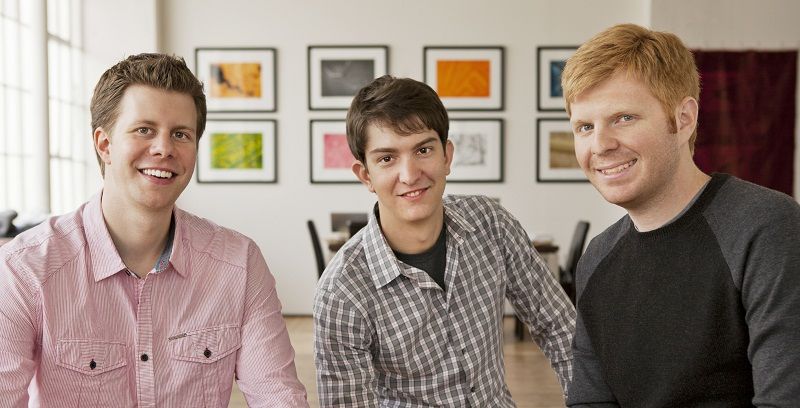
There have been many cases when people created wondrous things without knowing its worth. Though they want to accomplish a goal, they don’t have the idea that of the impact of their end product. They just keep working to get the product, and at the end, when the product is ready, it transforms their whole lives. One appropriate example of the same is none other than Weebly. Three college students, Dave Rusenko, Chris Fanini, and Dan Veltri, founded Weebly as a college project in 2006, and now, it is one of the most popular website building platforms.

Rusenko and Fanini were friends and met Veltri at the Pennsylvania State University. The university required every student to maintain an online profile. So one of Rusensko’s friend, who was a non-computer student, asked him to help her out with building her website for the astronomy class. While he was helping her, he figured out that many people need a website, but don’t have the skill to build one. This incident led him to think of developing a software that would help people, who did not know how to code, build a whole website.

Rusensko wrote the first line of code for the software, Weebly, as his college project, and Fanini and Veltri also joined in. In 2006, they completed a basic product and represented the same in a tech gathering of 1000 people. But for their disappointment, the CEO who was leading the gathering called the software “the worst idea” over the mic. This was heartbreaking for the three, but they kept the belief in their product, as it was a fact that not many people were into coding and ultimately, needed a website.
After the successful release of the invitational beta of the software in January 2006, in six months, they launched the official private-beta of the software. The next year in January, they took the software to Y Combinator’s winter startup program in Silicon Valley, California. Even though they were the last to apply, their idea had the potential that they got the entry. After getting selected in for the program, the three started working full-time on the software. The next year, they included a new editing interface named “what-you-see-is-what-you-get” to the software. They also raised a US$650,000 funding the same year.

Weebly now was a company, and they had to monetise the software. For that, they introduced the Pro accounts for the users, and also, included AdSense to the platform. In 2009, they also added support for editing the HTML and CSS to Weebly software. In 2013, the company hosted the C series funding, which helped them raise another $35 million. Companies, like Sequoia Capital and Tencent Holdings Ltd., also became the investment partner of Weebly. Till the time, the company had joined 80 employees to its work fleet.

In 2016, the company started working to add support for building an eCommerce website to the software, including the support for online payments through PayPal, Stripe or Authorize.net. It also included features to help people promote their brand, like Facebook Ad creator, integrated email marketing, and lead capture, etc. The platform offers support for 15 different languages, including English, Chinese, Japanese, Russian, Spanish, German, etc.

In 2018, Square acquired Weebly for a massive $365 million in cash and stock.

The website builder provides the users with multiple feature-rich options, such that they can create a multi-function website in minutes. Today, the very platform also provides hosting service where the users can get domain name including .weebly.com, .com, .net, .org, .co, .info, or .us. In the past 12 years, the company has earned over 45 million customers.

In 2007, Weebly was among the 50 Best Websites of 2007 by TIME Magazine. The CEO and co-founder of Weebly, David Rusenko, got a place in the Forbes’ list of “30 Under 30” in 2011.

Samsung Klaytnphone

Samsung is Launching a Blockchain Smartphone Named KlaytnPhone

Samsung is releasing its foldable smartphone today in its home country, and along with that, the company has come with another announcement that includes a new blockchain-based smartphone. Yes, a post from Wall Streat Journal has revealed that Samsung is working on a new flagship smartphone that will support cryptocurrency and will be called as “KlaytnPhone.”

The company has already got about ten smartphones’ release this year, including the Samsung Galaxy Fold, Galaxy S10s, Galaxy Note 10s, and now, it looks like the company is not stopping on them only. Samsung has chosen the name KlaytnPhone for its blockchain smartphone, which is inspired by a South Korean cryptocurrency built by the subsidiary company, Ground X Corp, of Korean internet company Kakao.

The smartphone actually belongs to the Galaxy Note 10 series and has got most of the features similar to the smartphones in this series. But there will be an inbuilt crypto wallet and support for blockchain included in it. Like the foldable smartphone from Samsung, for the time being, KlaytnPhone will also be available only in South Korea. According to the WSJ, the early buyers will also get a specified amount of cryptocurrency coins, i.e., Klay from Ground X Corp.

Samsung Klaytnphone
Image Source: digitaltrends.com

Klay is a newly launched cryptocurrency that Kakao released last year in October through its spin-off arm Klaytn. Cryptocurrencies and blockchain have been a topic of discussion for all. And, even being around for the past decade, there have been many questions about the authenticity of these technologies. But most of the big tech companies have always stood in favour of it. So the main purpose of Samsung to develop such a smartphone may be to get people familiar with this very technology and make it more user-friendly.

According to the reports, the prices for the new KlaytnPhone will start at $1000. There have been no comments from the company as yet, and if believed, according to Cointelegraph’s reports, Samsung has already launched a blockchain supporting smartphone in March this year, which is Galaxy S10. The company was also planning to build its own cryptocurrency and has invested $2.9 million into the French cryptocurrency company Ledger.

Fleet Space

Flavia Tata Nardini : Fleet Space Founder and a Pioneer in the Emerging Australian Space Industry

Today, everything is about connections; not the human connection, but the connection of humans through the internet. The Internet has transformed the world in less than the world had in the past 20 centuries. People just need their smartphone, and they can accomplish most of their daily routine work in a few swipes. Despite such advancement in human life, an aerospace engineer from Australia, Flavia Tata Nardini, does not want to stop here. She wants to create a network in the space, such that there will be no earthly object without an internet connection. Whether it is the students in the classroom or the tree in the forest, everything connected. The founder of Fleet Space Technologies has been developing satellites since she was a teen, and now, she is entirely focussing on the space as well as connecting the IoT devices.

Early Life and Career

Nardini was born into an engineer’s family in Rome, Italy. With a dream of becoming an astronaut, she completed a bachelor degree in aerospace engineering from University La Sapienza, Rome. She then completed a master’s degree in space engineering from the same university. In her late teens, she bagged an internship job at European Space Agency in The Netherlands, where she worked on the rocket propulsion technology.

In July 2009, she joined another company named TNO in The Netherlands, where she worked in various roles for four years, including propulsion design and test engineer as well as a product manager. Later, she even moved to Qatar to work with another space agency, where she sent nanosatellites to space.

Flavia Nardini founder Fleet Space
Image Source: amazon.com

Later, she moved to Adelaide, South Australia, to live with her partner (now husband) in 2014. Qualified with a lot of experience in space activities, it became tough for Nardini to find a job, as there was only one space startup back then. And having kids, she could not work in the defence, either. So, along with one of her future Fleet Space partner, Matt Pearson, she founded an educational startup named Launchbox. Under this startup, the two of the co-founders started teaching little kids about space and nanosatellites. Under the program, they even built CubeSat satellite using 3D printed components and launched them to the stratosphere.

Founding Fleet Space

While working for Launchbox, the two of the co-founders realised that they could also build a new space startup for connecting the IoT devices. Since no space agencies were working in Australia, founding one seemed a good idea to them. Hence in 2015, they, along with another aerospace engineer, Dr Matthew Tetlow, co-founded Fleet Space.

Fleet Space aims to create a network of nanosatellites around the earth, such that it can provide internet access to every person on earth for cheaper prices. The increase in the interconnection through the internet will make every single task accessible through a smartphone. For now, the company target is to connect 7.5 billion IoT devices on earth with the help of nanosatellites by 2020.

Partnerships and Fundings

Fleet Space has got the Australian as well the US government on board for the development process. Private companies like SpaceX has also partnered with the company to fulfil the goal. The French space agency CNES has also taken an initiative to help Fleet Space get the financial backing, and will be tracking and supporting the satellites built by Fleet Space. The company raised a $5m in Series A capital from Blackbird Ventures and Atlassian.

At the time Nardini founded the company, there was only one space startup in Australia. But with the success of Fleet Space, other budding entrepreneurs have also stepped into the same technology, and there are over 260 new startups that are working in the field of space research. In fact, the Australian government also announced in 2017 that it will be building the national space agency for Australia.

In September 2019, the company raised $7.35 million in the Series B funding led by Momenta Ventures and Horizons Ventures. Till now, Fleet has placed four CubeSat-class satellites in orbit and plans to send more satellites to the space to fulfil the demands.

Nardini’s love for space and satellites proves that the sky is the limit for her. She is an inspiring woman and a true example of women empowerment.

samsung galaxy fold

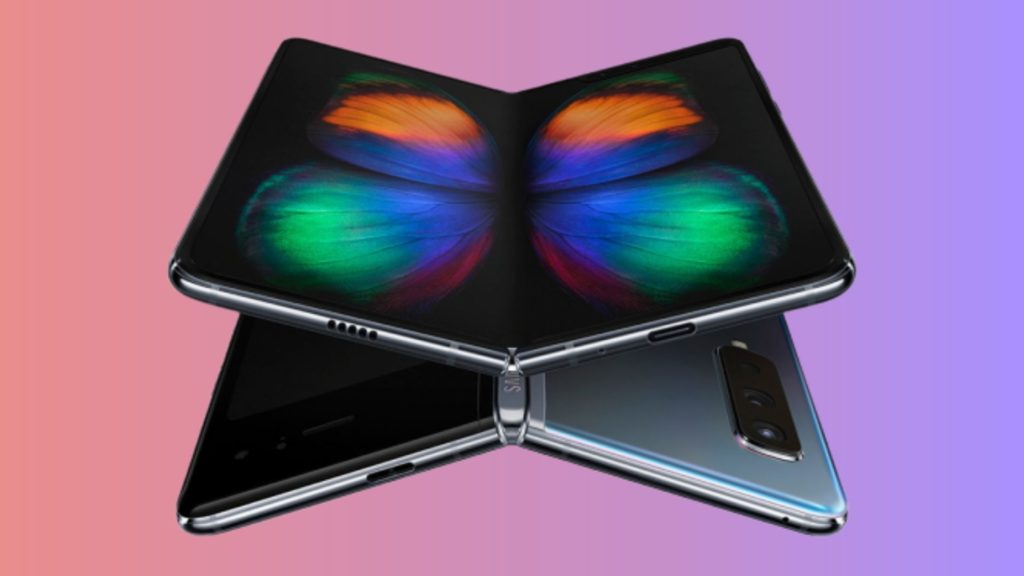
Samsung Galaxy Fold Finally Ready for its First Launch in Korea

The much anticipated Samsung Galaxy Fold have been quite in trouble since the company had announced the very smartphone. There were problems with its screen as it was prone to damage when folded, but after all, it is a foldable phone. So the company had to delay the launch of the smartphone to make improvements to make its screen stronger. And, after five months of its actual release date, the company is ready for the very smartphone’s first release.

The company has finally set 6th September as its launch date, and the first country, to be getting its hands on the smartphone, is Korea. Though the company had already mentioned that the smartphone will be arriving in September, there was no announcement about the actual date.

“The category-defining Galaxy Fold is a device that defies the barriers of traditional smartphone design. Now, we’re excited to release this pioneering mobile technology, and allow consumers to experience it for themselves,” said DJ Koh, President and CEO of IT & Mobile Communications Division, Samsung Electronics.

samsung galaxy fold

The new smartphone will take a bit longer to reach the other countries, including the US, the UK France, Germany, Singapore, etc. Some of the “select” countries will also get the 5G version of the same. The smartphone will be available in two colours, i.e., Silver and Black.

Along with the new Samsung Galaxy Fold, the company is also launching a new service named “Galaxy Fold Premier Service,” which will help the users on how to use and handle the new smartphone. It is expected the service will be free of cost and offer an in-person consultation for the users, and Samsung will be appointing experts for the task. These experts will guide the users on how to protect and carefully use the smartphone.

The reason for launching such a service is that the company do not want to take any risks. Though Samsung was ready to launch the smartphone in the spring-time frame, it had to delay the launch due to the wrong went testing of the smartphone. Many of the reviewers whom the company had sent the smartphone for the tests, returned it back damaged. But after Samsung has done some tough work on the same, it wants to train people how to handle it, so that the blame of any sort of damage does not go entirely to the company.

Reach Robotics

Silas Adekunle : The Founder of AR Robot Maker ‘Reach Robotics’

It is quite obvious to think that the world’s first gaming robot has been developed by a teen from the U.S., maybe from Japan, or even China, but in our imagination, Africa, and then Nigeria is way behind in this contrast. But would you believe if we tell you that this very robot does exist, and the inventor of the same does not belong to any of the developed nations, but Nigeria? Yes, a young lad, Silas Adekunle, of Nigerian descent is the developer of the world’s first gaming robot.

Early Life

Silas Adekunle was born in Lagos, Nigeria where he spent initial ten years of his life. He was always curious about technology, but due to lack of resources, could not get access to it. But when he turned ten, his parents moved to the UK, and he got the chance to know more about it. He had the desire to learn but had to pace up his learning process due to cultural shock. But soon, he was able to get among one of the bright students in his school.

After completing his school education, he joined the University of the West of England, Bristol to complete a bachelor’s degree in robotics and opted for C++. But it was before joining the university, that he had already started learning to code and do experiments with robots through YouTube and other online tutorials. Because of his knowledge about robotics, he became the team leader of the Robotics in Schools programme of the university. This programme targetted the students with a promising performance in the field of science, technology, engineering and mathematics. This was the turning point of Adekunle’s life, as he got to learn more about the subject he loved.

Finding the Passion

Silas Adekunle
Image Source: owler.com

Besides going to college, he opted for a part-time teaching job, where eventually, he started teaching the kids about robotics using his robotic kits, he was using. But soon, he realised that the kids used to lose their interest in robots as soon as they know completely about it.

While teaching the kids, he conceived the idea of Reaching Robotics, a program to teach kids robotics, built in a more innovative way. The concept was to build robots with gamification. He pitched the idea in front of the university and Princes’ Trust. Adekunle always knew he wanted a career in robotics and had made some entrepreneurial plans as well. As he was always in love with motion, he decided to build a consumer product based on it.

Founding Reach Robotics

Inspired by the already existing pet robots, Adekunle started working on a robot that would also express emotions and be a character from a game. In 2013, he met Christopher Beck, who was studying for his PhD in computer science, and John Rees, a robotics expert and engineering consultant. Both joined Adekunle for the development of the robot. Next thing they did was founding Reach Robots.

It took the three of them to create their and the world’s first gaming robot named Mekamon total two years. Mekamon is a gaming robot using which a player can play the game through its Android or iOS phone. The robot has got sensors to sense the obstacles and can easily identify things around it. The robot is a combination of gaming mechanics and augmented reality.

Receiving the Funding and New Partnerships

Silas Adekunle pitched his idea of gamified robots in front of a few capitalists and was able to raise $10M in total, including pre-seed and seed funding. Later, he also launched an educational branch of the firm with the name Reach Edu. The company also launched an app that teaches the children robotics and coding. The Reach Robotics product Mekamon was influencing enough that it also got Apple onboard to sign an agreement with the company in 2017. According to the agreement, Apple is the official retailer of the robot and sells the product in both the US and the UK markets.

Today, Reach Robotics is one of the leading robot makers that make use of AI and AR for the development of their robots. For his development works, Adekunle has been awarded a few famous awards. He was named to the Financial Times’ list of the ‘Top 100 minority ethnic leaders in technology in November 2018. He was also in the list of Forbe’s 30 Under 30 list. UWE Bristol also awarded him an Honorary Degree of Doctor of Technology to recognise his contribution to the student entrepreneurship and technology development.

firefox etp

Mozilla Turns the ETP (Enhanced Tracking Protection) By Default On for Every Users

The users’ privacy has always been the biggest concern of all the browsers working out there. Safari from Apple has been at the top when it comes to maintaining the user’s privacy, and slowly, the other browsers are also taking a step forward in the same regard.

Another browser maker, Mozilla, has also announced that the Firefox will now have by default privacy from the third-party tracking software, through its Enhanced Tracking Protection (ETP) feature. Though the company had introduced the very privacy feature last year in October, and even, made it official in June this year, the users had to manually turn on the feature. But from today onwards, the feature will be by default on for everyone.

The feature is integrated with the new version of Firefox, i.e. Firefox version 69. And, users who will upgrade their browser, whether on desktop or over their Android smartphones, they will also get the feature turned on by default. With ETP, the browser will also be blocking the cookies that are set by websites that want to steal the information, like user behaviour to send ads to the users or to sell the information further to other companies.

firefox etp
Image Source: mozilla.org

The new ETP feature will also take an action on the crypto mining or cryptojacking by blocking it by default for every user. Cryptomining is a type of malware that is capable of taking over the resources of a computer, draining the CPU as well as the battery. Cryptomining that runs in the background is responsible for ruining the user experience.

The company announced the news through a blog post, where it also said, “Currently over 20% of Firefox users have Enhanced Tracking Protection on. With today’s release, we expect to provide protection for 100% of ours users by default. Enhanced Tracking Protection works behind-the-scenes to keep a company from forming a profile of you based on their tracking of your browsing behaviour across websites — often without your knowledge or consent.”

Since the release of the feature in June, the company have been testing it in different use cases, and according to it, the feature is ready to provide complete protection to its users. From now on, with the latest version of Firefox, the users will see a shield icon beside the address bar on the left. By clicking on the shield they can see which of the companies have been blocked by ETP.