Your Tech Story

Yashica Vashishtha

Yashica is a Software Engineer turned Content Writer, who loves to write on social causes and expertise in writing technical stuff. She loves to watch movies and explore new places. She believes that you need to live once before you die. So experimenting with her life and career choices, she is trying to live her life to the fullest.

Docker

Solomon Hykes : The Founder of Enterprise Container Platform, ‘Docker’

Open-source is one technology that has helped developers to improve their software and lead it to the next level with the help of other developers, without even knowing them. This technology not only helps the main developer but also the other developers to grow their skills. WordPress being one of the biggest examples of such successful startup that has emerged mostly because it is open source and the community behind it. Soloman Hykes, also known as a French founder in Silicon Valley, is another startup owner, who made use of the open-source technology and established one of the biggest open-source development and deployment container providers, Docker.

Solomon Hykes was born to an American father and a French-Canadian mother in New York. But his family flew to France when he was four years old. He was introduced to computers when he was seven and instantly, became interested in coding. Hykes joined the Epitech School in 2001, where he started learning to programme. Alongside his studies, he got a job at a nearby cyber cafe, where he practised coding and ran the cafe’s servers. During this time, he also spent six months at the University of California, San Diego, and even, worked for a French movie company in Los Angeles.

In 2006, he graduated as a computer engineer and bagged a job at a computer security company. But there was something else he wanted to do. Only two years after starting his first job, in 2008, Hykes resigned to start a company of his own, along with Sébastien Pahl, a fellow student from Epitech. The two named the company as dotCloud, with which the two started working on a software that would offer a platform for developers to code on Amazon’s cloud.

Solomon Hykes Docker
Image Source: techcrunch.com

The two co-founders took the startup to Y Combinator in summer 2010 but got rejected. They again applied for the startup program in the winter session of the same year. But yet again were not selected. But at the very last moment, Paul Graham from Y Combinator changed his mind and selected dotCloud on a condition. The condition was to make all the Y Combinator peers to signup for dotCloud’s software.

At the startup program, Hykes presented the idea of a common container for software development and deployment. He wanted to create a container that could be accessed from anywhere, such that many computers interconnected into a cluster. With the very idea, dotCloud raised a decent amount of seed funding and started developing the software.

In 2011, Hykes shifted the company to the Silicon Valley, and the company raised an $11 million in Series A in April in the same year, from names like Peter Fenton of Benchmark Capital. At that time, the company was the only PaaS provider, and even, AWS was providing better support for the software. The company started to grow rapidly, and in 2013, the company dotCloud became Docker.

Though the company was going through a good time, there was still something that it was lacking. During the same time, Hykes got a decent offer for selling the company, but he decided not to and was tinkering around to make things right for the company.

So in the same year, Hykes made the company’s software an open-source platform, and RedHat was the one big company to step in to use the very software for its PaaS platform, OpenShift. In 2014, Microsoft announced that it will be integrating the Docker products into its Windows Server version in 2016. The same year, Google, Amazon and IBM also came in a partnership with the company. In 2014, the company raised a $40 million in the Series C funding led by Sequoia Capital. The company also acquired another startup named startup Orchard.

In 2015, the company became a unicorn company, after it valued $1 billion through a $95 million Series D fundraising led by Insight Venture Partners. By the end of the same year, the company again raised an $18 million in the Series D round. In the latest round of funding in 2018, the company has raised a $92 million.

In the beginning, Docker started with a single project, but now, it hosts projects like containers, LinuxKit, SwarmKit, and the Moby, etc, based on the Docker technology.

On 28 March 2018, Solomon Hykes stepped down as the CEO of the company, remaining on the board of the company valued $ 1.3 billion.

Apple event

Apple Event 2019: All Products that Apple Talked About

With Apple’s iPhone 11 being the biggest highlight, Apple finally hosted its annual Apple Event 2019, which started at 10 a.m. PT and 10:30 p.m. IST and took place at the Steve Jobs Theater on Apple’s campus in Cupertino, California. Along with the iPhone, there were many other products that the company talked about during the event.

The products, other than the iPhone, mainly includes the new version of the Apple Watch, and the launch of Arcade, a subscription-based game for mobile, desktop and living room. Finally, the company has also launched its much anticipated Apple TV+, that will be up for a rivalry with Netflix through its original TV shows.

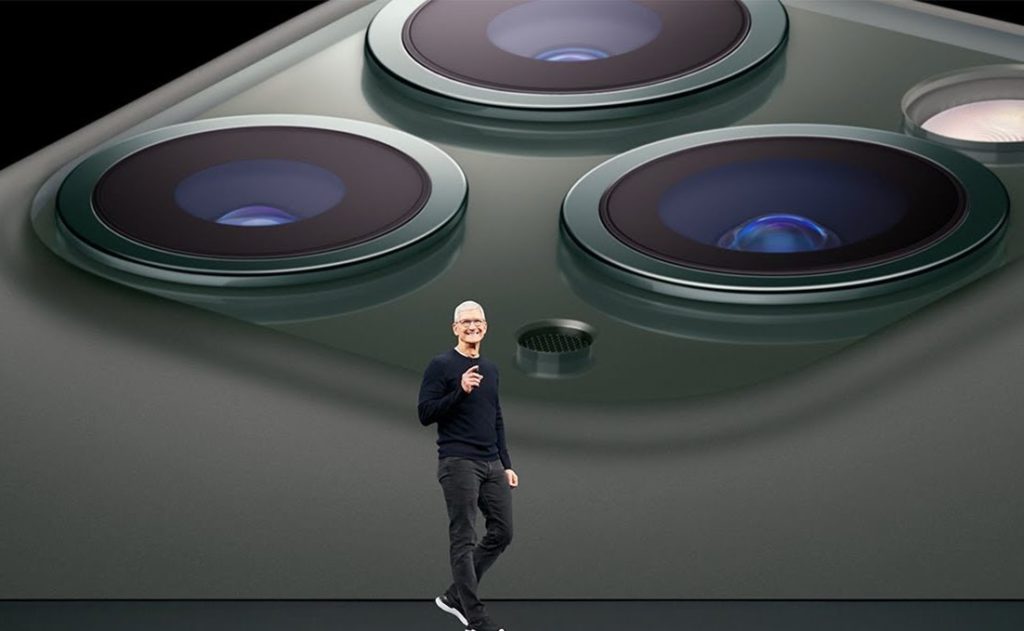
Apple, like every other year, took to the stage of its Apple Event to launch its new flagship smartphone iPhone 11. Like the previously launched Apple iPhone X, the company has brought three smartphones to the iPhone 11 lineup, which includes iPhone 11, iPhone 11 Pro, iPhone Pro Max.

Apple event
Image Source: Apple YouTube

Each of these iPhones are in other three variants based on their storage capacities. The Apple iPhone 11 has got storages 64GB ($699), 128GB ($749), and 256GB ($849). The three variants of iPhone 11 Pro includes 64GB ($999), 256GB ($1,149) and 512GB ($1,349). And, the iPhone 11 Pro Max renders stoargae capacities of 64GB ($1099), 256GB ($1,249) and 512GB ($1,449).

This time, the company has brought the dual sim option to the iPhones through a Nano-SIM card slot and an eSIM. The iPhone 11 is said to be the successor of the iPhone XR launched last year and has been upgraded to a dual-camera setup, including a standard wide-angle lens and an ultra-wide-angle lens. And, on the other hand, the other two newly launched smartphones are packed with triple 12MP sensors rear cameras that include an ultra-wide-angle lens and a telephoto lens.

The iPhone 11 has got a 6.1 inches LCD display, and for the iPhone 11 Pro and Pro Max, the company has used 5.8-inch and 6.5-inch OLED screen, respectively. The processor used in all the iPhone 11 models is an A13 Bionic chipset, which according to the company is way faster than the processors used in its previously launched iPhones. iPhone 11 comes in six new colours, including purple, green, yellow, white, red and black. The colour choices for the iPhone 11 Pro and the iPhone Pro Max are midnight green, space grey, silver and gold.

Talking about the Arcade, that the company launched with a partnership with gaming giants Konami, Capcom and Annapurna Interactive, is said to be the first subscription service for mobile and desktop. There will be more than 10,000 games that the users will have access through the subscription. The service will be available for $4.99 per month.

The company also launched the Apple TV+ for a $4.99 monthly subscription fees that will be streaming in over 100 countries. In fact, the company has announced a one-year free subscription with the purchase of any of its iPhone, iPad or Apple TV.

The company also introduced its new 7th generation iPad, empowered with the newly launched iPad OS, having a 10.2-inch display. According to Apple, the iPad has three times better pixels on its display, and for the first time, any of its iPad is having a 100% recycled aluminium body. The price of the new Apple iPad is set to be $329, and it will cost $299 for the educational institutions.

Last but not least, another highlight of Apple Event was the new Apple Watch Series 5, completely dedicated to human health. The watch will be looking after the health of the human heart, and the other women related health issues. The watch also includes a compass and decibel reader to monitor noise level. There are two types of models, one of which only includes the GPS ($399), and the other includes both GPS and the cellular service ($499). The users will also have an option for international emergency calling over the watch. The watch is available in five colours, i.e., silver, gold, aluminium, black and white.

Paytm

Paytm Suffers Almost Tripled Losses in FY19 due to Additional Expenses on Promotions

Online banking and payment apps have made life a lot easier, and the rewards we get on the payments are a plus. Paytm being the earliest and the biggest player in the country has been the most used payment app. But with the arrival of other payment apps, the former has to face some good losses. Reportedly, Paytm’s parent company has suffered a 165% extended loss for the financial year that ended on 31st March.

The company reported a total of Rs 3959 crore ($549 million) loss which is triple times up its last year’s losses, i.e., 1490 crore ($206 million). Going further, collectively, One97 Communication, including its other business, had to suffer a loss of Rs 4217.20 crore ($584 million), which is way above its last year’s losses, and that is Rs 1604.34 crore ($222 million).

“The company has incurred huge capital expenditure in creating a brand and establishing its business activity. We have incurred a considerable amount in various capital & operational expenditures which resulted in losses during the financial year,” said the company in the annual report.

Paytm
Image Source: forbes.com

Despite the losses, even the revenue of the company is up from its last year’s, i.e., Rs 3232 crore ($448 million) from Rs 3052 crore ($423 million). And, the company is even planning to invest a $3 billion for the growth of its business. According to its previous announcement, the company is even looking forward to going public with the next two year. But seeing its past expenditures, the company had spent a lot in the promotion of its app than it earned from it. So amid the raised competition, it has to be careful about its spendings in the coming future.

“For the last two years, we have been investing $1 billion each year to expand the digital payments ecosystem in our country. We will further invest about $3 billion in the next two years to scale the same,” said a Paytm spokesperson.

There has been a tough competition for Paytm as there are not less than ten payments (national and international) apps that are offering people exclusive offers along with the easy payments. Most of the big companies have brought their payments app, Google Pay and PhonePe, being the ruling party among of all. In fact, UPI-based apps like PhonePe are backed by the government and are even more flexible for the payments than Paytm. So it has become quite difficult for the company to stay firm in the market.

But according to the company, it is safe and is already spending on expending and strengthening its business and has claimed that the next year, there won’t be such losses. For now, the company is entirely focusing on its payments bank, insurance and insurance broking, travel ticketing, hotel and mobile wallet services, etc.

Qualcomm Snapdragon 7 and 6 Series

The Qualcomm’s Snapdragon 7 and 6 Series will be the Low-Budget 5G Chipsets

4G has made life a lot faster, and now, 5G is the next big thing the people are looking forward to. Till now, only a few companies have been able to get their hands on this technology, including Oppo Reno, Samsung Galaxy S, One Plus 7, etc., Qualcomm being the biggest chipmaker to provide them with the 5G modem.

Till now, Qualcomm had been offering the handsets makers with the separate 5G modem. But recently the company had announced that it will be including the 5G technology in its upcoming 8xx series 5G platform. That means, no separate modems but the 5G technology integrated to the processor itself. Adding to that, now the company has announced that the mid-range Snapdragon 6xx and 7xx chipsets will also have the 5G technology included into them.

The company announced its new Snapdragon 7xx and 6xx series 5G processors at the ongoing IFA event in Berlin, Germany. The announcement also revealed that there will be an extended range of 5G technology that will offer the support for technologies like the sub-6Ghz and mmWave spectrums, TDD and FDD modes, 5G multi-SIM, and Standalone (SA) and non-standalone (NSA) network architectures, etc.

Qualcomm Snapdragon 7 and 6 Series
Image Source: techblog.comsoc.org

Also, the new Qualcomm chipsets will make a large range of devices, mid-price or expensive, support 5G.Which is kind of the main purpose behind the release of the new chipset, i.e., to make the 5G technology available to almost everyone, not to the ones with expensive devices. “The transition to 5G is going to be faster than earlier transitions. Now we have to bring it to everyone,” said the Qualcomm President Cristiano Amon.

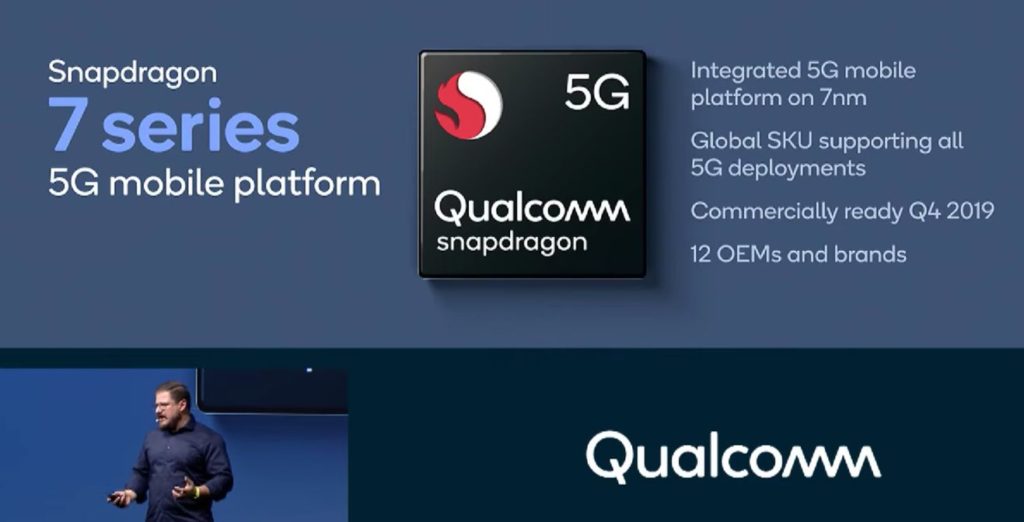
According to the announcement, the company has already partnered with twelve smartphone makers for integrating the new Snapdragon 7 series 5G chipset into their upcoming 5G smartphones. This list of partners includes names like Oppo, Vivo, Nokia, LG, etc.

The announcement by the company did not reveal the actual dates of availability of these new chipsets in the market but has given us the time slot when the markets can have them. Qualcomm has already talked about releasing the 8xx series 5G platform by the end of this year, whereas we can expect the Snapdragon 7xx series 5G platform to roll out by the fourth quarter of this year, and the release of the 6xx series 5G platform may take place in the second quarter of 2020.

TransferWise

TransferWise : A UK based Startup that Made Transfering Money Abroad Cheaper

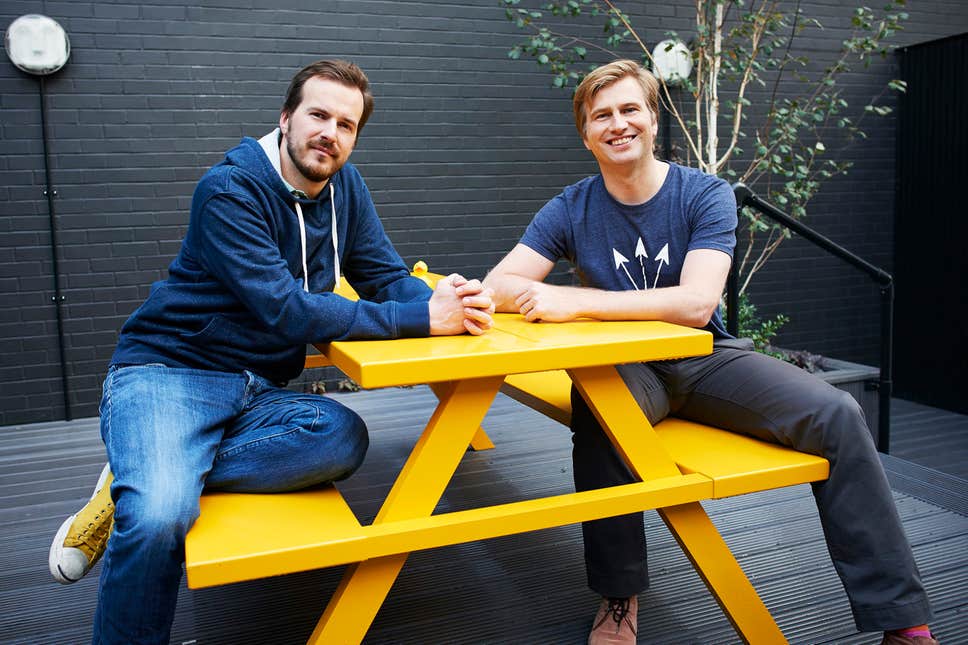
The people who live in a different country from their home for work would know the pain of paying the extra fee for sending money back to their home. Though with the rise of the internet and new fintech apps, the pain has been reduced to an extent. But, if we go a decade back, and even earlier, there were no such apps or any online platforms. People had to pay an extra fee, and mostly, in the currency which was the expensive one. This problem led two Estonian fellows, Taavet Hinrikus and Kristo Käärmann, to found TransferWise, a fintech platform for transferring money abroad without paying additional hidden fees.

Taavet Hinrikus and Kristo Kaarmann both belonged to Estonia and were working in London. In fact, Taavet Hinrikus was Skype’s first employee. The two had met a party and ultimately, became good friends.

The Problem

In 2008, Kaarmann was rewarded a Christmas bonus of £10,000 ($13,147) by his company, which he wanted to spend in something big. The only problem he faced was that he was paid in pounds, but he had a mortgage back in Estonia, that he had to pay in Euros. He used to regularly send money to his Estonian bank account. The transfer usually used to take 4-5 working days to complete, and the bank would charge a specific fee.

transferwise founders
Image Source: standard.co.uk

In general days, he had never sent such a big amount to his Estonian bank account. So the fee charged did not feel much for him. But when he had to send the earned bonus to that bank account, it shook him hard. Before sending the money, he looked at the exchange rates on Bloomberg and Reuters, that came out to be a £15 fee. But after he sent the money, he checked the balance and found out that the bank had charged him a £500. Here he realised that the banks were charging an extra fee other than the exchange rate and that too, in pounds.

The Solution

Kaarmann discussed the matter with Hinrikus, who was also suffering from the same problem. Living in London, Hinrikus had to pay bills in pounds, but his salary came in Euro. This led the two think of saving the exchange fee by transferring money to each other. The two built a private exchange system, in which, Kaarmann transferred Hinrikus money in pounds, whereas the latter sent money to Kaarmann in Euro and for free of cost.

For a few months, they followed the same method, and then they talked about the transfer system to some of their colleagues and friends, too. This way, they formed a small group for sending and receiving money without spending extra cash on exchange fees.

Launching TransferWise

Finally, in 2011, the two decided to launch a whole system for people, through which they could send and receive money across the border, without having to spend extra on exchange fee. They introduced the new online money transfer system, TransferWise, on TechCrunch through a simple blog post, and in no time, they started receiving emails regarding it.

In 2012, the platform got the approval from the UK financial regulator, and in the first year of its inception, it carried out transactions of worth €10 million. Though TransferWise was hitting off good, it was not able to reach more people. The investors were sceptical about the idea. But one person who was also the owner of a startup believed in the idea. It was PayPal co-founder Peter Thiel. In 2013, Thiel led the Series A round funding for the company and raised over a $1.3 million.

In 2016, it was found out that TransferWise on an average was 83% cheaper than the bank transfers. Till now, the company has raised a $400 million in all rounds of funding collectively. According to TransferWise, it carries out over $1 billion transactions every month and has saved around a billion pounds of its customers on the transfers.

Today the company has got offices in London, Singapore, Tallinn, and New York, etc. In 2017, the company also launched borderless accounts for its users and also a multicurrency master card to handle borderless transactions. TransferWise offers a peer-to-peer money transfer for more than 175 different currencies.

Becoming the Unicorn

In May 2019, the company had another round of funding and raised $292 million. With the fundraiser, the company reached a total valuation of $3.5 billion. TransferWise got the investments from some of the reputed investors in the world, including Peter Thiel, Richard Branson, and Andreessen Horowitz. Other than that the capital ventures that invested in the company, include Global Investors, IVP, Sapphire Ventures, Japanese Mitsui & Co, and World Innovation Lab.

TransferWise has received several accolades to its names. The Guardian named it as one of “East London’s 20 hottest tech startups”. It also got named as Wired UK Start-Up of the Week. The company was at number 12 in Startups.co.uk’s list of the top 100 UK start-ups of 2012. TechCrunch also named TransferWise as one of five “start-ups to watch” at Seedcamp’s 2012 US Demo Day. In August 2015, the company was named a World Economic Forum Tech Pioneer.

local motors

Jay Rogers : The Founder of Local Motors and Inventor of First 3D Printed Electric Car

There have been startups based on daily needs and also on the pain points people go through every day. But sometimes, it is the question of life and death, and the safety of people. There are many such examples of startups that are inspired by the people’s safety, and one such startup is Local Motors, that have a great story behind it.

Local Motors was founded by Jay Rogers in 2007 and have its headquarters situated at Phoenix, Arizona. Local Motors is a car manufacturing company that builds its autonomous cars with the help crowdsourcing.

Before starting up Local Motors, Rogers was a Marine in the US navy. But even before that, he was a confused young lad, who did not have any idea what would be the best career choice for him. He graduated from Princeton University with a degree in banking and was about to opt for an MBA for his post-graduation when he met a fellow from the same MBA batch, who had also been a marine.

Jay Rogers Local Motors
Image Source: zimbio.com

Influenced by that person, Rogers, in 1999, joined the U.S. Marine Corps. He served as a marine for seven long years and went through random experiences. He was posted in locations, including Iraq. In 2004, when he was appointed in Iraq, he lost one of his fellow officer and friend, Brent Morel while riding a Humvee. Rogers found it stupid to deploy a Humvee in Iraq as the vehicle have a heavy engine. Again in next couple of years, he lost his another friend due to the failed landing of a Boeing Vertol CH-46 Sea Knight helicopter.

These incidents hit Rogers hard, as he found out that these two vehicles were the best vehicles built in America. Still, these were not smart enough to save human lives. After seven years of his service as a marine, Rogers returned to complete a degree in business from the Harvard University, to give a direction to his new startup that was inspired by the sad incidents happened in his life. He wanted to start a company that would create smart vehicles to help people with their needs.

Rogers studied the business models of various car manufacturing companies, and what they all were doing was not customer-focused. He had a different approach, through which he wanted to build customer-oriented vehicles. So he thought of building a unique open-source micro-factory for rapid manufacturing.

But without investments, it was not possible to build a company, and then the products. So he approached the investors from the silicon valley, but for his disappointment people were more interested in investing their money in the already famous companies like Tesla. But without losing hope, Rogers raised a $10 million with the help of his family, friends and a few investors.

But the amount was not sufficient for both designing and developing the product. But Rogers again came with a unique solution. He opted for crowdsourcing the design concept for the company’s first product, offering $20,000 for the winner. An art student won the competition, and in 2009, based on the same design, Rogers launched the Rally Fighter, the first Local Motors product and a souped-up, fibreglass-chassis dune buggy made to run in the desert. The car was a massive success. A total of 20 units of this desert crawler was sold in the same year.

Since the launch of Rally Fighter, the basic business model of the company includes designing, engineering and manufacturing of automobiles open source, such that the designers are welcomed to submit their designs, and the community votes and selects the winners. Even though a single winner is chosen for the design, the community members can suggest improvements for the same. For Rally Fighter only, 35000 designs had been submitted by designers.

Rally Fighter was a giant desert truck, so now Rogers wanted something that would be suitable for the general public. On the arrival of the 3D printers in 2014, he opened a challenge for the Local Motors’ employees as well as for the community members to make the world’s first drivable 3D-printed automobile. 200 designers participated in the challenge, and Strati became the world’s first 3D printed electric car. The car was manufactured in 44 hours and in front of a live audience at the International Manufacturing Technology Show in McCormick Place, Chicago.

Though the car was not powerful enough, it set new technology standards. It gave Rogers the confidence of building something new. A few months later, Local Motors was invited to Berlin’s Urban Mobility Challenge, to build an emission-free minibus. Again Rogers notified all its 200,000 in the community for the designs for a $20,000 top prize. The design of a 24-year-old Colombian industrial engineer, Edgar Sarmiento, was finalised for the challenge and Olli was manufactured. The 8 to 12 seater minibus, Olli, was manufactured in the partnership with IBM.

Olli was demonstrated on Facebook Live of Berlin’s Urban Mobility Challenge. People were quite impressed with the design and the capabilities of the vehicle. So the company received $1 billion in financing from Florida-based Elite Transportation Services (ETS) for Olli. The company also received funding of $20 million from Texas-based Xcelerate.

The company is looking forward to embedding the autonomous driving and artificial intelligence to the new models of Olli. For bringing the new technologies to Local Motors, the company has partnered with International Business Machines Corp.’s Watson program for artificial intelligence and also with Robotic Research LLC.

Currently, Jay Rogers is serving the company as the CEO.