Your Tech Story

Suhani Jain

I am a student pursuing my bachelor's in information technology. I have a interest in writing so, I am working a freelance content writer because I enjoy writing. I also write poetries. I believe in the quote by anne frank "paper has more patience than person

Samsung Galaxy S24 Series to Launch on January 17, 2024

Samsung Galaxy S24 Series Breaks Records with 2.5 Lakh Pre-Orders in India in 3 Days

In just three days after its launch, Samsung India has announced an incredible feat: 2,50,000 pre-orders for its newest flagship Galaxy S24 series smartphones have been placed. This surpasses the pre-booking numbers of the previous Galaxy S23 series, which hit 2,50,000 within a three-week period last year, and creates a new milestone for the Galaxy S series. The resounding response highlights how well-liked and in high demand the Galaxy S24 series is in India.

Samsung has officially declared that the Galaxy S24 series will be produced in India in line with the ‘Make in India’ campaign of the government. In addition to demonstrating Samsung’s dedication to the Indian market, the action supports the nation’s indigenous manufacturing sector.

Samsung Galaxy S24 Series to Launch on January 17, 2024

The starting price of the Galaxy S24 series is Rs 79,999. The Galaxy S24 is available for Rs 79,999 for the 256GB model and Rs 89,999 for the 512GB variant. The price of the Galaxy S24 Plus is Rs 1,09,999 for the 512GB model and Rs 99,999 for the 256GB version. Three versions of the flagship Galaxy S24 Ultra are available: the 256GB model costs Rs 1,29,999, the 512GB variation is priced at Rs 1,39,999, and the 1TB option is priced at Rs 1,59,999.

In order to entice early adopters, Samsung is providing alluring perks. perks worth Rs 22,000 are available to those who pre-book the Galaxy S24 Ultra and Galaxy S24 Plus; perks worth Rs 15,000 are available to those who choose the Galaxy S24. On January 31st, the Samsung Galaxy S24 Series will go on formal sale in India.

Samsung integrates Galaxy AI functionalities including Live Translate, Interpreter, Chat Assist, Note Assist, and Transcript Assist to showcase the sophisticated features of the Galaxy S24 series. The Samsung Keyboard can now translate text in 13 languages, including Hindi, in real time. Android Auto will intelligently summarize incoming messages in the context of a car and recommend pertinent responses and actions.

The Galaxy S24 series features AMOLED displays that have a maximum brightness of 2600 nits. Seven years of Android and security upgrades are planned for all models, guaranteeing a durable and current user experience. 

Samsung’s dominance and ubiquity among smartphone fans are highlighted by the remarkable pre-order statistics for the Galaxy S24 series, which point to a solid start in the Indian market as excitement grows.

Upgrade to iOS 17.3: Apple Adds Powerful Stolen Device Security to iPhone

Upgrade to iOS 17.3: Apple Adds Powerful Stolen Device Security to iPhone

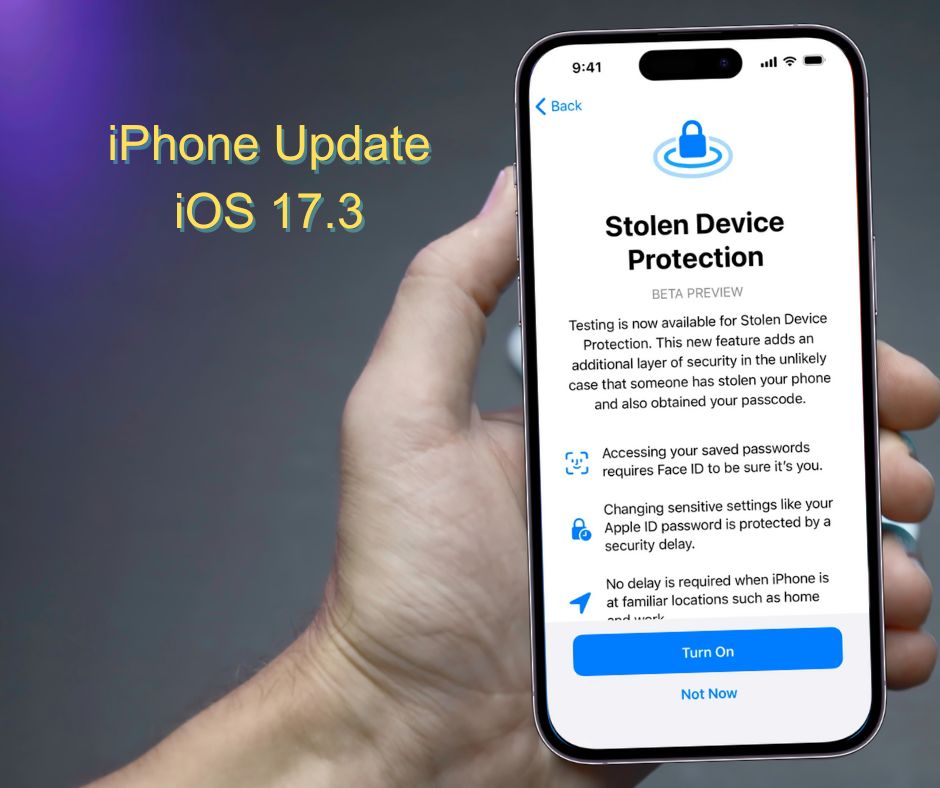
With the release of iOS 17.3, Apple has significantly improved iPhone security by introducing Stolen Device Protection. The purpose of this new function is to prevent hackers from accessing private data kept in iCloud or other important accounts. Stolen Device Protection forces users to utilise biometric identification, such as fingerprint scanning or Face ID, for some tasks, like accessing stored passwords or requesting a new Apple Card, in contrast to conventional passcode methods on the lock screen.

The update adds a Security Delay for more sensitive operations, such as resetting your iPhone passcode or Apple ID password, to further improve security. Apple claims that this Security Delay requires Face ID or Touch ID, which is followed by an additional successful biometric authentication and an hour-long delay. 

Upgrade to iOS 17.3: Apple Adds Powerful Stolen Device Security to iPhone

Only the legitimate owner will be able to do important operations on the device thanks to this multi-step procedure, which provides an additional degree of security. Notably, context-aware security measures are added when users are away from familiar places like home or work and additional authentication is triggered.

It’s simple to activate stolen device protection. Toggle the function on by going to the Settings app, choosing Face ID & Passcode, entering their device passcode, and so on. Apple highlights that there is strong protection against unwanted access with this latest security upgrade.

iOS 17.3 Brings Group Playlists

Together with security-related changes, iOS 17.3 brings group playlists to the Apple Music app. By enabling friends to join and contribute to playlists, this feature improves the social and interactive elements of sharing music.

Additionally, Apple gives customers more alternatives for entertainment while travelling by expanding the ability to stream content to TVs in a limited number of hotels.

Apple has released upgrades for devices running iOS 9, 15, and 16 in addition to iOS 17.3. Although specific details regarding these upgrades are not given, it is indicated that they could contain significant security fixes, demonstrating Apple’s dedication to preserving the ecosystem’s overall security.

These upgrades help to provide a safer and more robust environment for iPhone users, as Apple continues to prioritise user security. This ensures that their sensitive and personal data is secured against possible threats and unauthorised access.

China Boosts Chip Gear Purchases to $40B to Counter US Tech Curbs

China Boosts Chip Gear Purchases to $40B to Counter US Tech Curbs

China dramatically expanded its imports of chipmaking gear in 2023 as a calculated attempt to support its semiconductor sector and overcome limitations set by the US. Based on official customs statistics, Bloomberg calculated that imports of computer chip-related equipment increased by 14% to around $40 billion, the second-highest amount since 2015. This increase happened in the midst of a 5.5% overall dip in China’s total imports during the same time frame.

China Boosts Chip Gear Purchases to $40B to Counter US Tech Curbs

Image Source: techspot.com

Achieving self-sufficiency in chip manufacturing has been accorded top priority by the Chinese government and the semiconductor industry, especially in light of the difficulties caused by export restrictions enforced by the US and its allies. 

The US sees China’s high-tech sector as a possible danger, and these limitations have made it harder for Chinese enterprises to have access to state-of-the-art chipmaking gear.

Chinese Chip Businesses are Making Significant Investments

Chinese chip businesses are making significant investments in constructing new semiconductor production facilities to boost national capabilities and get around export control obstacles. Crucially, these restrictions have restricted Chinese companies’ access to the equipment needed to manufacture the strongest and most sophisticated semiconductors.

Notably, in anticipation of increased export restrictions, China saw a spike in imports from the Netherlands. The Netherlands has enforced regulations that impede Chinese enterprises, such as Semiconductor Manufacturing International Corp., from obtaining the newest equipment for producing chips. Lithography equipment imports from the Netherlands surged by about 1,000% year over year in December, totalling $1.1 billion, as businesses hurried to stock up before this month’s Dutch limitations went into effect.

The US government apparently requested that Dutch business ASML Holding NV stop shipments of some of its cutting-edge machinery to China even before the new limitations went into force. These cancellations happened just before export restrictions on expensive machinery used to make chips were supposed to go into force.

China’s significant investment in chip manufacturing equipment demonstrates its determination to become technologically independent and to get past international barriers. A crucial component of the country’s long-term economic plan continues to be its emphasis on developing a strong semiconductor sector.

The significant rise in imported chipmaking equipment demonstrates China’s will to maintain its leadership in the global semiconductor market in spite of outside obstacles.

How to Easily Delete an eSIM from Your iPhone and Android Devices

How to Easily Delete an eSIM from Your iPhone and Android Devices

How to Easily Delete an eSIM from Your iPhone and Android Devices

Image Source: futurezoneacademy.com

The functions that are built into our smartphones get more and more varied as technology develops. Embedded SIMs, or eSIMs, are one such innovation that makes it easy to move between cell plans without a physical SIM card. You could eventually need to remove an eSIM from your iPhone or Android smartphone, though. This post will discuss how to remove an eSIM and the ramifications of doing so.

What Takes Place When an eSIM is Deleted:

Eliminating an eSIM has serious repercussions since it stops all cellular service connected to that particular plan. This implies that the eSIM will not be able to make or receive calls, texts, or data access.

Furthermore, every piece of information and configuration on the eSIM—including contacts, messages, and network preferences—will be deleted. It’s important to understand that uninstalling an eSIM does not impact the validity of the eSIM plan you purchased; it merely removes services from your smartphone.

Because this step is irreversible, it is crucial to extract any required data from the eSIM before moving further. You should speak with your network service provider if you have any specific queries or worries.

How to Take Out of Your Phone an eSIM:

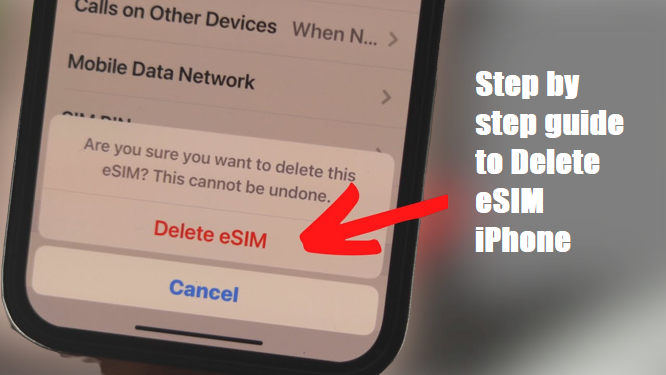
eSIM removal from iPhone:

  • Start the iPhone’s Settings app.
  • Press the “Mobile Service” button.
  • Choose the eSIM that you wish to remove.

It’s simple to remove the eSIM information from your iPhone. If you want to reactivate the service on your iPhone, you must have a physical SIM card with the same number.

Remove eSIM from Android device:

  • Launch the Settings application.
  • Next, select “Network and Internet.”
  • Choose “SIMs.”
  • Select the eSIM that you wish to remove.
  • After swiping down, select “Delete SIM.”
  • To verify your activity, press “Erase.”

The procedures outlined here for taking out an eSIM from an Android smartphone on a Pixel are also applicable to other Android handsets.

How to Turn Off eSIM on Your Smartphone:

Turning off eSIM is a workable alternative if you want to keep the services but disable its functionality. It can be difficult to recover an erased eSIM. Here’s

How to Disable the eSIM on Android and iPhone Devices:

Using an iPhone: Navigate to Mobile Service in Settings. Turn off the toggle after selecting the eSIM.

Open Settings -> Network & Internet -> SIMs on an Android device. To disable and switch off the “Use SIM” toggle, select the eSIM.

Conclusion

It’s critical to comprehend the ramifications of deleting an eSIM in order to properly manage the connectivity of your smartphone. If you want to keep the eSIM services, carefully follow the instructions and constantly think about turning it off instead than deleting it.

Pro Video Shooting Secrets for iPhone Users

Pro Video Shooting Secrets for iPhone Users

Taking high-quality movies with your iPhone can be a valuable tool in the era of content creation. These six expert suggestions can help you improve your iPhone videography, regardless of whether you’re a vlogger, content producer, or just taking pictures.

Pick Your Shooting Location Carefully:

Pro Video Shooting Secrets for iPhone Users

Image Source: pcmag.com

A well-produced video depends on the setting you choose. To avoid background noise that can be distracting, choose quiet areas. To warn others to stay away during your recording session, think about renting a specific space or posting signs. A smooth video production process starts with a controlled setting.

Make Sure There Is Enough Storage:

Nothing is more annoying than realizing you’re running out of storage in the middle of a recording. Before shooting, remove any unwanted files and programs to avoid interruptions. Invest in iCloud storage if necessary to make sure your iPhone has adequate capacity to record uninterrupted.

Get Stable Shots with a Tripod:

When filming films, especially for brand-related content or anything meant for long-term usage, even the steadiest hands can profit from the use of a tripod. Tripods are quite accessible and offer the stability required for photos that seem clean and professional.

Ideal Lighting for a Cinematic Touch:

The visual attractiveness of your video can be greatly enhanced or diminished by its lighting. Select a room with plenty of sunlight to maximize natural light instead of spending money on costly lighting arrangements. 

Turn off the above lights to prevent strange shadows and improve the ambience.

Improve Audio Quality with a Microphone:

Interesting videos require clear audio. Use an external microphone to enhance your audio; it doesn’t have to be a fancy one. Your speech quality can be greatly improved and irritating background noise can be eliminated with a simple plug-in microphone.

Optimize Your Editing and Framing:

Use the rule of thirds to frame your shots to give your videos more equilibrium and visual interest. For more sophisticated capabilities, you may also edit your videos on a computer with programs like Adobe Premiere Pro or iMovie. This stage guarantees that your finished work is flawless and prepared for publishing.

You can maximize the video capabilities on your iPhone by using these six expert techniques. Whether you’re a novice or a seasoned content maker, implementing these techniques into your daily routine will definitely advance your iPhone videography. Lights, camera, action! Now is the moment to use the device in your pocket to make engaging films.

Apple Watches Will Hit The Market Without the Oxygen Feature After Legal Setback

Apple Watches Will Hit The Market Without the Oxygen Feature After Legal Setback

Following a recent legal defeat, Apple has strategically stated that it would no longer be offering the blood oxygen monitoring capability on its Apple Watch Series 9 and Ultra 2 models in the United States. The decision is made in the midst of a legal dispute between the tech giant and Masimo, a medical technology startup, over patents pertaining to the technology used in the blood oxygen monitoring feature.

Apple’s shares fell 0.5% to close at $182.68 after the U.S. Court of Appeals for the Federal Circuit decided on Wednesday that the company could no longer sell the disputed models. The U.S. International Trade Commission (ITC) had previously granted Masimo a ruling in December that resulted in a brief suspension of the devices’ imports.

Apple Watches Will Hit The Market Without the Oxygen Feature After Legal Setback

Image Source: gulftime.ae

As the legal dispute plays out, Apple’s decision to deactivate the blood oxygen monitoring feature is perceived as a preventive action to maintain sales of the watches in one of its biggest markets. On Thursday at 6 a.m. Pacific Time, the Series 9 and Ultra 2 devices without this capability will be on sale both in-store and on Apple’s website.


Joe Kiani, the founder and CEO of Masimo, acknowledged the value of upholding intellectual property rights while expressing his happiness with the court’s decision. Apple has been charged by Masimo of recruiting its staff members and stealing pulse oximetry technology to use in Apple Watches.

Apple Voiced disagreement

Apple, on the other hand, maintains that the ITC ruling and any follow-up orders should be overturned and has voiced strong disagreement with them. The manufacturer maintains that the Series 9 and Ultra 2 devices available in the United States will retain the blood oxygen functionality, with a visible app icon. On the other hand, users who tap on these symbols will be notified that the services are not available.

It is speculated by analysts that Apple made a calculated decision to disable the blood oxygen characteristics rather than stop selling the watches in the US. With $39.84 billion of the company’s $383.29 billion in sales for the fiscal year 2023 coming from the wearables category, which includes the Apple Watch, wearable technology plays a major role in the company’s earnings.

Apple has asked that the ITC’s import restriction be put on hold indefinitely while the appeals process is ongoing. The legal battle is anticipated to last for around a year. The business is confident in its appeal, saying that the prohibition, if upheld, would have significant impacts on Apple, its suppliers, and the public.

The smartwatch market will be closely observing Apple’s response to this legal setback and how it plans to maintain its market share and strategic positioning in the wearables business.

"Pending the appeal, Apple is taking steps to comply with the ruling while ensuring customers have access to Apple Watch with limited disruption," Apple said. "These steps include introducing a version of Apple Watch Series 9 and Apple Watch Ultra 2 in the United States without the Blood Oxygen feature. There is no impact to Apple Watch units previously purchased that include the Blood Oxygen feature."

businessinsider.in