Your Tech Story

Athulya

Being a cinephile with a love for all things outdoorsy, Athulya never misses a chance to chase inspiring stories or poke fun at things, even when the subject is herself. Currently pursuing a degree in mechanical engineering, she is someone innately interested in technical and scientific research. Music reviews and op-eds define her as they allow her to explore different perspectives. Though sometimes she thinks she makes more sense playing the guitar than she does while writing.

Verizon Wireless

Verizon – How Mergers Helped this Company Become the Largest Wireless Service Provider in America

Headquartered in New York, Verizon Communications Inc. is a multinational company that delivers broadband and wireless communications services. They are a global leader in the field of communications and operates America’s largest wireless network, with over 107 million connections. They have also branched into other areas and now provides services in information and entertainment sectors, working with a fiber-optic network.

Not only do they have a strong presence in the US, they also operate worldwide with customers in over 150 countries. Notably, they provide services to all of the companies listed in the Fortune 500. Verizon is a Dow 30 company, making more than $106.6 billion in revenues with over 195,000 employees. Here’s a look at their success story and what makes them so special.

About the Company

Bell Atlantic Corp and GTE Corp merged in 2000 to form Verizon, which is incorporated in Delaware. The company turned public and started trading on the New York Stock Exchange as VZ in July of the same year. Ten years later, the company switched to NASDAQ under the same ticker name VZ.

The symbols signify speed and the word, veritas meaning reliability, credited to being the origin of the company name. Though Verizon is a 21st-century company, the companies, and mergers that made its formation possible go back many years.

Their roots may be traced to the early beginnings of the telephone industry in the late 19th century. The telephone industry was given more definition with the signing of the Telecommunications Act in 1996, making it a competitive marketplace.

Merging and Surging Ahead

Some of the largest mergers in US business history created Verizon, with the first one being the joining of Bell Atlantic and GTE in 1998. This move led to their headquarters being shifted from Stamford to Texas. Both these companies had grown side by side, expanding, growing and acquiring other companies.

Each of them commanded substantial market share and were successful in their own right. Before the merger, GTE was one of the largest communications company in the world, ending 1999 with an annual turnover exceeding $25 billion. They had built over 35 million access lines throughout the US, Dominican Republic, and Canada. GTE also had a foothold in the wireless industry, with over 7.1 million customers and 72.5 million potential customers.

In comparison, Bell Atlantic was an even larger company with revenues crossing $33 billion. They served 43 million access lines, along with 22 million houses and over 2 million businesses. They managed the world’s most successful wireless communication companies, with over 7.7 million customers and customers in Latin America and Europe.

Furthermore, they were the world’s largest directory publisher. Hence, it comes as no surprise that the merger came in at over $52 billion. The two companies decided to merge to create a company that would become the telecommunication industry’s giants. It took two years to close, following reviews and approvals from both sides and the Federal Communications Commission.

Starting Verizon Wireless

Around the same time, Bell Atlantic and Vodafone started a new wireless business combining both their wireless assets. The joint venture received approval in six months and the new brand launched in 2000, followed by Verizon Wireless in April. Verizon held the majority share of 55% in Verizon Wireless, thereby controlling it. 

During the beginning, leaders from both Bell and GTE shared management responsibility with GTE CEO Charles Lee becoming Verizon’s co-CEO, along with Ivan Seidenberg. Two years later, in 2002, Lee stepped down, while Seidenberg hung his boots in 2011, being succeeded by Lowell C. McAdam. Lowell served as Verizon’s President and Verizon Wireless’s CEO before becoming CEO.

After acquiring Alltel in 2009, Verizon Wireless turned into the largest wireless company in the U.S. Wireless revenue alone is over $92 billion as of 2016, making them the most successful wireless service provider in the US. Then, in 2014, Verizon made its largest investment by acquiring Vodafone’s 45% stake in Verizon Wireless for $130 billion. This transaction gave them full ownership over the American wireless industry, making them a global leader. With over 177,700 employees and an annual turnover exceeding $132 billion, the company looks all set to have a bright future.

Havells

Havells: Lighting Up the World One Bulb at A Time

In the year 1971, within a shady and busy street corner of Bhagirath Palace, Qimat Rai Gupta worked furiously on some permutations and combinations. No, these had nothing to do with the next batch of light bulbs he needed to order for his shop. Rather, it was regarding a business proposition that was on QRG’s mind. His vision and ambition led him to start manufacturing electrical goods and with his decade-long experience in the field of electrical goods market, he knew he could succeed. This is the story of his success and how he established Havells.

Breaking Barriers

Havells came up at a time when manufacturing was picking up in India. However, finding the right buyers and having enough money was still difficult. Except a few famous conglomerates, the barriers preventing entry into the manufacturing industry was still too high for most entrepreneurs. Furthermore, Licence Raj brought with it further more licensing and compliance issues. Yet, none of these issues held QRG back, and he went on to close the deal. The rest, like they say, is history!

Founding the Company

In 1971, QRG bought the brand Havells from Haveli Ram Gandhi for a bragin seven lakhs. However, to establish a manufacturing plant, the company now needed more cash. With a lot of effort from QRG’s side and several helpful friends, the brand name grew. Within a few years, the brand Havells picked up momentum and became a well-known brand trading in electrical goods within Delhi. In 1976, a plant came up in Kirti Nagar for the production of switches. Due to the large entry barrier, competition was scarce at the time and QRG pushed through. The company soon added distribution boxes to their product list and focused on making quality goods. Due to good feedback and growth in sales, the company expanded further, strengthening their distribution network. In 1979 they set up another plant in Badli, and a year later, one came up in Tilak Nagar.

Acquisitions and Further Growth

The company continued to grow organically, but knew that to accelerate this growth rate, they had to acquire companies. Thus began the acquisition and expansion phase of the company. They picked up companies losing money, and then turned them around into money-making machines. They acquired Towers and Transformers, which made electrical meters and Havells turned it cash positive in one year. The late 1980’s witnessed a slump in the Indian market due to large influx of cheaper Chinese products. This, therefore, served as a difficult time for local manufacturers and many shut down. However, Havells boosted their quality and expanded, holding their own through the storm. They established a Research and Development centre to come up with new and innovative products. They got into a joint venture with Geyer and DZG to create more innovative and high-quality products. Between 1998 and 2002, they acquired Standard, Crabtree and Arnics Electronics. They became the first company to introduce the ‘Green CFL’ technology and also the first BEE five-star rated fan.

A Family Affair

In 1984, founder QRG tasked his son, and later CEO of Havells, Anil Rai Gupta with his first business assignment- to find a good five-star hotel for a meeting! Anil was merely fifteen years old at the time and Havells was making just Rs 50 lakh annually. With time, however, the stature of both grew, and grew tremendously. Three decades later, Anil heads Havells which has over 6,500 agents in their network now. Its product basket now includes not just cables and fans, but also water heaters, mixer grinders and air coolers. Its annual revenue in 2016 came in at INR 5400 crore, growing 4% annually. Anil joined the company in 1992 as a non-executive director and worked with his father for over 22 years. Those years taught him greatly about his father’s values, which continue to drive the company forward.

Stellar Success

Havells also gave rise to the growing FMEG category by establishing direct rapport with customers across India with their brilliant brand building campaigns. They introduced a one stop-shop called Havells Galaxy, which today has over 250 stores across India. Havells was also the first FMEG company offering door-step service via Havells Connect. In 2007 they acquired Sylvania for over 980 crores, making Havells the fourth largest lighting company in the world. In the same year, Warburg Pincus invested over $110 million in Havells, buying 11.2% of their equity stake. With more than 11 manufacturing plants, 5300 dealerships, the journey of Havells is one that every Indian can be proud of.

Chuck Hall

How this Young Eighty-Year Old Continues to Revolutionise Manufacturing

3D Printing is now a major part of numerous applications, all the way from medicare to aerospace. However, how many of us know about its quiet founder and the story behind its success? Here’s a look at how Chuck Hull became the father of 3D printing.

Wide-spread Use

Surgeons at a hospital in Texas had to separate conjoined twins to save their lives in 1996. However, the operation would result in one girl never being able to walk, or so they thought. When doctors used a 3D printer to observe their bone structure, they found a bone bigger than expected. Hence, they split it, allowing both girls to walk. This was the magic of 3D printing. Hull recalls how the first few surgeries made him emotional, as he saw how his invention could help people.

Origin Story

Chuck Hall is now a young octogenarian who serves as the CTO of the company he co-founded, 3D Systems. Three decades ago he famously printed a cup using stereolithography, which later became 3D printing. At that time, he worked for a company that used UV light to adhere veneers to furniture. Like everyone else within the industry, he hated how difficult it was to prototype new designs.

That is when he first thought of using light to etch layers of plastic to form objects. He tinkered with the idea for over a year and finally adapted a system to do so. When he told his boss about the idea, he gave him a lab to play around during evenings and weekends.

3D Printing Revolution

The class of materials used is “photopolymers” which are acrylic-based liquids until hitting with ultraviolet light. Upon being hit, they turn into a solid which can then be molded. 3D printing, therefore, uses a vat of such liquid and turns it into a solid plastic using UV light. Upon making the project a success, Hull showed it to his wife. The idea really blossomed in the last few years with regard to rapid growth and recognition.

One of the biggest improvements it brought forth was the accuracy achieved in manufacturing. As early designs required the changing of the phase of substances, parts would shrink and get distorted. However, in recent years, that chemistry has vastly improved, ensuring there is no distortion now.

Also, the properties of the materials have improved, from being brittle to great and tough plastics. The whole point of 3D printing, according to Hull is to foster creativity and improve product design and manufacturing. The market growth occurred simultaneously and is now worth over $3 billion worldwide annually.

Continued Success

He patented this design in 1986 and then founded 3D Systems to commercialize the new technology. The company raised over $6m from investors and customers, as he used videotapes to show people how it worked. Their first product came out in 1988, becoming a sensation amongst aerospace and medical equipment manufacturers. Soon enough, GM and Mercedes-Benz became regular customers and the company just took off.

However, Hull predicted the year he invented the concept that it would take 30 years for it to be a commercial reality. That has proved correct as the widespread commercial use of 3D printers has started only in recent years. However, now that they have, the possibilities are truly endless with every industry from food making to pharmaceuticals are finding a use for it. In the future, the company will assist Google with its next-generation phone.

Legacy

Hull has 93 American patents and 20 European ones to his name. Rather than retiring to the suburbs, he has decided to keep working at his company. He now serves as the VP and CTO, holding stock worth $20m and 3D Systems makes over $500m annually. The company is growing and expanding constantly, coming out with new and innovative products.

It recently launched the Ekocycle Cube in collaboration with Black-Eyed-Peas fame Will.i.am. Will.i.am served as the chief creative officer for the project which came out as a daily use printer costing $1,199. Stepping down has never been an option for Hull, who continues working with the same passion he had decades ago.

Manna's 5G drone delivery deal

Delivering the Future, One Slice at A Time: How Manna’s Drones will now Deliver Pizza

If someone told you five years ago that a drone would drop your pizza at home, how would you have reacted? Well, the scene seems to be right out of a science-fiction movie without a doubt. However, thanks to advancements in science and technology, the future is coming to our houses! Manna, is an Irish drone manufacturer and deliverer company with huge plans for the future. They recently joined hands with Manna Cubic Telecom to usher in the future by bringing 5G connectivity to their fleet of drones. Here’s a look at their plans for the future, and how they will change the way product delivery works.

Upgrading their Fleet

Manna announced their tie-up with Cubic Telecom at the Consumer Electronics Show in Las Vegas. This arrangement will allow Manna to use the Pace connectivity platform, earlier used by cars, to track, control and monitor their drones. This particular platform is the preferred standard for companies such as Audi, Porsche, and Volkswagen, and has millions of users across 93 markets. Cubic has vital experience in the field of connectivity services, as they offer their last-mile connectivity service in over 180 countries. Their systems help cars link to internet-of-things devices and mobile networks.

Super-fast Pizza

Manna’s drone will deliver restaurant food in under three minutes, by using high-speed drones that travel at around 80 km/h! The company will start testing its delivery system by April, by starting with one location. Once they have worked through issues encountered and perfected the system, they will expand to more locations, by the end of this year. Cubic will help these drones perform better and improve their efficiency.

The software will be fed into the drones during manufacturing. This software will transfer data between the drone, restaurant, and customer in real-time, helping keep everyone in the loop. Thus, the customers will be able to track the drone’s position and hence, gauge how fast their food will reach them.

Imagining the Future

Manna’s Chief Technology Officer, Alan Hicks believes that the future of food and product delivery lies in the sky. Airborne methods of delivery will help streamline the process, resulting in better conversion rates and customer satisfaction. The most difficult part about taking delivery to the skies is maintaining robust communication between the fleet and the cloud services.

Partnering with Cubicle will help provide Manna with that viable link, which brings them closer to delivering the future to us. The commercial take-off of drone delivery will help revolutionize the world of delivery forever, as per Cubic’s CEO Barry Napier. Hence Cubic values its partnership with Manna as they will be helping to lower overall cost and time of deliveries, while also reducing their environmental impact.

To the Skies

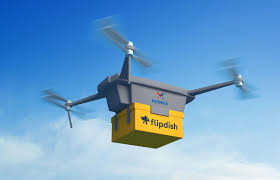
Founded by Bobby Healy, drone delivery company Manna recently raised $3 million via a seed round to fund their growth. This brings their total funding up to $5.2 million through seed funding. The three-year deal with Qualcomm-backed Cubic Telecom will greatly help the company commercialize its products effectively. Previously, the Irish company had teamed up with food delivery company Flipdish.

Bobby Healy
Image Source: Google Images

Manna’s drones fly almost 300 feet above the ground at an average speed of 50mph and occupy 6 feet by 6 feet. Manna surveys areas wherein they plan on delivering, verify landing zones through computer vision and then programs the drone. The drones can make deliveries weighing up to 4 pounds within a 4-mile radius. Restaurants can use these drones to make up to 5 deliveries an hour, thanks to the three batteries it uses.

Technology giants such as Amazon and Google are also hoping to soon use drones to deliver their packages and fulfill orders. Amazon is already said to be testing their drone-delivery system, in a bid to lower labor costs. Meanwhile, governments across the world will begin work on the legislature required to make such deliveries legal and safe. There are several obstacles that such companies will need to cross with regards to social acceptance, and they include privacy, safety, and noise.

However, drones will help speed up delivery unlike any other system used before. Manna has a testing center in Wales and plans on expanding to three additional sites in Ireland by the end of this year. In the future, the company plans to deliver meals at $1 per delivery.

Samsung AI based robots

When Dreams Turn to Reality: Samsung’s NEON is as Real as it Gets

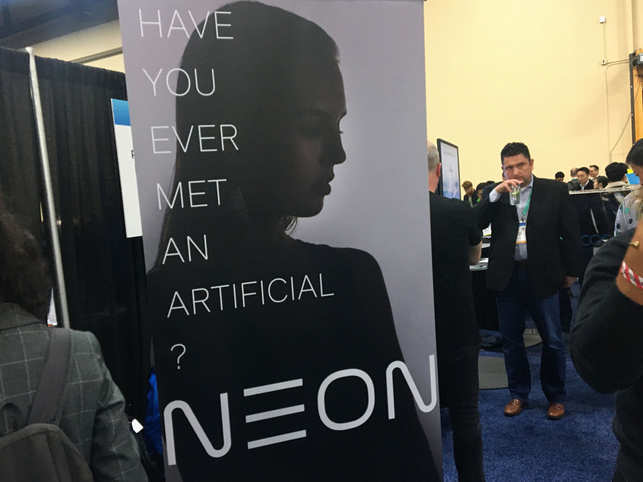
Growing up, we have all read books about robots and humanoid creatures. We have all seen science-fiction movies with fully-automated houses and robots who do all the housework. But, did you ever think that this would someday be a reality? Thanks to advancements in science and technology, we are now closer than ever before to see such a revolution. The momentum for such a change has been gaining, and the wheels seem to be in motion. Recently, in an announcement, Samsung unveiled an AI-powered digital avatar or artificial human which resembles humans. This robot, the company claims, can converse with empathy and sympathy the way we do. The announcement came as a part of the 2020 CES, or Consumer Electronics Show. Samsung’s collaborators, Star Labs have made this new AI, called NEON, which frankly resembles something out of our dreams.

What is NEON?

This new technology will allow developers to create customized avatars on display boards, ads, and video games. Such beings may be modeled to look like anyone from TV anchors to mega movie-stars. They can even become our companions if you let them be, as per the California-based laboratory. Pranav Mistry, who is the Chief Executive at Star Labs said that NEON can serve as a constantly evolving friend retains memories. The humanoid chatbot will not replace humans, but rather make us even more human.

How realistic is NEON?

The people that NEON generates are super realistic people of sorts. The computationally generated virtual entity looks, talks and behaves exactly the way a human does, even being capable of emoting. The robot can also handle a variety of emotions and shows considerable intellect and reasoning. Therefore, the technology allows developers to create video chatbots that look, behave and talk like real people. While these robots aren’t all-knowing assistants like the ones seen with Iron Man, they behave a lot like humans themselves. They are independent beings which show emotion and learn from their experiences to evolve and adapt better to their surroundings. The bot might not be able to tell you about the weather, but can have real, deep conversations with you!

NEON bots form memories and have the ability to teach themselves new skills. However, they do not have a physical body to manifest, for now, but they might in the future. But due to their hyper-realistic approach NEONs can become teachers, advisers, actors, and even TV anchors. Though they resemble humans, they cannot be exact copies of someone alive because each one has a unique personality.

NEON and the Future

Even before arriving on the scene through the CES 2020, NEON had made a name for itself. The robot had generated a lot of buzz for Samsung, though no one knew what the project was about. Several tweets and teasers had come out by December before the unveiling to keep spectators and enthusiasts excited. The bots are even capable of conversing in other languages such as Hindi. While the lab is funded by Samsung, these bots aren’t their property. Star Labs aims at expanding by turning science fiction into reality.

Samsung, much like Apple and Amazon have realized that the best way to make useful devices is to use artificial intelligence as voice assistants. Every big fish in the field of technology is investing in this field, as they think it is the future. Very soon, such AI-powered bots will decide how we interact with the world around us and our gadgets. The bots run using a technology called Core R3, where the three Rs stand for Reality, Real-time and Responsive. It also makes use of a technology called Spectra, which handles the bot’s capacity to learn, memorize and emote.

The company will beta-launch Neon this year around the world, and will sell it via a license. Samsung also hopes that one-day NEON will appear in movies and news around the world. Let us hope that the future makes more of our dreams come true, with life resembling science fiction faster than imagined.

Bitcoin Image

Nakamoto Mystery Worth Billions of Dollars: How Bitcoin founder Nakamoto left with no trace.

Bitcoin has emerged as a game-changer in world-economics attracting millions of users and buyers. An international digital currency that took the world by a storm at the start of the decade still continues its run. Rewarding investors handsomely, and turning them into millionaires has made this commodity very valuable. However, one of the most fascinating aspects of Bitcoin is its founder, Satoshi Nakamoto. This mystery remains unsolved as people know little about him. After releasing this commodity which forever changed the dynamics of international economics, he disappeared. Here’s a look behind the scenes at the mystery and the success of the Bitcoin.

What is Bitcoin?

Bitcoin is a type of decentralized digital currency or cryptocurrency, having no banks or administrators. This currency goes from one person to another, without relying on middle-men, via a network. The system works on the principle of block-chain technology through which transactions are verified and recorded in a public ledger. The idea started taking shape in 2008 by a person or group who used the pseudonym Satoshi Nakamoto. The platform went open source in 2009 and quickly gained popularity. People started trying to learn more about, and ‘mine’ these bitcoins to exchange them for other currencies and products. By 2017, over 4.8 million unique users had their own cryptocurrency wallets.

Bitcoin Image

Nakamoto Creation of the Bitcoin

In August 2008 the domain name “bitcoin.org” was registered and within a couple of months, Satoshi Nakamoto authored a paper titled “Bitcoin: A Electronic Cash System”. It came out as open-source software in January 2009 with Nakamoto’s identity remaining unknown. The author himself mined the first block, called the genesis block two days after launching. Hal Finney became the first receiver when Nakamoto sent him 10 bitcoins, and soon enough other people joined the chain. The first commercial exchange occurred in 2010 when 10,000 coins gave Laszlo Hanyecz two Papa John’s pizzas. Since then, the coin has become an international phenomenon and currently, one single Bitcoin costs around 5.5 lakhs!

Disappearance and Mystery

Nakamoto mined around a million bitcoins and disappeared in 2010, leaving everyone in shock. Before leaving, he handed over the network key to Gavin Andresen, who became the lead developer at the Bitcoin Foundation. Silk Road was a major investor early on, carrying out transactions worth more than $214 million. The coin started 2011 at $0.30 and grew to $5.27 by the end of the year, having hit $31.50 in June. Alternate coins soon came out with the first one being Litecoin, which came out in 2011. A year later, Bitcoin rose to $13.30 and in the same year, investors and developers found the Bitcoin Foundation.

Explosion and Growth

In 2013, the industry really exploded and the Bitcoin grew exponentially, starting the year at $13.30 and ending it at $770. The same year, FinCEN built some regulatory guidelines for the bitcoin, making it a legal entity. A huge hit came in late 2013 when the People’s Bank of China banned Chinese institutions from utilizing bitcoins. After two years of constantly rising and falling prices, in 2016, the prices steadily rose to $998. In 2017, the prices sky-rocketed, hitting their highest value of $19,783.06 on 17th December 2017. In 2018, the prices fluctuated, mostly staying above $5000, being negatively affected by hacks and thefts. Also read

Who is Nakamoto?

As the Bitcoin grew, Nakamoto’s importance grew with it, with him being a figurehead to the entire institution of digital currency. Most discussions regarding the future development of the bitcoin constantly feature his name. Also, the founder also holds cryptocurrency worth around $5.8 billion, making him an important investor. While people made numerous efforts over the years, the search for Nakamoto’s identity has proved difficult and elusive. Here’s a look at the three most probable candidates.

Satoshi Nakamoto
Image Source: Google Images

In 2014, Newsweek stated that Dorian Nakamoto is Satoshi Nakamoto via an article, creating a storm within the crypto-environment. The article claimed several similarities between the two, including a Japanese connection and similar philosophies. However, Dorian denied these claims, but still profited from it as people gifted him 67 bitcoins worth $273,000.

Australian scientist, Craig Wright announced in 2015 that he had been involved with bitcoin for a while. This led to large-scale investigations with people claiming he was Nakamoto. However, over time, the proof came out which unraveled Wright’s claim to being Nakamoto. Even Ethereum cofounder Vitalik Buterin, who is in most cases silent came out against him. Conspiracy theorists have even stated that the founder could be a group of companies. For example, Samsung + Toshiba= Satoshi and Nakamichi +Motorola=Nakamoto! Like “Finding Nemo”, the quest for finding Satoshi Nakamoto is on, and let us hope we get a name soon enough! However, in spite of this mystery, the industry continues to grow, being already worth billions of dollars.