Your Tech Story

Athulya

Being a cinephile with a love for all things outdoorsy, Athulya never misses a chance to chase inspiring stories or poke fun at things, even when the subject is herself. Currently pursuing a degree in mechanical engineering, she is someone innately interested in technical and scientific research. Music reviews and op-eds define her as they allow her to explore different perspectives. Though sometimes she thinks she makes more sense playing the guitar than she does while writing.

Commercial Docking Space

Space-Wars: The Fight for Commercial Docking Space in Outer-Space

For as long as humankind has been alive on Earth, it has been fascinated by the stars. Throughout history, we have seen great thinkers and scientists look to the skies for inspiration, and thinking men and women have always tried to unravel the secrets that lie behind our home planet. This innate curiosity which powers all our innovation has led to several space exploration missions, multiple moon landings and even expeditions to Mars. Quite recently, it has led to commercial satellites taking to the stars as well. History was created recently, when for the first time in the history of the world, two commercial satellites, as a part of a servicing mission docked in orbit! The scientific community has never been happier as this will lead to a new beginning with regards to space exploration and satellite servicing. Read on to find out more about this docking and why it is so important and historic.

New Beginnings

This orbiting provides new hope for ailing satellites which have been orbit for continuous periods of time and require quick assists. Furthermore, it could also give rise to a new form of business- space decluttering! As technology advanced, humans kept sending exploratory missions to outer space. This coupled with a large number of satellites in place for communication and spatial recognition has led to a space problem in outer-space. The skies are immensely cluttered and filled with space junk, which now has reached a stage, wherein we need cleaners to clear out.

International Space Docking

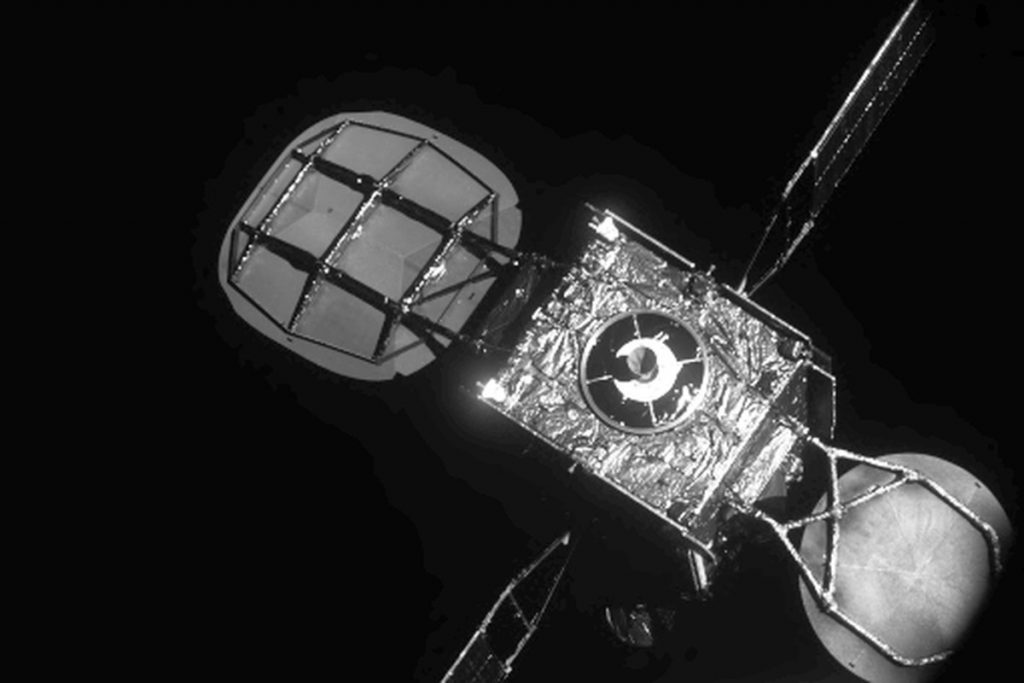
Out of the two satellites that docked, one is a telecom-industry satellite that was low on fuel while the other was a replacement that plans on taking over the former’s movements. This maneuver will help the Intelsat-901 extend the 19-year mission it has been fulfilling with regards to TV relay, by another 5 years. For all the scientists, platforms and satellite makers involved in the process, this docking is a major accomplishment as it helps in solving several problems.

The two satellites met about 36,000 km above the Earth’s surface, and the mission was spearheaded by Northrop Grumman, the maker of the Mission Extension Vehicle-1. After the successful docking, the MEV-1 plans to move westward by 27.5 degrees to continue its telecoms duties by late March. While talks of inter-galactic re-fueling and junk removal have been going for decades now, the success of the Northrop Grumman is the first undertaking that has come out with a positive result. The international docking took place on Tuesday, 300 km above the arc from where telecom satellites usually undergo their data relaying.

Process of Docking

  • Pushing of a probe into the Intelsat-901’s engine nozzle.
  • Removal of any spacecraft that is currently operational from close proximity to prevent any mishaps
  • The MEV-1 approaches the IS-901.
  • Opening of the probe’s fingers into the IS-901, allowing the MEV-1 to hold the spacecraft in place.
  • Autonomous docking once both the crafts are aligned.
  • Following the docking, the MEV-1 will now control all the movements of the satellite, allowing the IS-901 to continue operations for five more years.
  • Afterward, the MEV-1 will get rid of the IS-901 and dump it in what is commonly referred to as space. graveyard, which contains other defunct satellites.
  • The MEV-1 will then move on to the next ailing and old satellite, in a bid to extend its lifetime.

The MEV

The MEV-1, launched in October last year rose around 180 miles above the geosynchronous orbit to help the IS-901, which had stopped services in December of last year. This new stack consisting of two satellites will now perform the duties which IS-901 had earlier done, which will ensure that the TV relaying service continues uninterrupted for another five years. The contract also ensures that the MEV-1 after the period is over will return the IS-901 to a decommissioning orbit, before moving on to a different client spacecraft.

The MEV can accomplish multiple dockings and has a service life extension capability of over 15 years. However, in the near future, this vehicle will be capable of doing much more as the company aims to establish a fleet of such vehicles to make servicing, maintenance, and repair work possible. Furthermore, other plans include allowing the MEV to carry out inclination changes, diagnostics, spacecraft inspections, and even in-orbit repair assembly.

People Involved in the Docking

Northrop Grumman is a new company that works in the field of satellite communications through its subsidiary- SpaceLogistics LLC. The company plans on expanding the present project and wishes to perform in-orbit repair, maintenance, and assembly in time. It is now working on new technology that will help the docking probe, not just tug onto an object, but actually hold it, the way a robotic arm would. Furthermore, it is also working on the creation of fuel-pods that can attach itself onto satellites that are running low of fuel. SpaceLogistics is all set to launch its second MEV this year in order to perform some routine support on another Intelsat spacecraft.

Stephen Spengler who serves as the CEO of Intelsat says that such plans were set in motion in 1992, wherein an Intelsat spacecraft was famously rescued by another space-vehicle when it fell into lower-Earth orbit. Spengler believes that the company has always pushed boundaries with respect to space technology and will continue to do so in the coming years, turning dreams into reality in the process.

Lyft

Lyft: Making Car-pools Comfortable and Profitable

Due to growing environmental concerns, more and more people are shifting to carpooling and ride-share options. Companies such as Uber and Ola have profited from this shift in perspective. There’s another company that joined this cab-share bubble, much before it was a viable investment option. Headquartered in California, Lyft is a ride-share company that operates in over 644 cities in the US. The Lyft mobile app has become a sensation, offering rides, car-pool options, and even food delivery services. Here’s a look at their climb to success and fame.

How the System Works

Lyft has the second-largest market share in the United States, following Uber closely controlling 28% of the market as per the Second Measure. Users download and install the Lyft app on their mobile devices. They then register on the system, sign-up with their mobile number, and verify a payment system. The app supports payment via cards, Apple Pay, Google Pay, and even PayPal.

They can then book their rides, and once the trip is complete, their account is debited. The app provides information such as driver name and photograph to ensure safety. Both drivers and passengers have the option to add their personal information such as hometown and music preferences. Users also have the option to pay their drivers tips as they seem fit.

About the Founders of Lyft

Logan Green grew up in California, graduating with a BA in Business Economics from the University of California. The inspiration for founding Zimride came from having spent most of his life stuck in traffic, as per Green. He started the company as a means to solve the state’s transportation faults and shortcomings. Due to the limitations of public transportation, he requested Zipper to work from UCSB but they couldn’t due to the shortage of vehicles. So, Green acquired some cars and began a car-sharing program that had over 2,000 participants. This idea later took shape and became Zimride in 2007.

Logan Green
Image Source: Google Images

John Zimmer grew up in Connecticut, graduating in Hotel Administration from Cornell University at the top of his class. He then worked as an analyst for Lehman Brothers in New York. He met Green via Facebook while at Lehman Brothers, opting to quit his job to focus on their company. Green and Zimmer later moved to Silicon Valley and shared an apartment to grow the company, without taking salaries for three years.

Launch and Early Beginnings of Lyft

Computer programmers John Zimmer and Logan Green founded Lyft in 2012 as a subsidiary of Zimride. The latter worked as a long-distance carpooling company founded by the duo in 2007. The idea for Zimride came to Green on one of his frequent travels from the University of California to Los Angeles to visit his girlfriend. He initially used Craigslist’s ride boards but faced anxiety as he knew neither the passenger nor the driver.

Facebook launching its API to developers served as Green’s motivation to set up such a company. Soon enough, Zimride grew to become US’s largest carpool company. Green met John Zimmer on Facebook via a mutual friend. The company’s name came from Zimbabwe, wherein Green saw locals sharing a minivan during his trip there in 2005. Zimride launched at Cornell University, and six months later, 20% of the company had hopped on. In 2013, the company legally changed its name to Lyft, and in July of the same year, Lyft sold Zimride to Enterprise Holdings.

Growth of Lyft

While Zimride focused on colleges, Lyft served as a company enabling shorter trips within cities. The large pink mustaches on the front of cars became a symbol for Lyft. In 2014, it launched in 24 US cities, overnight, bringing its overall total to 60 cities. The same year, Lyft hired lobbying agents to handle the resistance they had faced since launching.

By mid-2014, Lyft launched its shared-taxi plan to enable cheaper rides to customers. By the end of next year, Lyft became the only company allowed to pick passengers up from the airport at Los Angeles. In 2017, Lyft completed its 160 millionth ride and launched in another 100 cities, bringing its total to 200 cities.

By the end of 2017, Lyft expanded its services to several Canadian cities such as Ontario, Toronto, and Ottawa. The following year, they partnered with All scripts to facilitate rides for patients, serving over 2,500 hospitals and 7 million patients. They acquired a bicycle-sharing company Motivates in late 2018.

The company went public in 2018, the first ride-sharing company to do so at a valuation of $24.3 billion, raising $2.34 billion. Also, by 2019, the company successfully completed over 5000 rides via self-driving cars in Las Vegas and has since grown tremendously, providing over a million rides a day.

Ethan Marcotte

Gearing Up for the Future: Story of Responsive web design(RWD)

Web design hasn’t been around for all that while, but within that short period, it has already grown so much. Its short history was made even more eventful by Ethan Marcotte who is credited with having coined the term RWD “responsive web design”. Not only did Ethan just conjure up a new world, but he also helped create something that would change the way the web worked. Here’s a look at one of the newest trends out there and why it is so significant.

What is Responsive Web Design

The word Responsive Web Design, known commonly as RWD was coined by Ethan Marcotte in 2010. Essentially, RWD includes all philosophies, ideas, and technologies that allow websites to respond to user interaction. Until a few years ago, most browsers ran on computers whose displays were around 800 to 1024 pixels wide. Hence, most web-pages were built for these sizes. As per this system, the widths of the columns and images were pre-set. Problems started rising when users switched to different screen sizes. In the early 2000’s, to combat this issue, web designers resorted to techniques known as fluid design and liquid layout. 

These techniques circumnavigated the issue by relying on different methods to define the width or length of texts and images. For example, by using percentages to denote width, the image would be of the same size, no matter what the size of the screen. However, new problems arose when people started relying on their mobile phones to browse the internet. Even using these techniques made it difficult for users to navigate the web-page without having to zoom in and out.

About the Developer

Ethan Marcotte works as an independent web designer, who has clients such as the New York Magazine, Sundance Film Festival, and People Magazine. He is also an active Tweeter and runs a blog on Twitter that addresses doubts and updates in the field of RWD. He has also released a book called Responsive Web Design, which outlines the fundamentals of RWD. He also regularly speaks at conferences and has held workshops at Adobe MAX, and Webstock. 

What Ethan Did

The technologies required to create a responsive web was already existing before Ethan entered the scene. These include fluid grids, images, and media queries, which are all staple ingredients for any web-page. But what Ethan did, united these techniques and bring them all under a single umbrella- that of Responsive Web Design. This, in turn, led to a digital revolution that saw change the way they used to think about web design. That is why, in many ways, Ethan Marcotte is considered a magician who changed the future of web design. Ethan has constantly talked about how this idea came to him back in the late ’90s, and that John Allsopp’s article A Dao of Web Design, has been a huge inspiration for him.

Ethan was so inspired by John’s work that he actually switched to flexible layouts when it came to his own projects such as his blog, way back in 2000. But for the most part, most professional websites still relied on fixed-width layouts. It was when the mobile phone industry broke through that Ethan started using fluid grids for client projects. 

Creating RWD 

When mobile devices became a huge hit, users found it very difficult to access actual web-pages on them owing to size constraints. There were so many issues that it looked like mobile browsers just wouldn’t be worth the effort. But all this changed, when Marcotte published a paper in A List Apart, that suggested using responsive web design. The paper explained how due to the sudden and constant changes in the field of web design, the only way forward would be to rely on self-sufficient and intuitive systems.

Why RWD?

With the variety and number of devices trying to access the web growing every day, being able to cater the page to the most number of people becomes vital. This is where RWD becomes a critical tool for every web developer and designer. As companies need to adapt their websites for all devices, RWD helps designers create just one code or URL for a site that can be viewed on a multitude of devices with ease. Not only are they a cost-effective solution, but they are also easy to run, maintain and manage, allowing companies to focus on more important things such as content.

Leading the Way

Such websites are highly intuitive and adapt themselves according to the device a user is utilizing to view the web-page. The system automatically rearranges and re-orients the data on the web-page to suit the display or screen of the device, so that the website is an optimal visual experience for all users. The responsive design has grown to become a gold standard within the industry. It is now the design type that is preferred by almost all designers across the web, and around the world. So much so in fact, that Google’s new update will penalize any website that does utilize RWD.

Everyone knows that mobile users are slowly, yet surely, taking over the world wide web. Hence, to survive, companies must be able to provide their customers with a seamless user experience. This will not be possible in the years to come, without the help of RWD. Without Ethan Marcotte and his ideas on RWD, companies around the world would not have been able to create websites that users like and enjoy visiting. It goes without saying, that a few years down the line, Ethan Marcotte will be credited as having saved the World Wide Web from crashing!

Msi-Logo

Ready, Player One: How MSI Defined the Gaming Industry

Taiwanese technology giant Micro-Star International has a pan Asia influence and is a IT multinational headquartered in Taipei City. The company deals in the development and production of computer hardware, and related products such as desktops, motherboards, servers and graphics cards. The company is listed on the Taiwanese Stock Exchange. Founded in 1986 by five entrepreneurs, the company has since grown to command considerable market share both within and outside Taiwan.

Humble Beginnings

The founding members of the company are Joseph Hsu, Jeans Huang, Frank Lin, Kenny Yu and Henry Lu. MSI’s five founders worked for Sony before quitting and founding MSI. Sony’s downsizing in 1985 brought the group together, and they pooled in their engineering experience to create MSI in August of 1986. The company opened its first plant in Jung-He city in 1997 and three years later opened another one in Jung-He city. In a bid to raise money for expansion, MSI went public in 1998 on the Taiwanese Stock Exchange. The company found subsidiaries MSI Computer in 2000, and MSI Electronics a year later. They followed this up by opening their logistics center in Netherlands.

Early Days and Products

The company built a name for itself by developing state-of-the-art motherboards and graphic cards. FUNTORO, which is a subsidiary to MSI took shape in 2008 as a wing of the company focusing on vehicle infotainment system. That wing now manufactures multimedia peripherals, vehicle infotainment systems and even Autonomous Mobility Robots. During their early years, MSI mainly focused on the design of motherboards and auxiliary cards. That same year, they hit the market with the world’s first over-clockable 286 motherboard.

Three years later, they introduced their 486 motherboard; following it up four years later with a 586 and then a Dual Pentium motherboard. In 1997, MSI launched their Pentium II-based motherboard and MMX, their first graphics card. They upgraded to a Bluetooth and WLAN motherboard in 2002. In 2002, they came out with a set-top box, in 2003, a Pen Tablet and a year later launched a Notebook. They followed this up with an Ultra Slim Notebook and All-in-One PC in 2009.

Aggressive Expansion

The founding five began operations in New Taipei before expanding to Mainland China. The first step of the expansion came in 2000, in the form of setting up a factory in Shenzhen. The company then established a Research and Development facility in Kunshan the next year. Since then, MSI has expanded and now provides services in North America, Central and South America, Europe and Australia.

The company also famously hosts the international gaming event called MSI Masters Gaming Arena or MSI Beat IT. The event began way back in 2010, culminating with Evil Geniuses winning the trophy. The company is headquartered in Zhonghe District, while most of the manufacturing takes place in factories spread all over Taiwan. As a part of their aggressive expansion, the company also owns offices in Europe, Australia and South Africa. They now boast of having a presence in more than 120 countries, across both the Americas, Europe, Asia Pacific and Africa.

Entering the Gaming Industry

However, the biggest change came in 2008, when they entered the PC gaming market by launching and sponsoring Fnatic. Their gaming series featured desktops, graphic cards and gaming peripherals which quickly captured the market. They partnered with Tobii in 2015 to design and develop eye-tracking gaming laptops. A year later, they collaborated with HTC to create Virtual Reality experiences. They got into the field of Content Creation in 2018 by launching creator-centric laptops.

Achievements and Further Growth of MSI

MSI ended 2008 within the top 20 of the best Taiwanese Global Brands and followed it up three years later by coming in at number one. By 2013, MSI had been awarded the honour of Taiwan Excellence for fifteen straight years. They were also ranked four on a global list of the best laptops in the world in 2015. Thanks to all these achievements their global market share increased rapidly, and by 2016, they had become the largest gaming laptop supplier.

Soleimani

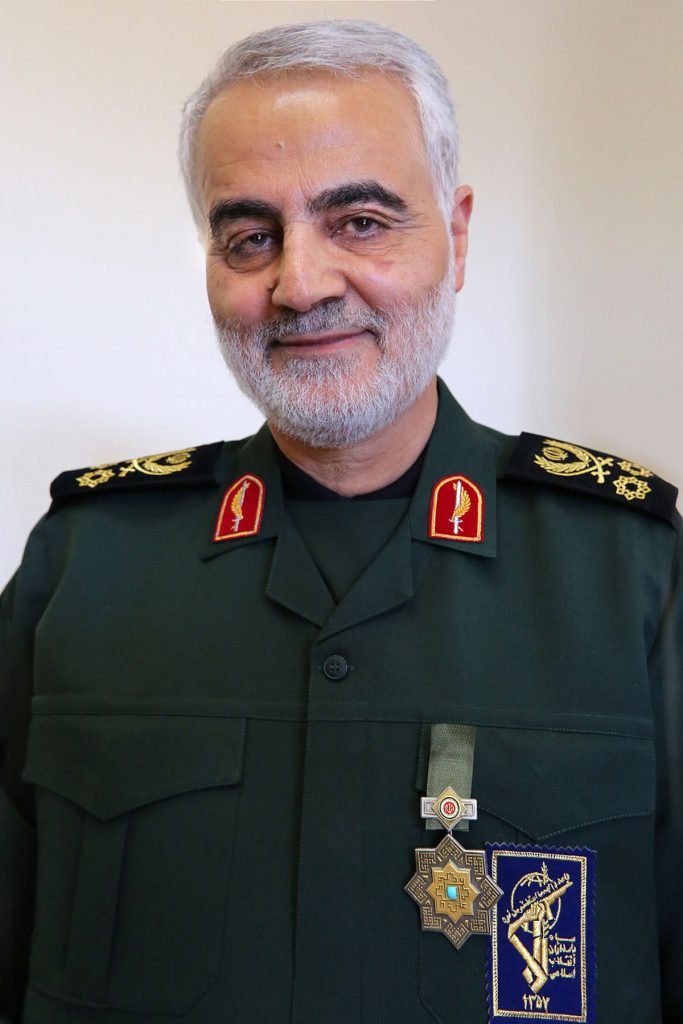
Instagram is Removing the Posts Supports Soleimani to Adhere US Laws

The world watched in shock as US released a statement saying they had taken out Iranian General Qasem Soleimani. However, there was more shock to follow suit, with Instagram recently announcing that it will remove posts about the slain commander. Instagram and its parent company Facebook has decided to take down posts in support of Soleimani due to U.S. sanctions laws. There are very few Western born social media platforms allowed in Iran, and Instagram is one of them. Thus, the move will come as a big setback for the technology giant, and a huge let down to the people. Here’s a look at the whole story.

Violation of Free Speech

Most journalists and activists who fight for free speech feel that such censoring will do no good for anyone. The removal of the posts will be to comply with American sanctions. Isobel Cockerell from Coda Story exposed that as per a report by the International Federation of Journalists, Instagram had suspended over 15 Iranian journalists’ accounts.

While some accounts were reinstated, several posts have been permanently deleted. As the activists feel that this is a time Iranians need to have access to information, the move will be heavily criticised. Choosing to censor Iranian media at this juncture is highly unacceptable as per Anthony Bellanger, who serves as the IFJ General Secretary.

Taking Down Accounts

Instagram has also reportedly been shutting down accounts of journalists, advocates and activists from Iran, sharing posts related to the commander. In one notorious instance, Instagram removed a post by journalist Emadeddin Baghi, who suggested that Soleimani’s killing is “contrary to the principles of international law”.

However, Instagram backed the move by stating that it is merely complying with US laws. Furthermore, the company stated that it restored posts made by Baghi after checking them for compliance. Posts removed by erroneous means, and which did not violate any company policy were later restored by the social media giant.

As per US law, Instagram has to remove posts in favour of groups labelled foreign terrorist organizations as per U.S. State Department records. That list, as of last year, includes the Islamic Revolutionary Guard Corps formerly led by Soleimani. Facebook interprets the law such that it removes all content encouraging their actions or speaking in support of them.

Public Resistance

However, this behavior raised concerns from free speech advocates, who feel the network has no legal obligation to take down such posts. Also, they feel that such a move goes against Facebook’s mission to become a representative for free expression.

Facebook spokesperson Sarah Pollack said that Facebook regularly reviews its content to make sure it complies with US laws. She also revealed that people whose accounts have been disabled can appeal at the Help Centre for further help. Noted advocate for free speech, Jillian York who works at the Electronic Frontier Foundation, expressed his disappointment, stating that Instagram is “legally wrong”.

Activists feel that while flagging organisations as terrorist groups might work for intelligence agencies, it also works as a blunt tool. Offering private entities, the power to dictate policies such as this could grow into a dangerous problem soon enough, as per them.

The aggressive position that such platforms are taking might not be very sustainable for the companies themselves. Though Google declined to comment, the giant has not yet removed any posts and neither has Twitter. This, therefore, puts Facebook in a tough spot.

Manta 5

Founding of Manta5 : Here’s how this Man Drives on Water

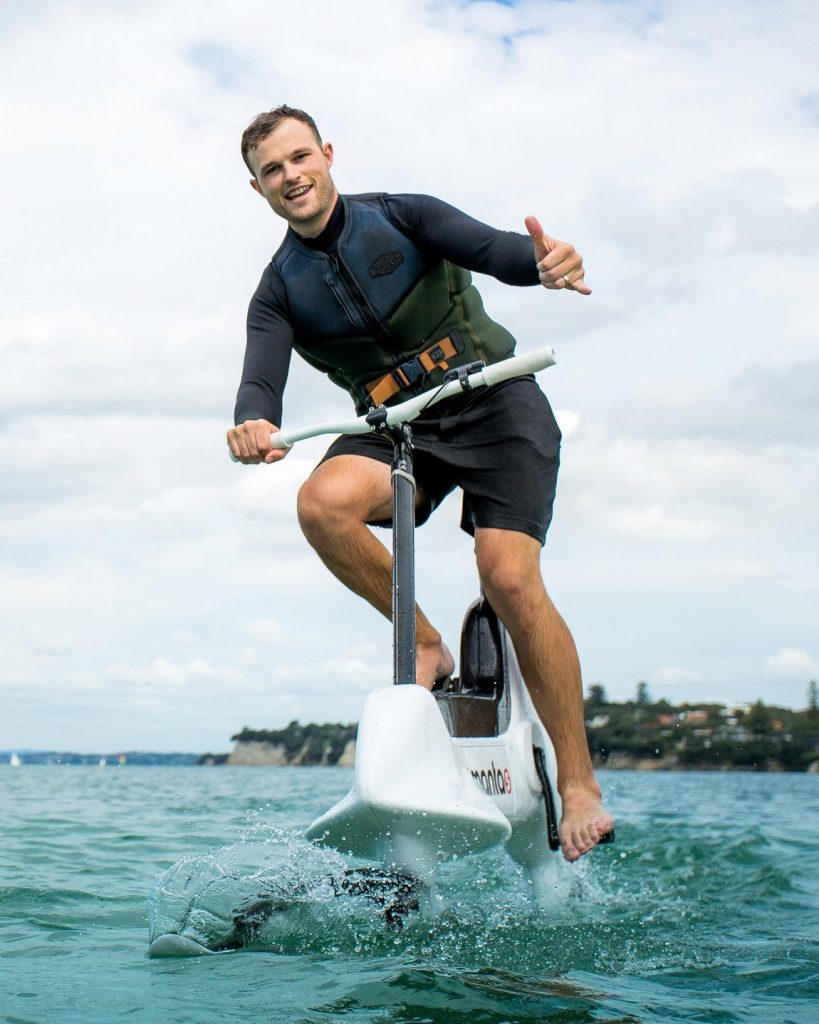
Most of use cars to get from Point A to Point B, and some of us even rely on two-wheeler for our daily commute. Whenever we have to cross a water-body, we wait patiently for a boat, load our vehicles onto it, cross the body and then drive off to our destination. But what if there is another way to travel on water? If someone told you a decade ago to drive on water, you would have called them crazy! Well, that day seems to have arrived and it’s all thanks to Guy Howard Willis, maker of the first hydrofoil bike. These bikes make use of the hydrofoil technology used by America’s Cup yachts, enabling riders to reach up to 20 km/hr. on water. Famously, the crown Prince of Dubai was so impressed with the design, that he pre-ordered three pieces for himself! So how did entrepreneur from New Zealand make such a splash? Read on to find out the secret behind the success of Manta5.

About the Founder Howard-Willis

Howard-Willis kept moving around in his childhood as he was part of a military family. He starting his education in Germany, attended an agricultural school in Kent and even worked on ferries for over a decade. In 1975, he shifted to New Zealand, and thus began his love for all things related to the sea. He initially set up a furniture business, before moving on to build hospital beds for the handicapped. He then established adventure gear store Torpedo7, and run it successfully.

Howard-Willis
Image Source : Google Images

While growing up in England, Willis took parts from garbage dumps to build his own bike with friends. He grew up thinking why we couldn’t do everything we did on land on water. This lack of options bothered him for years, till he finally decided to do something about it himself! He convinced professional bicycle designer Roland Alonzo to help him with his project.

This wasn’t the easiest of tasks as Alonzo is afraid of water and hence doesn’t know how to swim! Funded by Torpedo7, the pair worked for two years, until prototype three launched in a local swimming pool. Six years later, he unveiled the Manta5 Hydrofoil XE-1, which is the world’s first water-bike. The design, thanks to its uniqueness and flamboyance is making waves across the world!

Early Success

Since launching the company Manta5 in 2011, the bikes have gained quite a fan following, leading to over 12,000 pre-orders. Most of this interest comes from the US, followed closely by Europe, and Dubai. First deliveries will hit the market early this year, and Wills predicts that these bikes will change the way we view water-sports.

Willis envisions his product to lead to the birth of a new sport, making the Hydrofoil bike a Kiwi icon. The pair faced numerous difficulties early on as designing such a complex machine was no easy feat. Balancing maximum lift and thrust, especially at low speeds proved to be a difficult task.

However, relentless commitment from both pioneers led to a successful proof-of-concept and launch, which led to the company’s formation. In the 2017 Best Awards, their prototype won the Gold medal in the Concept Category, shooting them to super-stardom. Their video submission for the contest went viral, racking up over 350 million views on Facebook alone. Over a million people visited their official website, and thousands expressed their interest to buy the product.

Growth and Future Plans

In 2016, Greg Johnston joined the team as general manager, followed by marketing manager Louis Wilk, supply chain assistant Samaria Mason and Jeanna Sayson. It is interesting to note that all these people are graduates of the Waikato institute. Rounding up the team is a pair of electrical engineers, Daniel Dredge and Harrisson Jull.

Due to their innate presence, prototyping work for the bike happened after hours at the University’s Aquatic Centre. In 2015, their research centre shifted to Cambridge, with testing happening on Lake Karapiro. The company is also working closely with Callaghan Innovation and Export NZ to learn more about other business leaders from NZ.

Wills hopes that these bikes will go beyond just being a leisure product, and instead grow to symbolize New Zealand. One day, he even dreams that it becomes a sporting accessory worthy of becoming a part of the Olympic Games.