Your Tech Story

Athulya

Being a cinephile with a love for all things outdoorsy, Athulya never misses a chance to chase inspiring stories or poke fun at things, even when the subject is herself. Currently pursuing a degree in mechanical engineering, she is someone innately interested in technical and scientific research. Music reviews and op-eds define her as they allow her to explore different perspectives. Though sometimes she thinks she makes more sense playing the guitar than she does while writing.

Facebook

Facebook to Gather New Campaign “More Together” in India from Now On

As technology progressed, it helped to make the world a much smaller place. While in the past, people had to rely on letters to communicate with people living far away, as we moved ahead, faster, more efficient means developed. The world is moving towards a digital era, wherein we all have our digital personas on the world wide web. Social media has evolved to become an integral part of our lives, and most of us have accounts on multiple platforms. As the degree of internet penetration continues to rise, more and more people will join social media networks such as Instagram and Facebook. In fact, the competition amongst social media networking sites is so high that several of them have had to shut down due to a lack of an active user base. So how do social media sites ensure that they stay relevant and attract new users? Here’s a look at how Facebook is trying to stay on top of the game through an innovative marketing campaign.

What’s More Together About?

Social media giant, Facebook announced on Monday that it was going to launch a new campaign, More Together, in a bid to attract more new users in India. The initiative will focus on the app and will work towards making the company more relatable and human. One aspect of this program is to highlight stories that showcase the power of the network to bridge gaps and form relationships. This campaign will, therefore, help people realize how the platform has been integral in building connections and sustaining friendships all over the world. This campaign is the first of its kind in India and will go a long way in helping people become even more aware of Facebook’s power to bring people together.

Who’s Behind This Campaign?

The idea for such a campaign came from the Dentsu Aegis Network, which is a creative agency working in India. The plan was conceptualized by the head of this agency, Taproot Dentsu. The plan will see the release of advertisements in over eight Indian languages which will be aired all over the country in the weeks to come. The campaign aims to be a 360-degree strategy that will span across various mediums, such as radio, cinema, and social media.

Why Opt for Such a Campaign?

The main idea behind such a campaign was that in recent years Facebook had stopped telling stories about itself. Also, most of the time when such a story was put out, it was orchestrated by other groups and not by Facebook itself, which led to a divide in the narrative. Facebook India MD, Ajit Mohan believes that a campaign that comes from the social media giant itself will help in reaching out to even more people, as the narrative is extremely informal and personal.

There is a need to change the people’s perspective on Facebook, and such a campaign will help Facebook control its own narrative, as its own app will be at the epicenter of the campaign. Facebook also plans on spending even more on marketing and promotions within the country, and this campaign is just the start of many more things to come in the future.

Other Creative Members

The first TV commercial under this new campaign will release on Saturday and has been directed by none other than, Chak De India! fame Shimit Amin. Pallavi Chakravarti from Dentsu Aegis was given the responsibility to head the copywriting team behind the campaign and has incorporated several real stories from around the country. These stories capture the essence of what Facebook is and showcases it in a very raw light, inspired by real people and their stories.

Complementary advertisements have been led by Bharat Sikka and will feature YourFood Lab expert Sanjyot Kheer, Curly Tales fame Kamiya Jani and Madhuras recipe protégé Madhura Bachal. Furthermore, the ads will also feature Paula McGlynn, Sarang Sathaye, Chhavi Mittal, Varun Pruthi and Maithili Thakur.

All these people have used Facebook to build connections and improve their lives, and hence, will serve as ambassadors for the social media platform. This campaign comes after the brand’s famous decision to change its logo in November of last year and seems to be a continuation of that marketing strategy. Furthermore, the company has also appointed Avinash Pant as the MD for the Indian region.

Geely

How Geely Car Manufacturers Are Taking to the Stars?

Ever since mankind took form on the Earth, he has been fascinated by the sky and the stars. As a civilization, we have yearned to explore more about the stars than any species before us. This quest for innovation and creation has helped us become the longest surviving dominant species on Earth. Innovations in the field of science and technology have made it easier to live, lengthened our life spans and made things which were impossible in the past, possible. One of the key areas in which research is going on now is space and telecommunications. We are eternally in search of a new home in the galaxy, and science is helping us do that. Furthermore, huge advancements in the field of electronics and communication have made it possible for us to link various devices together. One major change that will occur in the next few years is the globalization and cloud-control of cars. Let us take a look at how Chinese auto-giant, Geely is making this dream a reality by taking to the stars.

Geely to Build Satellites

Geely is the largest private car manufacturer in China, and they are all ready to enter the satellite business. This Chinese conglomerate has been rapidly expanding in the last decade, having moved into trucking, speed trains, drones, and even Volvos. The company is showing no signs of slowing down any time soon, by releasing a statement that they will soon be entering the aerospace field.

This move has been undertaken so as to make it easier to tie together all their assets. Geely will begin work on its own satellite-powered network, in order to formulate a mobility ecosystem that will be smart and intelligent.

On Monday, the automotive giant announced their plans to begin work on a production facility that will create, design and test satellites in Taizhou, Zhejiang. This facility will have state-of-the-art technology, which will help it create different satellites for both Geely and non-Geely devices and machines. The company also mentioned that the satellite network will be launched by the end of the year, but refrained from commenting on how large or extensive it would be. Sources states that the giant is spending almost $326 million on this project, and plans to makeover 500 satellites a year.

Satellite Power

Most of these will be low-orbit satellites that will provide high-speed data transmission capabilities and also help with navigation. Geely believes that this will help usher in a new age for cloud computing, which will make it possible for vehicles to receive over-the-air instructions and updates.

Furthermore, this will help in providing a direct link between the manufacturer and the vehicle, allowing the company to constantly keep track of the device’s performance and maintenance. Also, the company might plan to collaborate with other satellite makers such as SpaceX and OneWeb. Altogether, these satellite constellations will be able to transmit large volumes of data.

While current GPS probes are only accurate up to meters, this new satellite network will make it possible for vehicles to be accurate to within even a centimeter. Such accuracy will prove to be crucial when it comes to autonomous vehicles, as the biggest argument against their use is that of safety and inaccuracy. Unmanned flight, UAVs and smart cars will all turn into realities if this plan works the way it ought to.

The Future

Autonomous vehicles will be a signature of the future. As and when that happens, Geely will have a huge advantage over its competitors if it has its own satellite network to back up its vehicles. Instead of relying on third-party vendors for satellites, the company will be able to make use of its own fleet to run diagnostics, control navigation and also set up communication with its cars.

Furthermore, the demand for on and in-car connectivity has been on the rise in the last couple of years and have their own satellite network will help Geely back up that demand. A similar move has been undertaken by Elon Musk, whose company SpaceX is creating a Starlink network, which can be used to communicate with his Teslas.

Every year over 78 million people buy cars, and as the years go by, more and more people want their cars to be smarter. Connected cars will help buyers get the best of both worlds by being smart, intelligent, intuitive and highly productive. For instance, in 2016, connections for cars was growing at a faster rate than cellular connections for mobile phones.

This is because a high-end supercar has to process more data than a supercomputer! Hence, car manufacturers all around the world have realized that in the future, cellular connections alone will not be enough to process all the data required. Hence, satellites will be the best option for them to transmit large data and process vital information. Therefore, we will be seeing even more car makers, such as Geely, take to the stars in order to turn their dreams into a reality.

Car Sales

How the Coronavirus is Pushing Car Sales to the Down-lane

Coronavirus has been making headlines all around the world due to its aggressive transmission rate and deadly symptoms. Many European countries have now fallen prey to the virus which has claimed over 2500 lives all around the world. Several countries around the world have imposed strict travel bans and economic sanctions in order to stop the spread of the deadly virus. With such a large global epidemic hitting the world, there were bound to be severe economic repercussions. So, how has the Coronavirus hit the Indian economy? Well, it certainly had an impact on our automotive sector. Here’s a look at how the Coronavirus has pushed car sales into a down-lane.

Car Sales in February

Rate of care sales has dipped again in February, and car manufacturers and makers across the country are now scared with respect to what further impact the virus will have on their sales. Most manufacturers are now trying to sell their left-over stock as production facilities in several countries in Europe have been shut. The government had recently released a statement that said that India would be transitioning to a new emission standard.

Therefore, car sales of models that comply with earlier standards will fall to an all-time low once the implementation starts. This sudden transition had already strained the automotive industry as buyers were still not confident in buying new cars. Therefore, most dealers were trying to get rid of their old stock as purchases for these obsolete models would be close to zero once the transition takes effect. The government had earlier said that the deadline to make the transition from BS-IV to BS-VI is April 1st. However, the Coronavirus scare has shut off several production facilities in mainland China, which has, in turn, affected the supply chains for automotive parts.

A slowdown in Car Sales and Manufacturing

The Director of Sales at MG Motors, Rakesh Sidana had said that the Coronavirus scare has severely limited their production capacities as many centers in Europe and China have been shut. He believes that this is directly responsible for the reduction in sales in February, and predicts that the downfall will continue throughout March. MG Motors had one of their lowest retail sales in February, with the final amount coming to a mere 1,376 units last month.

Similarly, Maruti Suzuki underwent a 1.11 % decline in sales, with total sales coming up to just 147,110 units, which is much lesser than their sale of 148,682 units last year. Furthermore, Mahindra & Mahindra suffered a 58 % decline in sales last month, owing to the automotive giant lowering production due to the emission standards transfer. Also, a shortage of parts and low exports from China led to them selling only 32,476 units last month, which is significantly lesser than the 56,005 units they sold last year.

Uncertain Future

While most of these companies had predicted a drop in sales due to the emission transfer protocol, the unexpected arrival of the Coronavirus has severely affected the industry. This unforeseeable challenge has put many restrictions on the supply of parts from China, affecting the capacity of Indian makers to adhere to the BS-VI specification. Tata Motors too suffered a 34 % decline in sales, having sold only 38,002 units in February, while they sold 57,221 units last year. The company was also badly affected by a fire that broke out in one of their vendor’s storehouses, which in turn, affected their production rate and volume. Similarly, Hyundai went down by 10.3 % with sales amounting to only 48,910 units in February.

Most of these manufacturers are hoping that issues will be cleared up by late March, and that supply chains will be re-instated as quickly as possible. To make this possible, large dealers such as Honda are trying to ramp up production of BS-6 models, in a bid to reduce the waiting period for customers. Adding further trouble to the struggling automotive industry is the lagging economy that is undergoing a slowdown, putting the entire industry under pressure. With mismatched inventories, shortage of parts, compromised production facilities and a slowing economy, it really does look like the automotive industry has its work cut out for itself in the months to come. Let us hope that the Coronavirus and its effect recedes in the months to come, providing much-needed relief to our automotive sector.

Digital river

How Digital River helps Global Commerce Flow Smoother than Ever Before?

Technology has had an impact on almost all spheres of our lives. While making it easier to do things, not even considered doable before, advancements in technology also lead to better commerce and economy. One of the most important fields in which technology has had a lasting impact is that of commerce. Technical solutions and online marketing have changed the way companies interact with their customers. Furthermore, since the entire world has moved into a digital stage, we see that almost all the major companies in the world have their own digital presence.

This helps them interact with their clients online and poach potential new customers. In this digital world, companies that offer tech-support in the field of commerce are greatly valued. Today, we will be taking a look at one of the largest global leaders in the field of commerce solutions- Digital River. This giant in the field of tech-solutions has been around for over 25 years and has helped some of the largest companies in the world with their commercial problems. Here’s a look at how Digital River helps companies manage their commercial applications effectively and efficiently.

A Look at Digital River

The company has over 25 years’ worth of industry experience, being a global partner to some of the world’s biggest corporations. They have during their long career in the field of e-commerce mastered the art of global commerce and economic stratification, specializing in brand valuation, image building, and customer service. Over the years, Digital River has helped global brands relate to their customers and build their brand loyalty, by formulating the right policies and strategies to deliver what their customers want from them.

Most of the world’s most famous software firms, electronics companies, and digital brands have utilized the executive prowess of Digital River sometime during their growth. The company makes use of a high-tech commerce cloud to store data and utilizes advanced tools to create personalized e-commerce solutions for its clients. Furthermore, it also formulates strategies regarding online sales, management of stores and even helps with processing payments. On the whole, the company provides services related to almost every field in e-commerce management, making them the true complete package. They also help companies with regards to disturbance handling, taxes, compliance, billing, and even fraud detection.

About Adam Coyle

In 2018, Digital River announced that Adam Coyle will succeed David Dobson as the Chief Executive Officer of the company. Coyle has been in the field of commerce-solutions for the past two decades or so and has been a valuable member of the company since early 2015. He began as an executive as Siris Capital, which is an investment partner of Digital River.

He began his term as Chief Operating Officer in 2018, before transferring to the role of CEO to oversee company strategy and policymaking. Before joining Siris, Adam worked as VP at Vantiv, prior to which he worked as the President of National Processing, which is a Vantiv subsidiary. He was also a partner at Advent International and began his career at First Data Corporation. He has also served as the director of establishments such as FirstBank, NYCE and the First Financial Bank.

Success and Growth

The company headquarters is in Minneapolis, and they have offices all across the US, Europe, South America, and even Asia. Founded in 1994 by Joel A. Ronning, Digital Rivers has come a long way to become one of the world’s largest e-commerce solution providers. One of the major strategies that Ronning wanted to inculcate in his business is accountability and responsibility.

The firm has a great understanding of the ever-changing e-commerce environment and does its part to stay updated and relevant with regards to new technologies. Furthermore, the company has over sixty patents to its name, and its annual transactions go over $3 billion regularly. Another important thing about Digital River is its outstanding employee and customer satisfaction, with most employees having stayed with the company for more than 2 decades.

Over the years, the company has grown and acquired other heavy-weights in the field of e-commerce such as CCNow, eSellerate, Fatfoogoo, and Journey Education Marketing. These valuable assets have helped Digital River build a hugely popular and respected business model that is truly unique from its competitors. The growth has been so phenomenal that the company processed over $30 billion through online transactions in the year 2013.

Ronning stepped down from the post of CEO in 2012 and was succeeded by Dave Dobson, who in turn, handed over the reins to Coyle in 2018. Some of their biggest clients include Lenovo, Media INC, Microsoft, Avast, Samsung, Kaspersky, and Adobe. Their annual income amounts to an impressive 400 million USD! With over two decades’ worth of experience in the field of e-commerce, it is safe to say that this giant is here to stay!

Bluetooth

How Jaap Haartsen Changed the World Sends and Receives Files With Bluetooth

The world around us has changed so much due to advancements in science and technology. Almost every sphere of our lives has been touched by technology in some way or the other. It has made it possible for us to do things that were impossible or unimaginable in the past. One of the major fields in which technology has had a massive impact is in communication and data transfer. We have all used Bluetooth at some point of time to share and transfer files. It has been our savior whenever we had to share a song or an image and didn’t have cellular data to help us. But how many know about how Bluetooth came to be. Since being invented, Bluetooth has come a long way, from being something primarily used by businesspeople to share things on their mobile phones to a universally loved and adopted platform to share and transfer data. So, here’s a look at the story behind Bluetooth and how the technology became what it is.

About the Inventor

Jaap Haartsen led the development team that designed and created the Bluetooth in 1994. At the time, he was working at Ericsson, while now he serves as an expert at wireless communication at Plantronics. Jacobus Cornelis Haartsen, generally called Jaap by his colleagues was born in 1963 in Hague, Netherlands. The Dutchman got his electrical engineering degree from Delft University in 1986.

After graduation, he worked for short stints in both Siemens and Philips before eventually going back to pursue his higher studies. He got his Ph.D. from Delft with honors in 1990, after publishing a thesis on acoustic wave detection. He joined Ericsson a year later, and worked in the US for two years, before shifting to their base in Sweden in 1993. It was while he was at the Mobile division in Lund that he developed the idea for the Bluetooth. After 1997, he worked for Ericsson in their Emmen plant, eventually quitting and taking up a part-time teaching job at the University of Twente.

He later became the Chief Technology Officer at Tonalite BV, which was a small company specializing in wireless wearables. In 2012, Plantronics acquired Tonalite, prompting Haartsen to become a part of their team. In 2015, he became a part of the National Inventors Hall of Fame for his contribution to the field of radio and wireless communication.

Jaap and Wireless Communication

Jaap always had an interest in the field of wireless communication, and now has been active in this field for over three decades. In 1994, he began developing a system that would later grow and evolve to become the Bluetooth technology we now enjoy. He began by taking up a project related to indoor wireless systems and tried to find ways to enable short-range radio connections.

After developing Bluetooth, he was also instrumental in setting up the Bluetooth Special Interest group, better known as the BSIG in 1998. He then, went on to serve as their Chairman till 2000, helping with standardizing the Bluetooth interface. He also played an important part in helping to obtain all the required approvals regarding the world-wide usage of Bluetooth technology.

Concept of Bluetooth

The idea for a short-range radio tech began in 1989, as per the suggestion of Ericsson’s CTO Nils Rydbeck. Haartsen’s goal was to create a device that could support both digital and visual data while being digital and wireless.

The team went with a chip that could integrate all these types of technologies and not pull to much space or battery power. Also, “Bluetooth comes from an anglicized version of the name of the Danish King Harald Blåtand, who played an important role in uniting Denmark and Norway. The logo too consists of a Viking inscription, called the bind rune, that brings together the king’s initials.

After developing the Bluetooth technology, IBM’s Adalio Sanchez approached Rybeck to talk about integrating the new technology with their existing technology in 1997. This resulted in the Bluetooth becoming a part of the ThinkPad notebook and Ericsson phone. However, since neither of these players was market leaders in their respective segments, they decided that it would do the technology well to make it open-source, so as to maximize the access to the market. Hence, with that aim in mind, in 1998, SIG came out with IBM, Ericsson, Nokia, Intel and Toshiba on board.

A year later, the first consumer device with Bluetooth integrated into came out, and even won an award at COMDEX. Ericsson then launched the first Bluetooth phone through the T36 and the T39 came out in 2001. Similarly, IBM launched the ThinkPad A30 in 2001, making it the world’s first notebook that came with Bluetooth.

Since then, Bluetooth has grown to become a gold standard in wireless data transfer, finding its way into almost every phone manufactured nowadays. With Apple recently stating that it was going to do away with the traditional headphone jack, the future of Bluetooth looks more interesting than ever before!

Microsoft Xbox Series

Microsoft is Out with the Perfect Xbox Specifications : Here’s a look at Your Dream Console

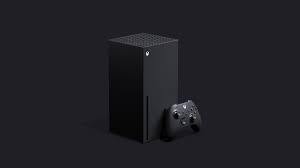
On Monday, Microsoft brought out the big guns and came out with the full specification list for its new Xbox Series X, and gamers couldn’t be more excited. The new model boasts of near-perfect specs and is expected to be on every gamer’s Christmas wish list. So, what’s so special about the Series X and why is the gaming fraternity going crazy over it? Here’s a look at everything you need to know about the Microsoft Xbox Series X which promises to bring be a next-gen gaming console.

Mind-Blowing Specifications

  1. The Xbox Series X will run on an AMD Zen 2 RDNA custom processor, which will be four times faster than the processor used in Xbox One.
  2. The new processor also offers 12 teraflops worth of GPU, which is twice that of the Xbox One X.
  3. The 12 teraflops GPU means the Xbox Series X will go far beyond the capabilities of mid-range AMD or Nvidia cards, making it a new gold standard.
  4. The Xbox Series X supports Variable rate shading which allows users to prioritize effects as per their needs and requirements. It also makes it possible to focus individual effects on just one game character or object, and renders that perfectly, without affecting the image quality of the rest of the screen.
  5. Xbox X will also have the DirectX Raytracing feature which will be on show for the first time ever, with this console. This feature will allow the console to create life-like images, realistic acoustics, real-time reflections, and even real-life lighting within the game.
  6. To wring the latency, the new Xbox comes with next-gen storage using SSD which promises faster load times than ever before.
  7. Furthermore, the Quick Resume option will allow players to access several games without delay from their suspended states.
  8. Also, to improve latency the device supports the Dynamic input option which results in minimising latency between Controller and console communication.
  9. The console also fully supports HDMI 2.1, meaning it has options such as Low Latency, Refresh rate variation and even Tearing prevention while gaming.
  10. Xbox Series X can go as high as 120 frames/sec, meaning the games will appear to be more real than ever before.
  11. Furthermore, Microsoft is heavily committed to its earlier games and hence will extend compatibility to Xbox One, 360 and original games with backward compatibility.
  12. The Series X, will, therefore, run all prior games faster, steadier and with better resolution than ever before.
  13. Also, the new Series will support videos in 8K, making it a great investment to have for the future, wherein 8K video support TVs become more popular.

Furthermore, Microsoft has said that further updates and specifications will be released in the coming months, with the Game Developers Conference in March being a key focal point. Also, the E3 convention in June might give Microsoft another opportunity to unveil more specs and features of the Xbox Series X. This convention might give us details regarding pricing, availability and even new launches. One of the most highly anticipated new launches for the Series X will be Halo Infinite. With these specs in place, Microsoft’s dream of creating the world’s most powerful console might just come true with the Xbox Series X.

Microsoft Vs Sony

The one area where Microsoft has a clear edge over Sony is with regards to backward compatibility of games. Whereas the PS4 has made several of the older PS games obsolete, Microsoft continues to make it possible for its users to access and enjoy its older titles. The two key interest areas where Microsoft seems to be the clear winner are computability and also delivery. Smart Delivery is a new feature that has come into play which makes it possible for you to reuse the games on various devices. For instance, if you buy a game for a particular device, Microsoft allows you access to the right game version for various Xbox types. Therefore, once you buy an Xbox, whichever one it may be, Microsoft has your back and will help you enjoy the gaming experience for years to come. This auto-updation of games is a feature loved by games as it allows them to enjoy games across platforms with ease, and unnecessary expense.

Furthermore, recent developments prove that Microsoft is interested in entering the cloud-based gaming industry, and the Xbox Series X might be a step in that direction. Their strategy seems to be to consolidate gaming across various platforms from PC to cloud, with mobile, Xbox and other consoles adding into the picture. However, Sony has stayed quiet with regards to its flagship new model PS5 and has released no announcements regarding the same. This announcement from Microsoft now has made it clear that it is now Sony’s turn to try to outdo the other with their announcement. Sony will, therefore, now be under pressure to release appropriate specs within a specified time interval. The relative quietness from their end indicates that something huge is in the making, and this sure seems to be an exciting time for gamers all around the world.