Your Tech Story

Athulya

Being a cinephile with a love for all things outdoorsy, Athulya never misses a chance to chase inspiring stories or poke fun at things, even when the subject is herself. Currently pursuing a degree in mechanical engineering, she is someone innately interested in technical and scientific research. Music reviews and op-eds define her as they allow her to explore different perspectives. Though sometimes she thinks she makes more sense playing the guitar than she does while writing.

Reliance JIO

Reliance JIO and Microsoft Come Together to Improve Online Learning During COVID-19 Pandemic

As the novel coronavirus continues its rampage throughout the world, most countries have been brought to a standstill. With worldwide cases having crossed 3 million, most nations have put in place severe restrictions. Almost all schools, universities and offices in Corona-hit countries have been shut. Therefore, this pandemic has had a significant impact on all our lives, rendering most services null. Most countries are shutting down their businesses and keeping alive only essential services. This has also made things difficult for traditional methods of education. The mass shutting of institutes has left millions without a class. Such dire circumstances have led to most major companies pledging their support to fight this pandemic. Recently, Reliance JIO announced that it would work with Microsoft to help the online learning industry in India. Here’s a look at everything you need to know regarding this partnership and what means to Indian students.

Indian Leaders Step Up

With the number of coronavirus cases in India exceeding the 500-mark, most Indian business houses are coming out with plans to help the government fight this epidemic. For instance, Mahindra and Paytm have already announced plans to help the government in various ways. Following suit was Reliance industries which recently pledged their full support for the government. The company has released a list of strategies they were putting in place. One of the main points here has been the help they have offered the online education industry in India.

With schools and colleges shutting across India, millions have been left without a classroom. In this light, to extend support to such students, JIO will partner with Microsoft to provide facilities to help schools and colleges function digitally. This sizeable digital collaboration will bring together these two tech giants and enable them to combine their resources. Their broad bandwidth and digital capabilities will help support both healthcare and educational institutions. This will go a long way in helping schools and colleges continue to function during social distancing and isolation.

Extended Internet

With most people being at home, internet services in the country are finding it challenging to keep up with service requests. Almost 90% of the country is under strict curfews and bans, resulting in large amounts of people working and studying from home. This has put an undue strain on our existing internet facilities, while also taxing individuals. To help such people, JIO has announced that they will provide the basic JioFiber connectivity at 10 Mbps, to whoever needs it, free of cost. The only requirement being that the area in consideration has enough range for their services.

Furthermore, JIO has also said that it will provide routers to people with a bare minimum refundable deposit. Also, existing users will have access to double the data limit they now have, and the same offer will hold for Jio 4G data vouchers. This move will significantly help the students all over the country who are now turning to online learning platforms for their educational needs.

Long-Awaited Partnership

While JIO and Microsoft have not provided further details regarding their partnership to help the online learning industry in India during such difficult times, this plan has been in motion for over a year now. In 2019, the two giants had decided to collaborate on a ten-year project, to help India go digital. This strategic relationship was to help accelerate India’s digital transformation by combining their capabilities and providing Indians with solutions for universal connectivity and storage issues they faced. The partnership would also lead to higher adoption of analytic services such as data science, artificial intelligence, and IOT in India. Details regarding their plans to help the online learning industry will most likely be along the same lines. Students all over the country are eagerly awaiting further details so that they can continue with their learning and education during these times.

e-learning

COVID-19 Helps Raise Income of Online Tutors Around the World

The COVID-19 is grabbing headlines all over the world for its rampant spread across Europe and North America. With the number of affected and dead keep rising every day, the world will have to wait out this pandemic. Recently, India has gone in for a 21-day complete lockdown to prevent the spread of the virus throughout the country. Around the world as well, most states have opted to implement travel bans, shut offices, and schools and also shut down public transport. The shutting down of schools and colleges has led to millions of students being left without a class. While these times are tough and trying, it has led to a surge in the online learning industry. With almost every student having to rely on online learning technologies to get their education, online tutors are making more money than ever before. Here’s a look at how the COVID-19 has led to a massive rise in income for online tutors.

Online Tutors Getting Rich

Raven Kate De Leon is a Filipino teacher, who is now working harder than ever before due to the COVID-19. She is working more than 10 hours a day from her home, in front of her home computer. Her desk is scattered with stuffed toys, cars and dolls, all of which she uses while teaching English to students from around the world. These toys help her lighten the mood and infuse some energy into her classes. With China having shut down, many students are now relying on teachers like Leon to get their education. Just like her, thousands of Filipino teachers are now cashing in on the disease by working overtime as grade school teachers. Instead of being frustrated due to the lockdown, these online tutors are turning this pandemic into golden opportunities.

The Philippines to the Rescue

Very few Asian countries have what the Philippines have. The country has both the technical capabilities and an ample supply of teaching professionals who speak flawless English. Both these combined help make this country into an online-learning powerhouse, helping out students all over the world. Platforms that mete out virtual learning, such as China’s 51Talk and the Filipino RareJob has grown tremendously in the last few months.

Ever since the COVID-19 hit Chinese shores, these platforms have developed as they serve as one of the few ways to teach students. Teachers who used to take eight classes daily, now take 20 to keep up with the more significant surge in demand. With the children being stressed out themselves, not being able to understand what’s happening around them, these classes also serve as a means to calm them down. Leon usually works from 8 in the morning to 11 at night, and never even takes a day off! A 25-minute session costs the student around $6.36, and most teachers earn $2.53 per hour.

Traditional Education Shuts Down

China shut all its schools and colleges in February in a bid to contain and prevent the further spread of the infection. Once the virus spread to other areas and countries, most of them had to follow suit and put the same measures in place. This led to the complete breakdown of traditional forms of education, with UNESCO calling this a modern-day educational crisis. The organization has stated that the pandemic has left over 290 million children without a school or college to attend. In such trying times, the safest option that people have to get their children educated is online learning.

With the virus being extremely viral and infectious, social distance has become the norm of the day. In such an environment of COVID-19, virtual classrooms and online learning initiatives might be the only option available to students who want to learn. Companies such as 51 Talk is making full use of this migration towards online learning, and the company employs over 20,000 teachers in the Philippines.

As these teachers work from home the entire time, they have also been able to stay clear of the viral infection. The Philippines is battling the disease, with over 400 positive cases. The market share value of the company China Online Education, which is valued at $419-million rose 154% while the NYSE index fell by 34% in the same period. Other platforms such as TAL Education Group, New Oriental Education and GSX Techedu Inc have also witnessed an enormous rise in share values, by 24%, 17%, and 112%, respectively.

RareJob employs over 6,000 Filipino tutors and works mainly in the Japanese market. They have seen a doubling of their customer base, with over 800,000 customers signing up since February. The company charges $60 for Japanese and $100 for English classes, and this is 40 times cheaper than the online learning classes based in Japan. Several companies are unable to keep up with the massive surge in demand. Regardless of whether the schools and colleges will open soon, it is clear to see that online learning institutions have made a long-lasting impact on the world’s education sector.

covid-19

World Comes Together to Find a Cure for the COVID-19

It has now been three months since the novel coronavirus went ballistic, spreading across the world and claiming lives. Since the spike in cases started, medical professionals from around the globe have been doubtful when it comes to how to treat the pandemic. Most of them are unclear regarding which drug will prove to be most effective against this viral disease. However, the silver lining here is that this confusion has brought together the entire medical community especially WHO, as they try to find answers. Here’s a quick look at how the world has come together to find a cure for the COVID-19.

Testing Progressing

The virus broke into China early December and then tore the country apart by February. Researchers and doctors then set up multiple testing centers and drug trial centers to test the efficiency of existing medicines. However, data from China has not been successful in pinpointing any particular drug as the final solution. This prompted the Director-General of WHO, Tedros Adhanom to ask top medical professionals from around the world to work together to find a cure. He recently applauded the global effort by stating that such an extensive program against the viral disease would lead to faster results. The WHO, has, therefore, launched a global clinical trial to test four drugs that they feel have the best response against the COIVD-19. These include the experimental Remdesivir, the anti-malarial chloroquine, and hydroxychloroquine, two HIV drugs from a combination pair, and the same two combined with an anti-inflammatory beta drug.

Global Effort

These trials will happen all over the world and will be extremely flexible. As time passes, the centers will add and remove additional treatments and therapies as per their findings. In many ways, this process will resemble the one adopted by the National Institute of Allergy and Infectious Diseases. This facility, which took shape in the US, sometime in February has been testing Remdesivir. However, as of now, the US is not included in this global testing scheme launched by WHO. Nevertheless, hundreds of such trials are now in motion. Here’s a look at the main drugs they are focusing on, as of now.

Anti-Malarial Drugs

Studies have found that both hydroxychloroquine and chloroquine can help in stopping the coronavirus’s spread. Meanwhile, anecdotal evidence suggests that this combination can help patients infected by the COVID-19. An advantage concerning this drug is that since it has been used for years as an anti-malarial drug, scientists and researchers have a lot of experience when it comes to using it. After having used it for years, most scientists have found that the drug affects viruses. The trials are trying to establish whether hydroxychloroquine can help with stopping the virus from developing into more severe conditions within patients. To test this, researchers need to administer the drug to people who are at high-risk locations. By getting the drug into people early on, the team will be able to track how the drug responds to the virus and whether it proves to be effective. Since viruses work incredibly fast, if a drug has a chance of working, that chance is amplified if it reaches the infection early on. While the research is still in its early stages, experts believe that hydroxychloroquine will prove to be an essential drug in the fight against the viral epidemic. However, such news has led to a rise in demand for the drug, inspiring manufacturers to increase production. This rise in demand has led to a shortage of people who use the drug to fight lupus.

HIV Drug Trials

Two Thai doctors in February claimed that a combination of lopinavir and ritonavir, two drugs used for the treatment of HIV helps COVID-19 patients. This has led to the WHO issuing testing centers to run clinical trials on the effectiveness of this combination. A separate test is running to test the effect of the blend with an anti-inflammatory interferon-beta. The most promising news here is that this combination proved successful in the fight against the SARS and MERS pandemics. However, some bad news has come out from China, wherein trials revealed that the combination did not prove successful. But, the test occurred in people who were in the later stages of the disease, meaning that this might be why the combination proved to be ineffective.

Antiviral Remedies

The drug remdesivir first gained attention as a useful tool against Ebola. Later on, research showed that the drug also works against MERS and SARS. Now, recent lab tests have shown that the drug can also help in curbing the novel coronavirus. While anecdotal evidence backs the remdesivir drug, clinical trials will aid in substantiating this evidence. Further trials are testing various other drugs; some backed by WHO, some without, in a way to quickly fight the virus. Japan is testing an anti-flu drug called favipiravir, which they say is effective in treating the COVID-19. While clinical trials take time to collect data, this global effort will help in building concrete evidence faster than ever before. As the world comes together to fight this pandemic, let us all hope that a cure is found soon.

digital robots

Diligent Robotics to Help Hospitals by Providing Assistant Robots

Studies show that almost 28% of a professional nurse’s working time goes into tasks that require low-skill and less technical knowledge. These tasks include taking medical tools from places and handing them over to the doctor-in-charge. Being a nurse is an essential job that requires a lot of other complex operations, which require care and compassion. When they are put under stress working on low-skill tasks, this affects the overall productivity and efficiency. The present COVID-19 attack has seriously put the medical profession under severe pressure. With doctors and nurses having to work around the clock to save lives, the least we can do is use science to make their lives easier. In this article, we will be taking a look at what the start-up Diligent Robotics is doing to help these nurses out.

Robots to the Rescue

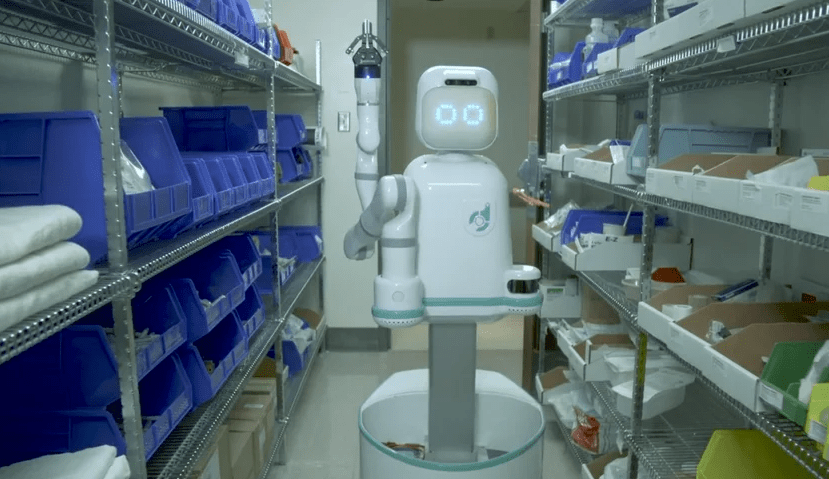
Diligent Robotics is trying to give back to the medical community by providing them with a helper robot to carry out low-task jobs. This robot will function as a sort of assistant to these nurses, helping them with errands around the clock. The company’s helper bot, called Moxi has a flexible gripper-equipped arm, which allows it to pick and drop things. This incredibly mobile robot can navigate its way through a hallway, clinical room or ward and assist nurses diligently. It can be put to use to transport resources from one department to the other, and hand over necessary documents to doctors. Since the world is facing a massive shortage of human resources with regards to the healthcare industry, this robot will help save lives. Using this robot will lead to medical professionals having more time to tend to the sick, instead of engaging in low-intensity tasks. This will help raise the overall efficiency and productivity of the hospital and its staff. Furthermore, since robots cannot get themselves infected with COVID-19, they cannot be carriers, making the entire process a lot safer.

Funding on Board

The company Diligent Robotics announced its plan to scale operations and deliver more robots to hospitals, thanks partly to a $10 million received via Series A funding. Diligent Robotics CEO Andrea Thomaz has said that the robot Moxi was designed by taking input from hospital customers and users so that it can provide more solutions than just material management. The company plans on making the robot a frontline staff in this fight against the disease. This round of funding led by DNX Ventures ensured that the company gained $15.75 million in total funding. This has pushed development works into fifth gear as far as Moxi is concerned. Two such robots are working in Dallas, within two top hospital networks inside the United States.

Road to the Formation of the Rescue Team

The new cash which has come in from companies and investors such as DNX, Ubiquity Ventures, Grit Ventures, and E14 Fund has helped in expanding Moxi’s capabilities. Andrea Thomaz came up with this idea when she was working on her Ph.D. from MIT Lab in the field of social robotics. Co-founder and the company’s CTO, Vivian Chu has a Master’s from UPenn. She then joined forces with Thomaz at Georgia Tech and realized just how much time nurses waste on menial tasks. This study led them to win a National Science Foundation grant amounting to $750,000. This money proved that stepping stone that led to the prototype of Moxi being built. Since then, the company has grown from strength to strength, expanding into an 18-member team. They worked with over a hundred nurses from all over the US, to study their needs and requirements. Thomaz believes that such movements will help in the integration of robots into everyday lives like never before. Hence, such service robots will benefit the entire field move from shop floors and industries to our homes and essential services. Rather than trying to replace humans, the company is trying to focus on building robots with unique human elements in them.

Moxi the Bot

Moxi is almost as big as a human but looks more like an 80’s inspired movie robot so that it does not make people feel weird. It has a pair of eyes that move as per signal transmission, with a command system that responds to voice commands from nurses. It has a control system inside it, which allows it to adjust its height, while its robotic arms will enable it to pick up and place items whenever necessary. Hospitals buy Moxi by paying a standard fee and then continue to pay a small monthly fee for the services it provides. While hospitals find it difficult to adjust to new technologies, the start-up believes that tough times will inspire more companies and hospitals to adopt new technologies to fight the pandemic.

Zapier

Chronicling Zapier’s Growth from a Three-Man Team to A Global Remote Working Phenomenon

With almost all services going digital, remote working has become a big part of our lives. Even in India, we are seeing a lot of new tech companies giving their employees the option to work from home on a regular basis. However, it is difficult to integrate all these employees and build a cohesive team. Well, that is where companies like Zapier come into the picture. This global remote company allows users to integrate all the applications they need from the comfort of their homes. Therefore, large companies get to bring all the web applications they need under one umbrella for easy and comfortable use. Here’s the story of how Zapier grew from being a small side hustle to a multi-million-dollar company employing over 250 employees from more than 23 countries around the world.

Founding Zapier

Zapier began in Missouri as a collaboration between friends Wade Foster, Bryan Helmig, and Mike Knoop. The idea for such a platform came while the trio was participating in the first Startup Weekend Columbia, way back in 2011. After their initial submission for the Winter funding cycle got rejected, they built a prototype which brought together 25 apps. This prototype was then accepted by Y Combinator, which is a startup accelerator. Follow this, the company shifted its base to California and in October of 2012, they received funding worth $1.3 million from investors such as Bessemer Venture. The company then grew at a rapid pace and became profitable by 2014.

Setting Up the Ground Rules

Right after winning Startup Weekend, the trio decided to pursue Zapier as a side hustle, opting to work on it only during their free time, such as nights and weekends. However, when they got picked up by Combinator, they decided to see it as a full-time project. The biggest challenge they faced while expanding was establishing its ground rules. Since they were a remote working company, the employees rarely met, and hence communication was key. When the CEOs sleep, most of their employees who are on the other side of the world, are waking up to start their day. Hence, the company had to implement some ground rules so that everyone stayed on the same page. The company utilizes Slack to maintain communication channels with their employees. They also have policies wherein every week pairs are matched for a video chat to build better employee relationships. By saving money in the form of rent, they host semi-annual retreats to get everyone under the same roof.

Growth and Success

Zapier’s success didn’t start in Silicon Valley, but in a college, hackathon based out of Missouri. Since then it has grown to become one of the world’s largest SaaS service providers, with over 1.5 million users. The trio grew from being full-time students and employees to co-founders of one of the US’s biggest companies. The main lesson here, as per Brian is to allow yourself to commit to your passion project, the way those three did. Furthermore, the co-founder states that the company never wanted to be a remote working one, but became one by pure coincidence. After winning Combinator, Mike was traveling back and forth to be with his girlfriend. This enabled him to see just how useful remote working is. So, when the time arose for them to scale their operations, the founders decided to try out remote working employees. Their success wasn’t easy, and they faced a lot of competition and struggles along the way.

Furthermore, Zapier is one of the few companies that have gotten by with just one round of funding. This is of course without counting their bootstrapping, which helped them raise $1.2 million in 2012. Eight years later, they have no office space but employ over 200 employees from all around the world. The company saves a lot from doing so, with their CFO estimating that they save $2 million a year thanks to this innovative approach. In under five years, starting from 2012, the team had surely yet slowly grown into a team of over 100 professionals. The company’s policy is to hire when they feel they are running short on people. The weekly one-on-one culture helps the higher-ups understand if anyone is feeling overworked and burnt out. Since hiring is restricted to mission objectives, their main priority is a skill, and this helps them access some of the best people out there.

All these policies have helped them grow exponentially, with the Zapier suite now containing over 800 apps. All of this has been without the help of even a basic sales team. Rather than invest money acquiring customers, the company believes in spending money serving their customers better. The company turned profitable for the first time in 2014, and have now had 6 profitable years. They have since gone on to make over $35 Million dollars in annual revenue.

Youtube Helping prevent from Coronavirus

YouTube Doing All It Can to Promote Good Content in the Times of COVID-19

As the COVID-19 continues to wreak havoc around the world, all spheres of our life are reeling in the aftermath. Around the world, cases seem to be on the increase and most governments are putting curfews in place to prevent the further spread of the virus. During this time of need, several people have been accused of spreading false information regarding the disease. When everything is digital, it becomes effortless to popularize and legitimize fake news. Since doing so can have serious repercussions, officials are asking people to be careful regarding what they share with family and friends. Therefore, having a legitimate source for news and updates regarding the COVID-19 has become integral, and Google seems to be stepping up to the occasion. Here’s a look at how YouTube and Google are handling the situation.

Saving Grace from Google

Google recently released specifications regarding how they are helping users fight the COVID-19. They have set up an education website that will help users gain insight into how the virus works and how we can protect ourselves against it. This website is working in tandem with the Trump administration to help curb the spread of the virus. This partnership with the government will help users gain information regarding how the virus spreads, WHO guidelines and even CDC control measures. The initial version of the website was to become active on the 16th of March.

Furthermore, reports state that Verily, which is owned by Google’s parent, Alphabet, is working on setting up COVID-19 testing centers. These will launch in the San Francisco Bay Area and will help speed up the testing process, limiting its spread. The company is also said to be developing an online tool to help patients self-quarantine themselves if they show symptoms. However, both these tools are only in their testing phase and may require a lot more time to become operational. Furthermore, the tech giant will also dispense vital information using Search, Maps, and YouTube. Let us take a look at what YouTube plans to do.

Google’s homepage now promotes the Do the Five campaign, which aims to raise awareness regarding measures people should take to limit the spread of the disease. These guidelines, which have been devised by the WHO, has been popularized by Google. Within just 24 hours from release, these guidelines have been viewed by millions in the US alone. Google’s My Business will also allow businesses to mark themselves as Temporarily Shut due to the COVID-19.

From Google to YouTube

YouTube has been spread misinformation in the past, and Google aims to stop that from happening this time. Therefore, Google has taken down thousands of videos that promote misleading and factually incorrect news regarding the COVID-19. Several of these videos claimed to have treatments and prevention methods against the coronavirus but had no medical proof to back up their claims. Similarly, Google Maps has also taken down malicious content and reviews regarding healthcare locations.

Furthermore, the tech giant has warned content creators against posting false information. Also, they have told creators that due to staffing changes owing to the COVID-19 outbreak, more and more reviews will rely on automated systems. Therefore, most of the removals and revisions will be done by automated algorithms and not through human intervention.

This may lead to an increase in video removals, with even some video which does not violate policies being taken down. In such cases, creators can appeal against the taking down of their video, and the teams associated with QC&QA will review the decision. However, YouTube has also made it clear that such reviews will take longer than usual due to a workforce shortage. Furthermore, the company will be more careful about what content goes up in order to prevent the spread of false information. Everything, including live streams, will be carefully analyzed with content awaiting review not being available via search or in recommendations.

YouTube will also come out with a new row of verified content on its homepage to help people looking for updates on the viral outbreak. These videos will feature news from authoritative outlets and health providers, rather than random users. This COVID-19 shelf will be available in 16 countries initially, and this includes the US, UK, India, Germany, Italy, and Brazil from this week onwards. In due time, it will be made available to more countries. Google has also pulled paid ads that try to capitalize on the virus from YouTube, giving more space to NGOs and government authorities.