Your Tech Story

Athulya

Being a cinephile with a love for all things outdoorsy, Athulya never misses a chance to chase inspiring stories or poke fun at things, even when the subject is herself. Currently pursuing a degree in mechanical engineering, she is someone innately interested in technical and scientific research. Music reviews and op-eds define her as they allow her to explore different perspectives. Though sometimes she thinks she makes more sense playing the guitar than she does while writing.

Quibi

Short-Form Content Specialist Quibi: An Honest Review

The way we consume content has changed over the years. Thanks to increasing internet penetration and a rise in the number of mobile users, we now have several options to view content. Entertainment portals such as Hulu and Netflix have become popular around the world. Even old patrons of entertainment, such as Disney are moving towards a newer, digital content platform. Even in India, streaming services such as Amazon Prime, Hotstar and Netflix have become extremely popular. It is into this highly competitive field that another entertainment platform has entered. After many months of massive publicity, Quibi, which will focus on short-form content launched today for both Android and iPhone users. Here’s an honest review of the application and what it means for the entertainment industry.

Who’s Behind It?

There’s been a lot of talk of this mobile app that delivers bite-sized original content, and finally, it is out. Headed by Jeffrey Katzenberg, who is a pioneer in the field of entertainment and Meg Whitman, an experienced tech player, Quibi looks stated for success. The application centers around mobile phones and was built for use on mobile devices, rather than desktops or laptops. The application brought in over $1 billion in investment, which includes attracting significant stars for their new original content. Finally, the app is out, and the creators will get to see whether the app is worth the $4.99-with ads and $7.990 without ad package they are giving it out for.

Boon or Bane?

The main USP of the app is that it specializes in content that lasts 10 minutes or less. Since there is no TV app for the same, Quibi will have to be enjoyed solely from your mobile phone. Since most people are at home now, due to the COVID-19, this might be something that will work against the application. Whenever people are at home, they tend to prefer to watch content through larger screens, such as laptops and TVs. However, since this app is made specifically for mobile devices, users will not be able to enjoy the comforts of a larger screen. The application is also not available via a website and does not work fully optimized on tablets either. Therefore, this rules out the possibility of teaming it with Chromecast or AirPlay. So it is safe to say that it is built for your phone and nothing else!

How is the Quibi Interface?

Quibi is an app that works fine. It is reliable, though the user experience needs to be a little more intuitive and fluid. Other streaming giants such as Netflix have been able to do so well for themselves as their interface is extremely user-friendly. So, this is one area that the makers really need to focus on when it comes to updates and improvements. However, the app supports auto-rotate, so the images flip into landscape and portrait as you rotate your device. Both these orientations have been completely optimized, which makes the viewing experience a lot better.

The features which allow the camera shots and text to realign itself as per the mode is Turnstyle, and it serves as Quibi’s main feature. As per Katzenberg, Turnstyle will help bring in the third generation of film narrative. While the function might not be as revelatory as it is made to sound, it does help in making it easier to watch shows on the app. The main homepage resembles Instagram, more than it does Netflix, as it makes use of vertical cards. Lingering on any card for a few seconds automatically starts the autoplay of the video, while every time you pass through, you receive vibratory feedback. The video begins playing on full screen if you press it, and delayed holds will present more options such as download, share and information regarding the show. You also have the option of enabling notifications which will allow you to stay updated with regards to new releases and so on.

Playback and Quality

During playback, users get access to controls such as play, pause, fast-forward, share and rewind. It also includes a Left-handed mode which makes the app very easy to use for lefties around the world. The app also has shortcuts in place for muting the audio and switching on the subtitles. The Turnstyle feature works by involving two different video streams and one audio track simultaneously. The mode in which you are watching the show runs on higher resolution, while the other keeps running in the background. Whenever you rotate, the stream also changes instantaneously and therefore, there is no loading issue, quality degradation or buffering issues. However, using dual-stream video makes the app use 20% more data than YouTube or Netflix.

The major misses when it comes to the app are as follows. It does not have a family option wherein various members can stream content from one account. Not accounting for multiple people in the same house might not end up working for the app in the long run. Furthermore, since it works on a single concurrent stream, password sharing is also not an option people have. However, the short content that it features makes it the perfect app for content on-the-go. It provides excellent, no-commitment entertainment that people can enjoy while traveling or waiting for an appointment. However, the fact that they chose to launch it at a time when everyone is at home could harm the app’s impact. We will be able to gauge its real success and effect after this challenging time passes, and people start traveling once again. For now, it looks like Netflix and Amazon do not have too much to worry about.

jeff bezos

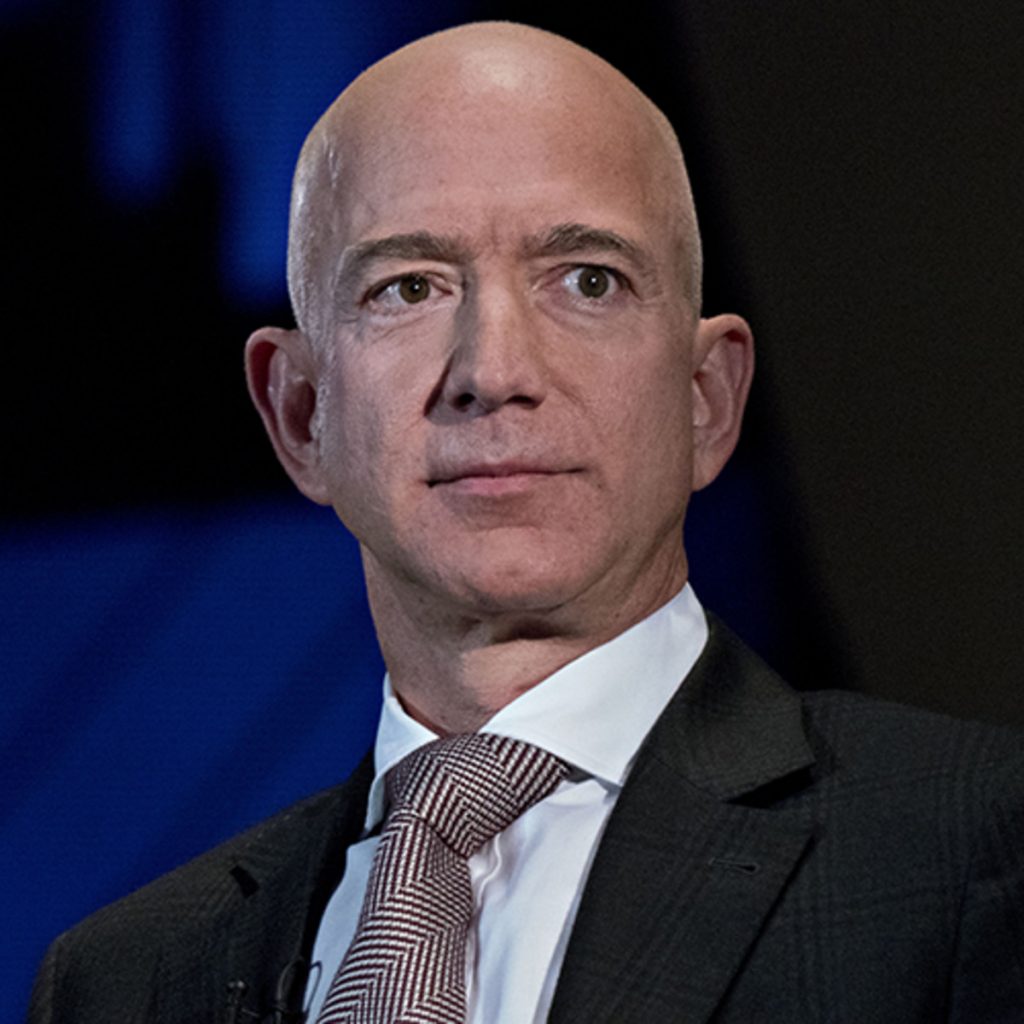
Jeff Bezos’ Blue Origins Asking Employees to Work on Test Launch During COVID-19

The COVID-19 scare has led most nations to propose a nation-wide lockdown. As a part of this health pandemic, most schools, colleges, offices and industries around the world have been shut. With most governments asking their citizens to shut everything except essential industries, most industries and shops have closed. However, in certain parts of the world, the word critical means different things, leading to various companies staying open even during the crisis. Such instances have led to widespread criticism, with several employees coming out saying that what is happening is unfair. One such example has been noticed in the US, where Jeff Bezos’ aerospace-related company Blue Origins continues to be working as if nothing is wrong. Here’s a look at Blue Origins and why it is angering people around the world.

Unusual Demands

Not only is the company, up and running, it is also pushing employees to get ready for a test launch. Blue Origins, is allegedly asking their employees to test their New Shepard rocket, which will be put to use to take tourists to outer space. Even with the COVID-19 crisis devastating the US, Bezos seems adamant on getting this done. The company, to test the rocket, is taking employees from Kent, a town with several COVID-19 cases, to Van Horn. This small town in Texas has a population of around 2,000 and houses Blue Origin’s test facility for the New Shepard rocket.

Jeff Bezos’ Blue Origin Asking Employees to Work on Test Launch During COVID-19
Image Source: Google Images

Dangerous Conditions

Most employees believe that going all the way to Van Horn puts them at risk of exposing themselves to COVID-19, and then spreading it over there. Since the rural town has minimal medical infrastructure, the town would be in big trouble, were the pandemic to spread there. More than 4 employees spoke to The Verge regarding the operation, choosing to remain silent in fear of retaliation. Not only were they frustrated by the company, but they also could not understand why this was so important at such a difficult time. All four felt that the company seemed to be prioritizing business goals over health concerns for the employees.

On April 1st, senior management briefed employees on the way they would be transported to Van Horn and even told them to keep a low profile there to prevent being noticed. While several employees raised safety concerns when they heard the plan, the management was quick to point out that noncompliance would have severe repercussions. Senior Director, Jeff Ashby apparently asked the employees to think about whether they want to help the leadership or act as a toxin to the company.

Allowed to Work

Furthermore, it is surprising why Blue Origin is even allowed to stay open during such trying times. The company is one of the few still operating in Washington, wherein the Governor had called for a stay-at-home order on March 23rd. After this order came out, all nonessential businesses in Washington closed, with Blue Origin staying open, due to its ties with the Defence Department making it an essential undertaking. However, right not the company is not focusing on the rocker New Glenn, which the US Air Force has asked for, to help in launching security satellites. Instead, it is working on New Shepard, a tool they will use to promote space tourism, through an 11-minute flight.

The company hopes to test the rocket on April 10th. However, it is not clear whether the date has been extended due to the difficulties caused by the pandemic. On March 29th, Greg Abbott, who serves as the Governor of Texas, announced a two-week quarantine for travelers from states such as Washington. This could have forced Blue Origin to put their flight testing on hold. However, senior management learned that they could exempt themselves from the quarantine and hence, are planning to go ahead with their initial plan. Even though they might be able to go ahead with its test launch, the company has not announced a new launch date as of now.

Angry, Confused Employees

Employees at Blue Origin cannot understand how the New Shepard classifies as an essential or critical vehicle that needs to launch now. Most of them believe that this launch is not crucial to the US in any way. While the rocket might carry research payloads, its primary goal is to ferry wealthy explorers to space to experience weightlessness. When asked to comment on employee dissatisfaction, Blue Origins said that it has nothing to say about its internal meetings. Furthermore, they said that senior management is monitoring the situation and that they would take the most appropriate step.

Employees are uncertain regarding whether they will be able to follow proper social distancing protocol while traveling. While most of them have to stay in hotels in Texas, they will be huddled together in conference rooms and mission control rooms during the launch. As a response, the company said that they would modify their launch procedure to ensure only a small crew need to be present. Yet, employees are skeptical regarding whether the company will be able to keep people safe, and whether this launch must even be done at this time. Employees feel that Blue Origin’s unhealthy competition with Virgin Galactic, who also plans on taking tourists to space, is making it take rash and unsafe decisions. With Bezos having stated earlier that now is the time to focus on the COVID-19, Blue Origin employees seem incredibly dissatisfied with the ground reality.  

Covid-19

COVID-19 Hits the Art Scene: Color Factory and Museum of Ice Cream Initiate Massive Lay Offs

The COVID-19 continues to spread and kill across the world, with global causalities having hit 34,000. Almost every sphere of our lives has been hit, and most of us are conformed to our houses. With schools shut, offices closed and public transport partially banned, most people are whiling away time at home. Such a global lockdown makes things difficult for businesses around the world. IMF has already stated that following the COVID-19, the world will spiral into an economic recession. Many major companies have also been reeling in the after-effect of this deadly pandemic. Here’s a look at how Color Factory, backed by Instagram, is handling the issues.

Shut-Down Imminent

Jeff Lind, who serves as the CEO of Color Factory, knew his business would shut down when the NBA canceled its season in the US. Jeff was watching a Utah Jazz game when the announcements came out, and he knew that soon enough the entire city would be on lockdown. As predicted, within a few days, the whole of New York went into a total shut-down, with the government closing all restaurants, hotels and non-essential stores. The entertainment industry, consisting of rodeos, sports complexes, museums and art galleries had the world change underneath their own feet, as the COVID-19 spread ferociously. Two of the world’s most popular photogenic experiences, the Color Factory and Museum of Ice Cream have both felt the after-effects of this deadly virus. Both of them have had to shut shop, in a bid to stop the aggressive spread of the pandemic. As a result, both have had to lay off employees, with almost no revenue coming in recently.

Making Things Difficult

Color Factory closed both its installments, in New York and Houston by March 18th, and followed up by temporarily laying off their employees. CEO Lind says that almost 90% of Color Factory’s employees have been let go, in a bid to cut costs. Everyone including hourly employees, part-time workers and corporate employees were dismissed, with them maintaining only critical positions. However, the company still provides health care benefits to eligible employees for 12 weeks.

Furthermore, all the employees who were laid off received severance pay associated with their experience. Also, to further cut costs, all the remaining employees have taken salary cuts. The company also had to ask people who had bought tickets before-hand to reschedule their visits. However, Color Factory is still handing out refunds if the customers insist on it. Unfortunately for them, the COVID-19 hit at peak time, with the Houston establishment having been sold out.

Others Follow Suit

Color Factory hasn’t been the only Instagram pop-up to suffer, with fellow art space, Museum of Ice Cream also sharing their fate. As more and more people stay confined to their houses, almost no one has the time for entertainment nowadays. People are not allowed to take their kids out to play, go on dates, or even enjoy an artistically inclined evening outdoors. Pop-up museums depend on such crowds, and hence, this industry has suffered much due to the COVID-19. These museums use the marketing power gained by people posting photos on Instagram, to attract crowds, and that doesn’t seem to be happening in today’s atmosphere. Unlike other streams of art, such as music and dance, these museums cannot recreate their space on a virtual platform. Therefore, the Museum of Ice Cream too laid off almost 90% of its employees, as per CEO Maryellis Bunn. However, just like the Color Factory, they also will provide employees with health care benefits, and severance pays.

Controversies and Bad Reputation

However, the Museum of Ice Cream was not able to pay some of their contractors on time, and this led to an Instagram smear campaign against them. Most of the comments under their posts feature people asking them to pay their workers on time. Some of the contractors have also stated that they have not been paid since last month. They went on to say that they received their money, only after calling out the company on Instagram and shaming them online.

Similarly, three other contractors also received their payment only after the social media storm hit the company. However, CEO Bunn had a different opinion, stating that all their employees had been paid on time. To cut costs even further, Bunn and all the employees who have been retained have taken massive salary reductions. The CEO has apparently given up her entire salary for the month to keep the company afloat. While New York City entered the shut-down recently, Bunn feels that revenue has been receding since February. A significant amount of their footfall comes from foreign tourists, who have been walloped by the COVID-19.

Another black mark in their reputation came in the form of claims that the company had not refunded money to clients who had canceled their tour. Several email chains came out in the open, stating that ShowClix, which sells tickets for the Museum of Ice Cream, was refusing to refund clients. Until March 19th, customers were being asked to reschedule their trip, rather than cancel it. In this case, as well, Bunn has said that refunds will be available as of last week. Other prominent closures around the US include Meow Wolf and Rosé Mansion, while Candytopia has stayed quiet regarding their locations. Since all of these are in-person experiences, they do not translate well on Zoom calls, making it difficult for them to work through the social distancing norm. These companies are hoping to put this episode behind them, and start again as soon as the COVID-19 scare passes.

skype

As Microsoft’s Skype Falters, Zoom Rises to the Occasion

With two weeks still left to go to end the nation-wide lockdown, people all around the country are relying on video-calling apps to communicate. As the novel coronavirus continues its dominant surge across North America and Europe, most of the world’s countries have gone into a nation-wide shutdown. With curfews in place, bans on gatherings and public transport, most people are confined to their homes. Since a majority of the world’s population is now sitting idly in their houses, applications that help in communicating are seeing a surge in demand. As we cannot go out to meet and socialize, apps that allow us to do so digitally are being used round the clock to beat boredom. Whether it is to play a game of UNO or have a group video-call, these apps are slowly taking over our smartphones. Skype and Zoom are the two most popular video-calling options available right now, and here’s a look at how one has faltered, while the other has surged.

Skype Vs Zoom

If this pandemic had occurred in 2011, the entire world would have been on Skype, calling, chatting and talking to their loved ones. Unfortunately, though, for Microsoft, in the year 2020, they aren’t able to replicate that level of success. With thousands of people looking for Skype alternatives, competitors such as Zoom and Houseparty are making the most of this departure. The recent weeks have seen people use Zoom to hold yoga classes, school lectures and even socialize with friends. Microsoft took over Skype in 2011, thanks to a deal that cost them $8.5 billion.

The same year saw the founding of both Zoom and Snapchat. Back then, Skype had over 100 million active users with 8 million of them choosing to voice calls over the application. Hence, it is safe to say, that back in 2011, Skype was the leading market player, being everyone’s first choice for video calling. It was so popular that the Onion released a statement that the word Skype would soon find a place in the dictionary.

Furthermore, three years later, the prophecy came true, and it was added as a verb to the Oxford English Dictionary. However, at the same time, Microsoft was struggling with turning Skype into a profitable and relevant business.

End of an Era

Microsoft’s acquisition of Skype happened during the same time applications such as WhatsApp, Messenger, and WeChat were gaining momentum with youngsters. In a bid to lessen competition, Microsoft even got rid of its own Live Messenger, which was also quite popular at the time.

One of the biggest problems Microsoft had was that Skype worked on Peer-to-Peer technology, making it difficult to adapt to mobile devices. In 2013, Microsoft shifted Skype from a P2P network onto cloud-powered servers, in a move to make it more efficient on mobile devices. The same year, Skype began the default messenger for Windows 8.1, and also a part of the Xbox One console and Outlook.com.

However, the transition was messy, resulting in repeating notifications on multiple devices. This led to the app becoming less reliable, while all of its competitors kept growing from strength to strength. Rather than fixing the underlying issues which led to this unreliability, Microsoft kept trying to redesign the interface for years.

Change in Direction

Instead of fixing Skype, Microsoft kept adding new supplementary features such as emoji’s and shutting down the Qik app. Then, in 2017, Microsoft redesigned Skype and made it eerily similar to Snapchat. However, this did not sit well with fans, and soon enough, Microsoft had to get rid of these features. Then, the tech giant pushed Skype as a replacement for Lync, an enterprise messaging application. However, with the arrival of Microsoft Teams in 2016, this plan too was dropped mid-way. With the success of Teams, Microsoft has been pushing it aggressively, taking all the spotlight off Skype. While Skype might not disappear soon, it no longer seems to be the company’s main focus. In 2015, Skype boasted of over 300 million active users, and Microsoft hasn’t bothered to update those numbers since.

Coronavirus-related Surge

The coronavirus pandemic has led to a 70% surge in usage, with over 40 million people using Skype daily. This means that before the Coronavirus pandemic, over 23 million people used Skype daily. However, at the same time, rivals such as Zoom, Hangouts and Houseparty also seem to be doing quite well for themselves. Both Zoom and Houseparty have exploded with Zoom topping the American App Store and coming in second in the UK App Store list. Houseparty has topped the UK and comes in at third place in the US. By comparison, Skype comes in at 75 in the US and 15 in the UK.

However, Microsoft Teams is doing much better, being 7th in the US, and 6th in the UK. However, Zoom refuses to share their numbers regarding usage, and hence we do not know the actual number of users. The biggest reason for people turning to Zoom and Houseparty is due to their ease of use. However, both these apps are now facing privacy concerns with Zoombombing and Houseparty hacking has become popular.

While there are several reasons for people migrating to Zoom and Houseparty, Microsoft’s inefficiency when it comes to dealing with Skype’s issues is definitely a major reason. With Skype all set to migrate to an Electron-powered app, making it more like a traditional desktop app, the future looks uncertain for Skype. Reports even state that it might face the same verdict that Live Messenger did a few years ago.

oneplus8

A Look at the Specifications of the New OnePlus 8 Smartphone that has Excited Fans Around the World

OnePlus is a leading smartphone manufacturer in India, with a loyal fan base. The smartphone maker has done well for itself in India, thanks to affordable handsets which boast high-end capabilities. Most of their phones are highly anticipated by the Indian audience, as they always seem to shake things up when it comes to launches. Recently, Roland Quandt, who is a famous industry insider working for WinFuture, released official specifications relating to the OnePlus 8. The OnePlus 8 will be the newest flagship from the highly successful Shenzhen-based brand. Here’s a look at everything you need to know about the latest specifications, and why it has made smartphone enthusiasts excited.

Launch Dates and Specifications

The leaked specifications reveal that the new flagship might come with an OLED screen, which is 6.55 inches big. The hyperboloid screen will support FHD+ resolution and can process images at 90Hz refresh rate. The phone is also expected to come with a Qualcomm Snapdragon 865 5G chipset, which will be available in two different memory categories: 8GB/128GB and 12GB/256GB. The OnePlus 8 will run on an LPDDR4X RAM and is not expected to have functionalities such as wireless charging and IP rating. The phone will also have a 16MP front camera and a back camera which comes with a triple camera setup, supporting a 48MP primary camera. The OnePlus 8 will be powered by a 4300mAh battery, which luckily for the fans, supports 30W flash charge.

Also, as per the report, the phone will most likely be launched mid-April, and the company will announce the exact launch date by the end of this week. The phone will also be available in three different colour schemes, Onyx Black, Interstellar Glow and Glacial Green.

Visual Display

The leak also came with individual renderings of the expected launches, and the new colours make for an impressive visual display. The most talked about in the new array of colours is undoubtedly the purplish- Interstellar Glow, which honestly looks out of this world. Fans from around the world were quick in heaping praises on the new launches’ look, some even stating that the phone seems ethereal. However, no official report has been released which states whether both the OnePlus 8 Pro and OnePlus 8, will have the same colour palette.

Also, reports state that the OnePlus 8 Pro might have a 120Hz refresh rate, making for more in-depth and vibrant images. These reports also indicate that the new flagship’s pro version will have a larger screen size, with several experts touting it to as high as 6.78 inches. The Pro is also expected to run on an LPDDR5 RAM, and support a quadruple-camera setup. Furthermore, it will have an IP68 rating, which makes it both water and dust resistant. Also, the phone will run on a 4,510mAh battery, which to supports 30W wireless charging. Furthermore, the phone will also support reverse wireless charging for up to 3 Watts. Both phones will most likely run on Qualcomm’s Snapdragon 865 5G chip.

Both WinFuture and Ishan Agarwal have released these new colour variations and specs this morning. As no further updates have come from OnePlus themselves, these new renderings are the closest we will get to see what the new launches will look like. Furthermore, the company has not yet confirmed a release date or pricing for both these flagship phones. Much talked about has been the never-before-seen option of colour called the Interstellar Glow. This new shade is expected to shift its look depending on ambient light and surrounding natural light. Fans have begun to compare this new feature to Samsung’s Aura Glow functionality, which first came out through the Note 10. This unique shade will have the ability to shift between purple, red and orange hues with a matte finish. However, reports have also come out stating that this look might not be available on the OnePlus 8 Pro, though. The Onyx Black shade looks very glossy, whereas Glacial green appears to have a more matte finish. With more reports being expected to come in by April 15th, fans around the world are waiting for confirmation regarding their dream smartphone.

namecheap

Namecheap Bans Domain Names Containing Words Related to COVID-19

The deadly coronavirus continues its rampage as it spreads aggressively throughout Europe and North America. With over 4,50,000 people have tested positive and causalities exceeding 20,000, the virus has grown to become a global pandemic. Almost all spheres of life have been hit by the virus, with most educational institutions and offices shutting down. Most non-essential services and industries have been shut in a bid to stop the spread of this viral infection. One of the most significant issues that have surfaced as a result of this global pandemic is the spread of fake news and theories. From around the world, people have been posting faux stories regarding cures and infection theories which has been spreading false information. Governments across the globe are trying to put an end to the peddling of incorrect information through various means. In this article, we will be taking a look at one such way which has been adopted by domain registrar company Namecheap.

Banning Words to Prevent False Information

Namecheap which handles the domain registration of websites, on Wednesday announced that it was prohibiting domains from taking names which contain the words, ‘covid’, ‘coronavirus’ and ‘vaccine’. The full list of words it will not allow to be a part of domain names has been released by the company. This decision has been taken to stop the peddling of false information in such trying times. Any term or phrase that alludes to the COVID-19 pandemic will not get registered as a domain name in the months to come. The LA-based company hopes that such measures will prevent fake products and websites from flooding the internet. Ever since the pandemic spread to Europe and the US, many sites flaunting miracle drugs and cures have popped up all over the internet. Such websites do not provide any medical background or proof and peddle fake products by selling misinformation. This move will go a long way in preventing people from capitalizing on the ongoing worldwide health hazard.

Desperate Measures during Desperate Times

The company’s statement called out all the people who were trying to take advantage of this crisis to make some quick money. Both the company and government authorities are working in tandem to prevent such misinformation and fraudulent products from taking over the internet. The government is also following a very proactive method that aims to stop and take down any such content from the world wide web. The company mailed a copy of its statement to all its customers and emphasized how from now on, it will not allow any domain name containing words or phrases related to the pandemic. In case, legitimate and legally valid companies wish to procure a domain name, including the banned words, they will have to do after contacting the company’s support team. After thorough verification and validation, such companies will be able to register themselves with the company.

Viral Scams

The coronavirus has led to large-scale loss of life around the world. However, fraudulent characters are making use of this deadly virus to scam people and sell fake products. Coronavirus-related scams and abuse has become as viral as the infection itself. With such scams becoming viral, most of the world’s top tech companies are trying to fight this in their ways. E-commerce legends such as Amazon and E-Bay are starting to remove all sellers and listings which claim to have coronavirus cures. These companies have also placed bans and restrictions on the sale of face masks and hand sanitizers, which people seem to be stocking, owing to the crisis.

Furthermore, social media giants such as Twitter, Facebook, and YouTube are now working together to moderate the content that goes live on their platforms. These companies have also come out with more aggressive approaches to content analysis, review, and removal. Almost all fake videos which are up on YouTube claiming to cure the viral disease have been taken off. Recently, NYC police officials had asked domain registrars too to help in this fight against online scamming, leading to this decision by Namecheap. All these rules and preventive measures will help in tackling forums, websites, and apps that claim to have fake vaccines, cures, and preventing tactics. This step was taken as the last month saw thousands of new domain registrations all peddling phony information. However, such registrar companies took action as soon as NY Attorney General, Letitia James asked them to deploy stringent countermeasures regarding the same. While Namecheap has taken proactive steps to prevent such fraudulent registration, GoDaddy and Endurance seem to still rely on their abuse reporting capabilities. With the viral disease having spread aggressively, it is safe to assume that these companies too will come out with stricter measures in the coming days, as the world comes together to fight the COVID-19.