Your Tech Story

Athulya

Being a cinephile with a love for all things outdoorsy, Athulya never misses a chance to chase inspiring stories or poke fun at things, even when the subject is herself. Currently pursuing a degree in mechanical engineering, she is someone innately interested in technical and scientific research. Music reviews and op-eds define her as they allow her to explore different perspectives. Though sometimes she thinks she makes more sense playing the guitar than she does while writing.

Anthony Levandowski

Anthony Levandowski Admits to Having Stolen from Google

Former Google employee and a pioneer of the self-driving car concept, Anthony Levandowski, yesterday pled guilty to stealing trade secrets from Google. He had left the tech giant in 2016, with dreams to start his self-driving truck manufacturing company, which Uber went on to acquire for $680 million. This led to Google’s division for self-driving automobiles, Waymo to sue Uber for using its technology. The lawsuit was finally settled in February, with Uber having to pay Waymo $245 million. Here’s a look at how the saga unfolded and what impact it can have on the industry, and both companies involved.

Indictment and Trial

The prosecutors chose to indict Levandowski last year, in August for 33 counts involving theft, theft of trade secrets and attempted theft from Google. All these allegations are said to have happened when he decided to leave the tech giant way back in 2015. While he had denied these allegations for a long time, Levandowski finally pleaded guilty to the charge that accuses him of trade secret theft. The Federal deal, as per reports, will lead to the other charges against being dropped, thanks to his confession. As per the US District Court of California, this plea carries a sentence that could lead up to 10 years in prison with a fine of $250,000.

Trial till Now

Levandowski said in his plea that he had downloaded the files in question intending to use them personal benefit, knowing fully well that he had no right to do so. However, no date has been set for sentencing him yet. At the beginning of March, the court had ordered him to pay Google $179 million for unlawfully terminating his contract with them. A couple of hours after this sentence was finalized on Wednesday, he filed for bankruptcy protection, under Chapter 11. Once the arbitration panel ruled that he owed Google $179 million, he filed for bankruptcy while in September, a lawyer had said he owned assets worth $72 million.

The case Waymo filed against Uber focused on lidar, which is a laser scanning technology that helps vehicles maintain their autonomy. However, Levandowski pleaded guilty to stealing a weekly update regarding the project. This document is said to have contained information regarding quarterly goals, metrics, technical challenges and recommendations on how to overcome challenges. Him pleading guilty has prevented him from now seeking a trial to appeal for conviction. He has also admitted that he downloaded around 14,000 files from the Google server to his laptop.

In 2018, Levandowski had announced that he had founded a new company called Pronto to focus on computer vision rather than lidar. However, when he was indicted on several criminal charges by the prosecutors, he had no choice but to leave this company.

Fall from Grace

Levandowski was once a heavily lauded engineer who had headed Google’s self-driving automobile division, earning it a lot of praise and recognition. Levandowski had been a significant player in the field of AVs since his early 20s, by entering the 2004 Darpa Grand Challenge. He then helped Google set up their AV team in 2009, growing within that team and even heading it at one point. However, by 2015, he had been removed from his position of ultimate power, due to power struggles with teammate Chris Urmson, which led to him quitting.

Shortly before leaving the giant, he stole highly confidential documents which contained crucial information regarding the project. Most prosecutors agree that the plea will warrant a sentence which will put him behind bars for around 24 to 30 months. The charges were levelled against him because right after he left Google, he founded his own company Otto which focused on self-driving trucks. It was this company that Uber acquired for $680 million. Waymo sued Uber in 2017, alleging that Uber bought Otto to gain access to their confidential records which Levandowski had stolen. In the 2018 settlement, Uber agreed to pay Waymo $245 million. However, while handling the case, the judge advised the prosecutors to file a criminal lawsuit against Levandowski for theft, leading to his indictment in August last year. The trial for these was to happen in January 2021, with Levandowski planning to plead innocent. Yesterday evening, he stated that while he was planning of fighting against the case, he decided it wasn’t worth it. He also said that he hopes to put all this behind him and move on.

authorize.net

How Jeff Knowles Created Payment Gateway History by Founding Authorize.Net

Almost everyone agrees that the future is digital. Therefore, it comes as no surprise that most organizations want to move their sales online, to maximize sales. In the field of e-commerce, one of the most crucial parts of going digital is creating a secure payment portal. Having a robust, credible and easy to use payment portal ensures efficient sales and revenue generation. Therefore, for an e-commerce company to sustain itself, it must employ an efficient payment gateway. We would not have been able to enjoy the choice and freedom we have now, concerning online shopping, if not were such technologies. Being able to secure such a gateway ensures that companies can enable financial transactions peacefully. This time around, we will be taking a look at one of the most successful payment gateway companies in world-Authorize.net founded by Jeff Knowles.

Early Payment Gateway Prior To Authorize.Net

While we see several options in front of us now, things weren’t always this easy. Before 1996, there were hardly any reliable options in the market. Then came Jeff Knowles, with his idea for a payment gateway that forever changed the way payment gateways function. Jeff has a degree in computer science and business from Brigham Young University and the University of Phoenix respectively. Jeff began his career as an engineer at WordPerfect. In 1995, he left this job to begin working as a sales agent for a particular ISO, while attending business school. While working here, he met several non-retail customers who were looking for a desktop-based solution. Prior to this, most people relied on Trans330 or Zon-Jr for this function. The only solution he saw was either selling clients PC-Authorize, ICVerify or CyberCash, all of which were difficult to use and lacked flexibility. Since he had a background in software engineering, Jeff decided to handle the problem his way. So, he began to explore new ways by which to process financial transactions. This would not only help his clients save money, but also improve the company’s overall efficiency. Meanwhile, around the world, the internet era was coming to life. Around the same time, Netscape grew to become an important browser, while ISPs cropped up all over the US. Hence, this essentially became the dawn of e-commerce around the world.

Process of Developing Authorize.Net

Jeff began by contacting First Data to understand how they work and gather data regarding financial transactions. He researched POS systems and then analyzed how various channels work, in order to gain an insight into how these systems function. Using these specifications, Jeff started to beta-test sending messages using this line. The initial development phase led to the formation of Authorize.Net, and then followed the hiring of other software engineers.

The idea then grew into and became a rudimentary plan to create a gateway service for enabling transactions between merchants. However, the initial plan took several hours to process and respond too, and wasn’t very successful. However, the idea proved to become extremely successful, with many clients wanting to try this idea out. Within a few weeks, the team built a system that could send transactions safely. They then designed an interface and API for the same and then encrypted it to provide security. A year later, in 1997, Authorize.net, allowed merchants to connect via https protocol and SSL encryption. Over the next two years, the team kept releasing timely updates to create a more well-rounded system.

The initial investment of $100,000.00 came from the friends and family of the team members themselves.

Success and Further Development

Authorize.Net grew exponentially, and the system quickly spread to various merchants, agents and sales agents across the country. All these individuals were anted such a product as they made it easier to make transactions online. The system later grew to include ACH payments, and within two years Go2Net bought Authorize.Net. Twenty years later, the payment gateway industry has undergone a tremendous overhaul, and yet Auhtorize.Net stays relevant. By 1999, Authorize.Net was making over 90 million dollars and its shareholders couldn’t be happier. Go2Net was bought by InfoSpace, three years later for US$4 billion, while Authorize.Net went to Lightbridge for US$82 million and later to CyberSource by 2007. Visa then acquired CyberSource three years later for US$2 billion. As of 2014, this payment gateway was serving over 450,000 customers, making it one of the world’s most popular gateways.

NASA and SpaceX

NASA and SpaceX to Take to the Skies in Mid-May

Ever since we began colonizing the Earth, we have been fantasized by the skies. Throughout our history as a race, we have been attempting to make sense of our skies and understand why the world is the way it is. This culminated with the Space Race that saw the USSR and US fight for supremacy when it came to interstellar travel and exploration. With science and technology progressing even further, the race to identify the secrets of our universe has only gotten more competitive. Elon Musk’s SpaceX is one of the largest private players in the field of space exploration, and they have recently released some exciting news. Here’s a look at what NASA and SpaceX had to say and what impact it will have on the space industry.

Taking to the Skies

NASA and SpaceX have released a statement which states that they are planning to launch their first manned flight somewhere between mid and late May. This comes as a surprise as most experts had felt that the COVID-19 would push dates further back. However, both NASA and SpaceX have issued a media invite on Wednesday regarding their Demo-2 launch. This will be the world’s first commercial manned crew launch into space. The invite has also specified a time frame that says that the mission will be completed by no later than mid-May, much to the excitement of fans from all over the world.

While reports which came out in January had stated that the launch would occur sometime in May or late April, people had expected the Coronavirus to have changed this date. With production facilities having been hit due to the virus, most experts were expecting a shift in dates. While SpaceX started early, readying their Crew Dragon spacecraft for the mission, NASA had to make a few changes in the mission parameters. These changes include a longer stay for the crew at the International Space Station. The crew consists of experienced astronauts Bob Behnken and Doug Hurley.

Universal Collaboration

SpaceX will be the world’s first private company to launch a manned space mission, and NASA is helping the company ready their team and machinery. The conveyance of astronauts from and to the International Space Station occurs successfully thanks to a partnership with the Roscosmos agency. This Russian initiative makes use of the Soyuz spacecraft to fly astronauts for ISS. While people were expecting a change in dates, this confirmation from NASA has proven that the mission is still very much on. Furthermore, NASA has moved facilities into Stage 3, meaning that their employees will be on telework unless specifically required at their facilities physically for any mission-related work. Meanwhile, their Ames facility has been taken up to Stage 4, due to California county implementing a shelter-in-place order. This essentially means that the facility is temporarily closed with all personnel working from their homes via telework.

In the new invite which came out yesterday, NASA has stated that they will continue to monitor the COVID-19 situation and will keep communicating updates as and when required. Reports also state that the organization is doing everything it can protect Hurley and Behnken by following standard isolation procedures so that they don’t get sick before the flight.

Brighter Future

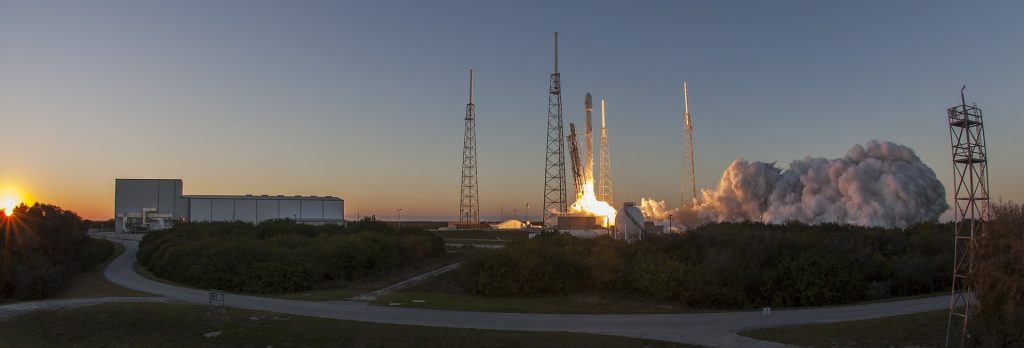
This will be the first crewed launch from US soil to the International Space Station ever since 2011. SpaceX will reportedly be using the Falcon 9 rocket to transport astronauts Behnken and Hurley as it tries its level best to cut unnecessary costs. In March, the Crew Dragon had circumnavigated the ISS, almost 400 kilometers above the Earth. However, the capsule contained only a mannequin inside and returned to the Atlantic after spending six days in space. Ever since, 2011 Americans have not launched any manned missions, with Russians handling most of the manned flights. This will be changed by this joint venture between SpaceX and NASA. SpaceX has made over 15 trips to the ISS for refueling the station ever since 2012. However, SpaceX is not the only private company that is helping NASA with space exploration, because even Boeing is developing their Starliner capsule, after having won a contract. The Falcon 9 rocket will launch from Complex 39A at the Kennedy Space Center in Florida with Dragon spacecraft onboard. If the Demo-2 launch proves to be successful, SpaceX will become officially certified to launch people into space.

Myspace

How Tom Anderson Grew to Become the World’s Most Popular Man By Finding Myspace

Social media took the world by a storm when it hit the markets in the early part of this decade, and the spark has grown to become a raging fire. With millions of people using social media on a daily basis, it has grown to become a billion-dollar industry. Here today, we will be taking a look at one of the most popular networking sites of the past-MySpace. This company became insanely popular, and then grew exponentially, before getting eclipsed by Facebook towards the latter part of its runtime. Take a look at how Tom Anderson who founded MySpace, grew to become one of the world’s most popular men.

About the Founder

Tom Anderson did his BA in English from the University of California, before following it up with an MA in Film Studies from the same university. He began his career as a product tester at XDrive in 2000, before dropping out and joining ResponseBase a year later. This company was then bought by eUniverse, and became Intermix a year later. Finally, in 2003 he and DeWolfe founded MySpace, which two years later was acquired by News Corp.

Founding MySpace

In 2003, employees of eUniverse felt that social media networking would grow to become a successful venture. They all had accounts on the networking platform Friendster and found the platform to be successful. They decided to use the same model and redesign it to be better. For instance, they stripped their design of Friendster’s less popular features and named the working prototype MySpace. All this designing and redesigning took only 10 days, and the first version of MySpace was ready. The company came to be, with Anderson serving as the CEO and DeWolfe being the President.

eUniverse gave the team everything they needed, including programmers, resources and even funding. The employees themselves became the first users of the networking platform, and they began recruiting new users. Since eUniverse had a massive contact list comprising of over 20 million individuals, the crew was able to spread the word regarding MySpace quite quickly and efficiently. This helped them drive a lot of traffic onto their platform, making it immensely popular, incredibly fast.

Their quick growth and surging popularity inspired Rupert Murdoch to buy the company in 2005 for $580 million, and he proceeded to take the platform globally. He grew the company into markets such as the UK and China, helping make MySpace an industry leader. At its highest, the company was valued at $12 billion, and constantly outperformed Facebook when it came to website traffic. However, soon enough they put a break on innovation, becoming stagnant in the process. This led to a massive growth slow-down, which Facebook capitalized on, and by 2008, Facebook succeeded in eclipsing MySpace.

Fall from Grace

Tom Anderson built a platform that completely revolutionized the way people share music and communicate with each other. However, even having 200 million friends and Rupert Murdoch as a boss didn’t help MySpace when Facebook grew phenomenally. At its peak, MySpace boasted of over 110 million users, the first time this had occurred in social networking. But, MySpace founder Tom Anderson believes that the company’s true peak came when it was sold to News Corp. Throughout its growth, the main issues that people had with MySpace was that it wasn’t very easy to use, lacked robust security feature and hadn’t clearly defined its scope.

What Could Have Been

The company rose from Los Angeles instead of the usual Stanford, which is the base of most of the world’s largest start-ups. While this made them unique, it also made it harder for the duo to build connections within the developer community. The platform found instant success thanks to its creative music initiative, which built a loyal fan base for the platform. Boss Murdoch then wanted the company to expand its video content creation and marketing. This led MySpace to curate an extensive list of licensed video content from their new owners News Corp and also other sources.

However, since News Corp regarded property rights as an important part of business relations, its growth was halted due to complications with licensing. According to Anderson, this prevented them from being the next YouTube. Also, MySpace turned profitable very fast, making close to $1bn in revenues in 2005. The company was making money before News Corp bought it, and for a company that was only four or five years old, it did much better than others of the same age.

Furthermore, the company’s obsession with developing everything on their own, made development difficult and slow. Hence, new features rarely came in, making the interface look old and outdated. Further trouble came in the form of hackers who hit MySpace badly using malware, spam and phishing scams. All of this led to a slow-down in growth and revenue generation, which led to the founding duo running into trouble.

Soon enough Anderson stepped down, with DeWolfe taking over as CEO. What followed was two major rounds of layoffs, with staff reducing by 30% first and later by 37.5%. It later went up for sale, later on, generating very low interest. Finally, the company was sold to Specific Media for a meagre $35 million with Justin Timberlake taking an interest. While MySpace fell from grace publicly, it was a pioneer in the field of social media networking and will be remembered in the years to come as a torch-bearer for the industry.

Nintendo

Nintendo Faces a Worldwide Shutdown in Services

Fans were left surprised and saddened by the fact that the Nintendo Switch’s online services are temporarily down. It seems that both the multiplayer services, as well as the Nintendo eShop facilities are not working for the time being. Here’s a look at why this has happened and what Nintendo plans to do regarding the same. multiplayer services are not working.

Officially Down

The company’s official Twitter account, which is in Japanese, has confirmed the news, by tweeting that the incident is true. The Twitter account also confirms that they have taken all the necessary steps to make sure that the site will be up in no time. The company has confirmed that repair work is underway regarding the website and portal. Furthermore, the company’s updated status confirms they are not able to connect to their services over their network. The message also urges users to try again later. The news also shows that the outage is worldwide and not specific to a certain area or nation. Also, the outage has affected various Nintendo services such as the Switch, 3DS, and Wii U. However, certain users have confirmed that while they are unable to access the eShop, many are being able to play the Rocket League online without any issues.

Aftereffects of COVID-19

Some experts believe that the Xbox Live and PlayStation services have suffered as a result of an increase in user base. The hard-hitting effects of the COVID-19 have left many people without work or school, meaning more people than ever before are turning towards entertainment facilities to stay occupied. This has put undue network strain on such services, leading to discrepancies and inefficiencies within the system. For instance, the gaming platform Steam, recorded a new all-time record for the number of users with 20 million people signing in last weekend. It is unfortunate that such an outage has occurred now when it is most needed with most people staying indoors to prevent the spread of the virus.

As more and more people choose to stay at home and avoid social gatherings, they are turning to online streaming services and video games to fill their time. However, it has not been confirmed whether or not this is the reason for the break-in service by Nintendo. But, most online multiplayer service portals are facing a severe network strain due to the excessive number of users. Both IGN and Downdetector have both stated that both the Switch Online and eShop are inaccessible to them. March 15 had also witnessed Microsoft’s Xbox Live network going down. However, this news comes at a bad time for Nintendo, who is coming out with their new release, Animal Crossing: New Horizons very soon. Fans are eagerly awaiting the services to start normal operation, and are hoping this does not delay the release of the new game. The outage seems to have occurred somewhere between 4:56 AM and 1:45 PM ET. The outage was experienced both in the UK, Japan, and the US, with Nintendo Mario Kart’s online facility being affected severely.

Other Failings

However, Nintendo isn’t the only tech company having problems keeping their services online. Last week, Microsoft was in the same position when the Xbox Live went down for almost 2 hours. Similarly, the gaming chat application Discord has been facing difficulties in recent times as well. This definitely comes as bad news for all the people who are self-quarantining themselves in the wake of the COVID-19. While nothing has been officially stated, certain players tweeted today morning that they were able to open the eShop. This suggests that at least some of the services were back on track, much to the delight of fans from all over the world. However, if you are still unable to access the eShop or any other online facility, do not worry, because Nintendo is doing all it can to fix the issue.

Facebook’s Oculus Quest

Facebook’s Oculus Quest to Get a New UI Revamp

The coronavirus has impacted the tech world the same way it has hit the healthcare industry. The presence of the COVID-19 and its aggressive transmission across Europe and the US, has led to the mass cancellation of conferences. Across the world, major tech companies are having no option but to cancel their developer conferences and meetings. Some of the major conferences canceled have come from Facebook, Google, and even the Microsoft Build conference. However, Facebook seems to be compensating by indulging in other announcements. While their Game Developers Conference could not take place as planned, Facebook is now creating ripples by making Oculus-related announcements. Here’s a look at everything you need to know regarding these announcements and what this means for the tech world.

Game Developers Showcase

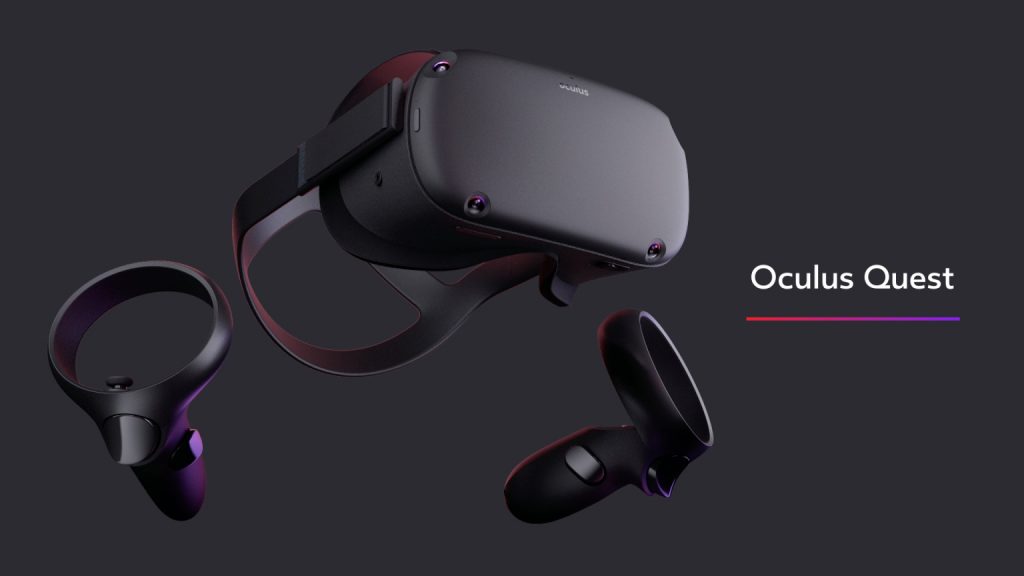
Facebook has been making announcements regarding the Oculus series via a Game Developers Showcase. The biggest news which has come through is that Facebook’s Oculus Quest will be undergoing a huge UI change which will help the company implement more VR functionalities. The UI now works through a somewhat confusing menu system that floats around a space that resembles a virtual living room. This menu appears whenever the user presses the main Oculus button. However, the new menu will get rid of this style, and replace it with a more minimal, and easily navigable menu. Also, this new system will bring all the applications available under one access system, which will make it easier for the user to access any application, right from the home screen. The new menu will also enable users to access the Quest’s volume and brightness controls. The immersive overlay also helps users access several functionalities such as live streaming, casting and approving updates.

Additional Features

Furthermore, the new system will host a new feature that supports multi-window functionality within the Quest’s in-built browser. This will help users rearrange their windows, open new ones and close existing ones with ease. Therefore, from now on users will be able to watch a football game in one window while handling their work emails in the second one and even check their Facebook profile on the side using the third screen. Also, the company has announced that the same feature will soon be available for AppStore and Chats. Facebook explained that these added functionalities would help the system support new VR technologies. The VR set of the future requires people to be able to multitask with ease, while also staying connected with loved ones efficiently. Everything from the gaming industry to the entertainment field will be transformed by this new update and VR will finally grow to become the next biggest thing in computing.

The Oculus Quest

The Oculus Quest is essentially a game console now that is highly self-contained, which is exactly how Facebook markets this product. Over 20 titles released by them has brought in more than $1 million in revenues for Facebook, just from Quest alone. Also, the company says that studies show that almost 90% of the people who bought the headset in the holidays, had never owned a product by Oculus before. On Christmas day alone, Oculus stores sold merchandise worth over $5 million, as per Facebook CEO Mark Zuckerberg. Hence, Facebook believes that this update will usher in a new age for the company, with more people getting introduced to the world of VR as a result of the product.

These new updates will start hitting the stores by the end of this month. All users have to do to enable them is go to the Settings, click on Experimental Figures and then switch the update on. In 2019 alone, the company boasted over 45,000 employees and this will only increase as the company keeps investing in the company to expand its VR capabilities. Also, supporting these claims is a report from Apex Construct which revealed recently that their game’s Quest version has been the best performing when compared to other versions. Similarly, the Quest version of Red Matter sold more than its Rift version in as little time as a week.

The success of Quest can be primarily associated with its accessibility, fast updates, reliability, and portability. This huge success has also lowered the entry barrier into the world of VR, helping more and more people get introduced to this concept. The demand has been so high that Facebook has failed to match production to demand. The headset went out of stock several times in the past couple of months with the holiday season increasing sales tremendously. Furthermore, the COVID-19 outbreak has had a significant impact on production, leading to a decline in the availability of not just the Quest, but also various other electronics products. However, this new update has excited fans from all over the world, who will now be closely watching the tech space to gather more updates regarding the release of this new version.