Your Tech Story

Annasha

Annasha Dey is an NIT student, who apart from studying engineering is also a content writer. She has a great interest in photography, writing, reading novels, and travelling as well. She is a foodie who loves socializing and hanging out with her friends. She is also a trained Kathak dancer and a big fashion enthusiast. Dey also loves watching TV series, which includes F.R.I.E.N.D.S. and Big Bang Theory. To be a better writer she prefers to read more

Graphcore

Simon Knowles : A Pioneering Engineer in the Field of AI-ML

In the 21st century, Artificial Intelligence and Machine Learning have spread a cloak of mystique around the world that no one wants to drop off. Today, the prime area of learning, research and improvement have been revolving around these two things which so far seems to the two most important and necessary development of science.

With science already bringing a new wave of inventions to the shore of computation, Simon Knowles is ruling the world with his idea of creating chips for AI and ML which will make the computer’s brain work more like a human’s brain.

Simon Knowles is a famous entrepreneur and an engineer who is the co-founder of Graphcore, a semiconductor company that he founded along with Nigel Toon. Knowles’s main aim is to create an IPU (Intelligence Processing Unit) that can allow humans to explore the scope of AI more freely and not just scraping the surface.

Education and Early Career of Knowles

Simon Knowles
Image Source: http://scaledml.org

Simon Knowles graduated with a degree in Electrical Engineering from the University of Cambridge. After graduating, he went to study early neural networks at a UK government research lab.

He co-founded his first start-up, Element 14, a wireless processor developing company in the 1990s, which came under the acquisition of Broadcom Inc. in 2000. He sold the company for $640 million and co-founded his second start-up, Icera, in partnership with Toon. The company was established for mobile chip making in 2002, which later was acquired by Nvidia for $436 million.

The Idea of Graphcore

After selling Icera to Nvidia Corp. in 2002, both the co-founders were trying to settle on one single idea, which could be their next field of research or next chance to make billions. Not being able to make a choice, Knowles decided to attend the series of lectures at Cambridge University. One day, he attended the presentation of Steve Young, a Cambridge professor of the Information Technology department, who was elaborating the limits of computational dialogue systems. Young is also known to invent a speech processing service which is now used in Siri.

While Knowles listened to Young’s speech, the former asked him multiple questions about numerical precision and energy efficiency. But, it seemed like Knowles’s questions were out of the field for Young, but that is where Knowles’s interest was stuck as he wanted to invent something instead of just swallowing the lump of information.

Few days after the lecture, Young contacted Knowles to tell him that his students found out that they were using 64 bits of data for one single calculation. They realized that this can be replaced by 8 bits data per calculation, as Knowles suggested in the lecture, which will save the energy that is consumed before. But the calculations won’t be that precise. Well, Knowles said that was his entire idea to manipulate the brain of the computer and make it more human-like. Knowles, in one of his interviews, said that if they could build this kind of processor, the performance factor will be increased by one thousand.

Everyone including, Young and Toon, was very impressed with his idea, and hence, Knowles and Toon decided to found Graphcore, to build this new kind of IPU. They started raising capital from 2013 and were finally able to launch Graphcore in 2016.

Success of Graphcore

After carrying out thorough research, for three years, to create energy-efficient and a cost-efficient chip, that can harness all the power at one single time, but uses less energy than a GPU, they designed a chip with 1,216 processor cores with 24 billion transistors. This chip was manufactured in 2018 and turns out, it was able to detect 10,000 different images per second.

The company is still working on these chips and making it recognize more complex data and not just simple objects. Knowles’s main goal is to provide the machine with lots of data, and the machine should find out a way to complete the given task. Knowles’s dream to make machines behave human-like is bringing a new era, an era of Artificial Intelligence.

The first funding round of Graphcore was led by Robert Bosch Venture Capital in 2016, followed by a round B funding in 2017 by Atomico, and a few months later, by Sequoia Capital. In 2018, Graphcore raised $200 million in series D funding from investors like Dell, Microsoft and Samsung, which resulted in its net worth to $1.7 billion in December 2018. The company also announced that it might hit $50 million revenue this year.

Graphcore also provides server blueprints to many big companies to guide them on how they should manufacture next-generation computers.

Michael Aldrich inventor of online shopping

Michael Aldrich : A Connoisseur in the Entrepreneurial World and the Founder of Online Shopping

In the biggest success stories of start-ups of that, we hear from around the world today would have not come into existence today, if online shopping did not exist. From the prospering online shopping sites, like eBay, Amazon, Flipkart, to the very small newly started e-commerce sites should be grateful of the English entrepreneur who came up with the idea of online transactions. That great innovator is none other than Michael Aldrich, who developed e-commerce from scratch in the late 1970s. With an experience of 28 years in the IT sector, he worked for reputed companies before inventing teleshopping (today known as online shopping).

Early Life

Born into a family living in Hertfordshire, England, on 22nd August 1941, Aldrich did his schooling from Clapham College, London. He was a very bright student and even received a scholarship to study history at the University of Hull in 1959. During his time there, he met Sandy Kay Hutchings and got married to her just before completing his graduation. So, Aldrich already established a family before starting his career.

Many say that getting committed and entering into married life at a very young age can create difficulties and stops you from giving your best. But, in this case, it’s diametrically opposite.

Beginning of Aldrich’s Career

Michael Aldrich inventor of online shopping
Image Source: alchetron.com

Aldrich worked for Honeywell and Burroughs in the sales and marketing department of the company for almost 15 years. After that, he joined Redifon Computers, which was a part of the UK Rediffusion Group of Companies. The Rediffusion Group manufactured televisions as well as computers, but Aldrich worked for the department of computer manufacturing.

This is when the journey of the invention of online shopping (he named it teleshopping) began.

The Story

One day in the year of 1979, UK Rediffusion Group sent a colour television to Aldrich’s office, but he didn’t pay much attention to it, as his main concern revolved around selling computers. This television came with a new service called Prestel, a paid commercial service that would be delivered through a telephone line.

Seeing no interest of Aldrich in that television one of the engineers in his company, Peter Champion, decided to learn more about this new TV, and its new feature. After studying about the TV for a few weeks, he told Aldrich that the television came with an auto-dialer that could hold four telephone numbers. He gave Aldrich the idea of building such a controller for a computer, and then, connecting the television. Aldrich noticed his point, but he didn’t give it much of thought at that time.

After a few days, when Aldrich was complaining about the weekly tour to grocery shops, the idea of Peter hit him hard. This was when he thought of connecting the television to the supermarket itself and get the groceries delivered to home. Without wasting a single second, Aldrich started working on this idea.

After days of research and writing papers, finally, a prototype TV to test this real-time transaction process was connected to one of their computers, and the test was successful. There wasn’t any year of research going on to support this idea of teleshopping, and hence, it seemed like a sudden scientific mutation took place in the communication world.

Once it was developed, Aldrich needed to set up a market and build up demand as the entire world wasn’t aware of how to use this new system.

After Reality Hit Hard

Aldrich found himself in a total mess, as he invented a product, but there wasn’t a market to sell it. So, after the invention, he tried reaching out to people for real feedback and everything was done in sheer privacy as their product wasn’t officially launched.

He went to a conference in New Orleans, kept it low and received positive feedback from the people. Returning back to the UK, the company designed the multi-port controller, built the computer interface software, and finally, launched it on April 1980. The entire world was amused by the idea of shopping from home, but no one was actually able to interpret how it worked. So, Aldrich hosted a press conference, and again, launched the product in July 1980.

Marketing Strategy

After launching the product, the idea was very clear to Aldrich that he would sell this to big corporations so that he could connect the agents, customers and distributors directly to the system without the involvement of a third party. He divided the market into leaders and followers and approached the leaders with this product. This business idea was later known as business to business online shopping (B2B).

The company had almost no competition, so it flourished for the next ten years after its launch.

After the great invention

In 1984 Aldrich became a fellow of the British Computer Society, and a Chartered Fellow in 2004. He was also awarded an honorary degree of Doctorate of Letters by the University of Brighton in 2004. In 1987 he was made a Freeman of the City of London, England. Aldrich became the Chairman of Tavistock Institute of Human Relations in 1989. In 2010, University of Brighton named an award after his name, which is given to the talented students excelling in e-commerce.

Aldrich died on 19th May 2014.

nazara technologies

Nitish Mittersain : The Founder of Leading Mobile Games Publishing Company in India, ‘Nazara Technologies’

The thrill gaming world brings to us, especially to the youngsters, is boundless. To plan a start-up based on gaming technologies brings with it a great potential to flourish in future. But, in a country like India, the major part of the crowd doesn’t support this unorthodoxy. Indian families always oppose the idea of gaming and even being a part of it. So, thinking about a gaming start-up is next to being delusional.

But, breaking all the social norms Nitish Mittersain, a boy from a typical Indian Marwari family, made bigger plans and established his gaming company, Nazara Technologies. Nitish Mittersain is an entrepreneur who founded India’s leading mobile gaming company in 2003. He was always passionate about video games and so decided to build his future around his interest without any hesitation.

Early Life of Mittersain

Since Mittersain belonged to a Marwari family, he was expected to join his father’s textile business after he completed a degree in MBA. But Mittersain as a very young kid was strongly attracted to the world of gaming and coding. His room used to be full of modems, video and computer games of all kind. Thinking that every kid loves to play video games, his father gifted him a ZX Spectrum, but little did he know that this is just the beginning of something incredible and unexpected. Receiving this gift was just like a spark that ignited the passion of gaming in him, and he coded his first game at an age of seven.

Nitish Mittersain
Image Source: glaws.in

During his college life, Mittersain started a bulletin board service which helped him connect to many influential and famous people over the internet. And this is how he got an opportunity to come across the 1960s actor, Shashi Kapoor. Apart from being known as a talented actor, he also showed great interest in technology and the internet. After his cinematic career, Kapoor engrossed himself in spreading of technology, and that’s how both, Mittersain and him, hit a common ground to discuss. Mittersain spoke to Kapoor almost every day, regarding the perfect blend of entertainment and technology. And, Kapoor was the one who inspired him and gave him ideas to start his own business. Getting motivated enough, Mittersain decided to launch his gaming company, Nazara Technologies, when he was still in college.

Beginning of the New Business

Nitish Mittersain founded Nazara Technologies in 2000 in Mumbai. But land swept off from under his feet after an unfortunate incident took place. The first dotcom crash in that very year made him question his decision repeatedly and whether to back off or not. But, he didn’t want to shut down his business as it was the doorway to his dreams. He tried his best to survive the bubble burst and with some clear strategies and a little luck he finally survived the crisis.

Stepping Ahead of Others

Being an entrepreneur with an innovative idea, he was already one step ahead of his competitors. And, in the early 2000s, there weren’t many companies in India that planned to develop gaming technologies. So, using it to Nazara’s advantage, Mittersain’s first strategy was to invest in advertisement and brand campaigning. He knew that once it captures the attention of mass, investors would line up in front of his door. So, in 2004, he approached Sachin Tendulkar, the legendary cricketer of that time, to come on board. After months of requesting and convincing, Tendulkar finally made a deal with Nazara Technologies. This strategy of his stirred the existing competitors away from his way.

Soon, Nazara came into a partnership with Electronic Arts (an American video game company) and brought it to India. Once, the company started taking up a good and faster speed, Mittersain planned to expand the market with stronger and bigger partnerships.

Keeping aside Nitish Mittersain’s passion for games, when he developed the company, his dream was as simple as that to make huge profits. But, he also wanted his company to play fair and square in the market, and it is appreciable that even after 19 long years of sustaining, his company doesn’t have any lawsuit against it.

The success of Nazara Technologies

Today, Nazara is doing business in 61 different countries, with more than 130 million monthly visitors. In 2017, nine in-house games of Nazara were listed among the top three games by download on Google Play Store.

Recently, Nazara has acquired 27.42% minority stake in Crimson Code, which will allow the company to offer real money on winning live quizzes. In 2019, the company acquired a 67% stake in Sportskeeda and now expecting an IPO in early 2020.

CMOS image sensor

Eric Fossum : The Inventor of Active Pixel Sensor

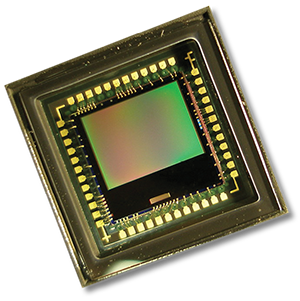
Due to the high demand for mobile phones and digital camera, the production and development of image sensors have become an integral part of existing technology. And, among all the image sensors developed till date, active-pixel sensor (APS) is the widely used one, especially CMOS (complementary metal-oxide-semiconductor) APS. These image sensors are extensively used in smartphone cameras, digital pocket cameras, digital single-lens reflex cameras, and probably, in every other present-day camera you can name.

The history of these image sensors goes back to 1985 when Tsutomu Nakamura started working on the charge modulation device active pixel sensor. But it was Eric Fossum, who brought a giant wave of development in this field. So, next time you take out that pocket camera to take photographs, it’s Fossum you should be thankful for.

Early Life and Education of Eric Fossum

Born into a family in Simsbury, Connecticut, Fossum went to a local public school. From a very tender age, he developed an interest in science and engineering. So he spent the Saturdays at Talcott Mountain Science Center in Avon CT. In 1979, he graduated from Trinity College with a B.S in physics and engineering, followed by receiving his PhD in electrical engineering, in 1984 from Yale University.

Fossum’s Academic Career, Research and Invention

eric fossum
Image Source: yale.edu

After receiving his PhD, Fossum joined Columbia University as a professor in 1984. During his time at the university, he, along with his students, researched on CCD (charge-coupled device) focal-plane image processing and high-speed III-C CCDs. In 1990, Fossum joined the NASA Jet Propulsion Laboratory in California Institute of Technology and continued his research on the image sensor field. There he developed a modified version of the image sensor with intra-pixel charge transfer and un-pixel amplifier with more modifications and additional features. While he was working in the laboratory, Daniel Goldin, the then NASA-Administrator, wanted something faster, better and cheaper for the space missions. This led Eric Fossum to come up with CMOS APS, which today is incorporated in phone cameras, DSLRs, medical equipment, and automotive safety systems, etc.

According to Fossum, the growth in technology during the early 1990s was at a very slow rate, which led him to establish Photo bit Corporation along with his then-wife, Sabrina Kemeny, to develop and commercialize APS technology at a faster rate. In 1996, he joined the board as chairman and also as the chief scientist. In 2000, Fossum became the CEO of the company, which after a year came under the acquisition of Micron Technology. Even after the acquisition, he remained the part of the company and was named a Senior Micron Fellow. But in 2003, Fossum left Micron. In 2005, he joined at SiWave Inc. as the CEO and worked with the company for two years.

Eric Fossum, in 1986, founded the IEEE workshop on CCDS, which was later renamed as International Image Sensor Workshop.

He also had a sheer interest in robotics, and hence, he partially sponsored the Trinity College Fire-Fighting Robot Contest in 2007. In 2010, Fossum joined the Thayer School of Engineering to teach and conduct research on Quanta Image Sensor and also to coordinate the PhD Innovation Program.

Achievements

Throughout Fossum’s academic career, he had been a recipient of ample of awards. His was in 1984, which was the Yale’s Becton Prize. In the same year, he was honoured with the IBM Faculty Development Award. He also received the National Science Foundation Presidential Young Investigator Award in 1986, and within the next decade, he bagged NASA Exceptional Achievement Medal. And, this is just a mere preview of his glorious achievements.

Recently, in 2017, Fossum was honoured with Queen Elizabeth Prize for Engineering, which is probably the biggest prize for an engineer. It’s a cash prize of £1 million, generally given to the engineers for inventing something which is globally beneficial.

Life after Retirement

Fossum founded Photobit in 1996 followed by another company Siimple within few years. But, he stepped down from every position, and finally, retired from his business life in 2010. He then moved to New Hampshire.

He was quite happy with his decision to leave his entrepreneurial life because he decided to embrace the retired life and pursue teaching. And thus, he joined Thayer School of Engineering to stay active in the journey of innovation and contribute to the technology as far as he can.

sql

The Story of two Genius Scientists Behind SQL

Donald D. Chamberlin and Raymond F. Boyce are the original developers of the SQL Server, a product for storing and managing data. Both of them started working on it in the 1970s, and the first version of the software was released in 1974. SQL (Structured Query Language) was built as a domain-specific language to be used for accessing and manipulating data, data query and much more.

Apart from SQL, Chamberlin and Boyce are well known for their contribution in XQuery and Boyce-Codd normal form respectively.

Donald D. Chamberlin

Born in 1944 in San Jose, California, Chamberlin attended Campbell High School. He pursued electrical engineering in Harvey Mud College and later, completed his master’s as well as a PhD degree from the Stanford University. While he was in his college, he managed to land an internship in IBM Research in New York, and it is the same place where he started working after his PhD.

donald d chamberlin sql
Image Source: computerhistory.org

In the 1960s, at the time Chamberlin was in college, Computers were merely reachable by commoners. In fact, at that time, Harvey Mud College also had only a single computer, an IBM 1620. Chamberlin got lucky to have access to the computer and managed to write a program for tic-tac-toe for a human player on a keyboard.

During this time, two significant figures, Charlie Bachman and Ted Codd, were making exceptional contributions to the database management system. When Chamberlin joined IBM, one of IBM’s main concerns was to launch an efficient optimizing compiler for Codd’s Relational Model of data. Chamberlin was a part of the group working for the prototype, and hence, he was sent to CA, where he met Raymond F. Boyce.

Raymond F. Boyce

Boyce was born in 1947 and grew up in New York. He graduated from Providence College in 1968 and received his PhD from Purdue University in 1972. After receiving his doctorate, he also joined IBM and worked on database projects. Shortly, he came up with Boyce-Codd normal form in collaboration with Todd and was later sent to CA to work on the optimizing compiler.

And, when he met Chamberlin in CA, both of them set their course to develop SQL.

The Idea of SEQUEL

Raymond F Boyce Sql
Image Source: alchetron.com

SEQUEL stands for Structured English Query English which is one of IBM’s original database management systems.

While they were working on Codd’s relational ideas, they found one major drawback that made this relational model look very complicated. Since Codd was a mathematician, he explained everything with reference to the Cartesian plane and used many complex mathematical symbols and relations to elaborate his models. Since they were working to improve the data management system, both Chamberlin and Boyce thought of coming up with a language that would simplify the complexity of his models because Codd’s ideas were undoubtedly too strong. So, both of them started working on writing a language and named it SEQUEL for everyone (non-mathematicians) to use it using simple terminologies.

When they came up with SEQUEL, IBM didn’t have any product plan based on this language, so the company suggested them to produce the paper at a technical conference in Ann Arbor. Boyce went to the conference and realized that the relational database system (RDBMS) is truly the future of database management in every field. Soon after Ray returned from the conference, he died of a brain aneurysm.

Success of SEQUEL

IBM lost one of its greatest computer scientists, and Chamberlin, unfortunately, lost his partner. But, this didn’t hinder the growth and exposure of SEQUEL. Once the paper was released, IBM started working on testing the usefulness of the language in the practical world. They started building prototypes of the product (system R prototypes) based on this language. A team of 12 IBM programmers was made to work on this system R.

Products like System/38, SQL/DS and DB2 were commercially available during the late 1970s and early 1980s. After SEQUEL started launching commercial products, the shorter version of the commercial name became SQL.

During the early 1980s, the prices of computers fall unexpectedly, thus, allowing every organization to shift their paper records to a computer database. This led to the growth of database management systems, having a grip on the market and opening a vast source of profit for SQL.

Oracle also started making SQL database systems for the U.S government and sold them successfully. The language becomes so easy and efficient to command that the government launched FIPS 127, a federal database system that used SQL.

By 1986, both ANSI and ISO accepted SQL as the database language, and since then, new versions of it have been popping up into our systems.

keka

Vijay Yalamanchili : The Founder of the Best Payroll and HR Software in India, ‘Keka’

We are often ambushed by many software companies in the market while searching for the best. Be it a tool for project management, your digital assistance, or an HR software, we often find ourselves in a huge dilemma. So, to reduce one of your conundrums, YourTechStory brings to you the flabbergasting story of Keka, the best HR software in India till date.

Vijay Yalamanchili, the founder of Keka, solely founded the company out of sheer disappointment and frustration from working with HR software not up to the mark. He found that the HR software available in the market have a very poor user interface, which leads to a substandard experience for both the HR and the employees. So, to contribute to the HR community of India, Yalamanchili built the software, Keka HR in 2015. Apart from HR software, Keka also has payroll software, applicant tracking software and much more.

Early Life and Career of Yalamanchili

Yalamanchili is mainly a product designer and architect by profession. He pursued his B.Tech in Electronics and Communication Engineering from JNTUH College of Engineering, followed by an MS from the University of Delaware.

Vijay Yalamanchili keka
Image Source: iamwire.com

After completing his MS, Yalamanchili started working with Microsoft in 2003 as a Software Development Engineer. He worked there only for three months.

In August 2006, he co-founded Fotolink Media, a visual image search platform used for product marketing by brands using mobile devices like mediums. It was one of the first mobile start-ups in India. He left the company after 4.5 years and founded Ramp India in 2006. The company was developed to provide solutions and build products for start-ups in India. After working in Ramp with a strong architectural team and delivering over 30+ products, Yalamanchili founded Technovert in July 2012. The zeal for excelling in the world of technology made Yalamanchili establish software solution companies one after the other. He co-founded Technovert with Sashi Pagadala. The company provides services in India, USA and Dallas.

By this time, Yalamanchili suffered enough with the HR software and founded Keka HR in 2015. It’s a Hyderabad based start-up which put a significant impact on the market when it got released, as it provided a better user experience to people.

Strategies to Outdo the Competitors

By the time Yalamanchili founded Keka, he was experienced enough to understand the major flaws in the other HR software. So, his main focus was on improving quality.

Yalamanchili’s first target was to make the user experience better because if the user experience degrades, after a point of time, it would ultimately ruin the brand name, which had already happened to all the other HR software out there.

Another major fault that Yalamanchili noticed in other HR software was the tracking of attendance. No existing software before Keka directly synced biometric devices to attendance log. Hence, it was very tiresome for the HRs to update it manually in the web browser. Keka got a very big bonus point by adding this feature. Though it took almost 1.5 years to build a software like this, it paid off well.

Keka also implemented well-designed security and privacy features that allowed the customer to get notified even if a Keka Customer representative is accessing their account. So, Keka itself also cannot sign in to customer’s account without their consent.

Instead of running behind more customers, Keka invested more time with its existing customers to improve their products until and unless it gave a smooth performance. It is very important to make the customers feel worthy and important because if they feel so, the scale will rise up automatically.

Success of Keka

It is nearly unbelievable that a company which acquired around 450 clients in less than a year is self-funded, given that Keka includes reputed clients like Godrej, Honda, Saavn and ClearTax. Keka is the recipient of the Hottest Start-up of Hyderabad Award and is in Top 3 in terms of bagging new customers with a comparatively smaller team with respect to its competitors.

Keka wanted to go old school, and hence, it tried becoming self-independent which turned out to be surprisingly successful. The company wanted to develop software with a touch of Indian style, and hence, they named it ‘Keka’ which means awesome in a native South Indian dialect. And, guess what? It just proved to be worthy of the name since the very first day.