Your Tech Story

Technology

crypto

What makes a crypto asset a security in the US?

The recent legal actions taken by the U.S. Securities and Exchange Commission (SEC) against prominent crypto platforms Coinbase and Binance have sparked a significant debate regarding the classification of digital tokens as securities.

Accusing these platforms of operating illegally and evading disclosure requirements, the SEC’s lawsuits seek to determine whether certain cryptocurrencies should have been registered as securities. As the United States leads the regulatory crackdown on cryptocurrencies, this case becomes a crucial test of the SEC’s jurisdiction over the industry.

Crypto
Image Source: zawya.com

The SEC alleges that Coinbase allowed users to trade at least 13 crypto assets that should have been registered as securities, including tokens like Solana, Cardano, and Polygon.

However, Coinbase and other industry players vehemently deny listing any securities, contending that most cryptocurrencies, which operate on blockchain networks, do not meet the definition of securities under U.S. law.

Industry participants argue that the SEC’s determination of whether digital assets are securities has been vague and inconsistent, making it challenging for market players to navigate regulatory requirements.

Also Read: How to install the macOS Sonoma public beta?

To determine whether crypto assets should be classified as securities, the SEC relies on the Howey Test. This test stems from a landmark 1946 U.S. Supreme Court case involving investors in Florida orange groves.

It established that an investment involving money in a common enterprise with profits derived solely from the efforts of others falls under the definition of an investment contract or security. This precedent empowers the SEC to intervene when investments resemble this type of arrangement, indicating the potential classification of certain cryptocurrencies as securities.

Previous Rulings and Settlements (approx. 120 words): In cases that have reached court, judges have generally sided with the SEC, determining that specific crypto assets are securities. These decisions have been based on developers’ statements linking the value of digital assets to the efforts of others, thereby establishing that investor profits depend on external factors.

Furthermore, courts have concluded that investors participate in a common enterprise when their funds are pooled by the token issuer and used for system development. Many crypto-related cases brought by the SEC have ended in settlements, with companies paying fines and committing to comply with U.S. securities laws, sometimes resulting in companies leaving the U.S. market or discontinuing their crypto projects.

The outcome of the SEC’s case against Ripple Labs over the cryptocurrency XRP holds substantial implications for the classification of crypto assets as securities. Ripple argues that there was no common enterprise involved since the associated blockchain was fully operational before XRP was ever sold.

In contrast, Bitcoin is generally not considered a security due to its anonymous and open-source origins, where investor profits are not dependent on the efforts of developers or managers. The Ripple case’s resolution will likely provide further clarity on the SEC’s stance regarding securities classification.

The ongoing legal battle between the SEC and major crypto platforms like Coinbase and Binance centers around the classification of cryptocurrencies as securities. As the industry calls for clearer regulations and guidance, the outcomes of current cases will significantly shape the regulatory landscape for the U.S. crypto industry.

macOS

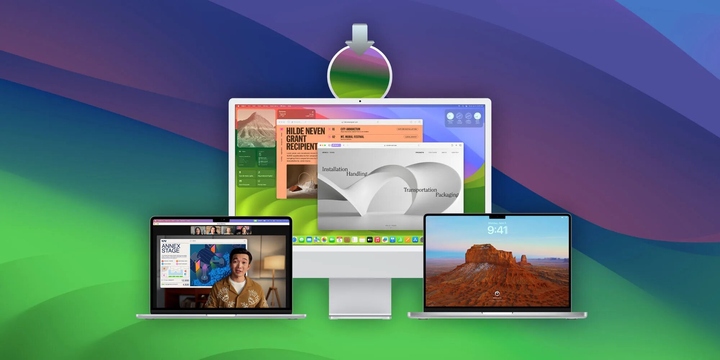
How to install the macOS Sonoma public beta?

Apple regularly releases beta versions of its operating systems to allow users to test new features and provide feedback before the official release. If you’re eager to try out the latest macOS Sonoma public beta, follow these steps to install it on your Mac. However, keep in mind that beta software may contain bugs and compatibility issues, so it’s advisable to back up your data before proceeding.

Before installing any beta software, it’s crucial to create a backup of your data using Time Machine. This ensures that you can revert to a stable version if any issues arise during the beta installation process.

macOS
Image Source: 9to5mac.com

Ensure that you have approximately 20GB of free space on your storage drive before attempting to install the beta. This ensures that you have enough room for the installation process.

Open Safari and navigate to Apple’s beta software portal. If you haven’t previously installed a public beta, you’ll need to sign up for access using your Apple ID. If you have already enrolled, click “Enroll Your Devices” in the top-right corner of the webpage. On the beta software portal, click on the macOS option, which is located in the center of the page.

Also Read: What is Netflix’s new ‘Profile Transfer” feature?

Scroll down the page until you find a button that says “Download the macOS Public Beta Access Utility.” Click on it to download a .DMG file. Once the download is complete, run the .PKG file within the disk image to sign up for receiving beta updates. After launching the installer, it will check for a Time Machine backup. If no backup is detected, a prompt will appear reminding you to perform a backup before proceeding.

Once you have completed the above steps, open the System Preferences app and navigate to Software Update. If it doesn’t open automatically, manually open it.

If you’re enrolled in the beta program, you should see a message stating, “This Mac is enrolled in the Apple Beta Software Program” below the Software Update icon. Note that the download may not be immediately available, and you’ll receive a notification once it is ready.

The updated file will take some time to download. Once the download is complete, click on “Upgrade Now” and follow the on-screen instructions to install the macOS Sonoma public beta on your Mac.

Remember, beta software is still in development, and unexpected issues may arise. It’s advisable to install the beta on a secondary machine or create a separate partition on your primary machine to keep your stable macOS installation unaffected. This allows you to test the new features without compromising your daily workflow.

By following these steps, you’ll be able to install the macOS Sonoma public beta and explore the latest features and improvements Apple has to offer. Enjoy testing the beta and providing valuable feedback to contribute to the development process!

xAI

Elon Musk launches AI firm xAI as he looks to take on OpenAI

Elon Musk, the billionaire entrepreneur, has introduced his highly anticipated artificial intelligence startup called xAI.

The team behind xAI consists of engineers from major U.S. technology firms, which Musk aims to challenge in his quest to create an alternative to ChatGPT. Musk, already serving as the CEO of Tesla, SpaceX, and the owner of Twitter, has been vocal about his concerns regarding AI and has advocated for its regulation.

xAI
Image Source: arabnews.com

He has expressed worries about the potential “civilizational destruction” that AI could bring. In a recent Twitter Spaces event, Musk outlined his strategy for developing a safer AI. Instead of directly programming morality into the AI, xAI plans to create an AI that is “maximally curious.”

According to Musk, AI should strive to understand the true nature of the universe, as this approach is crucial for ensuring AI safety. He believes that an AI that is focused on humanity is more interesting and beneficial than one that is not. Musk also predicted that superintelligence, which refers to AI surpassing human intelligence, will emerge within the next five to six years.

Also Read: Meta now lets you make video calls using a cartoon avatar

While Musk was a co-founder of OpenAI, the company responsible for ChatGPT, he stepped down from the board in 2018. Interestingly, Microsoft is one of the investors in OpenAI. The xAI website announced an upcoming Twitter Spaces event scheduled for July 14.

The xAI team comprises experienced engineers and researchers, including individuals such as Igor Babuschkin, formerly of Google’s DeepMind; Tony Wu, who previously worked at Google; Christian Szegedy, a former research scientist at Google; and Greg Yang, previously associated with Microsoft.

In March, Musk registered X.AI Corp as a separate company in Nevada, where he serves as the sole director and is accompanied by Jared Birchall, the managing director of Musk’s family office, as the secretary.

Musk had previously mentioned his intention to develop TruthGPT, an AI-focused on seeking maximum truth to rival Google’s Bard and Microsoft’s Bing AI, both of which aim to comprehend the nature of the universe.

Generative AI gained significant attention with the launch of OpenAI’s ChatGPT, which preceded the introduction of Bard and Bing AI. Dan Hendricks, the director of the Center for AI Safety, will provide guidance to the xAI team, focusing on AI risks.

Although xAI is a distinct company from X Corp, it plans to collaborate closely with Twitter, Tesla, and other companies, as mentioned on its website. xAI is currently seeking skilled engineers and researchers in the San Francisco Bay Area.

video calls

Meta now lets you make video calls using a cartoon avatar

Users of Messenger and Instagram may now answer as well as initiate video calls using their avatars, according to a recent announcement by Meta. The business claims that customers will be able to participate in video chats even when they are not ready for screen time due to the latest capability.

As a consequence, you and your peers may converse and stare at each other on an animated video conference without really seeing one another.

video calls
Image Source: mashable.com

“We’ve all been there: A call comes in but your hair looks like a hot mess,” Meta wrote in a blog post. “Or you’ve just been bawling your eyes out while re-watching From Scratch. Sometimes, we’re just not camera-ready. Wouldn’t it be great if there were a third option between camera-off and camera-on to let you feel a little more present on the call? Cue your Meta Avatar.”

Source: techcrunch.com

For those who prefer not to show their faces during some video calls, the concept of making real-time conversations behind your avatar may be an enjoyable twist. Furthermore, when you might simply make a phone call to a colleague or loved one, it could seem a little strange and disturbing to interact that way.

Android, as well as iOS, have access to the new features.

The announcement made yesterday included some further details on avatars that Meta provided. The business said that it is developing a simpler method of creating characters on WhatsApp and Facebook where you’ll be able to snap a live picture and get an avatar suggestion based on your selfie. You can select one of these alternatives and further customize it to best reflect your personality.

Also Read: Meta’s Threads Is Here. What It Is and How to Use It

Additionally, Meta stated that animated character stickers may now be shared in Fb comments, Instagram 1 on 1 conversation threads, Story posts on Instagram, and Facebook Reels as well. You can share stickers that depict your avatar performing specific behaviors, such as dancing or slowly clapping.

Meta is also introducing stickers that will let users’ avatars interact with those of their friends. Now that you may tag a few people in Facebook Stories, your avatars will co-appear in a sticker with those of your pals. With the new “Social Stickers” feature, you may share stickers with only one buddy in 1:1 conversation threads.

“No one wants to look like a cake pop, and now, you don’t have to,” the company wrote in the blog post. “We’re standardizing the look of our avatars across all our platforms, so the way you show up in VR will match how you show up on Facebook, Instagram, Messenger, and WhatsApp. Not only does that mean your avatar will look a little more realistic, it also means you’ll be better able to show off your ’fits since the focus won’t be drawn to your comically oversized noggin.”

Source: techcrunch.com
Profile Transfer

What is Netflix’s new ‘Profile Transfer” feature?

Netflix has announced an update to its Profile Transfer feature, allowing users to transfer their profile preferences to an existing account instead of creating a new one.

In a recent blog post, Netflix stated that the updated feature is now available and no longer requires the creation of a new account. The company described the update as a “much-requested feature” and confirmed that it would be rolling out globally to all members. Users can easily transfer their profile preferences by selecting the profile icon and choosing the “Profile Transfer” option.

Profile Transfer
Image Source: technosports.co.in

From there, they can select “An Existing Account” and enter the email address and password for the account they wish to transfer their profile. Once the transfer is complete, the member will receive an email notification informing them that a profile has been moved over to their account.

This feature was initially launched in October 2022 and encouraged members to create new accounts to transfer their personal data, including customized recommendations, viewing history, and favorites list.

This feature served as a precursor to Netflix’s recent crackdown on password sharing, where users outside the account holder’s household are required to pay an additional monthly fee of $7.99 for their own membership.

Also Read: Could AI robots play future roles as companions in care homes?

This update is particularly beneficial for users who are transitioning from living with their parents to sharing an account with a significant other or roommates. However, it’s important to note that if a user wants to transfer their profile to an account in a different household, they will be added as an extra member and will be charged the monthly fee.

Despite some online backlash regarding the new paid-sharing initiative, Netflix experienced a significant increase in daily sign-ups shortly after announcing the password-sharing rules. According to research firm Antenna, the streaming giant witnessed nearly 100,000 daily sign-ups within three days of the announcement.

In conclusion, Netflix’s update to the Profile Transfer feature allows users to easily transfer their profile preferences to an existing account, eliminating the need to create a new one. This feature enhances convenience for users transitioning between households while also reinforcing the company’s efforts to crack down on password sharing.

The update to Netflix’s new feature not only provides convenience for users transitioning between households, but it also strengthens the company’s commitment to ensuring fair usage of its services.

Despite initial concerns, the surge in daily sign-ups following the announcement suggests that many users are willing to embrace the changes. By offering this feature, Netflix aims to strike a balance between user convenience and maintaining the integrity of its membership policies.

AI chatbot

Google’s medical AI chatbot is reportedly being tested in hospitals

In a groundbreaking move, several hospitals, including the prestigious Mayo Clinic, have commenced trial runs of Google’s Med-PaLM 2, an AI chatbot that is widely anticipated to bring about a seismic shift in the healthcare industry.

Med-PaLM 2 represents an enhanced version of PaLM2, the language model announced by the tech giant at this year’s Google I/O. PaLM 2 serves as the foundational framework for Google’s AI tool, Bard.

AI chatbot
Image Source: benzinga.com

According to internal emails obtained by The Wall Street Journal, Google is confident that Med-PaLM 2 will provide superior medical advice due to its extensive exposure to questions and answers derived from medical licensing exams. This meticulous training ensures that the AI chatbot possesses a comprehensive understanding of medical knowledge.

Insiders familiar with the matter divulged that Google has been conducting tests of the new system in collaboration with various hospitals, including the esteemed research institution, Mayo Clinic, since April.

During that time, Google reportedly shared with its employees a statement from a researcher involved in the project, highlighting the potential value of a trusted medical assistant model in regions where access to doctors is limited.

Also Read: Apple opens store on China’s WeChat platform

The exact timeline for wider implementation of the program in hospitals and medical research institutions remains unclear. A senior researcher intimately involved in the project emphasized that Google is still in the early stages of developing this innovative product.

The advent of Med-PaLM 2 marks a significant milestone in the integration of artificial intelligence into healthcare. Leveraging the vast capabilities of language modeling, this advanced chatbot has the potential to revolutionize patient care, medical diagnostics, and treatment recommendations.

By harnessing the power of AI, Med-PaLM 2 can analyze vast amounts of medical data, rapidly process complex information, and generate tailored responses to inquiries. Its ability to draw from a vast pool of medical licensing exam questions and answers ensures a strong foundation in evidence-based medical knowledge.

The collaboration with renowned healthcare institutions, such as Mayo Clinic, highlights the commitment of both Google and the medical community to explore and embrace innovative technologies. Through rigorous testing and evaluation, the effectiveness, accuracy, and safety of Med-PaLM 2 can be thoroughly assessed, ensuring that it meets the highest standards of medical practice.

While the development and widespread adoption of Med-PaLM 2 may take time, the potential benefits it offers are immense. In addition to assisting healthcare professionals in providing comprehensive and timely medical advice, this AI chatbot has the potential to bridge the gap in access to medical expertise in regions with limited resources.

As Google continues to refine and expand the capabilities of Med-PaLM 2, the future of healthcare stands on the precipice of a transformative era. The integration of advanced AI technologies into clinical practice holds the promise of improved patient outcomes, enhanced healthcare delivery, and increased accessibility to medical knowledge for all.