Your Tech Story

tech story

Snowflake Inc

Snowflake Inc – An Eight Years Old Cloud Computing Company to top the Forbes Cloud 100 List

Cloud Computing in today’s era is a very promising field to both launch a business and get employed. Data storage based on cloud computing has escalated first and it makes access centralized for big enterprises as well as for individuals. Snowflake Inc is a very successful company in the sector of cloud computing-based data warehousing. Benoit Dageville along with Thierry Cruanes and Marcin Zukowski formed the company in July 2012. The company, however, was in stealth mode for two years and was officially launched in 2014. Currently, the company provides cloud-based data storage services and runs on Google Cloud Platform since 2019.

About Snowflake Inc

Benoit along with the other co-founders worked from scratch to build a data platform that will harness the power of cloud storage. The company claims that its platform leverages the two most important elements of the general cloud platform,i.e., elasticity and performance to develop a more flexible product. Snowflake makes sure that the customers can share data both in and out of their organization with the utmost security and without actually copying or moving the data.

Snowflake Inc
Image Source: siliconangle.com

The platform of Snowflake is used by many renowned companies including Adobe, Overstock, Capital One, etc. Over the years, the company has expanded on international grounds and currently, it has more than 1300 partners helping to strengthen the presence of Snowflake Inc. According to the statistics of last year, it had 3,400 active customers in 2020.

The Beginning of Snowflake Inc

Benoit and Thierry knew each other before co-founding Snowflake as they were colleagues while working for Oracle. Back in 2012, Benoit and Thierry discussed how the development of Hadoop will bring change in scenarios for processing large datasets. It was most likely to make the work of Benoit and Thierry obsolete that they were doing in Oracle. So, these led both the co-founders of Snowflake to think about the future and how big data was gradually taking over the data storage service sector. Benoit also realized that even Hadoop is having a few shortcomings like missing key features and overall less efficient. This led to the idea of building a new platform that would overcome both the shortcomings of Hadoop and data warehouses back then.

So, Benoit, Thierry, and Marcin started working on this new data platform from zero and were finally successful in developing it. The system that they created ran ten times faster as compared to any other data storage platform back then for the same cost. After they created the product, they gradually moved forward to the next step and founded Snowflake Inc. The company was named Snowflake because all the co-founders have a love for winter sports. Though the product was successfully developed in 2012, it was two years later that the company was launched publicly by Bob Muglia. In 2015, the product was eventually available and 80 organizations used it back then.

Success of Snowflake

Snowflake has always been one of the top companies in the data storage sector to continuously evolve their product. They are well known for their work culture and innovation that has kept them in business with a strong ground. When the product was developed in 2012, the co-founders started looking for investors and it was a bit difficult to convince people how a data storage platform will evolve in the future and why their system was superior. But, both Benoit and Thierry had a professional background which strengthened their game of networking. So, in August 2012 the company was successful in raising $5 million in Series A funding led by Sutter Hill Ventures.

After it came out of stealth mode in 2014, the company raised another $26 million followed by $45 million in 2015. The next two years were followed by raising a huge amount of money and in 2018 the company’s net valuation became $1.5 billion. Snowflake reached unparalleled heights as it gained unicorn status only after four years of the official launch. Last year, the company became public via an IPO and raised $3.4 billion.

Due to its innovative products, Snowflake has been the recipient of multiple awards and honors including “Cool Vendor” in Gartner’s Magic Quadrant, acquired the first position at the 2015 Strata + Hadoop World startup competition, ranked No. 1 on LinkedIn’s 2019 U.S, etc.

The Founders

Snowflake Inc Founders
Benoit Dageville, Thierry Cruanes, and Marcin Żukowski
Image Source: twitter.com, qconsf.com, and cwi.nl

Benoit Dageville is a French computer scientist who started his career at Bull Information Systems. Before co-founding Snowflake Inc, he worked at Oracle for more than fifteen years. Thierry Cruanes is also a computer scientist who worked at two leading companies, IBM and Oracle before developing Snowflake. Marcin Zukowski also has a very impressive professional career which includes working in multiple companies like Microsoft, Google, CWI, Actian Corporation, etc. Apart from co-founding Snowflake, he also founded Vectorwise.

Telus Communications

Telus Communications Inc. – The Largest Telecom and Internet Network in Canada

Telus Communications Inc. is a Canada-based telecommunications company founded in 1990 in Edmonton, Alberta, Canada. The company is the second-largest telecommunication company in Canada and offers its services on an international level as well. The company is a leading telecom company in Canada, making billions of revenues every year. As of 2020, Telus earned worth C$15.34 billion in revenues.

Telus Communications is among the top 100 best companies for employees, and as of 2019, over 65,000 people are working for it globally. Public Mobile, Alarmforce Canada, and Koodo Mobile are some of its major subsidiaries, providing services in the field of mobility, TV, internet/fiber, smart home security, healthcare, etc. Earlier, the company headquarters was in Alberta, which now has been moved to Vancouver, British Columbia, Canada.

The Founding of Telus Communications

The government of Alberta founded Telus as Telus Corp in 1990. The company was founded to encourage the privatization of the government-owned Alberta Government Telephones (AGT). This service was the most used telephone service in Alberta, except in Edmonton. Telus Communications is among the top 100 best companies for employees, and as of 2019, over 65,000 people are working for it globally. was a holding company, and to expand its operations into Edmonton, Telus acquired Edmonton Telephones Corporation (EdTel) in 1995. The same year, the company established the consumer internet service, and the next year, it launched Canada’s first Internet Yellow page service, i.e., Alberta.com. By 1996, AGT and EdTel had become a part of Telus.

The year 1997, Telus received approval for running multimedia service trials in Edmonton and Calgary from the CRTC. In 1999, Telus had a merger with BC Tel resulting in another big expansion for Telus, making it the second-largest telephone service in Canada. The same year, Telus Corp was renamed Telus Communications.

Telus Communications
Image Source: en.wikipedia.org

Telus, in 2005, merged its mobility department, Telus Mobility, with Telus Communications, resulting in the integration of the wireline and wireless segments of the company.  In 2009, the company launched a 3G+ wireless network, becoming the largest 3G+ network in Canada. Telus Communications won the most outstanding philanthropic corporation with a global award in 2010.

Telus Health launched an electronic service (first of its kind in Canada) for people to track their health in 2010. The next year, Telus launched the 4G+ wireless network in Canada, offering up to 42 Mbps downloading speed. Telus also became the first company to offer the Facebook app on its TV service in 2012. The same year, it launched the 4G LTE wireless network in 14 metropolitan cities in Canada.

Telus Communications Acquisitions

In June 2000, Telus acquired the market-leading bill integration firm CAG-TAMS. It also acquired the shares of GTE in Québec Téléphone (one of the oldest telecom companies in Quebec) in August 2000 and later renamed it to Telus Québec on April 2, 2001. On 25 October 2000, Telus acquired Clearnet to launch a wireless service in Canada. The next year Telus went on to acquire more companies, including Northwest Digital (NWD) Systems Inc., Columbus Group., PSINet’s Canadian operations and facilities, Daedalian Solutions Inc., Arqana Technologies Inc., and QuebecTel.

In the further years, Telus made some other acquisitions, including  ADCOM, Inc. (2004), Assurent Secure Technologies (2006), Emergis (2008), Black’s Photography (2009), Public Mobile (2013), etc.

The CEO: Darren Entwistle

Darren Entwistle is the CEO and the President of Telus Communications. He is a native of Montreal, Quebec, and completed his high school education at a local public school. Darren has a Bachelor’s degree in Economics (Honours) from Concordia University and an MBA (Finance) from the McGill University Desautels Faculty of Management. He also has got a diploma in Network Engineering from the University of Toronto.

Darren joined Telus in 2000, and before that, he had been with companies like George Weston Ltd., the Business Council of Canada, TD Bank Financial Group, McGill University Board of Governors, and Bell Cablemedia Plc. Bell Cablemedia Plc is a UK-based company, where Darren served as an executive. Being with Telus for the past 20 years has made Darren the longest-serving CEO amongst all the telecommunication companies worldwide.

BOE Technology

BOE Technology – The Largest Display Panel Maker in the World.

BOE Technology Group Co., Ltd., also known as Jingdongfang, is a China-based electronics and semiconductor company with its headquarters located in Beijing, China. Being an electronics company, BOE Technology exactly knows how much effort it takes to stay strong among great competition from its peers. And, it is tougher to be popular and stay relevant, when the big names from foreign countries are your competitors. BOE Technology is one of the biggest examples of how local products can also be the best, and how buying local products can help the country’s economy, too.

About more than twenty years ago, the company was struggling to make its mark in the industry as the competition was tough. But with constant efforts, BOE Technology is now known on the international level, and companies like Apple Inc. are its permanent customers.

About BOE Technology

BOE Technology is among the leading electronics company in China and expertise in electronics health care, the internet of things, and photovoltaics, such that it produces products like interface devices, smart medicine, smart IoT systems as well as engineering integration-related products. BOE Technology is also famous as the largest supplier of LCD, OED, and flexible/foldable displays. The company also manufactures and sells fingerprint sensors, optoelectronic sensors, and solar panels.

BOE Technology
Image Source: upload.wikimedia.org

BOE Technology has expanded overseas to 19 countries and has over 65,000 people working for it. Looking at the 2018 records, the company earned revenues worth US$14.56 billion and values at US$18 billion. SES-imagotag and Varitronix are its major subsidiaries.

The Founding of BOE Technology

Wang Dongsheng, who was an accountant, founded BOE Technology as Beijing Oriental Electronics Group Co., Ltd in April 1993. He opened the company by overtaking an ailing vacuum tube factory and raising money from his subordinates. Though, in the beginning, the founder had to sell mouthwash to generate extra income, the company soon was manufacturing and selling the products it intended to, i.e. TV and monitor displays.

The sudden rise in revenues helped BOE Technology list the B shares on the Shenzhen Stock Exchange, in 1997. The company was then renamed BOE Technology Group Co., Ltd. in 2001. It made its first acquisition in the same year, where it bought the LCD and OLED businesses of SK Hynix for US$22.5 million. In the next two years, the company also bought the flat-panel display business of the same company. In 2009, BOE Technology also acquired the Taipei-based Display Research Center and AIO Manufacturing Plant of Suzhou Gaochuang Electronics.

BOE Technology put the foundation of the BOE Energy Technology Co., Ltd and entered the photovoltaic business in 2009. The company expanded overseas when it opened its branch and an R&D center in Tokyo, Japan (2011) and Santa Clara in Silicon Valley, California (2012). In 2015 and 2016, BOE Technology opened offices in Frankfurt Germany, and New Delhi, India, respectively. In the following years, the company expanded to Dubai, Brazil, Indonesia, South Africa, etc.

The company partnered with the Universal Display Corporation for the supplies of phosphorescent OLED materials. It also entered into a joint venture with Kopin Corporation and Olightek to extend its operations in micro-displays manufacturing. The same year, BOE Technology became the world’s largest LCD TV and monitor producer. As of 2019, the company holds second place on shipping the smartphone OLED panel, Huawei and Samsung being few of its customers.

Acquisitions

In the past decade, BOE Technology has made some of the biggest acquisitions, which have contributed to the growth of the company. K-Tronics (2010), OASIS International Hospital (2015), Varitronix (2016),  SES-imagotag (2018) are some of the BOE’s acquired companies.

The Founder: Wang Dongsheng

Wang Dongsheng founded BOE Technology around 26 years ago at the age of 35. He was working as an accountant in a state-owned vacuum-tube factory, which he took over later to found BOE Technology. Before starting the company, he sold mouthwash for extra income and borrowed money from his subordinates from his former company to start the business. Today, after 26 years, after all the efforts of Dongsheng, BOE Technology is not only the largest electronics and semiconductor company in China but is among the largest LCD-LED suppliers in the world.

HCL Technologies

HCL Technologies – The Foundation Stone of the Pillar Of Indian IT Industry

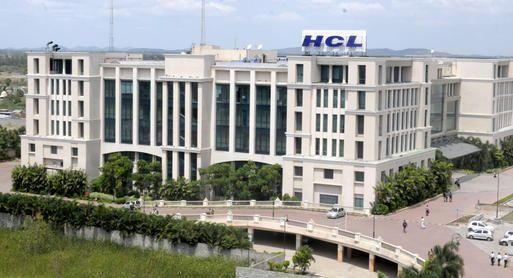
HCL Technologies is an Indian IT services and consulting company, the foundation stone of the Indian IT industry and way ahead of its time. Shiv Nadar founded HCL 44 years ago on 11 August 1976, with the idea of making computer hardware easily accessible to Indian consumers and HCL a common household brand. HCL Technologies is a multinational company with its headquarters located in Noida, India. The company specializes in software development, computer hardware manufacturing, outsourcing, consulting managed services, etc.

About HCL Technologies

HCL Technologies has a huge client base across the world, over 250 Fortune 500 companies being some of them. The company has expanded its operations overseas and has its offices located in countries like the US, the UK, France, Germany, etc., and over 160,00 people are working for it globally. The fields the company works in include banking, capital market, defense, aerospace, healthcare, hi-tech, insurance, media and entertainment, telecom, travel, etc. As of 2021, the company made revenues worth US$11 billion and owns total equity worth US$8.3 billion.

HCL Technologies
Image Source: glassdoor.co.in

The Back Story of HCL Technologies

In 1976, Shiv Nadar lead a team of five people, all colleagues from  Delhi Cloth & General Mills, to establish a teledigital calculators selling company named Microcomp Limited. The sole reason behind founding the company was to achieve their dream of starting up a computer manufacturing and selling company and raise money for it. On 11 August the same year, Nadar renamed Microcomp Limited to Hindustan Computer Limited.

Yet again, another name change took place, when in 1991 the founder built another company to provide technology development services with the name HCL Overseas Limited. This was the beginning of a new chapter as the new company was doing exactly what the founders had dreamt of, making and selling computers. In 1992, the company received the certificate of commencement of business, and the company started its journey as an authorized computer manufacturer and seller. The company became HCL Consulting Limited in 1994.             

In 1999 the R&D department of the HCL group became HCL Technologies Limited. HCL Technologies, HCL Infosystems, HCL Healthcare, HCL TalentCare are the four divisions of HCL Corporation. HCL Technologies is specifically into software services, business process outsourcing, and infrastructure services. The company is credited as the pioneer of the development and growth of the IT and computer industry in India.

HCL Technologies
Image SOurce: assets.entrepreneur.com

Though during the initial years of the company, Hindustan Computer Limited was selling teledigital calculators, the company’s focus was entirely on building personal computers and related hardware. It developed an indigenous microcomputer in 1978, and in 1980, the company opened its first international company branch in Singapore to sell IT hardware, with the name Far East Computers.

In 1983, it also introduced a networking OS and client-server architecture. During the 90s, the company targeted the software solutions development for its US and European clients as well as the APAC market. On 10 November 1999, HCL had its first IPO, and it also established a development center in Chennai in 2000.

Acquisitions

Starting from the year 2000, HCL has made some big acquisitions in the field of service outsourcing, telecommunication services, SAP, CRM-consulting, automation, IT and engineering service, etc. It acquired Gulf Computers Inc. in 2002. Between 2008 to 2009, the company made acquisitions like Capital Stream Inc., Liberata Financial Service, Control Point Solutions, Inc., Axon Group Plc. and UCS Group’s Enterprise Solutions SAP Practice.

In 2015, the company acquired Concept to Silicon Systems and PowerObjects, followed by the acquisition of Geometric Ltd (2016), Part of Volvo IT (2016), Butler America Aerospace  (2017), H&D International Group (2018), Actian (2018), and Sankalp Semiconductor (2019), etc.

The Founder: Shiv Nadar

Shiv Nadar is a famous Indian businessman who founded HCL Technologies in 1976. He is known for his innovative approach to business and is credited for his contribution to the growth of the IT industry in India. He is one of the richest people in India and has won one of the biggest honors of India, Padma Bhushan, for his efforts in the development of the IT industry in India.

Nadar was born on 14 July 1945, in Moolaipozhi, Tamil Nadu, India. During his childhood, he switched between multiple schools and completed his high school education at St. Joseph Boys Higher Secondary School, Trichy. He earned a pre-university degree in the American College, Madurai, and completed a bachelor’s degree in Electrical and Electronics Engineering from PSG College of Technology, Coimbatore.

Nadar started his career at Walchand group’s College of Engineering, Pune (COEP), in 1967, but left the job to found his own company, which today is known as HCL Technologies.

Xilinx Inc

Xilinx Inc – The Company Behind Programmable Semiconductor Chips.

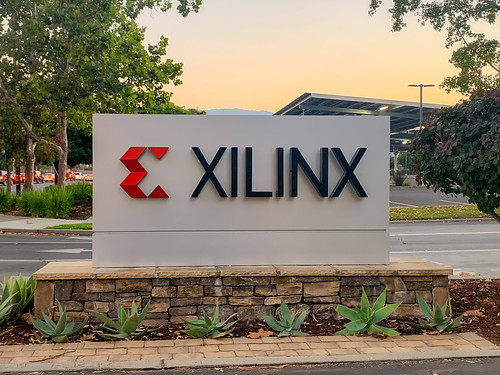
Based in San Jose, California, Xilinx, Inc. is one of the leading programmable logic device manufacturers in America. The company is over 37 years old and has a glorious history of success. Xilinx is the inventor of the field-programmable gate array (FPGA) and is known for manufacturing the first fabless manufacturing model. The company is operating globally, and around 5000 people are working for the company. As of 2020, the annual revenue made by Xilinx is around US$ 3.16 billion.

The Founding Story of Xilinx Inc

Ross Freeman, Bernard Vonderschmitt, and James V Barnett II, work-fellows from Zilog (a microprocessor manufacturing company), founded Xilinx in 1984 in San Jose. The main idea behind starting the company was to develop reprogrammable chips that could be used like blank tapes. The founders could not convince Zilog to invest in FPGA, but they were able to raise $4.5 million in venture capital and design the company’s first FPGA in 1984, which they started to sell in 1985. The idea was successful. As a result, Xilinx made around $14 million in revenue in 1987.

Xilinx Inc
Image Source: flickriver.com

The Growth and Expansion

The company profits were rising year by year, and in 1989, Xilinx went public on the NASDAQ. The success also led to a new 144,000-square-foot manufacturing unit in the same area, and Xilinx had bagged contracts from companies like HP, Apple Inc., IBM, and Sun Microsystems. In 1990, the company sales crossed $100 million, and Xilinx was dominating the FPGA market. During the same time, it also expanded its operations and started to experiment with EPLDs (EPROM technology-based Complex Programmable Logic Devices). By the mid-90s, the company was also operating in Europe and Asia.

In 1994, the company launched one of the most successful series of FPGA chips and, the XC5000. These chips were a cost-effective alternative to high-volume non-field-programmable gate array products. XC3100L and XC4000L were some of the most loved chips under the same chip family. Xilinx also started to manufacture low-power devices like portable computers, peripheral devices, wireless communication gear, and digital cameras, etc. Only after ten years of Xilinx’s inception, in 1995, its annual revenue reached $550 million, and around 1000 workers were employed at different office locations of Xilinx in three continents.

Xilinx appeared in the “100 Best Companies to Work For” in 2001 for the first time at no. 14, and later, it ranked 6the (2002) and 4the (2003) in the same list. The next innovative product from the company was in 2011, the Virtex-7 2000T. It is the first product that used the 2.5 stacked silicon to offer a bigger FPGA. At the same time, Xilinx combined the  FPGA with transceivers to enhance the bandwidth with low power consumption. The company started from making programmable chips and was successful to achieve its aim of making “all things programmable”, when it introduced the 28nm SoC devices, combining an ARM core with an FPGA and new tools software under the Zynq-7000 family.

The next year, the company launched an advanced electronic design system named  Vivado Design Suite, and in 2014, Xilinx released the first 20 nm UltraScale. In 2017, Xilinx partnered with Amazon and developed new software development tools. Xilinx is also actively working in the field of machine learning and has acquired a Chinese machine learning startup named DeepPhi Technology in July 2018. In November of the same year, the Zynq UltraScale+ family microprocessor got their  Safety Integrity Level (SIL) certification, which certified that these microprocessors are safe to use in  AI-based safety- applications of up to SIL 3, in industrial 4.0 platforms of automotive, aerospace, and AI systems. Xilinx acquired Solarflare Communications, Inc in 2019 and launched a single-chip FPGA-based 100G NIC jointly with the newly acquired company. The company made revenues worth $3 billion in 2019.

The CEO at Xilinx

Victor Peng is the current CEO of Xilinx Inc. He was born in Taipei, Taiwan in 1960 and holds American citizenship. Peng has got a B.E. degree in electrical engineering from Rensselaer Polytechnic Institute and an M.E. degree in the same subject from Cornell University.

Peng started his career at Digital Equipment Corporation (DEC) in 1982, and in 1996, he joined Silicon Graphics, switching to few more jobs in  MIPS Technologies, Tzero Technologies, ATI, and later AMD in the following years. In 2008, Peng joined Xilinx and was appointed as the  Senior Vice President of the programmable platforms group in 2013. He also served the company as the senior vice president (2014) and the CFO (2017). On January 29, 2018, Peng became the CEO of Xilinx.

Square Inc

Square Inc – An American Company providing Digital Payment Services since 2009.

Square Inc is a company booming in the realm of financial technology and services. The company was founded by Jack Dorsey and Jim McKelvey in 2009. Started off as a company to help small retailers and vendors accept credit cards but slowly ITV started expanding and broadened its customer base to big enterprises as well. The company’s headquarters is based in San Francisco, California and it is one of the largest companies in the financial technology sectors across the globe. So, let’s have a look at where it all began.

The Founding Story of Square Inc

Before co-founding Square Inc with Jim McKelvey, Jack Dorsey served as the CEO of Twitter. He stepped down from the position to establish Square Inc. The main idea behind founding this company was to make credit cards with tech that will be able to transmit data through the headphone jack of a smartphone.

To get the company up and running, both of them needed funding from investors. Since the co-founders hailed from a highly rich professional background, they were able to raise a total of $10 million in Series A funding. Some of the investors include Biz Stone (co-founder of Twitter) and Marissa Mayer (former CEO of Yahoo!). After receiving this funding, Square Inc developed its first product which was a square-shaped credit card reader. So, after a year of establishment, Square Inc rolled out its first product and also launched an app for both iOS and Android.

Square Inc
Image Source: logos-download.com

The company eventually started booming as it witnessed transactions worth millions of dollars every week. So, the co-founders decided to conduct another round of funding in January 2011. The money raised in this round was $27.5 million and the net valuation of the company became $230 million. During this time, Visa bought a small stake in the company.

Growth of Square Inc

In the early months of 2011, the company processed around $3 million per day. Seeing the number of users increasing per day, Square Inc made a deal with Apple so that the devices of the company are sold at Apple Stores. This increased the visibility of the brand and attracted more investors. After the next funding round, the valuation of the company became $1 billion. So, a young brand became a billion-dollar company within a span of three years and that was just the early days.

Since Square focused mainly on retailers, businesses, and small vendors, it built a lot of apps over the years to enhance digital payment processing, creating online stores, etc. One of the best services provided by Square Inc is Square Capital which analyzes data from merchant’s sales and provides advance loans using Square’s credit card processor. With the services provided by Square Inc, more businesses were able to create an online presence. In 2012, the company hosted Series D funding and raised $200 million and after two years it conducted Series E making a total worth of Square Inc $6 billion.

Uncertain Times

The company was making good money but its partnership with Starbucks led to a huge monetary loss. The company also went through some turmoil in 2015 when it was planning to file an IPO. During this time, Jack Dorsey became the interim CEO of Twitter and he had to handle both companies at the same time. So, after Square Inc started trading as a public company, the share prices dropped at the beginning and for one year the journey was a bit rocky.

Though the company lost millions in the partnership with Starbucks and found it difficult to trade as a public company after a year it was all getting back on track. From 2017 the company started recovering from its failure and decided to go international by expanding its services in the UK market. Given that the shares of Square were falling in 2016, the shares grew to 150% in 2018. In time, the company has also made a few acquisitions like Weebly and most recently gained majority ownership in Tidal.

About the Founders

Jack Dorsey is mostly famous as he served as the CEO and co-founder of Twitter. He went to New York University but dropped out before graduating. He started working on the idea of Twitter while he was a student at NYU.

Square Inc
Image Source: images.mktw.net and grupobcc.com
Jim McKelvey and Jack Dorsey

Jim McKelvey is an American billionaire famous for co-founding Square Inc. He went to Washington University at St Louis and after graduating started working as a contractor for IBM.