Your Tech Story

tech story

ON Semiconductor

ON Semiconductor – The Most Trustworthy Semiconductor Supplier.

ON Semiconductor is one of the few semiconductor distributors in Fortune 500, but it has been relegated to Fortune 1000(512) in 2020, according to recent news. In North America, Europe, and the Asia-Pacific, ON Semiconductor operates a broad network of production facilities. They also operate sales and layout center communities. The headquarters of ON Semiconductors is in Phoenix, Arizona. It is a worldwide leader in semiconductor sales of $3,907 billion (2016).

The Establishment Of ON Semiconductor


In 1999, ON Semiconductor was founded. The company started out in the Semiconductor Components Group of Motorola as the byproduct. Motorola’s discreet, standard analog, and standard logical devices are still produced. The acquisition of Cherry Semiconductor by ON Semiconductors was completed in April 2000. ON Semiconductor acquired AMI Semiconductor in March 2008 at a cost of $915 million. The purchase of Catalyst Semiconductor Inc. by the ON Semiconductor Corporation for $115 million on July 17, 2008, has been announced by On Semiconductor Corporations, Inc. The purchase approval was announced on 9 October 2008 by Catalyst Semiconductor, Inc. The purchase was completed on 10th October 2008 by ON Semiconductor Corporation. ON Semiconductor completed its $17M purchase in November 2009. In July of 2014 (including the settlement of a grant offer for foundries and a permanent agreement whereby ON Semiconductors is a 10 percent partner of Fujitsu’s 8-inch wafer fabric in Aizu-Wakamatsu, Japan) ON Semiconductors and Fujitsu Semiconductor announced a Strategic Partnership. In April 2019, ON Semiconductors acquired the 300 mm manufacturing facility of GlobalFoundries in East Fishkill, New York.

ON Semiconductor
Image source: www.electronicsmedia.info


ON Semiconductors Products


In conjunction with digital signal processors, FM receivers, extension controllers, and modulators, ON Semiconductors supplies application-precision Standard Products (ASSP). In addition, they provide a wide range of Digital Signal Processor (DSP) hearing aid structures. The ON Semiconductors HCT CMOS logic family works with 2 to 6 V Vcc, and ESD safety over 3 company standards (HBM, MM, CDM). Inputs compatible with TTL are included in the HCT logic family. The limited portfolio of Fast Switch Technology (FST) switches comes from ON Semiconductor. The ON Semiconductor Bipolar Metal Gate Family has a Vcc-spectrum of 3 to 18 V, work temperature range between -55 to +125 C, and latch-up immunity greater than 500 mA. ON Semiconductor’s VHCT CMOS logic family runs at 2.0 to 5.5 V Vcc and shows delays in propagation of just 3.8 ns. TTL compatible inputs are available in the VHCT logic family. The ON Semiconductors ACT CMOS logic family has a power current of 24 mA and Vcc operates from 3.0 to 5.5 V. The TTL-compatible inputs in the ACT logic family. ON Semiconductor’s AC CMOS logical family has a powerful cutting-edge of 24 mA and Vcc range of 3.0 to 5.5 V. ON Semiconductors supplies a number of 1-gate and 2-gate MiniGate standard logic devices, in superior micro-packages.


Hassane El-Khoury, The CEO


Hassane El-Khoury was appointed as ON Semiconductor and Semiconductor Components Industries, LLC’s president and chief executive officer in December 2020. In the meantime, El-Khoury was President, Chief Executive Officer, and a member of Cypress Semiconductor’s Board of Directors until it was sold to Infineon in April 2020, before becoming an officer of ON Semiconductor.
For 13 years at Cypress, he played numerous roles in the control of business units, product improvement, program engineering, and business improvement. Mr. El-Khoury began his profession as a senior design engineer at Continental Automotive Systems. After moving to the United States from Lebanon, El-Khoury graduated from Lawrence Technological University with a bachelor’s degree and a master’s degree in engineering from Oakland University. He was awarded a Silicon Valley 40 under the age of 40 in 2018 and is now a member of the KeraCel board.


Sherman Fairchild Arthur Rock, The Founder


Rock was born in Rochester, New York, in a Jewish family. He was an only child and his father owned a small sweet keep wherein Rock labored as a youth. He graduated from the University of Syracuse in 1948 with a B.A. from Harvard Business School and received his MA in Business Management in 1951.
Based out of Silicon Valley, California, he was an early investor in most important companies which include Intel, Apple Computer, Scientific Data Systems, and Teledyne. He joined the United States Army all through World World War II however the battle ended earlier than he was deployed. He then went to university at the G.I. Bill. Rock commenced his profession in 1951 as a securities analyst in New York City, after which joined the company finance branch of Hayden, Stone & Company in New York, wherein he centered on raising cash for small high-technology companies.

seiko epson corporation

Seiko Epson Corporation – Japanese Electronics Company used to Manufacture Computer Equipment.

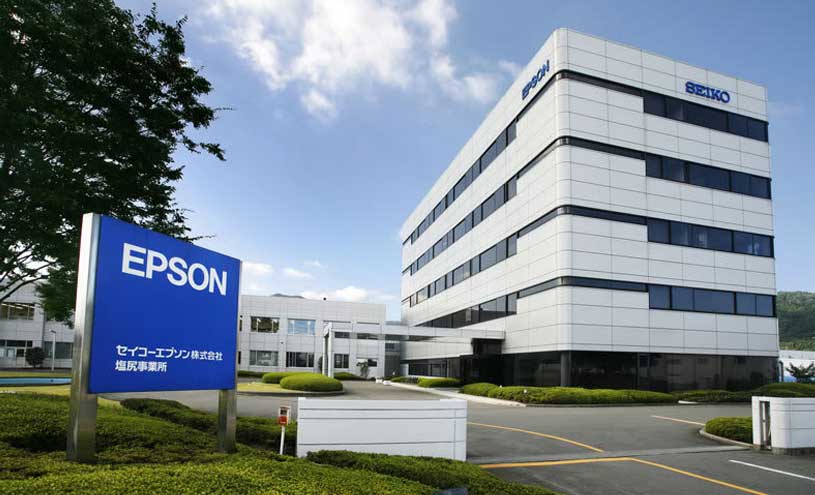
Seiko Epson Corporation is simply known as Epson. It is a Japanese electronics company used to manufacture computer printers, information, and imaging-related equipment all around the globe. Its headquarters are located in Suwa, Nagano, Japan.

The company has branches and subsidiaries worldwide. It also manufactures inkjets, dot-matrix and laser printers, scanners, desktop computers, businesses, multimedia, and home theatre projectors, major home-theater televisions, robots, and industrial automation equipment, cash and sales-docket printers, laptops, and integrated circuits. It falls under one of the three core companies owned by the Seiko Group which is traditionally known for designing Seiko timepieces since its foundation.

A Brief History of Seiko Epson Corporation

Ever since its inception, Seiko Epson has embedded its traditional strengths into a manufacturing company and expanded its growth further. Epson owes its rapid progress to refining the company’s super-microprocessing and precision processing technologies in the development of watches and then further expanding those technologies into other aspects. The company’s breakthrough was introduced with the launch of the EP-101(Electronic Printer). The EP-101 is a popular and astounding product that led to the establishment of new markets. This company was founded in 1975 with the goal of sending future “sons” of the EP-101 into the modernized world. Ever since the establishment of Epson, high-quality, high-value “sons” have been brought into this world in large numbers.

Seiko Epson Corporation
Image Source: bisinfotech.com

Products And Services

Seiko Epson Corporation manufactures and offers merchandise that lessens the effect on the environment. Epson has continually been fascinated as a manufacturer in what it may do to gain a sustainable company, running for decades to grow the energy performance of its efficient approaches and products, to enhance the performance of assets, and to get rid of dangerous substances.
Epson sells products that change the manner clients operate. This reduces the environmental effect and concurrently will increase the company’s operating performance and productivity. This merchandise assists to lessen the environmental effect of people.
The WF-C21000 is a high-pace multipurpose inkjet that may be print at speeds up to 100 ppm at integrated PrecisionCore lines (pages per minute). That’s a standard workplace laser printer output two times as much. The aggregate of print performance and energy efficiency is the following level in high-pace inkjet multipurpose printers (MFPs) powered with the aid of using Epson inkjet technologies. Inkjet printers from Epse use little or no electricity while printing due to the fact piezoelectric elements are ejected while only a small voltage is utilized by the ink droplets. On the opposite hand, laser printers require warmth – and plenty of power – to fuse toner to the paper. The PrecisionCore heat-free technology function of WorkForce Enterprise printers prevents warmth from getting used throughout the printing process. This reduces their running fees by using a good deal much less electricity than laser printers.
The digital textile inkjet printers from Epson are increasing layout possibilities in contrast to conventional tactics with decreased intake of energy, water, substances, and time. Digital information prints from a PC without delay from SureColor SC-F2100 on T-shirts and different clothing. The pictures may be reproduced not only with easy gradations and in complete color, however additionally with unnecessary monitors and plates. The SureColor SC-F2100 speeds up the procedure of printing.
Epson’s smart binocular headsets decorate operation performance and work nice by displaying digital manuals and imaginative and prescient instructions, allowing employees to finish tasks with both hands.

seiko epson corporation
Image Source: imagingsolution.in

Future Goals of Epson

Epson targets for decarbonization and closure of the useful resource loop, the improvement of environmental technologies, and the availability of environmental impact reduction services and products for consumers. In order to facilitate the transition to a decarbonized future as furnished for in the Paris Agreement, Epson combats climate change with reductions to greenhouse fuel line emissions in production and throughout its cost chain. By growing energy-saving merchandise and inkjet technology, Epson additionally contributes to society.

Yasunori Ogawa, The CEO

Mr. Yasunori Ogawa is the President and Representative Director of Seiko Epson Corp., as well as the CEO of EPSON X Investment Corp. He is a member of the Seiko Epson Corp. Board of Directors. He graduated from Tohoku University. He was appointed as the President in March 2020 before which he acted as Managing Executive Officer.

Kintaro Hattori, The Founder


Kintar Hattori became the founding father of Seiko, one of the world’s biggest watch manufacturers, and one of the first and most vital Japanese watchmakers in history. Kintar Hattori was born in 1860 in Uneme-Cho Kybashi, Tokyo, to a well-set-up merchant family. He turned into a pivotal figure withinside the improvement of Japan’s watchmaking industry. In 1892, he founded the primary watchmaking manufacturing unit in Japan, called “Seikosha.” Kintar Hattori additionally based the watch and jewelry store “K. Hattori” (Hattori Tokeiten in Japanese) in the Ginza district of Tokyo, Japan, that is now called Seiko Holdings Corporation and is known globally as Seiko.

Oki Electric Industry

Oki Electric Industry: The Leading Japanese Telecommunication Company.

Oki Electric Industry Co., Ltd. is a Japanese IT and telecommunication company, with its headquarters based in Toranomon, Minato-ku, Tokyo. The company was founded in January 1881, and since then, it has been working towards innovation and excellence. Oki is credited for developing the first Japanese telephone, introduced in 1881. Though the company started from manufacturing telephones and its equipment, today it is also known for manufacturing information products like ATMs, printers, fax machines, etc. Oki has also tried its luck in the semiconductor business but sold the business to Rohm.

About the Oki Electric Industry

Oki is a 140 years old company founded by Kibataro Oki, a Japanese engineer. The company started in Japan, but today it is operational in more than 120 countries. Oki is into manufacturing telephones, its equipment, info-telecom systems, social infrastructure systems, ATMs, printers, multifunction devices, technology solutions, etc.
In the late 90s, the company also started to provide network services. Oki is also into sponsorships, and till now, it has sponsored English Premier League football club Portsmouth F.C., NRL team St. George Illawarra Dragons, 1.FC Kaiserslautern, and the French Ligue 1 team HSC Montpellier, etc.

Oki Electric Industry
Image Source: en.wikipedia.org

The Back Story of the company

Oki Electric is the result of the discovery of the telephone by Graham Bell. Kibataro Oki, who was an engineer by profession, founded Oki as Meikōsha in 1881. He worked at a Kobusho (Ministry of Industry) factory in Japan, which started to use reverse engineering to learn the technology behind Graham Bell’s telephone. Oki was one of the team members and was inspired to make telephones common for people. In January 1881, he built the prototype of the telephone under his company Meikōsha.
Along with the prototype, he also made a silver-award-winning lacquer-coated wire which he showcased at the International Inventions Exhibition in London in 1885. The company was quite focused on making telephones common in Japan and contributed to the Telephone Expansion program running in the country. It also became a great help in the establishment of automatic exchanges.
World War I brought a rise in the demand for telephone, especially the PBX (Private Branch Exchange), resulting in rapid growth for the company. During the same time, the company was also producing railroad-type printers, portable telephones, and electric wires for its new customers overseas. In the late 30s, due to the high demand, Oki established multiple manufacturing plants in the country. WWII also brought a lot of business to the company. Oki Electric Co., Ltd. went public on Tokyo Stock Exchange in 1951. This was the same time when Oki also started the mass production of “Type-4 telephone”, a symbol of Japan getting on its feet again after the WWII destruction.
In 1956, Oki became the first company to produce the 100-line Ericsson-type crossbar-switching systems for the general public. The 60s and the 70s were the time when Oki started to try its hands in other technologies like electronics, manufacturing products like teletypewriters, perforation typewriters, electric typewriters, general-purpose computers, electro-printers, dot printers as well as terminals for online deposits. This was the same time when the company expanded to other countries and contents too. It established offices and manufacturing plants in Asian, Middle East, Central, and South American countries.
Oki also established a subsidiary for its printer manufacturing business in Philadelphia, the Oki Data Corporation, in 1972. In 1975, the company partnered with Bell Labs and built the first automatic telephone system. It also worked on wireless technology with Bell Labs. In 1982, Oki introduced the first cash-recycling ATM in the world. During the 90s, Oki also started to offer network services, and in 2004, the company released its IP CONVERGENCE Server SS9100. The server was the first Microsoft. The net-compliant server of the industry.
Today, Oki is one of the leading IT and telecommunication companies. From telephone equipment to PC peripheral to network services, the company knows the way to success. Oki has its multiple offices established in various parts of the world, and over 20,000 people are working for it. Oki Data Corporation, Oki Data Americas, and Oki Electric are some of its subsidiaries.

The Founder: Oki Kibatarō

Oki Kibatarō is the founder of Oki Electric Industry. He was born and brought up in Japan and completed his education at Tokyo Imperial University. Before founding Oki he worked at the Japanese Ministry of Industry as an engineer and was a member of the team that was trying to learn about the first telephone developed by Graham Bell in 1877. Just after one year of the discovery of the telephone, he had started to work on developing a similar product through reverse engineering, which he successfully released in 1881.

cerner corporation

Cerner Corporation – Merging Healthcare and IT.

For the past forty years, Cerner Corporation has worked at the crossroads of health care and information technology to link individuals and systems all over the globe. They use the latest technology to develop solutions that empower communities and people to take charge of their own health. Their tools are designed to work today while also pondering about tomorrow, whether or not they are supporting the clinical, financial, or operational areas of a hospital or health system.

Establishment of the Cerner Corporation


Cerner Corporation was founded in 1979 through Arthur Andersen’s colleagues Neal Patterson, Paul Group, and Cliff Illig. Its authentic name became PGI & Associates, however, when it released its first machine, PathNet, in 1984, it was renamed Cerner. In 1986, it went public. Cerner’s customer base step by step multiplied in the late 1980s, achieving 70 sites in 1987, 120 sites in 1988, 170 sites in 1989, and 250 sites in 1990. Cerner was operating on additives of a Health Network Architecture (HNA), an incorporated IT machine designed to automate health care processes, at the time. Clients could purchase individual components or the complete machine all at once. By 1994, more than 30 customers had purchased the complete HNA machine, with another 100 purchasing more than one component of the machine.

cerner corporation
Image Source: fortune.com


Cerner bought IMC Health Care, Inc. in early 2010 in order to keep expanding its health offerings to industrial employers, pharmacies, and health applications outside of Cerner.
Cerner Corporation announced its intention to purchase Siemens Health Services, Germany’s Siemens AG’s health information technology business, for $1.3 billion on August 5, 2014. On February 2, 2015, the acquisition was completed.
On July 29, 2015, the Leidos Partnership for Defense Health, comprised of Cerner, Accenture, and Leidos, was awarded a 10-year, $4.3 billion contract to overhaul and manage the Department of Defense’s electronic health records.


The Company’s Offerings


Command Center
The need for situational awareness in health care systems has never been greater. The Cerner Command Center Dashboard uses near real-time data and predictive analytics to give health systems a clear view of critical resources like staffed bed capacity, care demand, and equipment – information that leaders use to anticipate and respond to patient needs. The Cerner Command Center dashboard provides actionable data insights to enable effective resource and process management in order to improve health system operations.
Cerner’s best practices for staffing and patient throughput processes, Cerner model system for integrated and automated workforce management and capacity management solutions, AWS cloud, predictive intelligence, and machine learning, and integration across Cerner platforms can all be used by the Cerner Command Center to help reduce operational costs.


HealtheReferrals
HealtheReferrals supports provider organizations, throughout any EHR and payer, in the growth and retention of patients. The product targets patients with a configurable patient-supplier algorithm which includes factors such as specialty, insurance networks, proximity to patients, and network members. The product is the most appropriate in-network provider. It also offers analytical and referral coordination capabilities to help ensure transparency through employee and affiliate networks.
The average person influences household healthcare expenditure in excess of 1,5 M$, all references count. Cerner realizes that it is critical for the health of an organization to improve margins and lower risk and provide cost-effective care. HealtheReferrals is committed to providing providers and managers with the information they need to achieve these goals, independently of EHR.


Neal Patterson, The Founder


Neal Patterson has been CEO of Cerner for 38 years, an enterprise which he co-founded in 1979 with two colleagues. Patterson was a long-time CEO of the country. With revenues of 4,8 billion US dollars in 2016 and over 25,000 employees around the world, Cerner is currently the world’s largest independent information technology provider.

Patterson was posthumously brought to the Hall of Fame in 2019 and appointed as the International Entrepreneur of the Year by the Regnier Institute of Entrepreneurship and Innovation of the University of Missouri-Kansas.
On a farm near Manchester, Oklahoma, Patterson was brought up. He obtained a Bachelor of Finance and a Masters in Business Administration from the Oklahoma State University.
As a result of the recent recurrent cancer, Neal L. Patterson died on 9 July 2017. He was 67 years old.


Brent Shafer, The CEO


Brent Shafer, Chief Executive of Cerner, is responsible for the company’s market-oriented business units, consumer brands, key strategic relations, and priority business initiatives and is responsible for developing and expanding these business units.
Shafer has been CEO of Philips North America, where she has supervised the portfolio of health technology that includes a wide range of solutions and services inpatient surveillance, imaging, clinical computer technology, sleep, and respiratory services as well as a group of leading consumer brands. Shafer previously served as the CEO of Philips’ global Home Healthcare Solutions division.

Shafer possesses extensive experience building innovative value-based business models. He has contributed to the growth of a complex multinational organization for a number of years as a senior leader with Philips. He is also a member of the Healthcare Leadership Council which brings together health leaders of the nation to develop policies, plans, and programs to implement their vision of a system that provides all Americans with affordable, high-quality care. He received a Bachelor’s degree from the University of Utah.

Seagate Technology

Seagate Technology – The Biggest Contributor to the Growth of Computer Storage Industry.

Computer storage is an essential part of computer hardware and software. Over time, computer storage has gone through a tremendous change, and we have seen these devices grow in technology and size. Today a small chip can hold data over 500 GB or more. And this has happened due to some innovative companies running behind the technology and working towards innovation. Seagate Technology is one such example of companies, working in the field of computer storage that has been actively providing innovative products to the industry.

Seagate Technology Holdings initially founded as Shugart Technology is an American data storage company manufacturing and distributing computer storage devices. It was founded about 40 years ago and has been working in the field of computer storage as a leader. The company is credited for ‘sparking the personal computer revolution’ with its 5.25-inch hard drive for the PCs.

 About Seagate Technology

Seagate is a result of a prediction of upcoming growth in the economic industry as microcomputers were becoming popular in the late 70s. The company, today, stands as the biggest supplier of the HDD market and competes with companies like Western Digital. Seagate has also added to its growth with some of its major acquisitions, including Conner Peripherals, Maxtor and Samsung’s HDD business.

Seagate has established its operational headquarters in California, US, and the legal domicile is in Dublin, Ireland. The company has seen rapid growth in its sales in the past twenty years. As per the 2020 records, the company made revenues worth US$10.51 billion, and over 42,000 people are working for it in the US and overseas.

Seagate Technology
Image Source: www.seagate.com

Founding Seagate Technology

Finis Conner and Alan Shugart founded Seagate Technology on 1 November 1979 as Shugart Technology. It was Conner who thought of the idea to start a hard disk drive manufacturing company to take advantage of the upcoming economic boom.  Later, Tom Mitchell, Doug Mahon and Syed Iftikar joined in to become the partners in the company. There was a company already existing with the name Shugart, so the founders had to change the name to Seagate Technology.

Seagate started as the manufacturers of hard disk drives for computers. In 1980, the company developed its first product, the 5-megabyte ST-506, the first 5.25-inch hard disk drive (HDD). Later, due to the huge popularity of the ST-506, Seagate also brought the 10-megabyte version of the same hard disk. Soon Seagate became the major supplier of the hard disk drives for microcomputers and bagged a contract for OEM for the IBM XT from IBM. IBM XT was the first personal computer that had a hard disk.

The Growth

By the early 80s, Seagate had got a hold on the 45% of the single-user hard drive market. At the beginning of the 90s, Seagate shifted its focus from external drives to mainframe drives, and it limited the outsourcing of components from other companies. Instead, it started to manufacture most of the components in its manufacturing units. During the same time, Seagate also introduced the industry’s first hard disk with a 7200-RPM spindle speed. The company was already trading on Nasdaq but moved to New York Stock Exchange in 1995.

In 1996, Seagate merged with Conner Peripheral, standing as the largest independent hard-drive manufacturer in the world. The same year, the company came with the first hard disk with a 10,000-RPM spindle speed in the industry, named Cheetah 4LP. Between 1997 and 2004, Seagate increased its production, supplying about 20 million drives per quarter.

In the year 2000, the company became a private company, but after a lot of restricting and relocation to the Cayman Islands, it became public in 2002. In 2003, Seagate started to manufacture hard disks for notebook computers as well as for the first iPods, smartphones and cameras. Seagate introduced the concept of hybrid drive in 2007, and the next year, it sold 1 billion HDDs.

In 2010, another restructuring for the company took place, and the company headquarter was moved to Cupertino, California. The company also changed the country of its incorporation to Ireland, with a name change to Seagate Technology plc. The same year, it brought the world’s first 3 TB hard drive. By 2012, the company value had raised to $14 billion and produced the first 1 TB/square inch density hard drive. The next year, Seagate was shipping the shingled magnetic recording drives, and in 2016, it demonstrated the 60 TB SSD, ‘largest ever.’

In 2020, the company’s operational headquarters was moved to Fremont, California. In May 2020, Seagate Technology Holdings plc became the parent company of Seagate, replacing Seagate Technology plc.

The Founder

Finis Conner is the founder of Seagate Technolgy. He was born on 28 July 1943 in Gadsden, Alabama. Because of his poor financial condition, Conner started to work at the age of 19 at IBM, and with time managed to get a degree in industrial management from San Jose State College in 1969. With his experience at IBM, Conner thought of the idea to build a company named Shugart Associates with Alan Shugart to manufacture floppy disks, becoming the pioneer in the industry. Later with Shugart, he founded Seagate Technology. Apart from that, Conner also founded Conner Peripherals, which later became a part of Seagate Technology.

United Microelectronics Corporation

United Microelectronics Corporation – Taiwan’s First Semiconductor Company.

Taiwan is the manufacturing hub for most of the world’s biggest electronics and IT companies. Apart from providing land for manufacturing and labor for work, Taiwan has also given some big-name companies that are leaders of their respective fields. UMC, aka United Microelectronics Corporation, is one such Taiwanese company that has made its mark on the international level. In fact, it is the first semiconductor company in Taiwan.

UMC was founded in 1980, and its headquarter is based in Hsinchu Science Park Hsinchu, Taiwan. The founding of the company is a result of the spinning off of the government-sponsored organization, the Industrial Technology Research Institute (ITRI).

About United Microelectronics Corporation

As said earlier UMC is a spin-off company of a state-owned institution. The company is the first semiconductor company in Taiwan, and it is known to manufacture integrated circuit wafers for other companies which produce fabless semiconductor. Though the company is based in Taiwan, it does most of its business outside the country, TSMC and GlobalFoundries being its major competitors and the automotive industry being its major area of service. The company operates through its four different fabs (300 mm), based in Japan, Taiwan, Singapore, and China, to provide better service to its customers.

United Microelectronics Corporation
Image Source: tradingview.com

UMC incorporates the latest technologies and innovative techniques to manufacture and process IC manufacturing. Logic/Mixed-Signal, embedded High-Voltage, embedded Non-Volatile-Memory, RFSOI, and BCD, etc., are some of the techniques used by the company. The company has over 12 fab productions and produces about 800,000 wafers every month.

UMC trades as a public company and has listed on New York Stock Exchange as well as Taiwan Stock Exchange. The company employs over 19,500 people worldwide, and as per 2019 records, the company made annual revenues worth US$5 billion.

The Founding and Growth

UMC became the first Taiwanese semiconductor company when it got spun off from the state-owned ITRI. It became the pioneer of the commercial semiconductor industry for Taiwan. In 1985, UMC listed on  Taiwan Stock Exchange. The company ran on the IDM model for about fifteen years from its inception, and then in 1995, the company switched to the pure-play foundry model and started to manufacture its own products.

The next year, UMC spun off multiple design units, resulting in the formation of AMIC Technology, MediaTek, ITE Technology,  Novatek, Faraday Technology, and Davicom. In 1999, the company established its first 12A, Taiwan’s first 12-inch wafer fab in Tainan Science Park. The next year, UMC became Taiwan’s first-ever semiconductor company to list on the New York Stock Exchange. The same year, the company started to manufacture the chips using copper process technology. It also brought the first 0.13-micron ICs to the industry.

In 2024, the Singapore-based wafer fab of the UMC started mass production, and in 2008, UMC listed some of its stocks on the Dow Jones Sustainability Index (DJSI). The company also made some acquisitions like Hejian Technology Wafer Fab of China in 2013 and  Japan-based Mie Fujitsu Semiconductor in 2019. In 2015, UMC entered China by establishing a 12-inch wafer fab in Xiamen, Fujian Province, China, where the company started the 28 nm mass production in 2017.

Stan Hung: The Chairman at UMC

Stan Hung is the Chairman of the Board and Chief Strategy Officer in United Microelectronics Corporation. He joined the company in 1991 and became the chairman in 2008. Hung is a native of Taiwan. He completed his school education from a local high school and earned a bachelor’s degree in accounting from Tamkang University, Taiwan.

Other than being the chairman of UMC, Hung also holds a prime position in some prominent companies. He has been appointed as the chairman of the board in Fortune Venture Capital Corp., TLC Capital Co., Ltd., and Faraday Technology Corporation. Hung also serves Triknight Capital Corporation and UnitedDS Semiconductor (Shandong) Co., Ltd. as the director.