Your Tech Story

tech news

WeChat

Apple opens store on China’s WeChat platform

According to Tencent, Apple has recently launched an online store on the popular Chinese app WeChat.

The store has been integrated into WeChat’s mini-programs, which are small applications within the platform that offer various services such as e-commerce, finance, and transportation.

WeChat
Image Source: thehindu.com

Apple’s store on WeChat will feature a range of its products, including iPhones, iPads, Apple Watches, and Macs. This is not the first time Apple has established a presence on a Chinese platform, as it already operates a store on Alibaba’s Tmall e-commerce platform, which is a competitor of Tencent.

In addition to this, Apple also experimented with live commerce in China earlier this year, attempting to sell its products through interactive live streaming.

China is a significant market for Apple outside of the United States. According to research firm Counterpoint, the iPhone 13 series dominated the top three spots in the list of best-selling phones in China in 2022.

Despite a decline in China’s smartphone market in the first quarter of 2023, Apple has managed to maintain its position as the leading handset vendor in the country, capturing a 20% market share. This represents a 2% increase compared to the same period in the previous year, as highlighted in a report by Counterpoint.

However, Apple has been actively working to diversify its manufacturing operations by reducing its reliance on China. JP Morgan analysts reported last year that the company plans to shift 25% of its iPhone production to India and 20% of its iPad and Apple Watch production to Vietnam by 2025.

Also Read: Binance chief strategy officer Patrick Hillmann steps down

This strategic move aims to mitigate risks associated with overdependence on a single manufacturing location and take advantage of the benefits offered by other countries in terms of cost, logistics, and supply chain resilience.

In summary, Apple has expanded its presence in the Chinese market by launching an online store on WeChat, one of China’s most popular apps. This move follows Apple’s existing store on Alibaba’s Tmall platform and its previous foray into live commerce.

While China remains a crucial market for Apple, the company is actively working to diversify its manufacturing operations by gradually shifting production to countries like India and Vietnam. These efforts align with Apple’s strategy to reduce its dependence on a single manufacturing base and leverage the advantages offered by different regions.

The launch of Apple’s online store on WeChat demonstrates the company’s commitment to reaching Chinese consumers through diverse channels and platforms

Patrick Hillmann

Binance chief strategy officer Patrick Hillmann steps down

Binance’s chief strategy officer, Patrick Hillmann, announced his departure from the cryptocurrency exchange in a tweet on Thursday. Hillmann confirmed his resignation, stating that he was leaving Binance on amicable terms.

In his tweet, Hillmann acknowledged his two-year tenure at Binance and expressed his desire to take on new challenges. He stated, “I’ve been here for two years and it’s simply time for me to move on to the next challenge. I’ve taken this company through a lifetime of industry crises and regulatory challenges — from Luna to 3AC to FTX. Despite all of these challenges, the company has continued to grow and thrive.”

Patrick Hillmann
Image Source: thestar.com

Patrick Hillmann had assumed the role of chief strategy officer at Binance in October of the previous year. During his time at the world’s largest cryptocurrency exchange, he played a pivotal role in shaping the company’s strategic direction and navigating various regulatory hurdles.

The announcement of Hillmann’s departure comes shortly after Binance and its CEO, Changpeng Zhao, faced legal action from US regulators. Last month, the regulators filed a lawsuit against the exchange, accusing it of operating a “web of deception.” A federal court in Washington DC received 13 charges against Binance. In response, Binance vowed to vigorously defend itself against these allegations.

Also Read: Google Hires Brazil’s Temer to Lobby on controversial internet bill

Hillmann’s decision to step down from his position as chief strategy officer is notable, given the ongoing regulatory challenges faced by Binance. His departure may have implications for the exchange’s future strategic initiatives and its ability to overcome regulatory hurdles.

Binance has been a dominant player in the cryptocurrency market, offering a wide range of services to its global user base. It has weathered numerous industry crises and regulatory issues, maintaining its growth and success throughout. Hillmann’s departure marks a transition for both him and Binance, as the exchange continues to navigate the evolving landscape of cryptocurrency regulations and explores new avenues for expansion.

As Hillmann bids farewell to Binance, the cryptocurrency community will be closely watching to see what his next venture will be, and how Binance will adapt its strategy in the face of mounting regulatory pressure.

Google

Google Hires Brazil’s Temer to Lobby on controversial internet bill

According to his advisor on Friday, Alphabet child company Google has recruited Michel Temer, the previous president of Brazil, to influence legislators who are debating whether or not to regulate the internet.

The proposed legislation, frequently referred to as the ‘Fake News bill’, would require providers of internet services, web search engines, as well as social messaging platforms to discover and report illicit content and impose severe penalties for noncompliance.

Google
Image Source: freetimelearning.com

Tech businesses are worried about the law, and several have started initiatives on their respective websites to stop it.

Also Read: AI company Runway valued at $1.5 billion in the latest funding

The nation’s top judiciary in South America demanded a probe about two months back into Google as well as Telegram officials who spearheaded an initiative to oppose the new legislation.

Temer admitted he had been serving the role of “mediator” among the business and legislators for roughly three weeks, according to local publication Folha de Sao Paulo.

According to Temer’s advisor, the business paid the former president to arbitrate discussions and suggestions with the Brazilian parliament.

Temer rejected Folha’s statement that he had discussions with the judges of the supreme court, but the newspaper stated that he had a meeting with Orlando Silva, the senator in charge of the internet legislation, to go over specifics of the plan.

Also Read: Google to block news in Canada over law on paying publishers

The Supreme Court of Brazil will probably decide on two petitions that might loosen internet regulations. As stated by Folha, the judgment has been delayed from its original June date.

In a statement, Google said it hires specialized agencies and consultants to help “mediate efforts to dialogue with public authorities” so that it can bring contributions to politicians and parliamentarians, “, especially in important and technical issues such as the construction of a new legislation.”

Source: uk.sports.yahoo.com

On Tuesday, the lower chamber of Congress was scheduled to make a decision on a proposed law to penalize businesses for failing to report false news, but conservative and evangelical politicians are opposed to it.

“Such conduct could configure, in theory, abuse of economic power on the eve of voting on the bill by trying to illegally and immorally impact public opinion and the vote in Congress,” Justice Alexandre de Moraes said in his decision.

Source: theguardian.com
Runway

AI company Runway valued at $1.5 billion in the latest funding

After raising the sum of 141 million USD from financiers, which includes Alphabet child company, Google, and Nvidia, artificial intelligence business Runway has been assessed at 1.5 billion dollars, according to someone aware of the situation on Thursday.

Salesforce Vc and Runway present investors were also a part of the expansion of the Series C fundraising round, the business stated in a statement.

Runway
Image Source: news.crunchbase.com

Huge technological titans and venture capitalists have invested huge amounts of money in startups developing cutting-edge technologies as a result of ChatGPT’s meteoric growth and the promise of AI to alter industries.

“Generative AI is transforming the content creation industry, breathing new life into stories and ideas that were not imaginable,” Nvidia CEO Jensen Huang said in a statement.

Source: finance.yahoo.com

Using messages or pictures, Runway software can modify or alter already-existing movies or produce brand-new videos. Additionally, the business previously this year released a smartphone app that gave customers reach to its generative artificial intelligence (AI) capabilities.

Yet another AI firm, Inflection, got the sum of $1.3 billion from Microsoft previously at a value of 4 billion dollars, according to a source, acquainted with the transaction who spoke to Reuters. Numerous sectors are being transformed by artificial intelligence, so there is an increasing need for employees with knowledge and expertise in this field.

Also Read: Twitter says users must be verified to access TweetDeck

A person’s ability to build in-demand abilities that open up intriguing job options in fields like data science, machine learning, as well as robotics can be improved by studying artificial intelligence. It’s a new technology that’s developing quickly.

Understanding artificial intelligence can assist people in comprehending the current state of technology nowadays and its anticipated effects on many sectors. People may use this information to find fresh prospects for innovation and development.

Since the time it became essential cybersecurity has become a prominent issue. Possible risks to networks and sensitive information change along with technology. The need for solutions based on artificial intelligence for cybersecurity has risen.

Over the past ten years, fintech has experienced a lot of innovations. As new applications appear, traditional financial institutions are challenged to stay current with technology.

Processing times for financial institution operations can be slashed thanks to AI.

Nowadays, AI is becoming progressively more common, and its influence on many businesses and society at large cannot be understated.

Twitter

Twitter says users must be verified to access TweetDeck

Twitter recently made an announcement stating that users will soon be required to verify their accounts in order to utilize TweetDeck, a widely-used social media management tool.

This new policy is set to take effect within the next 30 days. In the same tweet, Twitter also unveiled an enhanced version of TweetDeck, showcasing various new features and functionalities. However, it remains uncertain whether Twitter intends to charge users for both the upgraded and previous versions of TweetDeck.

Twitter
Image Source: techcrunch.com

The introduction of fees for TweetDeck, which was previously free and extensively utilized by businesses and news organizations for content monitoring, could potentially provide a substantial revenue boost for Twitter. This is particularly relevant as the company has encountered challenges in retaining advertising revenue since Elon Musk took ownership.

This move comes shortly after Elon Musk’s recent announcement that both verified and unverified users would face limitations on the number of daily posts they can read. Musk’s intention behind this limitation was to address concerns related to extensive data scraping and system manipulation.

Also Read: Google to block news in Canada over law on paying publishers

However, Musk’s statement received significant backlash from Twitter users, while advertising experts expressed concerns about the potential negative impact on the new CEO, Linda Yaccarino, who assumed the position just last month.

To acquire verification on Twitter, individuals will now be required to pay a monthly fee of $8, whereas organizations will need to pay $1,000 per month. Verification badges serve as a means of establishing authenticity and credibility on the platform. Twitter’s decision to monetize this feature could potentially create a new revenue stream for the company.

By implementing mandatory verification for TweetDeck and introducing fees for account verification, Twitter aims to enhance user trust and combat issues such as spam, misinformation, and fake accounts. These measures align with the broader industry trend of prioritizing platform security and authenticity.

However, the reception of these changes and their impact on user experience and adoption remains uncertain. It remains to be seen how users will respond to the introduction of fees for TweetDeck and whether the potential benefits for Twitter’s revenue will outweigh any negative impacts on user satisfaction and platform usage.

TweetDeck is a widely used social media management tool that allows users to effectively monitor and manage their Twitter accounts. It was initially launched as an independent application in 2008 and was later acquired by Twitter in 2011.

TweetDeck offers a range of features designed to streamline the Twitter experience for individuals, businesses, and organizations. Users can view multiple timelines in a single interface, making it easier to follow and engage with conversations across different accounts. The platform supports the management of multiple Twitter accounts, allowing users to switch between profiles seamlessly.

Google

Google to block news in Canada over law on paying publishers

Google announced its intention to block Canadian news on its platform within Canada, following in the footsteps of Facebook’s Meta Platforms Inc.

This move comes as a response to a new law, the Online News Act (Bill C-18), which requires payments to local news publishers.

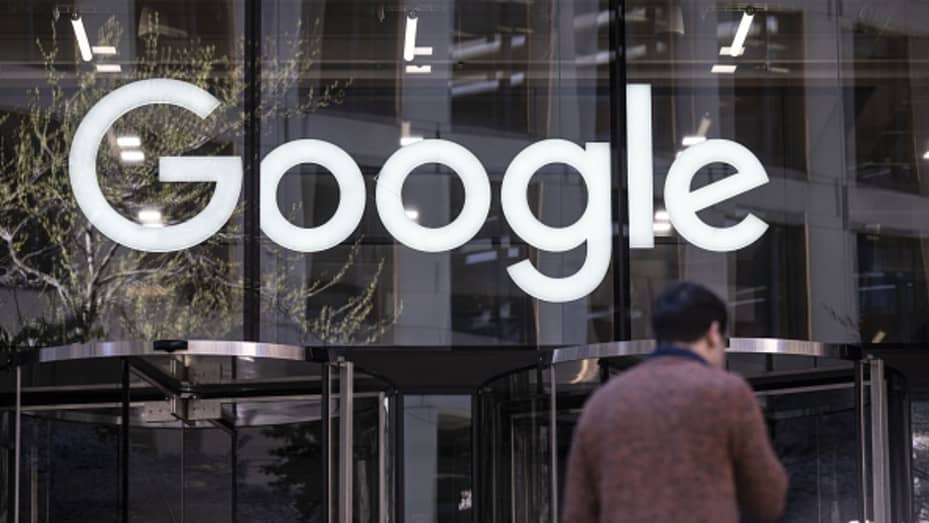
Google
Image Source: cnbc.com

The Canadian media industry has been advocating for tighter regulations on internet giants like Facebook and Google, aiming to allow new businesses to recover financial losses resulting from the increasing dominance of these platforms in the online advertising market.

The Canadian government estimated that news businesses could potentially receive around C$330 million ($249 million) per year from the mandated deals under this legislation.

Also Read: Google lays off staff at its mapping app Waze

However, Heritage Minister Pablo Rodriguez clarified that the platforms are not immediately obligated to comply with the act and expressed the government’s willingness to engage in consultations with them regarding regulatory and implementation processes.

Facebook and Google have argued that the proposed legislation is unsustainable for their businesses. For months, they have hinted at the possibility of blocking news availability in Canada if the act was not amended.

However, the Canadian federal government has resisted making changes, and Prime Minister Justin Trudeau accused the companies of employing “bullying tactics.”

In response to the law, Google’s president of global affairs, Kent Walker, stated in a blog post that they believe the law is unworkable and that the regulatory process would not resolve the “structural issues with the legislation.”

Consequently, Google informed the government that it will remove links to Canadian news from its Search, News, and Discover products within Canada once the law goes into effect. The specific news outlets affected by this decision will be determined based on the government’s definition of “eligible news businesses” when the rules for implementation are finalized.

Furthermore, Google will terminate its News Showcase program in Canada, which involves agreements with 150 news publications across the country. One of these agreements is with Reuters, which produces News Showcase panels, including in Canada.

The Online News Act mandates that online platforms negotiate with news publishers and compensate them for their content. A similar law was passed in Australia in 2021, which led Google and Facebook to threaten to curtail their services in the country. However, both companies reached agreements with Australian media companies after the legislation was amended.

Google argues that Canada’s law is broader than those in Australia and Europe, as it assigns a value to news story links displayed in search results and can potentially apply to outlets that do not produce news content.

Google has proposed that payment should be based on the display of news content itself, rather than links and that only businesses adhering to journalistic standards should be eligible for compensation.